AI integration for compliance reporting connects to the general ledger (GL) modules and regulatory reporting engines within platforms like Temenos, Oracle FLEXCUBE, and Finacle. The primary surface areas are the GL transaction tables, chart of accounts, and the data warehouses or staging areas used for report assembly. AI agents are typically deployed to extract, validate, and transform raw ledger data—such as loan balances, deposit classifications, and provisioning figures—into the structured formats required for reports like Basel III capital adequacy, IFRS 9 expected credit loss (ECL), and Liquidity Coverage Ratio (LCR) submissions. This happens via batch APIs, event-driven data pipelines, or direct queries to the core banking database, ensuring the AI operates on the system of record.

Integration
AI Integration for Core Banking Platforms in Compliance Reporting
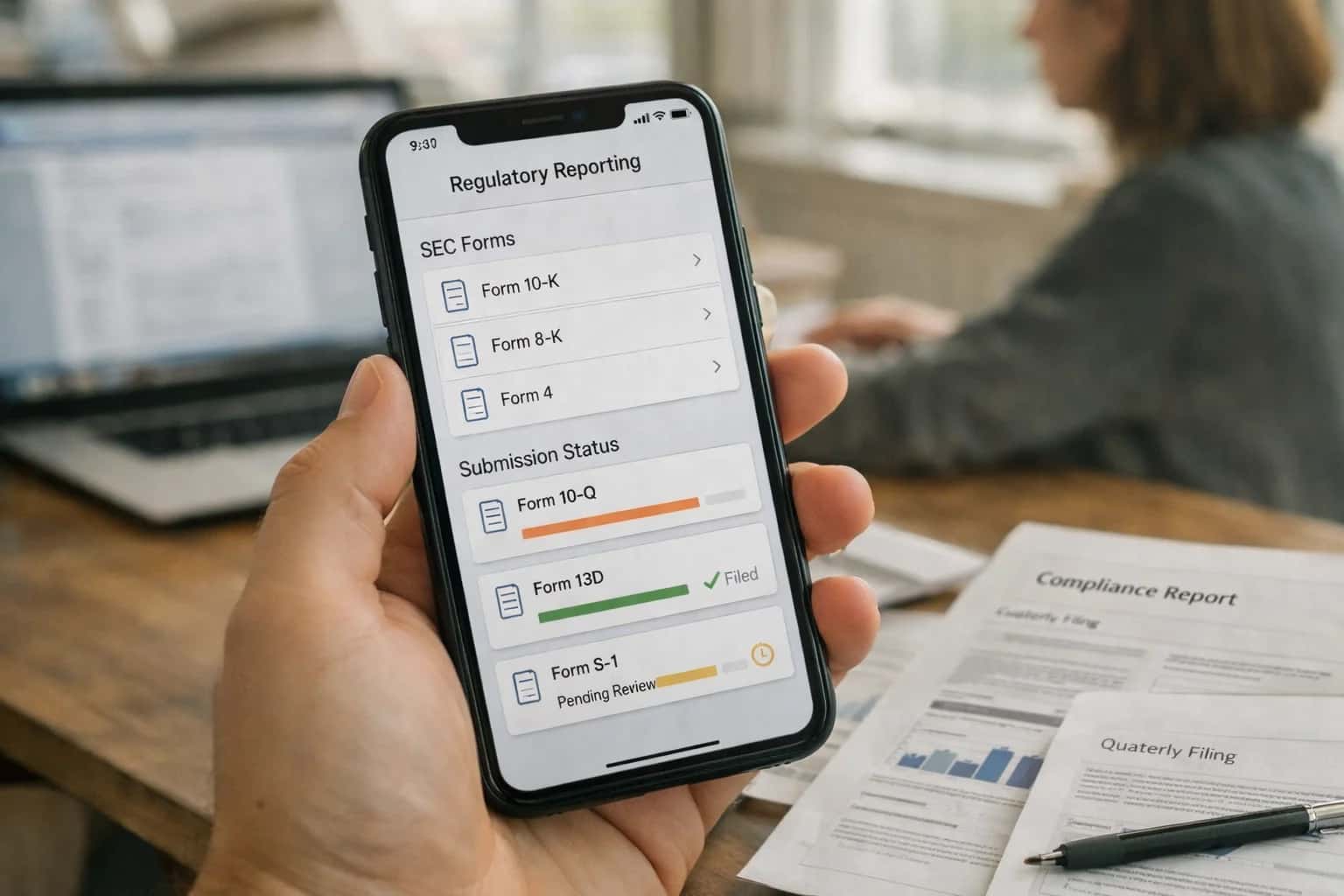
Where AI Fits into Core Banking Compliance Reporting
A practical guide to integrating AI for automating regulatory report generation from core banking ledgers.
A high-value workflow involves automated data validation and anomaly detection. For example, an AI service can run nightly, comparing extracted GL totals against predefined business rules and historical trends to flag discrepancies—like an unexpected spike in off-balance-sheet exposures—before they reach the report. This reduces manual reconciliation, which often consumes days each month. Another critical use case is narrative generation: AI can draft the qualitative sections of management reports (e.g., explaining changes in risk-weighted assets) by analyzing the quantitative data and pulling from a library of approved regulatory phrasing. Implementation requires careful prompt engineering and RBAC to ensure outputs are auditable and only accessible to authorized compliance officers.
Rollout should be phased, starting with a single, high-volume report (e.g., monthly prudential returns) in a sandbox environment that mirrors production GL data. Governance is paramount: all AI-generated figures must be traceable back to source ledger entries, with a human-in-the-loop approval step before final submission. Changes to the core banking chart of accounts or reporting rules require retraining or prompt adjustments, so the integration must be designed for maintainability. For teams evaluating this, the key is to map the specific data elements in your core platform's GL to the target report's line items, then prototype the extraction and validation layer. This approach turns a manual, error-prone monthly grind into a controlled, semi-automated workflow, shifting effort from data gathering to analysis and oversight.
Core Banking Data Surfaces for AI Integration
The Source of Truth for Regulatory Reporting
The general ledger (GL) is the foundational data surface for compliance reporting. AI integrations extract and validate transaction-level data mapped to the bank's chart of accounts, which is structured to align with regulatory frameworks like Basel III and IFRS 9.
Key integration points include:
- GL Balances & Journals: Extracting daily trial balances, journal entries, and posting details for capital, risk-weighted assets (RWA), and provisioning calculations.
- Account Attributes: Leveraging metadata (e.g., product type, currency, maturity bucket) from the chart of accounts to automate data categorization for reports.
- Sub-ledger Reconciliation: Using AI to identify and explain discrepancies between sub-ledgers (e.g., loans, deposits) and the GL before report generation.
Integrating here ensures AI models work with the bank's official book of record, reducing manual data aggregation and improving the audit trail for disclosures.
High-Value AI Use Cases for Compliance Reporting
Automate the extraction, validation, and assembly of data from core banking ledgers (Temenos, Mambu, Oracle FLEXCUBE, Finacle) to generate accurate, audit-ready regulatory reports for Basel, IFRS 9, and other frameworks.
Automated ECL (Expected Credit Loss) Calculation for IFRS 9
AI models analyze historical loan performance and forward-looking macroeconomic data from the core banking system to segment portfolios and calculate provision requirements. Automates the data pull from general ledger and loan modules, runs scenario analysis, and generates the disclosure workbook.
Basel III Capital & RWA (Risk-Weighted Asset) Reporting
Orchestrates data extraction from credit risk engines, counterparty records, and transaction ledgers to compute capital ratios. AI validates data consistency, flags outliers for review, and assembles the final report, ensuring alignment with the core platform's official balances.
Regulatory Data Validation & Anomaly Detection
Continuously monitors the GL accounts, product masters, and transaction postings used for compliance reporting. AI detects breaks, missing data, or unusual fluctuations against historical trends, triggering alerts for finance teams to investigate before the reporting deadline.
Narrative Disclosure Drafting & Management
Generates first drafts of the qualitative sections (e.g., risk management policies, accounting judgements) for annual reports. AI pulls relevant data points and approved language from past filings and internal policy documents stored in the core banking document repository, reducing manual compilation.
Liquidity Coverage Ratio (LCR) & NSFR Reporting
Integrates with the core banking treasury and deposits modules to classify cash flows and balance sheet items into regulatory buckets. AI automates the daily/weekly calculation, handles complex product mappings, and produces the report with a clear audit trail back to source system transactions.
Audit Trail & Workflow Orchestration for Submissions
Manages the end-to-end compliance workflow: data extraction, model runs, review cycles, and approvals. AI logs every data point's lineage back to the core banking API call or batch job, creates a immutable audit trail, and routes exceptions to the correct controller or risk owner for sign-off.
Example AI-Powered Compliance Reporting Workflows
These workflows illustrate how AI agents extract, validate, and structure data from core banking general ledgers and transaction systems to automate high-effort regulatory reporting, reducing manual compilation from weeks to days.
Trigger: End-of-month closing batch job completes in the core banking platform (e.g., Temenos T24, Oracle FLEXCUBE).
Context/Data Pulled: An AI agent is triggered via webhook or scheduled job. It queries:
- The loan portfolio master for all performing and non-performing loans.
- Historical default data and macroeconomic scenario tables from the data warehouse.
- Collateral valuation records linked to secured loans.
Model or Agent Action: The agent executes a multi-step process:
- Segments the portfolio into Stage 1, 2, and 3 buckets based on 12-month and lifetime PD criteria.
- Calculates Probability of Default (PD), Loss Given Default (LGD), and Exposure at Default (EAD) for each segment using approved bank models, pulling relevant historical data.
- Applies forward-looking macroeconomic adjustments to PDs based on the latest scenario forecasts.
- Generates a detailed ECL calculation report with drill-down capabilities by segment, product, and region.
System Update or Next Step: The report and aggregated ECL figures are posted to a designated provisioning journal in the General Ledger via the core banking API. The full calculation workbook is saved to a governed document repository (e.g., SharePoint) with a complete audit trail of data sources and model versions.
Human Review Point: The final ECL report and GL posting are flagged for review by the Head of Financial Reporting in the bank's workflow system. The AI agent provides a summary of material changes from the prior period and highlights any loans with calculation exceptions for manual review.
Implementation Architecture: Data Flow & Integration Patterns
A practical blueprint for integrating AI into core banking platforms to automate compliance reporting workflows like Basel and IFRS 9.
The integration architecture connects AI services to the core banking platform's general ledger (GL) and sub-ledger systems—the primary source for regulatory reporting data. This is typically achieved via a dedicated data extraction layer that pulls transaction-level data, account balances, and product master records on a scheduled or event-driven basis. For platforms like Temenos T24, Oracle FLEXCUBE, or Infosys Finacle, this involves leveraging their GL APIs, batch data export utilities, or direct database replication to a secure staging area. The extracted data is then normalized and enriched with reference data (e.g., counterparty risk ratings, product classifications) before being processed by AI models.
The AI layer performs several key functions: data validation and anomaly detection to identify missing or outlier figures before report assembly; automated mapping of raw ledger entries to specific regulatory line items (e.g., credit risk exposures for Basel III); and narrative generation for the management commentary sections of reports like IFRS 9. This is often implemented as a series of microservices—one for data quality, another for calculation logic, and a third for document assembly—orchestrated by a workflow engine. The final, validated report drafts are then routed through the core banking platform's existing approval workflows (or an integrated system like SAP) for sign-off before submission.
Governance and rollout require careful planning. A phased approach starts with a single report (e.g., Liquidity Coverage Ratio) and a subset of legal entities. All AI-generated outputs should be fully auditable, with the system logging the source data used, the applied rules, and any human overrides. Integration with the bank's model risk management framework is critical for validating the AI's classification and calculation logic. Furthermore, the architecture must support a human-in-the-loop review stage, especially for material figures, with discrepancies flagged back to the finance team for resolution within the core banking system's data correction workflows.
Code & Payload Examples for Core Banking Data Extraction
Extracting General Ledger Data for Basel III
Automating regulatory reports starts with programmatically extracting granular transaction and balance data from the core banking General Ledger (GL). This typically involves querying the GL module's APIs using date ranges, account hierarchies, and specific transaction codes relevant to capital adequacy calculations (e.g., risk-weighted assets).
Example Python API Call:
pythonimport requests # Authenticate with core banking platform (e.g., Temenos T24) auth_response = requests.post( 'https://api.corebank.com/auth', json={'username': 'service_account', 'api_key': 'key'} ) token = auth_response.json()['access_token'] # Fetch GL data for Basel reporting period gl_data_response = requests.get( 'https://api.corebank.com/v1/gl/entries', headers={'Authorization': f'Bearer {token}'}, params={ 'fromDate': '2024-01-01', 'toDate': '2024-03-31', 'chartOfAccounts': 'BASEL_III', 'includeDimensions': 'true' # For risk weight attribution } ) # The response contains the raw ledger entries for processing basel_raw_data = gl_data_response.json()
The extracted JSON payload includes transaction amounts, dates, account codes, and dimensional attributes (e.g., counterparty, product type) necessary for downstream risk-weight mapping and aggregation.
Realistic Time Savings & Operational Impact
This table illustrates the typical operational impact of integrating AI into core banking compliance reporting workflows, focusing on Basel, IFRS 9, and other capital/credit loss reports. Impacts are based on extracting, validating, and structuring data from the general ledger and other core modules.
| Reporting Workflow Stage | Manual / Traditional Process | AI-Assisted Process | Key Notes & Considerations |
|---|---|---|---|
Data Extraction & Validation | Days of manual SQL queries and spreadsheet reconciliation | Hours of automated data pulls with anomaly flagging | AI validates figures against GL rules and flags outliers for review, reducing data prep time by 60-80%. |
Report Population & Drafting | Weeks of manual template filling and cross-referencing | Same-day automated generation of first draft | AI populates report templates from validated data sources; finance teams shift to review and analysis. |
Disclosure Note Drafting | Manual drafting based on prior periods and new regulations | Assisted drafting with regulatory context and data highlights | AI suggests narrative explanations for material changes, pulling from approved language libraries and regulatory updates. |
Internal Review & Sign-off | Sequential email reviews with high back-and-forth | Streamlined workflow with automated routing and change tracking | AI routes drafts based on RBAC, summarizes changes between versions, and tracks approval SLAs. |
Regulatory Submission & Audit Trail | Manual packaging and submission with fragmented audit logs | Automated submission packages with immutable activity logs | AI compiles the final submission package, generates a submission receipt, and logs all actions for exam readiness. |
Ongoing Monitoring & Variance Analysis | Monthly manual checks for data drift or process breaks | Continuous monitoring with alerts for significant variances | AI monitors source data pipelines and report outputs, alerting teams to unexpected changes that could impact future reports. |
Year-over-Year Process Updates | Quarterly manual updates to reporting logic and mappings | Assisted updates via change detection in regulations and GL structure | AI compares new regulatory texts and core banking data model changes to suggest necessary report logic updates. |
Governance, Controls & Phased Rollout
A controlled, phased approach to integrating AI into core banking compliance reporting ensures accuracy, auditability, and regulatory acceptance.
The integration architecture must treat the core banking general ledger as the single source of truth. AI models for report generation (e.g., Basel III, IFRS 9) should operate on a governed data layer—extracting, validating, and transforming ledger data via secure APIs from platforms like Temenos T24, Oracle FLEXCUBE, or Finacle. All AI-generated outputs, such as calculated risk-weighted assets (RWA) or expected credit loss (ECL) figures, must be versioned, logged, and stored alongside the source data extracts and the specific prompt or model configuration used. This creates a complete audit trail from the raw GL entry to the final report line item.
A phased rollout is critical. Start with a parallel run for a single, non-material report (e.g., a liquidity coverage ratio report). In this phase, the AI-generated report runs alongside the traditional manual process. Outputs are compared, discrepancies are analyzed by a human-in-the-loop team of finance and compliance controllers, and the model's logic is refined. Governance controls like RBAC ensure only authorized users can approve AI outputs for submission, and any overrides or manual adjustments are captured in the audit log. This phase builds confidence and refines the data validation rules.
Subsequent phases expand to more complex reports and automate the workflow. The AI agent can be integrated into the bank's reporting calendar and workflow engine, automatically triggering data extraction, running validation checks, drafting report narratives, and routing the draft to the appropriate controller for review and sign-off within systems like Workiva or the regulator's portal. The final governance layer involves continuous monitoring for model drift—ensuring the AI's interpretations remain aligned with evolving accounting standards (like IFRS 9 updates) and regulatory guidance—and scheduled re-validation against a curated set of golden test cases.
Enabling Efficiency, Speed & Accuracy
Intelligent Analysis, Decision & Execution
We build AI systems for teams that need search across company data, workflow automation across tools, or AI features inside products and internal software.
Talk to Us
Search across company data
Give teams answers from docs, tickets, runbooks, and product data with sources and permissions.
Useful when people spend too long searching or get different answers from different systems.

Automate internal workflows
Use AI to route work, draft outputs, trigger actions, and keep approvals and logs in place.
Useful when repetitive work moves across multiple tools and teams.

Add AI to products and internal tools
Build assistants, guided actions, or decision support into the software your team or customers already use.
Useful when AI needs to be part of the product, not a separate tool.
Frequently Asked Questions (FAQ)
Practical questions for teams automating Basel, IFRS 9, and other regulatory reports using AI with Temenos, Mambu, Oracle FLEXCUBE, and Finacle.
AI integration for compliance reporting typically connects via:
- Direct Database Queries (Read-Only): For platforms like Temenos T24 or Oracle FLEXCUBE, a secure, read-only replica of the general ledger (GL) and subsidiary ledgers (loan, deposit) is used. AI services query this replica to extract raw transactional and balance data.
- API-Based Extraction: Modern platforms like Mambu and Finacle provide robust APIs. AI workflows call endpoints (e.g.,
GET /accounts/{id}/transactions,GET /glentries) to pull data in structured JSON/XML format, often using date and product filters relevant to the reporting period. - Event Streams: For real-time data validation, AI can subscribe to event streams (e.g., Kafka topics) publishing GL postings, ensuring the reporting engine is alerted to anomalies as they occur.
Key Data Points Extracted:
- Account balances and movements by product type and risk category.
- Loan details: principal, interest, stage, impairment flags, collateral values.
- Counterparty and exposure data for concentration calculations.
- Historical data for time-series analysis (e.g., 12-month PD for IFRS 9).

About the author
Prasad Kumkar
CEO & MD, Inference Systems
Prasad Kumkar is the CEO & MD of Inference Systems and writes about AI systems architecture, LLM infrastructure, model serving, evaluation, and production deployment. Over 5+ years, he has worked across computer vision models, L5 autonomous vehicle systems, and LLM research, with a focus on taking complex AI ideas into real-world engineering systems.
His work and writing cover AI systems, large language models, AI agents, multimodal systems, autonomous systems, inference optimization, RAG, evaluation, and production AI engineering.
Partnered with leading AI, data, and software stack.





How We Work
Custom AI workflows for your Business
One-fit-all AI don't work for modern businesses. At Inferensys, we aim to understand your business & custom requirements; which we use to define most efficient agentic workflows, the data, and the tools for your business.
01
Review the use case
We understand the task, the users, and where AI can actually help.
Read more02
Pick the right approach
We define what needs search, automation, or product integration.
Read more03
Build the first useful version
We implement the part that proves the value first.
Read more04
Improve from there
We add the checks and visibility needed to keep it useful.
Read moreThe first call is a practical review of your use case and the right next step.
Talk to Us