AI integrates with Icertis by connecting to its contract data model and extensible AI Studio framework. The primary surfaces for augmentation are the contract repository, clause library, and obligation tracking modules. Integration typically occurs via Icertis's REST APIs and webhooks, allowing AI services to trigger on key events like contract upload, status change, or milestone creation. This enables use cases such as automated metadata extraction during ingestion, AI-powered search and Q&A over the repository, and intelligent obligation identification from executed agreements.

Integration
AI Integration with Icertis Contract Intelligence Platform
Architecture guide for connecting AI to Icertis's AI Studio and contract data model to enhance analytics, compliance monitoring, and intelligent extraction for enterprise contract management.
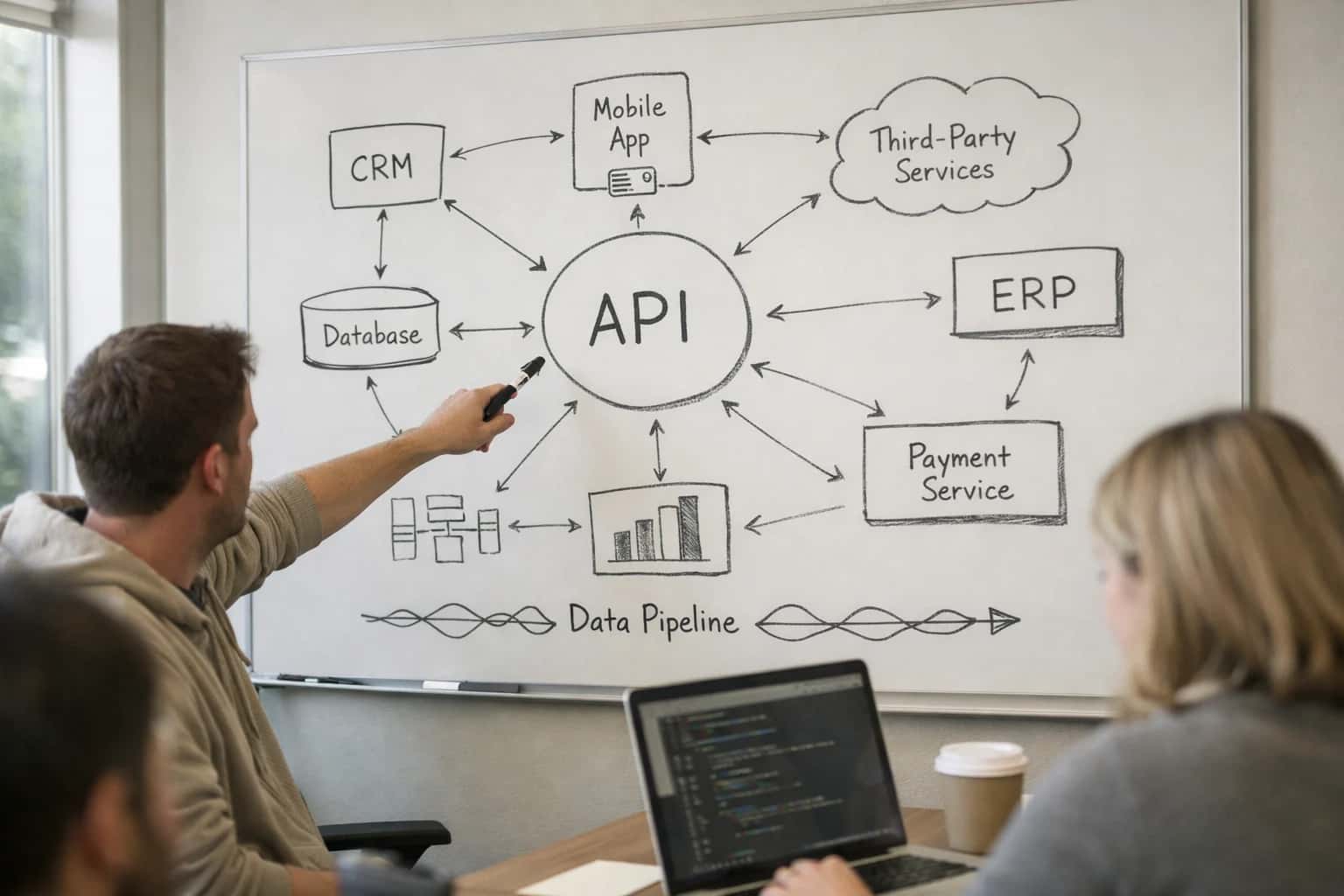
ARCHITECTURE AND IMPLEMENTATION PATTERNS
Where AI Fits into the Icertis Platform
A technical blueprint for embedding AI into Icertis's data model, AI Studio, and core workflows to automate contract intelligence.
For implementation, a common pattern is to deploy a RAG (Retrieval-Augmented Generation) pipeline that grounds an LLM in your specific Icertis contract corpus and playbooks. This pipeline can be invoked from within Icertis workflows to provide risk summaries during review, suggest redlines against standard positions, or auto-populate custom object fields. A critical governance step is configuring human-in-the-loop approvals within Icertis's workflow engine for high-risk AI suggestions, ensuring legal oversight while automating routine tasks. The result is a reduction in manual review cycles from days to hours and more consistent application of contracting policies.
Rollout should start with a pilot on a contained, high-volume contract type (e.g., NDAs or simple MSAs). Use Icertis AI Studio to prototype a custom connector or leverage its open architecture to deploy an external AI service. Focus on measurable outcomes like cycle time reduction or metadata completeness, and ensure all AI actions are logged to Icertis's audit trail for compliance. For enterprises, this integration often serves as the intelligence layer that connects Icertis to downstream systems like SAP for procurement or Salesforce for sales ops, creating a closed-loop system for contract-driven business processes.
ARCHITECTURE BLUEPRINT
Key Icertis Surfaces for AI Integration
The Core Orchestration Layer
Icertis AI Studio provides the primary surface for custom AI integration. It's a low-code environment for building, training, and deploying machine learning models directly against your contract repository. The key integration points are its REST APIs and webhooks, which allow you to inject external AI capabilities or pull enriched data out.
For production AI, you'll typically use the Contract Intelligence API to submit documents for processing and retrieve structured metadata, extracted clauses, and entity predictions. Webhooks can notify external systems when a contract reaches a specific state (e.g., "sent for signature"), triggering downstream AI workflows like obligation creation in a project management tool. The GraphQL-based Discover API is critical for executing complex queries to build a Retrieval-Augmented Generation (RAG) index, fetching contracts that match specific criteria for grounding an LLM's responses.
python# Example: Calling Icertis AI Studio to extract data import requests headers = { 'Authorization': 'Bearer YOUR_API_TOKEN', 'Content-Type': 'application/json' } payload = { "contractId": "CON-2024-00123", "extractionProfile": "StandardClauseExtraction" } response = requests.post( 'https://your-instance.icertis.com/api/v2/extract', json=payload, headers=headers ) # Returns JSON with extracted clauses, parties, dates, etc. extracted_data = response.json()
CONTRACT INTELLIGENCE
High-Value AI Use Cases for Icertis
Integrate AI directly into Icertis's data model and AI Studio to automate high-volume workflows, surface hidden risks, and turn your contract repository into a proactive business asset.
01
Automated Obligation & Milestone Extraction
Deploy an AI pipeline that ingests executed contracts via Icertis APIs, identifies obligations, deliverables, and key dates with high accuracy, and automatically creates tracked tasks, calendar entries, and alerts in Icertis or connected systems like ServiceNow or Jira.
Hours -> Minutes
Extraction time
02
Playbook-Driven Redlining & Negotiation Support
Build an AI copilot that sits within the Icertis review interface. It compares incoming redlines against approved legal playbooks, suggests specific fallback language, explains deviations, and predicts concession points—accelerating negotiations while maintaining compliance.
1 sprint
Typical review cycle reduction
03
AI-Powered Contract Repository Q&A (RAG)
Implement a Retrieval-Augmented Generation (RAG) system over your Icertis repository. Enable users to ask natural language questions (e.g., "Show all auto-renewal clauses for Vendor X") and get accurate, sourced answers grounded in your actual contract corpus, reducing manual discovery time.
Batch -> Real-time
Knowledge access
04
Continuous Compliance & Risk Monitoring
Use AI to continuously scan active contracts in Icertis against regulatory frameworks (e.g., GDPR, SOX) and internal policies. Flag non-standard terms (unlimited liability, unusual termination) and generate compliance reports automatically, moving from periodic audits to real-time oversight.
Same day
Violation detection
05
Intelligent Clause Extraction for Metadata Enrichment
Automate the population of Icertis custom object fields by extracting key data points—parties, governing law, liability caps, insurance requirements—from inbound contracts. This creates a searchable, reportable metadata layer without manual data entry, powering advanced portfolio analytics.
06
Renewal Forecasting & Opportunity Intelligence
Connect Icertis contract data with CRM (e.g., Salesforce) via AI. Analyze terms, usage, and relationship history to predict renewal likelihood, optimal negotiation windows, and upsell opportunities. Trigger automated workflows in the CRM for account teams to act on insights.
Weeks -> Days
Forecast lead time
PRACTICAL IMPLEMENTATION PATTERNS
Example AI-Augmented Workflows in Icertis
These workflows illustrate how AI agents and models connect to Icertis's AI Studio, data model, and APIs to automate high-volume tasks and enhance contract intelligence. Each pattern is designed for incremental rollout with clear human review points.
Trigger: A counterparty submits an NDA via a webform connected to Icertis.
AI Action:
- An AI agent retrieves the uploaded NDA document via Icertis's Document Management API.
- A fine-tuned extraction model identifies key fields: parties, effective date, term, governing law, and confidentiality scope.
- A separate classification model scores the document against the company's standard NDA playbook, flagging non-standard clauses (e.g., unilateral obligations, unusual indemnities).
System Update:
- The extracted metadata populates the corresponding Icertis contract object fields.
- The AI risk score and flag summary are written to a custom
AI_Review_Summaryfield. - The workflow is automatically routed:
- Low-risk, standard NDAs: To a paralegal or authorized business user for final review/signature.
- High-risk or non-standard NDAs: To a legal counsel's queue with the AI-generated clause-level commentary.
Human Review Point: All NDAs receive human review before signature; AI prioritizes the queue and provides a negotiation brief.
CONNECTING AI TO ICERTIS'S DATA MODEL
Implementation Architecture: Data Flow & APIs
A technical blueprint for wiring AI services into the Icertis platform to power intelligent extraction, analytics, and compliance workflows.
The integration architecture connects Icertis's AI Studio and core APIs to an external AI orchestration layer. The primary flow begins when a new contract document is uploaded to the Icertis Contract Repository. A webhook or scheduled job triggers the AI pipeline, which first extracts the raw text via Icertis's Document Extraction API. This text, along with relevant metadata (contract type, parties, region), is sent to a secure inference endpoint. Here, a combination of pre-trained and fine-tuned models perform specific tasks: a Named Entity Recognition (NER) model identifies key dates and monetary values, a classification model tags clauses (e.g., Limitation of Liability, Termination), and a RAG (Retrieval-Augmented Generation) system grounds queries against your internal playbook library to assess compliance.
The processed outputs—structured data, risk scores, and extracted obligations—are then mapped back to Icertis's data model via its RESTful Contract API. This typically involves: populating custom attribute fields on the contract record, creating related Obligation or Milestone objects for tracking, and generating AI-generated summaries stored as notes. For active monitoring, the architecture can be extended with a reverse flow: a scheduled service queries Icertis for contracts nearing renewal or with upcoming obligations, uses AI to analyze performance data from linked systems, and posts alerts or tasks back to the relevant Icertis workspace or via email to business owners.
Governance is critical. All AI interactions should be logged with a full audit trail, linking model inferences to source contract versions. A human-in-the-loop approval step should be configured for high-risk clauses or significant deviations from playbooks before updates are committed. This architecture, leveraging Icertis's extensible platform, allows for incremental rollout—starting with automated metadata extraction for NDAs before scaling to complex obligation tracking for MSAs. For related patterns on integrating AI with other enterprise systems in your stack, see our guides on CLM and ERP Integration and building a Contract AI with RAG foundation.
ICERTIS AI STUDIO & API INTEGRATION
Code & Payload Examples
Processing AI Studio Analysis Results
When Icertis AI Studio analyzes a contract, it can send a JSON webhook payload to your integration endpoint. This handler receives the analysis, validates it, and updates the corresponding contract record with extracted metadata.
pythonfrom flask import Flask, request, jsonify import logging from your_icertis_client import update_contract_metadata app = Flask(__name__) @app.route('/webhook/icertis-ai-studio', methods=['POST']) def handle_ai_studio_webhook(): """ Webhook endpoint for Icertis AI Studio analysis results. Expected payload includes contract ID, analysis ID, and extracted data. """ payload = request.get_json() # Validate webhook signature (implementation specific to your security setup) if not verify_signature(request): return jsonify({"error": "Unauthorized"}), 401 contract_id = payload.get('contractId') analysis_id = payload.get('analysisId') extracted_data = payload.get('extractedData', {}) # Map AI Studio output to Icertis metadata fields metadata_update = { "contractNumber": contract_id, "customFields": { "ai_analysis_id": analysis_id, "primary_term_months": extracted_data.get('termDuration'), "governing_law": extracted_data.get('governingLaw'), "auto_renewal": extracted_data.get('hasAutoRenewal', False), "liability_cap": extracted_data.get('liabilityCapAmount'), "obligation_summary": extracted_data.get('obligationSummary') } } # Update the contract in Icertis via REST API update_response = update_contract_metadata(metadata_update) logging.info(f"Updated contract {contract_id} with AI analysis {analysis_id}") return jsonify({"status": "success", "contractId": contract_id}), 200
This pattern ensures AI-derived insights are systematically written back to the system of record, enriching the contract data model for reporting and workflow triggers.
AI-ENHANCED CONTRACT INTELLIGENCE
Realistic Time Savings & Operational Impact
This table illustrates the measurable impact of integrating AI with Icertis Contract Intelligence Platform across core workflows, based on typical enterprise implementations.
| Contract Workflow | Before AI | After AI | Implementation Notes |
|---|---|---|---|
Contract Review & Risk Flagging | Manual clause-by-clause review (2-4 hours per contract) | AI-powered risk summary & clause highlighting (15-30 minutes review) | AI pre-screens and flags deviations from playbooks; legal reviews exceptions |
Obligation & Milestone Extraction | Manual spreadsheet tracking; missed obligations common | Automated extraction into Icertis tracking fields; alert workflows | AI parses executed contracts; creates tasks in Icertis for business owners |
Contract Data Entry & Metadata Population | Manual keying from PDFs into Icertis fields (30-60 mins) | AI auto-populates parties, dates, values, terms (<5 mins validation) | Extraction pipeline validates against existing master data; human spot-checks |
Contract Repository Q&A & Search | Keyword search; manual document review for answers | Natural language Q&A via RAG; instant answers with citations | AI is grounded in your Icertis repository and approved playbooks |
Renewal Forecasting & Analysis | Quarterly manual report compilation; reactive alerts | Continuous AI analysis; 60-90 day predictive alerts dashboard | AI correlates contract terms, usage data, and relationship signals in Icertis |
Compliance Monitoring (e.g., Insurance, Reporting) | Periodic manual audit samples; high risk of missed deadlines | Continuous AI monitoring of active contracts; automated breach alerts | AI checks obligations against integrated data sources; triggers Icertis tasks |
Standard Clause Identification & Language Analysis | Manual comparison to library; inconsistent standardization | AI scores alignment with approved clause library; suggests replacements | Supports legal's initiative to reduce non-standard, risky language in portfolio |
ENTERPRISE AI INTEGRATION
Governance, Security, and Phased Rollout
A structured approach to deploying AI within Icertis that prioritizes control, compliance, and measurable impact.
Integrating AI with the Icertis Contract Intelligence Platform requires a security-first architecture. This typically involves deploying a middleware layer or secure API gateway that sits between Icertis's AI Studio or REST APIs and your chosen LLM service (e.g., Azure OpenAI, Anthropic). This layer handles authentication, PII/PHI redaction before data leaves your environment, prompt management, and audit logging of all AI interactions. Sensitive contract data, such as pricing, liability clauses, and party information, is processed with strict access controls aligned with Icertis's native role-based permissions, ensuring AI insights are only surfaced to authorized legal, procurement, or sales users.
A successful rollout follows a phased, use-case-driven pilot. Start with a contained, high-volume process like automated metadata extraction for newly ingested NDAs or AI-generated executive summaries for sales contracts. This pilot runs in a "human-in-the-loop" mode where AI suggestions are reviewed before being committed to the Icertis data model. Measure success by reduction in manual review time and extraction accuracy. Subsequent phases can introduce more complex workflows, such as obligation tracking automation or compliance monitoring against clause libraries, each requiring their own validation gates and user training.
Governance is critical for maintaining trust and compliance. Establish a clear protocol for model version control, prompt lifecycle management, and a regular review cycle for AI-generated outputs to catch drift or inaccuracies. All AI actions—from a clause suggestion to a risk score—should be logged in an immutable audit trail within Icertis or a linked system, creating a defensible record for internal audit and regulatory requirements. This controlled, iterative approach de-risks the integration and ensures the AI augments—rather than disrupts—established contract governance processes.
Enabling Efficiency, Speed & Accuracy
Intelligent Analysis, Decision & Execution
We build AI systems for teams that need search across company data, workflow automation across tools, or AI features inside products and internal software.
Talk to Us
Search across company data
Give teams answers from docs, tickets, runbooks, and product data with sources and permissions.
Useful when people spend too long searching or get different answers from different systems.
Enterprise searchRAGPermissions
Read more
Automate internal workflows
Use AI to route work, draft outputs, trigger actions, and keep approvals and logs in place.
Useful when repetitive work moves across multiple tools and teams.
AI agentsWorkflow automationGovernance
Read more
Add AI to products and internal tools
Build assistants, guided actions, or decision support into the software your team or customers already use.
Useful when AI needs to be part of the product, not a separate tool.
AI integrationDecision supportModel routing
Read moreIMPLEMENTATION GUIDE
Frequently Asked Questions
Common technical and operational questions for integrating AI with Icertis Contract Intelligence (ICI) to automate extraction, enhance analytics, and enforce compliance.
Integration occurs primarily through Icertis's REST APIs and the extensibility of AI Studio. The architecture typically follows this pattern:
- Trigger & Data Pull: An event (new contract upload, status change) triggers a webhook or scheduled job. The integration service calls the Icertis API (e.g.,
GET /api/v1/contracts/{id}) to fetch the contract document and its existing metadata. - AI Processing: The document and context are sent to your AI service. For tasks like clause extraction, a specialized model (fine-tuned BERT, LayoutLM) or a RAG pipeline grounded in your clause library processes the document.
- System Update: The AI output (extracted dates, parties, obligations, risk scores) is formatted and pushed back to Icertis via API (
PATCH /api/v1/contracts/{id}) to populate custom fields or create tracked objects. - AI Studio Integration: For deeper workflow integration, you can package your custom model as a container and register it within Icertis AI Studio. This allows Icertis workflows to call your model natively for classification or extraction, keeping processing within Icertis's governance framework.
Key APIs Used: Contract API, Object API, File API, AI Studio Inference API.

About the author
Prasad Kumkar
CEO & MD, Inference Systems
Prasad Kumkar is the CEO & MD of Inference Systems and writes about AI systems architecture, LLM infrastructure, model serving, evaluation, and production deployment. Over 5+ years, he has worked across computer vision models, L5 autonomous vehicle systems, and LLM research, with a focus on taking complex AI ideas into real-world engineering systems.
His work and writing cover AI systems, large language models, AI agents, multimodal systems, autonomous systems, inference optimization, RAG, evaluation, and production AI engineering.
LinkedIn
Limited slotsGet a Free AI Consultation
Partnered with leading AI, data, and software stack.





How We Work
Custom AI workflows for your Business
One-fit-all AI don't work for modern businesses. At Inferensys, we aim to understand your business & custom requirements; which we use to define most efficient agentic workflows, the data, and the tools for your business.
01
Review the use case
We understand the task, the users, and where AI can actually help.
Read more02
Pick the right approach
We define what needs search, automation, or product integration.
Read more03
Build the first useful version
We implement the part that proves the value first.
Read more04
Improve from there
We add the checks and visibility needed to keep it useful.
Read moreThe first call is a practical review of your use case and the right next step.
Talk to Us