AI integration for vendor contracts in DocuSign CLM focuses on three primary surfaces: the Agreement Creation workflow, the Repository & Metadata layer, and the Obligation & Milestone tracking engine. During creation, AI can act as a copilot, suggesting optimal clauses from your playbook based on vendor type, spend tier, and service category, and pre-populating custom metadata fields like Risk Tier or Insurance Requirements. For existing contracts in the repository, a background AI service can perform bulk analysis, extracting key terms (payment terms, SLAs, termination clauses) into structured fields and flagging non-standard or high-risk language against your approved templates.

Integration
AI Integration for DocuSign CLM for Vendor Contracts
A technical blueprint for embedding AI into DocuSign CLM to automate vendor contract review, risk scoring, obligation extraction, and compliance monitoring, turning your agreement repository into an intelligent vendor management system.
ARCHITECTURE FOR THIRD-PARTY RISK AND OPERATIONS
Where AI Fits into DocuSign CLM for Vendor Management
A technical blueprint for integrating AI into DocuSign CLM to automate risk assessment, performance tracking, and compliance workflows across your vendor portfolio.
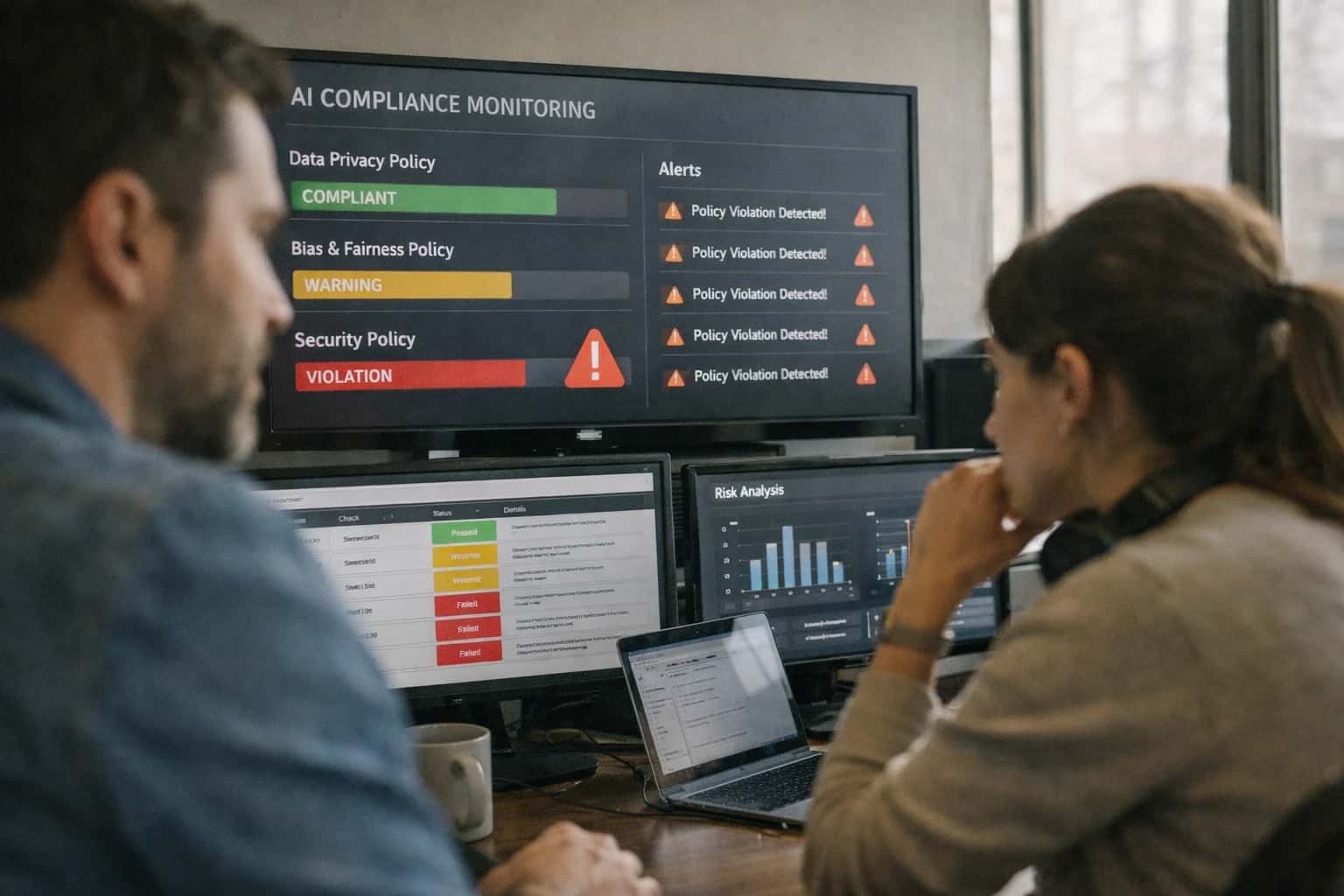
The high-value implementation pattern is a Retrieval-Augmented Generation (RAG) pipeline grounded in your specific clause library, historical negotiations, and vendor performance data. This allows agents to answer complex queries like "Show all vendors with auto-renewal clauses within 90 days" or "What's our standard liability cap for IT services in California?" directly within CLM. For ongoing management, AI can monitor key dates and deliverables extracted from contracts, creating tasks in connected systems like Coupa or ServiceNow and triggering compliance checks for certificates of insurance or required reports, moving review from a quarterly manual audit to a continuous, exception-based workflow.
Rollout requires a phased approach, starting with AI-assisted metadata enrichment for the existing vendor contract repository to build a clean data foundation. Governance is critical; all AI-suggested redlines or risk scores should be logged in the CLM's native audit trail, with a human-in-the-loop approval step configured for high-value or high-risk agreements. By connecting DocuSign CLM's Integration Hub to your procurement and AP systems, AI becomes the orchestrator, ensuring contract terms actively govern operational and financial workflows, reducing manual oversight and closing the loop on third-party risk.
VENDOR CONTRACT AUTOMATION
Key Integration Surfaces in DocuSign CLM
The Core Data Layer for AI
The DocuSign CLM repository is the primary source of truth for executed vendor contracts. AI integration begins here by enriching the structured metadata that powers reporting and search.
Key AI Actions:
- Automated Metadata Extraction: Use NLP models to parse uploaded vendor agreements (MSAs, SOWs, NDAs) and populate custom fields for
Contract Type,Governing Law,Term,Auto-Renewal Clauses,Liability Caps, andTermination Notice Periods. This eliminates manual data entry for procurement and legal ops. - Risk Flagging: Scan document text against a configured risk library to flag clauses like
Unlimited Liability,Unilateral Termination, orUncapped Indemnification. Flagged contracts are automatically routed for legal review. - Repository Intelligence: Implement a RAG (Retrieval-Augmented Generation) pipeline over the entire repository, enabling natural language queries like "Show me all vendor contracts with liability caps under $1M" or "What's our standard payment term for IT services?"
This enriched metadata layer becomes the foundation for all downstream AI workflows and analytics.
DOCUSIGN CLM INTEGRATION
High-Value AI Use Cases for Vendor Contracts
Transform your vendor contract portfolio from a static repository into an active, intelligent asset. These AI integration patterns for DocuSign CLM automate risk review, performance tracking, and compliance workflows, connecting contract terms directly to procurement and finance operations.
01
Automated Vendor Risk Assessment
AI scans new vendor agreements in DocuSign CLM against a configured risk playbook, flagging clauses like unlimited liability, auto-renewal, or unusual termination terms. It generates a risk score and summary for procurement and legal review, routing high-risk contracts for extra scrutiny.
Batch -> Real-time
Risk review
02
Intelligent Obligation Extraction & Tracking
Extracts key obligations (SLAs, reporting requirements, insurance, milestones) from executed vendor contracts into structured data within DocuSign CLM. Creates tracked tasks in connected systems (e.g., Jira, Coupa) and triggers automated reminders for business owners before deadlines.
Hours -> Minutes
Obligation setup
03
AI-Powered Contract Summarization
Generates a concise, role-specific summary for every vendor contract stored in the CLM repository. For procurement: key pricing and term sheets. For legal: deviation highlights. For finance: payment schedules and renewal triggers. Enables faster onboarding and decision-making.
Same day
Stakeholder briefing
04
Spend Compliance & Anomaly Detection
Connects extracted pricing and payment terms from DocuSign CLM to actual spend data in ERP/procurement systems. AI monitors for discrepancies, such as invoice amounts exceeding contract rates or unauthorized recurring charges, and flags exceptions for accounts payable review.
Batch -> Real-time
Exception detection
05
Vendor Performance & Renewal Intelligence
Correlates contract terms (SLAs, KPIs) with operational data from service tickets or delivery reports. AI analyzes performance trends and predicts renewal likelihood, providing procurement with data-driven negotiation leverage and optimal timing for contract renegotiation.
1 sprint
Renewal forecast
06
RAG-Powered Vendor Contract Q&A
Deploys a secure chatbot interface grounded in your DocuSign CLM repository. Procurement and legal teams can ask natural language questions (e.g., "Which vendors have a 90-day termination for convenience clause?") and get instant, citation-backed answers from the entire contract portfolio.
Hours -> Minutes
Contract discovery
VENDOR CONTRACT OPERATIONS
Example AI-Augmented Workflows
These workflows illustrate how AI agents can be embedded into DocuSign CLM to automate high-volume, repetitive tasks in the vendor contract lifecycle, from intake to renewal. Each flow connects to specific CLM objects, APIs, and approval surfaces.
Trigger: A vendor submits a new Non-Disclosure Agreement (NDA) via a webform connected to DocuSign CLM's Agreement API.
AI Agent Actions:
- Extract & Classify: The agent uses a fine-tuned extraction model to pull key fields: parties, effective date, term, governing law, and confidentiality scope.
- Risk Score: It compares the extracted clauses against the company's standard NDA playbook (stored in the CLM clause library) and assigns a risk score (e.g.,
Low,Medium,High) based on deviations (e.g., unilateral vs. mutual, indefinite term, unusual exclusions). - Populate & Route: The agent populates the CLM agreement record's metadata and, based on the risk score:
Low Risk: Auto-approves and triggers a DocuSign signature envelope to the vendor contact.Medium/High Risk: Routes the agreement to the appropriate procurement or legal reviewer in CLM with the AI-generated risk summary and highlighted clauses attached as a note.
System Update: The CLM workflow status updates, and all actions are logged in the agreement's audit trail. The reviewer sees a pre-digested summary, cutting initial review time from 30 minutes to under 5.
CONNECTING AI TO DOCUSIGN CLM'S DATA MODEL
Implementation Architecture & Data Flow
A practical blueprint for wiring AI into DocuSign CLM to automate vendor contract review, risk assessment, and performance tracking.
The integration connects at two primary layers: the Agreement Cloud API for document and metadata operations, and the CLM Workflow Engine for process automation. In a typical flow, a new vendor contract uploaded to a CLM library triggers a webhook to an AI processing service. This service extracts the document text, passes it through a pipeline for clause identification, obligation extraction, and risk scoring against configured playbooks, and then writes the structured results—parties, key dates, payment terms, liability caps, SLA clauses—back into custom metadata fields on the CLM Agreement record. For high-risk deviations, the AI agent can automatically route the contract to a specialized legal review queue or flag it in the vendor's profile.
Production architecture centers on a secure middleware layer (often built with tools like n8n or as a custom service) that orchestrates the flow between DocuSign CLM, the chosen LLM (e.g., GPT-4, Claude), and a vector database like Pinecone or Weaviate that stores your organization's approved clause library and historical contract embeddings for RAG. This setup grounds AI suggestions in your specific playbooks, reducing hallucinations. The middleware handles retries, manages API rate limits, and enforces role-based access control (RBAC) to ensure AI-generated insights are only visible to authorized users within CLM, maintaining the platform's native security model.
Rollout is typically phased, starting with a pilot on a single contract type (e.g., NDAs or simple SOWs) to validate accuracy and user trust. Governance is critical: all AI-suggested redlines or risk scores should be logged in CLM's audit trail with a clear human-in-the-loop approval step before any automated action is taken. This architecture allows procurement and legal ops teams to shift from manual, line-by-line review to managing by exception, focusing effort on the 20% of contracts that truly need it.
AI-ENHANCED VENDOR CONTRACT WORKFLOWS
Code & Payload Examples
AI-Powered Risk Scoring on Contract Upload
When a new vendor contract is uploaded to DocuSign CLM, a webhook triggers an AI analysis service. This service extracts key terms, compares them against your procurement playbook, and returns a risk score and summary for automatic metadata tagging.
python# Example: Webhook handler for AI risk assessment def handle_clm_webhook(payload): contract_id = payload['contractId'] file_url = payload['signedFileUrl'] # 1. Fetch contract text from CLM via API contract_text = fetch_contract_from_clm(file_url) # 2. Call AI service for analysis ai_payload = { "text": contract_text, "playbook_id": "procurement_vendor_2024", "analysis_types": ["liability", "termination", "auto_renewal", "indemnification"] } risk_report = call_ai_service(ai_payload) # 3. Update CLM contract metadata update_clm_metadata(contract_id, { "customField.riskScore": risk_report['overall_score'], "customField.riskSummary": risk_report['executive_summary'], "customField.highRiskClauses": risk_report['flagged_clauses'] }) # 4. Route based on score if risk_report['overall_score'] > 7: route_to_legal_review(contract_id) else: route_to_procurement_approval(contract_id)
This automation ensures high-risk terms are flagged immediately, routing contracts before manual review begins.
VENDOR CONTRACT OPERATIONS
Realistic Time Savings & Business Impact
How AI integration transforms key vendor contract workflows in DocuSign CLM, from intake to renewal.
| Workflow | Before AI | After AI | Notes |
|---|---|---|---|
Initial Risk & Compliance Review | 2-4 hours per contract | 15-30 minute AI summary | AI flags high-risk clauses (e.g., liability, indemnity) for legal; standard terms auto-approved. |
Obligation & Milestone Extraction | Manual spreadsheet tracking | Automated extraction to CLM fields | Key dates, deliverables, and reporting requirements pulled into structured data for tracking. |
Vendor Performance Data Consolidation | Manual gathering from emails, spreadsheets | AI-assisted aggregation from linked systems | Correlates contract terms with ERP/AP data for spend analysis and SLA compliance. |
Renewal & Amendment Identification | Calendar-based reminders, manual review | AI-prioritized forecast with context | Analyzes usage, spend, and relationship history to predict optimal renewal window and terms. |
Contract Query & Discovery | Keyword search, manual document review | Natural language Q&A across repository | Users ask "Show all auto-renewal clauses with 60-day notice" via RAG-powered assistant. |
Standard Clause Deviation Detection | Side-by-side manual comparison | Automated playbook comparison & alerts | Highlights non-standard language against approved library, accelerating legal review. |
Post-Signature Metadata Enrichment | Manual data entry by admins | Bulk AI extraction & population | Populates custom CLM fields (parties, effective dates, governing law) for thousands of legacy contracts. |
ARCHITECTING CONTROLLED AI ADOPTION
Governance, Security & Phased Rollout
A practical framework for deploying AI in DocuSign CLM with security, compliance, and controlled change management for vendor contracts.
Integrating AI into your DocuSign CLM instance for vendor contracts requires a security-first architecture that respects the sensitivity of third-party terms, pricing, and compliance data. This means implementing a zero-trust API layer between your CLM tenant and AI models, ensuring all data is redacted for PII and confidential commercial terms before processing. AI actions—like clause extraction or risk scoring—should be logged as immutable audit events within DocuSign CLM's native audit trail, linking model suggestions to specific user approvals. Access to AI features must be governed by CLM's existing role-based permissions, ensuring only authorized procurement, legal, and vendor management teams can trigger or override AI-generated outputs.
A successful rollout follows a phased, use-case-driven approach. Phase 1 typically automates high-volume, low-risk intake—like initial review of standard NDAs or MSA renewals—where AI pre-fills metadata and flags non-standard terms for human review. Phase 2 expands to obligation extraction, where AI parses executed contracts to create tracked milestones for insurance certificates or reporting deliverables, syncing tasks to systems like Coupa or SAP Ariba. Phase 3 introduces predictive analytics, using historical contract data to forecast renewal risks or identify cost-saving opportunities across the vendor portfolio. Each phase includes a human-in-the-loop checkpoint and measured KPIs (e.g., reduction in manual review time, increase in metadata accuracy) before proceeding.
Governance is sustained through a cross-functional AI steering committee (Legal, Procurement, IT, InfoSec) that reviews model performance, adjudicates edge cases, and updates the AI playbook—the set of rules that guide clause acceptance and risk thresholds. This ensures the AI aligns with evolving business policies and regulatory requirements, such as data residency for global contracts or adherence to industry standards like SOC 2. By treating AI as a governed extension of your existing CLM workflows, you achieve scalable automation without compromising control, turning your vendor contract repository into a proactive, intelligence-driven asset. For related patterns on integrating AI with upstream procurement systems, see our guide on CLM and P2P Integration.
Enabling Efficiency, Speed & Accuracy
Intelligent Analysis, Decision & Execution
We build AI systems for teams that need search across company data, workflow automation across tools, or AI features inside products and internal software.
Talk to Us
Search across company data
Give teams answers from docs, tickets, runbooks, and product data with sources and permissions.
Useful when people spend too long searching or get different answers from different systems.
Enterprise searchRAGPermissions
Read more
Automate internal workflows
Use AI to route work, draft outputs, trigger actions, and keep approvals and logs in place.
Useful when repetitive work moves across multiple tools and teams.
AI agentsWorkflow automationGovernance
Read more
Add AI to products and internal tools
Build assistants, guided actions, or decision support into the software your team or customers already use.
Useful when AI needs to be part of the product, not a separate tool.
AI integrationDecision supportModel routing
Read moreAI INTEGRATION FOR DOCUSIGN CLM
Frequently Asked Questions
Common technical and operational questions about implementing AI for vendor contract management within DocuSign CLM.
AI integration typically connects via DocuSign CLM's REST API and webhooks. The primary surfaces are:
- Agreement Objects: AI services read draft and executed agreements via the
GET /restapi/v2/accounts/{accountId}/agreementsendpoint to extract text and metadata. - Clause Library: AI can suggest or retrieve clauses via the Clause Library API, comparing extracted language against approved playbooks.
- Custom Metadata Fields: Extracted data (e.g., termination notice period, liability cap) is written back to agreement records using custom fields via the
PUT /restapi/v2/accounts/{accountId}/agreements/{agreementId}/metadataendpoint. - Workflow Triggers: Webhooks (e.g.,
agreement.created,agreement.status.changed) initiate AI analysis upon contract upload or status change, pushing results to a queue for processing. - User Interface: AI insights can be surfaced in CLM via custom widgets or side-panels using the UI Extension framework, providing a copilot experience within the native interface.
A secure API gateway manages authentication (OAuth 2.0) and rate limiting between your AI runtime and DocuSign CLM.

About the author
Prasad Kumkar
CEO & MD, Inference Systems
Prasad Kumkar is the CEO & MD of Inference Systems and writes about AI systems architecture, LLM infrastructure, model serving, evaluation, and production deployment. Over 5+ years, he has worked across computer vision models, L5 autonomous vehicle systems, and LLM research, with a focus on taking complex AI ideas into real-world engineering systems.
His work and writing cover AI systems, large language models, AI agents, multimodal systems, autonomous systems, inference optimization, RAG, evaluation, and production AI engineering.
LinkedIn
Limited slotsGet a Free AI Consultation
Partnered with leading AI, data, and software stack.





How We Work
Custom AI workflows for your Business
One-fit-all AI don't work for modern businesses. At Inferensys, we aim to understand your business & custom requirements; which we use to define most efficient agentic workflows, the data, and the tools for your business.
01
Review the use case
We understand the task, the users, and where AI can actually help.
Read more02
Pick the right approach
We define what needs search, automation, or product integration.
Read more03
Build the first useful version
We implement the part that proves the value first.
Read more04
Improve from there
We add the checks and visibility needed to keep it useful.
Read moreThe first call is a practical review of your use case and the right next step.
Talk to Us