AI integration for contract spend analysis operates at the intersection of your Contract Lifecycle Management (CLM) platform—like Ironclad, Icertis, Agiloft, or DocuSign CLM—and your procurement or ERP system—such as Coupa, SAP Ariba, or NetSuite. The core technical workflow is a bi-directional data pipeline: First, AI models extract structured financial data (pricing tables, volume commitments, payment terms, rebate clauses) from unstructured contract documents within the CLM. This data is then mapped, normalized, and pushed as enriched metadata into the CLM's custom object model. Second, this cleansed contract data is synchronized via API with corresponding vendor, purchase order, and invoice records in the procurement system, creating a unified 'contract-to-spend' data layer.

Integration
AI Integration for Contract Spend Analysis
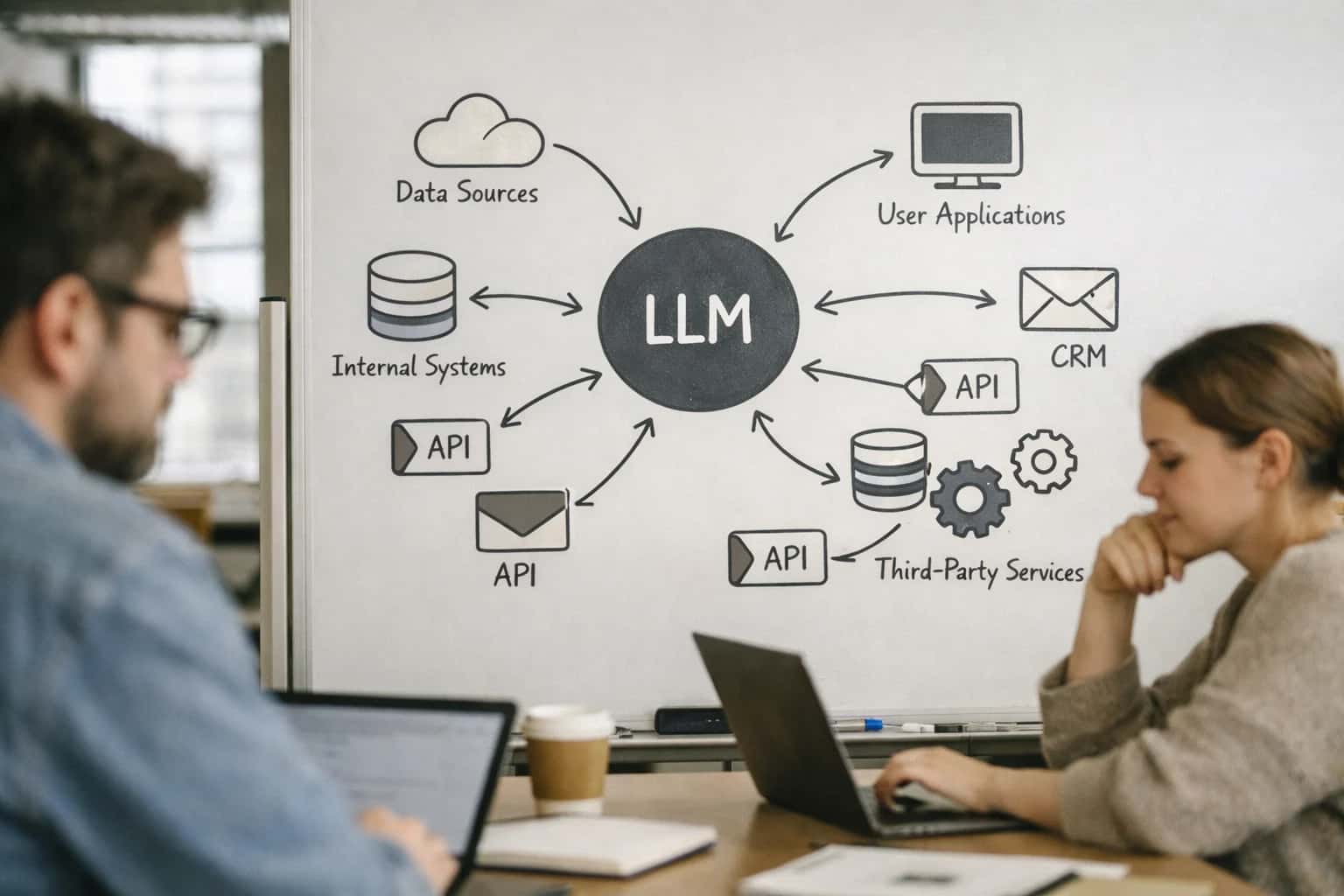
Where AI Fits in Contract Spend Analysis
Connecting AI to your CLM and procurement systems to transform contract terms into actionable spend intelligence.
The high-value use cases are operational and financial: automatically flagging invoices that deviate from contracted payment terms (e.g., net-60 vs. net-30), identifying suppliers where actual spend is nearing a contractual volume cap to trigger renegotiation, and calculating potential savings from unclaimed rebates or missed tiered pricing. For implementation, this typically involves deploying a RAG (Retrieval-Augmented Generation) pipeline grounded in your specific contract library and procurement data schema to ensure the AI's financial interpretations are accurate and contextual. A critical governance step is establishing a human-in-the-loop review for the initial extraction of high-value terms before they sync to financial systems, with a full audit trail of all AI-suggested values and human overrides logged back to the CLM.
Rollout should start with a focused pilot on a single, high-spend category (e.g., cloud services or contingent labor). The architecture must account for the data model differences between systems; for instance, mapping a multi-tier pricing clause from a contract in Icertis to the rate card structure in SAP Ariba. Success is measured in time-to-insight (reducing manual reconciliation from weeks to hours) and hard cost avoidance, not just vague efficiency gains. For teams evaluating this integration, the key is to partner with a provider like Inference Systems that understands both the legal nuance of contract extraction and the financial rigor required for spend analytics, ensuring the AI output is actionable for both procurement and finance operations.
AI Touchpoints Across the CLM and P2P Stack
From Document to Structured Data
The first AI touchpoint is the ingestion pipeline. AI models, often fine-tuned for legal language, process uploaded contracts (PDFs, Word docs) within the CLM (Ironclad, Icertis, etc.) to extract key financial terms. This is not just OCR; it's semantic understanding to identify:
- Pricing Models: Unit price, tiered pricing, volume discounts.
- Payment Terms: Net-30, milestone-based payments, rebates.
- Volume Commitments: Minimum purchase quantities, annual spend targets.
- Auto-Renewal & Price Escalation Clauses: Terms that directly impact future spend.
The extracted data populates structured metadata fields in the CLM, creating the foundational dataset for analysis. This automation replaces hours of manual review, ensuring data enters the system consistently and at scale.
High-Value Use Cases for AI-Powered Spend Analysis
Connecting contract terms from your CLM (Ironclad, Icertis, Agiloft, DocuSign CLM) with actual spend data in procurement systems (Coupa, SAP Ariba) to identify savings, enforce terms, and forecast liabilities.
Contract-to-Spend Reconciliation
AI correlates pricing terms, volume discounts, and rebate clauses from executed contracts in the CLM with line-item invoice data from the Procure-to-Pay (P2P) system. Flags discrepancies where payments exceed negotiated rates or miss earned discounts for immediate AP review.
Auto-Renewal & Spend Forecasting
Extracts renewal dates, termination notice periods, and price escalation clauses. Integrates with financial planning systems to forecast future spend liabilities and trigger renewal workflows in the CLM weeks before auto-renewal, giving procurement time to renegotiate.
Vendor Performance & Compliance
AI monitors contracts for SLA terms (e.g., uptime, resolution time) and pairs them with operational data from ITSM or vendor portals. Automatically generates performance scorecards and identifies breaches, triggering credit claims or contract review workflows in the CLM.
Spend Under Management Analysis
Identifies 'maverick spend' by comparing purchase orders against approved contract vehicles in the CLM. AI classifies off-contract spend by category and vendor, routing exceptions for approval and enriching the CLM's vendor intelligence for future negotiations.
Volume Commitment Tracking
Extracts tiered pricing and annual volume commitments from contracts. Connects to ERP or usage data to track progress toward commitment tiers in real-time, providing procurement and sales ops with dashboards to optimize purchasing and avoid missed discounts.
Savings Identification & Leakage Plugging
A RAG pipeline over the contract repository and spend data answers natural language queries like 'Show all vendors where our unit price increased >10% year-over-year.' Surfaces specific contract clauses and spend history for targeted renegotiation, directly within the CLM interface.
Example AI Workflows for Contract Spend Intelligence
These workflows connect AI to your Contract Lifecycle Management (CLM) platform to extract, correlate, and analyze spend-related terms, turning passive contract repositories into active savings engines. Each pattern details the trigger, data flow, AI action, and system update.
Trigger: A new vendor contract is fully executed and stored in the CLM (e.g., Ironclad, Icertis).
Context/Data Pulled: The AI agent retrieves the contract document and metadata (vendor name, effective date) from the CLM via API. It also fetches the corresponding vendor master record from the ERP (e.g., SAP S/4HANA, Oracle Cloud ERP) to validate the vendor ID.
Model or Agent Action: A fine-tuned extraction model (or a prompted LLM with RAG over playbooks) scans the contract to identify:
- Annual volume or spend commitments
- Pricing tiers and discount schedules
- Rebate or earn-back terms
- Payment terms (Net 30, 2/10 Net 30)
The agent structures this data into a JSON payload.
System Update or Next Step: The payload is posted to a dedicated API endpoint in the ERP or a middleware layer (like MuleSoft). This creates or updates a "Contract Spend Commitment" record linked to the vendor and material master, enabling procurement teams to track actual spend against commitments in real-time.
Human Review Point: Extracted terms with low confidence scores (e.g., ambiguous language) are flagged and routed to a procurement analyst's queue in the CLM or a connected task management tool for validation before system update.
Implementation Architecture: Data Flow and AI Layer
A technical blueprint for connecting contract data to spend systems using AI to identify savings opportunities.
The integration architecture establishes a bidirectional data pipeline between your Contract Lifecycle Management (CLM) platform—like Ironclad, Icertis, or Agiloft—and your procurement or ERP system (e.g., SAP Ariba, Coupa, Oracle Cloud ERP). The core flow begins with the AI layer polling the CLM's API for newly executed contracts or amendments. Using a fine-tuned extraction model, the system parses documents to identify and structure key financial terms: unit pricing, volume discounts, payment terms (Net 30/60), rebate schedules, auto-renewal clauses, and termination for convenience windows. This structured data is then mapped to corresponding vendor, item, and agreement records in the procurement system, creating a 'contractual spend' baseline.
The second layer of AI performs correlation and analysis. It matches the extracted pricing and terms from the CLM against actual spend data (invoices, POs) and usage data from the procurement system. Anomaly detection models flag discrepancies, such as invoices billed above contracted rates or payments made outside agreed terms. Predictive models analyze spend velocity against volume commitments to forecast potential overages or underutilized discounts. These insights are surfaced via alerts in the procurement dashboard or as prioritized tasks in a dedicated savings workflow within the CLM or a connected work management tool like Asana or ServiceNow.
Governance is built into the pipeline. All AI-extracted data points are logged with confidence scores and source document references, enabling human-in-the-loop review for low-confidence extractions or high-value contracts before system updates. The pipeline itself is orchestrated via a middleware layer (e.g., using n8n or Apache Airflow) that manages API calls, handles retries, and maintains an audit trail of all data movements and AI decisions. This ensures the integration is reliable for finance and procurement teams who depend on accurate contract-to-spend alignment for quarterly business reviews and savings reporting. For a deeper technical dive on the extraction models, see our guide on AI Integration for Intelligent Clause Extraction.
Code and Payload Examples
Extract Pricing Terms from Contract PDFs
This example uses an AI service to parse uploaded contract documents within your CLM (e.g., Ironclad, Icertis) and extract structured pricing data. The payload is sent to a dedicated extraction endpoint, which returns key financial terms for mapping to the CLM's metadata fields.
pythonimport requests # Example: Send a contract document for AI analysis def extract_pricing_terms(clm_document_id, file_url): payload = { "document_id": clm_document_id, "source_url": file_url, "extraction_schema": { "fields": [ "unit_price", "volume_commitment", "payment_terms", "price_escalation_clause", "currency", "effective_date", "termination_date" ] } } headers = {"Authorization": f"Bearer {API_KEY}"} response = requests.post( "https://api.inferencesystems.com/v1/extract/contract-pricing", json=payload, headers=headers ) # Map AI response to CLM custom object fields extracted_data = response.json() clm_update_payload = { "Contract_ID": clm_document_id, "Unit_Price__c": extracted_data.get("unit_price"), "Annual_Commitment__c": extracted_data.get("volume_commitment"), "Payment_Terms__c": extracted_data.get("payment_terms"), "Currency__c": extracted_data.get("currency") } # Post back to CLM API to update the contract record return clm_update_payload
Realistic Time Savings and Business Impact
How AI integration between your CLM and procurement systems accelerates spend visibility and savings identification.
| Process Step | Before AI | After AI | Key Impact |
|---|---|---|---|
Contract Data Extraction | Manual keyword search and copy-paste | Automated extraction of pricing, terms, and volume commitments | Reduces data gathering from hours to minutes per contract |
Spend Data Correlation | Manual spreadsheet reconciliation across systems | Automated matching of contract terms to actual P2P/ERP spend | Identifies discrepancies and off-contract spend same-day instead of next quarter |
Savings Opportunity Identification | Periodic manual audits by finance or procurement | Continuous AI scoring of contracts for renegotiation or compliance | Shifts from reactive audits to proactive, prioritized alerts |
Renewal Forecasting | Calendar-based reminders with manual term review | AI-predicted renewal impact based on usage and spend trends | Provides negotiation leverage 60-90 days ahead of renewal date |
Vendor Performance Analysis | Ad-hoc analysis of SLAs vs. invoices | Automated tracking of contract terms against delivery and payment data | Enables quarterly business reviews backed by data, not anecdotes |
Reporting and Dashboard Creation | Days spent consolidating data for leadership | Pre-built, AI-refreshed dashboards on spend under management and savings | Turns a monthly closing task into a real-time management tool |
Exception and Anomaly Review | Manual sampling of high-value invoices | AI-flagged exceptions routed for human approval | Focuses analyst time on the 5-10% of transactions that truly need review |
Governance, Security, and Phased Rollout
A production-grade AI integration for contract spend analysis requires a secure, governed architecture and a phased rollout to manage risk and demonstrate value.
The integration architecture must enforce strict data governance from the outset. This involves establishing a secure pipeline where contracts are extracted from the CLM (e.g., Ironclad, Icertis) via API, with access scoped to specific folders or contract types. Sensitive fields like counterparty financials or personally identifiable information (PII) should be redacted or tokenized before processing. The AI service—hosted in your VPC or a compliant cloud—processes documents to extract pricing, volume commitments, and payment terms, writing the structured results back to a dedicated Spend Intelligence object or custom metadata fields within the CLM. All data flows, prompts, and model inferences should be logged to an immutable audit trail, linking AI-extracted data back to the source contract version and user who triggered the analysis.
A phased rollout is critical for managing change and proving ROI. Start with a Pilot Phase focused on a single, high-volume contract category like NDAs or simple SOWs within a specific procurement category. Use this phase to validate extraction accuracy for key financial terms, calibrate human review workflows, and establish baseline metrics for manual review time. The Controlled Expansion Phase introduces the integration to a broader set of contracts, such as all vendor agreements above a certain spend threshold, and begins the correlation engine, matching extracted terms to actual spend data in systems like Coupa or SAP Ariba. Finally, the Production Scale Phase activates automated alerts for savings opportunities (e.g., missed volume discounts, incorrect payment terms) and integrates findings into quarterly business reviews, with the AI system continuously learning from reviewer corrections.
Governance is maintained through a human-in-the-loop (HITL) framework, especially for high-value or complex agreements. The system should be configured to flag low-confidence extractions or deviations from standard terms for mandatory legal or procurement review before any data is committed to the CLM record. Role-based access controls (RBAC) ensure only authorized teams can view correlated spend analysis or override AI suggestions. This controlled approach mitigates risk, builds organizational trust in the AI's outputs, and creates a clear path to gradually increase automation as confidence grows, turning the CLM into a system of intelligence for proactive financial management.
Enabling Efficiency, Speed & Accuracy
Intelligent Analysis, Decision & Execution
We build AI systems for teams that need search across company data, workflow automation across tools, or AI features inside products and internal software.
Talk to Us
Search across company data
Give teams answers from docs, tickets, runbooks, and product data with sources and permissions.
Useful when people spend too long searching or get different answers from different systems.

Automate internal workflows
Use AI to route work, draft outputs, trigger actions, and keep approvals and logs in place.
Useful when repetitive work moves across multiple tools and teams.

Add AI to products and internal tools
Build assistants, guided actions, or decision support into the software your team or customers already use.
Useful when AI needs to be part of the product, not a separate tool.
Frequently Asked Questions
Practical questions on connecting AI to your CLM and procurement systems to identify savings, validate payments, and manage financial terms.
The integration creates a live link between your Contract Lifecycle Management (CLM) platform and your Procure-to-Pay (P2P) or ERP system (e.g., Coupa, SAP Ariba).
Typical data flow:
- Extraction: AI models parse executed contracts in the CLM (Ironclad, Icertis, etc.) to extract structured financial terms: pricing tables, volume discounts, payment terms, and renewal clauses.
- Enrichment: This data populates custom metadata fields in the CLM and is synchronized via API to a corresponding vendor or item record in the procurement system.
- Validation: When an invoice arrives in the P2P system, an AI agent compares line-item details (price, quantity) against the contract terms synced from the CLM.
- Action: Discrepancies are flagged for review, and compliant invoices can be routed for automated approval, ensuring payments align with negotiated terms.

About the author
Prasad Kumkar
CEO & MD, Inference Systems
Prasad Kumkar is the CEO & MD of Inference Systems and writes about AI systems architecture, LLM infrastructure, model serving, evaluation, and production deployment. Over 5+ years, he has worked across computer vision models, L5 autonomous vehicle systems, and LLM research, with a focus on taking complex AI ideas into real-world engineering systems.
His work and writing cover AI systems, large language models, AI agents, multimodal systems, autonomous systems, inference optimization, RAG, evaluation, and production AI engineering.
Partnered with leading AI, data, and software stack.





How We Work
Custom AI workflows for your Business
One-fit-all AI don't work for modern businesses. At Inferensys, we aim to understand your business & custom requirements; which we use to define most efficient agentic workflows, the data, and the tools for your business.
01
Review the use case
We understand the task, the users, and where AI can actually help.
Read more02
Pick the right approach
We define what needs search, automation, or product integration.
Read more03
Build the first useful version
We implement the part that proves the value first.
Read more04
Improve from there
We add the checks and visibility needed to keep it useful.
Read moreThe first call is a practical review of your use case and the right next step.
Talk to Us