AI integration for insurance CLM focuses on connecting to the specific data objects and workflows within platforms like Icertis or Ironclad that manage policy contracts, endorsements, and reinsurance treaties. The primary surfaces are the clause library for standard insurance provisions, the redlining interface for negotiation, and the obligation tracking module for monitoring premium payments, claims reporting duties, and regulatory filings. Integration is typically achieved via the platform's REST APIs and webhook systems to trigger AI analysis upon document upload or status change, extracting structured data into custom metadata fields.

Integration
AI Integration for Contract Lifecycle Management for Insurance
Industry-specific AI integration for insurance carriers and brokers, handling policy contracts, endorsements, reinsurance treaties, and integration with claims and underwriting systems.
ARCHITECTURE & ROLLOUT
Where AI Fits in Insurance Contract Management
A technical blueprint for integrating AI into the unique workflows and data models of insurance contract management.
High-impact use cases include using a RAG pipeline to ground an LLM in the insurer's proprietary playbooks and prior adjudications, enabling an AI agent to: - Review new policy submissions against underwriting guidelines and flag non-standard terms. - Automatically extract critical dates, covered perils, limits, and exclusions into the CLM's structured data model for integration with **claims systems (Guidewire)** and **policy administration systems**. - Summarize lengthy reinsurance contracts for actuarial and finance teams, highlighting key terms like cession percentages and profit commissions. The operational impact is turning manual, multi-day reviews into same-hour triage, reducing errors in data entry, and ensuring contractual terms are actionable in downstream systems.
A production rollout requires a phased approach, starting with low-risk, high-volume documents like NDAs or standard endorsements to validate accuracy. Governance is critical; a human-in-the-loop review step must be mandated for all AI-generated redlines or extractions on complex policies. An audit trail logging the AI's input, the model version used, and any human overrides is essential for compliance, especially in regulated environments. The integration architecture should also include PII/PHI redaction layers before data is sent to external AI models and secure API gateways to protect sensitive contract information, aligning with frameworks like HIPAA for health insurance or NAIC model regulations.
INDUSTRY-SPECIFIC INTEGRATION
AI Touchpoints in Insurance CLM Platforms
AI-Assisted Policy Generation
AI integrates into the CLM's drafting interface to accelerate the creation of new policies, renewals, and endorsements. By connecting to underwriting guidelines and rating engines via API, an AI agent can pre-populate templates with insured details, coverage limits, and standard clauses. For non-standard requests, the system retrieves similar historical endorsements from the repository using semantic search (RAG) to suggest proven language.
Key integration points are the CLM's template library and the workflow engine that routes drafts for approval. AI reduces manual data entry and ensures consistency with carrier playbooks, cutting drafting time from hours to minutes for high-volume lines like auto or property.
INSURANCE-SPECIFIC AUTOMATION
High-Value AI Use Cases for Insurance CLM
Integrating AI into your Contract Lifecycle Management platform transforms policy, endorsement, and treaty management from a manual, reactive process into a strategic, data-driven operation. These patterns connect CLM data to underwriting, claims, and reinsurance systems for closed-loop intelligence.
01
Automated Policy Endorsement Review
AI agents review endorsement requests against the master policy in Ironclad or Icertis, flagging coverage conflicts, premium impacts, and required approvals. Workflow: Submission → AI analysis → routing to UW/Claims → update policy record. Reduces manual review from hours to minutes per endorsement.
Hours -> Minutes
Review time
02
Reinsurance Treaty Obligation Extraction
Parse complex reinsurance treaties in DocuSign CLM or Agiloft to extract ceding terms, reporting deadlines, and loss notification triggers. AI creates tracked tasks and syncs key dates to the reinsurance department's calendar and financial systems, ensuring compliance and avoiding coverage disputes.
Proactive
Compliance
03
Claims-Clause Correlation Engine
Build a RAG pipeline linking claims data (from Guidewire/Duck Creek) to the relevant policy clauses in the CLM. Adjusters query via natural language: "What are the coverage limits for water damage in policy #X?" AI retrieves the exact clause, accelerating claims triage and reducing coverage errors.
Instant
Clause retrieval
04
Underwriting Playbook Automation
Codify underwriting guidelines into AI rules within the CLM. For new MGA agreements or program business contracts, the AI scores terms against risk appetite, suggests fallback language, and routes exceptions. Integrates with underwriting workbenches to pre-populate risk assessments.
Guideline-Driven
Risk scoring
05
Bordereau & Reporting Compliance
AI monitors facultative and treaty contracts for reporting obligations (bordereau schedules, loss reports). It extracts data formats and deadlines, then triggers workflows in data warehouses or analytics platforms to generate and validate reports, sending alerts for upcoming submissions.
Automated
Deadline tracking
06
Portfolio Exposure & Renewal Forecasting
Analyze the entire CLM repository—policies, treaties, vendor contracts—using AI to model aggregate exposure by peril, geography, or counterparty. Predict renewal timing and likely negotiation points, feeding insights into actuarial and capital planning systems via secure APIs.
Data-Driven
Portfolio view
IMPLEMENTATION PATTERNS
Example AI-Powered Insurance Contract Workflows
These workflows illustrate how AI agents can be integrated into insurance-specific CLM platforms like Icertis or Ironclad to automate high-volume, high-risk processes. Each pattern connects to core underwriting, claims, and reinsurance systems.
Trigger: A new endorsement document is uploaded to the CLM via a broker portal or internal system sync.
AI Agent Actions:
- Extracts key variables: policy number, effective date, coverage changes, premium adjustment, and added/excluded riders.
- Cross-references the base policy in the CLM to validate consistency and flag conflicts (e.g., adding flood coverage to a policy in a high-risk zone without proper underwriting notes).
- Scores the endorsement for complexity and risk using a configured playbook.
System Update:
- Low-Risk/Administrative: Auto-approved. The CLM updates the policy record, and a webhook triggers the policy administration system (e.g., Guidewire PolicyCenter) to apply the endorsement.
- Medium/High-Risk: Routed to a specific underwriter's queue in the CLM with an AI-generated summary and highlighted risk points. The task is also created in the underwriter's core system.
Human Review Point: All medium/high-risk endorsements require underwriter sign-off within the CLM workflow before system-of-record updates are permitted.
INSURANCE-SPECIFIC INTEGRATION PATTERNS
Implementation Architecture: Connecting AI, CLM, and Core Systems
A technical blueprint for integrating AI into Contract Lifecycle Management platforms, connecting policy contracts, reinsurance treaties, and core insurance systems.
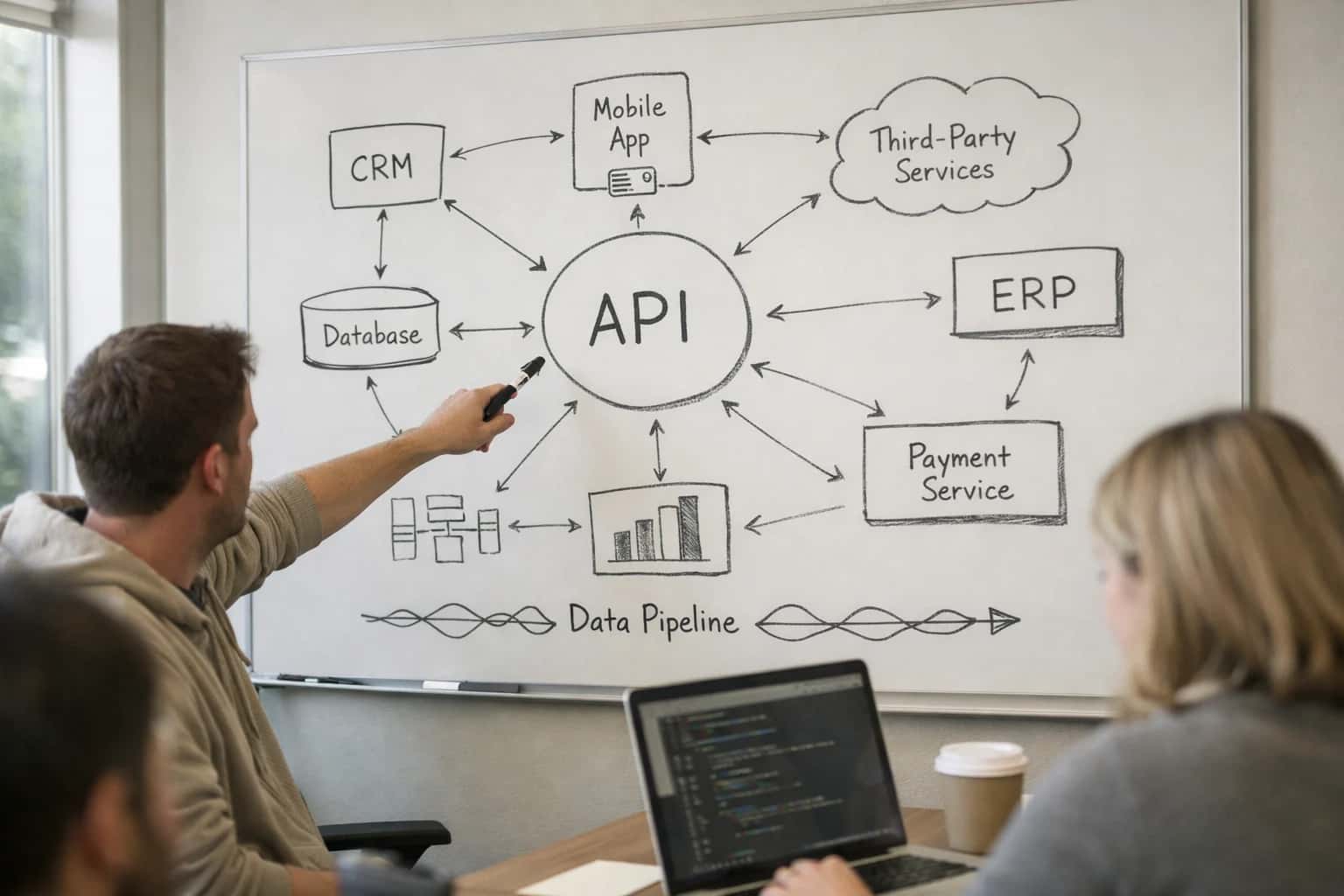
The integration architecture connects your CLM platform (Ironclad, Icertis, Agiloft, or DocuSign CLM) to a secure AI layer and core insurance systems. The AI layer, typically a RAG (Retrieval-Augmented Generation) pipeline, is grounded in your approved clause library, underwriting guidelines, and historical policy data. It connects to the CLM via its REST APIs and webhooks to trigger on events like document upload, status change, or renewal date. Key insurance data objects—policy contracts, endorsements, reinsurance treaties, and claims settlement agreements—are indexed in a vector database (e.g., Pinecone, Weaviate) to enable semantic search for clause retrieval and precedent analysis.
High-value workflows are automated by this architecture. For example, an AI agent can be triggered when a new Policy Form is uploaded to the CLM. It will extract key terms (coverage limits, exclusions, named insureds), compare them against a Master Underwriting Playbook, and flag deviations for review. For Reinsurance Treaties, the AI can parse complex layering and attachment points, cross-reference them with ceded claims data from the core admin system, and generate a risk exposure summary. Approved contracts can then trigger downstream updates: a fully executed policy can automatically provision the insured in the Policy Administration System (PAS), while a Claims Cooperation Agreement can update permissions in the Claims Management platform (e.g., Guidewire).
Rollout requires a phased, use-case-driven approach, starting with a pilot on a single contract type like NDAs for Third-Party Adjusters or Standard Endorsements. Governance is critical; a human-in-the-loop review step must be enforced for all AI-generated redlines or obligation extractions before system-of-record updates. An audit trail must log the AI's source documents, the prompt used, and the human reviewer's approval. This ensures model accountability and supports compliance with insurance regulations (e.g., NAIC models, state-specific filing requirements) and internal underwriting authority rules.
INSURANCE-SPECIFIC IMPLEMENTATION PATTERNS
Code and Payload Examples
Ingesting Policy PDFs into a RAG Pipeline
For insurance CLM, the first step is extracting structured data and text from complex policy documents (PDFs, DOCX) for AI analysis. This Python example uses PyPDF2 for text extraction and LangChain for chunking, preparing documents for vector storage. The key is to preserve the hierarchical structure of policies, endorsements, and riders to maintain context for accurate Q&A and obligation tracking.
pythonimport PyPDF2 from langchain.text_splitter import RecursiveCharacterTextSplitter def extract_and_chunk_policy(pdf_path, policy_id): """Extract text from a policy PDF and chunk for RAG.""" with open(pdf_path, 'rb') as file: reader = PyPDF2.PdfReader(file) full_text = "" for page in reader.pages: full_text += page.extract_text() # Insurance-specific chunking: keep sections together text_splitter = RecursiveCharacterTextSplitter( chunk_size=1000, chunk_overlap=200, separators=["\n\nSECTION", "\n\nCLAUSE", "\n\nENDORSEMENT", "\n\n"] ) chunks = text_splitter.create_documents([full_text]) # Add metadata for traceability for chunk in chunks: chunk.metadata = {"document_type": "policy", "policy_id": policy_id, "source": pdf_path} return chunks
This chunked data is then embedded and stored in a vector database like Pinecone, keyed by policy_id and document_type for efficient retrieval during underwriting or claims review.
INSURANCE CONTRACT OPERATIONS
Realistic Time Savings and Business Impact
How AI integration transforms core insurance contract workflows within CLM platforms, connecting policy documents to underwriting and claims systems.
| Workflow / Metric | Before AI Integration | After AI Integration | Implementation Notes |
|---|---|---|---|
Policy Endorsement Review | Manual extraction and comparison of changes | AI highlights material changes and suggests approval routing | Integrates with Guidewire or Duck Creek for policy version sync |
Reinsurance Treaty Clause Extraction | Hours of manual review per treaty | Key terms (ceding %, limits) extracted in minutes | RAG pipeline grounded in historical treaty library for accuracy |
Producer/Agent Agreement Intake | Manual data entry from PDF submissions | Auto-population of CLM fields (commission rates, territories) | Webhook from agent portal triggers AI parsing workflow |
Obligation Tracking for Claims | Manual calendar reminders for notice periods | AI extracts notice deadlines, creates tasks in claims system | Bi-directional sync with claims platforms (Snapsheet, Sapiens) |
Compliance Check (NAIC, State-Specific) | Periodic manual audits by legal team | Continuous AI monitoring against clause library | Human review required for flagged high-risk deviations |
Renewal Forecasting & Package Assembly | Manual analysis of expiring policies | AI identifies renewal candidates and drafts package summaries | Outputs feed into underwriting workbench for pre-fill |
FNOL Contract Validation | Adjuster manually locates and reviews policy | AI instantly surfaces relevant coverage sections | Secure API call from claims system to CLM RAG endpoint |
IMPLEMENTING AI IN A REGULATED INSURANCE ENVIRONMENT
Governance, Security, and Phased Rollout
A practical framework for deploying AI in insurance CLM with controlled risk, secure data handling, and measurable business impact.
Integrating AI into insurance contract management requires a policy-aware architecture. This means the AI system must respect the distinct data models and compliance rules for policy contracts, endorsements, and reinsurance treaties. Implementation typically involves a secure middleware layer that ingests documents from the CLM (e.g., Ironclad, Icertis), calls AI services for extraction or analysis, and writes structured results—like extracted premium terms, coverage limits, or exclusions—back to designated custom objects or metadata fields. All data flows must be logged, with PII and PHI redaction applied before processing by external LLMs, and results should be written to an audit trail object within the CLM to track AI-generated content and human approvals.
A phased rollout is critical for managing change and proving value. Start with a contained pilot on a single, high-volume document type, such as Producer Agreements or standard policy forms. Use this phase to validate extraction accuracy for key fields like commission rates, effective dates, and termination clauses, and to establish a human-in-the-loop review workflow within the CLM's existing approval queues. Success metrics should focus on operational efficiency: reducing manual data entry from hours to minutes and improving the speed of contract onboarding for new agents or reinsurers. Subsequent phases can expand to more complex documents like indemnity clauses in reinsurance treaties or SLAs in third-party administrator contracts, each with its own validation rules and integration points to claims or underwriting systems.
Governance is built on three pillars: model transparency, data lineage, and role-based access. Establish a clear protocol for versioning prompts and fine-tuned models used for clause classification. Ensure every AI-suggested edit or extracted obligation in the CLM can be traced back to the source document snippet. Finally, leverage the CLM's native RBAC to control who can trigger AI analysis, view AI outputs, or override AI suggestions—aligning permissions with underwriting, legal, and operations roles. This controlled approach allows insurance carriers and brokers to harness AI for faster cycle times and better risk insight while maintaining the rigorous oversight required for regulated financial instruments.
Enabling Efficiency, Speed & Accuracy
Intelligent Analysis, Decision & Execution
We build AI systems for teams that need search across company data, workflow automation across tools, or AI features inside products and internal software.
Talk to Us
Search across company data
Give teams answers from docs, tickets, runbooks, and product data with sources and permissions.
Useful when people spend too long searching or get different answers from different systems.
Enterprise searchRAGPermissions
Read more
Automate internal workflows
Use AI to route work, draft outputs, trigger actions, and keep approvals and logs in place.
Useful when repetitive work moves across multiple tools and teams.
AI agentsWorkflow automationGovernance
Read more
Add AI to products and internal tools
Build assistants, guided actions, or decision support into the software your team or customers already use.
Useful when AI needs to be part of the product, not a separate tool.
AI integrationDecision supportModel routing
Read moreIMPLEMENTATION AND WORKFLOWS
Frequently Asked Questions
Practical questions and workflow blueprints for integrating AI into contract management for insurance carriers, brokers, and MGAs.
This workflow uses AI to process inbound policy documents, classify them, and trigger the appropriate review path in your CLM.
- Trigger: A new document (PDF, DOCX) is uploaded to a designated intake folder, email alias, or CLM portal (e.g., Ironclad Workflow Designer, Icertis AI Studio intake).
- Context/Data Pulled: The AI service extracts text and metadata. It identifies the document type (e.g., BOP, Commercial Auto Policy, Reinsurance Treaty, Endorsement) and key attributes like carrier, insured name, policy number, and effective date.
- Model/Agent Action: A classification model routes the document. For a new policy, an extraction agent populates the CLM's custom object fields (e.g.,
Policy Type,Limits,Deductibles,Named Insured). - System Update: The enriched contract record is created in the CLM (Ironclad, Icertis). A workflow is automatically initiated—standard policies route for fast-track approval, while complex or high-limit policies are flagged for underwriting or legal review.
- Human Review Point: The system highlights extracted fields for a quick validation by an operations specialist before finalizing the record, ensuring accuracy for downstream integration with policy admin or claims systems.

About the author
Prasad Kumkar
CEO & MD, Inference Systems
Prasad Kumkar is the CEO & MD of Inference Systems and writes about AI systems architecture, LLM infrastructure, model serving, evaluation, and production deployment. Over 5+ years, he has worked across computer vision models, L5 autonomous vehicle systems, and LLM research, with a focus on taking complex AI ideas into real-world engineering systems.
His work and writing cover AI systems, large language models, AI agents, multimodal systems, autonomous systems, inference optimization, RAG, evaluation, and production AI engineering.
LinkedIn
Limited slotsGet a Free AI Consultation
Partnered with leading AI, data, and software stack.





How We Work
Custom AI workflows for your Business
One-fit-all AI don't work for modern businesses. At Inferensys, we aim to understand your business & custom requirements; which we use to define most efficient agentic workflows, the data, and the tools for your business.
01
Review the use case
We understand the task, the users, and where AI can actually help.
Read more02
Pick the right approach
We define what needs search, automation, or product integration.
Read more03
Build the first useful version
We implement the part that proves the value first.
Read more04
Improve from there
We add the checks and visibility needed to keep it useful.
Read moreThe first call is a practical review of your use case and the right next step.
Talk to Us