Complex contracts like those for M&A, joint ventures, or strategic partnerships are dense networks of conditional logic, cross-referenced obligations, and nuanced liabilities. Traditional CLM platforms excel at storing and routing these documents but lack the native intelligence to parse their intricate layers. AI integration targets the document intelligence layer, sitting between the repository and the workflow engine. It connects via the CLM's API (e.g., Ironclad's Workflow API, Icertis's AI Studio, Agiloft's REST API) to ingest executed or in-flight agreements. The core AI pipeline performs a multi-pass analysis: first, a layout recognition model identifies sections, annexes, and definitions; then, a fine-tuned NER model extracts parties, effective dates, and governing law; finally, a RAG system grounds a large language model in your specific clause library and prior deal corpus to interpret complex provisions around indemnification, termination, and change of control.

Integration
AI Integration for Complex Contract Analysis
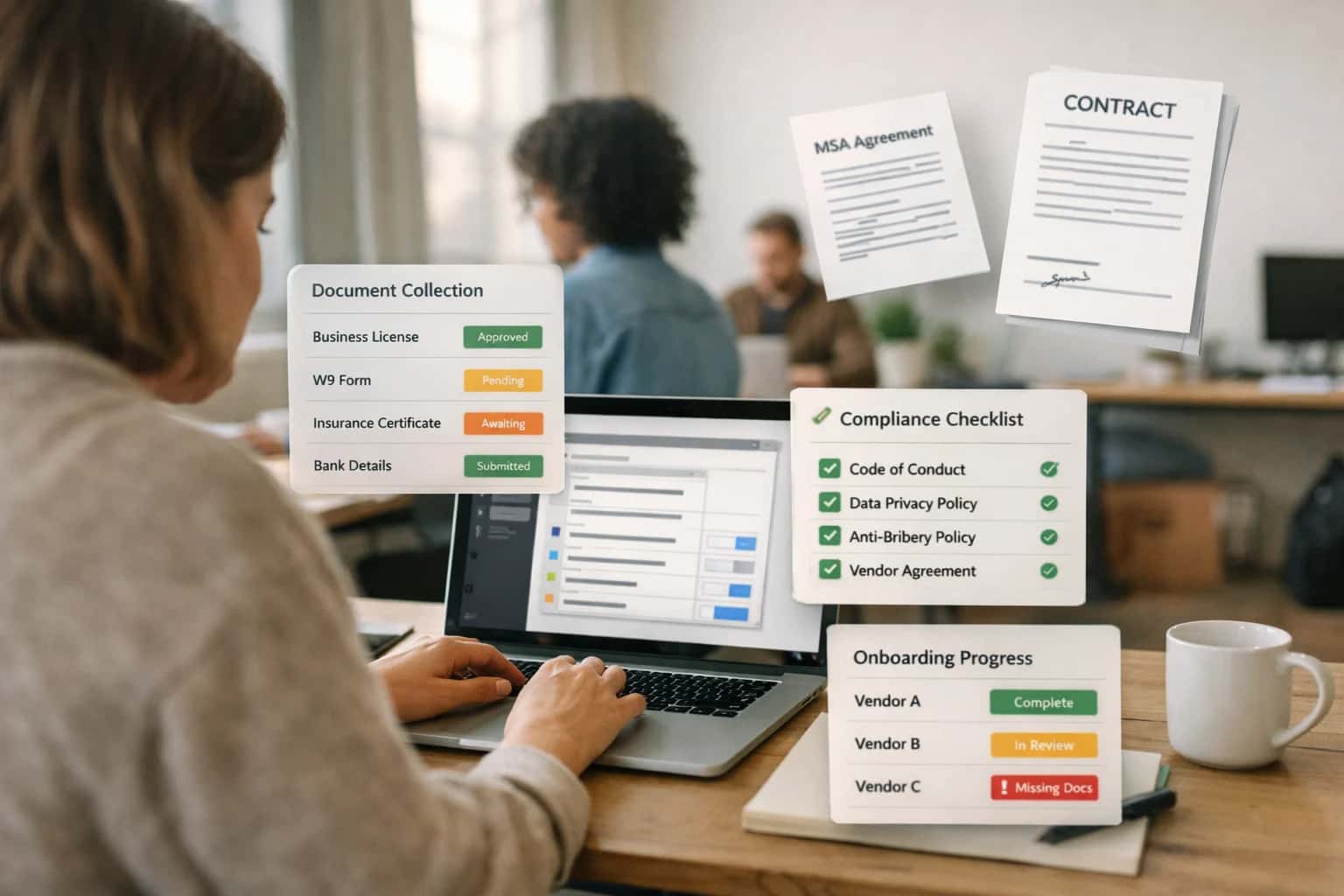
Where AI Fits in Complex Contract Analysis
A technical blueprint for integrating advanced NLP and RAG into CLM platforms to analyze high-stakes, long-form contracts.
The operational impact is turning weeks of manual legal review into a structured, queryable analysis in hours. For a 100-page joint venture agreement, the AI can:
- Generate an executive summary highlighting key economic terms and unusual clauses.
- Populate a structured obligation tracker in the CLM, creating tasks with owners and deadlines for deliverables, reporting, and milestone payments.
- Perform a risk assessment by comparing clauses against a configured playbook, flagging deviations like uncapped liability or unusual arbitration venues for legal review.
- Build a definitions map to clarify how capitalized terms are used throughout the document, critical for consistent interpretation. This analysis becomes actionable metadata within the CLM, triggering automated workflows for stakeholder notifications, integration into a risk register, or sync to an ERP system for financial provisioning.
Rollout requires a phased, governed approach. Start with a pilot on a closed corpus of historical, redacted agreements to train and validate the models, ensuring outputs align with legal team expectations. Implement a human-in-the-loop review step in the CLM workflow where AI suggestions are presented as recommendations, not autonomous actions. Governance is critical; maintain an audit trail logging the model version, prompt, source document, and human reviewer's decision for each AI-assisted analysis. For regulated industries, this pipeline must be designed with data residency in mind, often requiring a private cloud deployment of the AI models and a secure, VPC-connected integration to the CLM platform. The goal is not to replace legal expertise but to arm negotiators and business owners with a powerful copilot, transforming the CLM from a system of record into a system of intelligence for the most consequential deals.
CLM Platform Touchpoints for AI Integration
Core AI Workflow for Complex Contracts
Complex agreements like M&A documents or joint ventures contain hundreds of interdependent obligations, liabilities, and conditional clauses. AI integration at this layer focuses on structured data extraction to populate CLM metadata fields and create trackable records.
Key Integration Points:
- Document Ingestion APIs: Hook into the CLM's native upload or sync pipeline to trigger AI analysis upon contract intake.
- Custom Object Mapping: Map extracted entities (e.g.,
Indemnification Period,Milestone Payment) to custom fields in the CLM's data model (Ironclad Custom Objects, Icertis Contract Types, Agiloft tables). - Obligation Workflow Triggers: Use extracted dates and deliverables to automatically generate tasks in the CLM's workflow engine or connected project tools.
Example Payload for AI Service Call:
json{ "contract_id": "CLM-2024-789", "document_url": "https://clm-instance.com/files/ma_agreement.pdf", "extraction_schema": { "entities": ["PARTY", "EFFECTIVE_DATE", "GOVERNING_LAW"], "obligations": ["REPORTING", "INSURANCE", "AUDIT_RIGHTS"], "financial_terms": ["EARN_OUT", "ESCROW_AMOUNT"] } }
The AI service returns structured JSON, which your integration writes back to the CLM, transforming an unstructured PDF into queryable, actionable data.
High-Value Use Cases for Complex Contracts
Complex agreements like M&A documents, joint ventures, and strategic partnerships contain dense, interdependent obligations. AI integration within your CLM platform automates the extraction of nuanced logic, liabilities, and conditional terms, turning static documents into structured, actionable intelligence.
Obligation & Milestone Extraction
AI parses long-form contracts to identify and extract specific obligations, deliverables, and milestone dates. It creates structured tasks in the CLM, links them to responsible parties, and sets up automated alerts for upcoming deadlines, ensuring nothing falls through the cracks.
Conditional Logic & Cross-Reference Mapping
For contracts with complex if-then logic (e.g., "payment is due upon the later of delivery or acceptance"), AI maps dependencies and conditional triggers. It builds a visual or data model of these relationships within the CLM, clarifying critical paths and potential bottlenecks.
Liability & Indemnity Risk Scoring
AI scans for liability caps, indemnity clauses, warranty terms, and exclusion language. It scores each contract against internal risk playbooks and flags agreements with unlimited liability, unusual indemnification scopes, or asymmetric risk exposure for expedited legal review.
Change-of-Control & Assignment Analysis
Critical for M&A due diligence, AI identifies clauses related to assignment, change-of-control provisions, and consent requirements. It extracts key terms and restrictions, populating a diligence matrix within the CLM to accelerate integration planning and identify deal contingencies.
Multi-Party Role & Responsibility Matrix
In joint venture or consortium agreements, AI disentangles the roles, rights, and responsibilities of each party. It generates a clear responsibility assignment matrix (e.g., RACI) within the CLM record, providing immediate clarity for operational teams on governance and decision rights.
Ancillary Document Linkage & Consistency Check
AI links the primary agreement to its exhibits, schedules, and referenced documents (e.g., technical specifications). It performs consistency checks to ensure terms like "as defined in Exhibit A" are correctly referenced and that no critical attachments are missing from the CLM package.
Example AI-Powered Workflows for M&A & JV Contracts
These workflows illustrate how AI agents and RAG pipelines integrate with your CLM platform to automate the analysis of complex, long-form agreements like merger agreements and joint venture contracts.
Trigger: A new M&A agreement (e.g., Asset Purchase Agreement) is uploaded to the CLM repository (Ironclad, Icertis, etc.) and tagged with the "Due Diligence" workflow.
AI Agent Actions:
- Document Parsing & Chunking: The AI pipeline ingests the PDF, performs OCR if needed, and chunks the document by logical sections (Representations & Warranties, Covenants, Indemnification).
- RAG-Enhanced Analysis: For each major section, a RAG system retrieves relevant precedent clauses from the approved playbook library and past similar deals to provide context.
- Risk Scoring & Summarization: An LLM analyzes the text against configured risk criteria (e.g., overly broad reps, uncapped indemnity, unusual conditions precedent). It generates a concise executive summary and a section-by-section risk heatmap (High/Medium/Low).
System Update: The AI agent creates a structured summary note in the CLM's contract record, populates custom risk score fields, and attaches the heatmap. It then routes the contract to the lead counsel's review queue, prioritizing it based on the overall risk score.
Human Review Point: The attorney reviews the AI-generated summary and heatmap, which allows them to focus immediately on the flagged high-risk sections instead of reading the entire 100-page document from scratch.
Implementation Architecture: The RAG Pipeline for CLM
A production-ready Retrieval-Augmented Generation (RAG) pipeline transforms your CLM repository from a passive archive into an active intelligence layer.
The core of a complex contract analysis integration is a purpose-built RAG pipeline that sits alongside your CLM platform (Ironclad, Icertis, Agiloft, DocuSign CLM). This architecture typically involves: a document ingestion service that pulls contracts via the CLM's API or watches designated folders; a chunking and embedding engine that splits documents by logical sections (e.g., definitions, indemnification, termination) and creates vector embeddings; and a vector database (Pinecone, Weaviate) that stores these embeddings for low-latency semantic search. The pipeline is triggered by user queries from within the CLM interface or by automated review workflows.
For complex agreements like M&A or joint ventures, the pipeline must be tuned for nuance. This involves: metadata-aware retrieval, where the search is filtered by contract type, jurisdiction, or party to improve relevance; hybrid search combining semantic vectors with keyword filters for precise clause location; and multi-hop reasoning, where the AI agent retrieves relevant clauses from multiple related agreements (e.g., a master agreement and its amendments) to answer a single query. The retrieved context is then fed to a large language model (LLM) via a secure API gateway to generate summaries, identify conditional obligations, or flag potential liabilities, with all outputs referencing the source document and clause.
Rollout requires a phased approach: start with a read-only pilot on a curated set of historical contracts to validate accuracy and user trust, then expand to assisted review workflows where the AI provides risk summaries to legal teams during redlining. Governance is critical: implement a human-in-the-loop approval step for any AI-generated contract language, maintain a full audit trail of all AI interactions linked to the CLM's matter or contract record, and establish a feedback loop where user corrections are used to fine-tune retrieval and prompting strategies. This architecture ensures the AI is grounded in your specific legal positions and historical outcomes, reducing hallucinations and providing actionable intelligence where it matters most—inside the contract workflow.
Code & Payload Examples
Extracting Nuanced Obligations
For complex contracts like joint ventures, a multi-stage extraction pipeline is required. First, a layout model identifies document sections. Then, a fine-tuned NER model extracts specific obligation entities (e.g., milestone_date, reporting_frequency, liquidated_damages). The final step maps these to structured fields in the CLM via its API.
python# Example: Call a custom extraction model and push to Ironclad import requests # 1. Process document with AI service extraction_result = ai_service.extract_clauses( contract_text=contract_pdf_text, clause_types=["termination", "indemnification", "governing_law"] ) # 2. Structure payload for CLM API payload = { "contract_id": "ic_12345", "metadata_updates": { "primary_term_years": extraction_result.get("term"), "auto_renewal": extraction_result.get("renewal_provision"), "jurisdiction": extraction_result.get("governing_law"), "obligations": extraction_result.get("obligations_list") # Array of objects } } # 3. Update the CLM record response = requests.patch( f"https://api.ironcladapp.com/v1/contracts/{payload['contract_id']}", json=payload, headers={"Authorization": f"Bearer {api_key}"} )
This pattern populates custom object fields for reporting and triggers downstream alerts for obligation management.
Realistic Time Savings & Operational Impact
How AI integration transforms the review and management of complex agreements (M&A, JVs, strategic partnerships) within your CLM platform.
| Workflow Stage | Before AI | After AI | Key Impact |
|---|---|---|---|
Initial Document Triage & Classification | Manual review by legal ops (1-2 hours) | AI auto-classifies by deal type & criticality (5 minutes) | Faster routing to correct specialist; eliminates intake queue |
Key Obligation & Liability Extraction | Paralegal manual highlight & spreadsheet entry (3-5 hours) | AI extracts obligations to structured fields (15-20 minutes) | Ensures no critical term is missed; creates auditable data layer |
Conditional Logic & Cross-Reference Mapping | Manual tracing of "if/then" clauses across document (2-3 hours) | AI maps dependencies & creates visual relationship graph (30 minutes) | Uncovers hidden risks and operational dependencies pre-signature |
First-Pass Risk Summary for Counsel | Associate drafts summary memo (4-6 hours) | AI generates executive summary with risk scores (10 minutes) | Senior lawyer focuses on high-risk areas, not summarization |
Playbook Compliance & Redline Suggestions | Manual comparison against standard positions (2-4 hours) | AI suggests specific redlines against approved playbook (1 hour) | Accelerates negotiation with consistent, defensible positions |
Obligation Tracking Setup Post-Execution | Manual entry of milestones into CLM or project tool (1-2 hours) | AI auto-creates tracked tasks & calendar entries (5 minutes) | Ensures operational teams are immediately aware of commitments |
Portfolio-Wide Similar Clause Analysis | Manual search across repository (hours, often not done) | AI identifies similar historical clauses & outcomes in seconds | Informs negotiation strategy with internal precedent data |
Governance, Security, and Phased Rollout
A production-ready AI integration for complex contract analysis requires a deliberate architecture focused on security, human oversight, and measurable impact.
For complex contracts like M&A agreements or joint ventures, the AI system must operate within a human-in-the-loop framework. This means the integration should be designed to flag high-risk clauses, ambiguous obligations, or conditional logic for legal review, not to make autonomous decisions. The architecture typically involves a secure API layer between the CLM platform (e.g., Ironclad, Icertis) and the AI service, where contracts are processed in a dedicated, isolated environment. All data flows, prompts, and model outputs should be logged to a tamper-evident audit trail within the CLM or a linked system, creating a clear lineage for compliance and model improvement. Access to the AI's analysis should be governed by the CLM's existing role-based access controls (RBAC), ensuring only authorized users in legal, finance, or deal teams can view AI-generated insights.
A phased rollout is critical for managing risk and proving value. Start with a controlled pilot on a single, high-volume contract type—such as NDAs or standard MSAs—to validate extraction accuracy and user workflows. Use this phase to establish key performance indicators: reduction in manual review time, increase in clause identification accuracy, or faster time-to-signature. The next phase can expand to more complex agreements, integrating the AI's outputs into specific CLM workflows, like auto-populating custom metadata fields for obligation tracking or triggering approval routes based on AI-scored risk. The final phase focuses on cross-system intelligence, where insights from the AI (e.g., a liability summary) are pushed via webhook to connected systems like a CRM for account planning or an ERP for financial provisioning.
Security is paramount. Contract data often contains sensitive commercial terms, PII, and privileged legal communications. The integration must ensure data is encrypted in transit and at rest, and processed in compliance with the organization's data residency requirements. For highly regulated industries, the AI models may need to be fine-tuned and hosted within a private cloud or VPC. Furthermore, a robust AI governance program should be established, covering prompt management, model versioning, and regular bias/accuracy evaluations to ensure the system remains a reliable copilot. This structured approach ensures the AI integration augments legal expertise without introducing uncontrolled risk, turning the CLM into a true system of intelligence.
Enabling Efficiency, Speed & Accuracy
Intelligent Analysis, Decision & Execution
We build AI systems for teams that need search across company data, workflow automation across tools, or AI features inside products and internal software.
Talk to Us
Search across company data
Give teams answers from docs, tickets, runbooks, and product data with sources and permissions.
Useful when people spend too long searching or get different answers from different systems.

Automate internal workflows
Use AI to route work, draft outputs, trigger actions, and keep approvals and logs in place.
Useful when repetitive work moves across multiple tools and teams.

Add AI to products and internal tools
Build assistants, guided actions, or decision support into the software your team or customers already use.
Useful when AI needs to be part of the product, not a separate tool.
Frequently Asked Questions
Practical questions for teams planning to integrate AI into their CLM platform for complex contract analysis, covering architecture, security, and rollout.
A secure RAG pipeline for CLM involves a multi-layered architecture:
- Data Extraction & Chunking: Use the CLM platform's API (e.g., Ironclad Connect, Icertis AI Studio API) to pull contract documents and metadata. Chunk documents semantically, preserving clause and section boundaries.
- Secure Embedding & Storage: Generate embeddings using a model deployed in your VPC or via a secure API gateway. Store vectors and their source metadata in a private vector database (e.g., Pinecone, Weaviate) within your cloud environment.
- Orchestration & Querying: Build an orchestration layer (using tools like LangChain or CrewAI) that:
- Receives a user query from the CLM UI via a secure webhook.
- Performs a similarity search on the vector store.
- Retrieves the relevant contract chunks and their source CLM record IDs.
- Formats a grounded prompt for the LLM (e.g., "Using only the provided clauses from contract ID X, summarize the indemnification obligations...").
- Secure LLM Inference: Call the LLM (OpenAI, Anthropic, or a private model) via a dedicated, audited API connection, ensuring no sensitive data is used for model training. All prompts and completions should be logged to your audit trail.
- Response & Audit: Return the AI-generated analysis (e.g., risk summary, obligation list) to the CLM, creating a new activity log entry or populating a custom object. The system must log the query, retrieved source documents, and the final AI output for compliance.

About the author
Prasad Kumkar
CEO & MD, Inference Systems
Prasad Kumkar is the CEO & MD of Inference Systems and writes about AI systems architecture, LLM infrastructure, model serving, evaluation, and production deployment. Over 5+ years, he has worked across computer vision models, L5 autonomous vehicle systems, and LLM research, with a focus on taking complex AI ideas into real-world engineering systems.
His work and writing cover AI systems, large language models, AI agents, multimodal systems, autonomous systems, inference optimization, RAG, evaluation, and production AI engineering.
Partnered with leading AI, data, and software stack.





How We Work
Custom AI workflows for your Business
One-fit-all AI don't work for modern businesses. At Inferensys, we aim to understand your business & custom requirements; which we use to define most efficient agentic workflows, the data, and the tools for your business.
01
Review the use case
We understand the task, the users, and where AI can actually help.
Read more02
Pick the right approach
We define what needs search, automation, or product integration.
Read more03
Build the first useful version
We implement the part that proves the value first.
Read more04
Improve from there
We add the checks and visibility needed to keep it useful.
Read moreThe first call is a practical review of your use case and the right next step.
Talk to Us