An AI redlining engine integrates directly into the contract review interface of platforms like Ironclad, Icertis, Agiloft, or DocuSign CLM. It acts as a copilot, analyzing the draft document against your approved clause library and negotiation playbooks. The AI scans for deviations in key areas like liability caps, indemnification, termination rights, and auto-renewal clauses, then suggests specific, playbook-compliant edits directly in the document's margin or a dedicated panel. This surfaces material issues immediately, allowing negotiators to focus on strategic trade-offs rather than manual clause hunting.

Integration
AI Integration for AI-Powered Redlining
Build an AI redlining engine that compares contract drafts against approved playbooks, suggests specific edits, and explains the rationale to negotiators, cutting review cycles from days to hours.
ARCHITECTURE AND ROLLOUT
Where AI Fits into the Redlining Workflow
A practical guide to embedding an AI redlining engine into your CLM platform to accelerate contract negotiations.
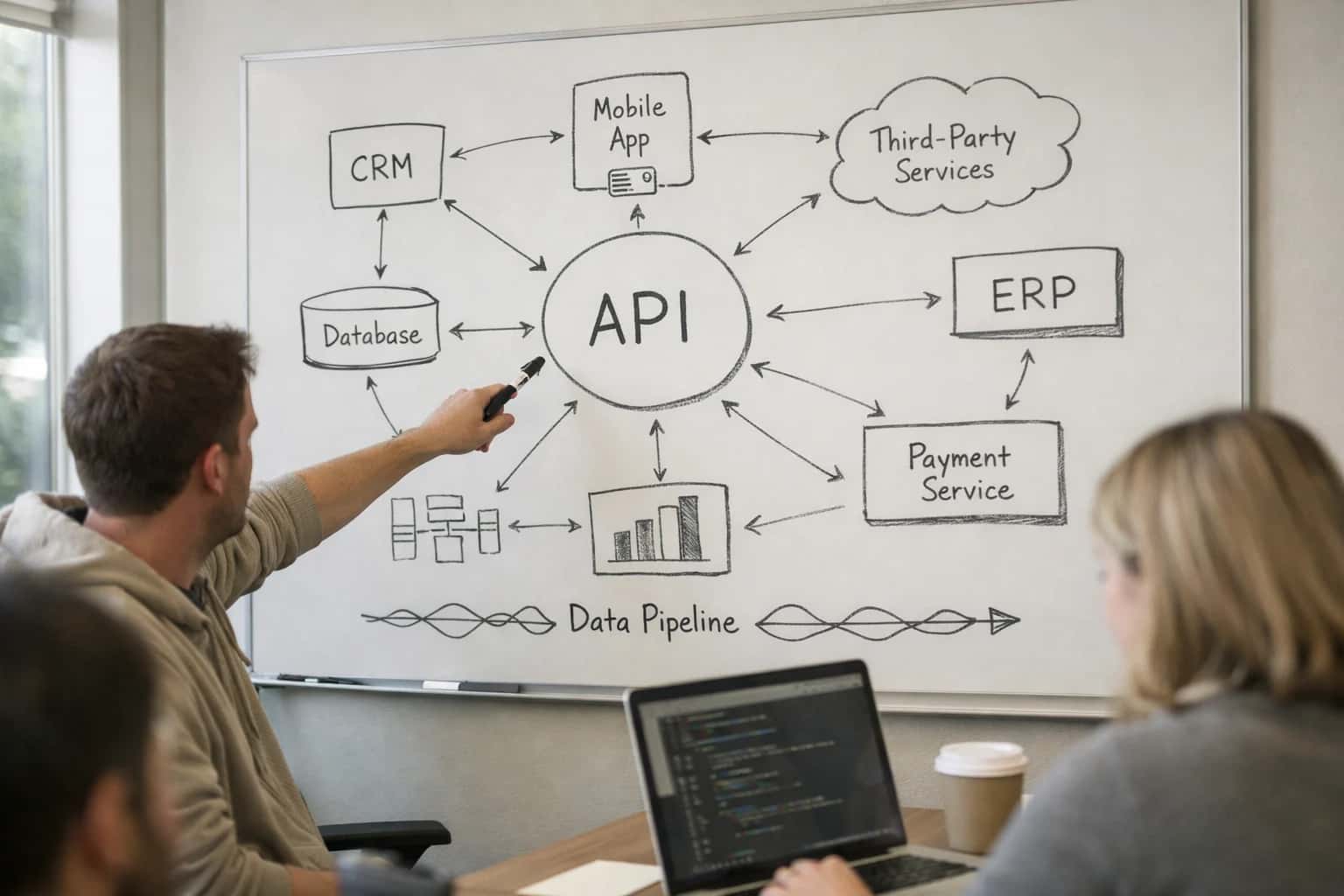
Implementation typically involves a secure API layer between your CLM and the AI service. The workflow is triggered when a new contract draft is uploaded or a review task is created. The system extracts the text, sends it to a RAG pipeline grounded in your proprietary playbooks and historical agreements, and returns annotated suggestions. These suggestions are attached to the contract record as structured metadata, enabling tracking of AI-assisted changes and feeding into audit logs for governance. The integration can be configured to run automatically on all contracts or only on specific types (e.g., NDAs, MSAs) based on CLM metadata.
Rollout requires a phased approach, starting with a pilot on low-risk, high-volume agreements like NDAs. Governance is critical: all AI suggestions should be presented as non-binding recommendations requiring human approval. Establish a clear review protocol where legal ops validates the AI's accuracy periodically and retrains models on corrected outputs. This creates a feedback loop that improves the system while maintaining legal oversight, ultimately shifting the team's role from manual redlining to managing and coaching a highly efficient AI-augmented workflow.
AI-POWERED REDLINING ENGINE
Integration Touchpoints in Your CLM Platform
The Foundation for AI Redlining
The contract repository is the primary data source for your AI redlining engine. Integration here involves connecting to the CLM's document store (e.g., Ironclad's Document Engine, Icertis's repository) via API to fetch draft contracts and the associated approved playbooks or clause libraries.
Key Integration Points:
- Document Ingestion API: Trigger AI analysis when a new contract draft is uploaded or a version is created.
- Metadata & Tagging: Enrich contract records with AI-generated metadata (e.g.,
redline_risk_score,primary_deviation_type) for reporting and routing. - Clause Library Lookup: Query the platform's approved clause library to retrieve the standard, preferred language that serves as the benchmark for the AI's comparison. The AI engine uses this as the "source of truth" to evaluate the draft.
This foundational layer ensures the AI operates on the correct versions and has access to your organization's negotiated positions.
CONTRACT NEGOTIATION AUTOMATION
High-Value AI Redlining Use Cases
Integrating AI into your CLM platform's redlining workflow automates the comparison of drafts against approved playbooks, suggests specific edits, and explains the rationale to negotiators, accelerating cycles from weeks to days.
01
Playbook-Driven Clause Replacement
AI scans incoming drafts against your approved clause library in Ironclad or Icertis, identifies non-standard language, and suggests specific, pre-approved replacement text with inline comments explaining the legal or business rationale.
Weeks -> Days
Negotiation cycle
02
Risk-First Review Triage
AI pre-scores contract drafts in Agiloft or DocuSign CLM for risk (e.g., unlimited liability, unusual indemnity). High-risk clauses are flagged and summarized for legal, while low-risk, standard agreements are auto-approved or routed for business review.
80%
Reduced legal review volume
03
Concession Tracking & Trade-off Analysis
An AI agent integrated into the redlining interface tracks every proposed change and counterparty response. It suggests strategic trade-offs based on playbook priorities and historical data, helping negotiators secure favorable terms efficiently.
Strategic
Negotiation guidance
04
Multi-Language Redlining Support
For global portfolios, AI translates counterparty redlines into the negotiator's language, analyzes them against the relevant regional playbook, and suggests compliant responses—all within the native CLM workflow.
Batch -> Real-time
Global support
05
Obligation & Milestone Extraction
During redlining, AI parses newly added or modified language to extract deliverables, dates, and reporting requirements. It automatically creates tracked obligations in the CLM or syncs them to project tools like Jira or Smartsheet.
Zero manual entry
For obligations
06
Deviation Alerting & Approval Routing
AI monitors all redlines against pre-defined approval matrices. If a edit falls outside a user's authority (e.g., a salesperson agreeing to a capped liability change), the system automatically pauses execution and routes the contract to the correct legal or finance approver.
100%
Policy compliance
IMPLEMENTATION PATTERNS
Example AI Redlining Workflows
These workflows illustrate how AI redlining agents integrate into the core review and negotiation processes of a CLM platform, acting as a real-time copilot for legal, procurement, and sales teams.
Trigger: A new contract draft (e.g., a vendor MSA) is uploaded to the CLM and enters a 'Legal Review' workflow stage.
Context/Data Pulled: The AI agent retrieves:
- The contract document text.
- The relevant playbook (e.g., 'Procurement - Software Vendor MSA') which contains approved fallback positions, prohibited clauses, and risk thresholds.
- Historical data on similar contracts and their negotiation outcomes.
Agent Action: The agent performs a clause-by-clause analysis, comparing the draft against the playbook. It generates a redlined version with specific, actionable suggestions:
- Identifies Deviations: Flags clauses that deviate from the approved standard (e.g., an indemnity clause with a lower cap than required).
- Suggests Edits: Inserts playbook-approved language directly into the document as suggestions or tracked changes.
- Explains Rationale: For each suggested edit, adds a comment citing the relevant playbook rule and the associated business risk (e.g., "Playbook requires mutual indemnification. One-sided indemnity exposes the company to unlimited liability for third-party claims.").
- Scores Overall Risk: Assigns a risk score (High/Medium/Low) based on the volume and severity of deviations.
System Update: The redlined document and risk summary are attached to the CLM record. The workflow is automatically routed:
- Low Risk: To a paralegal or procurement manager for final review/sign-off.
- High Risk: Directly to a senior attorney or designated approver.
Human Review Point: The reviewer sees the AI's redlines and comments inline, can accept/reject changes, and add their own notes before sending to the counterparty.
BUILDING A PRODUCTION-READY AI REDLINING ENGINE
Core Implementation Architecture
A practical blueprint for integrating an AI redlining agent into your CLM platform's negotiation workflow.
The core architecture connects your CLM platform's document repository and workflow engine to a secure AI service layer. When a new contract draft is uploaded to a platform like Ironclad or Icertis, a webhook triggers the AI redlining pipeline. The system first retrieves the relevant, approved playbook clauses (e.g., standard liability language, payment terms) from the CLM's library or a connected vector database. It then uses a Retrieval-Augmented Generation (RAG) model to compare the draft against these standards, identifying deviations, missing clauses, and non-compliant language. The output is a structured JSON payload containing specific edit suggestions, their rationale tied to playbook rules, and a risk score for each section.
This payload is injected back into the CLM's redlining interface via API, presenting suggestions as inline comments or tracked changes for the negotiator. For high-confidence, low-risk edits (e.g., correcting a notice address format), the system can be configured to auto-accept changes, logging the action in the CLM's audit trail. The architecture is designed for a human-in-the-loop review, ensuring legal oversight while accelerating the initial markup from hours to minutes. Critical integration points include the CLM's document object model for version control, its task/approval APIs to route flagged contracts, and its custom metadata fields to store AI-generated risk scores for reporting.
Rollout follows a phased approach: start with a single, high-volume contract type (e.g., NDAs or MSAs) and a controlled user group. Govern the AI's output through a prompt management layer that codifies your legal team's negotiation posture, and implement a feedback loop where user acceptances/rejections of suggestions are used to fine-tune the model. This setup not only speeds up redlining but creates a searchable record of why certain clauses were changed, building institutional knowledge for future negotiations. For a deeper look at grounding AI responses in your specific contract library, see our guide on RAG for CLM platforms.
IMPLEMENTATION PATTERNS
Code & Payload Examples
Extracting and Structuring Key Terms
This pattern uses an LLM to parse uploaded contract drafts, identify specific clauses, and map them to structured metadata fields within the CLM platform. The AI acts as a high-accuracy OCR+ layer, turning unstructured text into actionable data for workflows and reporting.
Typical Workflow:
- A new contract PDF is uploaded to the CLM via its API.
- The system extracts text and sends relevant sections to an LLM via a secure API call.
- The LLM, guided by a prompt referencing your playbook, identifies clauses (e.g.,
Limitation of Liability,Term,Governing Law). - The response is parsed and used to populate custom object fields or trigger conditional routing.
python# Example: Python service calling an LLM for clause extraction import openai def extract_clauses_from_text(contract_text, clm_record_id): prompt = f""" Extract the following clauses from the contract text below. Return a JSON object with keys: 'limitation_of_liability', 'term_months', 'governing_law', 'auto_renewal'. If a clause is not found, use null. Contract Text: {contract_text[:8000]} """ response = openai.chat.completions.create( model="gpt-4o", messages=[{"role": "user", "content": prompt}], response_format={ "type": "json_object" } ) extracted_data = json.loads(response.choices[0].message.content) # Now, update the CLM record via PATCH clm_api_response = requests.patch( f"https://api.yourclm.com/contracts/{clm_record_id}", json={"metadata": extracted_data}, headers={"Authorization": f"Bearer {CLM_API_KEY}"} ) return clm_api_response
AI-POWERED REDLINING
Realistic Time Savings & Operational Impact
How AI-assisted redlining changes the contract review workflow, from first draft to final negotiation.
| Workflow Stage | Manual Process | With AI Redlining | Impact & Notes |
|---|---|---|---|
Initial Draft Review | 4-8 hours per agreement | 1-2 hours with AI suggestions | AI flags deviations from playbook; reviewer focuses on high-risk clauses. |
Redline Generation | Manual editing in Word/CLM | AI suggests specific edits with rationale | Reduces repetitive editing; explains 'why' behind each suggestion to the negotiator. |
Internal Legal Alignment | Sequential email reviews | Shared AI summary & risk report | Aligns legal, sales, and procurement on key issues before external send. |
Counterparty Negotiation | Multiple rounds over days/weeks | Faster cycles with AI-backed positions | AI tracks concession history and suggests trade-offs, compressing negotiation timeline. |
Finalization & Approval | Final manual scrub for consistency | AI consistency check against playbook | Catches last-minute deviations and ensures internal compliance before signature. |
Playbook Compliance Rate | ~60-70% adherence | Targets 85-90%+ adherence | AI enforces standard positions, reducing future risk and interpretation disputes. |
Reviewer Capacity | 2-3 complex contracts per week | 4-6 complex contracts per week | Enables legal teams to handle higher volume without increasing headcount. |
CONTROLLED DEPLOYMENT FOR LEGAL WORKFLOWS
Governance, Security & Phased Rollout
A structured approach to implementing AI redlining that prioritizes security, maintains human oversight, and delivers incremental value.
Integrating an AI redlining engine into a CLM like Ironclad or Icertis requires a governance-first architecture. This means implementing a human-in-the-loop (HITL) review for all AI-suggested edits before they are applied to a draft. The system should log every AI action—suggested edit, rationale, and user acceptance or rejection—to a secure audit trail within the CLM's native activity log or a separate governance database. Access to the AI's configuration and underlying models (e.g., GPT-4, Claude 3) must be controlled via role-based access (RBAC), ensuring only authorized legal ops or IT administrators can modify playbooks or prompts.
For security, contract data must never be sent to an external LLM API without proper safeguards. A production implementation uses a zero-data-retention agreement with the model provider, passes data through a secure API gateway with strict egress controls, and can employ a proxy layer to redact highly sensitive PII or PHI before analysis. For on-premises CLM deployments or contracts with extreme sensitivity, the architecture can leverage locally-hosted open-source models (like Llama 3 or Mixtral) within the enterprise VPC, though this may trade some accuracy for total data control.
A successful rollout follows a phased pilot program. Start with a low-risk contract type, such as NDAs or simple order forms, with a controlled group of 5-10 legal or procurement team members. In this phase, the AI acts as a copilot in read-only mode, suggesting edits and explanations in a sidebar without auto-applying changes. Key success metrics include time saved per review, user acceptance rate of suggestions, and qualitative feedback on rationale clarity. After refining the model and workflow based on pilot data, expand to master service agreements (MSAs) and finally to the most complex, high-value contracts, continuously monitoring for drift in suggestion quality and alignment with updated legal playbooks.
Enabling Efficiency, Speed & Accuracy
Intelligent Analysis, Decision & Execution
We build AI systems for teams that need search across company data, workflow automation across tools, or AI features inside products and internal software.
Talk to Us
Search across company data
Give teams answers from docs, tickets, runbooks, and product data with sources and permissions.
Useful when people spend too long searching or get different answers from different systems.
Enterprise searchRAGPermissions
Read more
Automate internal workflows
Use AI to route work, draft outputs, trigger actions, and keep approvals and logs in place.
Useful when repetitive work moves across multiple tools and teams.
AI agentsWorkflow automationGovernance
Read more
Add AI to products and internal tools
Build assistants, guided actions, or decision support into the software your team or customers already use.
Useful when AI needs to be part of the product, not a separate tool.
AI integrationDecision supportModel routing
Read moreIMPLEMENTATION BLUEPRINT
AI Redlining: Technical & Commercial FAQs
Practical answers for legal, procurement, and RevOps leaders evaluating AI-powered redlining within Ironclad, Icertis, Agiloft, or DocuSign CLM.
The integration is API-first, typically using the CLM platform's native webhooks and REST APIs. The architecture follows this pattern:
- Trigger: A contract draft reaches a designated stage (e.g., "In Review") in the CLM workflow.
- Context Pull: The integration service calls the CLM API to fetch:
- The contract document (PDF/DOCX)
- Associated metadata (deal type, region, business unit)
- The relevant approved playbook or clause library
- AI Processing: The document and playbook are sent to a secure, governed AI service (like Azure OpenAI or Anthropic). A Retrieval-Augmented Generation (RAG) pipeline grounds the model in your specific playbooks and historical redlines.
- System Update: The AI returns a mark-up of suggested edits (additions, deletions, substitutions) with rationales. This is posted back to the CLM via API, creating a new redline version or adding comments to the document for reviewer visibility.
Key Technical Note: For platforms like Ironclad with an AI Assistant SDK or Icertis with AI Studio, the integration can be embedded directly into the user interface for a seamless copilot experience.

About the author
Prasad Kumkar
CEO & MD, Inference Systems
Prasad Kumkar is the CEO & MD of Inference Systems and writes about AI systems architecture, LLM infrastructure, model serving, evaluation, and production deployment. Over 5+ years, he has worked across computer vision models, L5 autonomous vehicle systems, and LLM research, with a focus on taking complex AI ideas into real-world engineering systems.
His work and writing cover AI systems, large language models, AI agents, multimodal systems, autonomous systems, inference optimization, RAG, evaluation, and production AI engineering.
LinkedIn
Limited slotsGet a Free AI Consultation
Partnered with leading AI, data, and software stack.





How We Work
Custom AI workflows for your Business
One-fit-all AI don't work for modern businesses. At Inferensys, we aim to understand your business & custom requirements; which we use to define most efficient agentic workflows, the data, and the tools for your business.
01
Review the use case
We understand the task, the users, and where AI can actually help.
Read more02
Pick the right approach
We define what needs search, automation, or product integration.
Read more03
Build the first useful version
We implement the part that proves the value first.
Read more04
Improve from there
We add the checks and visibility needed to keep it useful.
Read moreThe first call is a practical review of your use case and the right next step.
Talk to Us