AI integrates directly into Buildertrend's Messages and Daily Logs modules, acting as a co-pilot for superintendents and project managers. The primary surfaces are: 1) Automated Status Updates: AI agents can be triggered by schedule milestones (e.g., 'Foundation Pour Complete') or daily log entries to generate a client-friendly summary and post it to the project's Message board. 2) Q&A Triage: An AI-powered chatbot can be embedded within the Buildertrend client portal to answer common questions about schedules, selections, or next steps by retrieving context from the project's Schedule, Change Orders, and Selections data. This offloads repetitive inquiries before they hit a human's inbox.

Integration
AI Integration with Buildertrend Client Communications
Implement AI-powered chatbots and automated project updates within Buildertrend to handle common homeowner questions and provide proactive status reports, reducing project manager communication overhead.
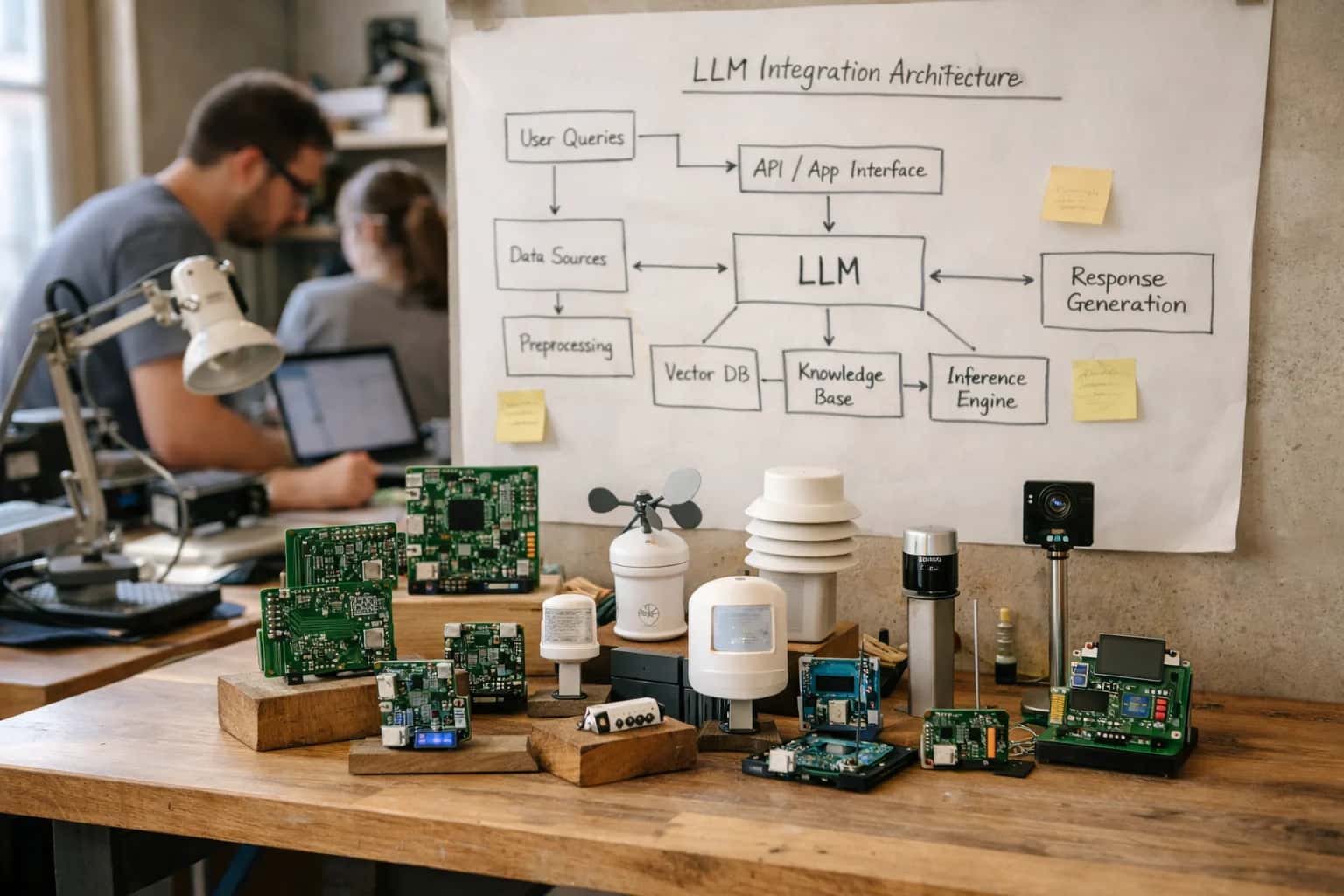
ARCHITECTURE & ROLLOUT
Where AI Fits in Buildertrend's Client Communication Workflow
A practical blueprint for adding AI agents to Buildertrend's communication surfaces to automate homeowner updates and field common questions.
Implementation typically involves a middleware layer that subscribes to Buildertrend webhooks (for new logs or messages) and uses the Buildertrend REST API to post replies or updates. The AI agent is grounded in the specific project's data—pulling the schedule from the Master Schedule, recent photos from Daily Logs, and pending items from the To-Do List—to ensure all communications are accurate and personalized. For governance, all AI-generated messages can be configured for human-in-the-loop review via a simple approval queue in a separate dashboard before being posted, or set to auto-post with a clear 'AI-generated' label for full transparency.
Rollout is best done in phases. Start with read-only Q&A in a sandbox client portal, where the AI answers questions but does not post. Then, pilot automated daily summaries for one or two trusted clients, using a superintendent to review the output before it's sent. Finally, scale to proactive, triggered updates across all active projects. This phased approach builds trust, allows for prompt tuning based on real client feedback, and integrates smoothly into the superintendent's existing workflow of checking Daily Logs each evening. For a deeper technical dive, see our guide on Building AI Agents for Residential Construction.
WHERE TO CONNECT AI FOR HOMEOWNER COMMUNICATIONS
Key Buildertrend Surfaces for AI Integration
The Primary Communication Hub
This is the core surface for AI-driven homeowner interactions. The Messages module handles all direct communications between the builder and client, while Notifications automate status updates. AI integration here focuses on two primary workflows:
Automated Status Reporting: An AI agent can be triggered by project milestones (e.g., "Foundation Pour Complete") or schedule updates in Buildertrend. It synthesizes data from the schedule, photos, and daily logs to generate a proactive, personalized update for the homeowner, posted directly to Messages.
Common Question Triage: A chatbot interface within Messages can handle frequent, repetitive homeowner inquiries (e.g., "What's the paint color code for the master bedroom?"). The AI retrieves answers from project documents, selections logs, and the schedule, providing instant answers and escalating only complex issues to the project manager. This reduces PM interruption and improves client satisfaction.
INTELLIGENT HOMEOWNER ENGAGEMENT
High-Value AI Use Cases for Buildertrend Communications
Integrate AI directly into Buildertrend's communication surfaces to automate routine updates, answer common questions, and proactively manage homeowner expectations—freeing your team to focus on building.
01
Automated Project Status Summaries
AI agents connect to Buildertrend's schedule, daily logs, and photo streams to generate proactive, plain-language status emails or SMS updates. Homeowners receive weekly summaries of progress, next steps, and any delays, reducing 'check-in' calls to the project manager.
Hours -> Minutes
Update creation
02
AI-Powered Homeowner Q&A Portal
Deploy a secure chatbot within the Buildertrend customer portal that answers common questions about selections, allowances, and construction processes using grounded data from the project's documents and specs. It escalates complex queries to the PM via a Buildertrend task.
Batch -> Real-time
Response handling
03
Selections & Change Order Drafting
When a homeowner inquires about a change, AI analyzes the request against the project's scope and budget in Buildertrend. It drafts a preliminary change order description with cost implications, which the PM reviews and sends for approval via Buildertrend's built-in workflow.
Same day
Initial draft
04
Punch List & Walkthrough Support
Before a final walkthrough, AI reviews homeowner-submitted photos and notes in Buildertrend's Punch List tool. It groups items by trade/location and suggests priority, creating a structured list for the superintendent to execute and track to completion.
1 sprint
Implementation
05
Warranty & Closeout Handoff
At project close, AI compiles a personalized homeowner manual from Buildertrend's documents, product cut sheets, and warranty info. It initiates a post-move-in check-in sequence via Buildertrend messages to schedule warranty service requests, improving retention for future projects.
06
Sentiment Analysis for PM Alerts
AI monitors the tone and frequency of all homeowner communications within Buildertrend (messages, call logs). It flags rising frustration or confusion to the project manager with suggested next steps, enabling proactive intervention before a small issue escalates.
CLIENT COMMUNICATIONS
Example AI Agent Workflows in Buildertrend
Concrete examples of how AI agents can automate homeowner interactions and project updates within Buildertrend's communication surfaces, reducing manual follow-up and improving client satisfaction.
Trigger: End-of-day sync from Buildertrend's Daily Logs or Completed Tasks.
Context Pulled: The agent retrieves:
- Completed tasks for the specific job from the Buildertrend Schedule module.
- Photos uploaded to the Daily Log for that day.
- Weather conditions logged.
- Next day's scheduled activities.
Agent Action: A configured LLM (e.g., GPT-4) drafts a concise, homeowner-friendly summary. It structures the update to highlight progress (e.g., "Framing for the west wall completed"), includes context about weather delays if applicable, and previews the next steps.
System Update: The drafted summary and selected photos are posted as a new message in the Buildertrend Client Portal Message Center. The agent tags the message with relevant categories (e.g., Daily Update, Framing Phase).
Human Review Point: Before sending, the agent can be configured to route the draft to the project manager's Buildertrend inbox for a quick review and approval, or it can be set to auto-post during low-risk phases.
A PRODUCTION BLUEPRINT FOR HOME BUILDER AI
Implementation Architecture: Data Flow, APIs, and Guardrails
A secure, phased approach to adding AI-powered communications into Buildertrend's workflows.
A production integration connects to Buildertrend's REST API and webhooks to create a real-time, bi-directional data flow. The core architecture involves:
- Ingestion Layer: Webhooks capture new
Messages,To-Doitems, andSchedulechanges from Buildertrend, placing them in a secure queue. - Orchestration Engine: An AI agent evaluates the inbound event—such as a homeowner question in a
Messagethread—and determines the appropriate workflow (e.g., answer from knowledge base, escalate to a human, trigger a proactive update). - Action Layer: Using the Buildertrend API, the system posts AI-drafted replies back to the
Messagelog, createsTo-Doitems for follow-up, or updates custom fields to flag status changes. All AI-generated content is clearly labeled.
High-Value Guardrails & Governance are critical for client-facing AI. Our implementations include:
- Human-in-the-Loop (HITL) Escalation: Any AI response with low confidence, or touching on financials (
Change Orders,Budget), legal terms, or safety, is routed as a draft to a designated user'sTo-Dolist for approval before sending. - Audit Trail: Every AI interaction is logged to a separate audit database, recording the source Buildertrend record ID, the prompt used, the generated response, and the final action (sent, edited, or rejected).
- Knowledge Grounding: AI responses are constrained to a curated knowledge base built from the builder's past project FAQs,
Specifications, andDocumentslibrary, preventing hallucinations about unverified procedures or promises.
Rollout is phased, typically starting with a single project or community. Phase 1 automates frequent, low-risk queries (e.g., "What are my cabinet selections?", "When is the next walkthrough?") by grounding answers in the project's Selections, Schedule, and Photos. Phase 2 introduces proactive status updates, where the AI analyzes schedule milestones and automatically sends a weekly digest to the homeowner's Message center. Phase 3 expands to Change Order support, where the AI drafts initial scope descriptions based on Message history for the PM to review and price. Each phase includes monitored performance reviews and feedback loops with the construction team.
IMPLEMENTATION PATTERNS
Code and Payload Examples
Handling AI-Generated Replies in Buildertrend
When an AI agent drafts a response to a homeowner's question, it must be posted back to the correct Buildertrend communication thread. This is typically done via a webhook endpoint that receives the structured AI output and uses the Buildertrend API to create a new message.
Key considerations:
- Authentication: Use OAuth 2.0 with appropriate scopes (
communications.write). - Thread Context: The AI payload must include the Buildertrend
project_idandmessage_thread_idto ensure the reply is posted to the right conversation. - Approval Workflow: For sensitive topics (e.g., change orders, delays), the system should flag the AI draft for human review before posting, updating the message status accordingly.
python# Example: Flask endpoint to process AI-generated reply from flask import request, jsonify import requests @app.route('/api/buildertrend/ai-reply', methods=['POST']) def handle_ai_reply(): data = request.json # Payload from AI service project_id = data['project_id'] thread_id = data['thread_id'] ai_message = data['message'] needs_review = data.get('needs_human_review', False) # Buildertrend API call to post message bt_api_url = f"https://api.buildertrend.net/projects/{project_id}/messages/{thread_id}/replies" headers = { "Authorization": f"Bearer {access_token}", "Content-Type": "application/json" } payload = { "message": ai_message, "status": "pending_review" if needs_review else "published" } response = requests.post(bt_api_url, json=payload, headers=headers) return jsonify({"success": response.status_code == 201})
BUILDERTREND CLIENT COMMUNICATIONS
Realistic Time Savings and Operational Impact
How AI integration reduces manual effort and improves responsiveness in homeowner interactions.
| Workflow | Before AI | After AI | Implementation Notes |
|---|---|---|---|
Common Question Triage | Manual monitoring and response by PM or admin | AI chatbot handles 60-70% of routine inquiries | Chatbot trained on project FAQs; escalates complex issues to human |
Project Status Updates | Manual compilation and sending of weekly/bi-weekly emails | Automated, personalized status reports triggered by schedule milestones | Leverages Buildertrend schedule and photo data; sent via Buildertrend messaging |
Change Order Inquiry Response | PM researches history, drafts email explanation | AI retrieves relevant CO details and drafts response for PM review | Pulls data from Buildertrend Change Orders module; maintains human-in-the-loop for approvals |
Schedule Change Notifications | Manual phone calls or individual messages to affected homeowners | Automated, templated notifications with revised timeline details | Integrated with Buildertrend Schedules API; allows homeowner confirmation via link |
Pre-Visit Preparation Reminders | Ad-hoc reminders from superintendents or admins | Automated 24-hour reminders sent for inspections, walkthroughs | Triggers based on Buildertrend calendar events; includes what to bring |
Post-Visit Follow-up | Manual follow-up to gather feedback or next steps | AI sends automated satisfaction check and collects feedback for PM | Survey link sent via Buildertrend messaging; feedback logged to project journal |
Document Retrieval Requests | Homeowner calls PM; PM searches and emails documents | AI chatbot provides secure, self-service links to approved documents | Governed access to Buildertrend Documents folder; logs all access for audit |
ARCHITECTING FOR TRUST AND ADOPTION
Governance, Security, and Phased Rollout
A production AI integration for Buildertrend requires a deliberate approach to data security, user trust, and controlled deployment.
The integration architecture is designed to operate as a secure middleware layer. AI agents interact with Buildertrend's REST API using scoped OAuth tokens, accessing only the necessary objects—such as Projects, Messages, To-Do's, and Change Orders—to perform their functions. All client communications generated by AI are first written to a secure audit log before being posted to Buildertrend, ensuring a complete, immutable record of every automated interaction for compliance and review.
We recommend a phased rollout to manage risk and build user confidence. Phase 1 might deploy a read-only agent that summarizes project activity into a daily digest for homeowners, requiring no direct posting to the platform. Phase 2 introduces an interactive Q&A agent that can draft responses in a "review queue" within Buildertrend for the project manager to approve before sending. Phase 3 enables fully automated, rule-based updates for non-critical status changes, like confirming a scheduled delivery, with clear opt-out controls for homeowners.
Governance is embedded into the workflow. AI-generated content can be tagged (e.g., [AI-Generated Draft]), and all automated messages should include a standard footer identifying them as such. Access controls (RBAC) ensure only authorized project team members can configure or override agent behavior. This structured approach minimizes disruption, allows for continuous tuning based on real feedback, and ensures the AI acts as a reliable copilot that augments—never replaces—the builder's relationship with their client.
Enabling Efficiency, Speed & Accuracy
Intelligent Analysis, Decision & Execution
We build AI systems for teams that need search across company data, workflow automation across tools, or AI features inside products and internal software.
Talk to Us
Search across company data
Give teams answers from docs, tickets, runbooks, and product data with sources and permissions.
Useful when people spend too long searching or get different answers from different systems.
Enterprise searchRAGPermissions
Read more
Automate internal workflows
Use AI to route work, draft outputs, trigger actions, and keep approvals and logs in place.
Useful when repetitive work moves across multiple tools and teams.
AI agentsWorkflow automationGovernance
Read more
Add AI to products and internal tools
Build assistants, guided actions, or decision support into the software your team or customers already use.
Useful when AI needs to be part of the product, not a separate tool.
AI integrationDecision supportModel routing
Read moreIMPLEMENTATION DETAILS
Frequently Asked Questions
Common technical and operational questions about deploying AI chatbots and automated status updates within Buildertrend for residential construction teams.
Security is architected at multiple layers:
- API Credentials: The integration uses Buildertrend's OAuth 2.0 or API keys, scoped with the principle of least privilege (e.g., read-only for client communications, write for log entries).
- Data Flow: Client questions are routed through a secure middleware layer (often an Azure Function or AWS Lambda). This layer authenticates, fetches the necessary context from Buildertrend's API (e.g., project timeline, recent photos, change order status), and sends only the relevant, anonymized data to the LLM provider (OpenAI, Anthropic, etc.).
- No Data Retention: The AI service is configured not to retain or train on the project data. Context is purged after the session.
- Audit Trail: All AI-generated interactions are logged back to a dedicated log in Buildertrend (e.g., as a Daily Log entry or a note on the Client Communications tab) for a complete audit trail.
This ensures homeowner data never leaves your controlled environment unnecessarily and all access is logged within Buildertrend itself.

About the author
Prasad Kumkar
CEO & MD, Inference Systems
Prasad Kumkar is the CEO & MD of Inference Systems and writes about AI systems architecture, LLM infrastructure, model serving, evaluation, and production deployment. Over 5+ years, he has worked across computer vision models, L5 autonomous vehicle systems, and LLM research, with a focus on taking complex AI ideas into real-world engineering systems.
His work and writing cover AI systems, large language models, AI agents, multimodal systems, autonomous systems, inference optimization, RAG, evaluation, and production AI engineering.
LinkedIn
Limited slotsGet a Free AI Consultation
Partnered with leading AI, data, and software stack.





How We Work
Custom AI workflows for your Business
One-fit-all AI don't work for modern businesses. At Inferensys, we aim to understand your business & custom requirements; which we use to define most efficient agentic workflows, the data, and the tools for your business.
01
Review the use case
We understand the task, the users, and where AI can actually help.
Read more02
Pick the right approach
We define what needs search, automation, or product integration.
Read more03
Build the first useful version
We implement the part that proves the value first.
Read more04
Improve from there
We add the checks and visibility needed to keep it useful.
Read moreThe first call is a practical review of your use case and the right next step.
Talk to Us