AI integration for Procore is not about replacing the platform, but connecting intelligence to its existing data model and user workflows. The primary surfaces for integration are its REST API, webhooks, and the Documents and Observations modules where unstructured data lives. Key objects to target include Projects, RFIs, Submittals, Prime Contracts, Daily Logs, and Cost Items. AI agents can be triggered by webhook events—like a new RFI creation or a photo upload—to perform analysis, draft responses, or enrich records before a project manager ever sees the task.

Integration
AI Integration for Procore
A technical blueprint for integrating AI agents and workflows into Procore's project management, document, and financial modules to automate reporting, RFIs, schedule analysis, and project delivery.
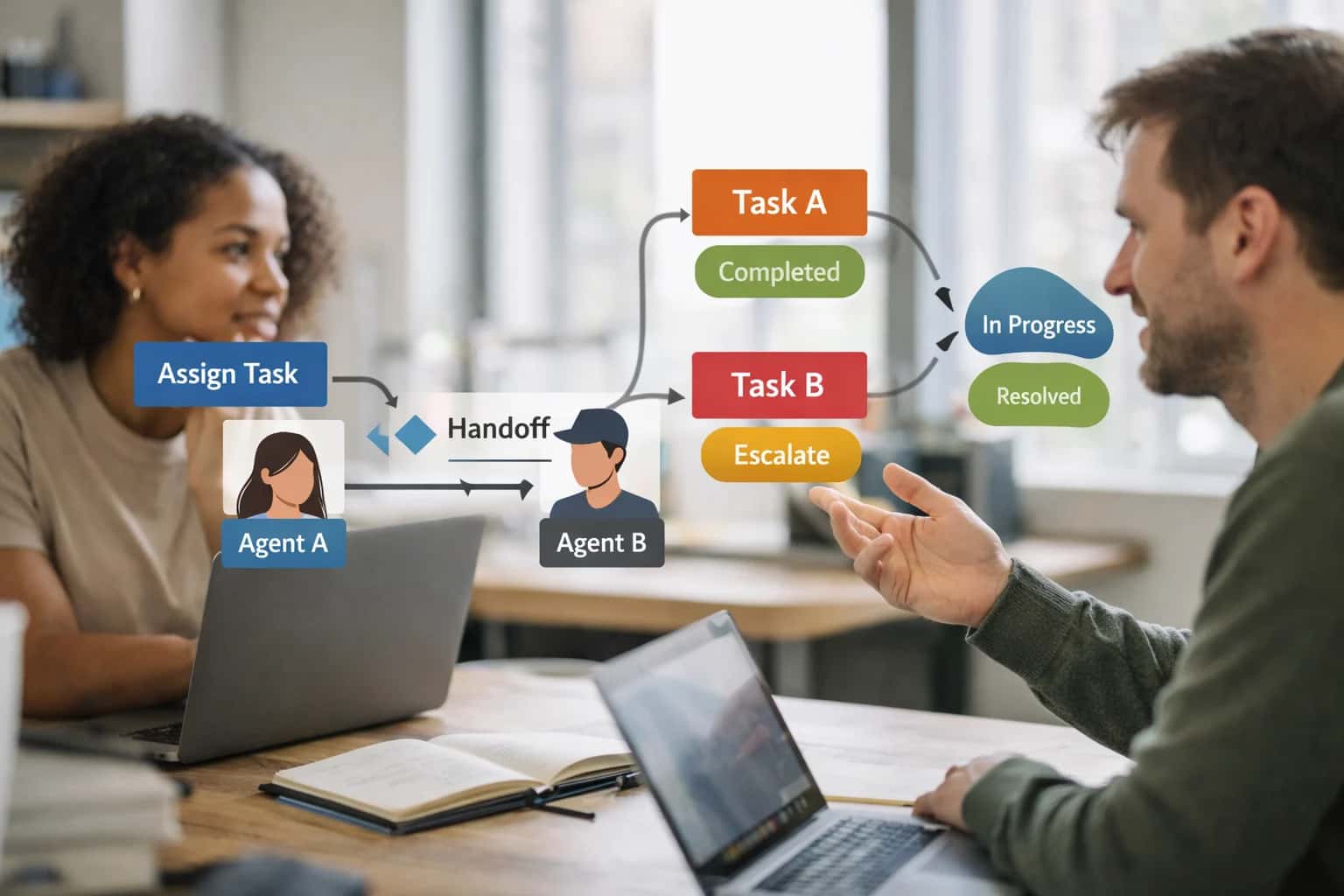
ARCHITECTURE AND ROLLOUT
Where AI Fits into the Procore Stack
A practical guide to wiring AI agents and workflows into Procore's project data, user surfaces, and automation layer.
Implementation typically involves a middleware layer (often built with tools like n8n or custom Python services) that sits between Procore and LLM providers (OpenAI, Anthropic, etc.). This layer handles authentication, data fetching, prompt construction with project-specific context, and the secure writing-back of results. For example, an agent listening for new submittals can fetch the attached spec sheet, extract key requirements using a vision-capable model, and auto-populate the submittal log's compliance checklist fields. Governance is built in through audit logs of all AI actions, human-in-the-loop approval steps for critical outputs (like cost forecasts), and RBAC to ensure agents only access data appropriate to their assigned project or company.
Rollout should be phased, starting with a single high-value, contained workflow—like automating the first draft of RFI responses based on the project's spec book—in a pilot project. This allows teams to tune prompts, establish confidence thresholds, and integrate feedback loops. Success is measured in operational time saved ("reducing RFI draft time from 30 minutes to 5 minutes") and risk reduction ("ensuring 100% of submittals get a preliminary compliance check"). The goal is to make superintendents, project engineers, and project managers more efficient by handling the cognitive load of data synthesis, letting them focus on decision-making and execution.
ARCHITECTURAL BLUEPRINT
Procore Modules and Surfaces for AI Integration
Core Project Management Surfaces
AI integration targets the central workflow surfaces where project managers and superintendents spend their time. Key modules include:
- Daily Logs & Observations: AI can auto-summarize entries from weather, manpower, and work completed, flagging anomalies or generating compliance-ready reports.
- Schedule (Tool): Integrate with the Schedule module to analyze dependencies, predict delays using historical data, and automate look-ahead planning notifications.
- Tasks & To-Dos: Use AI to triage and assign incoming action items from emails or meeting notes directly into Procore tasks, enriched with context from project data.
These surfaces are ideal for agent workflows that reduce manual data entry, provide predictive alerts, and keep the project pulse visible.
INTEGRATION PATTERNS
High-Value AI Use Cases for Procore
Practical AI workflows that connect directly to Procore's core modules—Documents, RFIs, Submittals, Cost Management, and Schedules—to reduce manual overhead for project teams and provide predictive insights for leadership.
01
Automated RFI Drafting & Routing
AI agents monitor Procore's RFI log and draft initial RFI descriptions by analyzing linked drawings, specs, and prior correspondence. They suggest the correct recipient (architect, engineer, owner) based on discipline and contract, cutting the initial drafting and routing time from hours to minutes. Integrates via Procore's RFI API and webhooks.
Hours -> Minutes
Drafting time
02
Intelligent Document Search & Clause Extraction
Deploy a RAG system over Procore's Documents module. Teams ask natural language questions (e.g., 'show me all seismic spec sections for Level 3') and get precise answers with source documents. AI extracts key clauses from contracts and submittals for obligation tracking. Uses Procore's Documents API for sync and a vector database for semantic search.
Batch -> Real-time
Knowledge retrieval
03
Submittal Log Auto-Population & Compliance Check
AI parses incoming submittals (shop drawings, product data) against the specification section in Procore. It auto-populates the submittal log item, suggests the correct spec section, and flags potential non-compliant items for the reviewer. Reduces manual data entry for project engineers and improves review accuracy.
1 sprint
Implementation timeline
04
Predictive Cost & Schedule Risk Detection
An AI model continuously analyzes data from Procore's Cost Management and Schedules modules, plus daily logs. It flags potential budget overruns by correlating committed costs with progress, and predicts schedule delays by analyzing task dependencies and weather data. Delivers alerts directly to the Project Dashboard.
Same day
Risk visibility
05
Automated Daily Log & Progress Summaries
For superintendents, AI compiles a draft daily log by pulling manpower counts from timecards, work completed from updated schedule tasks, and notable events from photo markups and comments. It generates a concise summary for the owner. Integrates with Procore's Daily Log, Photos, and Schedule APIs.
30 min -> 5 min
Log creation
06
AI-Powered Closeout & Handover Workflow
Orchestrates the project closeout process. AI agents scan the Procore Documents tool for missing O&M manuals, warranties, and as-builts. They generate punch list items from inspection reports, track completion, and auto-assemble closeout packages. Connects Procore Closeout to Autodesk Docs and other systems.
Weeks -> Days
Handover timeline
PRACTICAL AUTOMATION PATTERNS
Example AI Agent Workflows in Procore
These workflows demonstrate how AI agents can be integrated into Procore's core modules to automate manual tasks, provide proactive insights, and accelerate project delivery. Each pattern uses Procore's API, webhooks, and data model to trigger actions and update records.
Trigger: A user creates a new RFI record in Procore or uploads a drawing mark-up via the mobile app.
Context/Data Pulled: The agent retrieves the RFI's linked drawing (PDF), project specifications, the originating company, and the Procore project's directory for potential respondents.
Model/Agent Action:
- A vision model analyzes the drawing mark-up to identify the questioned area and element.
- An LLM cross-references the element with the project's spec book to find relevant sections.
- The agent drafts a structured RFI description, proposes a clear question, and suggests a responsible party (e.g., architect for design clarifications, structural engineer for load questions) based on the project directory and RFI history.
System Update/Next Step: A draft RFI is populated in Procore with the description, suggested respondent, and priority level. It's placed in a "Draft - AI Review" status, triggering a notification to the project engineer for final review and submission.
Human Review Point: Mandatory. The project engineer reviews the draft for accuracy, adjusts the question or respondent if needed, and clicks "Submit."
HOW AI CONNECTS TO PROCORE'S DATA MODEL
Implementation Architecture: Data Flow and APIs
A production-ready AI integration for Procore is built on secure, event-driven data flows that connect AI agents to specific project objects and user workflows.
The integration architecture typically connects to Procore's REST API and webhooks at key workflow junctions. Core data objects include Projects, RFIs, Submittals, Prime Contracts, Daily Logs, and Cost Items. An AI agent layer, hosted in your cloud, subscribes to webhook events—like a new RFI creation or a submittal status change—to trigger automated analyses. For example, when an RFI is logged, an agent can instantly retrieve related specifications from the Documents module, draft a technical response, and post it back as a private note for the project engineer to review and send.
Implementation detail focuses on context enrichment and controlled writes. Agents use Procore's API to fetch relevant project context—such as the drawing revision linked to an observation or the subcontract tied to a potential change order—before generating grounded, actionable output. Writes back to Procore are performed through service accounts with appropriate RBAC, often creating Comments, updating Custom Fields, or generating Reports, but rarely making autonomous, final changes. A common pattern is a middleware queue that holds AI-generated content for a human-in-the-loop approval step within Procore's interface before it's published.
Rollout and governance are critical. Start with a single, high-volume workflow like RFI drafting or daily log summarization in a pilot project. Use Procore's Project Templates to replicate the AI-enhanced workflow structure. Audit trails should log all AI interactions at the Procore record level, and cost attribution should be clear by project or division. This architecture ensures AI augments Procore's existing processes without disrupting established approval chains or data integrity, turning project data into accelerated decision-making.
PROCORE INTEGRATION PATTERNS
Code and Payload Examples
Automating Field Logs with AI
AI can parse weather reports, crew inputs, and photo evidence to auto-populate Procore's Daily Log tool, reducing superintendent admin time by 1-2 hours per day.
Example Python payload to create a log entry via Procore's API after AI analysis:
pythonimport requests log_payload = { "log": { "project_id": 12345, "date": "2024-05-15", "weather_conditions": { "high_temp_f": 78, "low_temp_f": 62, "conditions": "Partly Cloudy", "precipitation_inches": 0.0 }, "crews": [ { "crew_name": "Structural Steel", "manpower_count": 12, "hours_worked": 8, "work_description": "Erected columns and beams for Gridlines A-D, per AI-summarized progress from 9am site photos." } ], "work_completed": "Steel erection for Phase 2 superstructure. No safety incidents reported.", "deliveries": ["50 tons of rebar delivered at 10:30 AM"] } } # Post to Procore API response = requests.post( 'https://api.procore.com/rest/v1.0/projects/12345/daily_logs', json=log_payload, headers={'Authorization': 'Bearer YOUR_TOKEN'} )
This pattern uses AI to generate structured data from unstructured field inputs, then posts via Procore's REST API.
TYPICAL IMPACT FOR A 100-PERSON PROJECT TEAM
Realistic Time Savings and Operational Impact
Based on implementations for general contractors and specialty trades, this table shows where AI integration into Procore surfaces the most immediate operational lift. Impact scales with project complexity and data maturity.
| Workflow / Module | Before AI Integration | After AI Integration | Implementation Notes |
|---|---|---|---|
Daily Logs & Field Reports | 30-45 minutes manual entry per superintendent | 5-10 minute review of AI-drafted summary | AI parses weather, manpower, work completed from notes/photos; human finalizes. |
RFI Drafting & Routing | 1-2 hours to draft, research specs, identify reviewers | 20-30 minute review of AI-drafted RFI with cited spec sections | AI retrieves relevant spec clauses; PM approves routing and final text. |
Submittal Log Population | Manual entry from spec books; 4-8 hours per package | AI extracts and maps spec sections to submittal items in 1 hour | Requires digitized spec books; engineer reviews and adjusts AI mapping. |
Punch List Item Generation | Superintendent walks site, manually types items (2-3 hours) | AI suggests items from photo markups and voice notes (30 min review) | Mobile-centric; AI categorizes by trade/location for Fieldwire or Procore sync. |
Meeting Minutes & Action Items | PM spends 1 hour post-meeting transcribing and assigning | AI generates draft summary with owners/deadlines in 10 minutes | Integrates with Zoom/Teams; PM edits and pushes actions to Procore tasks. |
Cost Code Validation & Entry | Project accountant manually matches invoices to cost codes (2-3 hrs/wk) | AI suggests cost codes for 80% of line items; 30 min review | Learns from historical coding; flags anomalies for accountant review. |
Document Search (Specs, Contracts) | 15-30 minute manual searches across folders for key clauses | Natural language query returns relevant excerpts in under 60 seconds | Requires initial document ingestion into vector store; uses Procore API. |
Change Order Description Drafting | PM writes narrative from emails/notes; 45-60 minutes each | AI drafts scope narrative from comms log; 15 min PM refinement | Pulls from Procore Communication tool and linked emails; ensures audit trail. |
ARCHITECTING FOR PRODUCTION
Governance, Security, and Phased Rollout
A secure, controlled implementation of AI in Procore requires careful planning around data access, user permissions, and incremental deployment.
AI agents must operate within Procore's existing role-based permissions and project-level data segregation. We architect integrations to respect the same Project, Company, and User objects that govern manual access. For example, an AI agent summarizing RFIs for a superintendent will only have API access to RFIs within their assigned projects, and its outputs are written back as a new Comment or RFI Log entry, creating a full audit trail. This ensures AI actions are traceable and comply with your firm's internal controls and Procore's security model.
A phased rollout mitigates risk and builds organizational trust. We recommend starting with a single, high-value workflow in a pilot project, such as automating daily log creation from weather and manpower data or drafting RFI responses from specification documents. This controlled environment allows you to validate accuracy, establish a human-in-the-loop review step (e.g., superintendent approval), and measure time savings. Subsequent phases can expand to other modules—like Submittals, Cost Management, or Documents—and scale across more projects, adjusting governance gates as confidence grows.
Governance extends to the AI models themselves. We implement prompt management systems to ensure consistent, company-approved language for client communications or contractual language. For retrievals from your document vault, we use grounding techniques to cite source files (e.g., spec sections, past RFIs) directly in the AI's output, preventing hallucination. All AI-triggered updates to Procore records are logged, allowing for post-hoc analysis and continuous improvement of the workflows. This structured approach turns AI from a black-box experiment into a governed, scalable extension of your Procore operations.
Enabling Efficiency, Speed & Accuracy
Intelligent Analysis, Decision & Execution
We build AI systems for teams that need search across company data, workflow automation across tools, or AI features inside products and internal software.
Talk to Us
Search across company data
Give teams answers from docs, tickets, runbooks, and product data with sources and permissions.
Useful when people spend too long searching or get different answers from different systems.
Enterprise searchRAGPermissions
Read more
Automate internal workflows
Use AI to route work, draft outputs, trigger actions, and keep approvals and logs in place.
Useful when repetitive work moves across multiple tools and teams.
AI agentsWorkflow automationGovernance
Read more
Add AI to products and internal tools
Build assistants, guided actions, or decision support into the software your team or customers already use.
Useful when AI needs to be part of the product, not a separate tool.
AI integrationDecision supportModel routing
Read moreIMPLEMENTATION AND WORKFLOW DETAILS
Frequently Asked Questions
Practical questions for teams planning AI integration into Procore's project management, financial, and document workflows.
An AI workflow for RFIs is typically triggered via a Procore webhook configured in the Project Admin tool. When a new RFI is created or reaches a specific status (e.g., 'Submitted'), the webhook sends a JSON payload to your integration endpoint.
Typical Flow:
- Trigger: Procore webhook for
RFI.created. - Context Pulled: Your agent fetches the RFI details, linked drawings, specification sections, and prior similar RFIs via the Procore REST API.
- Agent Action: An LLM analyzes the question against the project documents and historical data to draft a potential answer or identify the responsible party.
- System Update: The draft answer is posted as a private note on the RFI for the engineer's review, or the RFI is auto-routed based on the analysis.
- Human Review: The project engineer reviews, edits, and officially submits the response. All AI actions are logged in the RFI's history for auditability.

About the author
Prasad Kumkar
CEO & MD, Inference Systems
Prasad Kumkar is the CEO & MD of Inference Systems and writes about AI systems architecture, LLM infrastructure, model serving, evaluation, and production deployment. Over 5+ years, he has worked across computer vision models, L5 autonomous vehicle systems, and LLM research, with a focus on taking complex AI ideas into real-world engineering systems.
His work and writing cover AI systems, large language models, AI agents, multimodal systems, autonomous systems, inference optimization, RAG, evaluation, and production AI engineering.
LinkedIn
Limited slotsGet a Free AI Consultation
Partnered with leading AI, data, and software stack.





How We Work
Custom AI workflows for your Business
One-fit-all AI don't work for modern businesses. At Inferensys, we aim to understand your business & custom requirements; which we use to define most efficient agentic workflows, the data, and the tools for your business.
01
Review the use case
We understand the task, the users, and where AI can actually help.
Read more02
Pick the right approach
We define what needs search, automation, or product integration.
Read more03
Build the first useful version
We implement the part that proves the value first.
Read more04
Improve from there
We add the checks and visibility needed to keep it useful.
Read moreThe first call is a practical review of your use case and the right next step.
Talk to Us