For a residential builder, AI integration targets specific Buildertrend modules where manual data entry, client communication, and coordination create bottlenecks. The primary surfaces are the Client Portal, Selections, Schedule, Change Orders, and Daily Logs. An AI agent can be configured to listen for webhooks or poll these modules via the Buildertrend API, acting as a copilot that drafts content, answers routine questions, and triggers follow-up tasks. For example, when a new client is added from the sales pipeline, an AI workflow can automatically generate a personalized welcome packet, populate the initial project schedule template based on the home model, and kick off the pre-construction checklist.

Integration
AI for Home Builders Using Buildertrend
Implement AI agents and workflows within Buildertrend to automate client communications, accelerate selections, streamline change orders, and improve handoff accuracy for residential construction projects.
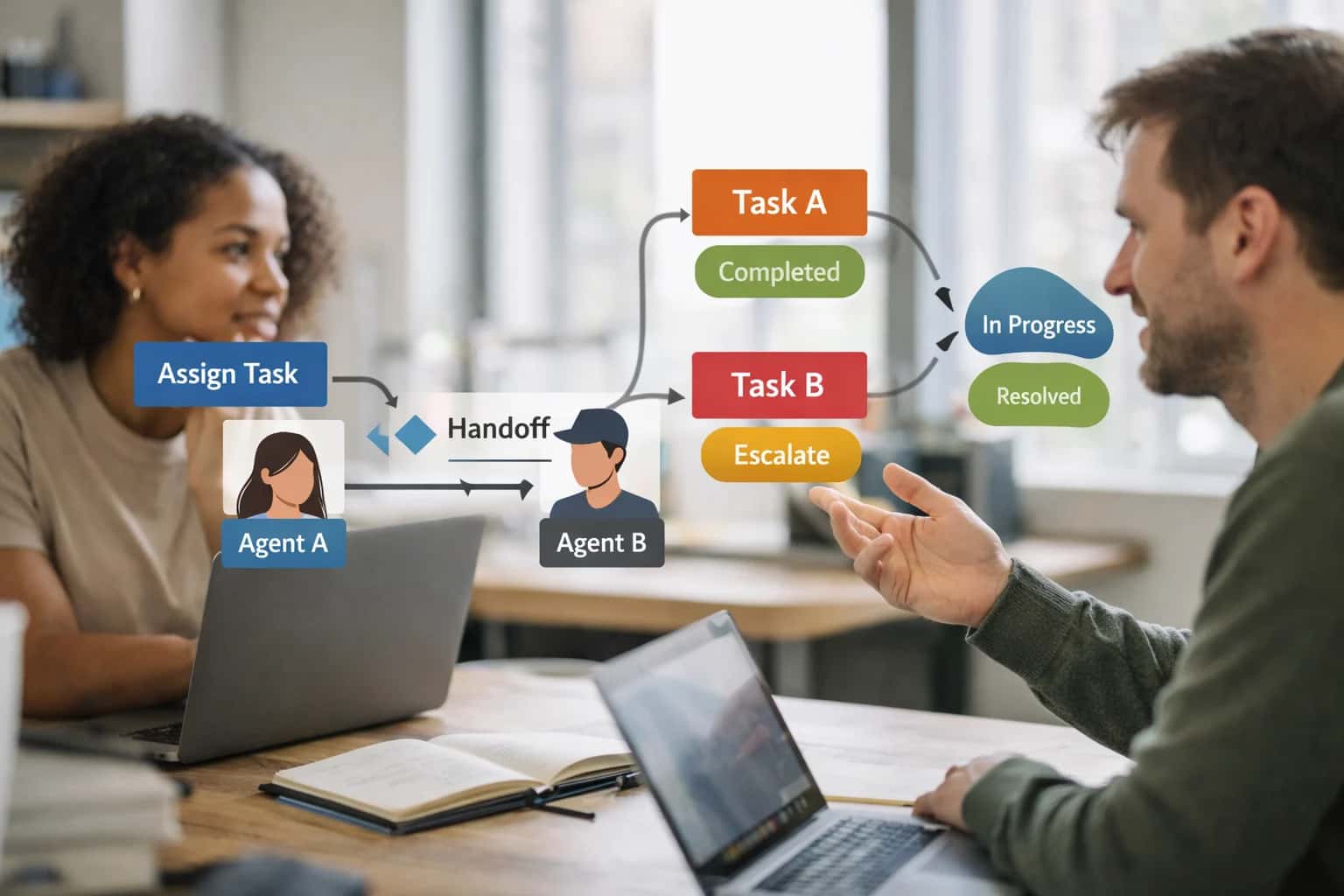
ARCHITECTING AI FOR THE RESIDENTIAL BUILD CYCLE
Where AI Fits into the Residential Builder's Buildertrend Workflow
A practical blueprint for embedding AI agents into Buildertrend's core surfaces to accelerate sales-to-construction handoff, streamline homeowner communications, and automate selections.
Implementation focuses on high-impact, repetitive workflows. In the Selections module, an AI agent can analyze a homeowner's previous choices and the builder's standard allowances to generate a curated, compliant list of upcoming decisions, reducing back-and-forth emails. For Change Orders, AI can draft the scope description and pricing breakdown by parsing related daily log notes and photos, ensuring the change request is clear and ready for client signature faster. These agents operate as middleware—they don't replace Buildertrend but enhance it by writing back structured data, sending templated (but personalized) messages via the Client Portal, and creating follow-up To-Dos for the project manager.
Rollout is phased, starting with a single, high-volume workflow like automated client Q&A. Governance is critical: all AI-generated content in the Client Portal should be clearly labeled, and key actions (like sending a change order) should require a human-in-the-loop approval step within Buildertrend's existing approval chain. This ensures brand voice and contractual accuracy are maintained while still saving the project manager hours per week. For a deeper dive into connecting AI to construction financials, see our guide on AI Integration with Buildertrend and Accounting Software.
WHERE TO CONNECT AI IN YOUR RESIDENTIAL WORKFLOWS
Key Buildertrend Modules and Surfaces for AI Integration
Automating Homeowner Interactions
The Buildertrend Client Portal is the primary surface for homeowner communication. AI can be integrated here to handle routine inquiries and provide proactive updates, reducing the volume of calls and emails to project managers.
Key Integration Points:
- Portal Messaging: Deploy an AI chatbot to answer common questions about schedules, selections, or payment schedules by retrieving data from the connected project.
- Automated Updates: Use AI to generate and send weekly progress summaries by synthesizing data from the Daily Logs, Schedule, and Photos modules.
- Selections Coordination: Integrate AI to guide homeowners through the selection process, answer product questions based on vendor catalogs, and log finalized choices directly to the Selections tool.
This layer focuses on improving client satisfaction and freeing up superintendent time by automating high-frequency, low-complexity communications.
BUILDERTREND INTEGRATIONS
High-Value AI Use Cases for Residential Builders
Practical AI automation for home builders using Buildertrend to streamline client communications, reduce administrative overhead, and accelerate project delivery. These patterns connect directly to Buildertrend's modules and APIs.
01
Automated Client Communications & Updates
Deploy an AI agent that monitors schedule milestones, change orders, and daily logs in Buildertrend to generate personalized homeowner updates. It can answer common questions via a secure chat interface embedded in the client portal, reducing calls to the project manager.
Hours -> Minutes
Update drafting
02
Selections & Change Order Drafting
Integrate AI with the Selections module and Change Orders to accelerate client decisions. The system can draft detailed change order descriptions from client emails or meeting notes, generate pricing breakdowns from the budget, and populate selection sheets with options based on the project's allowance data.
Same day
Turnaround target
03
Schedule Risk & Delay Prediction
Connect AI to the Buildertrend Schedule and Daily Logs to analyze task dependencies, crew availability, and weather delays. The system flags high-risk tasks, suggests schedule adjustments, and automatically updates client communications on potential impacts, helping superintendents stay proactive.
Batch -> Real-time
Risk monitoring
04
Punch List Generation from Photos
Implement computer vision AI that processes photos uploaded to Buildertrend's Photos tool or via the mobile app. It automatically identifies potential punch list items (e.g., paint drips, trim gaps), creates categorized tasks in the To-Do List, and assigns them to the appropriate trade partner, saving superintendent walk-through time.
1 sprint
Implementation cycle
05
Budget Variance & Forecasting
Integrate AI with Buildertrend's Budget Management and Purchase Orders. The agent continuously compares committed costs to the budget, forecasts final costs based on trends, and flags line items at risk of overrun. It can draft variance explanations for the project manager's review.
Hours -> Minutes
Reconciliation support
06
Sales-to-Construction Handoff Automation
Orchestrate an AI workflow that triggers when a sales opportunity in the CRM moves to "Sold." It automatically generates the initial project shell in Buildertrend, populates client and lot information, creates the baseline schedule from a template, and assigns tasks to the pre-construction team, eliminating manual data entry.
Batch -> Real-time
Handoff workflow
PRACTICAL AUTOMATION FOR RESIDENTIAL BUILDERS
Example AI-Powered Workflows in Buildertrend
These concrete workflows show how AI can be integrated into Buildertrend's core surfaces—from the client portal to the schedule and change orders—to reduce manual work, accelerate approvals, and improve homeowner communication.
Trigger: A superintendent or project manager creates a new Change Order item in Buildertrend and uploads related photos, sketches, or email threads.
AI Action:
- An AI agent is triggered via a Buildertrend webhook or scheduled scan of the
Change Ordersmodule. - The agent extracts key details from the uploaded files and the existing job data (e.g., original scope, selections).
- Using a structured prompt, the LLM generates:
- A clear, client-friendly description of the change.
- A bulleted list of included and excluded work.
- A draft pricing rationale based on historical cost data from the
Budgettool.
System Update: The generated text is posted as a comment on the Change Order and pre-populates the description field, ready for PM review and adjustment.
Human Review Point: The project manager reviews, edits if necessary, and then sends the formal Change Order to the homeowner via the client portal for approval. This cuts drafting time from 30+ minutes to under 5.
FROM DATA SYNC TO AGENTIC WORKFLOWS
Implementation Architecture: Connecting AI to Buildertrend's API
A practical blueprint for wiring AI into Buildertrend's core objects to automate residential construction workflows.
Production AI for Buildertrend starts with its REST API, which exposes key objects like Projects, Clients, To-Dos, Change Orders, Selections, and Messages. The integration architecture typically layers AI in three ways: 1) Event-driven agents listening to webhooks (e.g., a new client message or a change order request) to trigger automated drafting or triage; 2) Scheduled batch jobs that sync data from Buildertrend to a vector database for RAG-powered knowledge retrieval (e.g., finding past change order language or spec details); and 3) User-facing copilots embedded via iframe or custom app within Buildertrend's interface, calling external AI services to assist with tasks like writing daily logs or generating selection summaries.
For a concrete example, consider automating Change Order workflows. An AI agent can be triggered via a webhook when a ChangeOrder status changes to Requested. The agent fetches the project context, relevant specs, and past similar orders via RAG, then drafts a detailed scope description and cost breakdown using an LLM. This draft is posted back to Buildertrend as a comment on the change order for the project manager to review and adjust. This reduces manual writing from 30 minutes to a 2-minute review, while ensuring consistency and capturing historical precedent. Similarly, for Homeowner Communications, an agent can monitor the Messages inbox, classify inquiries, and draft responses for common questions about schedules or selections, which are posted as drafts for the builder's team to approve and send.
Rollout requires a phased approach: start with read-only data sync and RAG to build a 'project brain,' then deploy a single high-impact agent (like change order drafting) in a supervised mode where all outputs are human-approved. Governance is critical—every AI-generated post or update must be attributed (e.g., [Draft by AI Agent]) and logged with the source prompt and data used for auditability. Use Buildertrend's existing Role-Based Access Control to ensure only authorized users can trigger or approve AI actions. This architecture ensures AI augments—never bypasses—the accountability and approval chains home builders rely on in Buildertrend.
For builders looking to extend this pattern, consider connecting AI across your entire stack. Our guide on AI Integration with Buildertrend and Accounting Software details how to sync job cost forecasts with QuickBooks, and our overview of AI for Construction Schedule Coordination explains how to integrate Buildertrend schedules with external planning tools for predictive delay alerts.
AI INTEGRATION PATTERNS
Code and Payload Examples
Homeowner Query Handling
Integrate an AI agent into Buildertrend's Client Portal to handle common homeowner questions, reducing calls to the project manager. The agent uses RAG over project documents (selections, schedules, change orders) and a custom knowledge base of builder policies.
Example Webhook Handler (Python):
pythonfrom flask import Flask, request, jsonify import os from inference_agent import HomeownerAgent # Hypothetical agent SDK app = Flask(__name__) agent = HomeownerAgent( project_id=os.getenv('BUILDERTREND_PROJECT_ID'), api_key=os.getenv('BUILDERTREND_API_KEY') ) @app.route('/webhook/client-question', methods=['POST']) def handle_client_question(): """Processes a question from the Buildertrend Client Portal.""" data = request.json # Extract context from Buildertrend webhook payload homeowner_id = data.get('homeownerId') question = data.get('message') project_context = agent.get_project_context(project_id=data.get('projectId')) # Generate grounded, project-specific answer answer, sources = agent.answer_question( question=question, project_context=project_context, homeowner_id=homeowner_id ) # Post answer back to Buildertrend Communications log agent.post_to_buildertrend_log( project_id=data.get('projectId'), message=f"AI Assistant: {answer}", sources=sources # e.g., ['Selections: Kitchen Cabinets', 'Schedule: Drywall Phase'] ) return jsonify({"status": "processed", "answer_preview": answer[:100]})
This pattern keeps the project manager in the loop via the Communications log while deflecting routine inquiries about schedule, selections, or payment status.
AI-ASSISTED WORKFLOWS FOR RESIDENTIAL BUILDERS
Realistic Time Savings and Operational Impact
This table outlines the operational impact of integrating AI agents into key Buildertrend workflows, focusing on time savings and process improvements for home builders.
| Workflow / Module | Before AI | After AI | Implementation Notes |
|---|---|---|---|
Lead to Client Handoff | Manual data entry and follow-up | Automated intake & proposal drafting | AI populates Buildertrend client/project from CRM; human reviews final |
Selections & Change Orders | Back-and-forth emails, manual scope write-ups | Assisted drafting from conversation history | AI suggests descriptions/pricing in Buildertrend CO tool based on client messages |
Daily Homeowner Updates | Manual status calls/emails | Automated, personalized progress summaries | AI generates updates from schedule/task % complete; sent via Buildertrend messaging |
RFI & Specification Clarification | Manual search through plans and docs | Semantic search across project files | AI RAG connected to Buildertrend Documents finds relevant specs in seconds |
Punch List Generation | Superintendent walkthrough, manual list creation | AI-assisted item generation from photo markups | AI suggests items from Fieldwire/Procore photos; imports into Buildertrend punch list |
Subcontractor Communication | Manual dispatch of schedules and updates | Automated, trade-specific task reminders | AI triggers Buildertrend messages based on schedule changes; reduces call volume |
Budget Variance Review | Weekly manual spreadsheet comparison | Automated anomaly flagging | AI monitors Buildertrend budget vs. actuals, alerts PM to >5% variances |
PRACTICAL IMPLEMENTATION FOR BUILDERTREND
Governance, Security, and Phased Rollout
A structured approach to deploying AI for home builders that prioritizes control, data security, and measurable impact.
A successful AI integration for Buildertrend starts with a clear data governance model. This means defining which data objects—like Client Portals, Change Orders, Selections, and Daily Logs—the AI can access via the Buildertrend API. Access is scoped to specific job sites or user roles using Buildertrend's existing permissions. All AI-generated content, such as draft change order descriptions or client portal responses, is logged as a system activity with a clear audit trail, ensuring you can trace any automated action back to the source data and user who triggered it.
For security, we implement a layered architecture where the AI agent operates as a middleware service, never storing sensitive Buildertrend data long-term. Client communications are processed in-memory, and any temporary data used for context is encrypted. The integration uses secure, service-specific API keys with limited scopes, and all prompts are engineered to avoid hallucinating financial or contractual details, instead pulling directly from committed Budget, Purchase Order, and Schedule records to ground its responses in actual project data.
We recommend a phased rollout to de-risk adoption and demonstrate value quickly. Phase 1 often targets high-volume, low-risk workflows like automating initial responses in the Client Portal or drafting Change Order narratives from superintendent notes. Phase 2 expands to Selections management, using AI to answer common homeowner questions about options and deadlines. Phase 3 introduces predictive elements, like analyzing Daily Log sentiment and schedule progress to flag potential client concerns before they escalate. Each phase includes a defined review period where superintendents or project managers approve AI suggestions before they are posted, ensuring human oversight remains central to the workflow.
Enabling Efficiency, Speed & Accuracy
Intelligent Analysis, Decision & Execution
We build AI systems for teams that need search across company data, workflow automation across tools, or AI features inside products and internal software.
Talk to Us
Search across company data
Give teams answers from docs, tickets, runbooks, and product data with sources and permissions.
Useful when people spend too long searching or get different answers from different systems.
Enterprise searchRAGPermissions
Read more
Automate internal workflows
Use AI to route work, draft outputs, trigger actions, and keep approvals and logs in place.
Useful when repetitive work moves across multiple tools and teams.
AI agentsWorkflow automationGovernance
Read more
Add AI to products and internal tools
Build assistants, guided actions, or decision support into the software your team or customers already use.
Useful when AI needs to be part of the product, not a separate tool.
AI integrationDecision supportModel routing
Read moreIMPLEMENTATION AND WORKFLOW DETAILS
Frequently Asked Questions for Buildertrend AI Integration
Practical answers for home builders evaluating AI integration with Buildertrend. Focused on workflow automation, data security, rollout sequencing, and technical architecture.
AI integrates with Buildertrend primarily through its REST API and webhooks, acting as a middleware layer that reads, analyzes, and writes data back to the platform. Key connection points include:
- Triggers: Webhooks for new messages in the Client Portal, updated To-Do List items, or newly created Change Orders.
- Data Context: The AI system pulls relevant project data (budget, schedule, selections, past communications) via API to inform its actions.
- Actions & Updates: After processing, the system can create To-Dos, draft Change Order descriptions, post updates to the Message Center, or log notes in the Daily Log.
- Human Review: Critical actions (like finalizing a Change Order) typically require a project manager's approval within Buildertrend before being committed.
This architecture keeps Buildertrend as the system of record while adding intelligent automation to its surfaces.

About the author
Prasad Kumkar
CEO & MD, Inference Systems
Prasad Kumkar is the CEO & MD of Inference Systems and writes about AI systems architecture, LLM infrastructure, model serving, evaluation, and production deployment. Over 5+ years, he has worked across computer vision models, L5 autonomous vehicle systems, and LLM research, with a focus on taking complex AI ideas into real-world engineering systems.
His work and writing cover AI systems, large language models, AI agents, multimodal systems, autonomous systems, inference optimization, RAG, evaluation, and production AI engineering.
LinkedIn
Limited slotsGet a Free AI Consultation
Partnered with leading AI, data, and software stack.





How We Work
Custom AI workflows for your Business
One-fit-all AI don't work for modern businesses. At Inferensys, we aim to understand your business & custom requirements; which we use to define most efficient agentic workflows, the data, and the tools for your business.
01
Review the use case
We understand the task, the users, and where AI can actually help.
Read more02
Pick the right approach
We define what needs search, automation, or product integration.
Read more03
Build the first useful version
We implement the part that proves the value first.
Read more04
Improve from there
We add the checks and visibility needed to keep it useful.
Read moreThe first call is a practical review of your use case and the right next step.
Talk to Us