For a GC, AI isn't a separate tool; it's an intelligence layer that connects to Procore's key operational surfaces. This means integrating with specific data objects and automation triggers across modules. Primary integration points include the Documents tool for specification and submittal intelligence, the Observations and Daily Logs for field data synthesis, the RFIs module for drafting and routing, the Prime Contract and Subcontracts for obligation tracking, and the Cost Management ledger for forecasting and variance analysis. AI agents act on these objects via Procore's REST API and webhooks, listening for events like a new RFI submission or a daily log photo upload to trigger analysis.

Integration
AI for General Contractors Using Procore
A role-specific guide for General Contractors on implementing AI across Procore's platform to streamline operations for project managers, superintendents, and preconstruction teams.
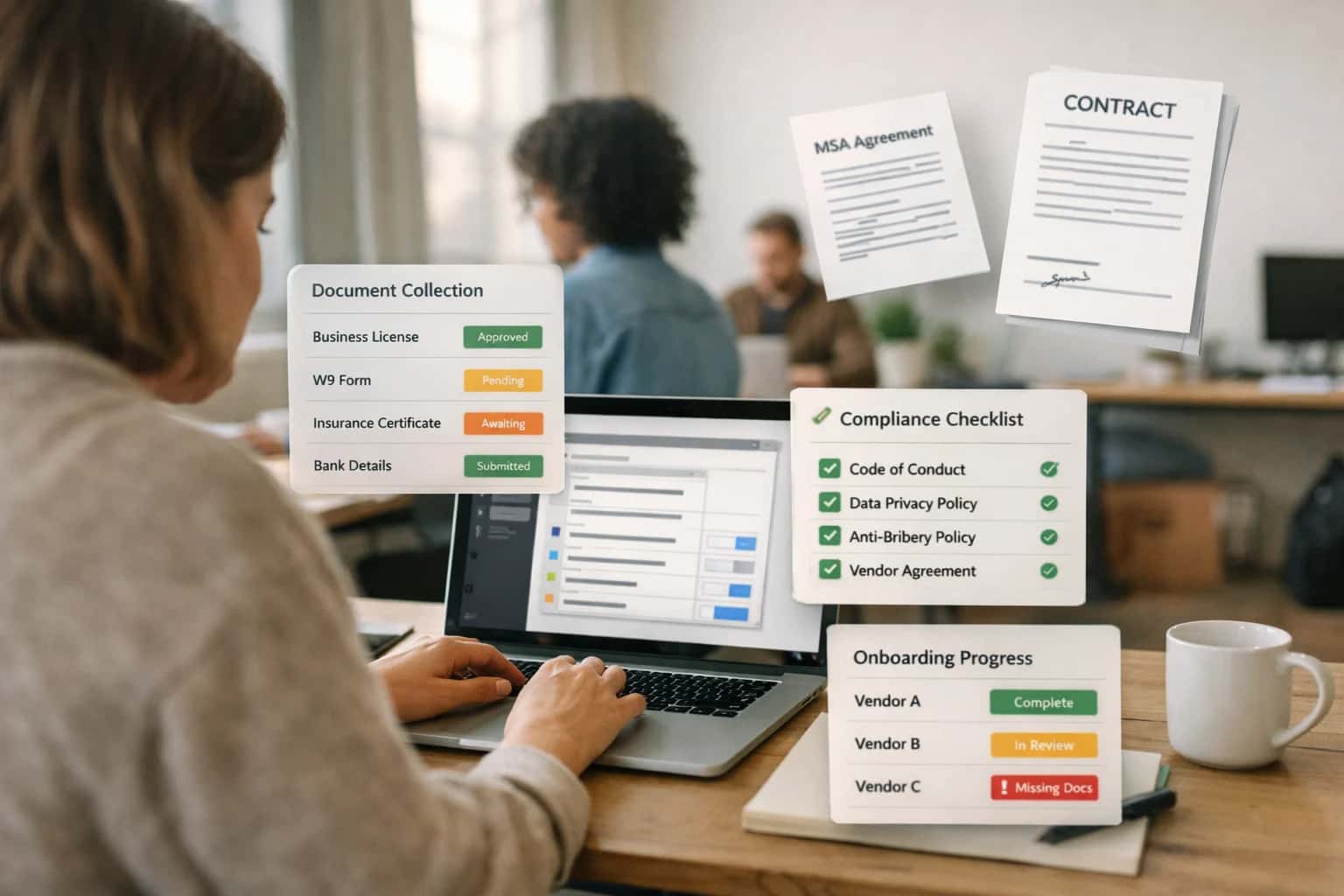
ARCHITECTURE BLUEPRINT
Where AI Fits in a GC's Procore Stack
A practical guide to wiring AI into the core workflows of a General Contractor's Procore instance.
Implementation follows a hub-and-spoke pattern: a central AI orchestration layer (often using platforms like n8n or Microsoft Copilot Studio) securely queries Procore's API, processes data with LLMs or custom models, and posts enriched data back to relevant records or triggers alerts in Procore's Communications tool. For example, an AI agent can monitor the Submittals log, cross-reference incoming shop drawings against the project's specification sections stored in Documents, and flag potential non-compliances for the project engineer before formal review begins. This reduces manual specification crawling from hours to minutes.
Rollout is phased, starting with read-only agents for summarization and alerting (e.g., auto-summarizing the week's RFIs and change orders for the owner's report) before progressing to write-back workflows that require governance. A critical success factor is configuring Procore's Permission Templates to ensure AI service accounts have the minimal necessary access—typically "Read-Only" on most modules, with specific "Standard" or "Admin" access only on the surfaces where they need to create or update items, like adding a comment to an RFI. All AI actions must be auditable, logging the source agent, timestamp, and triggering event to Procore's Audit Trail or an external system.
The goal is to make the project team more proactive. Instead of a superintendent manually compiling a safety report, an AI agent can analyze all Observations tagged 'Safety' from the past 24 hours, prioritize items by severity using historical incident data, and draft the report in the Daily Log. This shifts effort from data gathering to decision-making. For a deeper dive into automating specific workflows like RFIs or submittals, see our guide on AI for Construction RFI Management and our technical blueprint for AI Integration for Procore API and Custom Workflows.
AI SURFACES FOR GENERAL CONTRACTORS
Key Procore Modules for AI Integration
Daily Logs & Observations
AI can transform daily field reporting by automatically parsing weather data, manpower counts, and work descriptions from superintendent inputs. Agents can generate concise summaries, flag safety observations, and suggest corrective actions, turning raw notes into structured, actionable data. This reduces evening admin work and ensures critical issues are surfaced immediately.
Tasks & Punch Lists
Integrate AI to auto-generate punch list items from photo markups and inspection notes. An agent can categorize items by trade, assign priority based on location and due date, and track completion rates. For tasks, AI can analyze dependencies and suggest optimal sequencing for subcontractor work, helping superintendents keep the critical path on track.
FOCUSED ON PROCORE
High-Value AI Use Cases for General Contractors
For GCs, AI integration into Procore isn't about replacing the platform—it's about making every module smarter. These are practical, production-ready patterns to automate high-friction workflows for project managers, superintendents, and preconstruction teams.
01
Automated RFI Drafting & Routing
AI agents monitor the Procore RFI log for new, unanswered questions. Using the project's specification sections and submittal registers, the agent drafts a preliminary response, suggests relevant cost codes, and routes it to the correct consultant or subcontractor for review. This turns a 2-hour manual research task into a 15-minute review cycle.
Hours -> Minutes
Response time
02
Intelligent Submittal Log Management
Instead of manually populating the Procore Submittals log, an AI workflow ingests the project's specification book (PDF), automatically creates submittal items with correct spec section references, and pre-assigns them to trade contractors based on the scope of work. It flags items requiring architectural review versus structural approval, streamlining the entire preconstruction workflow.
1 sprint
Setup time saved
03
Daily Log & Progress Photo Summarization
For superintendents, AI analyzes photos uploaded to Procore's Daily Log, manpower entries, and work descriptions to auto-generate a concise narrative summary. It can flag discrepancies (e.g., concrete pour noted but no inspection photo) and suggest follow-up actions. This ensures accurate, audit-ready logs without the evening paperwork burden.
Batch -> Real-time
Log completion
04
Change Order Scope & Pricing Assistant
When a Procore Change Event is created, an AI agent reviews linked photos, RFIs, and meeting minutes to draft a clear scope description. It then references the project's master budget and historical unit costs to suggest a preliminary pricing breakdown. This accelerates client and subcontractor negotiations by providing a data-backed starting point.
Same day
Draft turnaround
05
Predictive Cost Code Validation
AI monitors the Procore Cost Management module, analyzing new commitments (POs, Subcontracts) and invoices. It cross-references line-item descriptions against the project's cost code structure to flag mis-coded items before they hit the budget. This prevents monthly reclassification work for project accountants and ensures accurate cash flow forecasting.
Proactive
Error prevention
06
Specification & Contract Clause Retrieval
A RAG-powered agent connects to Procore's Documents tool. Project teams can ask natural language questions (e.g., "What's the curing time for the slab?" or "Show me the liquidated damages clause") and get instant answers with direct links to the spec section or prime contract PDF. This eliminates hours of manual searching in complex project manuals.
Instant
Knowledge access
FOR GENERAL CONTRACTORS
Example AI-Powered Workflows in Procore
For GCs, AI integration in Procore should focus on reducing administrative burden and surfacing project risks faster. These workflows illustrate how AI agents can act on Procore's data to automate routine tasks and provide proactive intelligence to project managers, superintendents, and preconstruction teams.
Trigger: A superintendent creates a new RFI item in Procore's RFI tool but leaves the description field blank or provides minimal notes.
AI Agent Action:
- The agent is triggered via a Procore webhook on RFI creation.
- It retrieves the RFI location (drawing number, spec section) and the linked project documents (specifications, drawings from the Procore Documents tool).
- Using an LLM, it analyzes the context to draft a clear, formal RFI question that references the relevant spec clauses and drawing details.
- It suggests potential recipients (architect, engineer) based on the spec section's responsible party and past RFI history.
System Update: The drafted question and suggested recipients are posted as a comment on the RFI. The project engineer reviews, makes any edits, and submits—cutting drafting time from 20 minutes to 2.
Human Review Point: The agent never auto-submits. The PM or PE must review and approve the draft before sending.
A PRACTICAL BLUEPRINT FOR GENERAL CONTRACTORS
Implementation Architecture: Connecting AI to Procore
A technical guide to wiring AI agents into Procore's data model and workflows for project managers, superintendents, and preconstruction teams.
For a General Contractor, a production AI integration must connect at the data layer of Procore's platform. This typically involves using Procore's REST API and webhooks to create a middleware service that listens for events (e.g., a new RFI, an updated daily log, a submittal upload) and triggers corresponding AI workflows. The core surfaces for integration are Procore's Project, Cost Management, Documents, and Observations modules. Data flows bi-directionally: AI agents ingest project records, photos, and documents to generate insights or draft content, which is then posted back to Procore as enriched data, comments, or new records, all while maintaining a full audit trail.
A common implementation pattern uses a queue-based architecture. For example, when a new RFI is logged in Procore, a webhook pushes its context to a message queue. An AI agent retrieves it, analyzes attached drawings and specs using a vision model, searches a vector store of past projects for similar RFIs, and drafts a proposed answer. This draft is posted as a comment on the RFI for the project engineer's review and finalization. This reduces the research and drafting cycle from hours to minutes. Similar patterns apply to automating daily log summarization, submittal compliance checking, and punch list item generation from photo markups.
Rollout requires a phased, workflow-specific approach. Start with a single, high-volume process like RFI drafting for one pilot project. Integrate with Procore's existing Roles and Permissions to ensure AI-generated content follows the same approval chains. Govern the integration by implementing human-in-the-loop review steps for all AI outputs before they become official project records. Monitor performance with custom reports in Procore Analytics, tracking metrics like 'RFI Draft Time' and 'Submittal Review Cycle'. This controlled, iterative approach de-risks the implementation and builds internal confidence before scaling to other workflows like change order scoping or schedule delay prediction.
AI INTEGRATION PATTERNS
Code & Payload Examples
Automating Request for Information Creation
An AI agent can draft RFIs by analyzing incoming emails, specification PDFs, and drawing markups. It uses the Procore API to create the RFI object, attach relevant documents, and route it to the correct reviewer based on the trade and project directory.
Typical Workflow:
- Webhook from Procore's Documents tool triggers on a new spec upload.
- Agent extracts key sections and clauses using an LLM.
- When a field question arises, the agent matches it to the relevant spec section.
- It auto-populates the RFI form and assigns it to the project engineer.
python# Example: Create an RFI via Procore API import requests def create_rfi_from_question(project_id, question, spec_reference, assigned_to_id): headers = {"Authorization": "Bearer <token>", "Content-Type": "application/json"} payload = { "rfi": { "title": f"Clarification: {spec_reference}", "question": question, "spec_section": spec_reference, "assigned_to": {"id": assigned_to_id}, "priority": "Normal", "due_date": "<date>" } } response = requests.post( f"https://api.procore.com/rest/v1.0/projects/{project_id}/rfis", json=payload, headers=headers ) return response.json()
AI INTEGRATION FOR GENERAL CONTRACTORS
Realistic Time Savings & Operational Impact
How AI integration into Procore transforms manual, reactive workflows into proactive, assisted operations for project managers, superintendents, and preconstruction teams.
| Workflow | Before AI | After AI | Implementation Notes |
|---|---|---|---|
RFI Drafting & Routing | 1-2 hours per RFI | 15-20 minutes per RFI | AI drafts from specs/plans; human reviews & routes in Procore |
Daily Log Summarization | 30-45 min end-of-day | 5 min auto-generated | AI parses weather, manpower, work notes from field inputs |
Submittal Log Population | Manual entry from PDFs | Auto-populated from specs | AI extracts data; PM validates in Procore Documents |
Punch List Item Generation | Walkthrough, then manual entry | Items suggested from photo markups | AI analyzes field photos; superintendent approves/edits |
Change Order Scope Drafting | Back-and-forth emails, 2-3 hours | Initial draft in 30 min | AI suggests description & scope from correspondence & plans |
Schedule Delay Risk Analysis | Weekly manual review | Real-time alerts on critical path | AI monitors Procore Schedules & daily logs for pressure points |
Preconstruction Takeoff Support | Manual or semi-automated in Bluebeam | AI-assisted quantity validation | AI cross-references BIM/PDFs with historical bid data |
ARCHITECTING FOR PRODUCTION
Governance, Security, and Phased Rollout
A practical guide to deploying AI in Procore with control, security, and measurable impact.
For a General Contractor, AI integration must respect Procore's existing data model and user permissions. Your implementation should treat AI as a privileged user within the system, interacting with Procore's REST API and webhooks to read and write data to specific modules like Prime Contracts, Submittals, RFIs, and Daily Logs. All AI actions must be scoped by the same project- and role-based access controls (RBAC) your team uses, ensuring a superintendent's AI agent only sees their assigned projects. Data flows should be logged to Procore's Comments or a custom log object for a full audit trail of AI-generated content and decisions.
Start with a pilot focused on a single, high-frequency, low-risk workflow. A common first phase is AI-assisted RFI drafting, where an agent reads relevant specifications from the Procore Documents tool and a superintendent's voice memo to generate a first draft. This workflow runs in a sandbox environment, with a human-in-the-loop approval step in Procore before the RFI is officially logged. Measure success by the reduction in time from observation to submitted draft. Subsequent phases can introduce more autonomous workflows, like automated Daily Log summarization from Fieldwire inputs or submittal compliance pre-checks, each with its own governance gate and rollout plan.
Security is non-negotiable. Never send raw Procore data directly to a public LLM endpoint. Your architecture must include a secure proxy layer that strips personally identifiable information (PII) and uses enterprise-grade models via private endpoints. For retrieval-augmented generation (RAG), maintain a separate vector store for your project knowledge (specs, contracts, past RFIs) that is populated and updated via secure, automated pipelines from Procore. This keeps sensitive data within your governance perimeter while enabling powerful semantic search. A phased rollout allows you to validate data security, user adoption, and business impact at each step, turning AI from a concept into a reliable, governed part of your Procore operations.
Enabling Efficiency, Speed & Accuracy
Intelligent Analysis, Decision & Execution
We build AI systems for teams that need search across company data, workflow automation across tools, or AI features inside products and internal software.
Talk to Us
Search across company data
Give teams answers from docs, tickets, runbooks, and product data with sources and permissions.
Useful when people spend too long searching or get different answers from different systems.
Enterprise searchRAGPermissions
Read more
Automate internal workflows
Use AI to route work, draft outputs, trigger actions, and keep approvals and logs in place.
Useful when repetitive work moves across multiple tools and teams.
AI agentsWorkflow automationGovernance
Read more
Add AI to products and internal tools
Build assistants, guided actions, or decision support into the software your team or customers already use.
Useful when AI needs to be part of the product, not a separate tool.
AI integrationDecision supportModel routing
Read moreAI IMPLEMENTATION FOR PROCORE
Frequently Asked Questions for GCs
Practical answers for General Contractors evaluating how to add AI into their Procore workflows for project managers, superintendents, and preconstruction teams.
Start with a high-volume, manual data entry or review process where AI can provide immediate time savings. For most GCs, the top three entry points are:
- RFI Drafting & Routing: Use AI to auto-draft RFIs from email threads or field notes, suggest relevant specs, and route to the correct reviewer based on the work breakdown structure.
- Daily Log Summarization: Automatically generate the narrative summary for the Superintendent's Daily Log by analyzing weather, manpower counts, work completed notes, and photo uploads.
- Submittal Log Population: Extract data from specification PDFs and vendor submittals to auto-populate the Submittal Log (spec section, responsible party, due dates), reducing manual entry by project engineers.
Implementation sequencing: Begin with a single project as a pilot, using Procore's API and webhooks to send data to your AI service and receive structured outputs back into specific tool records.

About the author
Prasad Kumkar
CEO & MD, Inference Systems
Prasad Kumkar is the CEO & MD of Inference Systems and writes about AI systems architecture, LLM infrastructure, model serving, evaluation, and production deployment. Over 5+ years, he has worked across computer vision models, L5 autonomous vehicle systems, and LLM research, with a focus on taking complex AI ideas into real-world engineering systems.
His work and writing cover AI systems, large language models, AI agents, multimodal systems, autonomous systems, inference optimization, RAG, evaluation, and production AI engineering.
LinkedIn
Limited slotsGet a Free AI Consultation
Partnered with leading AI, data, and software stack.





How We Work
Custom AI workflows for your Business
One-fit-all AI don't work for modern businesses. At Inferensys, we aim to understand your business & custom requirements; which we use to define most efficient agentic workflows, the data, and the tools for your business.
01
Review the use case
We understand the task, the users, and where AI can actually help.
Read more02
Pick the right approach
We define what needs search, automation, or product integration.
Read more03
Build the first useful version
We implement the part that proves the value first.
Read more04
Improve from there
We add the checks and visibility needed to keep it useful.
Read moreThe first call is a practical review of your use case and the right next step.
Talk to Us