The core integration surfaces are the BIM/design platform (like Revit or Navisworks), the preconstruction platform (like Procore's Estimating or Autodesk Takeoff), and the project management platform (like Procore Project Management or Autodesk Build). AI agents act as the connective tissue, automating handoffs. For example, an AI workflow can extract quantities and specifications from a Revit model to auto-populate a bid in Procore Estimating, or analyze a design model against a subcontractor's scope in Buildertrend to flag potential gaps before construction begins.

Integration
AI for Design-Build Firms
Integrate AI across BIM, preconstruction, and project management platforms to unify design-build workflows, reduce RFI cycles, automate clash detection, and accelerate project delivery.
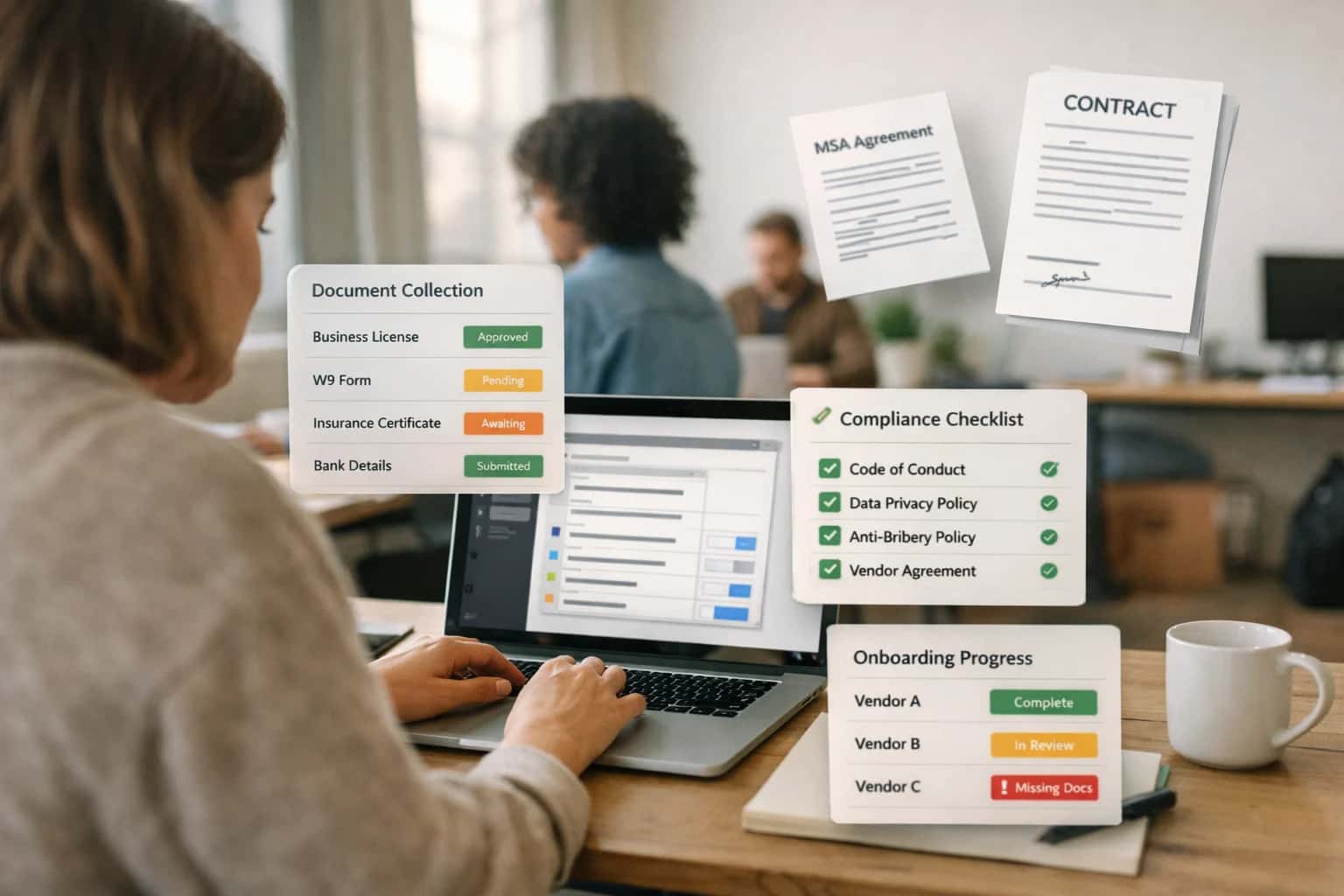
ARCHITECTING INTEGRATED WORKFLOWS
Where AI Fits in the Design-Build Stack
For design-build firms, AI integration connects the traditionally siloed phases of design, preconstruction, and project delivery into a continuous, intelligent workflow.
Implementation focuses on creating a unified data layer across these systems. This involves using APIs and webhooks to sync key objects—BIM elements, cost items, schedule activities, RFIs—into a central context store. AI models then operate on this enriched dataset to power use cases like automated value engineering suggestions, generative design compliance checking, and predictive cost-over-run alerts based on historical design-change impacts. The goal is to shift decision-making earlier, where changes are less costly.
Rollout is phased, starting with a single high-value workflow like AI-assisted design-to-estimate. Governance is critical, requiring clear rules for human-in-the-loop review, especially for cost or scope recommendations. An audit trail must track which AI agent made a suggestion, based on which data sources, and the final human decision. This controlled approach allows design-build teams to accelerate integrated project delivery without sacrificing accountability, turning weeks of manual coordination into days of assisted workflow.
AI WORKFLOW CONNECTIONS
Key Integration Surfaces Across the Design-Build Lifecycle
Connecting AI to Design Authoring and Coordination
AI integrates directly with BIM platforms (Revit, Archicad) and coordination hubs (Autodesk BIM 360/ACC, Navisworks) to automate preconstruction workflows. Key surfaces include:
- Model Data Extraction: Use AI to parse IFC and native model files, extracting room data, component counts, and system information for automated quantity takeoff and spec compliance checking.
- Clash Detection & Resolution: AI agents can prioritize clash reports from coordination meetings, suggest resolution paths based on historical data, and automatically update issue statuses in platforms like Autodesk Build.
- Design-Assist Drafting: Integrate AI copilots within design software to generate RFI drafts based on model ambiguities or automate the creation of shop drawing markups from coordination notes.
This layer focuses on reducing manual model interrogation and accelerating the design-to-constructible-document transition.
INTEGRATED WORKFLOW AUTOMATION
High-Value AI Use Cases for Design-Build
For design-build firms, AI integration connects the silos between design intent and built outcome. These use cases focus on automating handoffs, enriching data, and providing predictive insights across your BIM, preconstruction, and project management platforms.
01
Automated RFI Generation from BIM Clashes
AI monitors the BIM coordination model (Revit, Navisworks) for new clashes. It automatically drafts a structured Request for Information with relevant views, suggested disciplines, and priority, then creates and routes the RFI ticket in Procore or Autodesk Build. This turns a manual, reactive process into a proactive workflow.
Batch -> Real-time
Issue detection
02
Specification & Submittal Compliance Checking
AI agents parse project specifications (PDFs in Procore Documents) and cross-reference them against submittal packages and shop drawings. They flag non-compliant items for the project engineer and automatically update the submittal log status, reducing manual review time and compliance risk.
Hours -> Minutes
Review cycle
03
Design-Change Cost Impact Forecasting
When a design change is issued in the BIM model, AI analyzes the delta, references the Procore or Buildertrend budget and historical unit costs, and generates a preliminary cost impact forecast. This provides the project manager and client with real-time financial data to support change decisions.
Same day
Impact analysis
04
Constructability Review Copilot
An AI copilot for VDC and preconstruction teams reviews 3D models and 2D plans. It surfaces potential constructability issues—like insufficient access, sequencing conflicts, or code violations—by drawing on past project data and best practices, logging them directly to the issue tracker in Autodesk Build.
1 sprint
Review coverage
05
Automated Closeout Documentation Assembly
At project closeout, AI orchestrates data from Procore Closeout, Autodesk Docs, and field logs (Fieldwire) to auto-generate O&M manuals, warranty registers, and asset data sheets. It identifies missing documents and assigns tasks, compressing the handover timeline.
Weeks -> Days
Manual assembly
06
Integrated Schedule Risk Analysis
AI continuously analyzes the project schedule (linked from Procore Schedules or MS Project), alongside RFI logs, daily reports, and weather feeds. It predicts potential delays, suggests mitigation actions, and automatically updates look-ahead plans for the superintendent in Fieldwire.
Proactive vs. Reactive
Risk management
INTEGRATED AUTOMATION FROM DESIGN TO HANDOVER
Example AI-Powered Design-Build Workflows
For design-build firms, AI integration connects traditionally siloed design (BIM), preconstruction, and project management data. These workflows show how AI agents and automations can accelerate delivery, reduce rework, and improve client collaboration by acting on a unified data model.
Trigger: A superintendent or project engineer flags a potential clash or ambiguity while reviewing the latest coordinated model in Autodesk Build or Navisworks.
Context/Data Pulled: The AI agent retrieves:
- The specific 3D view and object IDs from the BIM model.
- Relevant specification sections and detail drawings from the Procore Documents folder linked to that model area.
- Historical RFI logs for similar scopes or trades.
Model/Agent Action: A multi-step agent:
- Drafts a complete RFI description, referencing the exact model coordinates and object IDs.
- Proposes 2-3 potential resolution options based on the retrieved specs and past approved RFIs.
- Identifies the responsible design party (architect, structural engineer, MEP) and the affected subcontractors.
System Update/Next Step: The drafted RFI, with attachments and proposed routing, is pre-populated in Procore's RFI tool. It is assigned to the Project Manager for a final review and one-click submission.
Human Review Point: The PM reviews the draft for accuracy and strategic framing before sending it to the design team, ensuring the question is clear and positions the builder favorably.
FROM MODEL TO MOBILE
Implementation Architecture: Connecting BIM to the Field
A practical blueprint for integrating AI agents between design platforms like Revit and field management tools like Procore or Fieldwire to close the information gap.
The core of this integration is a bi-directional data pipeline. On the design side, AI agents connect to the BIM 360 or Autodesk Construction Cloud API to monitor model revisions, extract intelligent property sets, and parse Navisworks clash reports. On the field side, agents use the Procore API or Fieldwire API to create and update RFIs, Issues, and Punch List items directly from model intelligence. The critical middleware is a workflow orchestration layer (often built with tools like n8n or CrewAI) that maps model entities (e.g., a specific wall assembly) to field surfaces (e.g., a location-specific task).
A typical automated workflow begins when a new model version is published. An AI agent analyzes the delta between revisions, focusing on changes to MEP fixtures, structural elements, or finish schedules. It then cross-references these changes against the current project schedule in Procore Schedules or MS Project. If a changed element is within the upcoming 2-week look-ahead, the agent automatically generates a pre-populated Fieldwire task or Procore Observation for the superintendent, highlighting the specific clash or specification update, complete with a screenshot from the model viewer and a link to the relevant detail sheet.
Rollout requires a phased, trade-by-trade approach. Start with a single high-value workflow, such as automated punch list generation from BIM-coordinated finish schedules. Governance is critical: all AI-generated field items should be tagged as AI-Drafted and routed through a human-in-the-loop approval, like the BIM manager or lead superintendent, within the platform's existing approval routing system before being assigned. This ensures model authority while drastically reducing the manual transfer of design intent, turning what was a weekly coordination meeting into a continuous, actionable feed.
DESIGN-BUILD INTEGRATION PATTERNS
Code & Payload Examples
Automating RFI Drafts from Model Comments
When a designer adds a comment to a Revit model via the Autodesk Construction Cloud API, an AI agent can parse the 3D location and comment text to draft a formal RFI in Procore. This bridges the design-intent gap.
Example Webhook Payload from ACC:
json{ "event": "model.comment.added", "timestamp": "2024-05-15T14:30:00Z", "data": { "project_id": "proj_abc123", "model_urn": "urn:adsk.objects:os.object:model/architectural.rvt", "comment": { "id": "comment_789", "author": "[email protected]", "text": "Clash with structural beam at gridline C-5. Verify clearance for ductwork.", "position": {"x": 125.4, "y": 89.1, "z": 12.0} } } }
An AI workflow ingests this payload, enriches it with relevant spec sections from Procore Documents, and posts a structured RFI draft to the Procore RFI log via its API, pre-assigning it to the structural engineer.
AI FOR DESIGN-BUILD WORKFLOWS
Realistic Time Savings and Operational Impact
How AI integration across BIM, preconstruction, and project management platforms accelerates integrated design-build delivery.
| Workflow / Module | Traditional Process | AI-Assisted Process | Implementation Notes |
|---|---|---|---|
RFI Drafting from BIM Clash | Manual review of clash report, 1-2 hours per complex RFI | AI auto-generates draft RFI with spec references, ~15 minutes review | Integrates Autodesk BIM 360/Revit with Procore RFI module |
Submittal Log Population | Manual entry from spec book, 8-16 hours per project phase | AI extracts and maps spec sections to log, 2-4 hours verification | Connects Procore Submittals to OCR-processed PDF specs |
Preliminary Cost Estimate from Schematic Design | Takeoff + pricing by estimator, 3-5 days | AI performs initial quantity takeoff, estimator reviews & adjusts, 1-2 days | Links Revit model to estimating platforms (e.g., Bluebeam, Stack) |
Change Order Narrative Drafting | PM writes description, tracks scope creep manually, 2-3 hours each | AI drafts narrative from email/meeting notes & linked schedule impact, 30 min review | Integrates Buildertrend COs with communication platforms and MS Project |
Daily Log & Progress Photo Summarization | Superintendent manually compiles notes and photos end-of-day, 45-60 minutes | AI transcribes voice notes, tags photos, suggests log entries, 15 min review | Uses Fieldwire mobile app with offline-capable AI agent |
Closeout Document Assembly | Manual compilation of O&M manuals, warranties, and as-builts, 40+ hours | AI aggregates documents from Procore, Autodesk Docs, and vendor portals, 8-12 hours QA | Orchestrates data from multiple platforms into a unified handover package |
Design Coordination Meeting Prep | VDC manager manually flags clashes and updates agenda, 4-6 hours weekly | AI analyzes latest model sync, highlights new clashes, suggests agenda topics, 1-2 hours | Connects Navisworks/BIM 360 to Microsoft Teams/Outlook for workflow automation |
FOR DESIGN-BUILD INTEGRATION
Governance and Phased Rollout Strategy
A controlled, risk-managed approach to embedding AI across your design-build technology stack.
Start with a pilot workflow that connects two systems, such as extracting key design parameters from a Revit model to auto-populate a Procore submittal log or generating a preliminary RFI draft in Autodesk Build based on a BIM clash report. This initial phase validates the data pipeline, establishes a human-in-the-loop review step, and measures time savings for a single project team. Governance begins here with clear RBAC (Role-Based Access Control) mapping to ensure only authorized BIM managers or project engineers can trigger AI actions and review outputs.
Scale to integrated project delivery workflows in Phase 2, connecting AI across the design-build lifecycle. For example, an AI agent could monitor the Autodesk Build Issues module for recurring design coordination problems, analyze the linked BIM 360 model elements, and suggest detailed scope clarifications for the next Procore Prime Contract amendment. This phase introduces audit logging for all AI-generated content and establishes a cross-functional steering committee (design, construction, IT) to approve new use cases and manage change control.
A full rollout embeds AI as a governed orchestration layer between your BIM, preconstruction, and project management platforms. This involves deploying queue-based processing for high-volume tasks like daily log summarization from Fieldwire or automated punch list generation from Procore Photos, ensuring system stability. Final governance includes prompt versioning, output quality scoring (e.g., accuracy of AI-generated cost codes), and a defined rollback procedure. The goal is predictable, auditable automation that accelerates integrated delivery without introducing unmanaged risk.
Enabling Efficiency, Speed & Accuracy
Intelligent Analysis, Decision & Execution
We build AI systems for teams that need search across company data, workflow automation across tools, or AI features inside products and internal software.
Talk to Us
Search across company data
Give teams answers from docs, tickets, runbooks, and product data with sources and permissions.
Useful when people spend too long searching or get different answers from different systems.
Enterprise searchRAGPermissions
Read more
Automate internal workflows
Use AI to route work, draft outputs, trigger actions, and keep approvals and logs in place.
Useful when repetitive work moves across multiple tools and teams.
AI agentsWorkflow automationGovernance
Read more
Add AI to products and internal tools
Build assistants, guided actions, or decision support into the software your team or customers already use.
Useful when AI needs to be part of the product, not a separate tool.
AI integrationDecision supportModel routing
Read moreAI INTEGRATION FOR DESIGN-BUILD FIRMS
Frequently Asked Questions
Common questions about implementing AI across the integrated design-build workflow, from BIM coordination to project delivery.
The core challenge is establishing a bidirectional data flow between systems like Revit/Autodesk Docs and Procore/Autodesk Build. A typical integration architecture involves:
- Event Triggers: Use webhooks or scheduled syncs from the BIM platform (e.g., a new model version is published) and the construction platform (e.g., an RFI is logged).
- Orchestration Layer: A central middleware (often a lightweight service you host) receives these events, fetches relevant context (model metadata, issue logs, spec sections), and calls the appropriate AI agent.
- AI Agent Actions: Agents perform tasks like:
- Clash to RFI: Analyze a new clash report from Navisworks, draft an RFI description with suggested resolution, and create the RFI in Procore.
- Spec to Checklist: Parse an updated specification PDF in Procore's Documents, extract quality control requirements, and generate a corresponding inspection checklist in Autodesk Build.
- System Update: The orchestration layer posts the AI's output (the drafted RFI, the generated checklist) back to the target platform via its API.
- Human Review Loop: Configure the workflow to place AI-generated items in a "Draft" or "Pending Review" status for a BIM manager or project engineer to approve before final submission.
Key tools are the APIs of both platforms and a vector database to store and retrieve relevant project knowledge (past RFIs, spec clauses, model element data) for grounding the AI's responses.

About the author
Prasad Kumkar
CEO & MD, Inference Systems
Prasad Kumkar is the CEO & MD of Inference Systems and writes about AI systems architecture, LLM infrastructure, model serving, evaluation, and production deployment. Over 5+ years, he has worked across computer vision models, L5 autonomous vehicle systems, and LLM research, with a focus on taking complex AI ideas into real-world engineering systems.
His work and writing cover AI systems, large language models, AI agents, multimodal systems, autonomous systems, inference optimization, RAG, evaluation, and production AI engineering.
LinkedIn
Limited slotsGet a Free AI Consultation
Partnered with leading AI, data, and software stack.





How We Work
Custom AI workflows for your Business
One-fit-all AI don't work for modern businesses. At Inferensys, we aim to understand your business & custom requirements; which we use to define most efficient agentic workflows, the data, and the tools for your business.
01
Review the use case
We understand the task, the users, and where AI can actually help.
Read more02
Pick the right approach
We define what needs search, automation, or product integration.
Read more03
Build the first useful version
We implement the part that proves the value first.
Read more04
Improve from there
We add the checks and visibility needed to keep it useful.
Read moreThe first call is a practical review of your use case and the right next step.
Talk to Us