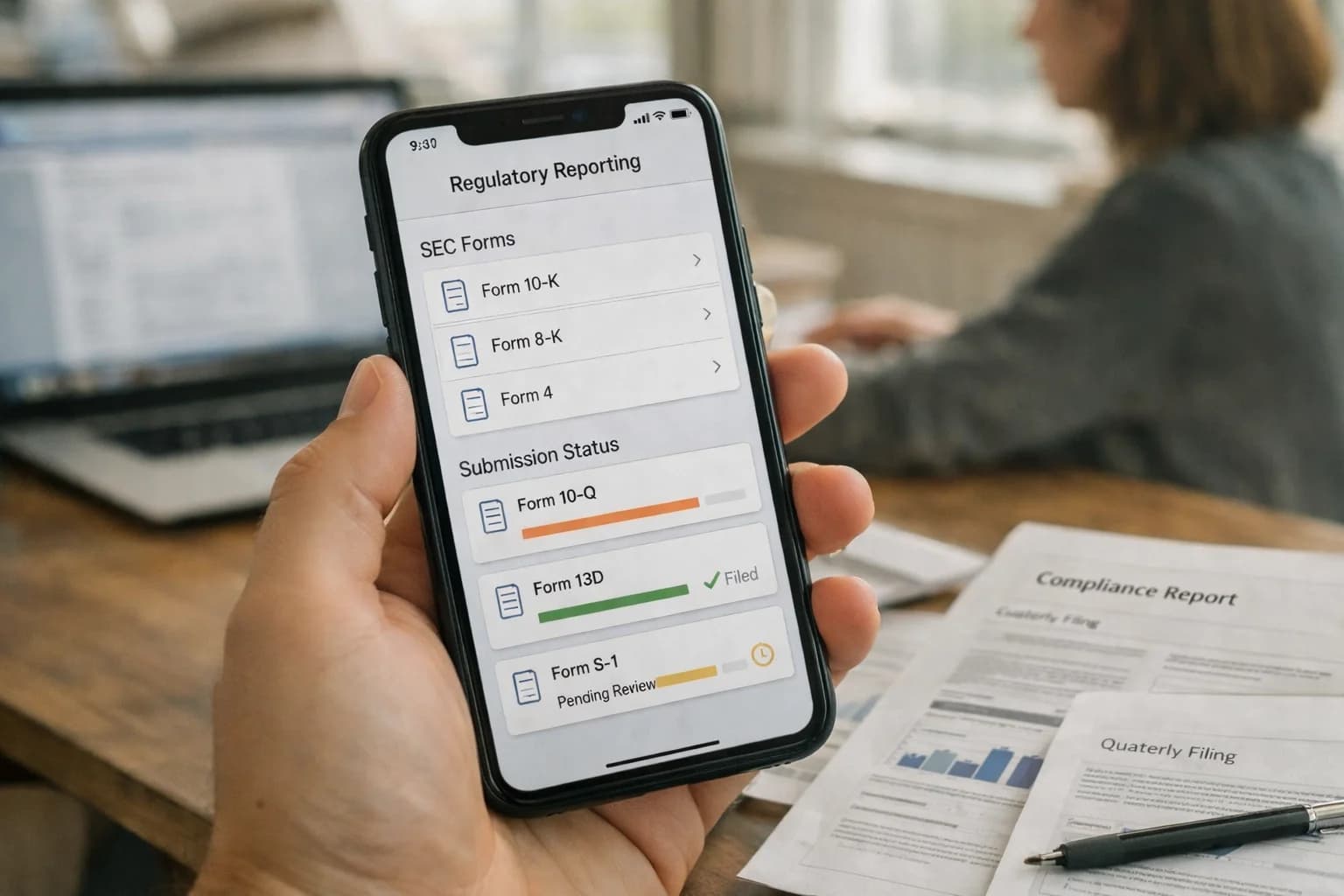
AI Integration for Compensation Compliance and Audit Trails
Governance-focused AI integration for Pave, Salary.com, Compa, and Payscale to automate SOX/OFFCP audit trails, regulatory reporting, and compliance monitoring workflows.
Integrating AI into compensation platforms like Pave and Salary.com transforms manual compliance into an automated, auditable control layer.
AI governance agents connect to the audit log APIs and change event webhooks of platforms like Pave, Compa, and Salary.com. They monitor for high-risk activities: bulk data imports, formula adjustments, off-cycle pay changes, and manual overrides to job codes or pay ranges. By processing these events in real-time, the AI can tag transactions with compliance context (e.g., SOX-relevant, pay equity impact, manager override) and automatically generate a structured audit trail.
For regulated reporting—such as OFCCP submissions or year-end compensation committee materials—AI workflows can be triggered. An agent aggregates the tagged audit data, synthesizes it with employee demographic feeds from your HRIS, and drafts the required narrative explanations and statistical summaries. This shifts a multi-day, manual compilation task into a same-day review process, with all source data traceable back to the original platform transaction.
Rollout requires mapping your specific compliance obligations to the platform's data model. We typically start with a focused proof-of-concept on a single high-risk workflow, like merit increase approvals or sales incentive plan changes. The AI is configured to monitor the relevant objects (e.g., Pave's compensation_review records or Salary.com's market_pricing_analyses), with human-in-the-loop review steps before any automated reporting is finalized. This builds trust and ensures the AI's classifications align with your legal and finance teams' interpretations.
GOVERNANCE AND COMPLIANCE
AI Touchpoints Across Compensation Platforms
Automated SOX & OFCCP Audit Logs
Compensation platforms like Pave, Salary.com, and Compa generate critical data changes but often lack narrative context for auditors. AI integration can monitor platform APIs and webhooks for key events—merit increases, equity grants, range adjustments, and manager overrides—and automatically generate human-readable audit trails.
Implementation Pattern: An AI agent listens for POST /v1/compensation_changes webhooks. For each event, it enriches the raw JSON payload with contextual data from the HRIS (e.g., employee tenure, performance rating) and uses an LLM to draft a compliant audit note: "On [date], Manager [name] approved a 7.5% merit increase for [employee], bringing their salary to $X. This adjustment is within the established pay band for [job code] and aligns with their 'Exceeds' performance rating from the Q4 review." These narratives are written back to a dedicated audit_log object or exported to a governance system like Workiva.
This transforms opaque system logs into defensible, ready-to-submit documentation for compliance reviews.
GOVERNANCE-FOCUSED AUTOMATION
High-Value Compliance and Audit Use Cases
AI integrations for Pave, Salary.com, Compa, and Payscale can automate the most labor-intensive compliance workflows, turning manual monitoring into proactive governance and generating defensible audit trails for SOX, OFCCP, and internal audits.
01
Automated Pay Equity Audit Trail Generation
Continuously monitor compensation data for statistical anomalies and potential disparities across gender, race, and ethnicity. AI agents generate narrative reports, flag high-risk groups for review, and maintain a complete, timestamped audit log of all analyses, model versions, and reviewer actions—critical for OFCCP readiness.
Quarterly -> Continuous
Monitoring cadence
02
SOX-Compliant Change Log Synthesis
Orchestrate AI to ingest activity logs from Pave, Compa, and connected HRIS (Workday, UKG). The system summarizes bulk edits, role-based access changes, and approval overrides into executive-friendly narratives, highlighting non-standard patterns for controller review before quarterly filings.
Days -> Hours
Close package prep
03
Regulatory Document Submission Workflow
Automate the assembly of compensation data for regulatory submissions (e.g., EEO-1, CA Pay Data). AI extracts required fields from Salary.com and Pave, validates against submission rules, drafts cover narratives, and routes the final package through a defined approval chain in the compensation platform before submission.
Batch -> Real-time
Data validation
04
Anomaly Detection in Manager Proposals
Deploy ML models to screen every manager compensation proposal in Compa or Payscale against historical patterns, budget guidelines, and equity bands. Flag outliers (e.g., spikes for specific managers, deviations from guidelines) for HRBP review before approvals, creating a documented pre-approval check.
100% coverage
Proposal screening
05
Policy Exception Tracking & Justification
Integrate AI to monitor for compensation actions that breach policy rules (e.g., off-cycle adjustments, out-of-band offers). When detected, trigger a workflow that requires the manager to provide a written justification. AI summarizes the exception and justification for the audit log, linking to the original platform record.
Manual -> Automated
Exception workflow
06
Compensation Data Lineage & Provenance
Implement a governance layer that uses AI to trace the origin and transformation of every critical compensation data point—from source HRIS feed through benchmarking adjustments in Salary.com to final calculated values in Pave. Generate visual lineage reports for auditors to verify data integrity across the stack.
1 sprint
Audit investigation time
AUTOMATED AUDIT TRAILS & REGULATORY REPORTING
Example AI-Powered Compliance Workflows
These concrete workflows illustrate how AI integrates with compensation platforms like Pave, Salary.com, and Compa to automate compliance monitoring, generate defensible audit trails, and streamline regulatory submissions for SOX, OFCCP, and pay equity laws.
Trigger: A compensation planning cycle is closed in Pave or Compa, or a new employee's compensation is approved.
AI Agent Action:
The agent is triggered via a platform webhook or scheduled batch job.
It retrieves the relevant employee cohort data (e.g., department, job level, tenure) and the finalized compensation decisions.
Using a pre-configured statistical model (e.g., regression analysis for pay equity), the agent analyzes the data for disparities across protected categories (gender, ethnicity).
It generates a narrative audit report that includes:
Analysis methodology and date/time stamp.
Summary of the population analyzed.
Any statistical anomalies flagged, with confidence intervals.
Justifications for outliers, if pulled from manager notes in the platform.
A clear "pass/fail" or risk rating against internal equity policies.
System Update: The structured report and raw analysis data are written back to a dedicated audit object in the compensation platform (if supported) and simultaneously stored in a secure, immutable audit repository (e.g., an S3 bucket with versioning). A link to the audit record is appended to the employee's compensation history.
Human Review Point: An alert is sent to the Head of Compensation or Legal if the analysis flags a high-risk disparity that exceeds a pre-defined threshold, requiring manual review and a documented action plan.
GOVERNANCE AND COMPLIANCE
Implementation Architecture: Data Flow and Guardrails
A production-ready integration for compensation compliance requires a secure, auditable data flow with explicit human-in-the-loop controls.
The architecture is built around a central AI Governance Layer that sits between your compensation platform (e.g., Pave, Salary.com) and the LLM. This layer performs three critical functions: 1) It ingests events via platform webhooks (e.g., comp_plan.created, merit_batch.submitted) or scheduled API calls to AuditLog objects. 2) It redacts or tokenizes sensitive Personally Identifiable Information (PII) like employee names and IDs before sending context to the model. 3) It logs every AI interaction—including the raw prompt, model response, and the user/action that triggered it—to a dedicated AI_Audit_Trail table in your data warehouse, tagged with the relevant comp_cycle_id and platform_event_id for full traceability.
High-value workflows are designed for oversight. For example, an AI agent monitoring for pay equity flags would not auto-correct data. Instead, it creates a Compliance_Review_Task in the compensation platform or a connected system like Jira or ServiceNow, attaching the flagged population (e.g., role='Software Engineer', tenure_cohort='3-5 years', flag='gender_pay_gap > 5%') and a suggested analysis narrative for a Compensation Analyst to review. Similarly, automated SOX/OFFCP report generation follows a draft → legal_review → certify workflow, where the AI assembles the initial draft from platform data, but a human with appropriate RBAC permissions must attest to its accuracy before submission.
Rollout follows a phased, risk-based approach. Phase 1 typically implements read-only monitoring and alerting—using AI to analyze completed compensation cycles and generate audit-ready summaries without touching live data. Phase 2 introduces assistive drafting for compliance narratives and regulatory forms within sandboxed environments. Phase 3, only after rigorous validation, may include pre-submission validation checks that run in real-time during pay planning (e.g., checking proposed increases against pre-defined policy guardrails). Each phase is governed by a clear AI Use Policy that defines acceptable prompts, data boundaries, and required approval chains, ensuring the integration enhances—rather than compromises—your compliance posture.
COMPLIANCE AND AUDIT WORKFLOWS
Code and Payload Examples
Real-Time Log Analysis & Alerting
AI agents continuously monitor platform audit logs (e.g., Pave's audit_events API, Salary.com's activity streams) for high-risk changes. This includes bulk data imports, formula adjustments, permission modifications, and access from unusual locations. The agent parses logs, enriches them with user context from your HRIS, and uses a classification model to score risk.
When a high-risk event is detected, the agent triggers an alert workflow—creating a ticket in your GRC platform, posting to a dedicated Slack channel, or pausing the user session for review. This provides a proactive, automated layer of SOX and OFCCP compliance monitoring beyond native platform reporting.
python
# Example: Webhook handler for Pave audit events
from flask import Flask, request
import openai
import requests
app = Flask(__name__)
@app.route('/webhook/pave-audit', methods=['POST'])
def handle_audit_event():
event = request.json
# Enrich event with HRIS data (e.g., user role, department)
user_context = get_user_context(event['user_id'])
# Classify event risk using LLM
prompt = f"""Classify risk of this compensation platform change:
Event: {event['action']} on {event['entity_type']}
User Role: {user_context['role']}
Output: HIGH, MEDIUM, or LOW and a brief reason."""
classification = openai.chat.completions.create(
model="gpt-4o-mini",
messages=[{"role": "user", "content": prompt}]
)
if "HIGH" in classification.choices[0].message.content:
# Trigger compliance workflow
create_jira_issue(event, classification, user_context)
send_slack_alert(event, user_context)
return {'status': 'processed'}, 200
AI FOR COMPLIANCE WORKFLOWS
Realistic Time Savings and Business Impact
How AI integration transforms manual, high-risk compensation compliance tasks into automated, auditable workflows within platforms like Pave, Salary.com, Compa, and Payscale.
Compliance Workflow
Manual Process
AI-Assisted Process
Key Impact & Notes
Audit Trail Generation
Manual log compilation from multiple systems
Automated, event-driven log synthesis
Reduces prep time from days to hours; creates immutable, SOX-ready records
Pay Equity Analysis for Reporting
Monthly/quarterly manual statistical runs
Continuous monitoring with anomaly alerts
Shifts from reactive reporting to proactive governance; identifies drift between cycles
Regulatory Change Impact Assessment
Manual review of new laws vs. current plans
AI scans and maps regulations to plan attributes
Assessment time reduced from weeks to days; surfaces specific plan sections at risk
Manager Justification Review
HR manually samples and reviews manager notes
AI scores all justifications for bias/consistency
100% coverage vs. 10% sample; flags high-risk cases for human review
Data Validation for SOX Controls
Spreadsheet reconciliations and sample testing
AI validates entire population against rules
Eliminates sampling risk; provides full-population assurance for key controls
Off-Cycle Adjustment Approval Routing
Email chains and manual policy checks
AI evaluates request against policy and auto-routes
Approval cycle time reduced from 3-5 days to same-day; enforces policy before human touch
Disclosure Document Drafting (e.g., CD&A)
Legal/HR draft from scratch using past templates
AI assembles first draft from platform data and prior filings
Cuts initial drafting time by 60-70%; allows teams to focus on narrative and strategy
AUDITABLE, CONTROLLED, AND LOW-RISK DEPLOYMENT
Governance, Security, and Phased Rollout
A production-ready AI integration for compensation compliance must be built with governance-first principles, ensuring every AI action is traceable, secure, and rolled out with minimal operational disruption.
In platforms like Pave, Salary.com, Compa, and Payscale, AI governance is anchored to the audit log. Every AI-generated insight, recommendation, or automated adjustment must create an immutable record linked to the specific employee record, job code, or pay band. This includes logging the source data used (e.g., benchmark survey ID, employee tenure), the prompt or model parameters that generated the output, and the human-in-the-loop approval before any system-of-record write-back. For SOX and OFCCP audits, this creates a defensible, step-by-step narrative of how compensation decisions were informed or assisted by AI.
Security is enforced at the data and API layer. AI agents operate with role-based access control (RBAC) scoped to the compensation platform's permissions, ensuring a manager-level AI copilot cannot access executive compensation data. Sensitive Personally Identifiable Information (PII) and pay data are tokenized or masked before being sent to external LLM APIs, with all processing occurring in compliant cloud environments. Integration patterns use secure webhooks from the compensation platform to trigger AI review workflows and queues (e.g., AWS SQS, RabbitMQ) to manage asynchronous processing of batch jobs like equity analysis or data enrichment.
A phased rollout mitigates risk and builds trust. Phase 1 typically deploys AI as a read-only advisor, surfacing potential equity flags or compliance notes within the platform's UI without making changes. Phase 2 introduces controlled automation for low-risk tasks, such as generating draft justification narratives for manager approvals or auto-populating benchmark job codes from job descriptions, all requiring a human approval step. Phase 3, after validation and policy tuning, enables closed-loop automation for specific, rules-based workflows like mass data cleansing or triggering compliance review tickets in a system like ServiceNow. Each phase includes parallel runs to compare AI-assisted outputs against manual baselines, ensuring accuracy before broadening scope.
This governance framework ensures the integration enhances compliance posture rather than introducing new risk. By designing for auditability from the start, securing data in transit and at rest, and adopting an incremental rollout, organizations can confidently leverage AI to transform compensation compliance from a reactive, manual audit burden into a proactive, managed business process. For detailed architecture patterns, see our guide on AI Integration for Compensation Platform APIs and Webhooks.
Enabling Efficiency, Speed & Accuracy
Intelligent Analysis, Decision & Execution
We build AI systems for teams that need search across company data, workflow automation across tools, or AI features inside products and internal software.
IMPLEMENTATION AND GOVERNANCE
Frequently Asked Questions
Practical questions for technical leaders planning AI integrations to automate compliance monitoring, audit trail generation, and regulatory reporting within compensation platforms like Pave, Salary.com, Compa, and Payscale.
The integration uses event-driven monitoring of platform APIs and webhooks to create a real-time compliance layer.
Trigger & Ingestion: AI agents subscribe to key events via platform webhooks (e.g., compensation_plan.created, merit_increase.submitted, benchmark_data.imported) and ingest the associated payloads.
Context Enrichment: The agent retrieves related records (employee job history, prior compensation, relevant policy documents) to build a full context.
Policy Check: A configured LLM evaluates the action against a structured rule set (e.g., OFCCP pay equity guidelines, internal promotion caps, geographic differential policies).
Audit Logging: Every check—pass or fail—generates a immutable audit entry with a timestamp, user ID, action, policy rule ID, and the AI's reasoning, stored in a secure, append-only log (often in a separate governance database).
Alerting: For violations or high-risk actions, the system triggers alerts in Slack, Microsoft Teams, or creates a high-priority ticket in the HRIS or compliance team's queue.
This creates a continuous audit trail, moving compliance from quarterly manual reviews to real-time, automated governance.
About the author
Prasad Kumkar
CEO & MD, Inference Systems
Prasad Kumkar is the CEO & MD of Inference Systems and writes about AI systems architecture, LLM infrastructure, model serving, evaluation, and production deployment. Over 5+ years, he has worked across computer vision models, L5 autonomous vehicle systems, and LLM research, with a focus on taking complex AI ideas into real-world engineering systems.
His work and writing cover AI systems, large language models, AI agents, multimodal systems, autonomous systems, inference optimization, RAG, evaluation, and production AI engineering.
Partnered with leading AI, data, and software stack.
How We Work
Custom AI workflows for your Business
One-fit-all AI don't work for modern businesses. At Inferensys, we aim to understand your business & custom requirements; which we use to define most efficient agentic workflows, the data, and the tools for your business.
The first call is a practical review of your use case and the right next step.