AI integration for Prisma Cloud connects directly to its core data surfaces and automation APIs. The primary integration points are the Prisma Cloud API for querying posture findings, vulnerabilities, and alerts, and the Prisma Cloud Compute API for runtime workload security data. AI agents can be triggered by webhooks from new high-severity alerts or scheduled scans, consuming JSON payloads containing resource IDs, risk scores, and contextual metadata. This allows AI to operate on the same unified data model used by security analysts, focusing on high-value objects like cloud accounts, clusters, workloads, IAM roles, and data stores.

Integration
AI Integration for Prisma Cloud
A technical blueprint for embedding AI agents into Palo Alto Networks Prisma Cloud to automate alert triage, generate natural-language compliance reports, and orchestrate remediation workflows across CSPM, CWPP, and CIEM modules.
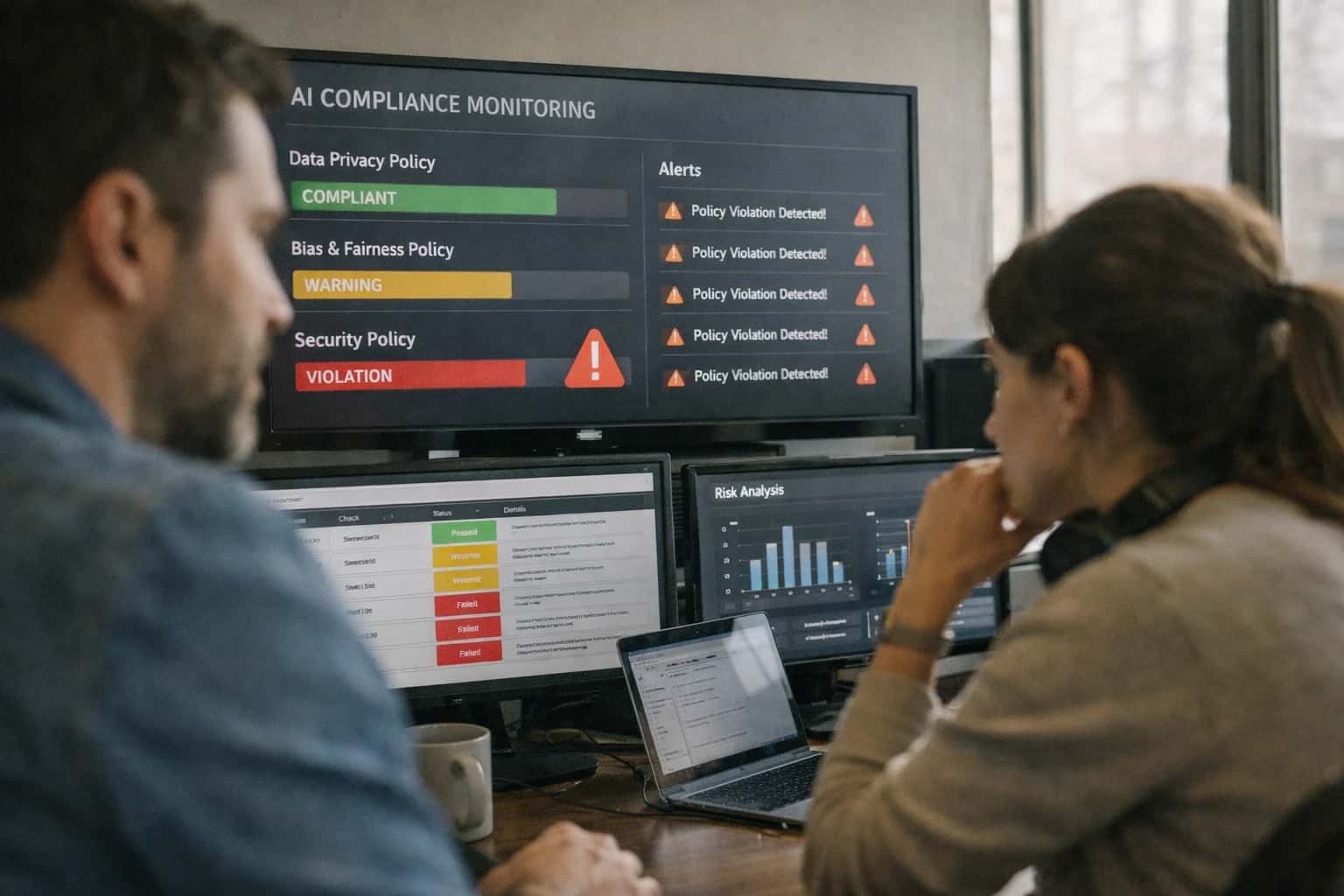
ARCHITECTURE FOR INTELLIGENT CNAPP OPERATIONS
Where AI Fits into the Prisma Cloud Stack
A technical blueprint for embedding generative AI agents into Palo Alto Networks Prisma Cloud to automate risk analysis, generate human-readable insights, and orchestrate remediation across CSPM, CWPP, and CIEM modules.
Implementation typically involves an AI middleware layer that ingests these findings, enriches them with external context (like exploitability feeds or business criticality tags), and processes them through LLMs. For example, an agent can:
- Interpret CSPM misconfigurations: Transform a raw finding like
storageBucket.publicAccessPreventioninto a plain-language explanation of the exposure risk and business impact. - Prioritize CWPP vulnerabilities: Correlate CVE data with runtime context from Prisma Cloud Compute to assess actual exploitability, suppressing noise for containers not exposed to the internet.
- Draft remediation playbooks: Generate step-by-step Jira tickets or ServiceNow tasks with specific CLI commands or Terraform snippets to fix issues, pulling from Prisma Cloud's built-in remediation guides.
- Answer natural language queries: Power a chat interface that allows analysts to ask "Show me all publicly exposed S3 buckets in our PCI environment" and receive a synthesized report from live API data.
Rollout should follow a phased approach, starting with read-only analysis and summarization use cases before progressing to automated ticket creation and, eventually, approved remediation actions. Governance is critical: all AI-generated outputs and recommended actions must be logged in Prisma Cloud's Activity Log and optionally routed through a human-in-the-loop approval step via Prisma Cloud's existing alert and policy workflows. This ensures audit trails are maintained and changes align with organizational change control procedures. The integration should augment, not replace, Prisma Cloud's native policy engine and reporting, acting as a force multiplier for overburdened cloud security teams.
WHERE AI AGENTS CONNECT AND AUTOMATE
Key Prisma Cloud Modules and Integration Surfaces
Cloud Security Posture Management (CSPM)
AI integrates with Prisma Cloud's CSPM module to interpret misconfigurations and compliance violations across AWS, Azure, and GCP. Key surfaces include:
- Policy Engine: Use LLMs to translate complex security findings (e.g., overly permissive S3 buckets, unencrypted databases) into plain-language explanations and business-risk context for resource owners.
- Compliance Frameworks: Automate the mapping of resource configurations to regulatory standards (SOC 2, HIPAA, PCI DSS). AI agents can generate audit-ready summaries and evidence packages by querying the Prisma Cloud API.
- Drift Detection: When a resource drifts from a secure baseline, an AI workflow can analyze the change's intent, assess risk, and automatically create a Jira ticket or ServiceNow incident with recommended remediation steps, pulling context from the asset inventory.
This moves teams from reviewing thousands of findings to acting on prioritized, explained risks.
INTELLIGENT AUTOMATION FOR CWPP AND CSPM
High-Value AI Use Cases for Prisma Cloud
Move beyond dashboards and alerts. Embed generative AI directly into Prisma Cloud workflows to automate analysis, generate context, and orchestrate remediation across your cloud estate.
01
Natural-Language Compliance Querying
Enable security and compliance teams to ask questions like "Show me all S3 buckets in production without encryption and their owners" directly against Prisma Cloud's data model. An AI agent translates the query into the appropriate API calls across CSPM modules, structures the results, and provides narrative summaries, eliminating the need for complex dashboard configuration.
Hours -> Minutes
Compliance audit prep
02
Intelligent Alert Triage & Enrichment
Process high-volume alerts from Prisma Cloud Compute (CWPP) and Cloud Security Posture Management (CSPM). An AI copilot performs initial root cause analysis, correlates events across modules (e.g., linking a vulnerability to an over-permissive IAM role), and drafts enriched incident tickets for ServiceNow or Jira with recommended priority and context for SOC analysts.
Batch -> Real-time
SOC analyst support
03
Automated Policy & Rule Generation
Accelerate policy-as-code adoption. Describe a security intent in plain English (e.g., "Ensure all production databases are not publicly accessible"), and an AI agent analyzes your cloud environment to draft precise, context-aware Prisma Cloud policy rules in Rego or the native policy language. It can also suggest exceptions based on existing configurations.
1 sprint
Policy deployment cycle
04
Remediation Playbook Orchestration
Connect Prisma Cloud findings to downstream actions. For a critical misconfiguration, an AI workflow can: 1) Analyze the resource and blast radius via Prisma Cloud's APIs, 2) Generate a precise remediation step (e.g., a Terraform patch or console instruction), 3) Route it via webhook to the correct team's channel in Slack or MS Teams, and 4) Track closure via integrated ticketing.
Same day
Time to remediate
05
Developer-Centric Fix Guidance
Integrate AI into DevOps pipelines. When a Prisma Cloud Code Security scan fails a build, an AI agent intercepts the finding, explains the risk in developer-friendly terms, and suggests a corrected code snippet (Terraform, CloudFormation, Kubernetes YAML). This is delivered as a comment on the pull request, turning security feedback into actionable guidance.
Self-service
Developer resolution
06
Executive Risk Reporting Automation
Automate the monthly security posture briefing. An AI agent queries Prisma Cloud's risk scores, compliance posture, and trend data across accounts and modules. It then generates a narrative executive summary, highlights top risks with business context, and produces visual charts for board-ready reports, saving dozens of manual hours per reporting cycle.
Hours -> Minutes
Report generation
AUTOMATED REMEDIATION AND INTELLIGENT ANALYSIS
Example AI Agent Workflows with Prisma Cloud
These concrete workflows illustrate how AI agents can be integrated with Prisma Cloud's CSPM and CWPP modules to automate high-volume tasks, provide contextual analysis, and orchestrate secure remediation. Each workflow is designed to be triggered by Prisma Cloud findings and execute through a secure, governed AI layer.
This workflow automatically identifies and secures publicly accessible S3 buckets, a common critical misconfiguration.
- Trigger: Prisma Cloud CSPM generates a
cloud-discoveryalert with the policyAWS S3 Bucket is Publicly Accessible. - Context/Data Pulled: The AI agent calls the Prisma Cloud API to fetch the alert details, including:
- Resource ID (ARN)
- Account and region
- Specific public access configuration (e.g., bucket policy, ACLs)
- Resource tags (for ownership)
- Agent Action: The agent uses an LLM to analyze the configuration and generate a precise, least-privilege remediation plan. It drafts the necessary AWS CLI or SDK code to:
- Apply a block public access setting.
- Replace the permissive bucket policy with a restrictive one, preserving necessary access for known internal services.
- System Update/Next Step: The generated code and justification are posted as a comment on the original Prisma Cloud alert and sent to the resource owner via Slack/Teams (using tags for routing). The agent also creates a Jira ticket for tracking, setting it to
Pending Approval. - Human Review Point: The resource owner has a 24-hour SLA to review and approve the automated fix via the Jira ticket or a provided secure link. If approved, the agent executes the remediation code via a privileged, sandboxed execution environment and updates the ticket and Prisma Cloud alert status.
FROM ALERTS TO ACTION
Implementation Architecture and Data Flow
A practical blueprint for wiring AI agents into Prisma Cloud's CSPM and CWPP modules to automate analysis, explanation, and remediation workflows.
A production-ready integration connects to Prisma Cloud's REST API v3 and Alert Webhooks. The core flow begins with the AI layer subscribing to high-priority alert streams—such as CLOUD_DISCOVERY, NETWORK_ALERT, or VULNERABILITY—from the Prisma Cloud Compute and Enterprise consoles. Upon receiving a webhook payload, the system extracts the alert context, resource metadata (from the /v2/resource API), and relevant compliance standard mappings. This enriched data bundle is then routed to a dedicated AI agent orchestration layer, which determines the appropriate analysis path: a misconfiguration explainer agent for CSPM findings or a runtime threat investigator agent for CWPP alerts.
For a CSPM finding like an over-permissive S3 bucket, the AI agent retrieves the exact resource configuration, IAM policies, and data classification tags. It uses a Retrieval-Augmented Generation (RAG) pipeline against your internal security playbooks and cloud architecture documents to ground its response. The output is a structured analysis sent to a remediation queue, containing: a plain-English risk explanation, a severity-adjusted priority score, a precise Terraform or CloudFormation snippet to apply the fix, and a recommended approval path (e.g., auto-remediate dev, notify for production). This queue can integrate with your ServiceNow, Jira, or GitHub Actions to trigger the actual change. For CWPP runtime alerts, the agent correlates the process tree, network connection, and vulnerability data to draft an incident summary and suggest containment steps like isolating the workload.
Governance is wired in at multiple points. All AI-generated recommendations and actions are logged with a full audit trail linking back to the original Prisma Cloud alert ID. A human-in-the-loop approval step can be mandated for critical resources or production environments via your existing ITSM or chatops channels (Slack, Teams). The system's prompts and decision logic are version-controlled, and its outputs are continuously evaluated against a ground truth of security analyst decisions to detect and correct drift. Rollout typically starts in a monitor-only mode for a subset of non-critical alerts, allowing security teams to review AI suggestions in a dashboard before enabling automated ticket creation or safe, predefined remediation actions in development environments.
PRISMA CLOUD API INTEGRATION PATTERNS
Code and Payload Examples
Automating Alert Investigation
Use Prisma Cloud's /v2/alert API to fetch high-volume alerts and an LLM to perform root cause analysis, suppress noise, and create enriched incident tickets. This pattern reduces SOC analyst fatigue by pre-summarizing threats and suggesting containment steps.
Example Python workflow:
pythonimport requests from inference_llm import analyze_alert_context # Fetch recent high-severity alerts headers = {'Authorization': 'Bearer YOUR_TOKEN'} params = {'timeType': 'relative', 'timeAmount': 1, 'timeUnit': 'hour', 'detailed': 'true'} response = requests.get('https://api.prismacloud.io/v2/alert', headers=headers, params=params) alerts = response.json() for alert in alerts: # Enrich with resource context resource_details = get_resource_details(alert['resource']['rrn']) # LLM analysis for triage analysis = analyze_alert_context( alert_type=alert['policy']['name'], resource=resource_details, cloud_account=alert['account']['name'] ) # Create Jira/ServiceNow ticket with AI summary create_incident_ticket({ 'title': f"Prisma Alert: {analysis['severity']} - {alert['policy']['name']}", 'description': analysis['summary'], 'recommended_actions': analysis['actions'] })
AI-ENHANCED PRISMA CLOUD OPERATIONS
Realistic Time Savings and Operational Impact
This table illustrates the measurable impact of integrating AI agents into Prisma Cloud workflows, focusing on time savings, operational efficiency, and risk reduction for security and platform teams.
| Workflow / Task | Before AI Integration | After AI Integration | Implementation Notes |
|---|---|---|---|
Alert Triage & Prioritization | Manual review of 100+ daily alerts | AI-assisted scoring & noise suppression | Analyst reviews top 20-30 high-fidelity alerts; human-in-the-loop for final classification |
Compliance Gap Analysis | Days to map resources to frameworks (SOC2, HIPAA) | Hours to generate evidence summaries & gap reports | AI queries CSPM data; generates draft reports for auditor review |
Remediation Ticket Creation | Manual ticket drafting in Jira/ServiceNow | Automated ticket generation with context & fix steps | AI enriches tickets with resource IDs, risk scores, and code snippets; requires approval |
IAM Policy Review & Recommendation | Weeks for manual entitlement analysis | Days for AI-generated least-privilege suggestions | AI analyzes CIEM findings, simulates blast radius; security team validates changes |
Vulnerability Exploitability Assessment | Generic CVSS scoring, manual correlation | Context-aware risk scoring with exploit prediction | AI correlates CWPP vuln data with runtime context, network exposure, and threat intel |
Incident Summary for SOC Handoff | 30-60 minutes to draft initial report | <5 minutes for AI-generated incident narrative | AI pulls from Prisma Cloud audit logs, resource configs, and alert timelines |
Daily/Weekly Executive Risk Reporting | Manual data aggregation and slide creation | Automated report generation via natural language query | AI answers ad-hoc questions on exposure, trends; formats findings for board review |
ARCHITECTING FOR PRODUCTION
Governance, Security, and Phased Rollout
A secure, governed approach to embedding AI into Prisma Cloud's operational workflows.
Integrating AI into a critical security platform like Prisma Cloud demands a security-first architecture. We design integrations that respect Prisma Cloud's existing RBAC, audit trails, and data boundaries. AI agents operate as a controlled layer, accessing only the necessary Prisma Cloud APIs (e.g., /v2/alert, /v2/config, /v2/resource) with scoped service accounts. All AI-generated outputs—such as policy recommendations, natural-language summaries, or remediation steps—are logged as discrete activities within Prisma Cloud's audit log or a dedicated LLMOps platform, creating a clear lineage from AI suggestion to human review or automated action.
A phased rollout mitigates risk and builds confidence. We recommend starting with read-only, assistive use cases in a single Prisma Cloud module, such as using an AI agent to explain complex CWPP runtime alerts to Tier 1 SOC analysts. This provides immediate value without altering security posture. Phase two introduces guided remediation, where the AI suggests precise CLI commands or Terraform fixes for CSPM misconfigurations, requiring analyst approval before execution via Prisma Cloud's built-in remediation workflows or integrated ITSM tickets. The final phase enables conditional automation for high-confidence, low-risk actions, like auto-dismissing known false-positive alerts based on historical context from Prisma Cloud's findings database.
Governance is maintained through a centralized prompt registry and evaluation framework. Each AI workflow—whether for natural-language compliance querying ("Show me all S3 buckets in AWS us-east-1 that are non-compliant with PCI DSS requirement 3.4") or automated playbook generation—has defined validation rules, output schemas, and a human-in-the-loop escalation path. This ensures AI augmentations remain explainable, auditable, and aligned with your cloud security team's operational procedures, turning Prisma Cloud from a monitoring console into an intelligent, action-oriented command center.
Enabling Efficiency, Speed & Accuracy
Intelligent Analysis, Decision & Execution
We build AI systems for teams that need search across company data, workflow automation across tools, or AI features inside products and internal software.
Talk to Us
Search across company data
Give teams answers from docs, tickets, runbooks, and product data with sources and permissions.
Useful when people spend too long searching or get different answers from different systems.
Enterprise searchRAGPermissions
Read more
Automate internal workflows
Use AI to route work, draft outputs, trigger actions, and keep approvals and logs in place.
Useful when repetitive work moves across multiple tools and teams.
AI agentsWorkflow automationGovernance
Read more
Add AI to products and internal tools
Build assistants, guided actions, or decision support into the software your team or customers already use.
Useful when AI needs to be part of the product, not a separate tool.
AI integrationDecision supportModel routing
Read moreIMPLEMENTATION AND ARCHITECTURE
Frequently Asked Questions
Practical questions for teams planning to embed AI agents and copilots into Palo Alto Networks Prisma Cloud to automate security operations, enhance analyst productivity, and drive intelligent remediation.
A production integration requires a secure middleware layer, often deployed within your cloud environment, to broker communication between the LLM and Prisma Cloud.
Typical Architecture:
- Service Principal / API Credentials: Create a dedicated service account in Prisma Cloud with scoped RBAC permissions (e.g.,
Readfor alerts/assets,Writefor tickets). Store credentials in a secrets manager like HashiCorp Vault or AWS Secrets Manager. - Orchestration Layer: Deploy a lightweight application (e.g., FastAPI/Flask app, Azure Function, AWS Lambda) that:
- Authenticates to Prisma Cloud using the service principal.
- Handles prompt construction and LLM API calls (to OpenAI, Anthropic, or a private model).
- Enforces query rate limits and manages context windows.
- Secure Context Passing: The orchestration layer queries Prisma Cloud's REST API (e.g.,
/v2/alert,/cloud/discovery) to fetch the specific alert, asset, or compliance finding. It structures this JSON data into a system prompt for the LLM, ensuring no raw credentials or excessive data are sent. - Audit Trail: Log all queries, API calls, and generated responses to your SIEM (e.g., Splunk) for compliance and debugging.
Example Payload to LLM:
json{ "system_prompt": "You are a Prisma Cloud security analyst. Analyze this alert and provide a root cause and recommended action.", "user_prompt": "Alert ID: PC-12345. Details: { \"alertId\": \"PC-12345\", \"policy\": \"AWS Security Group allows unrestricted ingress\", \"resource\": \"sg-abc123\", \"account\": \"prod-account\" }" }

About the author
Prasad Kumkar
CEO & MD, Inference Systems
Prasad Kumkar is the CEO & MD of Inference Systems and writes about AI systems architecture, LLM infrastructure, model serving, evaluation, and production deployment. Over 5+ years, he has worked across computer vision models, L5 autonomous vehicle systems, and LLM research, with a focus on taking complex AI ideas into real-world engineering systems.
His work and writing cover AI systems, large language models, AI agents, multimodal systems, autonomous systems, inference optimization, RAG, evaluation, and production AI engineering.
LinkedIn
Limited slotsGet a Free AI Consultation
Partnered with leading AI, data, and software stack.





How We Work
Custom AI workflows for your Business
One-fit-all AI don't work for modern businesses. At Inferensys, we aim to understand your business & custom requirements; which we use to define most efficient agentic workflows, the data, and the tools for your business.
01
Review the use case
We understand the task, the users, and where AI can actually help.
Read more02
Pick the right approach
We define what needs search, automation, or product integration.
Read more03
Build the first useful version
We implement the part that proves the value first.
Read more04
Improve from there
We add the checks and visibility needed to keep it useful.
Read moreThe first call is a practical review of your use case and the right next step.
Talk to Us