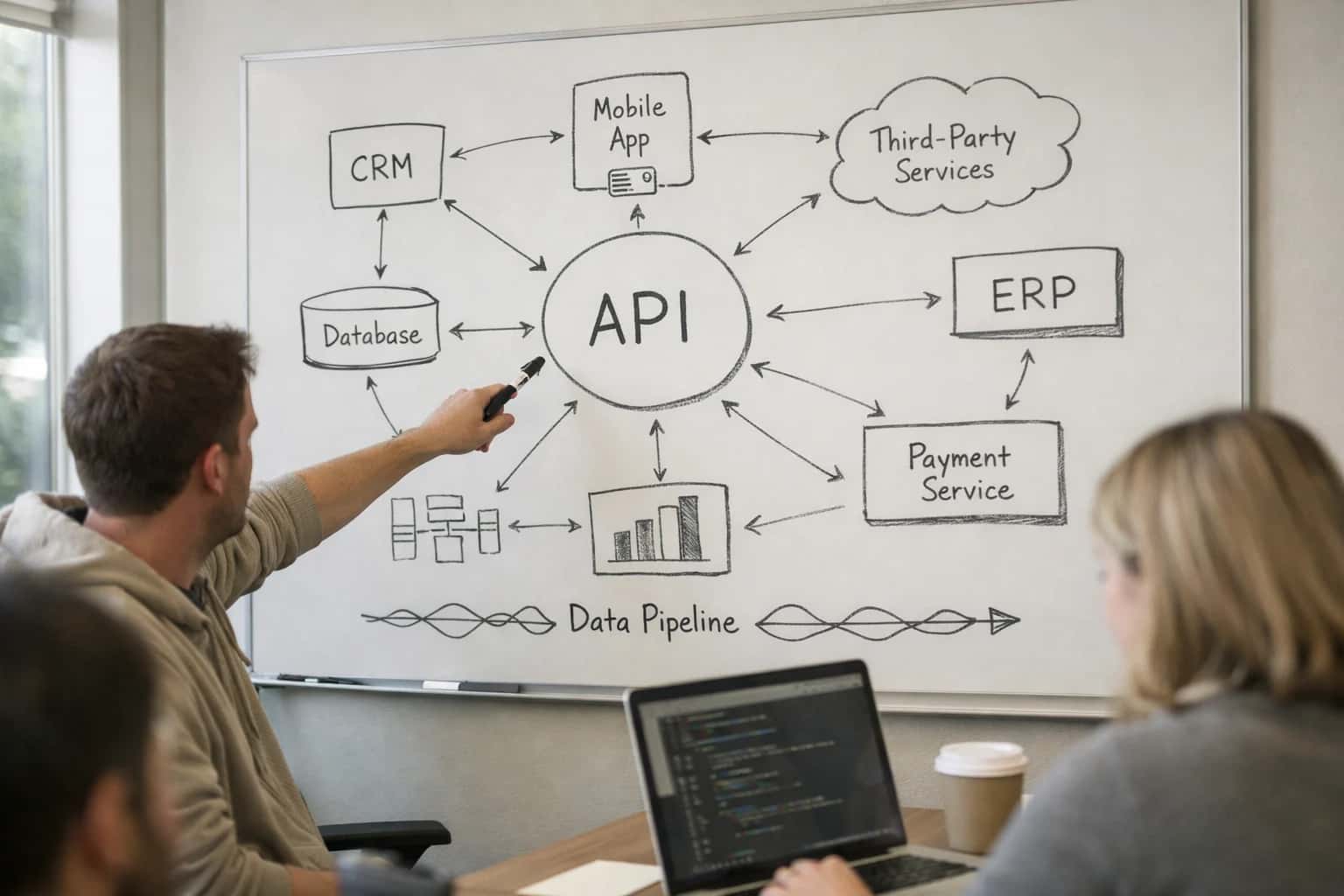
AI integration for multi-cloud security posture focuses on the normalization and correlation layer that sits atop disparate CNAPP platform APIs. Each cloud provider (AWS, Azure, GCP) and each CNAPP vendor (Wiz, Orca, Prisma Cloud, Lacework) has its own data model for findings—vulnerabilities, misconfigurations, exposed data, and identity risks. An AI agent's first job is to ingest these heterogeneous alerts via their respective REST APIs or streaming feeds, map them to a unified risk ontology, and deduplicate findings that represent the same underlying issue across different tools. This creates a single, entity-rich context—EC2 instance, Storage Account, Cloud SQL database—with a consolidated risk score that reflects the aggregate threat across all monitored platforms.

Integration
AI Integration for Multi-Cloud Security Posture
Where AI Fits in Multi-Cloud Security Posture Management
Integrating AI into multi-cloud CNAPP platforms like Wiz, Prisma Cloud, and Orca Security to normalize findings, prioritize cross-cloud risk, and automate remediation planning.
The high-value workflow begins with cross-cloud attack path analysis. An AI layer can trace a potential breach path that starts with an over-permissive IAM role in AWS, moves to an unpatched container in Azure AKS, and ends at sensitive data in a publicly accessible GCP Cloud Storage bucket. By understanding the business context (e.g., this workload runs the production payment service), the AI can prioritize this multi-cloud chain over isolated, lower-impact findings. From here, the integration triggers orchestrated remediation plans. This might involve: 1) generating a Jira ticket for the cloud engineering team with precise Terraform code snippets to tighten the IAM policy, 2) creating a ServiceNow change request to patch the container image in the CI/CD pipeline, and 3) automatically applying a temporary network restriction in GCP via its API while a permanent fix is developed.
Rollout requires a phased, governance-first approach. Start with a read-only AI copilot that analyzes and explains findings without taking action, building trust with SecOps teams. Next, implement human-in-the-loop workflows where the AI drafts remediation tickets or pull request comments, but requires analyst approval before execution. Finally, enable fully automated playbooks for low-risk, high-confidence actions like tagging orphaned resources or suppressing known false positives. Critical to this architecture is maintaining a full audit trail of all AI-generated recommendations and actions, linked back to the original CNAPP findings. This ensures accountability and provides the data needed to continuously fine-tune the AI's decision-making logic, closing the loop on multi-cloud security operations.
AI Integration Surfaces Across Leading CNAPP Platforms
Cloud Security Posture Management (CSPM) Surfaces
CSPM modules in Wiz, Prisma Cloud, and Orca Security generate thousands of findings on misconfigurations and compliance drift. AI integration surfaces here focus on intelligent prioritization and remediation automation.
Key Integration Points:
- Findings API: Ingest real-time or batch misconfiguration alerts.
- Resource Graph: Query contextual relationships between assets, identities, and data.
- Compliance Frameworks: Map findings to controls (SOC2, HIPAA, CIS).
AI Use Cases:
- Risk Explanation: Use an LLM to generate plain-English summaries of why a misconfigured S3 bucket is high-risk, referencing exposed data and attack paths.
- Fix Generation: Automatically draft Terraform or CloudFormation patches to correct configurations, appended to Jira or ServiceNow tickets.
- Policy-as-Code: Convert natural language security requirements ("block public RDP access") into Rego or Sentinel policy code for the CNAPP.
This layer turns alert fatigue into actionable, contextual guidance for cloud engineers.
High-Value AI Use Cases for Multi-Cloud Security
Integrating AI with unified CNAPP platforms (Wiz, Prisma Cloud, Orca, Lacework) moves beyond dashboards to create intelligent, closed-loop workflows that reduce risk exposure across AWS, Azure, and GCP. These patterns deliver operational leverage for cloud security and platform engineering teams.
Cross-Cloud Alert Triage & Enrichment
An AI agent consumes raw, high-volume alerts from CNAPP APIs across all cloud accounts. It performs root cause correlation, suppresses noise by understanding context (e.g., dev vs. prod, approved exceptions), and creates enriched incident tickets in ServiceNow or Jira with clear remediation steps and blast radius analysis. This shifts SOC analyst work from investigation to validation.
Natural-Language Compliance Querying
Instead of navigating complex CNAPP dashboards, security and audit teams ask questions in plain English: "Show me all S3 buckets in AWS us-east-1 without encryption that contain PII tags." An AI layer translates this into precise API calls against the CNAPP's normalized asset inventory, returning a summarized answer with direct resource links. It can also automate evidence collection for frameworks like SOC2 or HIPAA.
Intelligent Remediation Workflow Orchestration
For critical misconfigurations or vulnerabilities, AI doesn't just flag them—it orchestrates the fix. The system analyzes the finding (e.g., an over-permissive IAM role in Azure), determines the correct downstream system (Terraform repo, CI/CD pipeline, ServiceNow change request), and generates a context-aware action: a pull request with corrected Terraform, a pre-populated change ticket, or a Slack alert to the resource owner with a one-click approval button.
Executive Risk Briefing & Forecasting
An AI agent scheduled daily or weekly consumes the CNAPP's risk scores, new critical findings, and exposure data. It synthesizes a narrative risk report for CISOs and cloud governance boards, highlighting trends ("IAM risks increased 15% in GCP this week"), forecasting potential impact, and answering ad-hoc follow-up questions. This turns fragmented dashboard data into actionable business intelligence.
AI-Powered IaC Security Gate
Integrate AI directly into the CI/CD pipeline. When a CNAPP IaC scan (Terraform, CloudFormation) flags a security issue, an AI copilot reviews the finding's context. It can bypass false positives, explain the risk to the developer in the pull request comment with a secure code snippet, and even suggest alternative, approved modules from an internal registry. This educates developers and prevents insecure code from merging.
Unified Threat Investigation Copilot
For SOC analysts investigating a cloud incident, an AI copilot provides a unified interface to multiple CNAPPs and EDR platforms. The analyst asks: "What happened with workload X in the last 24 hours?" The agent queries Wiz for config changes, Prisma Cloud for runtime alerts, and CrowdStrike for endpoint telemetry, returning a consolidated timeline and attack narrative. It can draft the initial incident report for review.
Example AI-Driven Multi-Cloud Security Workflows
These are production-ready workflow patterns that connect AI agents to CNAPP platform APIs and downstream systems. Each pattern normalizes findings across AWS, Azure, and GCP to drive consolidated action.
Trigger: A new critical or high severity vulnerability is detected in any cloud environment (e.g., Log4j in an AWS ECS task, a critical kernel flaw in an Azure VM).
Context/Data Pulled:
- The AI agent queries the CNAPP (Wiz, Prisma Cloud, Orca) API for the vulnerability details, including CVE, CVSS, affected asset, and cloud account.
- It enriches the finding by pulling the asset's owner from CMDB tags, its exposure (public/private), and any active exploitation intelligence from an integrated threat feed.
- The agent normalizes the cloud-specific resource identifiers (e.g., AWS ARN, Azure Resource ID) into a standard format.
Model or Agent Action: A multi-step agent evaluates the enriched data against a risk-scoring prompt:
codeGiven this vulnerability, asset context, and threat intel, output: 1. A risk score (1-10). 2. The likely responsible team (e.g., 'platform-eng-team-a', 'app-team-echo'). 3. A concise, actionable fix instruction (e.g., 'Upgrade package X to version Y via this Ansible playbook link'). 4. A boolean: 'requires_immediate_ticket'.
System Update or Next Step:
- If
requires_immediate_ticketis true, the agent automatically creates a high-priority incident in ServiceNow or Jira, pre-populating the description, assigning it to the identified team's queue, and attaching the fix instruction. - A summary alert is posted to the security team's Slack channel: "🚨 Critical CVE-XXXX-XXXX triaged. Assigned to app-team-echo. Ticket INC-12345 created."
Human Review Point: The security team monitors the Slack summary and can override the assignment or priority in the ticketing system. The AI's reasoning log is attached to the ticket for audit.
Implementation Architecture: Data Flow, APIs, and Guardrails
A practical blueprint for integrating AI agents that normalize, analyze, and act on security findings from Wiz, Prisma Cloud, Orca, and Lacework across AWS, Azure, and GCP.
The core architecture establishes an AI orchestration layer that sits between your CNAPP platforms and downstream action systems. It ingests normalized findings via each platform's REST APIs (e.g., Wiz's /graphql API, Prisma Cloud's /v2 endpoints, Orca's SideScanning™ data feeds). Key data objects include SecurityFindings, CloudAssets, ComplianceChecks, and VulnerabilityScans. This layer uses a vector database to index and semantically search historical findings, enabling the AI to answer questions like "show me all S3 buckets with public access and sensitive data in the last 90 days" across all connected clouds.
AI agents are triggered by webhooks for critical alerts or run on scheduled intervals for posture analysis. They perform three key functions: 1) Risk Normalization & Scoring, using LLMs to contextualize raw findings (e.g., a "high" severity in Wiz vs. Prisma Cloud) into a unified risk score based on exploitability, business context, and asset criticality. 2) Remediation Plan Generation, where agents draft Jira tickets or ServiceNow incidents with precise, cloud-provider-specific CLI commands or Terraform snippets to fix misconfigurations. 3) Executive Summarization, automatically producing weekly risk briefs by querying the normalized data store. All agent outputs are logged with a full audit trail, including the source findings, prompt used, and reasoning chain.
Production guardrails are critical. Implement a human-in-the-loop approval step for any automated remediation action targeting production environments. Use role-based access control (RBAC) to ensure only authorized security engineers can approve AI-suggested changes. The system should also include continuous evaluation—sampling AI-generated summaries and fix instructions for accuracy—and have fallback procedures to default, rule-based workflows if the AI service is unavailable. Rollout should start in a single cloud (e.g., AWS) with a non-critical finding type (e.g., tagging violations) before expanding to critical vulnerability management and multi-cloud attack path analysis.
Code and Payload Examples for CNAPP AI Integration
AI-Powered Alert Enrichment Workflow
When a CNAPP platform like Wiz or Prisma Cloud generates a high-volume alert (e.g., a public S3 bucket), an AI agent can intercept the raw finding via webhook, enrich it with context, and route it intelligently.
Typical AI enrichment steps:
- Fetch asset context (owner, tags, environment) from the CNAPP API.
- Correlate with external data (CMDB, vulnerability feeds) to assess blast radius.
- Generate a plain-language summary of the risk and business impact.
- Recommend a priority (P1-P4) and suggested fix based on historical remediation data.
Example Python webhook handler for alert ingestion and enrichment:
pythonimport requests from openai import OpenAI def enrich_cnapp_alert(webhook_payload): """Enrich a raw CNAPP alert with AI-generated context.""" alert_id = webhook_payload['id'] # 1. Fetch full alert details from CNAPP API alert_details = requests.get( f"{CNAPP_API_BASE}/alerts/{alert_id}", headers={"Authorization": f"Bearer {CNAPP_API_KEY}"} ).json() # 2. Construct prompt for LLM prompt = f""" CNAPP Alert Summary: - Severity: {alert_details['severity']} - Resource: {alert_details['resourceName']} ({alert_details['resourceType']}) - Cloud: {alert_details['cloudProvider']} / Region: {alert_details['region']} - Rule: {alert_details['ruleName']} - Description: {alert_details['description']} Based on this, provide: 1. A business-risk explanation for a non-technical resource owner. 2. A one-sentence recommended immediate action. 3. A likely root cause (e.g., misconfigured Terraform, manual console change). """ # 3. Call LLM for enrichment client = OpenAI(api_key=OPENAI_API_KEY) completion = client.chat.completions.create( model="gpt-4o", messages=[{"role": "user", "content": prompt}] ) ai_insight = completion.choices[0].message.content # 4. Create enriched ticket payload for ITSM (e.g., ServiceNow) enriched_alert = { "short_description": f"{alert_details['severity']}: {alert_details['ruleName']} on {alert_details['resourceName']}", "description": f"{alert_details['description']}\n\n--- AI ENRICHMENT ---\n{ai_insight}", "priority": map_severity_to_priority(alert_details['severity']), "assignment_group": determine_owner_group(alert_details['tags']) } return enriched_alert
Realistic Time Savings and Operational Impact
How AI integration transforms key cloud security workflows by automating analysis, prioritization, and response across Wiz, Prisma Cloud, Orca, and Lacework.
| Workflow / Metric | Before AI Integration | After AI Integration | Implementation Notes |
|---|---|---|---|
Alert Triage & Prioritization | Manual review of 1000+ daily alerts | AI-assisted scoring & grouping of top 10 critical alerts | SOC analyst reviews AI-curated shortlist; human-in-the-loop for final decision |
Misconfiguration Root Cause Analysis | Hours of manual log and config tracing | Minutes with AI-generated explanation & attack path visualization | AI queries CNAPP graph APIs and synthesizes context for DevOps |
Compliance Evidence Collection | Days spent mapping resources to control frameworks | Same-day automated report generation for SOC2, ISO27001 | AI correlates CSPM findings with regulatory frameworks via natural language queries |
Vulnerability Risk Scoring | CVSS-based scoring lacks business context | Context-aware scoring based on exploitability, exposure, and asset criticality | AI enriches CVE data with environment context from CNAPP inventory and IAM data |
Remediation Ticket Creation | Manual drafting of Jira/ServiceNow tickets | Automated ticket generation with enriched context and fix steps | AI triggers via webhook; includes code snippets, IAM policy examples, and linked CNAPP evidence |
Executive Risk Reporting | Weekly manual slide deck compilation | On-demand natural language report generation | AI queries CNAPP APIs, summarizes trends, and highlights exposure changes for CISO briefings |
CI/CD Security Gate Review | Developer blocked by generic scan failure | AI explains failure, suggests fix, and provides secure code alternative | Integration via pipeline plugin; provides contextual guidance without halting deployment |
Governance, Data Handling, and Phased Rollout
A practical guide to implementing AI governance, secure data flows, and a phased rollout for multi-cloud security posture management.
A production AI integration for multi-cloud posture must operate within the strict governance and data handling boundaries of enterprise security teams. This starts with a read-only API integration to your primary CNAPP platforms (Wiz, Prisma Cloud, Orca, Lacework), where the AI layer acts as a downstream analytics and orchestration engine—never modifying source security findings directly. Data flows are architected to pull normalized risk data (misconfigurations, vulnerabilities, compliance gaps, IAM findings) into a secure processing environment. Here, findings are enriched with context from cloud asset inventories and CMDBs before being passed to the LLM for analysis, ensuring the model reasons with a complete picture of asset criticality, ownership, and business context.
Governance is enforced through policy-aware tool calling. AI agents are programmed with explicit guardrails: they cannot execute remediation actions without human approval. For example, an agent can draft a Jira ticket with a precise Terraform fix for an S3 bucket exposure, but the creation of that ticket triggers a standard ITSM approval workflow. All AI-generated outputs—risk summaries, fix instructions, policy recommendations—are logged with full provenance (source finding IDs, model version, prompt seeds) in your SIEM or audit log. This creates an immutable chain of custody for compliance reviews and model performance tracking.
A successful rollout follows a phased, risk-based approach. Phase 1 (Read-Only Analysis) focuses on non-critical development environments, using AI to summarize findings and explain risks to platform engineers, building trust in the system's accuracy. Phase 2 (Orchestrated Workflow) integrates with ticketing (ServiceNow, Jira) and communication (Slack, Teams) systems to automate the creation of enriched remediation tasks, but keeps humans in the approval loop. Phase 3 (Closed-Loop Automation), reserved for high-confidence, low-risk actions (e.g., auto-applying security tags, triggering low-priority scan workflows), is implemented only after extensive validation and policy sign-off. This crawl-walk-run model mitigates risk while delivering incremental value, allowing security operations to scale without sacrificing control.
Enabling Efficiency, Speed & Accuracy
Intelligent Analysis, Decision & Execution
We build AI systems for teams that need search across company data, workflow automation across tools, or AI features inside products and internal software.
Talk to Us
Search across company data
Give teams answers from docs, tickets, runbooks, and product data with sources and permissions.
Useful when people spend too long searching or get different answers from different systems.

Automate internal workflows
Use AI to route work, draft outputs, trigger actions, and keep approvals and logs in place.
Useful when repetitive work moves across multiple tools and teams.

Add AI to products and internal tools
Build assistants, guided actions, or decision support into the software your team or customers already use.
Useful when AI needs to be part of the product, not a separate tool.
FAQ: Technical and Commercial Questions
Common questions from security architects and cloud risk leaders planning to augment CNAPP platforms (Wiz, Prisma Cloud, Orca, Lacework) with generative AI for cross-cloud analysis and automated remediation.
Our integration architecture uses a two-layer approach to normalize multi-cloud CNAPP data for AI analysis:
- CNAPP API Ingestion Layer: We pull raw findings via each platform's native API (e.g., Wiz GraphQL, Prisma Cloud API). This layer handles authentication, pagination, and rate limiting.
- Unified Context Enrichment Layer: Before sending data to an LLM, we map all findings to a normalized schema. This includes:
- Resource Standardization: Converting AWS ARNs, Azure Resource IDs, and GCP resource names into a common
provider/type/region/nameformat. - Severity & Status Mapping: Aligning each CNAPP's proprietary risk scores (e.g., Wiz Risk Score, Prisma Cloud RRI) to a common
Critical/High/Medium/Lowscale and status (e.g.,open,in_progress,resolved). - Entity Enrichment: Appending contextual tags (owner, environment, application) from the CNAPP's asset inventory or your CMDB via a separate lookup.
- Resource Standardization: Converting AWS ARNs, Azure Resource IDs, and GCP resource names into a common
The enriched, normalized payload is then sent to the LLM. This ensures the AI operates on a consistent data model, enabling accurate cross-cloud correlation and prioritization, regardless of the underlying provider.

About the author
Prasad Kumkar
CEO & MD, Inference Systems
Prasad Kumkar is the CEO & MD of Inference Systems and writes about AI systems architecture, LLM infrastructure, model serving, evaluation, and production deployment. Over 5+ years, he has worked across computer vision models, L5 autonomous vehicle systems, and LLM research, with a focus on taking complex AI ideas into real-world engineering systems.
His work and writing cover AI systems, large language models, AI agents, multimodal systems, autonomous systems, inference optimization, RAG, evaluation, and production AI engineering.
Partnered with leading AI, data, and software stack.





How We Work
Custom AI workflows for your Business
One-fit-all AI don't work for modern businesses. At Inferensys, we aim to understand your business & custom requirements; which we use to define most efficient agentic workflows, the data, and the tools for your business.
01
Review the use case
We understand the task, the users, and where AI can actually help.
Read more02
Pick the right approach
We define what needs search, automation, or product integration.
Read more03
Build the first useful version
We implement the part that proves the value first.
Read more04
Improve from there
We add the checks and visibility needed to keep it useful.
Read moreThe first call is a practical review of your use case and the right next step.
Talk to Us