AI integration for serverless security targets specific data objects and workflows within your CNAPP platform. The primary surfaces are vulnerability findings for functions (e.g., outdated runtimes, libraries with CVEs), configuration risks (over-permissive IAM roles, public triggers, excessive memory/timeouts), and runtime anomalies (cold-start attacks, abnormal invocation patterns). An AI agent consumes these findings via the platform's REST API or webhook alerts, enriched with context like the function's code repository link, associated cloud account, and owner tags.

Integration
AI Integration for Cloud Serverless Security
A technical blueprint for embedding AI into Lacework and Prisma Cloud to automate the analysis of serverless function security findings, generate secure code snippets, and provide architectural recommendations for DevOps and security teams.
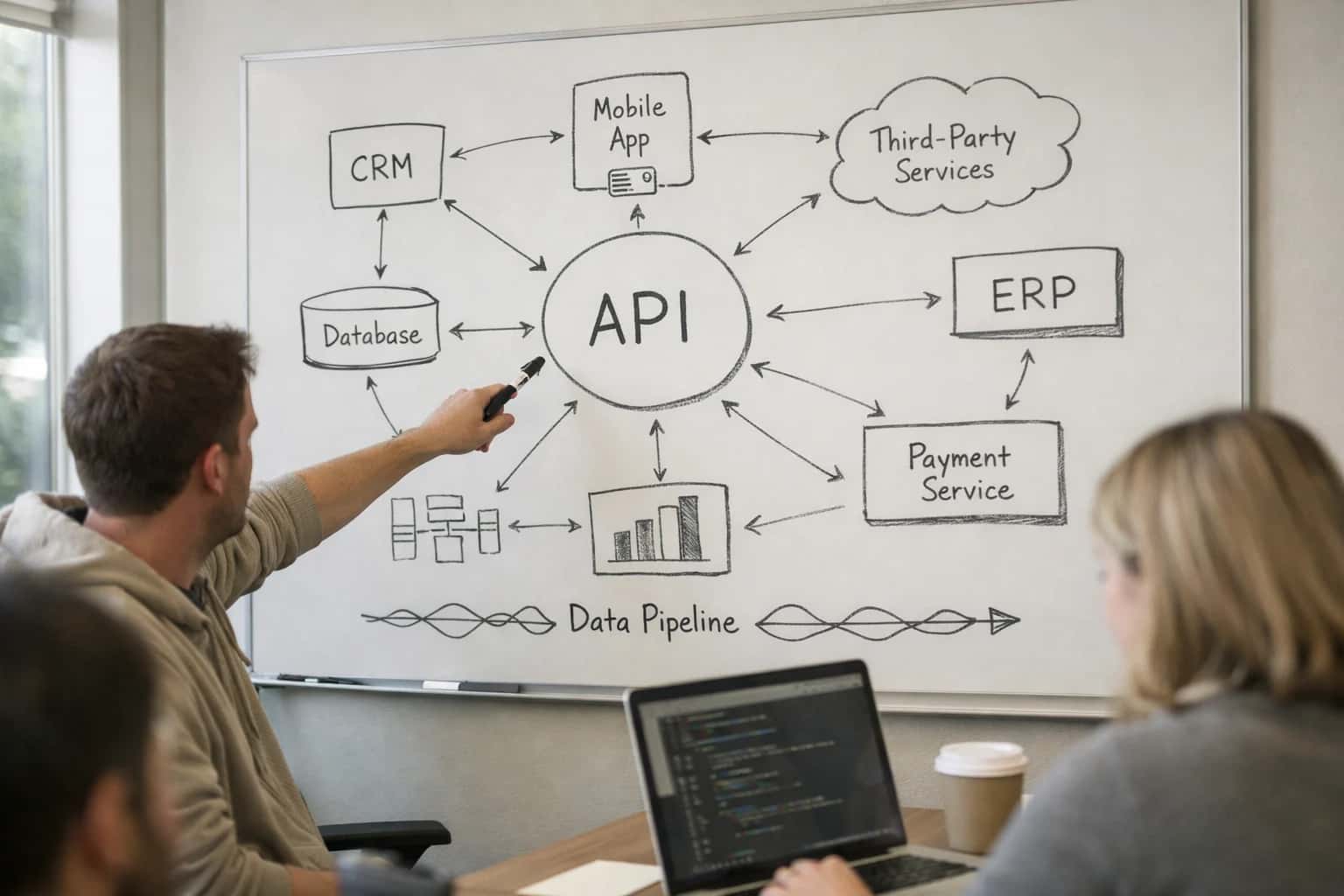
ARCHITECTURE FOR AUTOMATED RISK REMEDIATION
Where AI Fits into Serverless Security Workflows
Integrating AI agents directly into serverless security findings from platforms like Prisma Cloud and Lacework to automate secure code generation and architectural fixes.
The core AI workflow involves a multi-step orchestration: First, the agent performs a root cause analysis, correlating the finding with the actual function code (fetched from GitHub or AWS Lambda layers). For a vulnerability, it scans the package.json or requirements.txt. For a misconfiguration, it reviews the serverless.yml or Terraform module. Then, it generates a contextual remediation. This isn't a generic suggestion; it's a secure, ready-to-apply code snippet—like a corrected IAM policy limiting to lambda:InvokeFunction or an updated dependency version with a back-compatibility check. The output is formatted as a pull request comment, a Jira ticket description, or a direct commit to a secure hotfix branch, triggering your existing CI/CD pipeline.
Rollout requires a governed feedback loop. Initial implementations should run in a 'copilot mode', where all AI-generated fixes are presented to a developer or cloud engineer for review and approval within their existing tools (e.g., GitHub Pull Requests, ServiceNow tickets). This builds trust and provides labeled data to fine-tune the agent. Governance rules must define which risk severities (e.g., Critical, High) the agent can act on autonomously versus which require human sign-off. Audit trails are critical: every AI-suggested change must log the original finding ID, the prompt used, the generated code diff, and the approving entity to the CNAPP's native activity log or a separate SIEM.
SERVERLESS SECURITY INTEGRATION PATTERNS
AI Touchpoints in Lacework and Prisma Cloud
Analyzing Cold-Start and Permission Risks
Serverless functions in AWS Lambda, Azure Functions, or Google Cloud Functions present unique risks that CNAPP platforms like Lacework and Prisma Cloud detect. AI can analyze these findings to generate actionable, secure code.
Key AI Touchpoints:
- Over-Permissive Execution Roles: AI reviews IAM policies attached to functions, identifies excessive permissions (e.g.,
s3:*,dynamodb:*), and drafts least-privilege policy JSON snippets for developers to apply. - Insecure Trigger Configurations: For functions triggered by public API Gateway endpoints or overly broad EventBridge rules, AI suggests specific IP allow-lists, authentication layers, or narrower event patterns.
- Cold-Start Exposure: AI correlates function configuration (memory, timeout) with activity logs to identify infrequently used, high-memory functions that are costly and slow to respond. It recommends optimization strategies like provisioned concurrency or architecture changes.
INTEGRATING WITH PRISMA CLOUD & LACEWORK
High-Value AI Use Cases for Serverless Security
Applying AI to serverless security findings—like cold-start risks, over-permissive triggers, and vulnerable dependencies—to move from alert fatigue to automated, contextual remediation. These patterns integrate directly with CNAPP platforms to provide secure code snippets, architecture fixes, and operational guidance for DevOps and security teams.
01
Automated Fix Generation for Misconfigured Triggers
When Prisma Cloud or Lacework flags an over-permissive Lambda function trigger (e.g., a public API Gateway), an AI agent analyzes the finding, reviews the function's IAM role and VPC configuration, and generates a secure, context-aware code snippet. The snippet includes least-privilege resource policies and can be delivered as a pull request comment or a Jira ticket attachment for the owning team.
Hours -> Minutes
Remediation time
02
Cold-Start Risk Analysis & Optimization
AI processes runtime metrics and configuration data from CNAPP scans to identify serverless functions with high cold-start latency that impact security monitoring (e.g., delayed log ingestion). It correlates package size, memory allocation, and runtime to provide architectural recommendations, such as moving to provisioned concurrency or suggesting lightweight library alternatives, directly in the security finding.
Batch -> Real-time
Risk prioritization
03
Dependency Vulnerability Triage & Patching
Instead of a raw list of CVEs from a software composition analysis (SCA) scan, an AI agent contextualizes vulnerabilities within serverless functions. It evaluates exploitability based on the function's runtime, network exposure, and data sensitivity, then generates a patching workflow—prioritizing fixes, suggesting version upgrades, or creating a temporary security group rule as a stopgap.
1 sprint
Backlog reduction
04
Architectural Pattern Recommendations
For recurring misconfiguration patterns (e.g., functions writing directly to S3 without encryption), AI analyzes aggregated findings across the tenant to identify systemic gaps. It then generates and recommends secure infrastructure-as-code (IaC) modules (Terraform/AWS SAM) and architectural diagrams that teams can adopt, turning point-in-time alerts into proactive guardrails.
05
Natural-Language Query for Serverless Posture
A copilot interface connected to the CNAPP API allows engineers to ask questions like: "Show me all Lambda functions in production with public internet access and PII data exposure." The AI translates the query into platform-specific filters, executes the search, and returns a summarized report with risk scores and immediate next steps, bypassing complex query builders.
Same day
Audit readiness
06
Remediation Workflow Orchestration
AI acts as an orchestrator between the CNAPP platform and downstream systems. When a high-severity serverless finding is detected, it can: 1) Create a ticket in Jira/ServiceNow with enriched context, 2) Assign it to the team based on code ownership, 3) Post a summary in the team's Slack channel, and 4) Monitor the remediation via CI/CD pipeline scans until closure, creating an audit trail.
PRACTICAL AUTOMATION PATTERNS
Example AI-Powered Serverless Security Workflows
These workflows demonstrate how to connect LLM agents to serverless security findings from platforms like Prisma Cloud and Lacework. Each pattern is designed to move from detection to action, reducing manual investigation and accelerating secure deployment.
Trigger: A new serverless function (AWS Lambda, Azure Function) is deployed with a runtime or configuration flagged for high cold-start latency (e.g., Java runtime with large deployment package).
Workflow:
- Context Pull: The AI agent ingests the finding from the CNAPP (Prisma Cloud Compute, Lacework) along with function metadata (runtime, memory, package size, invocation pattern).
- Agent Analysis: An LLM analyzes the finding against known cold-start patterns and the function's expected traffic (e.g., sporadic vs. constant). It assesses the business impact.
- Action & Update: The agent generates a secure, optimized code snippet or configuration change. For example:
- Suggests switching from Java to a provisioned concurrency setup or a lighter runtime (like Python) if appropriate.
- Drafts a Terraform/CloudFormation snippet to enable provisioned concurrency.
- Creates a Jira ticket or PR comment with the recommendation, code, and a plain-English explanation of the risk.
- Human Review Point: The generated fix and ticket are routed to the function's owner team for approval before any automated deployment.
FROM CNAPP ALERTS TO SECURE CODE
Implementation Architecture: Data Flow and Guardrails
A production-ready blueprint for integrating AI agents with Lacework and Prisma Cloud to automate serverless security remediation.
The integration connects to the Findings API of your CNAPP platform (Lacework or Prisma Cloud), subscribing to real-time alerts for serverless functions. Key triggers include findings for over-permissive execution roles, exposed environment variables, unused cold-start packages, and publicly accessible triggers. An event-driven orchestrator (e.g., AWS EventBridge, Azure Service Bus) routes these alerts to a dedicated AI agent workflow, which first enriches the raw finding with contextual data from the cloud provider's API—such as the function's runtime, attached VPC, and recent invocation logs.
The enriched payload is sent to a governed LLM endpoint (OpenAI, Anthropic, or Azure OpenAI) with a system prompt engineered for cloud security. The prompt instructs the model to analyze the risk, reference the AWS Well-Architected Framework or Azure Security Benchmark, and generate two outputs: 1) A plain-language explanation of the exploit scenario and business impact, and 2) corrective code snippets (e.g., a least-privilege IAM policy, a secured serverless.yml block, or a Python script to prune unused layers). All outputs are logged with a full audit trail, including the original finding ID, the prompt used, and the model's reasoning chain for compliance review.
Before any action is taken, generated code passes through a security guardrail. This includes a syntax check, a policy validation against internal security standards (using Open Policy Agent), and optionally, a dry-run in a sandboxed environment. Approved fixes are then formatted as a pull request in the linked Git repository (via GitHub/GitLab API) or as a ready-to-apply Terraform module. For high-severity, auto-remediable issues (like removing public internet access), the workflow can be configured to execute the fix directly via the cloud provider's SDK, but only after logging the action and notifying the resource owner via Slack or Microsoft Teams. This architecture ensures AI augments the security workflow without bypassing essential governance, creating a closed-loop from detection to resolution.
INTEGRATING AI WITH SERVERLESS SECURITY WORKFLOWS
Code and Payload Examples
Enriching Serverless Security Alerts with AI Context
When a CNAPP like Prisma Cloud or Lacework flags a serverless function with an over-permissive execution role or exposed environment variables, raw findings lack operational context. An AI integration layer can consume these alerts via webhook, enrich them with runtime context, and prioritize them for the security team.
This process involves:
- Parsing the native alert payload to extract the function ARN, risk score, and detected misconfiguration.
- Enriching by querying additional cloud APIs (e.g., AWS Lambda, CloudTrail) to gather invocation patterns, associated VPCs, and data sensitivity.
- Summarizing the risk in plain language for a DevOps engineer, explaining the potential blast radius and likely exploit scenarios.
The AI agent outputs a structured, enriched ticket ready for triage in Jira Service Management or ServiceNow, drastically reducing the analyst's investigation time.
json{ "source_alert_id": "lacework-2025-04-15-12345", "resource_arn": "arn:aws:lambda:us-east-1:123456789:function:processPayment", "finding_type": "OverlyPermissiveExecutionRole", "raw_risk_score": 8, "ai_enrichment": { "context_summary": "Function 'processPayment' has an execution role with wildcard S3 permissions ('s3:*'). It processes PII data and is invoked 500+ times daily from a public API Gateway. A compromised function could lead to exfiltration of customer data.", "invocation_source": "API Gateway (public)", "data_sensitivity": "High (PII)", "recommended_action": "Replace wildcard 's3:*' with explicit GetObject permissions for the specific payment bucket.", "enriched_risk_score": 9 }, "ticket_system_payload": { "summary": "[High] Lambda 'processPayment' has wildcard S3 access on PII data", "description": "AI-Triaged: {context_summary}", "priority": "P1", "assignee_group": "Cloud-Security-DevOps" } }
AI-ENHANCED SERVERLESS SECURITY OPERATIONS
Realistic Time Savings and Operational Impact
This table illustrates the tangible impact of integrating AI agents with CNAPP platforms like Lacework and Prisma Cloud to automate the analysis and remediation of serverless function security findings.
| Workflow | Before AI | After AI | Implementation Notes |
|---|---|---|---|
Finding Triage & Prioritization | Manual review of 100+ daily alerts | AI pre-filters to top 10 critical risks | LLM analyzes cold-start risks, over-permissive triggers, and exploitability context. |
Root Cause Analysis | Engineer traces IAM roles, triggers, and code | AI generates narrative explanation with affected resources | Agent queries CNAPP API for runtime config and correlates with code repo. |
Secure Code Snippet Generation | Engineer drafts fixes based on documentation | AI suggests validated, least-privilege code (Lambda, Cloud Functions) | Prompts are grounded in cloud provider best practices and organizational policies. |
Architecture Recommendation | Manual diagram review and peer consultation | AI proposes serverless design patterns (e.g., event-driven, step functions) | Considers performance, cost, and security trade-offs from historical data. |
Remediation Ticket Creation | Manual copy-paste into Jira/ServiceNow | Auto-generated ticket with context, code fix, and rollout steps | Includes links to CNAPP evidence and pre-populates required fields for DevOps. |
False Positive Reduction | Team backlog review and manual suppression | AI flags likely false positives based on deployment context | Reduces alert noise by 30-50%, allowing focus on true risks. |
Compliance Evidence Gathering | Manual screenshot and report compilation for audits | AI auto-generates evidence packs for specific controls (e.g., CIS, SOC2) | Queries CNAPP for historical posture snapshots and maps to framework requirements. |
Rollout Phasing & Validation | Ad-hoc testing and staged deployment planning | AI suggests phased rollout plan and automated validation checks | Integrates with CI/CD to suggest canary deployments and post-fix security scans. |
IMPLEMENTING AI IN A REGULATED CLOUD ENVIRONMENT
Governance, Security, and Phased Rollout
A practical guide to deploying AI for serverless security with control, auditability, and minimal operational risk.
Integrating AI into your Prisma Cloud or Lacework serverless security workflows requires a governance-first architecture. This means implementing a secure middleware layer that acts as a policy-enforcing broker between your CNAPP APIs and the LLM. Key controls include: RBAC-gated access to the AI service, ensuring only authorized security engineers or automated workflows can trigger analysis; input sanitization and context window management to prevent prompt injection or accidental data leakage from function code and configuration findings; and immutable audit logs that record every AI-generated recommendation, the source finding ID, and the user or system that requested it. This audit trail is critical for compliance reviews and understanding the AI's role in security decisions.
A phased rollout minimizes disruption and builds trust. Start with a read-only, human-in-the-loop phase: configure the integration to generate secure code snippets and architecture recommendations for serverless findings (like over-permissive triggers or public function exposure), but present them as suggestions within a dedicated Slack channel or a column in your security findings dashboard. No automated actions are taken. In phase two, introduce low-risk automation: allow the system to auto-comment on Jira tickets created from high-confidence, high-severity findings, or to automatically tag resources in the CNAPP platform with ai_reviewed. The final phase enables closed-loop remediation for pre-approved patterns, such as automatically drafting a pull request to add a missing Resource policy to a serverless function's IAM role, but only after a security lead approves the pattern in a sandbox environment.
Security of the AI system itself is paramount. The integration should never expose API keys or use a monolithic, all-powerful model. Instead, employ a defense-in-depth model strategy: use a smaller, faster model for initial triage and classification of findings, and reserve larger, more capable models (via secure, VPC-endpoint access) only for complex code generation tasks. All calls should be rate-limited and budget-capped to prevent cost overruns. Furthermore, implement a feedback loop where security analysts can flag unhelpful or incorrect AI suggestions; this data is used to fine-tune prompts and improve the system, creating a continuously learning, governed asset. For a deeper dive on architecting these secure, agentic workflows, see our guide on AI Integration for Cloud Security Orchestration.
Enabling Efficiency, Speed & Accuracy
Intelligent Analysis, Decision & Execution
We build AI systems for teams that need search across company data, workflow automation across tools, or AI features inside products and internal software.
Talk to Us
Search across company data
Give teams answers from docs, tickets, runbooks, and product data with sources and permissions.
Useful when people spend too long searching or get different answers from different systems.
Enterprise searchRAGPermissions
Read more
Automate internal workflows
Use AI to route work, draft outputs, trigger actions, and keep approvals and logs in place.
Useful when repetitive work moves across multiple tools and teams.
AI agentsWorkflow automationGovernance
Read more
Add AI to products and internal tools
Build assistants, guided actions, or decision support into the software your team or customers already use.
Useful when AI needs to be part of the product, not a separate tool.
AI integrationDecision supportModel routing
Read moreIMPLEMENTATION AND ARCHITECTURE
Frequently Asked Questions
Common technical and operational questions about integrating AI agents with serverless security findings from platforms like Lacework and Prisma Cloud.
The integration typically follows a webhook-driven, event-based architecture:
- Trigger: Configure your CNAPP (Lacework, Prisma Cloud) to send a webhook for new or critical serverless findings (e.g.,
AWS_LAMBDA_FUNCTION_OVER_PERMISSIVE_ROLE,COLD_START_RISK_HIGH). - Ingestion & Enrichment: A lightweight middleware service (often serverless itself) receives the webhook payload, extracts the resource ID (ARN), and calls back to the CNAPP API to fetch full context: function code snippets, attached IAM policies, environment variables, and associated cloud account metadata.
- AI Processing: The enriched context is sent to an LLM (like GPT-4 or Claude 3) via a secure, governed API layer. A system prompt instructs the model to analyze the finding, focusing on serverless-specific risks, and generate actionable outputs.
- Output Delivery: The AI's response—containing a secure code fix, architecture recommendation, or plain-language explanation—is delivered via:
- Pull Request: A GitHub/GitLab app creates a branch and PR with the suggested fix.
- Ticket Enrichment: The output is appended to a Jira or ServiceNow ticket created from the finding.
- ChatOps: A message is posted to a Slack or Microsoft Teams channel for the responsible team.
Key tools include API gateways (like Kong or Apigee) for secure LLM calling, and vector databases (like Pinecone) if you need to ground recommendations in internal architectural guidelines.

About the author
Prasad Kumkar
CEO & MD, Inference Systems
Prasad Kumkar is the CEO & MD of Inference Systems and writes about AI systems architecture, LLM infrastructure, model serving, evaluation, and production deployment. Over 5+ years, he has worked across computer vision models, L5 autonomous vehicle systems, and LLM research, with a focus on taking complex AI ideas into real-world engineering systems.
His work and writing cover AI systems, large language models, AI agents, multimodal systems, autonomous systems, inference optimization, RAG, evaluation, and production AI engineering.
LinkedIn
Limited slotsGet a Free AI Consultation
Partnered with leading AI, data, and software stack.





How We Work
Custom AI workflows for your Business
One-fit-all AI don't work for modern businesses. At Inferensys, we aim to understand your business & custom requirements; which we use to define most efficient agentic workflows, the data, and the tools for your business.
01
Review the use case
We understand the task, the users, and where AI can actually help.
Read more02
Pick the right approach
We define what needs search, automation, or product integration.
Read more03
Build the first useful version
We implement the part that proves the value first.
Read more04
Improve from there
We add the checks and visibility needed to keep it useful.
Read moreThe first call is a practical review of your use case and the right next step.
Talk to Us