AI connects to the core data objects and APIs within your Clinical Trial Management System (CTMS)—like Oracle Clinical One or Veeva Vault CTMS—to analyze site performance metrics, screening logs, and patient pre-screening data. It also ingests feeds from Electronic Health Record (EHR) systems and Electronic Data Capture (EDC) platforms like Medidata Rave to build a unified view of recruitment velocity. The integration typically sits as a middleware layer, using the CTMS's event framework and REST APIs to trigger AI agents when new patient records are created, screening fails occur, or site enrollment milestones are updated.

Integration
AI Integration for Clinical Trial Patient Recruitment
A practical guide to integrating AI with Clinical Trial Management Systems (CTMS) to optimize patient recruitment workflows, predict enrollment rates, and identify site-level bottlenecks using EHR data, screening logs, and site performance metrics.
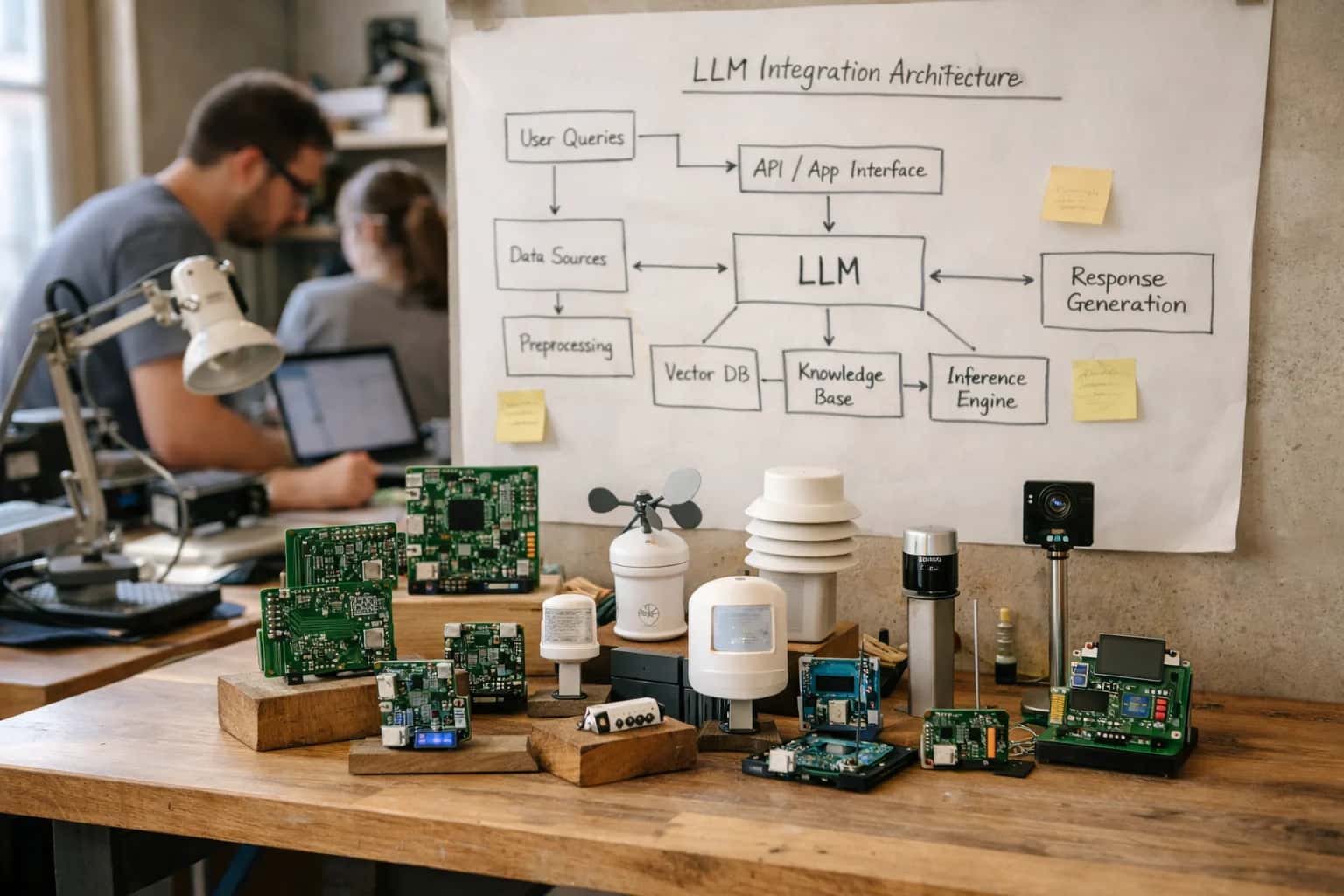
ARCHITECTURE AND IMPLEMENTATION
Where AI Fits into Patient Recruitment Workflows
Integrating AI into clinical trial patient recruitment transforms how sites are activated and patients are screened by injecting intelligence into CTMS, EDC, and EHR data flows.
High-value use cases include predictive enrollment modeling, which forecasts site-specific recruitment rates by analyzing historical performance and current pipeline data, and automated patient pre-screening, where an AI agent reviews EHR data against protocol criteria to generate a shortlist of potential candidates for site staff. Another critical workflow is bottleneck detection, where AI monitors the time between patient identification, consent, and randomization within the EDC/IRT workflow, alerting study managers to stalls in specific steps. This moves recruitment from reactive manual tracking to a proactive, data-driven operation.
A production implementation requires careful governance. AI outputs, such as patient eligibility scores, should be logged as audit trails within the CTMS or a dedicated system of record, and a human-in-the-loop approval step is essential before any automated action, like contacting a patient, is taken. Rollout typically starts with a pilot at a few high-enrolling sites, using the CTMS's reporting modules to measure impact on screen failure rate reduction and time-to-randomization. The architecture must also respect data privacy, often using a de-identified data pipeline for AI analysis, with re-identification only occurring under controlled conditions at the site level.
AI FOR PATIENT RECRUITMENT
Key Integration Surfaces in CTMS Platforms
Site Performance & Feasibility Analysis
AI integration for patient recruitment begins with the foundational data layer: site performance history and feasibility assessments. CTMS platforms like Oracle Clinical One and Veeva Vault CTMS maintain structured records for site activation timelines, past enrollment rates, and investigator profiles. An AI agent can be triggered via API or scheduled job to analyze this historical data, cross-reference it with protocol requirements from the study startup module, and generate predictive scores for new site feasibility.
Key objects for integration include:
- Site Performance Metrics: Past enrollment velocity, screen failure rates, query response times.
- Feasibility Questionnaires: Unstructured text responses from potential sites regarding patient population, staff, and facilities.
- Regulatory Document Timelines: Track document collection (1572, CVs) to predict activation delays.
By connecting to these surfaces, AI can prioritize high-potential sites, forecast realistic enrollment curves, and alert study teams to sites at risk of underperformance before the first patient is screened.
INTEGRATION OPPORTUNITIES
High-Value AI Use Cases for Patient Recruitment
Patient recruitment is the most critical bottleneck in clinical trials. These AI integration patterns connect directly to your CTMS and EDC platforms to automate screening, predict enrollment, and optimize site performance.
01
Automated EHR Pre-Screening
Integrate AI with Oracle Clinical One or Medidata Rave to analyze de-identified EHR data against protocol criteria. The system flags potentially eligible patients for site review, transforming manual chart reviews from hours to minutes and expanding the screening funnel.
Hours -> Minutes
Chart review time
02
Predictive Enrollment Forecasting
Connect AI models to CTMS enrollment dashboards and site performance history. The system analyzes screening logs, dropout rates, and seasonal trends to predict recruitment curves, enabling data-driven adjustments to site activation and patient outreach strategies.
Same day
Forecast updates
03
Site Performance & Bottleneck Detection
Deploy AI agents that continuously monitor Veeva Vault CTMS data—screen failure reasons, query rates, activation timelines—to score site performance. The system identifies root-cause bottlenecks (e.g., slow ethics approval) and triggers targeted support workflows for study managers.
Batch -> Real-time
Monitoring cadence
04
Intelligent Patient Matching & Outreach
Orchestrate AI across patient registries, eConsent platforms, and CTMS to match patient profiles to open trials. The system drafts personalized outreach messages, schedules pre-screenings, and logs all activities back to the CTMS patient record for compliance.
1 sprint
Pilot to production
05
Protocol Feasibility & Complexity Scoring
Integrate AI with protocol authoring tools and historical trial data within the CTMS. Before activation, the system analyzes inclusion/exclusion criteria against real-world population data to predict recruitment difficulty, suggesting protocol amendments to accelerate enrollment.
06
Decentralized Trial (DCT) Participant Onboarding
For hybrid or fully decentralized trials, implement an AI copilot within DCT platforms and patient portals. It guides participants through eConsent, device setup, and visit scheduling using natural language, reducing site burden and improving participant retention from day one.
Reduce manual triage
Site support load
ORACLE CLINICAL ONE INTEGRATION PATTERNS
Example AI-Driven Recruitment Workflows
These workflows illustrate how AI agents, integrated directly with Oracle Clinical One APIs and data models, can automate high-friction recruitment tasks. Each pattern connects to specific Clinical One objects—like Screening Logs, Patient Visits, and Site records—to predict, prioritize, and act.
Trigger: A new patient is added to the Screening Log in Clinical One.
Context Pulled: The AI agent retrieves the patient's anonymized EHR summary, key inclusion/exclusion criteria from the protocol (stored in Clinical One's study configuration), and historical screening outcomes from similar sites.
Agent Action: A model compares patient data against the criteria, generating a match confidence score and flagging any ambiguous criteria that may require Site Coordinator review. It drafts a preliminary eligibility note.
System Update: The agent updates the patient's Screening Log record in Clinical One with:
AI_Match_Score(0-100)AI_Flagged_Criteria(list)AI_Eligibility_Note(text)Next_Action: "Schedule Screening Visit" or "Review with PI"
Human Review Point: Scores below a configured threshold (e.g., 70) or flagged criteria automatically route the record to the Site Coordinator's task list for manual assessment before scheduling.
CONNECTING AI TO CTMS AND EDC FOR PREDICTIVE ENROLLMENT
Typical Implementation Architecture
A production-ready architecture for AI-driven patient recruitment integrates predictive models with your Clinical Trial Management System (CTMS) and Electronic Data Capture (EDC) platform to automate site scoring and bottleneck detection.
The integration is anchored on a central AI orchestration layer that ingests near-real-time data from your CTMS (e.g., Oracle Clinical One, Veeva Vault CTMS) and connected EDC (e.g., Medidata Rave). Key data objects include:
- CTMS Feeds: Site activation status, screening logs, enrollment targets, historical performance metrics, and feasibility questionnaire responses.
- EDC Feeds: Subject screening visit data, inclusion/exclusion criteria checks, and screen failure reasons.
- External Context: Optional de-identified EHR or claims data feeds for patient population modeling, ingested via secure APIs.
This data is processed through a vector-enabled data pipeline that normalizes and enriches records before feeding into two core AI workflows:
- Site Performance & Bottleneck Predictor: An agent analyzes screening velocity and failure patterns against protocol complexity to score sites weekly, flagging those at risk of missing targets. Alerts are pushed back to the CTMS as tasks for the Clinical Research Associate (CRA) or study manager.
- Patient Pre-Screening Assistant: For sites using integrated patient portals, an AI copilot reviews pre-screener data against the protocol's inclusion/exclusion criteria, providing a likelihood-of-qualification score. This helps site coordinators prioritize outreach.
Predictions and agent outputs are served via a secure API layer back to the CTMS dashboard, patient recruitment platforms, and operational reporting tools.
Governance is critical. The implementation includes:
- Audit Logging: All AI-generated scores, recommendations, and data accesses are logged to a separate audit database, traceable back to the source CTMS record.
- Human-in-the-Loop Approvals: High-impact actions, like re-allocating monitoring resources based on AI site scores, require a manager's approval within the CTMS workflow before execution.
- Model Performance Monitoring: Drift detection is configured against key metrics like prediction accuracy for screen failures, with alerts routed to the data science team.
Rollout typically follows a phased approach, starting with a pilot on 3-5 high-enrolling sites to validate predictions and refine agent prompts before scaling to the full study. This architecture ensures AI augments—rather than disrupts—existing site activation and patient recruitment workflows in your CTMS. For related patterns on data integration, see our guide on AI Integration for Clinical Data Management Platforms.
AI-PATIENT RECRUITMENT INTEGRATION PATTERNS
Code and Payload Examples
Real-Time Patient Pre-Screening
Integrate AI directly with Electronic Health Record (EHR) systems like Epic or Oracle Health to analyze patient records against protocol criteria. The AI agent calls the EHR's FHIR API, retrieves structured and unstructured data, and returns a match score with reasoning.
Example Python payload for a screening request to your orchestration layer:
pythonimport requests screening_payload = { "protocol_id": "NCT04567890", "patient_id": "P-12345", "criteria": { "inclusion": ["Age >= 18", "Diagnosis: Type 2 Diabetes", "HbA1c > 7.0%"], "exclusion": ["Pregnancy", "Renal Impairment (eGFR < 30)"] }, "data_sources": { "ehr_fhir_endpoint": "https://ehr-api/fhir/Patient/P-12345", "required_observations": ["HbA1c", "eGFR", "MedicationList"] } } response = requests.post( "https://your-ai-orchestrator/patient-screen", json=screening_payload, headers={"Authorization": "Bearer YOUR_API_KEY"} )
The AI service processes the data, returns a structured assessment, and can automatically create a pre-screened candidate record in the CTMS via its REST API.
AI-ASSISTED PATIENT RECRUITMENT
Realistic Time Savings and Operational Impact
How integrating AI with CTMS platforms like Oracle Clinical One transforms patient recruitment workflows by analyzing EHR data, screening logs, and site performance to predict enrollment and identify bottlenecks.
| Recruitment Workflow | Before AI | After AI | Notes |
|---|---|---|---|
Site Feasibility & Selection | Manual analysis of historical data (2-3 weeks) | AI-scored site recommendations (1-2 days) | Uses CTMS historical performance and real-world patient data |
Patient Pre-Screening | Manual EHR chart review (hours per patient) | AI-powered cohort identification (minutes) | Queries de-identified EHR data via integrated feeds; human review required |
Screening Visit Scheduling | Site coordinator manual outreach (next-day follow-up) | AI-assisted scheduling & reminders (same-day) | Integrates with patient portal and site calendars via CTMS APIs |
Enrollment Rate Forecasting | Monthly manual spreadsheet updates | Dynamic, weekly AI-powered predictions | Models CTMS enrollment data against site activation and screen-fail trends |
Bottleneck Identification | Post-mortem analysis after milestone miss | Real-time dashboard alerts on lagging metrics | Monitors CTMS data for screen-fail rates, consent delays, and site activity |
CRA Monitoring Focus | Evenly distributed site visits | Prioritized visits to high-risk or high-opportunity sites | AI ranks sites based on CTMS performance scores and predicted enrollment risk |
Recruitment Material Optimization | A/B testing over multiple study cycles | AI analysis of consent comprehension & engagement | Reviews eConsent platform interaction data to suggest plain-language revisions |
CONTROLLED DEPLOYMENT FOR REGULATED WORKFLOWS
Governance, Compliance, and Phased Rollout
Implementing AI for patient recruitment requires a risk-aware, phased approach that respects clinical data governance and maintains trial integrity.
Start with a read-only pilot in a non-critical environment, such as a sandbox instance of Oracle Clinical One or Veeva Vault CTMS. Use AI to analyze historical, de-identified screening logs and EHR data to predict enrollment rates and site bottlenecks, generating insights without touching live patient records or altering active workflows. This phase validates model accuracy and establishes a baseline for operational impact, measured in hours saved on manual data aggregation and analysis for study startup teams.
For production integration, implement a governance layer that enforces role-based access control (RBAC) via the CTMS, ensuring only authorized users (e.g., Clinical Operations Managers) can trigger AI agents. All AI-generated outputs—such as site performance scores or patient cohort predictions—should be logged as audit trails within the CTMS, tagged with the source data, model version, and user ID. Use the platform's native APIs (e.g., Oracle Clinical One Event Framework) to trigger AI reviews only after a site's screening data is marked as 'verified' in the EDC, maintaining a clear data lineage from source system to AI insight.
Adopt a phased rollout by therapeutic area or study phase. Begin with a single, low-risk Phase III study, integrating AI to prioritize site support visits based on predicted enrollment lag. Subsequent phases can introduce more autonomous workflows, such as automated patient pre-screening alerts sent to site coordinators via the CTMS communication module, but always with a human-in-the-loop approval step before any action is taken. This controlled approach allows for monitoring AI performance, adjusting prompts and thresholds, and ensuring compliance with ICH GCP E6(R3) guidelines on computerized systems and ALCOA+ principles for data integrity.
Enabling Efficiency, Speed & Accuracy
Intelligent Analysis, Decision & Execution
We build AI systems for teams that need search across company data, workflow automation across tools, or AI features inside products and internal software.
Talk to Us
Search across company data
Give teams answers from docs, tickets, runbooks, and product data with sources and permissions.
Useful when people spend too long searching or get different answers from different systems.
Enterprise searchRAGPermissions
Read more
Automate internal workflows
Use AI to route work, draft outputs, trigger actions, and keep approvals and logs in place.
Useful when repetitive work moves across multiple tools and teams.
AI agentsWorkflow automationGovernance
Read more
Add AI to products and internal tools
Build assistants, guided actions, or decision support into the software your team or customers already use.
Useful when AI needs to be part of the product, not a separate tool.
AI integrationDecision supportModel routing
Read moreIMPLEMENTATION AND WORKFLOW DETAILS
Frequently Asked Questions
Practical questions about integrating AI into patient recruitment workflows within Clinical Trial Management Systems (CTMS) like Oracle Clinical One, Veeva Vault CTMS, and Medidata Rave.
AI integrates via the CTMS's APIs and webhooks to read and write data, acting as an intelligent layer on top of your existing operations.
Typical Integration Points:
- Data Ingestion: An AI agent periodically queries the CTMS API for new patient screening logs, EHR data extracts, and site performance metrics.
- Analysis & Prediction: The agent uses this data to calculate enrollment likelihood scores, identify site bottlenecks, and flag potential protocol deviations in screening.
- Action & Orchestration: Based on its analysis, the system can:
- Create tasks or alerts in the CTMS for site monitors.
- Update patient status fields (e.g.,
RecruitmentPriorityScore). - Trigger automated communications to sites via integrated email or portal systems.
- Human Review Loop: Critical predictions (e.g., high-risk patient exclusion) are routed to a review queue within the CTMS or a connected workflow tool before final action is taken.
This architecture keeps your CTMS as the system of record while adding predictive intelligence to its workflows.

About the author
Prasad Kumkar
CEO & MD, Inference Systems
Prasad Kumkar is the CEO & MD of Inference Systems and writes about AI systems architecture, LLM infrastructure, model serving, evaluation, and production deployment. Over 5+ years, he has worked across computer vision models, L5 autonomous vehicle systems, and LLM research, with a focus on taking complex AI ideas into real-world engineering systems.
His work and writing cover AI systems, large language models, AI agents, multimodal systems, autonomous systems, inference optimization, RAG, evaluation, and production AI engineering.
LinkedIn
Limited slotsGet a Free AI Consultation
Partnered with leading AI, data, and software stack.





How We Work
Custom AI workflows for your Business
One-fit-all AI don't work for modern businesses. At Inferensys, we aim to understand your business & custom requirements; which we use to define most efficient agentic workflows, the data, and the tools for your business.
01
Review the use case
We understand the task, the users, and where AI can actually help.
Read more02
Pick the right approach
We define what needs search, automation, or product integration.
Read more03
Build the first useful version
We implement the part that proves the value first.
Read more04
Improve from there
We add the checks and visibility needed to keep it useful.
Read moreThe first call is a practical review of your use case and the right next step.
Talk to Us