AI Integration for Clinical Trial KPI Tracking and Dashboards
Automate KPI tracking for clinical trial leadership by integrating AI with CTMS and operational data sources to generate real-time dashboards, predict SLA breaches, and recommend corrective actions.
Transform CTMS dashboards from historical snapshots into proactive, predictive command centers for clinical trial leadership.
Traditional dashboards in Veeva Vault CTMS, Oracle Clinical One, or Medidata Rave show what happened last week. AI integration connects these platforms to operational data sources—EDC query rates, site activation timelines, patient screening logs, and supply chain alerts—to model leading indicators. Instead of manually correlating data across systems, an AI agent continuously analyzes these streams, surfaces correlations (e.g., a spike in protocol deviations at a site predicts a future enrollment stall), and pushes predictive KPIs directly into the CTMS dashboard or a connected BI tool like Tableau.
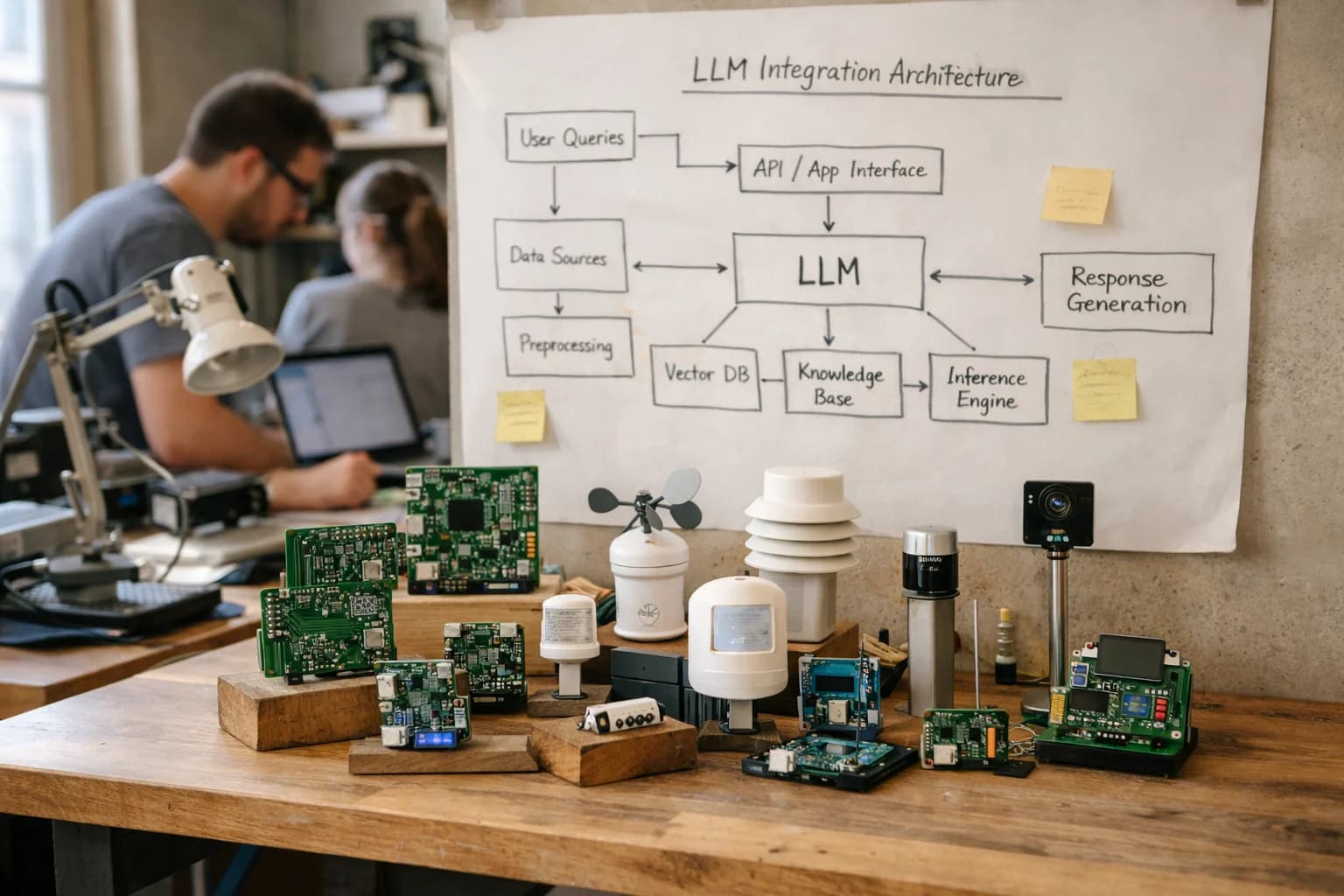
Implementation involves deploying lightweight agents that subscribe to CTMS webhooks and API events. For example, when a new site is activated in Oracle Clinical One, an agent can trigger a forecast model using historical data to predict first-patient-in timelines. Or, when Medidata Rave records a data anomaly, an agent can assess its severity against similar past issues and recommend a monitoring visit priority. The architecture is typically a middleware layer (often using n8n or CrewAI for orchestration) that sits between the CTMS, other clinical systems, and a vector database like Pinecone that stores historical patterns and study protocols for contextual reasoning.
Rollout focuses on a single, high-impact KPI first—such as predicting screen failure rates or SLA breaches for query resolution. Governance is critical: all AI-generated predictions and recommendations are logged with an audit trail in the CTMS or a dedicated governance platform, and key alerts are routed for human review before triggering automated actions in systems like Suvoda IRT for supply changes. This approach turns static reporting into a closed-loop system where dashboards don't just inform—they recommend the next best action for study managers and clinical operations leaders.
KPI TRACKING & DASHBOARDS
Where AI Connects to Your Clinical Trial Stack
Core Systems for KPI Aggregation
AI integration for KPI tracking begins by connecting to your Clinical Trial Management System (CTMS) as the central data hub. This includes platforms like Veeva Vault CTMS, Oracle Clinical One, or Medidata CTMS. The AI agent ingests key operational objects:
Site & Study Performance: Enrollment rates, screen failure ratios, and site activation timelines.
Financial Metrics: Grant payment status, budget vs. actual spend, and invoice reconciliation flags.
Milestone Tracking: Key dates for database lock, last patient visit, and regulatory submissions.
By establishing a real-time API connection, the AI can continuously monitor these data streams, detect deviations from projected timelines, and trigger alerts or predictive insights for study leadership. This moves reporting from weekly manual extracts to a live operational dashboard.
CLINICAL TRIAL MANAGEMENT PLATFORMS
High-Value AI Use Cases for KPI Intelligence
Automate KPI tracking and dashboard generation by integrating AI with CTMS, EDC, and operational data sources. Move from manual aggregation to real-time insights, predictive alerts, and action-oriented intelligence for clinical operations leadership.
01
Real-Time Enrollment & Milestone Dashboards
Integrate AI with Veeva Vault CTMS and Oracle Clinical One enrollment APIs to generate executive dashboards. Automatically pull site activation status, screening logs, and randomization data to calculate enrollment velocity, predict final FPFV/LPLV dates, and flag sites falling behind target. Eliminates weekly manual spreadsheet updates.
Weekly -> Real-time
KPI refresh
02
Predictive Site Performance Scoring
Build an AI model that consumes Medidata Rave query rates, CTMS monitoring visit findings, and protocol deviation data to generate dynamic site performance scores. Automatically route high-risk sites to centralized monitoring queues and trigger CRA visit prioritization within the CTMS workflow. Proactively allocates monitoring resources.
Batch -> Proactive
Risk management
03
Automated Data Quality & Query KPI Tracking
Connect AI to EDC systems like Medidata Rave and clinical data warehouses to monitor data entry lag, query aging, and DCF rates. Generate automated weekly reports that highlight data management bottlenecks, predict database lock delays, and recommend corrective actions to data managers. Turns reactive metrics into prescriptive insights.
Hours -> Minutes
Report generation
04
Financial & Grant Forecasting
Integrate AI with the financial modules of Veeva Vault CTMS or Oracle Clinical One. Analyze patient visit completions, site contract terms, and pass-through cost triggers to forecast monthly grant accruals, predict budget overruns, and automate invoice reconciliation workflows. Provides real-time visibility into trial burn rate.
05
Supply Chain & IRT KPI Monitoring
Orchestrate AI agents to monitor Suvoda IRT APIs for kit utilization, drug accountability, and temperature excursion alerts. Correlate this with CTMS enrollment forecasts to predict supply shortages or overages weeks in advance. Automatically update dashboards and trigger replenishment workflows. Prevents clinical supply disruptions.
Days -> Hours
Shortfall prediction
06
Centralized Monitoring & Risk Indicator Synthesis
Deploy AI to continuously analyze aggregated data from EDC, CTMS, and ePRO platforms. Automatically synthesize key risk indicators (KRIs) for centralized monitoring reports, highlighting trends in patient safety, protocol compliance, and data integrity. Push summarized findings and prioritized actions to the CTMS task manager for CRAs. Transforms data surveillance into operational tasks.
AUTOMATED DASHBOARD AND INSIGHT GENERATION
Example AI-Powered KPI Workflows
These workflows illustrate how AI integrates with CTMS, EDC, and operational data sources to automate KPI tracking, predict delays, and generate actionable dashboards for clinical trial leadership.
Trigger: Daily batch job from the CTMS (e.g., Veeva Vault CTMS, Oracle Clinical One) API pulls updated screening, enrollment, and randomization counts per site and country.
Context/Data Pulled:
Historical enrollment curves for similar protocols.
Site activation dates and performance scores.
Current screening failure reasons from the EDC (e.g., Medidata Rave).
Country-level holiday calendars and seasonal factors.
Model/Agent Action:
An AI agent analyzes the data against the target enrollment plan. It uses a time-series model to:
Predict the date for reaching the next 25% enrollment milestone.
Identify sites that are underperforming their projected screening-to-randomization conversion rate.
Flag potential root causes (e.g., high screen failures due to a specific lab exclusion criterion).
System Update/Next Step:
The agent generates a structured JSON payload and posts it to a dashboard service (e.g., Power BI dataset, internal API). It also creates a high-priority task in the CTMS for the regional lead, titled: "Review predicted 2-week delay at Site ABC - Suggested action: Protocol clarification call."
Human Review Point: The prediction and flagged sites are presented in the leadership dashboard with a confidence interval. The regional lead must acknowledge the alert before the system sends automated communications to the site.
AI-POWERED KPI DASHBOARDS
Implementation Architecture: Data Flow & AI Orchestration
A practical blueprint for integrating AI with clinical trial management systems to automate KPI tracking, predictive analytics, and corrective action workflows.
The architecture connects to your core Clinical Trial Management System (CTMS)—such as Veeva Vault CTMS, Oracle Clinical One, or Medidata Rave—via its native APIs or a dedicated data warehouse. Key data objects are ingested in near real-time: site activation timelines, patient enrollment curves, query resolution rates, monitoring visit completion, and financial burn rates. This operational data is enriched with external feeds from Interactive Response Technology (IRT) for supply status and Electronic Data Capture (EDC) for data entry velocity. The AI layer, typically deployed as a secure cloud service, processes this stream to calculate KPIs, detect deviations from planned baselines, and predict future SLA breaches (e.g., enrollment shortfalls, monitoring backlog).
Orchestration is handled by configurable AI agents that trigger specific workflows based on predictions. For example, an agent monitoring screen failure rates might automatically draft a corrective action recommendation for the study manager and create a task in the CTMS for a targeted site support call. Another agent, watching data query aging, could prioritize and assign overdue queries to data managers via the EDC system's API. The output is served to role-based dashboards within the CTMS interface or a separate BI tool like Tableau, providing clinical operations leadership with a single pane of glass showing predicted vs. actual milestones, risk heat maps, and automated insight summaries.
Governance and rollout are critical. Implementations start with a pilot KPI (e.g., site activation cycle time) and a single data source. AI predictions are initially presented as "assistive insights" alongside human-confirmed data to build trust. Access is controlled via the CTMS's existing RBAC, ensuring users only see KPIs relevant to their study or role. All AI-generated recommendations and alerts maintain a full audit trail linked back to the source data points in the CTMS, which is essential for inspection readiness. This phased approach de-risks the integration while delivering immediate value in reducing manual report compilation and enabling proactive study management. For related architectural patterns, see our guide on AI Integration for Clinical Trial Analytics and Reporting or AI Integration for Clinical Trial Risk-Based Monitoring.
AI-POWERED KPI AUTOMATION
Code & Payload Examples
Connecting to CTMS Data Sources
To build real-time KPI dashboards, the first step is programmatically extracting operational data from your Clinical Trial Management System (CTMS). This typically involves authenticating with the CTMS API and querying for key entities like sites, patients, visits, and financial milestones.
Below is a Python example using the Veeva Vault API (REST) to fetch site activation statuses, a critical leading indicator for trial timelines. The response is then structured for downstream AI processing.
python
import requests
import pandas as pd
# Authenticate with Veeva Vault CTMS API
auth_url = "https://your-veevavault.com/api/v20.3/auth"
payload = {
"username": "YOUR_SERVICE_USER",
"password": "YOUR_SERVICE_PASSWORD",
"grant_type": "password"
}
response = requests.post(auth_url, data=payload)
access_token = response.json()["sessionId"]
# Query for site activation KPIs
headers = {"Authorization": f"Bearer {access_token}"}
kpi_query_url = "https://your-veevavault.com/api/v20.3/objects/study_site__v"
params = {
"fields": "id,name__v,activation_status__v,activation_date__v,patient_count__v",
"limit": 100
}
site_data = requests.get(kpi_query_url, headers=headers, params=params).json()["data"]
# Transform for AI analysis
df_sites = pd.DataFrame(site_data)
print(f"Fetched {len(df_sites)} sites for KPI tracking.")
AI-POWERED KPI DASHBOARDS
Realistic Time Savings & Operational Impact
How AI integration transforms manual reporting into proactive intelligence for clinical trial leadership, based on data from CTMS, EDC, and operational systems.
Metric
Before AI
After AI
Notes
KPI Dashboard Compilation
Manual data pulls from 5+ systems, 4-8 hours weekly
Automated data aggregation and refresh, 30 minutes weekly
Connects to Veeva Vault CTMS, Medidata Rave, and financial modules
SLA Breach Detection
Reactive review after monthly reports, next-day awareness
Proactive alerts based on predictive models, real-time awareness
Flags risks for enrollment, site activation, and query resolution timelines
Corrective Action Recommendation
Ad-hoc analysis by study managers, 2-3 hours per issue
AI-generated insights with ranked options, 15 minutes per issue
Suggests actions based on historical trial patterns and site performance data
Executive Reporting
Manual slide deck creation, 1-2 days per cycle
Automated report generation with narrative summaries, 2 hours per cycle
Integrates with BI tools like Tableau for drill-down capability
Enrollment Forecast Accuracy
Spreadsheet-based projections, ±25% variance common
AI-modeled forecasts using site & patient data, ±10% variance
Uses CTMS enrollment logs and screening data for continuous recalibration
Monitoring Visit Prioritization
Equal weighting or CRA intuition, leading to inefficiencies
Risk-based scoring of sites, focusing visits on highest need
Leverages CTMS data on query rates, protocol deviations, and data timeliness
Regulatory Submission Timeline Tracking
Manual Gantt chart updates, lagging status by days
Automated milestone tracking with confidence scores, real-time status
Pulls from eTMF, CTMS, and regulatory information management systems
ARCHITECTING FOR REGULATED ENVIRONMENTS
Governance, Security & Phased Rollout
A production-ready AI integration for clinical trial KPIs requires a deliberate architecture that prioritizes data integrity, auditability, and controlled adoption.
The integration architecture must treat the CTMS (e.g., Veeva Vault CTMS, Oracle Clinical One) as the system of record. AI agents should operate as a read-and-write layer via secure APIs, never storing a separate copy of master trial data. Key data objects—Site, Patient, Visit, Milestone, Budget—are ingested in real-time or batch from the CTMS into a dedicated analytics environment. Here, AI models perform KPI calculations, anomaly detection, and predictive forecasting (e.g., enrollment SLA breaches). All derived insights and recommended actions are written back to the CTMS as annotated records or system-generated tasks, maintaining a complete audit trail within the primary platform. This ensures data lineage and a single source of truth for audits.
Security is enforced through the CTMS's existing role-based access control (RBAC). AI-generated dashboards and alerts respect user permissions; a site coordinator sees only their site's data, while a study director sees the global view. All API calls are logged, and any AI-suggested corrective action (e.g., "prioritize monitoring for Site A-101") requires human-in-the-loop approval via a workflow in the CTMS or a connected system like a Project Management platform before execution. Data in transit and at rest is encrypted, and the AI service itself should be deployable in a sponsor's VPC or compliant cloud to meet data residency requirements for global trials.
Rollout follows a phased, risk-based approach. Phase 1 focuses on descriptive analytics: automating the aggregation of data from the CTMS and connected sources (EDC, ePRO) to generate real-time dashboards for leadership, replacing manual spreadsheet reporting. Phase 2 introduces predictive alerts: deploying models to forecast key milestones and flag at-risk sites or budgets, with alerts routed to CTMS task lists for study managers. Phase 3 enables prescriptive recommendations: where the AI suggests specific interventions (e.g., "activate backup site in Region Y") for review and approval. Each phase includes parallel validation, where AI outputs are compared against manual analysis to ensure accuracy and build trust before expanding scope. Start with a single study or therapeutic area to refine the workflow, then scale across the portfolio.
Enabling Efficiency, Speed & Accuracy
Intelligent Analysis, Decision & Execution
We build AI systems for teams that need search across company data, workflow automation across tools, or AI features inside products and internal software.
IMPLEMENTATION AND WORKFLOW DETAILS
Frequently Asked Questions
Practical questions about integrating AI into clinical trial KPI dashboards, covering data orchestration, model actions, and governance for operations leadership.
The integration uses a layered data orchestration approach, typically built on a cloud data warehouse (e.g., Snowflake, BigQuery) or a data lake.
Trigger: Scheduled batch jobs (nightly) or event-driven webhooks (real-time) from source systems.
EDC (Medidata Rave): Data entry velocity, query rates, protocol deviation counts, screen failure ratios.
Financial Systems: Site payment status, invoice aging, budget vs. actual spend.
eTMF (Veeva Vault): Document submission and approval lag times.
System Update: Raw and transformed data is staged in the warehouse. A unified "trial operations" schema is created, serving as the single source of truth for the AI layer and downstream dashboards (e.g., Tableau, Power BI).
About the author
Prasad Kumkar
CEO & MD, Inference Systems
Prasad Kumkar is the CEO & MD of Inference Systems and writes about AI systems architecture, LLM infrastructure, model serving, evaluation, and production deployment. Over 5+ years, he has worked across computer vision models, L5 autonomous vehicle systems, and LLM research, with a focus on taking complex AI ideas into real-world engineering systems.
His work and writing cover AI systems, large language models, AI agents, multimodal systems, autonomous systems, inference optimization, RAG, evaluation, and production AI engineering.
Partnered with leading AI, data, and software stack.
How We Work
Custom AI workflows for your Business
One-fit-all AI don't work for modern businesses. At Inferensys, we aim to understand your business & custom requirements; which we use to define most efficient agentic workflows, the data, and the tools for your business.
The first call is a practical review of your use case and the right next step.