AI integration targets the contract lifecycle management (CLM) and financial modules within Clinical Trial Management Systems (CTMS) like Veeva Vault CTMS and Oracle Clinical One. The primary data objects are site agreements, grant payment schedules, patient enrollment milestones, and invoice records. An AI agent can be triggered via CTMS APIs or webhooks upon events like a new contract upload, a site activation, or a patient visit completion. The agent extracts key terms—such as payment triggers, pass-through costs, and compliance clauses—using document intelligence, then maps them to the study's operational timeline and budget model stored in the CTMS.

Integration
AI Integration for Clinical Trial Contract and Grant Management
Automate site agreement review, grant calculation, and payment reconciliation within Veeva Vault CTMS, Oracle Clinical One, and Medidata Rave using AI agents for faster budgeting and compliance.
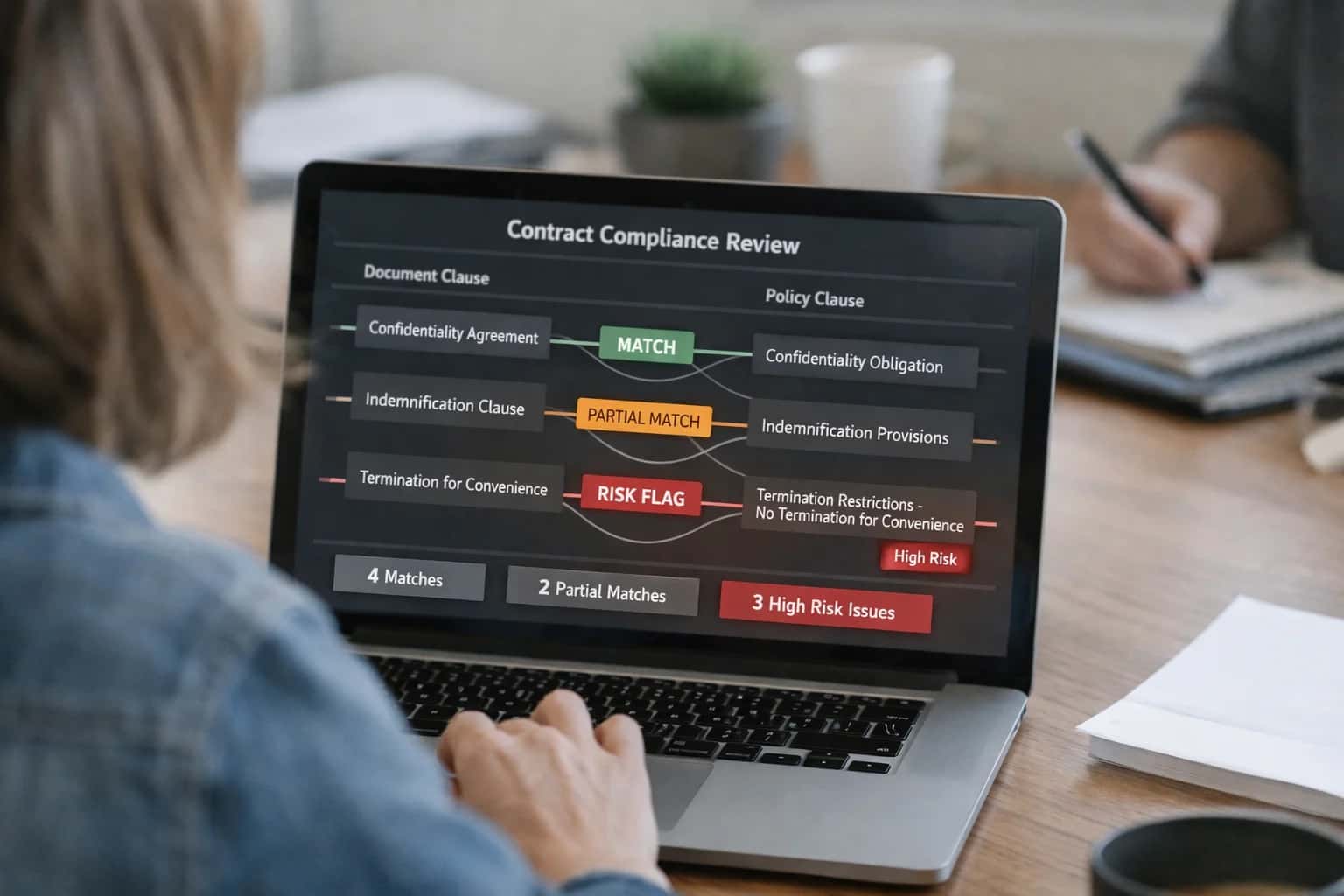
ARCHITECTURE FOR AUTOMATED BUDGETING AND COMPLIANCE
Where AI Fits into Clinical Trial Contract and Grant Workflows
Integrating AI into CTMS and financial modules to automate site agreement analysis, payment reconciliation, and grant forecasting.
High-value use cases include automated grant calculation (reconciling actual patient visits against contract terms), budget variance alerts (flagging invoices that deviate from agreed rates), and compliance tracking (ensuring payment terms align with regulatory and sponsor requirements). For example, an AI workflow can review a site's monthly invoice packet, cross-reference it with the executed contract and EDC visit data, and either auto-approve for payment or route discrepancies to a clinical operations finance specialist—reducing manual review from hours to minutes per site.
A production rollout typically involves a phased approach: starting with read-only analysis of historical contracts and payments to train models and establish baselines, then moving to assistive workflows where AI suggests actions within the CTMS UI, and finally enabling closed-loop automation for low-risk, high-volume payment triggers. Governance is critical; all AI-generated recommendations and actions must be logged in the CTMS audit trail with clear attribution, and human-in-the-loop approvals are maintained for significant budget deviations or novel contract structures. For a deeper look at automating financial operations, see our guide on AI Integration for Clinical Trial Financial Management.
CONTRACT AND GRANT MANAGEMENT
AI Integration Surfaces in Leading CTMS Platforms
Core Contract Objects
AI integration targets the core data objects within CTMS contract modules: Site Agreements, Clinical Trial Agreements (CTAs), and Budget Versions. These records contain the structured terms, payment schedules, and deliverables that govern site relationships.
Key integration surfaces include:
- Agreement Lifecycle Status Fields: Trigger AI review upon status changes like "Sent for Signature" or "Executed."
- Payment Milestone Tables: Connect AI to analyze milestone triggers (e.g., "First Patient First Visit") against actual site activity data from the EDC.
- Budget Line Items: Use AI to compare proposed site budgets against historical benchmarks and fair market value data, flagging outliers for review.
By connecting to these modules, AI can automate compliance checks, extract key obligations, and forecast payment cash flows.
CLINICAL TRIAL MANAGEMENT PLATFORMS
High-Value AI Use Cases for Contract & Grant Management
Integrate AI with Veeva Vault CTMS, Oracle Clinical One, and other trial management systems to automate the analysis of site agreements, payment terms, and grant calculations, reducing manual effort and accelerating financial operations.
01
Automated Site Agreement Analysis
Deploy AI to ingest and analyze executed Clinical Trial Agreements (CTAs) and site budgets from the eTMF. Extract key terms (payment schedules, pass-through costs, milestones) and push structured data into the CTMS financial module for automated tracking against actual site activities.
Hours -> Minutes
Contract review time
02
Intelligent Grant Calculation & Forecasting
Connect AI to the CTMS to analyze patient enrollment, visit completion, and protocol deviations in real-time. Automatically calculate earned site grants, forecast upcoming payments, and flag discrepancies between contract terms and triggered payments for finance review.
Batch -> Real-time
Payment forecasting
03
Invoice Reconciliation & Dispute Triage
Integrate AI with the CTMS financial dashboard and accounts payable system. Automatically match site invoices to contract terms and triggered milestones, flagging mismatches for rapid review. Draft dispute communications and log issues back to the CTMS for resolution tracking.
Same day
Dispute identification
04
Obligation Tracking & Compliance Alerts
Use AI to maintain a live register of contractual obligations (e.g., data delivery timelines, regulatory document submissions) extracted from agreements. Monitor CTMS and eTMF activity, sending alerts to study managers when obligations are due or at risk of breach.
Proactive
Compliance monitoring
05
Budget Variance & Change Order Support
Leverage AI to compare actual trial costs (from CTMS) against the original protocol budget. Identify significant variances, suggest potential change order scenarios, and draft amendment language based on historical contract patterns and real-time enrollment data.
1 sprint
Budget analysis cycle
06
Subcontractor & CRO Agreement Flow-Down
Apply AI to ensure sponsor contract terms are correctly flowed down to CRO and vendor agreements within the CTMS vendor module. Compare master service agreement clauses against work orders, highlighting gaps in liability, payment terms, or intellectual property before execution.
CLINICAL TRIAL FINANCE AUTOMATION
Example AI-Powered Contract and Grant Workflows
Integrating AI into Clinical Trial Management Systems (CTMS) and financial modules automates the contract and grant lifecycle, from initial budgeting to final payment reconciliation. These workflows reduce manual review, accelerate site activation, and ensure compliance with complex payment terms.
Trigger: A new draft clinical trial agreement (CTA) or budget is uploaded to the CTMS (e.g., Veeva Vault CTMS) or document management system.
Workflow:
- An AI agent extracts key terms: payment milestones (e.g., per-patient, startup fee), pass-through costs, and country-specific regulatory requirements.
- The agent compares the draft against a library of approved, historical site budgets for the same therapeutic area and country, flagging significant deviations (e.g., >15% variance in per-patient costs).
- It generates a negotiation brief for the clinical contracts team, highlighting non-standard clauses and suggesting alternative language based on precedent.
- The brief and flagged items are posted as a task in the CTMS workflow for the contract manager, with a link to the source document.
Human Review Point: The contract manager reviews the AI-generated brief before engaging with the site.
CONTRACT AND GRANT WORKFLOWS
Implementation Architecture: Data Flow, APIs, and Guardrails
A production-ready architecture for integrating AI into clinical trial contract and grant management within CTMS platforms like Veeva Vault CTMS and Oracle Clinical One.
The integration connects to the CTMS's contract and budget modules—typically via REST APIs for objects like Site Agreement, Payment Schedule, and Grant Calculation—and the document management layer for PDF contracts and amendments. An event-driven pipeline listens for new contract uploads, budget version approvals, or payment milestone triggers. Incoming documents are chunked, embedded, and indexed in a vector database (e.g., Pinecone) for semantic search on clauses, terms, and obligations. Structured data from the CTMS API provides the operational context, such as site ID, protocol number, and negotiated payment terms.
AI agents orchestrate three core workflows: 1) Contract Intelligence - New site agreements are analyzed against master templates to flag non-standard clauses, calculate financial exposure, and auto-populate budget line items in the CTMS. 2) Grant Automation - Upon a patient randomization event from the IRT system, an agent calculates the due payment, validates it against the executed contract, and drafts a payment request in the financial module, ready for approver review. 3) Compliance Tracking - Agents monitor payment dates and clinical milestones, cross-referencing CTMS activity logs to trigger alerts for potential overpayments or missed deliverables. All agent actions are logged as audit trail entries in the CTMS, preserving a clear lineage from AI suggestion to human approval.
Governance is enforced through a human-in-the-loop approval layer. No payment is auto-initiated; every AI-generated grant calculation or contract discrepancy is presented in a review queue within the CTMS UI or a connected dashboard. Approvers see the source data, the AI's reasoning, and can override before committing. The system uses role-based access control (RBAC) synced from the CTMS to ensure only authorized budget owners and contract managers can approve agent actions. Regular drift monitoring on the AI models ensures clause detection and financial logic remain accurate as contract templates and protocol designs evolve.
CLINICAL TRIAL CONTRACT AND GRANT MANAGEMENT
Code and Payload Examples for CTMS Integrations
Analyzing Site Budgets and Payment Terms
Integrate AI to review executed Clinical Trial Agreements (CTAs) and site budgets loaded into the CTMS (e.g., Veeva Vault CTMS). An agent can extract key financial terms, payment milestones, and pass-through cost caps, comparing them against the master budget and historical site data.
Example Python payload for sending a document to an analysis endpoint:
pythonimport requests payload = { "document_id": "CTA-2024-001", "source_system": "VeevaVault", "object_type": "Clinical_Trial_Agreement__c", "analysis_type": ["payment_terms", "budget_line_items", "cap_analysis"] } response = requests.post( 'https://api.your-ai-service.com/analyze-contract', json=payload, headers={'Authorization': 'Bearer YOUR_API_KEY'} ) # Returns structured data for import back into CTMS financial objects print(response.json())
This automates the initial finance review, flagging outliers for contract managers.
AI FOR CONTRACT AND GRANT WORKFLOWS
Realistic Time Savings and Operational Impact
How AI integration accelerates key contract and grant management workflows within Clinical Trial Management Systems like Veeva Vault CTMS and Oracle Clinical One, reducing manual cycles while keeping human oversight in the loop.
| Metric | Before AI | After AI | Notes |
|---|---|---|---|
Contract clause extraction & comparison | Manual review (2-4 hours per agreement) | Assisted extraction (15-30 minutes) | AI flags non-standard terms for legal review |
Site budget & grant calculation | Spreadsheet modeling (1-2 days) | Scenario modeling (1-2 hours) | AI uses historical site data and protocol complexity |
Payment milestone validation | Manual cross-check of CTMS activities vs. contract | Automated discrepancy flagging | Triggers review only for mismatches; integrates with CTMS visit logs |
Compliance obligation tracking | Quarterly manual audit of contract terms | Continuous monitoring & alerting | AI scans eTMF and CTMS for deliverables, deadlines |
Amendment impact analysis | Manual redline and financial re-forecast (3-5 days) | Draft impact summary (same day) | Highlights changed terms, cost implications for negotiation |
Invoice reconciliation | AP team matches invoices to CTMS activities | Pre-matched line items with exception routing | Reduces manual touchpoints by ~70%; finance approves exceptions |
Grant forecasting & accruals | Monthly manual roll-up from spreadsheets | Automated forecast updates | Pulls live enrollment and visit data from CTMS for accuracy |
ENSURING CONTROLLED, AUDITABLE AI OPERATIONS
Governance, Compliance, and Phased Rollout
A structured approach to deploying AI for contract and grant management that prioritizes compliance, maintains data integrity, and delivers incremental value.
AI integration for clinical trial contracts and grants must be built on a foundation of auditable data flows and role-based access control (RBAC). This means connecting to systems like Veeva Vault CTMS or Oracle Clinical One via their official APIs, never directly accessing raw patient data, and ensuring all AI-generated outputs—such as payment term summaries or budget variance flags—are logged as discrete records with a clear audit trail. AI agents should operate with permissions scoped to specific study teams or functional roles (e.g., Clinical Operations, Finance) to enforce the principle of least privilege.
A phased rollout is critical for managing risk and proving value. Phase 1 typically focuses on read-only analysis, such as using AI to review historical site agreements in the CTMS to flag non-standard clauses or calculate average grant payment timelines. Phase 2 introduces assistive automation, like an AI copilot that drafts budget change orders or payment triggers based on monitored enrollment milestones, but requires a human-in-the-loop for approval before any system-of-record update is committed. Phase 3 enables conditional automation for low-risk, high-volume tasks, such as auto-generating routine amendment summaries or populating grant tracking fields, governed by pre-defined business rules.
Governance is maintained through a centralized prompt library and continuous evaluation. All AI prompts used for clause extraction or financial calculation are version-controlled and tested against a gold-standard dataset of anonymized contracts. Performance is monitored for drift in accuracy, especially for nuanced terms like "pass-through costs" or "subject to institutional review." Any integration that touches financial data or contractual obligations includes a mandatory reconciliation step, where AI-suggested actions are compared against the source document within the CTMS or eTMF before finalization, ensuring GCP and financial compliance standards are met throughout the trial lifecycle.
Enabling Efficiency, Speed & Accuracy
Intelligent Analysis, Decision & Execution
We build AI systems for teams that need search across company data, workflow automation across tools, or AI features inside products and internal software.
Talk to Us
Search across company data
Give teams answers from docs, tickets, runbooks, and product data with sources and permissions.
Useful when people spend too long searching or get different answers from different systems.
Enterprise searchRAGPermissions
Read more
Automate internal workflows
Use AI to route work, draft outputs, trigger actions, and keep approvals and logs in place.
Useful when repetitive work moves across multiple tools and teams.
AI agentsWorkflow automationGovernance
Read more
Add AI to products and internal tools
Build assistants, guided actions, or decision support into the software your team or customers already use.
Useful when AI needs to be part of the product, not a separate tool.
AI integrationDecision supportModel routing
Read moreIMPLEMENTATION BLUEPRINT
FAQ: AI for Clinical Trial Contracts and Grants
Practical answers for integrating AI into clinical trial contract and grant management workflows within CTMS and financial systems to automate budgeting, compliance, and payment operations.
AI integrates via the CTMS's APIs (e.g., Veeva Vault CTMS REST API, Oracle Clinical One Web Services) to access site agreement documents, payment schedules, and budget records. A typical implementation involves:
- Trigger: A new contract document is uploaded to the CTMS's document repository or a site's budget is updated.
- Data Pull: The AI agent retrieves the document (PDF, DOCX) and relevant context like protocol ID, site ID, and country from the CTMS.
- AI Action: A multi-modal LLM (e.g., GPT-4 Vision, Claude 3) extracts key clauses (payment terms, milestones, pass-through costs), calculates total grant value, and flags non-standard language against a library of approved templates.
- System Update: The structured data (milestone dates, amounts, compliance flags) is written back to custom objects or fields within the CTMS for tracking.
- Human Review: The system creates a task for the Clinical Contracts Manager in the CTMS workflow to review high-risk flags or approve the AI's summary.
This creates a searchable, auditable layer of contract intelligence directly inside your operational system.

About the author
Prasad Kumkar
CEO & MD, Inference Systems
Prasad Kumkar is the CEO & MD of Inference Systems and writes about AI systems architecture, LLM infrastructure, model serving, evaluation, and production deployment. Over 5+ years, he has worked across computer vision models, L5 autonomous vehicle systems, and LLM research, with a focus on taking complex AI ideas into real-world engineering systems.
His work and writing cover AI systems, large language models, AI agents, multimodal systems, autonomous systems, inference optimization, RAG, evaluation, and production AI engineering.
LinkedIn
Limited slotsGet a Free AI Consultation
Partnered with leading AI, data, and software stack.





How We Work
Custom AI workflows for your Business
One-fit-all AI don't work for modern businesses. At Inferensys, we aim to understand your business & custom requirements; which we use to define most efficient agentic workflows, the data, and the tools for your business.
01
Review the use case
We understand the task, the users, and where AI can actually help.
Read more02
Pick the right approach
We define what needs search, automation, or product integration.
Read more03
Build the first useful version
We implement the part that proves the value first.
Read more04
Improve from there
We add the checks and visibility needed to keep it useful.
Read moreThe first call is a practical review of your use case and the right next step.
Talk to Us