Traditional clinical trial analytics rely on static reports from Veeva Vault CTMS, Medidata Rave, or Oracle Clinical One, forcing teams to manually interpret lagging indicators. AI integration connects directly to these platforms' data warehouses and APIs—pulling enrollment figures, site performance metrics, query rates, and visit adherence data—to generate dynamic, predictive insights. Instead of simply reporting that enrollment is at 45%, an AI layer can analyze screening logs, site activation timelines, and historical data to forecast the actual go-live date and identify the three sites most likely to cause delay.

Integration
AI Integration for Clinical Trial Analytics and Reporting
Build AI-powered analytics on top of CTMS and EDC data warehouses to generate executive dashboards, predict study milestones, and automate KPI reporting for clinical operations leadership.
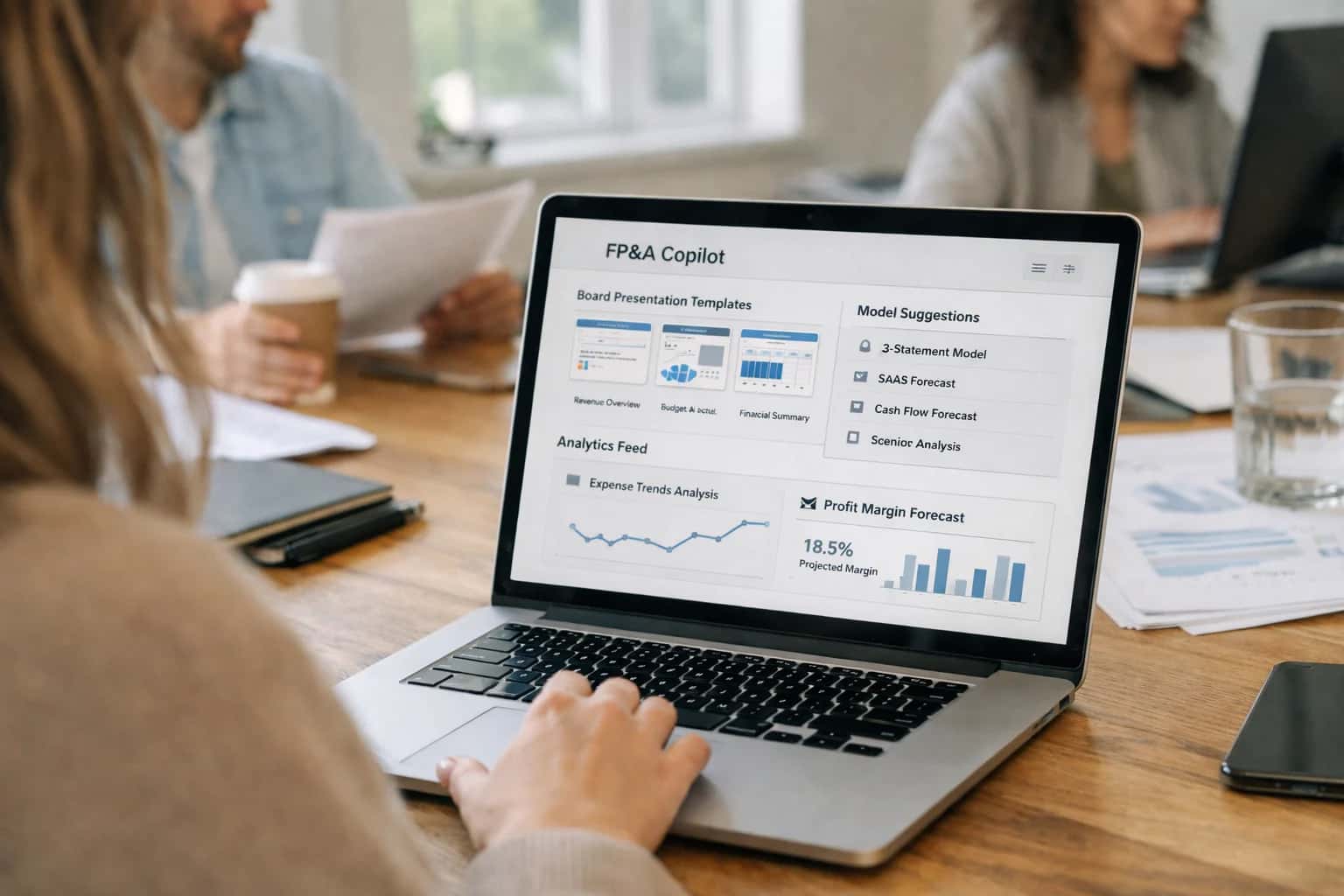
AI INTEGRATION FOR CLINICAL TRIAL ANALYTICS AND REPORTING
From Static Reports to Intelligent, Predictive Insights
Move beyond manual dashboards to AI-driven analytics that predict study outcomes and automate KPI reporting for clinical operations.
Implementation typically involves a middleware layer that subscribes to CTMS and EDC webhook events or scheduled data extracts. This layer feeds structured operational data into a vector-enabled analytics engine, where AI agents perform tasks like:
- Predictive milestone forecasting: Modeling database lock or last patient first visit dates based on current trends and site-level variables.
- Automated KPI generation: Drafting the weekly operations report with narrative summaries of top risks, using natural language to highlight deviations from plan.
- Anomaly detection in reporting: Flagging unexpected drops in data entry rates or spikes in protocol deviations for immediate review, moving from periodic checks to continuous surveillance.
Rollout focuses on the highest-friction reporting workflows first, such as the monthly study leadership review or the CSR drafting process. Governance is critical: all AI-generated insights remain recommendations, with clear audit trails back to source data in the CTMS. Outputs are delivered via existing channels—embedded in Power BI dashboards, posted as summaries in Microsoft Teams channels for the study team, or appended as notes to the Veeva Vault eTMF. This approach ensures AI augments the existing tech stack, providing predictive power without requiring clinical teams to learn a new analytics platform.
INTEGRATION SURFACES
Where AI Connects to Your Clinical Data Stack
The Core Analytics Engine
AI connects directly to the aggregated data warehouses that feed your clinical trial analytics dashboards. This includes the operational data from CTMS platforms like Veeva Vault CTMS and Oracle Clinical One, combined with cleaned clinical data from EDC systems like Medidata Rave.
Key integration points:
- Scheduled Data Pulls: Use platform APIs or database connectors to feed nightly extracts into a dedicated analytics layer.
- Real-time Event Streams: Ingest key milestone events (e.g., patient randomized, site activated) via webhooks for live KPI updates.
- Data Model Mapping: Align AI outputs with your existing dimensional models for patient, site, visit, and milestone facts.
AI agents analyze this unified dataset to predict enrollment curves, flag sites at risk of missing targets, and automate the generation of executive summary reports, moving from monthly manual compilation to daily automated insights.
FROM DATA WAREHOUSE TO EXECUTIVE INSIGHT
High-Value AI Use Cases for Clinical Analytics
Move beyond static dashboards. Integrate AI directly with your CTMS and EDC data warehouses to automate KPI reporting, predict study outcomes, and deliver actionable intelligence to clinical operations leadership.
01
Automated Executive & KPI Reporting
Replace manual slide decks with AI agents that query your clinical data warehouse (e.g., Veeva Vault, Medidata Rave) on a schedule. They generate narrative summaries of enrollment, site activation, and query rates, delivering formatted reports to leadership via email or Slack. Operational value: Turns a weekly 8-hour manual compilation into a same-day, zero-effort process.
Weekly -> Daily
Reporting cadence
02
Milestone & Timeline Prediction
Train models on historical CTMS data to forecast key study dates. Integrate with Oracle Clinical One or Veeva Vault CTMS APIs to ingest real-time site performance, enrollment curves, and monitoring visit completion. Predict database lock, last patient last visit, or site activation delays with confidence intervals. Operational value: Enables proactive resource allocation and risk mitigation 1-2 sprints ahead of schedule.
1-2 Sprints
Lead time for forecasts
03
Anomaly Detection in Operational Data
Deploy real-time monitors on EDC and CTMS data feeds to flag outliers. Detect unusual screen failure rates at a site, spikes in specific query types, or deviations from expected patient visit windows. Integrate alerts into ServiceNow or Jira Service Management ticketing for clinical operations teams. Operational value: Shifts monitoring from periodic review to continuous surveillance, catching data integrity issues within hours.
Batch -> Real-time
Monitoring mode
04
Natural Language Analytics for Study Teams
Build a RAG-powered copilot connected to your clinical data warehouse and internal wikis. Allow study managers and CRAs to ask questions like "Show me sites with enrollment >20% below forecast" or "Summarize query trends for Site 105" in plain English. Operational value: Democratizes data access, reducing dependency on BI teams and enabling faster, data-driven decisions.
Hours -> Minutes
Time to insight
05
Risk-Based Monitoring Prioritization
Integrate AI scoring with your CTMS central monitoring module. Consume site-level data on enrollment, query rates, protocol deviations, and SDV completion to generate a dynamic risk score. Use scores to automatically prioritize CRA visit schedules and monitoring resources in tools like Smartsheet or Asana. Operational value: Optimizes finite monitoring resources, focusing effort on the highest-risk sites and data points.
High-Risk First
Resource focus
06
Automated Regulatory & DSMB Report Drafting
Connect AI to scheduled data snapshots from the clinical data warehouse. Automatically generate first drafts of Data Safety Monitoring Board (DSMB) reports or regulatory submission documents by pulling pre-defined tables, listings, and narratives, with clear citations to source data. Operational value: Cuts the initial drafting phase for complex reports from days to hours, allowing medical writers to focus on high-value analysis and refinement.
Days -> Hours
Draft generation
CLINICAL TRIAL OPERATIONS
Example AI-Powered Analytics Workflows
These workflows illustrate how AI agents can be integrated with CTMS, EDC, and data warehouses to automate reporting, predict outcomes, and generate actionable insights for clinical operations leadership.
Trigger: Scheduled daily refresh or manual trigger from a clinical operations leader.
Context Pulled: The AI agent queries the CTMS (e.g., Veeva Vault CTMS) and EDC (e.g., Medidata Rave) APIs for the last 24 hours of operational data, including:
- Site activation statuses and document completion rates.
- Patient screening, enrollment, and dropout counts.
- Open query volume and aging.
- Monitoring visit completion status.
Agent Action: The agent uses an LLM to analyze trends, calculate KPIs (e.g., screen failure rate, average time to activation), and compare them against study plan targets. It generates a narrative summary highlighting key achievements, risks, and recommended focus areas.
System Update: The agent formats the analysis into a structured JSON payload and pushes it to a business intelligence platform (e.g., Power BI) via its API, updating a live executive dashboard. It also sends a summary email via the CTMS notification system to the study leadership team.
Human Review Point: The dashboard and email are flagged for review by the Clinical Trial Manager, who can drill down into any anomalies or approve the agent's recommended actions for the day.
FROM DATA WAREHOUSE TO EXECUTIVE INSIGHT
Implementation Architecture: Data Flow & AI Layer
A practical blueprint for integrating AI analytics into your clinical trial data stack.
The integration architecture connects your clinical data warehouse—aggregating feeds from Veeva Vault CTMS, Medidata Rave EDC, and Oracle Clinical One—to a dedicated AI processing layer. This layer uses secure APIs to pull key operational objects: patient enrollment records, site monitoring visit logs, query backlog data, protocol deviation events, and financial grant statuses. The AI models, typically fine-tuned LLMs or forecasting algorithms, run in a governed cloud environment, processing this data to generate predictions and summaries without touching the live production CTMS.
A typical workflow for milestone prediction might be: 1) A nightly batch job extracts current enrollment figures and site activation timelines from the CTMS API. 2) This data is enriched with historical study performance metrics from the data warehouse. 3) An AI forecasting model analyzes the combined dataset to predict database lock dates or last patient in timelines, flagging studies at risk of delay. 4) Results are pushed back to the CTMS as custom objects or sent via webhook to a Power BI or Tableau dashboard, triggering alerts in the project management module for study leadership.
For rollout, we recommend a phased approach: start with read-only reporting use cases like automated KPI dashboards to establish trust in the data pipeline. Next, implement predictive alerts for high-priority milestones, routing them to clinical operations managers via email or Slack. The final phase introduces prescriptive agents that suggest corrective actions—like reallocating CRA resources—directly within the CTMS task management system. Governance is critical; all AI-generated insights should be logged with source data lineage, and key metrics (e.g., predicted vs. actual enrollment) should be continuously monitored for model drift.
This architecture ensures AI augments—rather than disrupts—existing workflows. Clinical operations leaders get same-day visibility into study health, data managers receive prioritized anomaly lists, and finance teams automate grant forecasting, all while maintaining audit trails within the primary CTMS and EDC systems of record.
AI-POWERED CLINICAL ANALYTICS
Code & Payload Examples
Querying and Enriching Clinical Data
Analytics workflows begin by pulling structured data from the clinical data warehouse (CDW) or EDC reporting APIs. The goal is to retrieve key operational metrics—enrollment rates, query backlog, site activation status—and enrich them with AI-generated insights before feeding them into dashboards.
A typical pattern involves a scheduled Python job that queries the CDW, passes the results to an LLM for trend analysis and narrative generation, and then updates a reporting database or BI tool like Tableau.
python# Example: Fetch enrollment data and generate a weekly insight import pandas as pd from inference_llm_client import generate_insight # Query clinical data warehouse for enrollment metrics query = """ SELECT site_id, target_enrollment, current_enrollment, screened, randomized, screen_failure_rate FROM ctm_analytics.enrollment_dashboard WHERE study_id = 'STUDY-123' AND report_week = DATE_TRUNC('week', CURRENT_DATE) """ enrollment_df = execute_warehouse_query(query) # Prepare context for LLM analysis context = enrollment_df.to_dict('records') prompt = f"""Analyze this week's enrollment data for STUDY-123: {context} Identify the top 2 sites lagging behind target and suggest one actionable reason based on screen failure rates. Return a concise summary for the study manager dashboard.""" # Generate insight for dashboard insight = generate_insight(prompt, model="gpt-4") # Store insight in reporting table: analytics_study_insights
AI-POWERED ANALYTICS FOR CLINICAL OPERATIONS
Realistic Time Savings and Operational Impact
How AI integration transforms manual reporting and reactive analysis into proactive, automated intelligence for clinical trial leadership.
| Analytics Workflow | Before AI | After AI | Key Impact |
|---|---|---|---|
Executive KPI Dashboard Generation | Manual data pulls, spreadsheet assembly (2-3 days) | Automated daily refresh, anomaly highlighting (15 minutes) | Leadership reviews current data, not last week's |
Study Milestone Forecasting | Manual extrapolation based on static reports (Next week) | Dynamic prediction using live enrollment & site data (Same day) | Proactive resource shifts to avoid delays |
Central Monitoring Report Creation | CRA manually compiles data, writes narrative (4-6 hours) | AI drafts narrative from EDC/CTMS trends, CRA reviews (1 hour) | CRAs focus on high-risk sites, not report writing |
Patient Dropout Risk Scoring | Retrospective analysis after dropout events | Proactive scoring from ePRO/eCOA trends, triggers alerts | Site teams intervene early, improving retention rates |
Data Anomaly & Fraud Detection | Sampling audits during monitoring visits | Continuous statistical surveillance of all EDC data | Identifies integrity issues in hours, not months |
Regulatory Submission Timeline Tracking | Manual status calls and spreadsheet updates | AI scans eTMF, predicts readiness dates, flags gaps | Reduces submission delays by surfacing bottlenecks early |
Clinical Supply Forecast Updates | Monthly re-forecast based on static enrollment plans | Weekly dynamic forecast using live IRT & screening data | Prevents drug overage/shortage, optimizes comparator sourcing |
CONTROLLED IMPLEMENTATION FOR REGULATED DATA
Governance, Security, and Phased Rollout
A pragmatic approach to integrating AI into clinical trial analytics, designed for audit readiness and operational control.
AI integration for clinical trial analytics must be built on a governed data layer. This typically involves creating a secure, read-only data pipeline from your CTMS (e.g., Veeva Vault CTMS, Oracle Clinical One) and EDC (e.g., Medidata Rave) into a dedicated analytics environment. AI models operate on this de-identified or tokenized data, ensuring no direct writes back to source systems. Key controls include:
- Role-based access (RBAC) tied to study, role, and region.
- Audit trails logging every AI-generated insight, query, and user interaction.
- Data masking for PHI/PII in prompts and outputs.
- Approval workflows for any AI-suggested changes to study plans or reports before they are actioned in operational systems.
A phased rollout is critical for adoption and risk management. We recommend starting with read-only, internal reporting use cases before progressing to predictive or prescriptive analytics that influence trial operations.
Phase 1: Automated KPI & Executive Reporting
- Connect AI to the CTMS data warehouse to auto-generate weekly enrollment dashboards, site activation status, and monitoring visit summaries.
- Impact: Reduces manual report compilation from days to hours for clinical operations leadership.
Phase 2: Predictive Analytics & Alerting
- Implement models to predict milestone delays (e.g., database lock) or site underperformance, triggering alerts within project management tools like Smartsheet or Asana.
- Impact: Enables proactive intervention, shifting from reactive to predictive operations.
Phase 3: Prescriptive Workflow Integration
- Integrate AI insights directly into CRA and data manager workflows within the CTMS or a companion copilot interface, suggesting priority actions.
- Impact: Closes the loop from insight to execution, embedding intelligence into daily operations.
Security is non-negotiable. The integration architecture should enforce:
- Zero-trust principles between the AI service, data sources, and end-user applications.
- Encryption in transit and at rest for all clinical data, including vector embeddings.
- Vendor-agnostic model hosting options (Azure OpenAI, AWS Bedrock, private models) to meet corporate IT and compliance policies.
- Regular penetration testing and adherence to GxP computerized system validation principles where applicable.
Successful governance means the AI acts as a controlled assistant, not an autonomous agent. All critical outputs—like a predicted site failure or a recommended protocol amendment—are routed through existing human review and approval channels within the clinical operations workflow. This ensures AI augments decision-making without compromising sponsor oversight or regulatory accountability.
Enabling Efficiency, Speed & Accuracy
Intelligent Analysis, Decision & Execution
We build AI systems for teams that need search across company data, workflow automation across tools, or AI features inside products and internal software.
Talk to Us
Search across company data
Give teams answers from docs, tickets, runbooks, and product data with sources and permissions.
Useful when people spend too long searching or get different answers from different systems.
Enterprise searchRAGPermissions
Read more
Automate internal workflows
Use AI to route work, draft outputs, trigger actions, and keep approvals and logs in place.
Useful when repetitive work moves across multiple tools and teams.
AI agentsWorkflow automationGovernance
Read more
Add AI to products and internal tools
Build assistants, guided actions, or decision support into the software your team or customers already use.
Useful when AI needs to be part of the product, not a separate tool.
AI integrationDecision supportModel routing
Read moreIMPLEMENTATION BLUEPRINTS
FAQ: AI for Clinical Trial Analytics
Practical answers on integrating AI with CTMS and EDC data warehouses to automate reporting, predict milestones, and generate executive dashboards for clinical operations leaders.
The integration typically follows a three-layer architecture:
- Data Ingestion Layer: An AI agent is configured to query your clinical data warehouse (e.g., built on Snowflake, Redshift, or BigQuery) on a scheduled basis. It uses service accounts with appropriate RBAC to pull key tables like
site_performance,patient_visits,query_logs, andmilestone_dates. - Analysis & Generation Layer: The agent uses a model (like GPT-4 or Claude 3) with a system prompt tailored for clinical operations. It analyzes the raw data, calculates KPIs (e.g., screen failure rate, query resolution time), and generates narrative summaries.
- Output & Delivery Layer: The final output—a structured JSON or markdown report—is pushed via webhook to:
- Dashboard Tools: Update a Tableau or Power BI dataset via API.
- Communication Platforms: Post a summary to a dedicated Microsoft Teams or Slack channel for the study team.
- Document Systems: Append a formatted report to the study folder in Veeva Vault eTMF.
Key Governance Point: All AI-generated insights should be tagged as such and include a link to the underlying source data for auditability.

About the author
Prasad Kumkar
CEO & MD, Inference Systems
Prasad Kumkar is the CEO & MD of Inference Systems and writes about AI systems architecture, LLM infrastructure, model serving, evaluation, and production deployment. Over 5+ years, he has worked across computer vision models, L5 autonomous vehicle systems, and LLM research, with a focus on taking complex AI ideas into real-world engineering systems.
His work and writing cover AI systems, large language models, AI agents, multimodal systems, autonomous systems, inference optimization, RAG, evaluation, and production AI engineering.
LinkedIn
Limited slotsGet a Free AI Consultation
Partnered with leading AI, data, and software stack.





How We Work
Custom AI workflows for your Business
One-fit-all AI don't work for modern businesses. At Inferensys, we aim to understand your business & custom requirements; which we use to define most efficient agentic workflows, the data, and the tools for your business.
01
Review the use case
We understand the task, the users, and where AI can actually help.
Read more02
Pick the right approach
We define what needs search, automation, or product integration.
Read more03
Build the first useful version
We implement the part that proves the value first.
Read more04
Improve from there
We add the checks and visibility needed to keep it useful.
Read moreThe first call is a practical review of your use case and the right next step.
Talk to Us