An effective AI copilot for CRAs integrates at three key functional layers of the clinical trial stack: the CTMS for operational data (Veeva Vault CTMS, Oracle Clinical One), the EDC for clinical data (Medidata Rave), and the CRA's workflow tools (email, task managers, reporting dashboards). The AI acts as a middleware agent, listening for events—like a completed monitoring visit report upload or a new data query in Rave—and triggering context-aware assistance. For example, when a CRA finalizes a visit report in the CTMS, an integrated AI agent can automatically summarize key findings, cross-reference them with open queries in the EDC, and generate a list of follow-up tasks back into the CTMS or the CRA's task queue.

Integration
AI Integration for Clinical Trial AI Copilots for CRAs
Build AI copilots that integrate with CTMS and EDC platforms to help Clinical Research Associates prepare for monitoring visits, summarize site findings, and automate follow-up task creation, cutting prep time from hours to minutes.
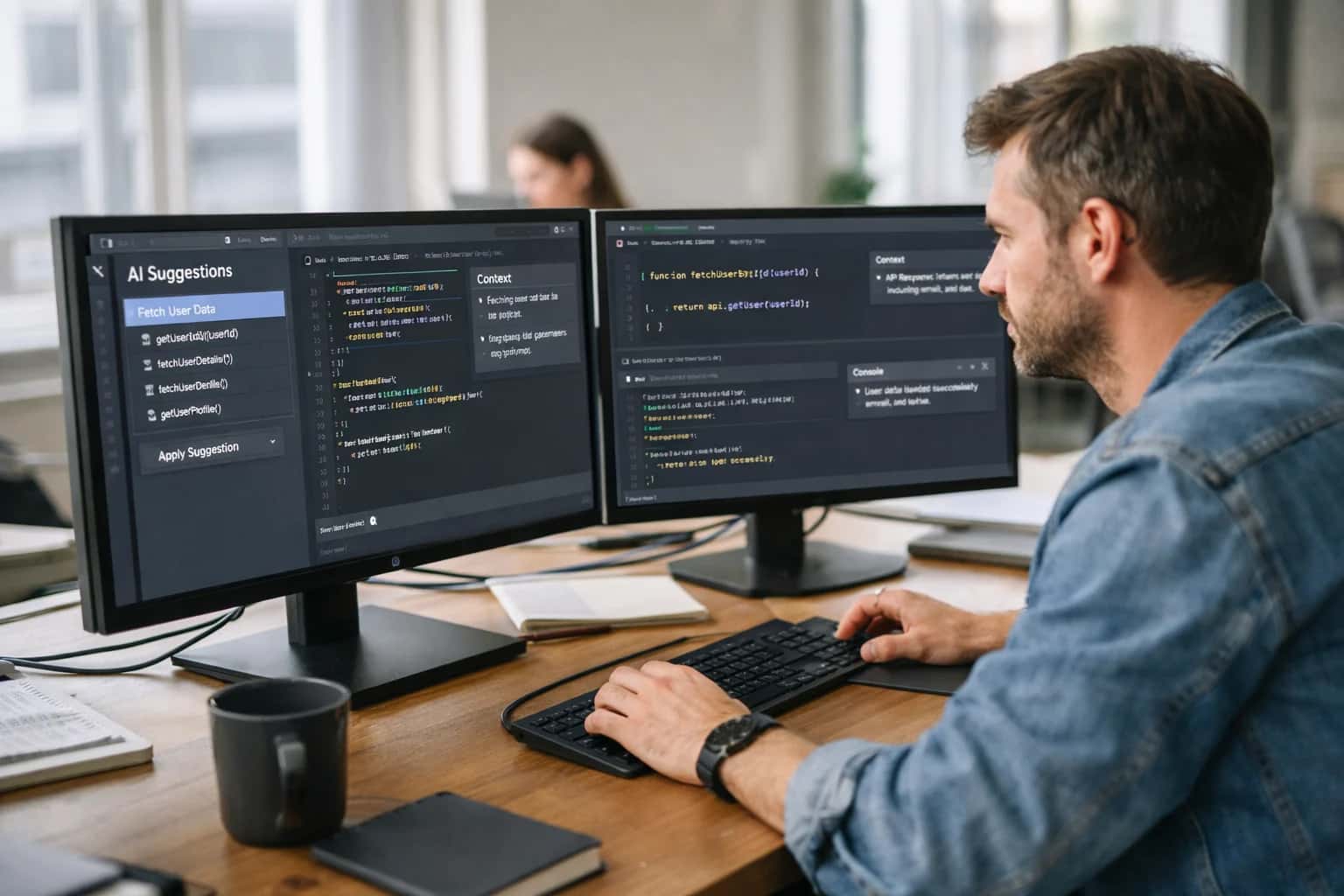
ARCHITECTURE & IMPLEMENTATION
Where AI Fits into the CRA Workflow
A practical blueprint for integrating AI copilots into the daily tasks of Clinical Research Associates, connecting directly to CTMS and EDC systems.
Implementation typically involves service accounts with appropriate RBAC in the CTMS and EDC, using their respective REST APIs or webhook frameworks. The AI system ingests visit reports, patient data snapshots, and query logs, then uses a RAG pipeline grounded in the study protocol, monitoring plan, and historical data to generate relevant, compliant support. High-value use cases include:
- Pre-visit preparation: The agent analyzes the site's recent EDC data, open queries, and previous findings to create a prioritized checklist for the upcoming visit.
- Post-visit summarization: It drafts a monitoring visit report summary, highlighting critical action items, data discrepancies found, and protocol deviations noted.
- Automated follow-up: It creates and assigns tasks in the CTMS (e.g., "Follow up on lab value at Site 101") and can even draft initial query text for the EDC based on the visit findings.
Rollout should be phased, starting with a pilot group of CRAs on a single study to refine prompts and workflows. Governance is critical; all AI-generated summaries and task suggestions should be clearly labeled as drafts requiring CRA review and sign-off, with a full audit trail linking the AI's output to the source CTMS/EDC data. This ensures the CRA remains in control while gaining significant time savings—turning hours of manual data collation and report writing into minutes of review and refinement. For a deeper look at connecting AI to the specific data models of these platforms, see our guides on AI Integration for Veeva Vault CTMS and AI Integration with Medidata Rave EDC.
WHERE AI COPILOTS CONNECT FOR CRAS
Integration Touchpoints in Clinical Trial Platforms
Core CTMS Objects and Workflows
AI copilots for CRAs integrate directly with Clinical Trial Management System (CTMS) platforms like Veeva Vault CTMS and Oracle Clinical One to automate pre-visit preparation and post-visit follow-up. Key integration points include:
- Site and Visit Objects: Pull upcoming monitoring visit details, historical findings, and open action items to generate a pre-visit briefing pack for the CRA.
- Enrollment and Patient Data: Analyze screening and enrollment logs to highlight recruitment risks or protocol deviations needing attention during the site visit.
- Financial and Contract Modules: Summarize site payment status and grant milestones to inform CRA conversations with site staff.
- Document Management (eTMF): Retrieve the latest versions of essential documents (e.g., CVs, lab certifications) relevant to the scheduled visit.
Integration is typically achieved via REST APIs or platform-specific SDKs to query, summarize, and write back data, transforming hours of manual review into minutes of automated insight.
INTEGRATION PATTERNS FOR CTMS & EDC
High-Value AI Copilot Use Cases for CRAs
AI copilots for Clinical Research Associates (CRAs) integrate directly with CTMS and EDC platforms to automate pre-visit prep, site data review, and follow-up task creation. These patterns reduce manual cycles and let CRAs focus on high-value site interactions.
01
Automated Pre-Monitoring Visit Briefing
An AI agent queries the CTMS (e.g., Veeva Vault CTMS) for the site's enrollment status, open queries, and protocol deviations, and the EDC (e.g., Medidata Rave) for recent data entries and pending actions. It synthesizes a one-page briefing for the CRA, highlighting critical review areas and follow-up items before the site visit begins.
Hours -> Minutes
Briefing prep time
02
Site Data Anomaly & Trend Detection
Integrated with the EDC's data feed, the copilot runs continuous checks for outliers, missing data patterns, and potential protocol deviations. It flags anomalies in real-time, summarizes trends per site, and creates prioritized review tickets in the CRA's workflow tool (e.g., within the CTMS task module).
Batch -> Real-time
Review cycle
03
Automated Monitoring Visit Report Drafting
Post-visit, the CRA provides key findings. The copilot uses the visit notes, combined with current CTMS site metrics and EDC data snapshots, to draft the formal monitoring visit report. It structures findings, pulls in relevant data points, and suggests follow-up action items, ready for CRA review and sign-off.
1 sprint
Report backlog reduction
04
Intelligent Query Generation & Routing
When a data discrepancy is identified (manually or by AI), the copilot suggests precise query text based on the protocol and historical query patterns. It then routes the query via EDC API to the correct site role or data manager, and logs the action in the CTMS for tracking. Reduces query rework and misrouting.
Same day
Query resolution start
05
Site Performance & Support Triage
The copilot aggregates CTMS data on enrollment rates, query response times, and protocol compliance to generate a dynamic site performance score. It triages sites needing additional support and recommends specific interventions—like targeted training or a follow-up call—directly within the CRA's dashboard.
06
Protocol Guidance & FAQ Agent
A chat interface integrated with the study's protocol documents, manuals, and historical Q&A from the CTMS. CRAs can ask natural language questions (e.g., 'inclusion criteria for concomitant medication X') and get instant, grounded answers, reducing time spent searching through documents during site calls.
INTEGRATION PATTERNS
Example AI Copilot Workflows for CRAs
These workflows illustrate how AI copilots can be embedded into a Clinical Research Associate's daily tools—like Veeva Vault CTMS, Medidata Rave, and Oracle Clinical One—to automate prep, review, and follow-up tasks. Each example shows the trigger, data flow, AI action, and system update.
Trigger: A CRA schedules a monitoring visit in the CTMS (e.g., Veeva Vault CTMS).
Context Pulled: The copilot fetches:
- Site performance metrics (enrollment, query rates, protocol deviations) from the CTMS.
- Recent data entry and query status for the site from the EDC (e.g., Medidata Rave).
- Open action items and pending documents from the eTMF.
AI Action: An LLM agent analyzes the aggregated data to:
- Generate a one-page summary of site status and key risks.
- Draft a prioritized checklist of data points to verify during the visit.
- Flag any critical protocol deviations or data anomalies that require immediate discussion.
System Update: The compiled 'Pre-Visit Packet' is saved as a PDF in the CTMS visit record and attached to the CRA's calendar event. The CRA receives a notification with the packet 48 hours before the visit.
Human Review Point: The CRA reviews and can edit the AI-generated packet within the CTMS before the visit.
CTMS AND EDC INTEGRATION PATTERNS
Implementation Architecture: Data Flow & Guardrails
A secure, governed architecture for connecting AI copilots to clinical trial management and data capture systems.
The core integration connects the AI copilot to the CTMS (e.g., Veeva Vault CTMS, Oracle Clinical One) and EDC (e.g., Medidata Rave) via their respective REST APIs and webhook frameworks. For a CRA preparing for a monitoring visit, the workflow begins when the CTMS triggers an event—such as a scheduled visit confirmation or a site status update. This event payload, containing the study ID, site ID, and CRA user context, is sent via a secure webhook to an orchestration layer. This layer fetches relevant, pre-filtered context from the EDC, including recent query logs, data entry patterns, and pending discrepancies for that site, and from the CTMS, including site activation documents and previous monitoring reports. This aggregated, role-scoped context is then sent to the LLM to generate a pre-visit briefing.
Data flows back into operational systems through controlled write-backs. For instance, after a site visit, the CRA can instruct the copilot to summarize findings. The copilot drafts a note, which, after human review and approval, is posted as a new monitoring visit report object back to the CTMS via its API. Similarly, identified follow-up tasks—like a data clarification or document request—can be created as activities in the CTMS or as queries in the EDC. All LLM interactions are logged with full audit trails, linking prompts, data sources used, generated outputs, and the user who approved the action. This traceability is critical for GCP compliance and internal review.
Governance is enforced at multiple layers. Role-Based Access Control (RBAC) from the CTMS/EDC is respected; the copilot only accesses data the integrated user is permitted to see. A human-in-the-loop approval step is mandatory for any action that creates or modifies a clinical record (e.g., posting a query, updating a report). The system can be configured to redact or mask sensitive patient identifiers (PII/PHI) from context sent to the LLM, depending on the use case and model deployment (cloud vs. private). Finally, performance and hallucination guards are implemented by comparing AI-suggested queries or summaries against source data snippets, flagging low-confidence outputs for mandatory review before proceeding. This architecture ensures the copilot augments the CRA's workflow without compromising data integrity or regulatory standing.
INTEGRATION PATTERNS FOR CRA COPILOTS
Code & Payload Examples
Triggering a Pre-Visit Summary
A CRA copilot can be triggered via a webhook when a monitoring visit is scheduled in the CTMS (e.g., Veeva Vault CTMS). The agent receives the site ID, visit type, and relevant study IDs, then queries the EDC and eTMF for a consolidated summary.
Example Webhook Payload from CTMS:
json{ "event_type": "monitoring_visit_scheduled", "visit_id": "VIS-2024-001", "site_number": "101", "study_id": "PROT-123", "scheduled_date": "2024-10-15", "cra_id": "CRA-789", "visit_focus": "routine_sdv" }
Agent Workflow:
- Fetch pending queries from Medidata Rave for site 101.
- Retrieve recent protocol deviations from the CTMS.
- Pull the latest monitoring report from the eTMF.
- Generate a concise, prioritized briefing for the CRA.
FOR CLINICAL RESEARCH ASSOCIATES
Realistic Time Savings & Operational Impact
How an AI copilot integrated with CTMS and EDC systems changes daily workflows for CRAs, reducing administrative burden and increasing focus on high-value site oversight.
| Workflow | Before AI Copilot | With AI Copilot | Implementation Notes |
|---|---|---|---|
Site Visit Preparation | 2-4 hours manual data pull and review | 30-45 minutes with pre-summarized reports | Copilot aggregates EDC queries, protocol deviations, and patient status from CTMS/EDC APIs |
Monitoring Visit Report Drafting | 3-5 hours post-visit documentation | 1-2 hours with AI-generated first draft | AI summarizes findings from notes; CRA reviews, edits, and finalizes in CTMS |
Follow-up Task Creation & Assignment | Manual entry across CTMS, email, and trackers | Automated creation and routing within CTMS | AI parses visit conclusions to create tasks in Veeva/Oracle with due dates and owners |
Query Triage & Prioritization | Daily review of all new EDC queries | Focus on high-priority exceptions flagged by AI | AI scores query urgency based on data impact and protocol; integrated with Medidata Rave |
Site Communication & Status Updates | Ad-hoc emails and calls for routine updates | Automated weekly site summary digests | AI generates status from CTMS data; CRA approves and sends via integrated portal |
Documentation Gap Analysis | Manual checklist review in eTMF before visits | Automated gap report 48 hours pre-visit | Copilot scans Veeva Vault eTMF for missing documents against plan |
Risk Indicator Review | Monthly manual compilation of site metrics | Real-time dashboard with AI-highlighted trends | AI analyzes CTMS enrollment, compliance, and data quality for early warnings |
CONTROLLED DEPLOYMENT FOR REGULATED ENVIRONMENTS
Governance, Compliance, and Phased Rollout
Implementing AI for Clinical Research Associates requires a structured approach that prioritizes data security, protocol adherence, and user trust.
A production CRA copilot must operate within the strict access controls and audit trails of your Clinical Trial Management System (CTMS) and Electronic Data Capture (EDC) platform. This means the integration layer—typically a secure middleware service—must authenticate via OAuth or API keys with scoped permissions, only accessing the specific site visit records, patient enrollment data, query logs, and monitoring plan documents necessary for its function. All AI-generated outputs, such as visit summaries or follow-up task drafts, should be written as provisional suggestions to a secure audit log before being presented to the CRA for review and approval within their native workflow tool.
Rollout follows a phased, risk-based model:
- Phase 1: Silent Pilot – The copilot runs in a read-only "shadow mode," analyzing historical site visit data from the CTMS (e.g., Veeva Vault CTMS visit reports) and generating draft summaries and task lists. These are compared against human-CRA outputs to validate accuracy and utility without impacting live operations.
- Phase 2: Assisted Review – Approved CRAs in a controlled study receive the copilot as an assistive pane within their workflow. AI-generated visit prep checklists and anomaly flags are presented as suggestions. All actions, including the CRA's acceptance or edits, are logged to the eTMF for traceability.
- Phase 3: Conditional Automation – For low-risk, repetitive workflows—such as generating first-draft follow-up emails for resolved data queries—the system can automate creation, but always routes the output through a mandatory CRA review and approval step in the CTMS task queue before sending.
Governance is maintained through a continuous feedback loop. A human-in-the-loop approval gate is required for any AI-suggested action that modifies a system of record (like creating a task in the CTMS or logging a note in the EDC). Performance is monitored against key metrics like CRA time saved per visit and reduction in query resolution time, while a dedicated review panel assesses any drift in suggestion quality. This controlled, audit-friendly approach ensures the AI augments the CRA's expertise without compromising GCP compliance or study integrity.
Enabling Efficiency, Speed & Accuracy
Intelligent Analysis, Decision & Execution
We build AI systems for teams that need search across company data, workflow automation across tools, or AI features inside products and internal software.
Talk to Us
Search across company data
Give teams answers from docs, tickets, runbooks, and product data with sources and permissions.
Useful when people spend too long searching or get different answers from different systems.
Enterprise searchRAGPermissions
Read more
Automate internal workflows
Use AI to route work, draft outputs, trigger actions, and keep approvals and logs in place.
Useful when repetitive work moves across multiple tools and teams.
AI agentsWorkflow automationGovernance
Read more
Add AI to products and internal tools
Build assistants, guided actions, or decision support into the software your team or customers already use.
Useful when AI needs to be part of the product, not a separate tool.
AI integrationDecision supportModel routing
Read moreIMPLEMENTATION AND WORKFLOW DETAILS
FAQ: AI Copilots for Clinical Research Associates
Practical answers on integrating AI copilots into the daily workflows of Clinical Research Associates (CRAs), connecting to CTMS and EDC systems to automate monitoring prep, site communication, and follow-up task creation.
The workflow integrates with your CTMS (e.g., Veeva Vault CTMS, Oracle Clinical One) and EDC (e.g., Medidata Rave) to automate pre-visit preparation.
- Trigger: A scheduled visit is confirmed in the CTMS calendar module.
- Context Pull: The AI agent retrieves:
- Site performance metrics (enrollment, query aging, protocol deviation history) from the CTMS.
- Recent data entries and outstanding queries for the site from the EDC.
- Previous monitoring visit reports and action items from the eTMF.
- Agent Action: The LLM analyzes this data to generate a pre-visit briefing document that includes:
- A prioritized list of data points to verify (e.g., high-risk SAEs, specific lab values).
- A summary of open queries requiring site discussion.
- Suggested agenda topics based on past findings.
- System Update & Next Step: The briefing is posted to the CRA's dashboard in the CTMS or collaboration tool and a calendar invite with the document is sent to the CRA. The CRA can refine the agenda before the visit.

About the author
Prasad Kumkar
CEO & MD, Inference Systems
Prasad Kumkar is the CEO & MD of Inference Systems and writes about AI systems architecture, LLM infrastructure, model serving, evaluation, and production deployment. Over 5+ years, he has worked across computer vision models, L5 autonomous vehicle systems, and LLM research, with a focus on taking complex AI ideas into real-world engineering systems.
His work and writing cover AI systems, large language models, AI agents, multimodal systems, autonomous systems, inference optimization, RAG, evaluation, and production AI engineering.
LinkedIn
Limited slotsGet a Free AI Consultation
Partnered with leading AI, data, and software stack.





How We Work
Custom AI workflows for your Business
One-fit-all AI don't work for modern businesses. At Inferensys, we aim to understand your business & custom requirements; which we use to define most efficient agentic workflows, the data, and the tools for your business.
01
Review the use case
We understand the task, the users, and where AI can actually help.
Read more02
Pick the right approach
We define what needs search, automation, or product integration.
Read more03
Build the first useful version
We implement the part that proves the value first.
Read more04
Improve from there
We add the checks and visibility needed to keep it useful.
Read moreThe first call is a practical review of your use case and the right next step.
Talk to Us