AI integration for summer camps focuses on three core surfaces within platforms like Campspot, CampBrain, or Active Network: the session and enrollment module for planning and grouping, the activity and resource scheduler for specialized programming, and the parent communication hub for rapid, high-volume updates. Unlike year-round childcare, summer camps deal with compressed timelines, variable session lengths, and specialized activity tracks (e.g., archery, swimming, arts). AI agents can connect via these platforms' REST APIs and webhook systems to ingest real-time data on camper registrations, waitlists, medical forms, and activity sign-ups.

Integration
AI Integration for Summer Camp Management Software
A technical guide to embedding AI into summer camp platforms for automating session planning, camper group assignments, activity scheduling, and parent communications for short-term programs.
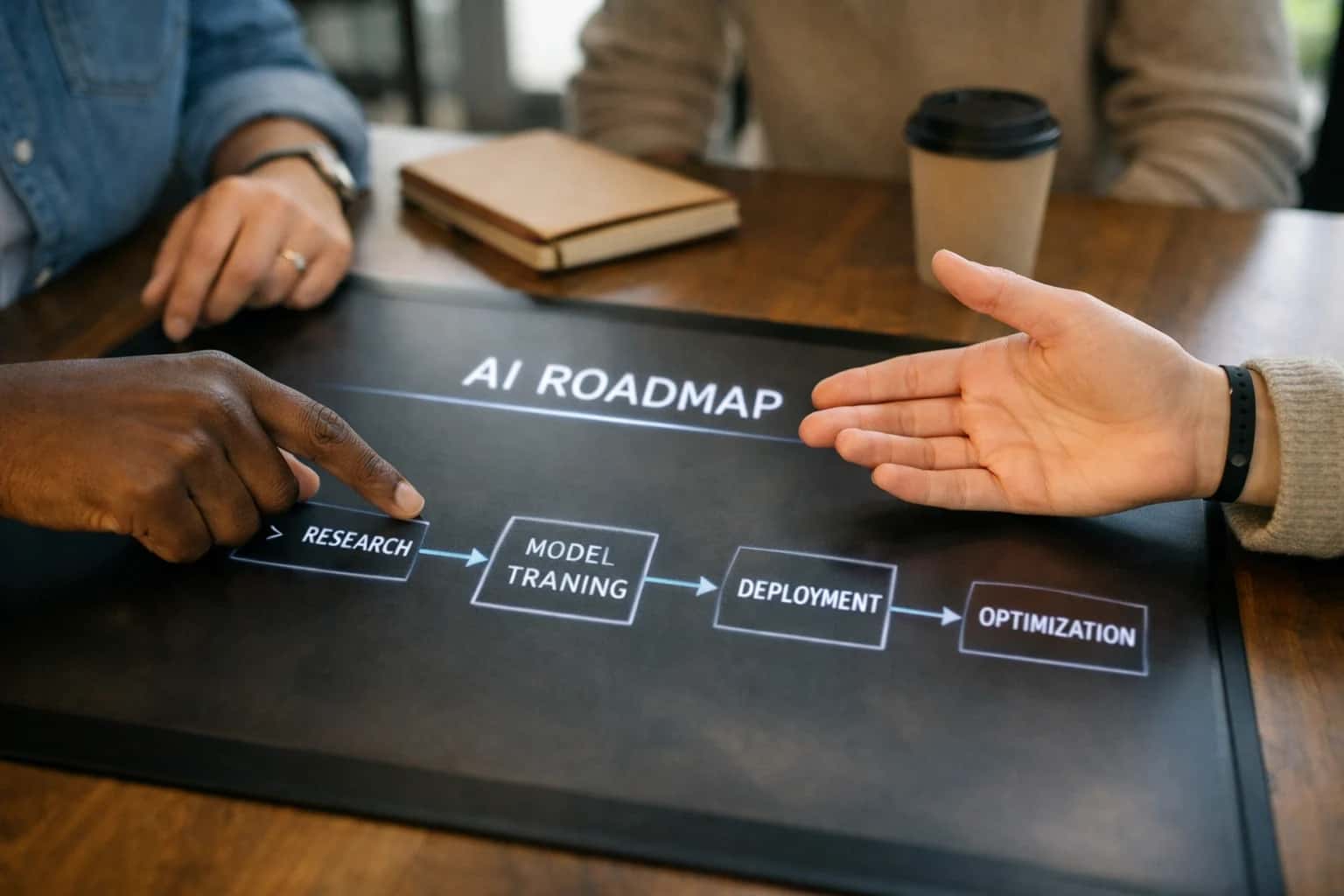
ARCHITECTURE AND ROLLOUT
Where AI Fits in Summer Camp Operations
Integrating AI into summer camp management software requires connecting to specific operational surfaces for short-term, high-intensity programs.
Implementation typically involves building orchestration layers that sit between the camp management platform and LLM services. For example, an AI workflow for camper group assignments would pull camper age, interests, and buddy requests from the enrollment module, process them against counselor specialties and group size limits, and push optimized rosters back via API. Another agent could monitor the activity scheduler, using forecasted weather and instructor availability to suggest real-time adjustments or generate backup plans. For parent communications, AI can draft personalized, session-specific daily summaries by synthesizing counselor check-ins, photo tags, and activity completion data, then queue them for review and delivery through the platform's messaging APIs.
Rollout should be phased, starting with a single, high-impact workflow like automated waitlist management or activity capacity alerts before expanding to more complex orchestration. Governance is critical: all AI-generated outputs—especially those involving camper groupings or health/safety notes—must have a human-in-the-loop review step logged in the system's audit trail. Since summer camp staff are often seasonal, AI tools must be designed for minimal training, with clear interfaces inside the existing staff portal or as simple approval queues in Slack or email.
SUMMER CAMP OPERATIONS
Key Integration Surfaces in Camp Management Platforms
Session Planning and Camper Assignment
AI integration surfaces here focus on optimizing capacity and creating balanced camper groups. Key modules include the session catalog, camper application forms, and group/roster management tools.
Primary Use Cases:
- Dynamic Session Recommendations: An AI agent analyzes a family's past attendance, camper age, and interest surveys to recommend optimal session dates and activity tracks via the platform's recommendation APIs.
- Intelligent Group Assignment: AI processes camper profiles (age, medical notes, friend requests, skill levels) to automatically generate balanced cabin or activity groups, reducing manual roster work from hours to minutes.
- Waitlist Automation: AI monitors real-time capacity across sessions and automatically offers spots to waitlisted families via email/SMS workflows, maximizing enrollment fill rates.
Integration typically connects to the platform's family and camper record APIs to read profiles and to the roster management endpoints to write assignments, often triggered after application submission.
OPERATIONAL AUTOMATION
High-Value AI Use Cases for Summer Camps
Summer camps face unique operational challenges: short, intense sessions, dynamic group assignments, and high-frequency parent communication. AI integration with platforms like CampBrain, CampMinder, or Active Network Camp & Class Manager can automate key workflows, reduce administrative burden, and enhance the camper experience.
01
Dynamic Camper Grouping & Bunk Assignments
AI analyzes camper profiles (age, interests, medical notes, friend requests) and staff availability to create balanced cabin and activity groups. Integrates with the camp management platform's session and roster modules to automate assignments, update schedules in real-time, and handle last-minute changes.
Hours -> Minutes
Assignment time
02
Personalized Session Itinerary Generation
Generates daily or weekly itineraries for each camper based on their group, skill level, and activity preferences. Pulls from the platform's master activity catalog and facility schedules to avoid conflicts and optimize resource use (e.g., pool, ropes course).
Batch -> Real-time
Itinerary updates
03
Intelligent Parent Communication & FAQ Agent
Deploys an AI agent that connects to the camp's parent portal API and registration data. It answers common questions about schedules, packing lists, bus times, and policies 24/7, escalating complex issues to staff. Reduces inbound call/email volume during peak periods.
80%
Common queries deflected
04
Automated Health & Medication Log Summaries
Processes nurse or counselor inputs from the platform's health log module. AI generates end-of-session summaries for parents, highlighting medication administered, minor incidents, and overall wellness trends, ensuring clear, compliant communication.
Same day
Report delivery
05
Staff Scheduling & Certification Compliance
AI optimizes staff rotations for activities, cabin coverage, and time-off requests. Continuously checks staff records against the platform's HR module to flag expiring certifications (lifeguard, CPR) and automate reminder workflows, reducing compliance risk.
1 sprint
Implementation timeline
06
Post-Session Feedback Analysis & Reporting
Ingests parent and camper survey responses via the platform's feedback tools. AI performs sentiment analysis, identifies recurring themes (food, activities, safety), and generates structured reports for directors to inform planning for the next season.
Batch -> Insights
Feedback processing
SUMMER CAMP OPERATIONS
Example AI-Powered Camp Workflows
These are practical, production-ready AI workflows designed to integrate with summer camp management platforms like CampBrain, CampMinder, or UltraCamp. Each example shows how AI connects to specific modules and data objects to automate high-volume tasks and improve operational speed.
Trigger: A new camper registration is completed and saved in the camp management platform.
Context/Data Pulled: The AI agent retrieves the new camper's profile (age, gender, grade, noted interests, medical notes, friend requests) and queries the current session's group rosters for all cabins or activity pods.
Model/Agent Action: An LLM evaluates the camper's profile against group balancing goals (age distribution, gender ratios, interest diversity, medical needs separation) and the friend request graph. It generates 1-3 optimal group placement recommendations.
System Update/Next Step: The recommendation, with reasoning, is posted to a dedicated staff Slack channel via webhook and appended as a note to the camper's record via API. The group leader can approve or override with one click, which updates the official roster.
Human Review Point: Mandatory. A human (group leader) must approve the AI's suggestion before the system record is updated, ensuring oversight for social dynamics and special cases.
AI-ENHANCED CAMP OPERATIONS
Implementation Architecture & Data Flow
A practical blueprint for integrating AI agents into summer camp management platforms to automate session planning, camper grouping, and parent communications.
The integration architecture connects to the camp software's core data model—typically built around sessions, campers, activities, and family profiles. AI agents interact via the platform's REST APIs and webhooks to read and write to key objects: pulling camper applications and medical forms for group assignments, accessing activity inventory and staff certifications for scheduling, and triggering personalized communication workflows through the built-in messaging or email modules. A central orchestration layer, often implemented as a lightweight microservice, manages the flow, ensuring AI actions are logged, auditable, and can be approved by a director for high-stakes decisions like camper placement.
For a typical workflow like automated camper group assignment, the data flow is: 1) An overnight batch job extracts anonymized camper profiles (age, interests, medical notes, friend requests) from the camp management database. 2) An AI agent processes this data against defined constraints (group size, gender ratios, activity capacities) and generates optimized grouping proposals. 3) Proposals are pushed to a director's dashboard within the camp software for review and one-click approval. 4) Upon approval, the agent uses the platform's API to update camper records with their assigned group and counselor, which automatically triggers a personalized welcome email to the family. This reduces manual planning from days to hours while maintaining human oversight.
Rollout should be phased, starting with a single, high-value workflow like dynamic activity scheduling. Governance is critical: implement role-based access controls (RBAC) so AI suggestions are only actionable by authorized staff, and maintain a full audit trail of all AI-generated changes linked to the original camper or session record. For camps using platforms like CampMinder or ACTIVE Camp & Class Manager, this integration sits alongside the existing system, augmenting staff productivity without disrupting trusted daily operations.
SUMMER CAMP INTEGRATION PATTERNS
Code & Payload Examples
Intelligent Session & Group Assignment
This workflow uses AI to analyze camper profiles and preferences to optimize group assignments for activities and cabins, balancing skills, friendships, and counselor expertise. It typically runs as a batch job after registration closes, updating the camp management system via its participant API.
Typical Integration Points:
- Camper Profile API: Pull
age,grade,registered_activities,friend_requests,medical_notes,skill_level. - Session & Activity API: Get
activity_capacity,required_ratios,instructor_specialties. - Group Assignment API: POST final
group_id,cabin_id,activity_rosterassignments.
Example Payload for Assignment Update:
json{ "session_id": "SUMMER24-A", "assignments": [ { "camper_id": "CAM-78910", "cabin_assignment": "CABIN-3", "activity_rosters": [ {"activity_id": "ACT-101", "group": "INTERMEDIATE_ARCHERY_A"}, {"activity_id": "ACT-205", "group": "BEGINNER_CANOES_B"} ] } ], "optimization_notes": "Balanced for age spread, friend pairs, and archery instructor certification." }
The AI model processes constraints (ratios, capacities) and objectives (social cohesion, skill matching) to generate this payload, which is then pushed to the camp platform to update schedules and rosters.
SUMMER CAMP OPERATIONS
Realistic Time Savings & Operational Impact
How AI integration for summer camp management software accelerates key workflows, reduces manual overhead, and improves the camper and parent experience.
| Workflow | Before AI | After AI | Key Impact |
|---|---|---|---|
Camper Group Assignment | Manual sorting based on age, interests, and buddy requests | AI-assisted clustering and balancing | Optimized for social dynamics and activity fit; reduces planning from hours to minutes |
Specialized Activity Scheduling | Spreadsheet-based coordination of instructors, spaces, and equipment | AI-driven resource optimization and conflict detection | Maximizes facility use; prevents double-booking and instructor overload |
Parent Communication for Session Updates | Manual drafting and sending of bulk emails/SMS for each session | AI-generated personalized updates triggered by schedule changes | Ensures timely, relevant communication; reduces outreach workload by 70%+ |
Waitlist Management & Offer Automation | Manual review and phone/email outreach to fill last-minute spots | AI-prioritized waitlist and automated offer sequences | Fills cancellations same-day; improves revenue capture and parent satisfaction |
Health & Allergy Log Review | Daily manual checks of paper/digital logs for camper alerts | AI-monitored logs with exception flagging and nurse alerts | Proactive risk management; shifts focus from monitoring to intervention |
Post-Session Feedback Analysis | Manual reading of survey comments to identify trends | AI sentiment and theme analysis on open-ended responses | Delivers actionable insights in hours instead of days for program improvement |
Custom Itinerary & Packing List Creation | Staff create generic templates for activity blocks | AI generates personalized itineraries and packing lists per camper | Enhances family preparedness and reduces pre-camp support calls |
ARCHITECTING FOR SUMMER'S UNIQUE OPERATIONAL PACE
Governance, Security & Phased Rollout
Implementing AI for summer camp operations requires a rollout strategy that respects the compressed, high-intensity nature of the season while ensuring data security and program integrity.
Governance starts with data access controls mapped to camp roles. AI agents and workflows should respect the same permissions as your camp management software (e.g., CampBrain, CampMinder, or custom platforms), ensuring that seasonal counselors cannot access sensitive financial data and that directors maintain oversight over all automated communications. Key surfaces for integration include the session roster API, activity scheduling module, billing engine, and parent messaging webhooks. All AI-generated outputs—like camper group assignments or activity suggestions—should be logged to an immutable audit trail linked to the specific session and staff member for review.
A phased rollout is critical for managing risk during the short camp season. We recommend a three-stage approach:
- Pre-Season (Pilot): Deploy AI for session planning and resource allocation, using historical data to optimize cabin assignments and staff-to-camper ratios. This low-risk phase builds confidence.
- Early Season (Controlled): Activate AI for automated parent communications for routine updates (e.g., packing lists, check-in reminders) and real-time attendance reconciliation via badge or kiosk systems.
- Mid-Season (Scaled): Introduce AI-driven activity scheduling adjustments based on weather or interest, and support agents for parent FAQs on billing or daily schedules, with a human-in-the-loop for escalation.
Security is paramount when handling minors' data. All AI integrations must operate within your existing identity provider (e.g., Okta, Azure AD) for authentication and enforce data residency rules. For instance, AI processing of health information from medication logs or allergy reports should occur in isolated, compliant environments. We architect integrations using a gateway pattern, where all calls to LLMs (like OpenAI or Anthropic) are routed through a secure proxy that enforces rate limits, strips unnecessary PII, and logs prompts for compliance. This ensures that even as you automate camper form processing or generate personalized welcome emails, you maintain control and visibility. For related architectural patterns, see our guide on AI Integration for Childcare Software Security AI.
Enabling Efficiency, Speed & Accuracy
Intelligent Analysis, Decision & Execution
We build AI systems for teams that need search across company data, workflow automation across tools, or AI features inside products and internal software.
Talk to Us
Search across company data
Give teams answers from docs, tickets, runbooks, and product data with sources and permissions.
Useful when people spend too long searching or get different answers from different systems.
Enterprise searchRAGPermissions
Read more
Automate internal workflows
Use AI to route work, draft outputs, trigger actions, and keep approvals and logs in place.
Useful when repetitive work moves across multiple tools and teams.
AI agentsWorkflow automationGovernance
Read more
Add AI to products and internal tools
Build assistants, guided actions, or decision support into the software your team or customers already use.
Useful when AI needs to be part of the product, not a separate tool.
AI integrationDecision supportModel routing
Read moreSUMMER CAMP AI IMPLEMENTATION
Frequently Asked Questions
Practical questions for camp directors and operations managers evaluating AI integration for session planning, group assignments, and parent communications.
A phased rollout aligns with the camp planning calendar and minimizes operational disruption.
Phase 1: Pre-Season (8-12 weeks out)
- Start with camper group assignment AI. Integrate with your camp management software's
Camper,Session, andActivityobjects. - Use AI to balance groups by age, gender, special needs, friend requests, and activity preferences, pulling from registration form data.
- Output optimized rosters for director review and approval before counselor assignments.
Phase 2: Onboarding & Communications (4-6 weeks out)
- Activate AI-powered parent communication workflows. Connect to the platform's messaging APIs (e.g., for welcome emails, packing lists, forms reminder).
- Implement a RAG-based parent Q&A agent trained on your camp handbook, FAQs, and session-specific details.
Phase 3: In-Season (Live Operations)
- Deploy daily activity scheduling support for weather-related changes or resource constraints.
- Enable real-time incident summarization for minor injuries or behavior reports, automatically notifying appropriate staff via webhook.
Governance: Each phase includes a 2-week pilot with a subset of sessions or campers, with a human-in-the-loop review checkpoint before full automation.

About the author
Prasad Kumkar
CEO & MD, Inference Systems
Prasad Kumkar is the CEO & MD of Inference Systems and writes about AI systems architecture, LLM infrastructure, model serving, evaluation, and production deployment. Over 5+ years, he has worked across computer vision models, L5 autonomous vehicle systems, and LLM research, with a focus on taking complex AI ideas into real-world engineering systems.
His work and writing cover AI systems, large language models, AI agents, multimodal systems, autonomous systems, inference optimization, RAG, evaluation, and production AI engineering.
LinkedIn
Limited slotsGet a Free AI Consultation
Partnered with leading AI, data, and software stack.





How We Work
Custom AI workflows for your Business
One-fit-all AI don't work for modern businesses. At Inferensys, we aim to understand your business & custom requirements; which we use to define most efficient agentic workflows, the data, and the tools for your business.
01
Review the use case
We understand the task, the users, and where AI can actually help.
Read more02
Pick the right approach
We define what needs search, automation, or product integration.
Read more03
Build the first useful version
We implement the part that proves the value first.
Read more04
Improve from there
We add the checks and visibility needed to keep it useful.
Read moreThe first call is a practical review of your use case and the right next step.
Talk to Us