
Inferensys

Integration

AI Integration for Parent Data Protection AI

A technical guide to embedding AI-powered PII detection, consent management automation, and privacy compliance monitoring into childcare management platforms to protect sensitive family data and reduce compliance risk.
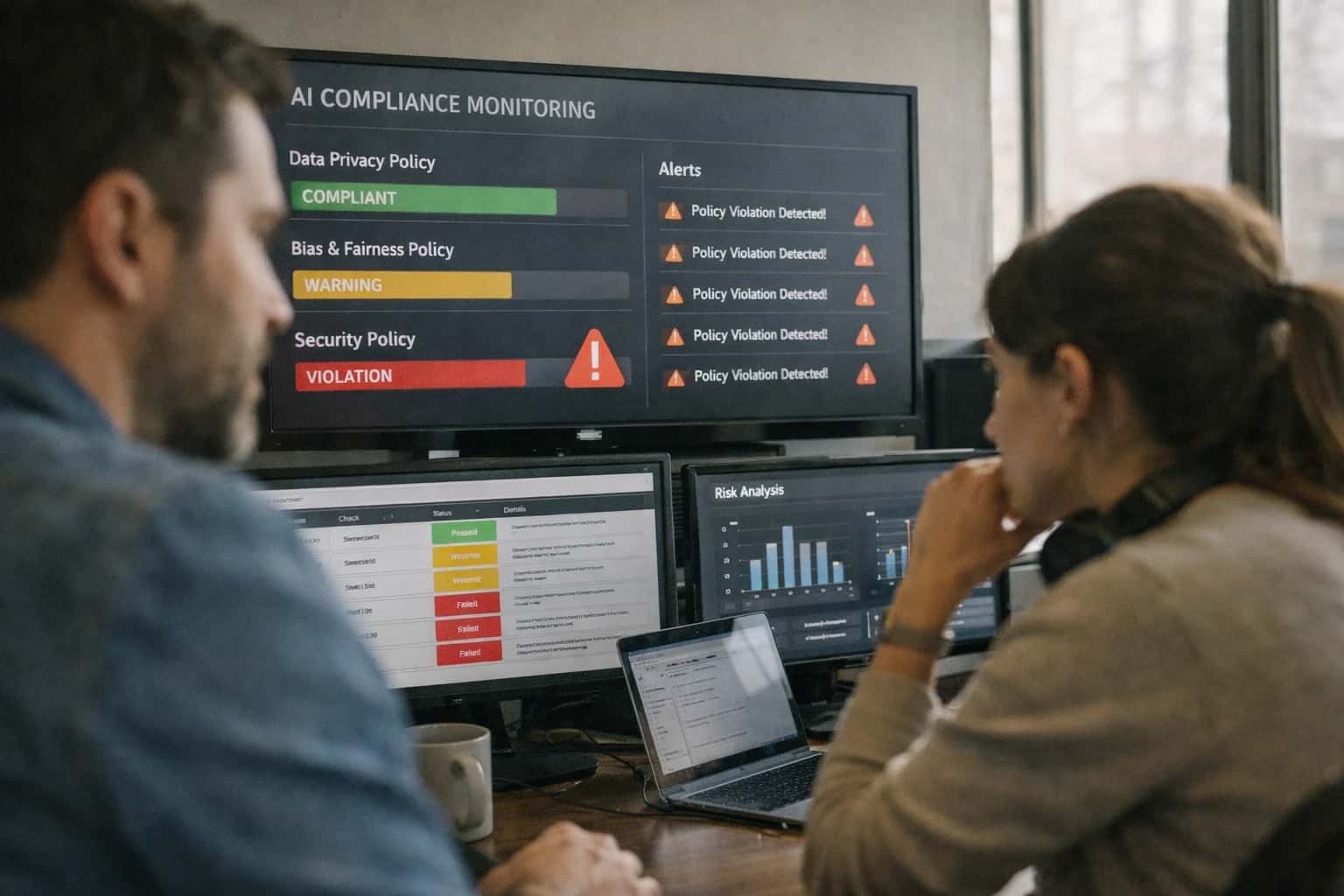
Compliance officer monitoring AI compliance agent on laptop, policy dashboards visible, modern WeWork desk setup.
ARCHITECTURE & GOVERNANCE

Where AI Fits in Childcare Data Protection

Integrating AI for PII detection, consent management, and privacy compliance within childcare platforms like Brightwheel, Procare, Kangarootime, and Famly.

AI integrates into the data ingestion and storage layers of childcare management platforms to automate protection workflows. Key touchpoints include:

  • Enrollment APIs & Digital Forms: Scanning uploaded documents (IDs, birth certificates, subsidy forms) for sensitive fields using OCR and Named Entity Recognition (NER) to auto-redact or flag PII before storage.
  • Family & Child Profile Objects: Continuously monitoring profile updates in platforms like Procare or Brightwheel for new contact info, health data (allergies, medications), or custody notes, applying classification tags for access control.
  • Communication Channels & Audit Logs: Analyzing outbound messages, daily reports, and media shared via parent portals for accidental PII disclosure, triggering alerts or requiring human-in-the-loop approval before sending.


Implementation focuses on event-driven automation to maintain compliance without disrupting staff workflows. For example, a webhook from Famly signaling a new observation note can trigger an AI service to scan for child names or addresses mentioned in free-text fields, suggesting pseudonymization. Consent management is automated by linking AI to the platform's family preference center; when a parent updates photo release permissions via the Brightwheel app, an AI agent can propagate this change to all connected media storage and reporting modules, ensuring data use aligns with latest consent. A vector database (/integrations/childcare-and-daycare-management-platforms/vector-database-and-rag-platforms) can store and retrieve center-specific privacy policies, enabling a RAG-powered chatbot for staff to query handling procedures for sensitive data.

Rollout requires a phased, audit-first approach. Start with a pilot on non-critical data flows, such as automated redaction in exported reports, while maintaining full audit trails of all AI actions for compliance reviews. Governance must address model drift in PII detection—regularly evaluating false positives/negatives against labeled datasets of childcare-specific documents. Integration with IAM platforms (/integrations/childcare-and-daycare-management-platforms/identity-and-access-management-platforms) ensures AI-driven access policies (e.g., restricting health data to authorized staff) are enforced. The goal is not to replace human oversight but to create a scalable, policy-aware layer that reduces manual review from hours to minutes and provides directors with continuous compliance visibility.

AI-ENHANCED PRIVACY WORKFLOWS

Data Protection Touchpoints in Childcare Platforms

PII Detection and Document Redaction

This surface handles initial data collection, where AI can automate the detection and protection of sensitive information. When a family submits digital enrollment packets via platforms like Procare or Brightwheel, an AI layer can scan uploaded PDFs and images for Personally Identifiable Information (PII) such as Social Security Numbers, driver's license details, and home addresses.

Key Workflow:

  • Pre-Submission Redaction: AI identifies and automatically redacts sensitive fields from documents before they are permanently stored in the child's profile, leaving only necessary identifiers.
  • Consent Flagging: The system cross-references extracted data with digital consent forms, flagging any information collected without proper parental authorization for review.
  • Secure Data Routing: Redacted documents and extracted, authorized data points are routed to separate, access-controlled storage areas within the platform's data model.
CHILDCARE DATA PRIVACY

High-Value AI Data Protection Use Cases

Protecting sensitive family data is a core compliance and trust requirement. These AI integration patterns automate PII detection, consent management, and privacy monitoring within Brightwheel, Procare, Kangarootime, and Famly workflows.

01

Automated PII Detection in Family Communications

Scan parent messages, daily reports, and uploaded documents for accidental exposure of sensitive data (SSNs, credit card numbers, home addresses). AI flags and redacts PII in real-time before storage or sharing via platform messaging APIs, reducing manual review and compliance risk.

Batch -> Real-time
Detection speed
02

Consent Form Workflow Automation

Automate the lifecycle of photo release, media consent, and data sharing agreements. AI extracts signed dates and permissions from uploaded PDFs, links them to child profiles, and triggers expiry reminders for annual renewal via the platform's document and family record APIs.

1 sprint
Implementation timeline
03

Privacy Policy & Regulation Monitoring

Continuously monitor internal data access logs and user activity against configured privacy policies (e.g., COPPA, GDPR). AI detects anomalous access patterns (e.g., excessive record views) and generates audit-ready compliance reports by querying platform audit trails.

04

Secure Data Deletion & Archiving

Orchestrate GDPR 'right to be forgotten' or record retention workflows. AI identifies all linked records (attendance, photos, notes, billing) across platform modules for a departing family, generates a verified deletion manifest, and executes archiving via API before final purge.

Hours -> Minutes
Process time
05

Field-Level Access Governance

Enforce role-based data masking within staff views. Integrate AI with platform RBAC to dynamically redact sensitive fields (e.g., financial aid status, specific health notes) in UI surfaces and exported reports based on staff role and context, going beyond basic module permissions.

06

Third-Party Integration Data Flow Auditing

Monitor and classify data payloads sent to integrated services (payment gateways, assessment tools, nutrition apps). AI analyzes webhook and API call logs to ensure only authorized, anonymized, or aggregated data leaves the primary platform, alerting on policy violations.

PRIVACY COMPLIANCE AUTOMATION

Example AI Data Protection Workflows

These workflows demonstrate how AI integrates with childcare platforms to automate the detection, classification, and governance of sensitive family data, ensuring compliance with regulations like COPPA, FERPA, and state-specific childcare privacy laws.

Trigger: A parent uploads a document (e.g., enrollment form, immunization record, subsidy application) via the parent portal.

AI Action:

  1. The document is routed to an AI service for processing.
  2. An Optical Character Recognition (OCR) model extracts all text.
  3. A PII detection model scans for and classifies sensitive data points:
    • High Sensitivity: Social Security Numbers, financial account numbers, driver's license numbers.
    • Medium Sensitivity: Home addresses, phone numbers, precise birthdates.
    • Low Sensitivity: Child's first name, general age group.

System Update:

  • The platform's child or family record is updated with metadata tags indicating the type and location of PII detected.
  • The document is automatically filed in a secure, access-controlled digital folder based on its sensitivity classification.
  • An audit log entry is created, recording the scan timestamp, findings, and automated action.

Human Review Point: If the AI model flags a potential high-sensitivity data point with low confidence (e.g., an ambiguous number string), the document is routed to an admin queue for manual verification before filing.

PRIVACY-FIRST AI FOR FAMILY DATA

Implementation Architecture: Data Flow and Guardrails

A production-ready architecture for embedding PII detection, consent automation, and privacy monitoring into childcare platforms.

The core integration pattern connects to the childcare platform's family, child, and document APIs to monitor data-at-rest and data-in-motion. An AI service layer acts as a privacy middleware, scanning incoming parent communications, uploaded documents (enrollment forms, immunization records), and database records for sensitive identifiers. Key data objects include FamilyProfile, ChildRecord, DocumentAttachment, and ConsentLog. The system uses event-driven webhooks (e.g., document.uploaded, family.updated) to trigger real-time scans, ensuring PII detection occurs before data is persisted or shared.

Guardrails are implemented through a multi-layered workflow: 1) Real-time Redaction for staff-facing interfaces, where detected PII (e.g., Social Security Numbers in scanned forms) is masked. 2) Consent Workflow Automation, where AI classifies data sensitivity and triggers platform-native consent requests via the CommunicationAPI before processing. 3) Compliance Auditing, where all scans, redactions, and consent events are logged to a secure AuditTrail object, creating an immutable record for licensing reviews. This architecture ensures AI augments privacy operations without disrupting core teacher or director workflows in Brightwheel, Procare, or Famly.

Rollout follows a phased, center-specific policy configuration. We start with detection-only mode in a sandbox environment, validating accuracy against a center's specific document types. Then, we enable automated redaction for non-critical modules (e.g., internal notes) before applying it to parent-facing communications. Finally, consent automation is activated, with AI suggesting opt-in requirements based on data classification. Governance is maintained through a centralized dashboard where directors can review flagged items, adjust sensitivity thresholds, and generate compliance reports. This controlled approach minimizes risk while automating the manual review burden of protecting family data.

IMPLEMENTATION PATTERNS

Code and Payload Examples

Scanning Child and Family Profiles

AI models can be integrated via webhook to scan new or updated child and family records for unprotected Personally Identifiable Information (PII). This workflow triggers when a record is saved, analyzes text fields (notes, emergency contacts, custom forms), and flags potential exposures like Social Security Numbers, full addresses in notes, or unprotected health data.

A common pattern is to run detection asynchronously to avoid UI latency. The AI service returns a structured payload identifying the field, record ID, PII type, and confidence score. This can then create a compliance task in the platform or send an alert to the center director for review.

python
# Example: Webhook handler for PII detection on a Procare child record
import json
from inference_systems.client import PrivacyClient

def handle_child_update(webhook_payload):
    """Process a child record update from Procare webhook."""
    child_data = webhook_payload.get('child')
    record_id = child_data['id']
    
    # Concatenate text fields for analysis
    text_to_scan = f"{child_data.get('notes', '')} {child_data.get('allergies', '')}"
    
    # Call PII detection service
    client = PrivacyClient()
    findings = client.detect_pii(
        text=text_to_scan,
        entity_types=["US_SSN", "EMAIL", "PHONE_NUMBER", "MEDICAL_RECORD_NUMBER"]
    )
    
    # Format finding for platform task creation
    if findings:
        task_payload = {
            "record_type": "child",
            "record_id": record_id,
            "findings": findings,
            "action_required": "review_and_redact"
        }
        # Post to Procare tasks API or internal queue
        create_compliance_task(task_payload)
AI FOR PII DETECTION AND CONSENT MANAGEMENT

Realistic Time Savings and Risk Reduction

This table illustrates the operational impact of integrating AI-powered data protection tools into childcare management platforms like Brightwheel, Procare, Kangarootime, and Famly. It compares manual processes against AI-assisted workflows, focusing on time savings, compliance accuracy, and risk mitigation for family data.

ProcessManual / Before AIAI-Assisted / After AIKey Impact & Notes

PII Detection in Uploaded Documents

Manual visual scan by staff (5-10 min per doc)

Automated scan & redaction flagging (<30 sec)

Reduces human error; ensures SSNs, addresses in enrollment packets are caught pre-storage.

Consent Form Tracking & Expiry

Spreadsheet or calendar reminders; monthly audits

Automated monitoring & alerting for upcoming expirations

Proactive alerts prevent care interruptions; audit trail is automatic.

Privacy Policy Update Communications

Manual email blasts; tracking opens/clicks separately

Segmented, personalized outreach with delivery/read tracking

Improves documented consent rates; essential for compliance evidence.

Data Subject Access Request (DSAR) Fulfillment

Hours of manual record collection across modules

Automated report generation from linked child/family records

Meets regulatory timelines (e.g., CCPA, GDPR); reduces staff burden significantly.

Anomaly Detection in Data Access Logs

Reactive review after incident; limited to known patterns

Continuous monitoring for unusual access patterns (e.g., after-hours downloads)

Early warning for potential internal data breaches; shifts security to proactive.

Consent Management for Photo/Media Sharing

Paper forms or generic digital checkboxes

Granular, preference-based permissions integrated with media APIs

Respects family preferences at scale; reduces risk of sharing non-consented media.

Compliance Reporting for Audits

Days of manual data compilation before licensing visits

Pre-formatted reports generated on-demand from governed data

Turns audit preparation from a multi-day scramble into a same-day task.

ARCHITECTING FOR PRIVACY AND COMPLIANCE

Governance, Permissions, and Phased Rollout

Implementing AI for parent data protection requires a governance-first architecture that respects existing permissions and enables controlled, phased adoption.

The integration must operate within the role-based access controls (RBAC) of your primary childcare management platform (e.g., Brightwheel, Procare). This means AI agents and workflows are assigned service accounts with scoped permissions—such as read-only access to child profiles for PII scanning or write access to consent logs—never exceeding the privileges of a human user. All AI actions, from scanning a record for unprotected Social Security numbers to logging a consent status change, must generate an immutable audit trail linked to the service account and the triggering event (e.g., a new enrollment form upload).

A phased rollout is critical for managing risk and building trust. Phase 1 typically involves deploying AI in a monitoring-only capacity, running background scans on historical data in a sandbox environment to establish a baseline of PII exposure and consent gaps without taking any automated action. Phase 2 introduces automated detection and alerting into live workflows, such as flagging unredacted driver's license numbers in newly uploaded documents within Procare's file storage and notifying the center director via a dedicated, secure channel. Phase 3, after validation and policy sign-off, enables guarded automation for low-risk, high-volume tasks like auto-redacting sensitive fields in exported reports or updating consent management flags in Kangarootime based on parsed parent agreement forms.

Governance is enforced through a centralized policy layer that sits between the AI models and the platform APIs. This layer validates every AI-suggested action against configurable rules: Is this data type allowed to be modified? Does the parent's consent record permit this processing? Is the action occurring during business hours for rollback capability? This ensures the AI acts as a policy-aware copilot, not an autonomous actor. Rollback plans are built-in, allowing administrators to revert AI-made changes in Famly or Brightwheel through dedicated reversal APIs, maintaining data integrity and compliance with data subject access requests (DSARs).

IMPLEMENTATION AND COMPLIANCE

Frequently Asked Questions

Common technical and operational questions about integrating AI for parent data protection, PII detection, and privacy compliance within childcare management platforms like Brightwheel, Procare, Kangarootime, and Famly.

The AI integration connects to your platform's APIs to scan structured fields and unstructured text for sensitive data. It uses a multi-layered detection model:

  1. Structured Field Mapping: Automatically identifies known PII fields (e.g., child_full_name, parent_ssn, home_address) via your platform's data model.
  2. Unstructured Text Analysis: Scans free-text fields (notes, messages, uploaded documents) using Named Entity Recognition (NER) models trained on family data contexts to find:
    • Personally Identifiable Information (PII): Full names, dates of birth, Social Security Numbers.
    • Protected Health Information (PHI): Allergy details, medication logs, doctor's notes.
    • Financial Data: Payment card snippets, bank account numbers in notes.
  3. Contextual Classification: The system tags data with sensitivity levels (e.g., high, medium, low) and its purpose (e.g., required_for_licensing, optional_emergency_contact).

Results are logged to an audit trail, and alerts can be configured for unexpected PII in non-standard fields via webhooks to your security team.

Prasad Kumkar

About the author

Prasad Kumkar

CEO & MD, Inference Systems

Prasad Kumkar is the CEO & MD of Inference Systems and writes about AI systems architecture, LLM infrastructure, model serving, evaluation, and production deployment. Over 5+ years, he has worked across computer vision models, L5 autonomous vehicle systems, and LLM research, with a focus on taking complex AI ideas into real-world engineering systems.

His work and writing cover AI systems, large language models, AI agents, multimodal systems, autonomous systems, inference optimization, RAG, evaluation, and production AI engineering.


