AI integration connects directly to Kangarootime's core data streams—real-time check-in/out events, room assignments, and staff schedules—to create a live compliance engine. Instead of relying on periodic manual checks, an AI agent monitors the Child and Staff objects, calculating ratios per room against state-specific rules. It can trigger immediate alerts via Kangarootime's notification system or external channels like Slack when a room approaches or violates its limit, and can even suggest which floating staff member to assign based on proximity, qualifications, and current workload.

Integration
AI Integration for Kangarootime Ratio Tracking
Automate real-time staff-to-child ratio monitoring, violation alerts, and coverage suggestions using Kangarootime's APIs. Reduce compliance risk and administrative burden.
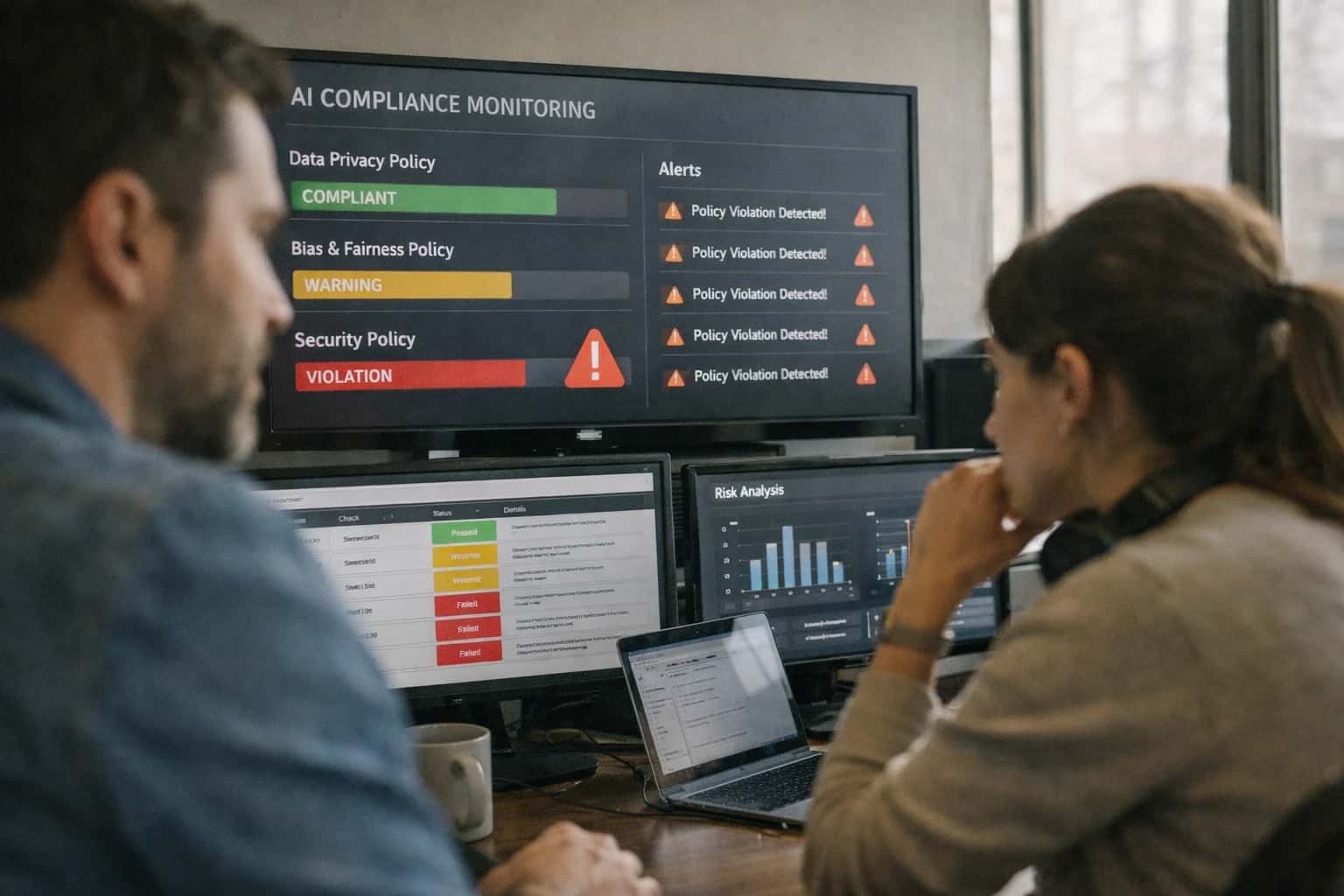
REAL-TIME STAFFING INTELLIGENCE
Where AI Fits into Kangarootime Ratio Compliance
Integrating AI with Kangarootime's attendance and room management APIs transforms passive ratio tracking into proactive, predictive compliance operations.
The implementation typically involves a lightweight service that subscribes to Kangarootime's webhooks for attendance events and polls the REST API for room and schedule data. This service maintains a real-time model of center occupancy. High-value workflows include:
- Predictive Coverage Alerts: Forecasting ratio risks 15-30 minutes ahead based on scheduled pick-ups and staff breaks.
- Automated Substitution Logging: When AI suggests and a supervisor confirms a staff reassignment, it can automatically log the change in Kangarootime's staff module for audit trails.
- Exception Handling: Intelligently routing alerts for "soft" violations (e.g., a staff member stepping out for a bathroom break) to room leads versus "hard" violations to directors.
Rollout focuses on gradual trust building. Start with AI as a monitoring copilot that sends alerts for human confirmation, logging all suggestions and overrides. Over time, as the model's accuracy is validated, it can progress to automated, logged adjustments for low-risk scenarios. Governance is critical: all AI-driven suggestions and actions must be written to an audit log within Kangarootime or a linked system, and the logic must be regularly reviewed against updated licensing regulations. This approach turns ratio compliance from a reactive, manual burden into a continuously optimized, documented operation.
AI-ENABLED STAFF-TO-CHILD COMPLIANCE
Kangarootime Modules and APIs for Ratio Tracking
Core Data Feeds for Ratio Calculation
Kangarootime's attendance APIs provide the foundational real-time data stream for AI-driven ratio monitoring. The /api/v1/attendance/checkins endpoint delivers live check-in/out events, while the /api/v1/rooms API supplies current room assignments and capacity limits. An AI agent consumes these webhook events to maintain a live count of children and staff per room, classroom, or age group.
Key payload fields for ratio logic include child_id, staff_id, room_id, event_type (check-in/out), and timestamp. By processing this stream, an AI system can calculate ratios against state-mandated thresholds (e.g., 1:4 for infants) with sub-minute latency. This enables proactive alerts before a violation occurs, rather than retrospective reporting.
KANGAROOTIME INTEGRATION
High-Value AI Use Cases for Ratio Management
Real-time ratio monitoring is a core compliance and operational challenge. These AI workflows connect directly to Kangarootime's attendance, room, and staff APIs to automate violation detection, coverage planning, and audit readiness.
01
Real-Time Violation Alerts & Escalation
AI agents monitor live attendance feeds from Kangarootime's check-in/out APIs and room assignments. They calculate staff-to-child ratios per room, per state rule, and trigger Slack or SMS alerts to directors and floaters the moment a threshold is breached, with suggested coverage actions.
Seconds
Violation detection
02
Predictive Coverage Planning
Analyzes historical attendance patterns, scheduled staff shifts, and planned absences from Kangarootime's scheduling module. Predicts high-risk ratio periods for the upcoming week and suggests optimal float staff assignments or shift adjustments to prevent violations before they happen.
1 Week
Forecast lead time
03
Automated Audit Log & Explanation
For every ratio event (violation or near-miss), the AI automatically generates a structured log entry in a connected system like Google Sheets or Notion. It includes timestamps, room, involved staff/children, and a natural-language explanation of the root cause (e.g., 'Unexpected early pickup in Toddler A during floater break').
Batch -> Auto
Compliance logging
04
Dynamic Staff Reassignment Engine
When a violation is detected or a staff member calls out, the AI evaluates qualified staff across rooms based on Kangarootime credential data, current ratios, and proximity. It proposes a real-time reassignment plan to the director via a simple approve/deny interface, then updates Kangarootime schedules via API if approved.
Minutes
Coverage resolution
05
License Compliance Reporting
Connects to Kangarootime's reporting APIs to pull daily attendance snapshots. An AI agent runs scheduled analyses to produce state-specific ratio compliance reports, highlighting trends, frequent violation rooms, and exceptions for director review, drastically reducing manual report compilation before licensing visits.
Hours -> Minutes
Report generation
06
Parent Communication for Ratio Impacts
For planned ratio-driven changes (e.g., room closures for staffing), the AI drafts personalized parent notifications using Kangarootime's family data. It suggests messaging for affected families via Kangarootime's communication APIs, ensuring clear, timely updates that maintain trust and reduce front-desk inquiries.
Same day
Communication readiness
KANGAROOTIME INTEGRATION PATTERNS
Example AI-Powered Ratio Workflows
These are production-ready workflows that connect AI agents to Kangarootime's real-time attendance and room management APIs. Each pattern is designed to maintain compliance, alert the right staff, and suggest actionable coverage.
This workflow triggers the moment a child is checked into a room, performing an immediate compliance check and escalating if thresholds are breached.
- Trigger: A child check-in event is captured via Kangarootime's
POST /api/v1/checkinswebhook. - Context Pulled: The AI agent calls Kangarootime's API to get:
- Current room roster (
GET /api/v1/rooms/{id}/children) - Assigned staff for that room and their qualifications (
GET /api/v1/rooms/{id}/staff) - Applicable state/licensing ratio rules for the room's age group (stored in a configuration database)
- Current room roster (
- AI Agent Action: The agent calculates the current child-to-staff ratio and compares it to the regulatory limit. If a violation is imminent or has occurred, it determines severity.
- System Update: Based on severity, the agent executes one or more actions:
- Low Risk (Approaching Limit): Creates a proactive task in Kangarootime for the room lead (
POST /api/v1/tasks). - Active Violation: Immediately posts an alert to a designated Slack channel via webhook, tagging the Director and available float staff.
- Critical Violation: Sends an SMS alert via Twilio integration to the Director and Assistant Director.
- Low Risk (Approaching Limit): Creates a proactive task in Kangarootime for the room lead (
- Human Review Point: All violation events are logged to a dedicated audit table with a timestamp, room ID, calculated ratio, and the action taken. Directors can mark these as reviewed in a daily compliance dashboard.
REAL-TIME RATIO MONITORING AND ALERTING
Implementation Architecture: Data Flow and System Design
A production-ready blueprint for connecting AI to Kangarootime's attendance and room APIs to automate ratio compliance.
The integration architecture is event-driven, centered on Kangarootime's real-time attendance event webhooks and room/group management APIs. Core data objects include ChildCheckInEvent, StaffAssignment, RoomCapacity, and StateRatioRule. An AI agent, deployed as a cloud function or container, subscribes to check-in/check-out and staff shift change events. For each event, it calls Kangarootime's API to fetch the current roster of checked-in children and actively scheduled staff for the affected room, calculates the real-time ratio, and compares it against configured licensing rules stored in a separate policy service.
When a potential or actual violation is detected, the system triggers a multi-channel alert workflow:
- Primary Alert: An immediate notification is pushed back into Kangarootime via its internal messaging or alert API, visible to room leads and directors on their dashboard.
- Escalation Path: For critical violations, the system uses a separate integration (e.g.,
/integrations/childcare-and-daycare-management-platforms/kangarootime-and-slack-integration-ai) to post to a designated Slack channel with context and suggested actions. - Coverage Suggestion: The agent concurrently queries the
StaffAvailabilityAPI and a separate staff scheduling module to identify available, qualified staff who can be assigned to rebalance the ratio, presenting these options within the alert.
Governance is built into the flow. All ratio checks, decisions, and alert actions are logged to an immutable audit trail with a correlation ID, essential for licensing audits. The AI's suggestion logic can be configured with approval steps—for instance, a director may need to approve a suggested staff reassignment before it's written back to Kangarootime's schedule. Rollout typically starts in a monitoring-only "shadow mode" for a week, comparing AI-generated alerts against manual logs to tune sensitivity, before enabling live notifications for a pilot room or center.
IMPLEMENTATION PATTERNS
Code and Payload Examples
Real-Time Ratio Monitor
This Python service listens to Kangarootime's real-time check-in/out webhooks and room assignment events. It calculates the current staff-to-child ratio per room and triggers alerts via Slack or SMS if a violation is imminent or occurs. The logic accounts for staff qualifications (lead teacher vs. assistant) based on role data from the Staff API.
pythonimport requests from datetime import datetime # Example payload from Kangarootime webhook (simplified) webhook_payload = { "event_type": "check_in", "child_id": "CHLD_789", "room_id": "ROOM_101", "timestamp": "2024-05-15T09:30:00Z", "center_id": "CTR_456" } def calculate_room_ratio(room_id, center_id): """Fetch current children and qualified staff for a room.""" # Get current children in room children_resp = requests.get( f"{KANGAROOTIME_API}/rooms/{room_id}/children", headers={"Authorization": f"Bearer {API_KEY}"} ) child_count = len(children_resp.json()) # Get staff currently assigned and qualified staff_resp = requests.get( f"{KANGAROOTIME_API}/rooms/{room_id}/staff", headers={"Authorization": f"Bearer {API_KEY}"} ) qualified_staff = [s for s in staff_resp.json() if s["role"] in ["Lead Teacher", "Teacher"]] staff_count = len(qualified_staff) # State ratio rule (e.g., 1:4 for toddlers) required_ratio = 4 return { "child_count": child_count, "staff_count": staff_count, "current_ratio": child_count / staff_count if staff_count > 0 else float('inf'), "is_violation": (child_count / staff_count) > required_ratio if staff_count > 0 else True }
KANGAROOTIME RATIO TRACKING
Realistic Time Savings and Operational Impact
How AI integration transforms manual ratio monitoring into a proactive, automated system, reducing compliance risk and administrative overhead.
| Workflow / Metric | Before AI | After AI | Notes |
|---|---|---|---|
Real-time ratio violation detection | Manual headcounts during transitions | Automated alerts within 60 seconds | Leverages Kangarootime's real-time attendance API |
Coverage gap resolution | Phone calls/texts to find staff (15-45 min) | AI-suggested swaps from available pool (<5 min) | Integrates with staff scheduling and availability data |
Daily compliance reporting | End-of-day manual spreadsheet (30+ min) | Automated report generation and sign-off (2 min) | Report includes timestamped logs for audits |
Staff-to-child ratio forecasting | Reactive, based on enrollment numbers | Proactive alerts for upcoming shift shortages | Uses historical patterns and scheduled absences |
Incident documentation for licensing | Manual narrative write-up post-violation | AI-assisted summary with timestamps and context | Auto-attaches to child/staff records in Kangarootime |
Director oversight and intervention | Constant monitoring of multiple room feeds | Weekly review of exception summaries (15 min) | Focus shifts from detection to strategic staffing |
New staff training on ratio rules | Manual orientation and shadowing | Contextual, in-app guidance triggered by scenarios | Reduces training burden and human error |
IMPLEMENTING WITH CONTROL
Governance, Permissions, and Phased Rollout
A secure, staged approach to deploying AI for real-time ratio monitoring in Kangarootime.
Effective AI integration for ratio tracking must respect Kangarootime's existing data permissions and user roles. The AI agent should be configured as a system-level service account with read-only access to the Attendance API, Room Management API, and real-time check-in/out event streams. It should never write data directly; instead, it generates alerts and suggestions that are routed through Kangarootime's native notification system or a dedicated admin queue. This ensures all actions are logged within Kangarootime's audit trail and adhere to the center's configured role-based access control (RBAC) for directors, assistant directors, and lead teachers.
A phased rollout is critical for user adoption and risk management. Phase 1 (Monitoring & Alerts): Deploy the AI to monitor real-time ratios against state-mandated thresholds and send immediate, high-confidence violation alerts via Kangarootime's in-app notifications and SMS. Phase 2 (Predictive Suggestions): Introduce coverage recommendations, analyzing staff schedules, certifications, and room assignments to suggest floaters or shift adjustments before a violation occurs. Phase 3 (Automated Workflows): Connect approved suggestions to Kangarootime's scheduling module to propose temporary assignment changes, requiring a manager's one-click approval within the platform to execute.
Governance is built around a feedback loop. Each AI-generated alert and suggestion is logged with its reasoning (e.g., 'Violation: Room 3 has 1:8 ratio, requires 1:4 for infants'). Directors can flag false positives or missed violations, which are used to continuously fine-tune the model's understanding of center-specific rules, split rooms, and staff qualifications. This human-in-the-loop review, combined with the AI's read-only data access, ensures the system augments—rather than disrupts—established operational protocols and compliance accountability.
Enabling Efficiency, Speed & Accuracy
Intelligent Analysis, Decision & Execution
We build AI systems for teams that need search across company data, workflow automation across tools, or AI features inside products and internal software.
Talk to Us
Search across company data
Give teams answers from docs, tickets, runbooks, and product data with sources and permissions.
Useful when people spend too long searching or get different answers from different systems.
Enterprise searchRAGPermissions
Read more
Automate internal workflows
Use AI to route work, draft outputs, trigger actions, and keep approvals and logs in place.
Useful when repetitive work moves across multiple tools and teams.
AI agentsWorkflow automationGovernance
Read more
Add AI to products and internal tools
Build assistants, guided actions, or decision support into the software your team or customers already use.
Useful when AI needs to be part of the product, not a separate tool.
AI integrationDecision supportModel routing
Read moreKANGAROOTIME RATIO TRACKING
Frequently Asked Questions
Common technical and operational questions about implementing AI-driven ratio monitoring and compliance automation with Kangarootime.
The system works by continuously monitoring Kangarootime's attendance and room management APIs. Here's the typical workflow:
- Trigger: A new check-in, check-out, or staff shift change event is pushed via Kangarootime webhook or polled from the API.
- Context Pull: The agent immediately queries the API for:
- Current child count per room/age group.
- Currently clocked-in, qualified staff per room.
- Applicable state licensing ratios for each age group.
- Model Action: A simple rules engine (or a lightweight ML model for complex, multi-room scenarios) calculates the real-time ratio.
- System Update: If a violation is imminent (e.g., a staff member is about to clock out and would put the room out of compliance), the system triggers an alert before the violation occurs.
- Alert & Log: An alert is sent via the configured channel (Slack, SMS, in-app notification) and a record is written to an audit log for licensing reviews.
This proactive approach shifts management from reactive compliance to preventative operations.

About the author
Prasad Kumkar
CEO & MD, Inference Systems
Prasad Kumkar is the CEO & MD of Inference Systems and writes about AI systems architecture, LLM infrastructure, model serving, evaluation, and production deployment. Over 5+ years, he has worked across computer vision models, L5 autonomous vehicle systems, and LLM research, with a focus on taking complex AI ideas into real-world engineering systems.
His work and writing cover AI systems, large language models, AI agents, multimodal systems, autonomous systems, inference optimization, RAG, evaluation, and production AI engineering.
LinkedIn
Limited slotsGet a Free AI Consultation
Partnered with leading AI, data, and software stack.





How We Work
Custom AI workflows for your Business
One-fit-all AI don't work for modern businesses. At Inferensys, we aim to understand your business & custom requirements; which we use to define most efficient agentic workflows, the data, and the tools for your business.
01
Review the use case
We understand the task, the users, and where AI can actually help.
Read more02
Pick the right approach
We define what needs search, automation, or product integration.
Read more03
Build the first useful version
We implement the part that proves the value first.
Read more04
Improve from there
We add the checks and visibility needed to keep it useful.
Read moreThe first call is a practical review of your use case and the right next step.
Talk to Us