AI integration for Kangarootime billing connects at three primary surfaces: the Billing Engine API, the Family & Child Record data model, and the Payment & Invoice webhook event streams. The integration focuses on automating repetitive, rule-based tasks that currently consume director and administrator time. Key data objects include Family records (for payment terms and contact info), Invoice and InvoiceLineItem objects (for tuition, fees, and adjustments), and Payment and Credit transactions. By tapping into these APIs, an AI layer can read real-time billing states, apply logic, and write back updates or trigger communications without manual intervention.

Integration
AI Integration for Kangarootime Billing Support
Automate tuition calculations, late fee assessments, payment reminders, and billing exception handling using AI with Kangarootime's financial APIs. Reduce manual billing work by 60-80%.
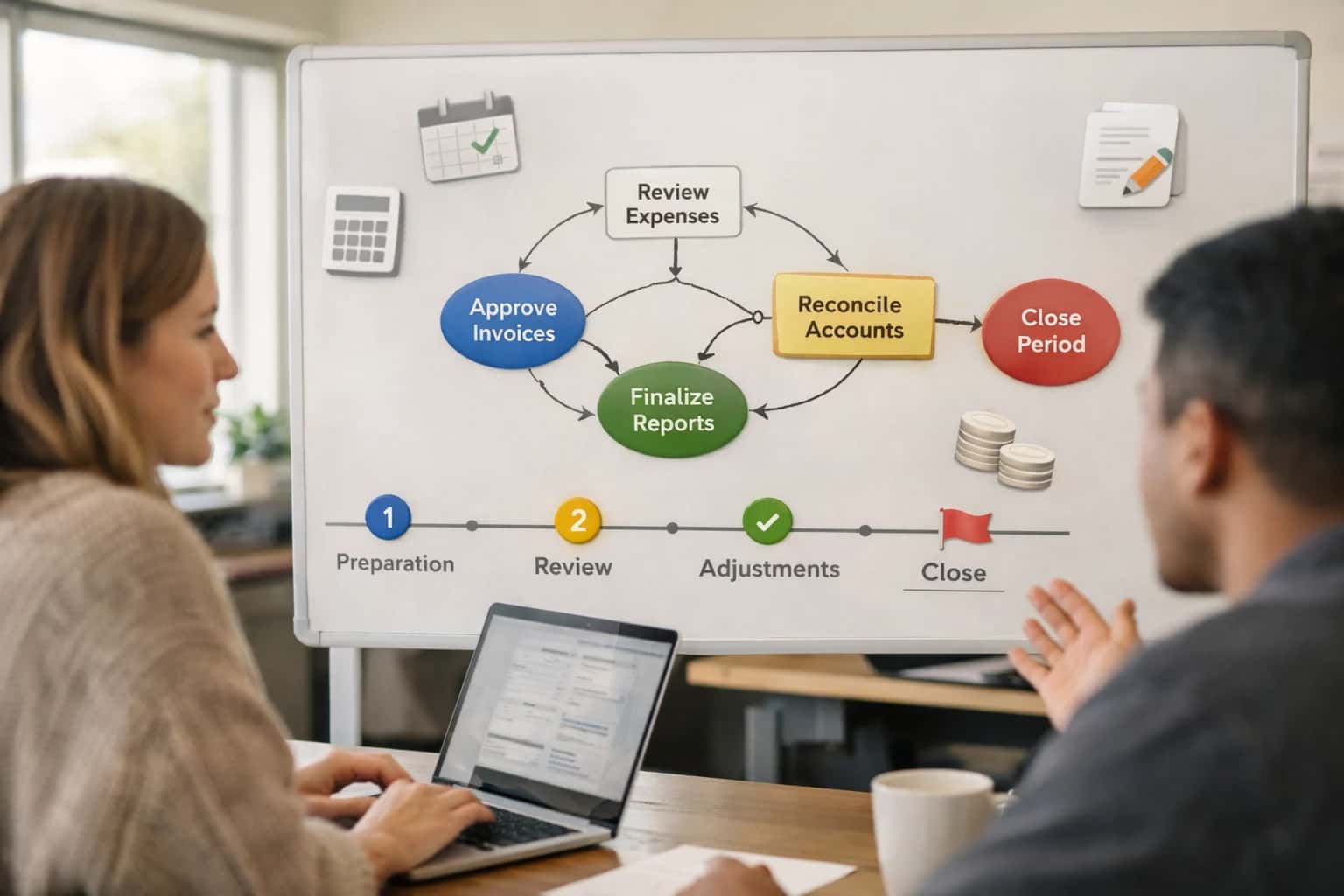
ARCHITECTURE AND ROLLOUT
Where AI Fits into Kangarootime Billing Operations
A practical guide to embedding AI agents and workflows into Kangarootime's billing engine to automate financial operations and reduce administrative burden.
Implementation typically involves a middleware service that subscribes to Kangarootime webhooks for events like invoice.created, payment.failed, or invoice.past_due. This service hosts AI agents that evaluate each event against center policies and historical data. For example, an agent can:
- Calculate and apply late fees dynamically, considering family payment history, communicated hardships, or center discretion policies.
- Generate and send personalized payment reminders via SMS or email, using the family's preferred channel and past interaction tone.
- Triage billing exceptions—like a payment that doesn't match an invoice amount—by analyzing the discrepancy, checking for applied credits, and either auto-reconciling or flagging it for human review in a dedicated queue.
- Automate subsidy adjustments by cross-referencing attendance records with subsidy program rules to ensure accurate billing line items before invoices are finalized.
Rollout should be phased, starting with read-only monitoring and alerting, then progressing to supervised automation (where the AI suggests actions for admin approval), and finally to fully autonomous execution for low-risk, high-volume tasks. Governance is critical: all AI-generated actions must write an audit trail back to Kangarootime as notes on the family or invoice record, and a human-in-the-loop escalation path must be maintained for exceptions exceeding confidence thresholds. This approach turns Kangarootime from a system of record into a system of intelligence, where billing operations shift from daily manual tasks to weekly exception management. For related architectural patterns, see our guide on Childcare Billing Automation or our technical deep dive on Kangarootime API and Webhooks.
ARCHITECTURAL SURFACES
Kangarootime Billing Modules and Integration Points
Core Billing Logic and Rate Management
Kangarootime's tuition engine calculates charges based on complex variables: scheduled days, attendance hours, drop-in rates, sibling discounts, and subsidy codes. AI integration here focuses on automating exception handling and dynamic rate application.
Key integration points are the FamilyContract and BillingSchedule APIs. An AI agent can monitor real-time attendance feeds against contracts to flag discrepancies—like a child present on a non-scheduled day—and apply the correct drop-in rate automatically before invoice generation. This prevents manual review of every variance. For centers with variable pricing, AI can analyze historical attendance to suggest optimal rate plans for new families, pushing updates via the Rate API.
python# Example: AI agent checking attendance against contract attendance_event = get_kangarootime_webhook("check_in", child_id) contract = kangarootime_api.get(f"/families/{family_id}/contract") if not is_scheduled_day(attendance_event.date, contract): # AI logic determines applicable drop-in rate rate = ai_agent.determine_dropin_rate(child_id, attendance_event) kangarootime_api.post(f"/billing/adjustments", { "familyId": family_id, "type": "drop_in", "rate": rate, "date": attendance_event.date })
AUTOMATION BLUEPRINTS
High-Value AI Use Cases for Kangarootime Billing
Integrate AI directly into Kangarootime's billing engine to automate complex calculations, reduce manual follow-up, and improve cash flow. These workflows connect to the Billing API, Family Ledger, and Payment Gateway surfaces.
01
Automated Tuition & Fee Calculation
AI parses complex family schedules, subsidy rules, and center policies to generate accurate, compliant invoices. It handles part-time schedules, sibling discounts, and late registration prorations by reading child attendance records and family contract terms via the Billing API.
Hours -> Minutes
Monthly close
02
Intelligent Late Fee Assessment & Waivers
An AI agent reviews payment history, family circumstances, and past communications to dynamically apply, waive, or escalate late fees. It writes notes to the family ledger and can trigger personalized payment plan offers, moving beyond rigid, one-size-fits-all policies.
Batch -> Real-time
Policy execution
03
Personalized Payment Reminder Sequences
Instead of generic blast emails, AI crafts and schedules context-aware SMS and email reminders. It considers the family's preferred channel, past responsiveness, invoice amount, and even sentiment from prior support tickets to optimize for payment recovery without damaging relationships.
Same day
Personalized outreach
04
Billing Exception Triage & Routing
AI monitors the Billing API for failed payments, disputed charges, and subsidy claim rejections. It classifies the root cause (e.g., expired card, insufficient subsidy documentation) and automatically routes the ticket to the correct staff member in Kangarootime or a connected helpdesk like Zendesk, with suggested next actions.
1 sprint
Implementation
05
Subsidy & Grant Compliance Tracking
For centers managing state subsidies or grant-funded slots, AI cross-references child attendance, family eligibility documents, and billing records to flag discrepancies before claim submission. It automates the compilation of audit-ready reports, reducing the risk of payment recoupment.
Reduce manual triage
For finance staff
06
Cash Flow Forecasting & Insights
By analyzing historical payment data, seasonal enrollment patterns, and pending invoices, an AI model provides weekly cash flow forecasts and anomaly alerts. This helps directors anticipate shortfalls and connects to Kangarootime's reporting modules for proactive financial management.
Batch -> Real-time
Financial visibility
KANGAROOTIME BILLING SUPPORT
Example AI-Driven Billing Workflows
These workflows demonstrate how AI can automate and enhance Kangarootime's billing operations, reducing manual effort, improving accuracy, and accelerating cash flow. Each flow is triggered by Kangarootime's API events and uses AI to process financial data, make decisions, and update records.
Trigger: A child's schedule is updated in Kangarootime (e.g., new enrollment, schedule change, drop-in day added).
Context Pulled: The AI agent fetches the child's rate card, scheduled days, applicable family discounts, sibling rates, and any prepaid credit balance via Kangarootime's Child, BillingRate, and Family APIs.
AI Agent Action:
- The LLM parses the schedule against the rate logic (e.g., full-time vs. part-time, daily vs. weekly rates).
- It calculates the prorated amount for schedule changes mid-period.
- It applies the correct discounts and credits, generating a line-item breakdown.
System Update: The validated calculation is posted back to Kangarootime's BillingPeriod or Invoice API to create or update the draft invoice. The family portal is updated in real-time.
Human Review Point: Any calculation that deviates from the family's historical pattern (e.g., a 20% variance) or involves a manual override flag is routed to a billing manager's dashboard for approval before finalization.
BILLING SUPPORT
Implementation Architecture: How AI Connects to Kangarootime
A technical blueprint for automating tuition calculations, payment workflows, and financial exception handling using Kangarootime's APIs.
AI connects to Kangarootime's billing engine via its REST API and webhook system, primarily interacting with the Family, BillingAccount, Invoice, and Payment objects. The integration is event-driven: a webhook for a new attendance record triggers the AI to calculate adjusted tuition, while scheduled cron jobs poll for invoice.due events to initiate personalized payment reminders. For exception handling, the AI agent monitors the BillingException queue, which holds records for failed payments, disputed charges, or manual adjustments requiring review.
A core workflow involves the AI parsing complex billing rules (e.g., sibling discounts, late pick-up fees, state subsidy adjustments) that are often managed in spreadsheets or notes. The agent uses a retrieval-augmented generation (RAG) system grounded in your center's policy documents to make consistent decisions. For example, when a late_fee exception is created, the AI reviews the family's payment history and the center's grace period policy via RAG, then either automatically approves the fee, applies a waiver, or routes it to a director for manual review—logging the decision and rationale in the BillingAccount notes field for audit.
Rollout follows a phased approach: start with read-only financial reporting and anomaly detection (e.g., identifying unusual payment patterns), then progress to automated invoice generation and payment reminder sequences, and finally implement closed-loop exception resolution. Governance is critical; all AI-generated billing actions are written as draft records in Kangarootime, requiring a staff member's approval via a dedicated dashboard or mobile push notification before being posted. This human-in-the-loop step, combined with detailed audit logs sent to your data warehouse, ensures financial control while reducing manual data entry from hours to minutes per week.
KANGAROOTIME BILLING AUTOMATION
Code and Payload Examples
Automating Complex Billing Logic
Kangarootime's billing engine handles base tuition, but AI can automate complex adjustments. Use the GET /families/{id}/billing and POST /invoices endpoints to retrieve family data, apply custom logic (e.g., sibling discounts, pro-rated days for mid-month enrollment), and generate final invoices.
Example Python logic for calculating a prorated invoice:
pythonimport requests from datetime import datetime def calculate_prorated_invoice(family_id, enrollment_date, monthly_rate): # Fetch family billing profile billing_data = requests.get( f"{KT_API_BASE}/families/{family_id}/billing", headers={"Authorization": f"Bearer {API_KEY}"} ).json() # AI/Logic: Determine prorated amount based on start date start = datetime.fromisoformat(enrollment_date) days_in_month = (start.replace(month=start.month+1, day=1) - start.replace(day=1)).days days_attending = days_in_month - start.day + 1 prorated_rate = (monthly_rate / days_in_month) * days_attending # Build and post invoice payload invoice_payload = { "familyId": family_id, "amount": round(prorated_rate, 2), "description": f"Prorated tuition for {start.strftime('%B %Y')}", "dueDate": start.replace(day=1).strftime("%Y-%m-%d"), "lineItems": [ { "description": "Monthly Tuition (Prorated)", "amount": round(prorated_rate, 2) } ] } response = requests.post( f"{KT_API_BASE}/invoices", json=invoice_payload, headers={"Authorization": f"Bearer {API_KEY}"} ) return response.json()
KANGAOOTIME BILLING AUTOMATION
Realistic Time Savings and Operational Impact
How AI-driven workflows integrated with Kangarootime's billing APIs transform manual financial operations into automated, exception-based processes.
| Billing Workflow | Before AI | After AI | Implementation Notes |
|---|---|---|---|
Tuition Calculation & Invoice Generation | Manual spreadsheet adjustments, 2-4 hours weekly | Automated rule-based generation, <15 minutes weekly | AI validates against enrollment schedules, discounts, and subsidy rules via API |
Late Fee Assessment & Application | Manual review of payment history, 1-2 hours weekly | Dynamic policy engine applies fees, flags exceptions | Human-in-the-loop for family hardship reviews; logs audit trail |
Payment Reminder & Dunning Sequences | Generic email blasts, low response rates | Personalized, multi-channel sequences based on family history | Triggers via Kangarootime webhooks; A/B tests message effectiveness |
Billing Exception & Dispute Triage | Staff investigates all exceptions, 3-5 hours weekly | AI pre-classifies and routes only complex cases | Integrates with ticketing or Slack for staff alerts on high-priority items |
Subsidy & Grant Payment Reconciliation | Manual cross-reference of ledgers, error-prone | Automated match of expected vs. received payments | Flags discrepancies for human review; updates family balances automatically |
Month-End Close & Financial Reporting | Manual data aggregation from multiple reports | Automated report synthesis with anomaly highlights | Pushes summarized insights to director dashboards; syncs with QuickBooks |
Family Billing Inquiry Response | Staff handles all calls and emails during business hours | AI chatbot answers common questions 24/7 using live data | Escalates to staff only for account-specific adjustments; reduces call volume by ~40% |
ARCHITECTING FOR FINANCIAL DATA
Governance, Security, and Phased Rollout
Implementing AI for billing support requires a secure, governed approach that respects the sensitivity of family financial data and integrates cleanly with Kangarootime's operational rhythm.
A production integration connects to Kangarootime's Billing API and Financial Data Model—specifically Families, Invoices, Payments, PaymentMethods, and LedgerEntries. AI agents and workflows operate as a middleware layer, ingesting webhooks for events like invoice.created, payment.failed, or invoice.past_due. All AI processing occurs in a secure, isolated environment where PII (names, emails) is tokenized and financial data (amounts, account numbers) is encrypted in transit and at rest. Access is controlled via service accounts with scoped permissions, and all AI-generated actions (e.g., creating a late fee adjustment, sending a reminder) are logged as audit trails back to Kangarootime for a complete financial record.
Rollout follows a phased, risk-managed path. Phase 1 targets non-cash workflows: using AI to draft personalized payment reminder messages and flag invoices with complex subsidy calculations for human review. Phase 2 automates routine calculations and postings, such as applying standardized late fees based on center policy or generating pro-rated invoices for mid-month enrollments, with a required manager approval step in Kangarootime before final posting. Phase 3 enables predictive and prescriptive actions, like identifying families at high risk of payment delay and suggesting tailored payment plan options, which are presented to staff as recommendations within the Kangarootime interface for final decision and execution.
Governance is centered on human oversight and continuous validation. Key controls include:
- Approval Gates: Any AI-suggested write-back to Kangarootime's financial modules (adjustments, fee applications) requires a staff approval via a dedicated queue.
- Explainability Logs: Every AI-generated output (e.g., a late fee calculation) is accompanied by a reason trace ("Fee applied per Center Policy A, 5 days past due").
- Regular Reconciliation: Automated daily checks compare AI-influenced ledger totals with expected values, flagging discrepancies.
- Model Monitoring: Drift detection on the AI's classification of billing exceptions ensures recommendations remain accurate as family payment behaviors evolve. This structured approach minimizes financial risk while steadily unlocking efficiency gains, turning billing from a reactive administrative task into a proactive, intelligence-driven operation.
Enabling Efficiency, Speed & Accuracy
Intelligent Analysis, Decision & Execution
We build AI systems for teams that need search across company data, workflow automation across tools, or AI features inside products and internal software.
Talk to Us
Search across company data
Give teams answers from docs, tickets, runbooks, and product data with sources and permissions.
Useful when people spend too long searching or get different answers from different systems.
Enterprise searchRAGPermissions
Read more
Automate internal workflows
Use AI to route work, draft outputs, trigger actions, and keep approvals and logs in place.
Useful when repetitive work moves across multiple tools and teams.
AI agentsWorkflow automationGovernance
Read more
Add AI to products and internal tools
Build assistants, guided actions, or decision support into the software your team or customers already use.
Useful when AI needs to be part of the product, not a separate tool.
AI integrationDecision supportModel routing
Read moreKANGAROOTIME BILLING SUPPORT
Frequently Asked Questions
Common questions about implementing AI-driven automation for tuition, payments, and financial operations in Kangarootime.
The AI agent connects to Kangarootime's Billing API to pull child schedules, enrollment contracts, and fee configurations. For each billing cycle, it:
- Triggers on a scheduled cron job (e.g., weekly, bi-weekly) or via a webhook from a contract change.
- Pulls Context for each family: contracted rates, scheduled days, recorded absences (excused vs. unexcused), and any one-time fees or discounts.
- Executes Logic using an LLM or rules engine to:
- Prorate tuition for partial months or mid-month enrollments.
- Apply late pick-up fees based on check-out logs.
- Calculate subsidy co-pays if integrated with a state system.
- Flag anomalies, like a child scheduled for 5 days but only 3 contracted.
- Updates System by pushing the calculated line items and total to Kangarootime's
Invoiceobject via API, marking it as 'Ready for Review'. - Human Review Point: Invoices flagged with anomalies are routed to a director's dashboard for approval before final generation and sending to the family portal.

About the author
Prasad Kumkar
CEO & MD, Inference Systems
Prasad Kumkar is the CEO & MD of Inference Systems and writes about AI systems architecture, LLM infrastructure, model serving, evaluation, and production deployment. Over 5+ years, he has worked across computer vision models, L5 autonomous vehicle systems, and LLM research, with a focus on taking complex AI ideas into real-world engineering systems.
His work and writing cover AI systems, large language models, AI agents, multimodal systems, autonomous systems, inference optimization, RAG, evaluation, and production AI engineering.
LinkedIn
Limited slotsGet a Free AI Consultation
Partnered with leading AI, data, and software stack.





How We Work
Custom AI workflows for your Business
One-fit-all AI don't work for modern businesses. At Inferensys, we aim to understand your business & custom requirements; which we use to define most efficient agentic workflows, the data, and the tools for your business.
01
Review the use case
We understand the task, the users, and where AI can actually help.
Read more02
Pick the right approach
We define what needs search, automation, or product integration.
Read more03
Build the first useful version
We implement the part that proves the value first.
Read more04
Improve from there
We add the checks and visibility needed to keep it useful.
Read moreThe first call is a practical review of your use case and the right next step.
Talk to Us