
Inferensys

Integration

AI Integration for Childcare Compliance Automation

Automate licensing checklists, audit preparation, and policy document retrieval using AI integrated with Brightwheel, Procare, Kangarootime, and Famly. Reduce manual prep from days to hours.
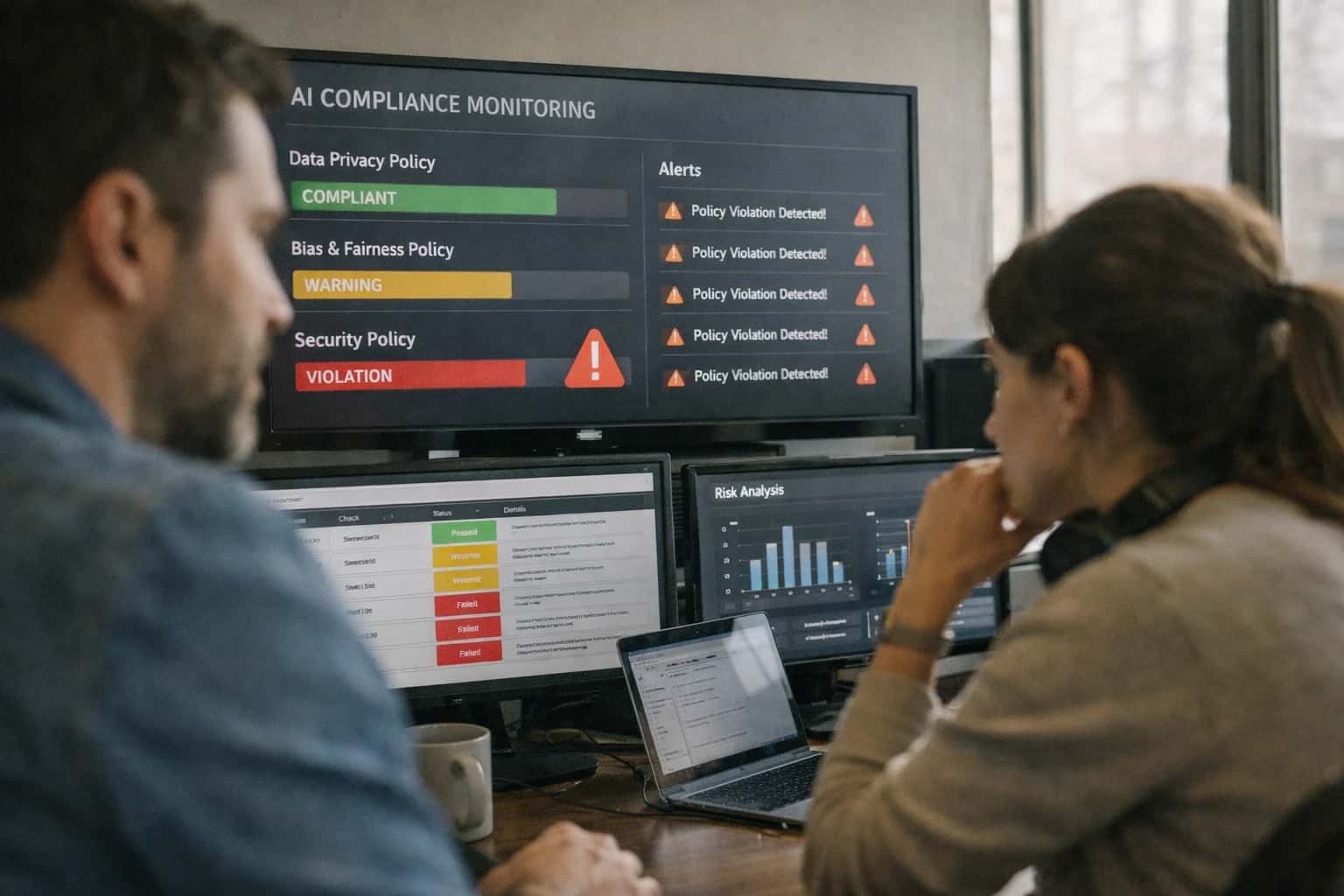
Compliance officer monitoring AI compliance agent on laptop, policy dashboards visible, modern WeWork desk setup.
ARCHITECTURE & ROLLOUT

Where AI Fits into Childcare Compliance Workflows

A practical guide to embedding AI into licensing, audit, and policy workflows across Brightwheel, Procare, Kangarootime, and Famly.

AI integration for compliance automation connects to the core data objects and audit trails within your childcare management platform. This typically involves:

  • Child and Staff Records: Using APIs to access profiles for credential tracking, background check status, and training completion dates.
  • Attendance & Ratio Logs: Processing real-time check-in/out event streams to monitor staff-to-child ratios and flag potential violations against state-specific rules.
  • Document Repositories: Indexing uploaded files (licenses, inspection reports, immunization records, policy manuals) for intelligent retrieval and expiry tracking.
  • Incident & Health Logs: Analyzing structured logs for medication administration, allergy incidents, and accident reports to identify patterns and ensure proper documentation.


Implementation focuses on event-driven workflows that trigger AI actions. For example, a new staff hire in Procare can automatically trigger an AI agent to verify required certifications are uploaded and schedule mandatory training. A daily batch job can analyze Kangarootime's attendance data to generate a ratio compliance report, highlighting rooms at risk. For audit preparation, a RAG (Retrieval-Augmented Generation) system can be built on top of Famly's document storage, allowing directors to ask natural language questions like "show me all fire drill logs from Q3" or "what's our policy on sunscreen application?" and get instant, cited answers from the center's own policy manuals.

Rollout should be phased, starting with read-only monitoring and reporting before moving to assistive automation. A first phase might deploy AI to generate weekly "compliance health" dashboards, summarizing expired documents and upcoming inspection dates. A second phase could introduce AI-assisted workflows, such as drafting corrective action plans based on past audit findings or auto-populating state subsidy claim forms from attendance data. Governance is critical: all AI-generated outputs should be routed for human review and approval within the platform's existing workflow tools (e.g., Procare's task assignments) before final submission, maintaining a clear audit trail. This approach reduces manual data wrangling from hours to minutes while keeping center directors in control.

WHERE AI AUTOMATES LICENSING, AUDITS, AND POLICY WORKFLOWS

Compliance Data Touchpoints in Major Platforms

Core Profile Data for Licensing

Compliance automation begins with the structured data in child and staff profiles. AI agents can monitor these records for missing or expiring documentation critical for state licensing, such as:

  • Immunization records and physical exam forms.
  • Background check and credential expiration dates for staff.
  • Emergency contact completeness and authorization forms.
  • Allergy and medication plans requiring annual updates.

By integrating with platform APIs (e.g., Procare's Child and Staff objects, Brightwheel's Profiles endpoints), an AI system can trigger automated outreach to families for missing documents, flag records for director review, and maintain an audit-ready status dashboard. This moves compliance from a monthly manual checklist to a continuous, automated workflow.

CHILDCARE & DAYCARE MANAGEMENT

High-Value AI Compliance Use Cases

Automating licensing, audit, and policy workflows reduces administrative burden and risk. These AI integration patterns connect directly to compliance modules in Brightwheel, Procare, Kangarootime, and Famly to turn manual checklists into governed, intelligent operations.

01

Automated Licensing Checklist Management

AI agents monitor child-staff ratios, credential expirations, and facility requirements in real-time. The system pulls data from attendance, staff, and room modules, flags violations, and generates corrective action tickets—replacing weekly manual audits with continuous compliance.

Weekly -> Continuous
Audit frequency
02

State Subsidy & Food Program Claim Preparation

Automatically compiles eligible attendance days, meal counts, and family eligibility data from child records and daily logs. AI validates against program rules, pre-fills claim forms (e.g., CACFP), and assembles supporting documentation for one-click submission, reducing errors and audit risk.

Hours -> Minutes
Claim assembly
03

Policy Document Retrieval & Staff Q&A

Deploy a RAG-powered chatbot indexed on your employee handbook, state licensing regulations, and center policies. Staff ask natural language questions (e.g., 'ratio for 2-year-olds') and get accurate, sourced answers—cutting down on supervisor interruptions and ensuring consistent policy application.

Search -> Conversation
Query mode
04

Incident Report Triage & Audit Trail

AI reviews incident reports (falls, allergies, behavioral) as they are logged. It classifies severity, routes to required personnel (director, nurse), checks for follow-up actions, and ensures all fields are completed for licensing audit readiness. Automates the workflow from log entry to resolution documentation.

Batch -> Real-time
Review process
05

Health & Safety Compliance Monitoring

Connects to medication logs, allergy lists, and temperature check data. AI cross-references child schedules with health alerts, ensures medication logs are signed, and schedules safety drill reminders. Proactively surfaces gaps (e.g., missing epinephrine pen check) before an inspector does.

Reactive -> Proactive
Compliance stance
06

Enrollment Packet & Document Compliance

Uses OCR and NLP to extract data from scanned immunization records, physicals, and enrollment forms uploaded to child profiles. AI validates completeness against state requirements, flags missing or expired documents, and auto-generates reminder messages to families—streamlining the onboarding bottleneck.

Manual → Automated
Document review
CHILDCARE COMPLIANCE AUTOMATION

Example AI Automation Workflows

These workflows illustrate how AI agents can automate critical, time-consuming compliance tasks by connecting to your childcare management platform's APIs, webhooks, and data models. Each flow is designed to reduce manual effort, minimize human error, and maintain a continuous state of audit readiness.

Trigger: A scheduled cron job runs weekly, or a manual audit is initiated by a director.

Context/Data Pulled: The AI agent queries the platform's APIs for:

  • Staff records (credentials, training completion dates, background check status).
  • Child records (immunization documents, enrollment forms, health plans).
  • Facility inspection logs and maintenance work orders.
  • Archived policy documents and procedure manuals.

Model or Agent Action: The agent uses a combination of classification and extraction models to:

  1. Parse uploaded document files (PDFs, images) for key dates and compliance flags using OCR.
  2. Compare expiration dates against current date to identify upcoming renewals.
  3. Check for missing required documents per child age group and state regulations.
  4. Generate a structured compliance report with Pass/Warning/Fail status for each item.

System Update or Next Step: The report is posted to a dedicated "Compliance Dashboard" channel in the center's Slack/MS Teams and a summary alert is sent via the childcare platform's internal messaging to the director. Critical fails (e.g., expired staff CPR certification) trigger an immediate high-priority task in the platform's task management module assigned to the relevant manager.

Human Review Point: The director reviews the AI-generated report, clicks to acknowledge items, and uses it as an agenda for their weekly compliance stand-up. The AI does not auto-archive documents or mark items as complete without human sign-off.

BUILDING A CONTROLLED, AUDITABLE PIPELINE

Implementation Architecture: Data Flow and Guardrails

A production-ready AI integration for compliance automation connects to your management system's data layer, orchestrates document workflows, and enforces strict governance before any action is taken.

The integration architecture typically connects at three key points within platforms like Procare, Brightwheel, or Kangarootime: the child and staff record APIs (for real-time roster data), the document storage or blob APIs (for policy manuals and past inspection reports), and the task or calendar APIs (for scheduling audit prep and generating corrective action items). An AI orchestration layer, often built with tools like n8n or CrewAI, polls these APIs, ingests structured data (e.g., staff credentials, child attendance) and unstructured documents (e.g., PDF licensing checklists), and routes them through a Retrieval-Augmented Generation (RAG) pipeline. This pipeline grounds AI responses in your specific center policies and state regulations, preventing hallucinations and ensuring citations are accurate.

Critical guardrails are implemented at each step. Before an AI agent can auto-populate a licensing renewal form in your system, it requires a human-in-the-loop approval via a configured webhook to a supervisor's dashboard. All AI-generated content and suggested actions are logged with a full audit trail, linking back to the source data and the specific LLM prompt used. For sensitive workflows—like checking background check expiration—the system employs role-based access control (RBAC), ensuring only authorized directors can trigger certain automations. Data never leaves your configured cloud environment (e.g., AWS, Azure), and PII is masked or pseudonymized before being sent to inference endpoints.

Rollout follows a phased approach. Phase 1 focuses on read-only intelligence, such as an AI copilot that answers staff questions about compliance policies by searching your uploaded handbooks. Phase 2 introduces assistive automation, like scanning daily attendance logs to pre-fill ratio compliance reports and flagging potential violations for review. Phase 3, after trust is established, enables controlled action, such as automatically generating and submitting food program claim documents via the platform's API, but only after a manager's digital sign-off. This crawl-walk-run model, coupled with immutable audit logs, ensures the integration reduces administrative burden without introducing compliance risk.

AUTOMATING LICENSING, AUDITS, AND POLICY WORKFLOWS

Code and Payload Examples

Automating Licensing Audit Packets

AI can ingest inspection checklists, past reports, and real-time center data to auto-generate compliance packets. A common workflow involves querying child records, staff credentials, and facility logs to populate state-specific forms.

Example Payload for Document Generation API:

json
{
  "audit_type": "annual_licensing",
  "center_id": "CTR-78910",
  "date_range": {
    "start": "2024-01-01",
    "end": "2024-12-31"
  },
  "data_sources": [
    "child_immunization_records",
    "staff_training_certificates",
    "facility_maintenance_logs",
    "daily_attendance_ratios"
  ],
  "output_format": "pdf_packet"
}

The AI system retrieves the required records via the platform's APIs, validates completeness against the checklist, and assembles a structured PDF with cover sheets and deficiency summaries.

CHILDCARE COMPLIANCE AUTOMATION

Realistic Time Savings and Operational Impact

How AI integration reduces manual effort and risk in licensing, audit, and policy workflows for centers using Brightwheel, Procare, Kangarootime, or Famly.

Compliance WorkflowManual ProcessWith AI IntegrationKey Impact

Licensing Checklist Completion

4-6 hours per quarter per center

1-2 hours with automated data pull

Staff reallocated to child-facing tasks

Audit Document Preparation

Next-day turnaround for record requests

Same-day compilation and indexing

Reduces director stress during inspections

Policy & Handbook Query Resolution

15-30 minute manual search per question

Instant RAG-powered chat answer

Ensures consistent, accurate policy application

Staff Credential Expiration Tracking

Monthly manual spreadsheet review

Real-time alerts & auto-generated renewal tasks

Prevents licensing violations from lapsed certifications

Incident Report Triage & Routing

Manual review and email forwarding

AI-assisted severity scoring & auto-routing

Accelerates response to safety-critical events

State Subsidy Claim Documentation

2-3 days compiling attendance & invoices

Hours with automated report generation

Improves cash flow via faster reimbursement

Health & Safety Log Compliance

Daily manual paper logs & weekly filing

Automated digital logging with exception flagging

Creates reliable, searchable audit trail

ARCHITECTING FOR TRUST AND SCALE

Governance, Security, and Phased Rollout

Implementing AI for compliance requires a secure, auditable, and incremental approach that respects the sensitivity of childcare data and the operational realities of a center.

AI integration for compliance automation connects to sensitive surfaces within your management platform, such as the child and staff record modules, document storage APIs, and audit log feeds. The architecture must enforce strict role-based access control (RBAC), ensuring AI agents and workflows only interact with data permissible for the requesting user's role (e.g., Director vs. Teacher). All AI-generated outputs—like a pre-filled licensing checklist or an audit readiness report—should be written back to the system as versioned documents with a clear audit trail linking the action to the user and the AI model used.

A phased rollout is critical for adoption and risk management. Start with a low-risk, high-ROI pilot, such as automating the monthly extraction and summarization of attendance logs for ratio compliance reports. This pilot operates in a human-in-the-loop mode, where the AI drafts the report and a director reviews and approves it before submission. Success metrics here are time saved and error reduction. Subsequent phases can introduce more autonomous workflows, like continuous policy document retrieval via a RAG system that answers staff questions from your employee handbook, or automated scheduling of fire drill reminders based on state-mandated frequencies.

Security is paramount. All data sent to external LLM APIs (like OpenAI or Anthropic) should be de-identified where possible, with PII stripped or tokenized. For highly sensitive workflows, consider on-premise or VPC-deployed open-source models. Implement prompt injection guards and output validation to ensure the AI's suggestions adhere to your center's specific policies and state regulations. A well-governed rollout plan, starting with assistive pilots and scaling to trusted automation, ensures your AI integration enhances compliance without introducing new operational or regulatory risks.

AI INTEGRATION FOR CHILDCARE COMPLIANCE AUTOMATION

FAQ: Technical and Commercial Questions

Practical answers on implementing AI to automate licensing checklists, audit preparation, and policy management within Brightwheel, Procare, Kangarootime, and Famly.

Integration typically uses the platform's existing APIs and webhooks to create a secure, read-only data pipeline. For example:

  1. API Access: We configure service accounts with appropriate RBAC (e.g., read access to child records, staff credentials, attendance logs, and document storage) in your Procare or Brightwheel instance.
  2. Data Synchronization: A lightweight middleware service polls or receives webhooks for key events (e.g., a new staff member added, a health log entry created). This data is indexed in a secure, isolated vector database.
  3. AI Layer: Compliance workflows are triggered by schedules or events. An AI agent retrieves relevant data and documents, checks them against a knowledge base of state licensing rules, and generates actionable outputs.
  4. System Updates: Results—like a flagged expired credential or a generated audit packet—are pushed back via API to a dedicated module, posted as a task, or sent via the platform's native alert system (avoiding direct writes to core tables).

This approach keeps the AI as a supporting layer, not a replacement, ensuring your core system's integrity.

Prasad Kumkar

About the author

Prasad Kumkar

CEO & MD, Inference Systems

Prasad Kumkar is the CEO & MD of Inference Systems and writes about AI systems architecture, LLM infrastructure, model serving, evaluation, and production deployment. Over 5+ years, he has worked across computer vision models, L5 autonomous vehicle systems, and LLM research, with a focus on taking complex AI ideas into real-world engineering systems.

His work and writing cover AI systems, large language models, AI agents, multimodal systems, autonomous systems, inference optimization, RAG, evaluation, and production AI engineering.


