AI connects to Brightwheel's digital forms at three key points: intake, validation, and routing. Using the POST /forms/submissions and GET /forms/templates API endpoints, an AI agent can ingest new form submissions as JSON payloads. The primary data objects involved are the Family, Child, and FormSubmission records. For intake, AI can pre-fill known fields (like parent names from a prior inquiry) by cross-referencing the Family object, reducing parent effort and abandonment. For validation, the agent checks for completeness, scans uploaded documents (like immunization records via OCR), and flags missing signatures or inconsistent dates against center policies before the submission is committed to Brightwheel's database.

Integration
AI Integration for Brightwheel Digital Forms
Automate enrollment form pre-filling, validation, and routing using AI with Brightwheel's Forms API. Reduce manual data entry, improve submission accuracy, and accelerate family onboarding.
ARCHITECTURE AND IMPLEMENTATION
Where AI Fits into Brightwheel's Digital Form Workflows
Integrating AI with Brightwheel's Forms API automates enrollment, reduces manual data entry, and ensures compliance by processing family submissions intelligently.
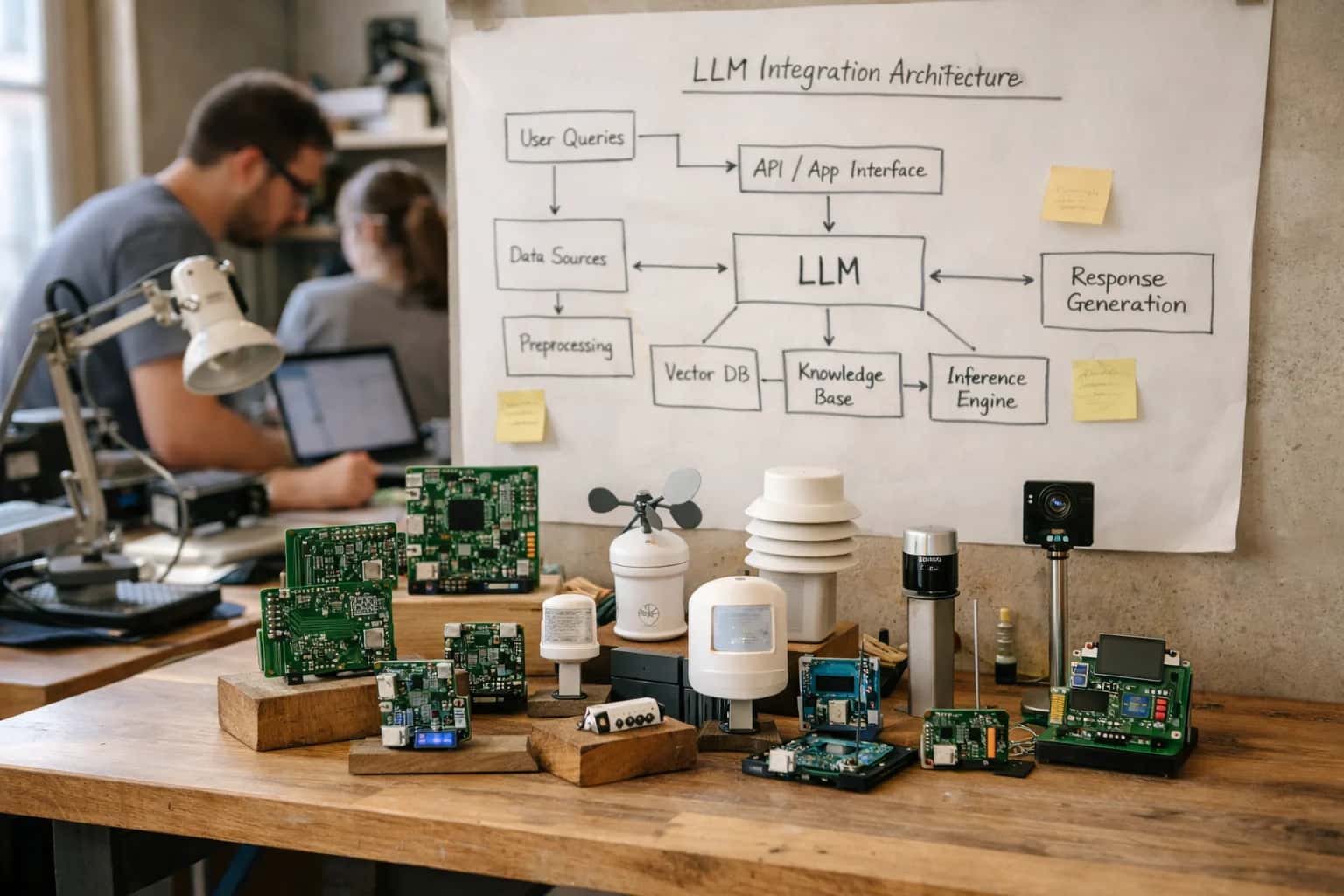
Implementation typically involves a middleware service that subscribes to Brightwheel's form webhooks. When a form.submitted event is received, the service calls an LLM with a structured prompt containing the submission data and validation rules. The LLM returns a validation summary and any extracted data for pre-population. High-value use cases include:
- Enrollment Form Processing: Auto-populating child medical history from prior records.
- Permission Slip Triage: Routing field trip forms based on allergy flags or payment status.
- Document Compliance: Extracting expiration dates from uploaded files and setting calendar alerts in Brightwheel. This shifts form processing from a manual, next-day review task to a same-hour, exception-based workflow for administrative staff.
Rollout should start with a single form type (e.g., annual re-enrollment) in a sandbox environment, using Brightwheel's API test mode. Governance is critical: all AI suggestions should be logged as a Note on the FormSubmission record with an AI-generated tag, and a human-in-the-loop approval step should be required for the first 90 days. Center staff need clear training to review the AI's validation flags and overrides. This approach minimizes risk while demonstrating time savings—often cutting form processing time from hours to minutes for directors.
DIGITAL FORMS
Brightwheel APIs and Surfaces for AI Integration
Core Integration Points for Form Automation
The Brightwheel Forms API and webhook system are the primary surfaces for AI-driven form workflows. The API allows for programmatic retrieval of form templates, submission of pre-filled forms, and querying of existing submissions. Webhooks can be configured to trigger AI processes in real-time.
Key Endpoints for AI:
GET /v2/forms/templates: Retrieve form structure, including field types, labels, and validation rules.POST /v2/forms/submissions: Submit a completed form, which is where AI-generated content is injected.GET /v2/families&GET /v2/children: Access family and child profile data to pre-fill known information (e.g., child name, date of birth, parent contacts).
Webhook events like form.submitted allow an AI agent to immediately validate, summarize, or route a newly completed form without polling. This creates a closed-loop system where AI acts on form data as soon as it enters Brightwheel.
AUTOMATE ENROLLMENT & COMPLIANCE WORKFLOWS
High-Value AI Use Cases for Brightwheel Forms
Brightwheel's digital forms are critical for enrollment, health records, and permissions, but manual processing creates bottlenecks. These AI integrations use the Brightwheel Forms API to pre-fill, validate, and route submissions, turning administrative tasks into automated workflows.
01
Intelligent Form Pre-Filling
AI cross-references existing family profiles and past submissions to auto-populate known fields (parent names, contact info, child details) in new enrollment or permission forms. Reduces parent data entry by 60-80% and minimizes typos that cause downstream issues.
Minutes -> Seconds
Parent completion time
02
Automated Submission Validation & Triage
As forms are submitted, an AI agent reviews attachments and entries for completeness and compliance. It checks for missing immunization dates, unsigned fields, or unclear photos, then routes incomplete forms back to parents with specific instructions and flags complete forms for staff review.
Batch -> Real-time
Compliance check
03
Health Record & Document OCR
AI-powered OCR extracts structured data from uploaded PDFs or images of physical forms (doctor's notes, immunization records, insurance cards). It populates the corresponding Brightwheel child health profile fields, eliminating manual data entry for staff and creating searchable digital records.
Hours -> Minutes
Record processing
04
Conditional Workflow Routing
Based on form responses, AI determines the next step without staff intervention. A field trip permission slip with a 'yes' is logged and the child is added to the trip roster. A medication authorization form triggers an alert to the lead teacher and updates the child's health log. Ensures actions follow policy automatically.
Manual -> Automated
Next-step routing
05
Expiration & Renewal Tracking
AI monitors form expiration dates for critical documents (allergy action plans, custody agreements, annual permissions). It automatically generates and sends renewal requests to parents via Brightwheel messaging 30 days before expiry, and escalates to staff if unresolved. Prevents lapses in compliance.
Proactive Alerts
Avoids compliance gaps
06
Multi-Form Enrollment Packet Assembly
For new family enrollment, AI orchestrates the submission of multiple linked forms (application, contract, health history, permissions). It ensures all parts are completed, validates consistency across forms, and bundles them into a single, audit-ready digital packet attached to the family's Brightwheel profile for director approval.
1 sprint
Implementation timeline
BRIGHTWHEEL INTEGRATION PATTERNS
Example AI-Powered Form Workflows
These workflows demonstrate how AI agents, connected via Brightwheel's Forms API and webhooks, can automate high-friction form processes. Each pattern is designed to reduce manual data entry, improve accuracy, and accelerate family onboarding and compliance.
Trigger: A parent initiates a new enrollment application via a Brightwheel digital form.
Context Pulled: The AI agent receives the webhook event with the parent's email/phone. It queries Brightwheel's Family and Child APIs for existing records and cross-references any prior inquiry data from a connected CRM (e.g., HubSpot).
Agent Action: Using retrieved data, the agent pre-populates known fields in the form's draft state:
- Parent/guardian names, contact info, and addresses.
- Child's name, date of birth, and known allergies from previous "tour" records.
- Preferred schedule based on prior communications.
System Update: The partially completed form is saved and a notification is sent to the parent: "We've started your application with the info we have. Please review and complete the remaining sections."
Human Review Point: The center director receives an alert that a high-intent application has been started, with the AI-highlighted fields that still require parent verification (e.g., emergency contacts, physician details).
BRIGHTWHEEL DIGITAL FORMS
Implementation Architecture: Data Flow and System Design
A technical blueprint for integrating AI to automate enrollment form processing within Brightwheel.
The integration connects to Brightwheel's Forms API and Family Data Model. An AI agent acts as a middleware layer, triggered by a new form submission webhook. It ingests the raw PDF or form data payload, then performs three core functions: pre-filling known fields from the family's existing Brightwheel profile, validating entries (e.g., date formats, required signatures), and classifying the form type (enrollment, health, consent) for routing. The processed, structured data is then posted back to Brightwheel via the API to update the child's digital record, and a summary is queued for staff review in a designated admin panel.
Key implementation details include:
- Data Flow:
Brightwheel Webhook → Secure Queue → AI Processing Engine → Brightwheel API Update → Audit Log. - Tool Calling: The AI agent uses function calling to interact with Brightwheel's REST endpoints for
GET /families/{id}andPATCH /forms/{submission_id}. - Human-in-the-Loop: Invalid or low-confidence fields are flagged in a separate
requires_reviewstatus, triggering a task in Brightwheel's internal tasking system or a Slack alert to the center director. - Impact: Reduces manual data entry from 15-20 minutes per form to under 2 minutes of review, accelerates onboarding, and ensures data consistency by pulling from the system of record.
Rollout is typically phased, starting with a single form type (e.g., enrollment application) at one center location. Governance requires configuring RBAC in the AI layer to match Brightwheel's staff permissions, maintaining a full audit trail of all AI actions on form data, and establishing a feedback loop where staff corrections are used to fine-tune the validation logic. For a production deployment, we architect the service to handle Brightwheel's API rate limits and implement idempotent processing to prevent duplicate updates. Explore related patterns for parent communications or custom workflow automation.
BRIGHTWHEEL FORMS API INTEGRATION PATTERNS
Code and Payload Examples
Handling Form Submissions with AI
When a parent submits a digital form, Brightwheel sends a JSON payload to your configured webhook endpoint. Your AI service should listen for this event, extract the raw data, and apply logic for pre-filling, validation, or routing.
A typical webhook handler in Python (using FastAPI) would:
- Verify the webhook signature from Brightwheel.
- Parse the
form_submissionobject containing thefamily_id,child_id,form_id, and submitted answers. - Call an AI service to process the submission.
- Update the form status or family record via Brightwheel's API based on the AI's output.
pythonfrom fastapi import FastAPI, Request, HTTPException import httpx from pydantic import BaseModel app = FastAPI() BRIGHTWHEEL_API_KEY = "your_api_key" class FormSubmission(BaseModel): event_type: str data: dict # Contains form_submission details @app.post("/webhooks/brightwheel-forms") async def handle_form_submission(request: Request): payload = await request.json() submission_data = payload.get('data', {}).get('form_submission', {}) # Extract key fields for AI processing family_id = submission_data.get('family_id') form_answers = submission_data.get('answers', {}) # Call AI service for validation/enrichment ai_result = await call_ai_validation_service(form_answers, family_id) if ai_result.get('needs_correction'): # Use Brightwheel API to add an internal note or update status async with httpx.AsyncClient() as client: await client.post( f"https://api.brightwheel.com/v1/form_submissions/{submission_data['id']}/notes", headers={"Authorization": f"Bearer {BRIGHTWHEEL_API_KEY}"}, json={"note": f"AI Validation Flag: {ai_result['message']}"} ) return {"status": "processed"}
AI-ASSISTED DIGITAL FORMS
Realistic Time Savings and Operational Impact
How AI integration reduces manual data entry, accelerates enrollment, and improves accuracy for Brightwheel's digital forms.
| Workflow | Before AI | After AI | Implementation Notes |
|---|---|---|---|
Form Pre-filling for Returning Families | Manual copy/paste from previous records | Auto-populated from family/child profile data | Leverages Brightwheel's Family API; human review recommended for accuracy |
New Enrollment Application Intake | Staff manually transcribe from PDF/paper | AI extracts and structures data via OCR | Integrates with document uploads; flags low-confidence fields for staff |
Immunization Record Validation | Visual check against paper/scan | AI cross-references dates and types against schedules | Uses Brightwheel's health record surfaces; alerts for missing or expired vaccines |
Emergency Contact & Pick-up Authorization | Manual entry of multiple contacts | AI suggests contacts from prior forms; validates phone/email format | Reduces duplicate entries; integrates with Brightwheel's contact management |
Income Verification for Subsidy Forms | Manual calculation from pay stubs | AI extracts figures, calculates averages, and pre-fills eligibility sections | Handles common document types; requires final director approval |
Form Routing & Assignment | Manual email or in-app assignment based on staff memory | AI routes to appropriate staff based on form type, child's room, or staff role | Configurable rules using Brightwheel's webhooks and staff API |
Form Completion Rate Follow-ups | Periodic manual review of incomplete forms | Automated, personalized reminders triggered by AI analysis of delay | Sends via Brightwheel's messaging API; respects family communication preferences |
Data Sync to Child Profiles | Manual update of child records after form submission | Automated field mapping and update via Brightwheel's Child API | Ensures single source of truth; logs all changes for audit compliance |
PRACTICAL IMPLEMENTATION
Governance, Security, and Phased Rollout
A production-ready AI integration for Brightwheel forms requires a secure, governed approach that builds trust and demonstrates value incrementally.
A secure integration begins by mapping the data flow. AI agents interact with Brightwheel's Forms API to fetch blank templates and submit completed data, and the Families API to retrieve context for pre-filling. All data exchanges should be encrypted in transit, and API keys must be scoped with the principle of least privilege—granting access only to the specific endpoints and objects (e.g., family, child, form_response) required for the workflow. Personally Identifiable Information (PII) like child names and birthdates should be tokenized or pseudonymized before being sent to external LLM services, with strict data retention policies enforced on the AI side.
Governance is critical for accuracy and compliance. Implement a human-in-the-loop review step for high-stakes forms (e.g., enrollment contracts, allergy action plans) where an administrator must approve the AI-generated content before submission to Brightwheel. For lower-risk forms (e.g., field trip permissions), use confidence scoring to auto-route low-confidence submissions for review. All AI actions should generate immutable audit logs, recording the source data, the prompt used, the model's output, and the final submission status. This creates a defensible trail for licensing audits and internal quality assurance.
A phased rollout minimizes risk and maximizes adoption. Start with a pilot program targeting a single, high-volume form type (e.g., daily health screenings) in one center. Use this phase to tune prompts, validate accuracy rates, and gather staff feedback. Phase two expands to additional form types and centers, integrating learnings. Finally, phase three enables advanced automation, such as triggering follow-up workflows in Brightwheel based on form responses (e.g., automatically creating a task for the director if a health concern is noted). This iterative approach proves ROI at each step and ensures the system enhances—rather than disrupts—daily operations.
Enabling Efficiency, Speed & Accuracy
Intelligent Analysis, Decision & Execution
We build AI systems for teams that need search across company data, workflow automation across tools, or AI features inside products and internal software.
Talk to Us
Search across company data
Give teams answers from docs, tickets, runbooks, and product data with sources and permissions.
Useful when people spend too long searching or get different answers from different systems.
Enterprise searchRAGPermissions
Read more
Automate internal workflows
Use AI to route work, draft outputs, trigger actions, and keep approvals and logs in place.
Useful when repetitive work moves across multiple tools and teams.
AI agentsWorkflow automationGovernance
Read more
Add AI to products and internal tools
Build assistants, guided actions, or decision support into the software your team or customers already use.
Useful when AI needs to be part of the product, not a separate tool.
AI integrationDecision supportModel routing
Read moreIMPLEMENTATION AND WORKFLOW DETAILS
Frequently Asked Questions
Common questions about architecting, deploying, and governing AI integrations for Brightwheel's digital forms to automate enrollment and compliance workflows.
This workflow reduces manual data entry by pulling known information from Brightwheel's Family and Child records via its REST API.
- Trigger: A parent initiates a new enrollment or re-enrollment form via the Brightwheel parent app or web portal.
- Context Pull: An AI agent, triggered by a Brightwheel webhook for
form.created, calls the API to fetch the family's existing profile data (e.g.,GET /api/v1/families/{family_id}). - AI Action: The agent uses a structured extraction model to map the retrieved data (parent names, contact info, child's name, known allergies) to the corresponding fields in the new digital form's schema.
- System Update: The agent uses Brightwheel's Forms API (e.g.,
PATCH /api/v2/forms/{form_id}/responses) to pre-populate the applicable fields with the extracted data. - Human Review Point: The form is returned to the parent for review, verification, and completion of any remaining blank fields (e.g., emergency contacts, physician details). This ensures accuracy and maintains a clear audit trail.

About the author
Prasad Kumkar
CEO & MD, Inference Systems
Prasad Kumkar is the CEO & MD of Inference Systems and writes about AI systems architecture, LLM infrastructure, model serving, evaluation, and production deployment. Over 5+ years, he has worked across computer vision models, L5 autonomous vehicle systems, and LLM research, with a focus on taking complex AI ideas into real-world engineering systems.
His work and writing cover AI systems, large language models, AI agents, multimodal systems, autonomous systems, inference optimization, RAG, evaluation, and production AI engineering.
LinkedIn
Limited slotsGet a Free AI Consultation
Partnered with leading AI, data, and software stack.





How We Work
Custom AI workflows for your Business
One-fit-all AI don't work for modern businesses. At Inferensys, we aim to understand your business & custom requirements; which we use to define most efficient agentic workflows, the data, and the tools for your business.
01
Review the use case
We understand the task, the users, and where AI can actually help.
Read more02
Pick the right approach
We define what needs search, automation, or product integration.
Read more03
Build the first useful version
We implement the part that proves the value first.
Read more04
Improve from there
We add the checks and visibility needed to keep it useful.
Read moreThe first call is a practical review of your use case and the right next step.
Talk to Us