The daily report is a core workflow in Brightwheel, involving structured data entry for meals, naps, activities, and notes across multiple child profiles. AI integration connects at two key points: synthesis and publication. First, an AI agent can process teacher inputs—which may be fragmented voice notes, quick-tap logs, or brief typed observations—and synthesize them into coherent, personalized narrative summaries for each child. This agent acts on data from Brightwheel's Child, Activity Log, and Observation APIs. Second, the structured output is formatted and pushed back into Brightwheel via its Daily Report or Journal Entry API, appearing in the parent app as a completed update, often with enriched developmental context or milestone tagging.

Integration
AI Integration for Brightwheel Daily Reports
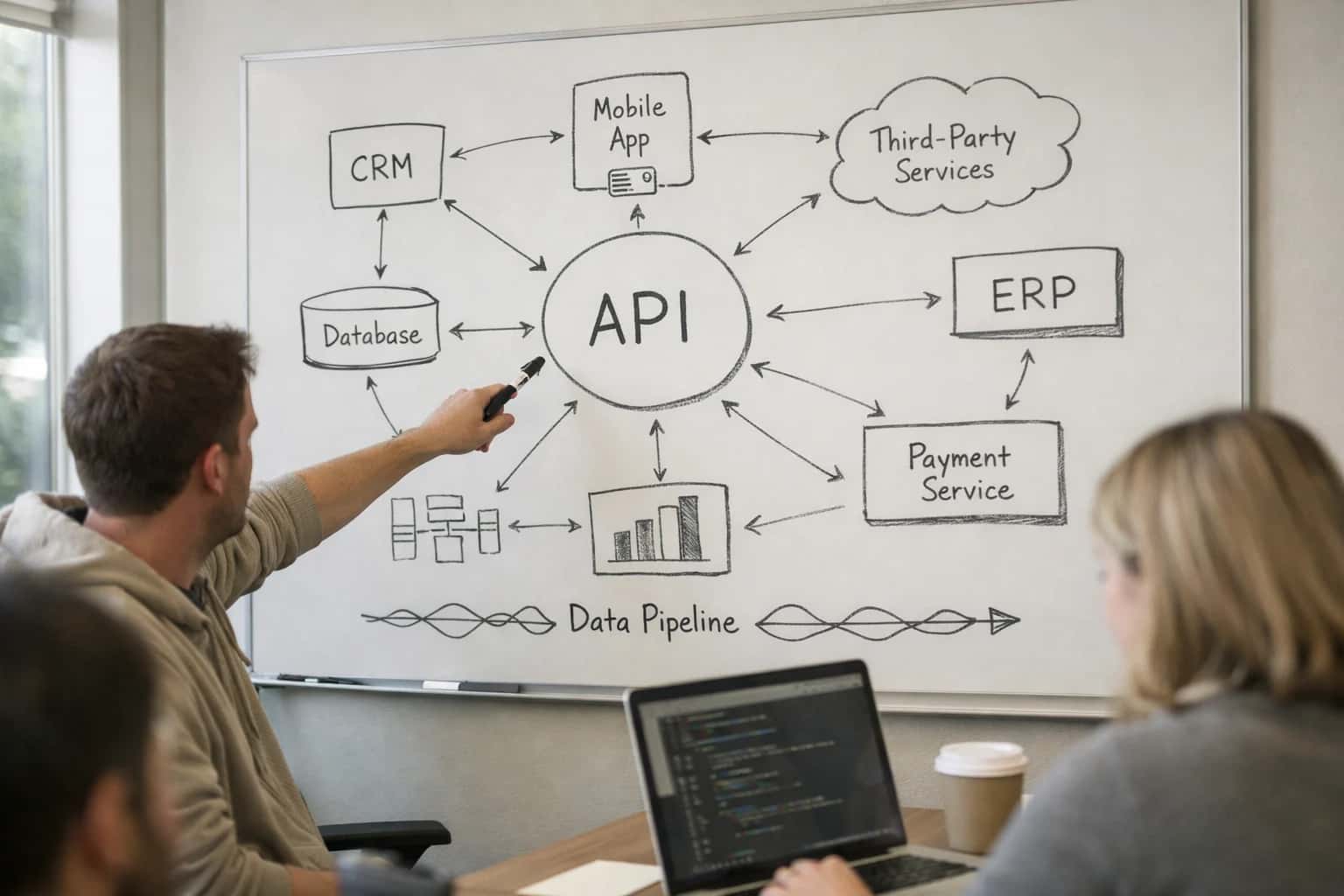
Where AI Fits into Brightwheel's Daily Reporting Workflow
A practical guide to automating personalized child daily reports by integrating AI with Brightwheel's reporting APIs and teacher workflows.
Implementation typically involves a middleware service subscribed to Brightwheel webhooks for new log entries. This service uses a configured LLM with a prompt template that incorporates the center's tone, developmental frameworks (like Early Learning Standards), and child-specific details (allergies, current goals). The processed report is then posted back via API. Key technical considerations include idempotency to prevent duplicate reports, rate limiting against Brightwheel's API thresholds, and maintaining an audit trail linking the original teacher input to the AI-generated summary for compliance. The impact is operational: reducing the time teachers spend crafting narratives from 10-15 minutes per child to near-zero, while increasing report consistency and depth.
Rollout should be phased, starting with a pilot group of teachers and a human-in-the-loop review step before full automation. Governance is critical: directors need visibility into the AI's output via a moderation dashboard and the ability to set rules (e.g., flag reports containing certain keywords for review). This integration doesn't replace teacher judgment but augments it, freeing educators for direct engagement while ensuring parents receive rich, timely updates. For a deeper technical blueprint, see our guide on Building AI Agents for Parent Communications.
Brightwheel APIs and Surfaces for AI Integration
Core Profile and Record Management
AI agents need structured access to child and family profiles to personalize interactions. Brightwheel's Child, Family, and Guardian APIs provide the foundational data layer.
Key objects for AI workflows include:
- Child Profiles: Contain age, classroom assignment, allergies, authorized pickups, and developmental notes.
- Family Records: Store billing addresses, primary contacts, and communication preferences.
- Guardian Objects: Detail parent/guardian relationships, phone numbers, and email addresses for targeted messaging.
An AI system can query these APIs to retrieve context—for example, fetching a child's age and classroom to generate an age-appropriate daily activity summary. Webhooks on profile updates (like a new allergy entry) can trigger immediate AI-driven alerts or documentation reviews. This data layer ensures all generated content is grounded in the correct, up-to-date family context.
High-Value AI Use Cases for Daily Reports
Transform manual, time-consuming daily report creation into an automated, personalized workflow. These AI use cases connect directly to Brightwheel's reporting APIs to synthesize teacher inputs, generate structured updates, and deliver insights that save hours each week.
Automated Report Synthesis from Voice Notes
Teachers record brief voice notes throughout the day. AI transcribes and structures these into formatted daily report sections (naps, meals, activities) via Brightwheel's API, eliminating manual typing and data entry.
Personalized Developmental Milestone Highlights
AI analyzes observation logs and activity data to automatically identify and highlight key developmental milestones (e.g., first steps, new words) within the daily report, providing personalized context for parents.
Smart Meal & Nap Pattern Analysis
AI processes logged meal intake and sleep durations to generate trend summaries and gentle suggestions (e.g., "Ate well today, napped 15 mins less than average") within the daily report, offering actionable insights.
Multi-Child Report Generation for Siblings
For families with multiple children at the center, AI consolidates and cross-references data from sibling profiles to generate a unified, coherent daily report, saving teachers from managing separate, repetitive entries.
Sentiment-Aware Parent Communication Triggers
AI analyzes the tone and content of the generated daily report. If it detects potential concerns (e.g., low food intake, unusual mood), it can automatically flag the report for teacher review or trigger a predefined, templated follow-up message via Brightwheel's messaging APIs.
Compliance & Audit Trail for Reporting
Every AI-generated report is logged with a full audit trail—including source inputs, model version, and editor approvals—ensuring compliance with center policies and readiness for licensing reviews. Integrates with Brightwheel's activity logs.
Example AI Automation Workflows
These workflows demonstrate how AI can transform manual, time-consuming daily report creation into a structured, automated process. Each flow connects teacher inputs, child data, and AI synthesis to push personalized updates directly into Brightwheel via its reporting APIs.
Trigger: Teacher submits a batch of handwritten or voice-recorded notes for a group of children at the end of the day.
Context Pulled: The system retrieves each child's profile from Brightwheel, including their typical nap schedule, dietary restrictions/allergies, and recent meal patterns.
AI Action: An LLM processes the unstructured teacher notes:
- Identifies and extracts data points for
nap_start,nap_duration,lunch_items_eaten,snack_refusal. - Cross-references extracted data against child-specific norms and restrictions, flagging anomalies (e.g., "unusually long nap for Alex").
- Structures the data into a clean JSON payload per child.
System Update: The structured payload is sent via Brightwheel's POST /v1/children/{child_id}/daily_reports API to create or update the daily report.
Human Review Point: Before the API call, the system can present a summary to the lead teacher for a quick verification, especially for any flagged anomalies. The teacher can approve or edit in a simple UI before final submission.
Implementation Architecture: Data Flow and Guardrails
A secure, event-driven architecture for automating personalized daily reports using Brightwheel's APIs and AI synthesis.
The integration is built on an event-driven data flow. A webhook listener captures observation.created and activity.logged events from Brightwheel's API, which fire when teachers log notes on naps, meals, or activities. These raw text entries are queued, then processed by an orchestration agent that enriches them with child-specific context (e.g., age, allergies, developmental goals) by fetching the child's profile via the GET /children/{id} endpoint. The agent then calls a configured LLM (e.g., GPT-4, Claude) with a structured prompt template to synthesize a coherent, warm narrative summary from the day's disparate inputs.
The generated narrative is structured into a JSON payload matching Brightwheel's Daily Report object schema and posted back via the POST /daily_reports API. To ensure quality and safety, the flow includes mandatory guardrails: a secondary classifier model screens for policy violations or sensitive content, and all AI-generated reports are written to an immutable audit log with the source observation IDs and prompt version for traceability. For centers requiring a human touch, the architecture supports a configurable approval step where reports are placed in a "Pending Review" queue within Brightwheel for a lead teacher to approve or edit before being shared with parents.
Rollout is phased, starting with a pilot group of classrooms. We instrument the pipeline to track key metrics like report generation latency, teacher edit rates, and parent open rates via Brightwheel's analytics. Governance is maintained through a centralized configuration layer that controls which classrooms are auto-piloted, which LLM model and prompt version are active, and the rules for the content safety filter. This ensures the AI operates as a consistent, reliable copilot that reduces manual narrative writing from 15-20 minutes per child per day to near-zero, while keeping teachers firmly in the loop.
Code and Payload Examples
Synthesizing Teacher Inputs with AI
This example shows a Python function that calls an LLM (like OpenAI's GPT-4) to synthesize a structured, personalized daily report from raw teacher notes. The function formats the teacher's input, adds child-specific context from Brightwheel, and prompts the model to output a clean, parent-friendly summary.
pythonimport os from openai import OpenAI def generate_daily_report(child_name, teacher_notes, child_context): """ Generates a structured daily report from teacher notes. child_context: dict with keys like 'age_group', 'allergies', 'recent_milestones' """ client = OpenAI(api_key=os.environ.get("OPENAI_API_KEY")) prompt = f"""You are a helpful assistant for a daycare teacher. Create a warm, detailed daily report for {child_name}'s parents. Child Context: - Age Group: {child_context.get('age_group', 'N/A')} - Notes: {child_context.get('recent_milestones', 'None noted')} Raw Teacher Notes: {teacher_notes} Please structure the report with these sections: 1. **Meals & Snacks**: What and how much they ate. 2. **Nap Time**: Duration and quality of rest. 3. **Activities & Play**: Key engagements and social interactions. 4. **Learning Moments**: Observations linked to developmental goals. 5. **Teacher's Note**: A personalized closing comment. Use a friendly, professional tone. """ response = client.chat.completions.create( model="gpt-4-turbo-preview", messages=[{"role": "user", "content": prompt}], temperature=0.7, max_tokens=500 ) return response.choices[0].message.content # Example Usage child_info = {'age_group': 'Toddler', 'recent_milestones': 'Starting to use two-word phrases.'} raw_notes = "Ate all of her applesauce at lunch, napped from 1-2:30pm, played in the sandbox with Leo, built a block tower." report = generate_daily_report("Sophie", raw_notes, child_info) print(report) """
Realistic Time Savings and Operational Impact
How AI-assisted synthesis of teacher inputs and structured API updates changes the daily reporting workflow for teachers and directors.
| Workflow Step | Before AI | After AI | Implementation Notes |
|---|---|---|---|
Data Collection & Note-Taking | Manual entry across nap, meal, and activity logs | Voice notes or quick text inputs via mobile app | AI transcribes and structures observations from natural language |
Report Drafting & Personalization | 15-25 minutes per child to compile and write | 2-5 minutes to review and edit AI-generated draft | AI pulls from structured logs and synthesizes narrative summaries |
Report Review & Quality Check | Director spot-checks 10-20% of reports for consistency | AI flags incomplete entries or outliers for director review | Focus shifts from proofreading to coaching on observation quality |
Report Distribution via API | Manual 'Send All' or batch upload at end of day | Automated, staggered push via Brightwheel Reporting API | Reports delivered throughout day as completed, reducing parent wait time |
Parent Follow-up & Clarifications | 5-10 minutes daily responding to clarification questions | AI suggests anticipated FAQs; reduces clarifications by ~60% | Clearer, more consistent narrative reduces misinterpretation |
End-of-Month Developmental Summary | Hours compiling notes and writing summaries per child | AI generates first-pass summary from 30 days of structured reports | Teacher time shifts from compilation to adding nuanced insights |
New Teacher Onboarding for Reporting | 1-2 weeks to achieve consistent report quality and speed | AI provides real-time templates and phrasing suggestions | Reduces training burden and accelerates time-to-proficiency |
Governance, Security, and Phased Rollout
A practical framework for deploying AI-driven daily reports with controlled risk and measurable impact.
A production integration for Brightwheel daily reports operates on a read-transform-write pattern, governed by API rate limits and data permissions. The AI agent is deployed as a middleware service that:
- Reads teacher-submitted inputs (notes, photos, activity logs) from Brightwheel's
ObservationandMediaAPIs. - Transforms this unstructured data using a configured LLM prompt to generate a structured, personalized narrative.
- Writes the final report back to the child's timeline via the
Daily ReportAPI, attributing it to the original teacher. All actions are logged with a correlation ID for full auditability, and the service only requests the OAuth scopes necessary for these specific read/write operations.
Rollout follows a phased, center-by-center approach to manage change and gather feedback. A typical sequence is:
- Pilot Group: Start with 2-3 volunteer classrooms, running the AI in a human-in-the-loop review mode. Generated reports are placed in a moderation queue within a custom dashboard for teacher approval before being posted.
- Controlled Expansion: After refining prompts and workflows based on pilot feedback, expand to additional classrooms, enabling automated posting for trusted teachers while keeping new staff in review mode.
- Full Deployment & Optimization: Roll out center-wide, using the accumulated data to fine-tune models for specific age groups or report types. Implement monitoring for report quality (e.g., sentiment, completeness) and system performance against Brightwheel's API quotas.
Security is anchored in Brightwheel's existing authentication and data isolation. The integration service uses a dedicated service account with role-based access, ensuring it only interacts with data for enrolled children in active classrooms. No child or family PII is stored permanently in the AI service; data is processed in memory and the LLM call is configured to not retain inputs. For centers with heightened compliance needs, the architecture can be adapted to use a private, single-tenant LLM deployment or an on-premises processing node.
Enabling Efficiency, Speed & Accuracy
Intelligent Analysis, Decision & Execution
We build AI systems for teams that need search across company data, workflow automation across tools, or AI features inside products and internal software.
Talk to Us
Search across company data
Give teams answers from docs, tickets, runbooks, and product data with sources and permissions.
Useful when people spend too long searching or get different answers from different systems.

Automate internal workflows
Use AI to route work, draft outputs, trigger actions, and keep approvals and logs in place.
Useful when repetitive work moves across multiple tools and teams.

Add AI to products and internal tools
Build assistants, guided actions, or decision support into the software your team or customers already use.
Useful when AI needs to be part of the product, not a separate tool.
Frequently Asked Questions
Practical questions about automating daily reports in Brightwheel with AI, covering technical integration, workflow design, and operational governance.
The workflow uses a multi-step agent to transform fragmented teacher notes into a polished, parent-ready report.
- Trigger & Data Pull: A scheduled job or a teacher's "Finalize Report" action in your custom UI triggers the process. The system calls Brightwheel's API to fetch the child's profile and the day's logged events (naps, meals, activities, notes) for the specific classroom.
- Context Enrichment: The agent retrieves additional context, such as the child's age from their Brightwheel profile and the center's preferred reporting tone from a configuration store.
- Model Action: A structured prompt is sent to a language model (e.g., GPT-4, Claude). The prompt includes:
- The raw log data
- Instructions to format into sections ("Today's Activities," "Meals & Nap," "A Note from Your Teacher")
- Rules to use positive, developmental language and avoid medical diagnoses
- A requirement to highlight a specific learning moment from the activity logs
- System Update: The generated narrative is posted back to Brightwheel's Daily Report API for that child, creating a new report record. The system logs the generation event with a unique ID for auditability.
- Human Review Point: Before the report is automatically sent, it can be routed to a lead teacher's dashboard for a quick review and edit. Alternatively, centers can opt for direct send with high-confidence thresholds.

About the author
Prasad Kumkar
CEO & MD, Inference Systems
Prasad Kumkar is the CEO & MD of Inference Systems and writes about AI systems architecture, LLM infrastructure, model serving, evaluation, and production deployment. Over 5+ years, he has worked across computer vision models, L5 autonomous vehicle systems, and LLM research, with a focus on taking complex AI ideas into real-world engineering systems.
His work and writing cover AI systems, large language models, AI agents, multimodal systems, autonomous systems, inference optimization, RAG, evaluation, and production AI engineering.
Partnered with leading AI, data, and software stack.





How We Work
Custom AI workflows for your Business
One-fit-all AI don't work for modern businesses. At Inferensys, we aim to understand your business & custom requirements; which we use to define most efficient agentic workflows, the data, and the tools for your business.
01
Review the use case
We understand the task, the users, and where AI can actually help.
Read more02
Pick the right approach
We define what needs search, automation, or product integration.
Read more03
Build the first useful version
We implement the part that proves the value first.
Read more04
Improve from there
We add the checks and visibility needed to keep it useful.
Read moreThe first call is a practical review of your use case and the right next step.
Talk to Us