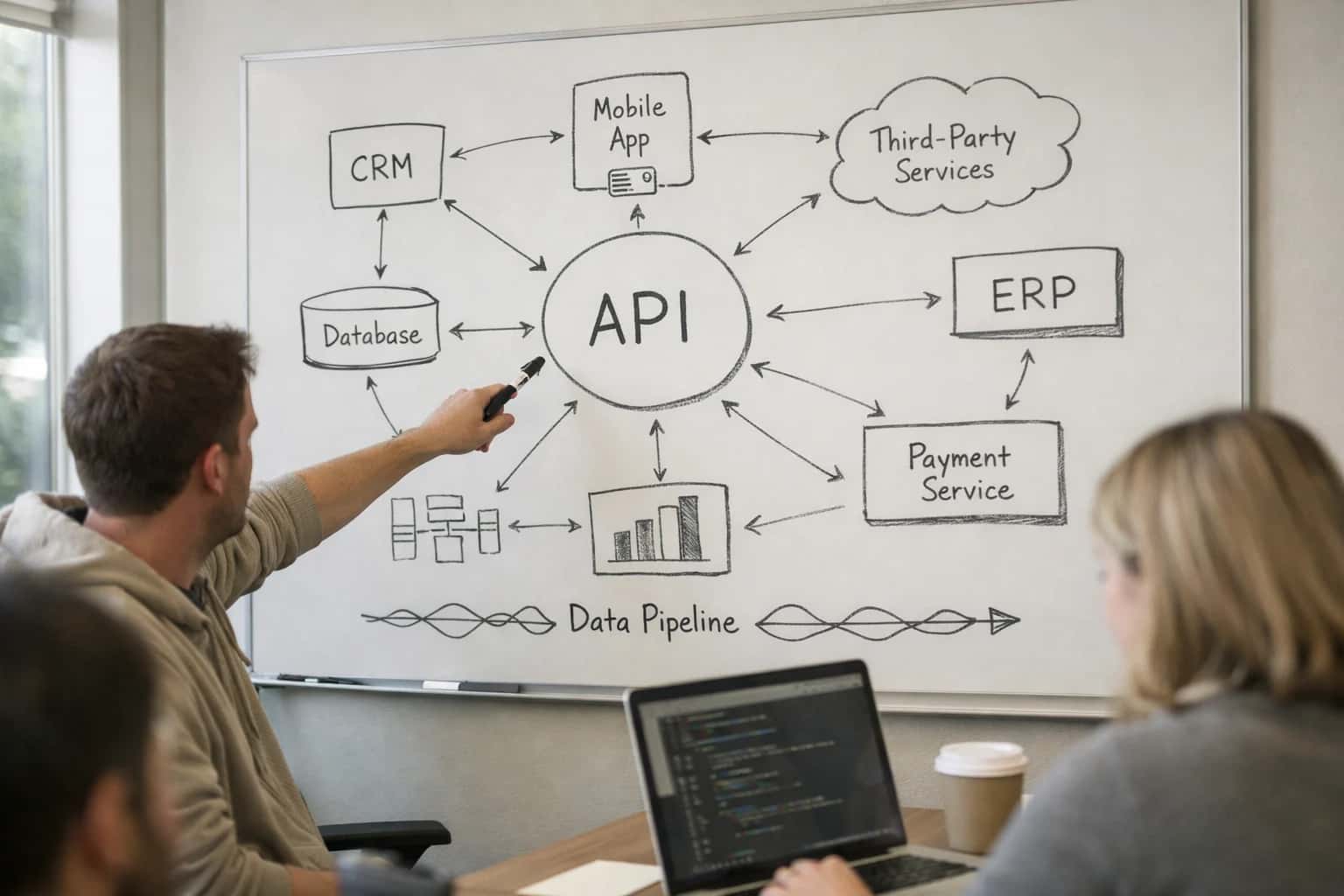
AI connects to the casino management system's core modules: the player tracking database, the promotional engine, and the property management system (PMS). The integration ingests real-time feeds of theoretical win, actual win, coin-in, trip frequency, and current hotel occupancy. This data forms the live context for the AI's pricing decisions, which are executed via API calls back to the promotional engine to adjust offer values or to the PMS to modify room rate availability. The system acts as a real-time overlay, not a replacement, for the existing rules-based comp and yield management logic.

Integration
AI for Dynamic Pricing and Offer Yield Management
A technical blueprint for revenue optimization specialists to integrate AI with casino management systems, enabling real-time dynamic pricing of free play, mailers, and room discounts based on player elasticity and casino capacity.
ARCHITECTURE FOR REVENUE OPTIMIZATION
Where AI Fits into Casino Pricing and Yield Management
A technical blueprint for integrating AI into casino management systems to dynamically adjust free play, mailer offers, and room discounts based on real-time player elasticity and property capacity.
High-value workflows include dynamic free play valuation, where the AI adjusts the cash-equivalent value of a mailer offer for a specific player segment based on predicted redemption likelihood and forecasted casino capacity for the target date. Another is personalized room discounting, where the system analyzes a player's past room spend versus gaming value to recommend a discount that maximizes the probability of a trip without eroding ADR from higher-value guests. Implementation requires a queued architecture: the AI model generates batch or real-time recommendations, which are routed through an approval workflow for high-value adjustments or logged directly for audit, before being pushed to the target system.
Rollout is typically phased, starting with a single offer type (e.g., mid-tier player mailers) and a single channel (e.g., digital offers). Governance is critical; all AI-driven adjustments must be written to an immutable audit log with the model's reasoning (e.g., "increased offer by 15% due to 20% lower forecasted floor traffic"). This enables compliance review and model performance tracking. The final architecture ensures the casino's marketing and revenue teams shift from manual, calendar-based offer planning to a system that continuously optimizes yield across all player assets and physical capacity.
ARCHITECTURE FOR DYNAMIC OFFER YIELD MANAGEMENT
Key Integration Surfaces in Casino Management Systems
Core Player Data for Elasticity Modeling
The Player Tracking System (PTS) is the primary source for calculating theoretical win, average daily worth (ADW), and play patterns. AI models for dynamic pricing must integrate here to access real-time coin-in, time-on-device, and tier status. Key integration points are the player profile API and the session data feed.
- Player Profile API: Retrieve comprehensive player attributes, including lifetime value segments, preferred game types, and historical offer response rates. This data feeds the AI's player elasticity model.
- Real-Time Session Feed: Ingest live play data (via CDC or messaging queue) to adjust offer values based on a player's current session trajectory, such as increasing a free play offer during a cooling-off period.
- Theoretical Win Calculation Engine: Connect to the system's built-in theo engine or replicate its logic to ensure AI-recommended offer values are grounded in the casino's existing yield math. This ensures governance and auditability.
CASINO MANAGEMENT PLATFORMS
High-Value Use Cases for AI-Powered Yield Management
Integrate AI with your casino management system (Aristocrat CMS, IGT Advantage, Bally Table View, Konami Synkros) to move from static, rules-based offers to a dynamic, predictive model that maximizes player lifetime value and floor yield.
01
Dynamic Free Play & Mailer Valuation
An AI model continuously analyzes individual player elasticity, recent play, and promotional saturation to assign a real-time value to free play offers and mailers. The system integrates with the casino's promotional engine to adjust offer amounts, ensuring the right incentive is extended to the right player at the right cost.
Static → Dynamic
Offer Model
02
Real-Time Room & F&B Yield Optimization
Integrate AI with your Property Management System (PMS) and POS. The system ingests future room occupancy, event calendars, and player value scores to dynamically adjust room upgrade offers and F&B comps. It targets high-potential players during low-occupancy periods to drive incremental visits and spend.
Same-Day
Capacity Response
03
Theoretical Win-Based Offer Triggers
Automate the host workflow. An AI agent monitors real-time theoretical win from the slot accounting system and player tracking data. When a player's session value crosses a dynamic threshold, the system automatically generates a personalized offer (e.g., a dinner comp) and suggests it to the host via the CRM for approval and delivery.
Batch → Real-time
Recognition Speed
04
Promotional Saturation & Cannibalization Guardrails
Prevent offer fatigue and wasted marketing spend. The AI tracks all active promotions across channels for each player segment. It uses predictive models to flag when additional offers are unlikely to drive incremental play, allowing marketers to pause campaigns and protect yield. Integrates directly with marketing automation modules.
1 Sprint
ROI Visibility
05
Event-Driven Package Yield Management
For concerts and shows, AI analyzes historical sales data, current player demand signals, and room availability to create and price dynamic packages (room + tickets + dining). The system integrates with the event management and booking platforms to adjust package composition and pricing in the weeks leading up to the event.
Hours → Minutes
Package Design
06
Cross-Channel Offer Attribution & Yield Analytics
Close the loop on marketing spend. An AI-powered analytics layer connects player redemption data from kiosks, the cage, and POS systems back to the original offer source in the CRM. It attributes subsequent play and calculates true promotional ROI, providing a yield dashboard for executives to refine budget allocation.
Daily → Intraday
ROI Reporting
CASINO MANAGEMENT PLATFORMS
Example AI-Powered Pricing and Offer Yield Management Workflows
These workflows illustrate how to connect AI models to your casino management platform (Aristocrat CMS, IGT Advantage, Bally, Konami Synkros) to dynamically adjust free play, mailer offers, and room discounts. Each example details the trigger, data context, AI action, and system update required for production implementation.
Trigger: A player's theoretical win (Theo) for the current session crosses a pre-defined threshold (e.g., $500) as tracked in the casino management system.
Context/Data Pulled:
- Current session Theo, coin-in, and duration from the player tracking module.
- Historical player data: average daily Theo, trip frequency, preferred game type, past offer redemption rates.
- Real-time casino factors: daypart, floor occupancy, VIP host availability.
- Current active offers for the player from the promotional engine.
Model or Agent Action:
A lightweight AI model (e.g., a propensity score model) runs a real-time inference via an API call. It calculates an elasticity score predicting the player's likelihood to extend their session or return within 30 days if given an incremental free play offer. The model recommends an offer amount (e.g., $25 - $150) and delivery channel (kiosk, SMS, digital wallet).
System Update or Next Step: The AI system posts a payload to the casino platform's offer API:
json{ "player_id": "P123456", "offer_type": "free_play", "amount": 75, "expiration_hours": 24, "delivery_channel": "sms", "trigger": "session_theo_threshold", "model_version": "elasticity_v2.1" }
The casino platform generates and delivers the offer, logging the AI-generated recommendation for attribution.
Human Review Point:
Offers exceeding a configurable amount (e.g., $500) are routed to the player's assigned VIP host for approval via a Slack or Teams alert before issuance.
A PRODUCTION BLUEPRINT FOR REAL-TIME REVENUE OPTIMIZATION
Implementation Architecture: Data Flow, Models, and Guardrails
A practical guide to architecting an AI system that ingests player and casino data to dynamically price offers, maximizing yield without manual intervention.
The core integration connects to three primary data sources within your casino management system (CMS): the player tracking database (for theoretical win, play history, and elasticity), the property management system (PMS) (for room inventory and rates), and the promotional engine (for active offer definitions and redemption rates). An event stream or scheduled batch job ingests this data into a central feature store, where player propensity scores, forecasted casino capacity, and real-time promotional performance are calculated. The AI model—typically a reinforcement learning or ensemble model—consumes these features to output a recommended dynamic value adjustment (e.g., +15% free play, -10% room rate) for each eligible player segment and offer type.
The recommended adjustments are pushed via REST API or message queue back into the CMS's promotional engine (e.g., Aristocrat Oasis 360 or IGT Advantage marketing module) to update offer parameters in near-real-time. A critical guardrail is the offer governance layer, which enforces business rules: caps on total promotional cost, exclusion of self-excluded players, and mandatory cool-off periods between high-value offers. All model decisions, input features, and overrides are logged to an audit trail for compliance review and model retraining. The system operates on a closed-loop, where redemption data feeds back to retrain the model, continuously refining its understanding of player price sensitivity.
Rollout is typically phased, starting with a single offer type (e.g., mailer free play) and a controlled player segment. A/B testing frameworks are built into the orchestration layer to compare AI-driven dynamic offers against static control groups, measuring incremental revenue per player and cost per acquisition. The final architecture ensures the AI acts as a decision-support copilot for the revenue management team, providing explainable recommendations that can be manually overridden in the CMS interface, blending predictive automation with necessary human oversight for high-stakes player relationships.
ARCHITECTURE PATTERNS FOR REAL-TIME OFFER OPTIMIZATION
Code and Payload Examples
Ingesting Real-Time Play and Profile Data
To power dynamic pricing models, you must first ingest a real-time stream of player activity from the casino management system (CMS). This typically involves subscribing to event feeds from the player tracking interface (PTI) or listening for webhooks on key transactions.
Key data points include:
- Theoretical Win (Theo): Real-time coin-in and game-specific hold percentages.
- Trip Duration & Frequency: Session start/stop times and visit patterns.
- Demographic & Tier Data: Player club tier, age, zip code, and historical preferences.
- Offer Response History: Past redemption rates for mailers, free play, and room offers.
This data is streamed to a central event bus (e.g., Apache Kafka, AWS Kinesis) where it's normalized and made available for the AI model's feature store.
python# Example: Listening for player session webhook from Aristocrat Oasis 360 import requests import json # Webhook endpoint to receive CMS events def handle_player_session_event(payload): """ Payload example from CMS webhook: { "event_type": "SESSION_END", "player_id": "PLR-88723", "theo_win": 245.50, "coin_in": 12500.00, "duration_minutes": 142, "machine_id": "SLT-AB-12", "timestamp": "2024-05-15T14:32:11Z" } """ # Validate and enrich payload enriched_data = { "player_id": payload["player_id"], "theo_win_usd": payload["theo_win"], "trip_duration": payload["duration_minutes"], "game_type": "slot", # Derived from machine_id "event_time": payload["timestamp"] } # Publish to event bus for model consumption publish_to_event_bus("player.activity", enriched_data)
AI-PRICING WORKFLOW COMPARISON
Realistic Operational Impact and Time Savings
This table illustrates the shift from manual, periodic offer management to a dynamic, AI-driven system for pricing and yield optimization. It shows where time is saved, operational focus shifts, and how human oversight remains critical.
| Pricing Workflow | Before AI (Manual/Static) | After AI (Dynamic/AI-Assisted) | Operational Impact & Notes |
|---|---|---|---|
Offer Value Calculation | Weekly/Monthly batch updates using fixed tiers and rules | Real-time, per-player elasticity scoring and capacity-based adjustment | Shifts focus from rule maintenance to model monitoring and strategy refinement. |
Promotional Calendar Planning | Quarterly planning cycles; 2-3 weeks for manual analysis and scheduling | Continuous scenario modeling; 1-2 days for review and approval of AI-generated calendars | Enables proactive response to demand shifts and competitive moves. |
Player Segment Targeting | Static segments (e.g., by tier); manual list pulls for campaigns | Dynamic micro-segments based on real-time play patterns and predicted response | Increases offer relevance and redemption rates, reducing promotional waste. |
Free Play & Mailer Budget Allocation | Monthly budget reconciliation; manual allocation based on historical spend | Daily predictive allocation; AI recommends shifts based on forecasted ROI | Optimizes marketing spend, improving overall promotional yield. |
Room Rate & Package Pricing | Fixed rates set seasonally; limited dynamic adjustment | Dynamic pricing based on real-time hotel occupancy, event calendar, and player value | Maximizes room revenue and fills occupancy gaps with targeted player offers. |
Exception & Manual Override Review | Ad-hoc, reactive process for host requests; high volume | AI-prioritized queue; system suggests approval/denial with rationale for host overrides | Reduces administrative burden on managers; ensures policy consistency. |
Performance Reporting & Analysis | End-of-month manual report generation; 3-5 day lag for insights | Daily automated performance dashboards with anomaly detection and causal insights | Moves analysis from backward-looking reporting to forward-looking optimization. |
CONTROLLED DEPLOYMENT FOR REVENUE SYSTEMS
Governance, Compliance, and Phased Rollout
Implementing AI for dynamic pricing requires a controlled, auditable approach that aligns with casino regulatory frameworks and operational risk tolerance.
A production architecture for dynamic offer yield management typically layers an AI decision engine between the casino management system's player database (e.g., Aristocrat Oasis 360, IGT Advantage) and the promotional execution modules. The AI system consumes real-time feeds of player theoretical win, trip duration, game preference, and current casino capacity (from table game systems and slot management). It then outputs a recommended offer value—such as free play amount, mailer tier, or room discount—which is written back to a staging table within the CMS. This staging layer is critical; it allows for automated rules (e.g., maximum daily offer caps, exclusion lists) and manual approval workflows before any offer is committed to the player's card or mailed.
Rollout follows a phased, measurable path. Phase 1 is a shadow mode: the AI generates recommendations in parallel with existing manual or rules-based processes, but no offers are issued. This builds confidence in the model's logic and surfaces edge cases. Phase 2 introduces a human-in-the-loop: hosts or marketing managers review AI-recommended offers for a pilot player segment (e.g., mid-tier slots players) within their existing workflow tools, approving or adjusting before issuance. Phase 3 moves to limited autonomy, where pre-defined offer bands (e.g., free play offers between $25-$75) are automated for specific, low-risk segments, with full audit logs of every decision sent to the data warehouse.
Governance is built on three pillars: explainability, auditability, and compliance. Every offer must have a traceable rationale (e.g., 'offer increased by 15% due to 30-day visit gap and high slot hold percentage'). All AI-driven transactions are logged with a unique session ID, linking the model's input data, the recommendation, any human override, and the final issued offer. For regulatory compliance, the system must enforce hard limits on offer frequency and value per player per day, and all models must be validated to ensure they do not create discriminatory outcomes based on protected classes—often requiring a bias audit during the shadow phase. Integrating with platforms like /integrations/casino-management-platforms/ai-for-casino-accounting-and-audit-systems ensures financial reconciliation remains seamless.
Enabling Efficiency, Speed & Accuracy
Intelligent Analysis, Decision & Execution
We build AI systems for teams that need search across company data, workflow automation across tools, or AI features inside products and internal software.
Talk to Us
Search across company data
Give teams answers from docs, tickets, runbooks, and product data with sources and permissions.
Useful when people spend too long searching or get different answers from different systems.
Enterprise searchRAGPermissions
Read more
Automate internal workflows
Use AI to route work, draft outputs, trigger actions, and keep approvals and logs in place.
Useful when repetitive work moves across multiple tools and teams.
AI agentsWorkflow automationGovernance
Read more
Add AI to products and internal tools
Build assistants, guided actions, or decision support into the software your team or customers already use.
Useful when AI needs to be part of the product, not a separate tool.
AI integrationDecision supportModel routing
Read moreAI FOR DYNAMIC PRICING AND OFFER YIELD MANAGEMENT
Frequently Asked Questions for Technical Buyers
Practical answers for architects and revenue leaders implementing AI-driven pricing systems for casino free play, mailers, and room discounts.
The connection is typically a two-way API integration between your AI service and the core casino management system (CMS).
- Data Ingestion: Your AI system subscribes to real-time event streams or polls APIs from the CMS (e.g., Aristocrat Oasis 360, IGT Advantage) for player activity (theo, coin-in, duration), current offers, and property capacity (hotel occupancy, table limits).
- Context Enrichment: This real-time data is merged with historical player profiles from the data warehouse, which includes elasticity models, past offer response, and predicted lifetime value.
- Model Execution: For a player triggering an offer decision (e.g., logging into a kiosk, reaching a theo threshold), the enriched context is sent to the AI model. The model returns a dynamic offer value and type.
- System Update: The AI system calls the CMS's promotional engine API to generate the personalized offer, making it available on the player's card, mobile app, or kiosk.
Key APIs to map: Player Tracking GET /player/{id}/session, Promotional Engine POST /offer, and Property Management GET /inventory/rooms.

About the author
Prasad Kumkar
CEO & MD, Inference Systems
Prasad Kumkar is the CEO & MD of Inference Systems and writes about AI systems architecture, LLM infrastructure, model serving, evaluation, and production deployment. Over 5+ years, he has worked across computer vision models, L5 autonomous vehicle systems, and LLM research, with a focus on taking complex AI ideas into real-world engineering systems.
His work and writing cover AI systems, large language models, AI agents, multimodal systems, autonomous systems, inference optimization, RAG, evaluation, and production AI engineering.
LinkedIn
Limited slotsGet a Free AI Consultation
Partnered with leading AI, data, and software stack.





How We Work
Custom AI workflows for your Business
One-fit-all AI don't work for modern businesses. At Inferensys, we aim to understand your business & custom requirements; which we use to define most efficient agentic workflows, the data, and the tools for your business.
01
Review the use case
We understand the task, the users, and where AI can actually help.
Read more02
Pick the right approach
We define what needs search, automation, or product integration.
Read more03
Build the first useful version
We implement the part that proves the value first.
Read more04
Improve from there
We add the checks and visibility needed to keep it useful.
Read moreThe first call is a practical review of your use case and the right next step.
Talk to Us