In a casino environment, the IT and operations service desk is the central nervous system for the gaming floor, handling a constant stream of tickets from slot machine errors (EGM malfunctions), point-of-sale (POS) outages, player club kiosk failures, network issues, and facilities requests. AI integration injects intelligence at the point of ingestion, automatically triaging and classifying incoming tickets from systems like ServiceNow or Jira Service Management. By analyzing the ticket description and cross-referencing it with real-time data from the slot monitoring system (e.g., Aristocrat Oasis 360, IGT Advantage ACSC), an AI agent can instantly determine severity, assign the correct priority and category, and route it to the appropriate queue—slot techs, network engineers, or facilities. This reduces the manual sorting burden on dispatchers and ensures critical gaming floor issues are flagged immediately.

Integration
AI for Casino Support and IT Service Automation
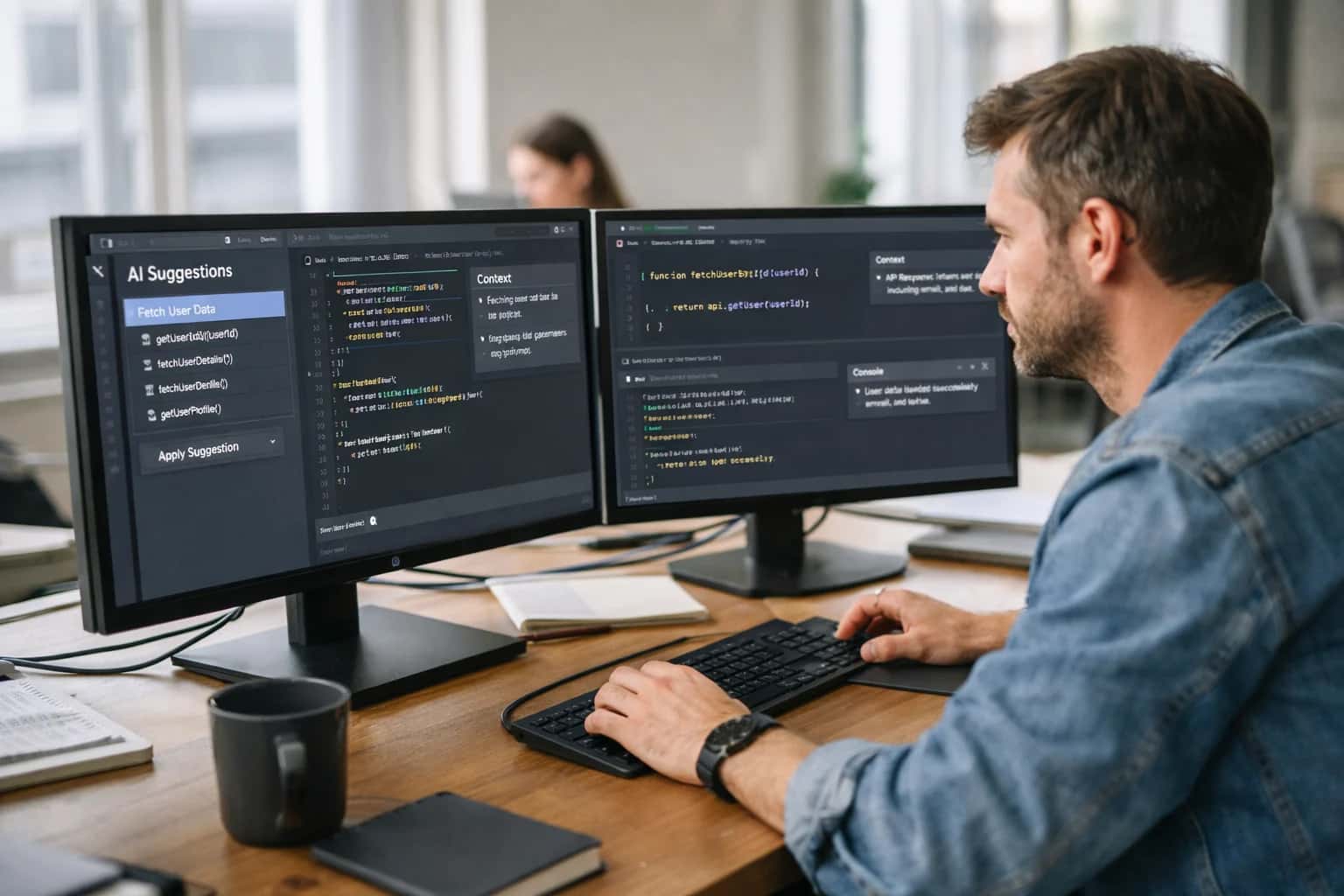
Where AI Fits in Casino Support and IT Operations
Integrating AI agents with casino service desk and slot monitoring systems to transform reactive support into proactive, automated operations.
For dispatched technicians, AI acts as a copilot in the field. When a slot tech receives a work order for a malfunctioning machine, the AI can pre-fetch the machine's recent error logs, maintenance history from the CMMS (like Fiix or UpKeep), and even relevant knowledge base articles. Using a secure, tool-calling agent framework, the technician can ask natural language questions via a mobile interface: "What's the most common fix for a bill validator jam on this IGT Reel Touch model?" or "Show me the last ten cashless transactions for this unit." The AI synthesizes data from the casino management system, the slot accounting system, and maintenance records to provide concise, actionable guidance, reducing mean time to repair (MTTR).
Beyond reactive fixes, AI enables predictive maintenance workflows. By continuously analyzing telemetry from slot machine monitoring systems—including coin-in counts, door-open events, and hardware error codes—AI models can identify patterns indicative of impending failure. The system can automatically generate preventive maintenance work orders in the CMMS, schedule them during low-traffic periods, and even recommend spare parts to pull from inventory based on the machine's model and past repair data. This shifts operations from a break-fix model to one that maximizes machine uptime and floor revenue.
Rollout and governance are critical. A successful implementation starts with a pilot on a single slot bank or for a specific ticket category, using a human-in-the-loop approval step for all AI-generated actions during the initial phase. Audit trails must log every AI-suggested classification, routing decision, and data query for compliance and continuous model tuning. Integration requires secure API connections between the AI orchestration layer, the IT service management (ITSM) platform, the slot data system (SDS), and the CMMS, often using a message queue (like RabbitMQ or AWS SQS) to handle event-driven workflows. The goal is not to replace staff but to augment them, freeing technical teams from administrative tasks to focus on higher-value floor optimization and complex problem-solving.
Key Integration Surfaces in the Casino Tech Stack
Automating IT Support for Gaming Floor Systems
The casino IT service desk manages a high volume of tickets for slot machines, player tracking kiosks, digital signage, and back-office systems. AI integration focuses on automating triage and resolution.
Key Integration Points:
- Ticket Ingest: Connect AI to the service desk platform (e.g., ServiceNow, Jira) via webhook or API to receive new incidents.
- Intelligent Classification: Use an LLM to analyze ticket descriptions (e.g., "slot machine 12B coin-in error") and automatically assign priority, category (Hardware/Software/Network), and the correct support group.
- Knowledge Retrieval: Ground the AI agent in internal KB articles, vendor manuals, and past resolution notes to suggest fixes to technicians.
- Automated Responses: For common issues like printer jams or password resets, the agent can provide immediate self-service steps to the requester via the ticket interface.
This reduces mean-time-to-resolution (MTTR) for floor-critical issues and allows IT staff to focus on complex hardware failures.
High-Value AI Use Cases for Casino Support
For casino IT and operations directors, AI agents integrated with service desk and slot monitoring systems can automate ticket triage, provide technician copilots, and streamline maintenance dispatch to reduce downtime and improve floor efficiency.
Automated Slot Machine Ticket Triage
AI agents ingest alerts from slot monitoring systems (SDS, ACSC) and service desk tickets, automatically classifying issues like cash out, TITO jam, or communication error. The agent routes tickets with suggested parts and priority, reducing manual categorization from hours to minutes.
Technician Copilot for Slot Repairs
A mobile or tablet-based AI copilot provides technicians with real-time access to machine manuals, historical repair data, and parts inventory. Using natural language, techs can ask, "What's the most common fix for error code 23 on a Konami machine?" and get step-by-step guidance, reducing mean-time-to-repair.
Predictive Maintenance Dispatch
AI analyzes real-time telemetry from slot machine controllers and historical failure data to predict component failures (e.g., bill validator, printer). The system automatically generates preventive work orders in the CMMS (like Fiix or UpKeep) and dispatches them to the appropriate technician team before a machine goes down.
IT Service Desk Agent for Employee Support
An AI-powered virtual agent integrated with the casino's ITSM platform (like ServiceNow or Jira Service Management) handles common employee requests: password resets, software access, and hardware troubleshooting. It authenticates via Active Directory, executes approved workflows, and escalates complex tickets, freeing up IT staff for critical gaming system issues.
Automated Surveillance System Health Monitoring
AI agents monitor the health of the casino's video management system (VMS) and network video recorders, detecting camera failures, storage anomalies, or bandwidth issues. Alerts are automatically created in the service desk with severity levels and suggested remediation steps for the surveillance IT team.
Unified Operations Command Center
An AI orchestration layer aggregates alerts from slot systems, POS, HVAC, and security into a single dashboard. It uses priority rules and impact analysis to correlate incidents (e.g., a power fluctuation affecting multiple systems) and creates a unified, summarized incident report for the shift manager, reducing alert fatigue and accelerating coordinated response.
Example AI-Powered Support Workflows
These concrete workflows illustrate how AI agents integrate with casino service desk and slot monitoring systems to automate ticket triage, provide technician copilots, and streamline maintenance dispatch, reducing resolution times and operational downtime.
Trigger: A slot machine sends a fault code (e.g., TITO JAM, BILL VALIDATOR ERROR) to the Slot Data System (SDS) or Aristocrat Oasis 360.
Context/Data Pulled: The AI agent immediately retrieves:
- The machine's full service history from the CMMS (e.g., MaintainX).
- Real-time floor traffic data from the CMS to assess player impact.
- Technician location and current task load from the dispatch board.
- Parts inventory levels for common components related to the fault.
Agent Action: The agent classifies the fault severity, cross-references the history to suggest a probable root cause (e.g., "90% similar to last 3 jams resolved by cleaning sensor X"), and checks parts availability.
System Update/Next Step: The agent automatically creates a prioritized work order in the ITSM (e.g., Jira Service Management) or CMMS, pre-populated with:
- Suggested diagnosis and repair steps.
- Required part numbers and bin location.
- Recommended technician skill set.
- Links to relevant machine manuals or schematics. The work order is routed to the nearest available technician with the right skills via their mobile dispatch app.
Human Review Point: For critical high-limit machines or complex, unprecedented fault codes, the ticket is flagged for supervisor review before dispatch, with the agent's analysis provided as a starting point.
Typical Implementation Architecture
A practical blueprint for integrating AI agents with casino IT service management and slot monitoring systems to automate support workflows and reduce technician downtime.
The core integration connects an AI orchestration layer to two primary data sources: the IT Service Management (ITSM) platform (e.g., ServiceNow, Jira Service Management) for support tickets and the Slot Data System (SDS) or Slot Monitoring Platform (e.g., Aristocrat Oasis 360, IGT Advantage ACSC) for real-time machine alerts. The AI layer ingests ticket data (title, description, asset tag, priority) and slot alerts (machine ID, error code, meter readings) via REST APIs or message queues, creating a unified event stream for triage.
An AI triage agent classifies incoming issues using a RAG system grounded in casino-specific knowledge bases (SOPs, slot technical manuals, historical resolutions). It determines if an alert is a known issue with a documented fix, requires parts, needs a technician dispatch, or should be escalated. For slot errors, it correlates the alert with the machine's recent performance data and play history to predict root cause. The agent then performs automated actions: updating the ITSM ticket with a diagnosis, assigning it to the correct queue, attaching relevant troubleshooting steps, or, for simple resets, executing a command via the slot system's API if permitted.
For dispatched technicians, a field copilot agent provides context via a mobile interface. When a technician views a work order, the agent retrieves the machine's service history, similar past issues, and diagrams of the specific cabinet model. It can guide the technician through diagnostic steps using the camera for visual verification (e.g., "confirm the bill validator stacker is seated properly") and log all actions back to the ticket. For parts-heavy repairs, it can check inventory levels in the casino's asset management system and initiate a requisition workflow.
Governance is managed through a human-in-the-loop approval layer for high-risk actions (e.g., machine lock/unlock, credit adjustments) and a dedicated audit log in the ITSM platform tracing all AI-generated actions to a service account. Rollout typically starts with a pilot on non-critical, high-volume ticket types (e.g., player club printer issues, slot ticket jams) before expanding to more complex slot logic board errors. The architecture is designed to plug into existing casino RBAC, ensuring technicians only see AI suggestions for machines within their assigned bank or area.
Code and Payload Examples
Slot Machine Alert Triage
When a slot machine sends a fault code to the monitoring system (e.g., Aristocrat OASIS 360 or IGT Advantage), an AI agent can intercept the alert, classify its severity, and suggest immediate actions. This reduces technician dispatch for non-critical issues and provides a first-response summary.
Example JSON Payload from Slot Monitoring System:
json{ "asset_id": "SLOT-A1-23", "timestamp": "2024-05-15T14:30:00Z", "fault_code": "E-127", "machine_state": "TILT", "last_meter_readings": { "coin_in": 1250, "coin_out": 1100 }, "location": "Main Floor, Bank 7" }
The AI agent uses this payload to query a knowledge base of fault codes and historical resolutions, then returns a triage recommendation to the IT service management (ITSM) platform, such as ServiceNow or Jira Service Management.
Realistic Time Savings and Operational Impact
A comparison of manual and AI-assisted workflows for casino IT and slot support operations, showing realistic efficiency gains and operational improvements.
| Workflow / Metric | Before AI | After AI | Implementation Notes |
|---|---|---|---|
Slot machine error ticket triage | Manual review by Level 1 tech; 15-30 min per ticket | AI pre-classifies & routes; <5 min per ticket | AI reads error codes from SDS/ACSC, suggests resolution, routes to correct queue |
Technician dispatch for slot repairs | Manual parts lookup & scheduling; next-day dispatch common | AI suggests parts, optimizes route; same-day dispatch prioritized | Integrates with CMMS for parts inventory and technician GPS location |
IT service desk password resets & basic queries | Full manual handling by agent | AI virtual agent handles 40-60% of tier-1 requests | Agent remains in loop for exceptions; uses SSO/IDM APIs for execution |
Daily slot performance anomaly report | Analyst manually reviews meter reports; 2-3 hour process | AI flags anomalies with narrative; 15-min review for confirmation | AI monitors drop, handle, win % against forecasts from CMS data |
Preventive maintenance scheduling for slots | Calendar-based; often leads to unnecessary downtime | Condition-based scheduling using AI-predicted failure risk | Integrates with slot machine health data from the casino management platform |
Major incident communication (e.g., bank of slots down) | Manual calls/emails to floor manager, slots director | AI auto-generates incident summary & notifies pre-defined roles | Uses templates; triggered by integration with slot monitoring system alerts |
Knowledge article search for slot repairs | Technician searches manual PDFs or tribal knowledge | AI RAG system surfaces relevant repair history & procedures | Built on vectorized maintenance logs and OEM technical documentation |
Governance, Security, and Phased Rollout
Deploying AI for casino support and IT service automation requires a controlled, audit-first approach that respects gaming regulations and protects sensitive player data.
AI agents for service desk and slot monitoring must operate within strict data boundaries. This means implementing role-based access controls (RBAC) to ensure agents can only query and act upon data relevant to their function—for example, a slot technician copilot can access machine performance logs but never player financial records. All AI-generated actions, such as creating a work order in your CMMS (like Fiix or UpKeep) or escalating a ticket in ServiceNow, must be logged with a full audit trail, including the user prompt, agent reasoning, data sources consulted, and the final system call. For integrations with slot management systems (SDS, ACSC), AI interactions should be treated as an extension of your existing change management protocols.
A phased rollout is critical for managing risk and proving value. Start with a read-only pilot in a non-critical environment, such as using an AI agent to summarize recent slot fault histories from the monitoring system to assist technicians. Next, move to assisted write-back in a controlled workflow, like having the agent draft a maintenance ticket in your ITSM platform that requires human review and approval before creation. The final phase is conditional automation for high-volume, low-risk tasks, such as auto-triaging generic IT service requests (e.g., password resets) or generating standard responses for common slot error codes, always with a clear path for human override and escalation.
Security is paramount when connecting AI to gaming floor systems. All API calls between the AI orchestration layer and core systems like Aristocrat CMS or IGT Advantage must be encrypted in transit. For tool-calling agents, implement strict input/output sanitization to prevent prompt injection attacks that could manipulate system actions. Consider a governance layer that enforces compliance rules—for instance, an agent suggesting a player comp must first verify the action against jurisdictional promotion limits and internal approval matrices. Start with a single property, document the operational playbook, and then scale the integration across your portfolio, ensuring each phase delivers measurable operational lift—like reducing mean time to repair (MTTR) for slot faults or cutting tier-1 IT ticket volume—before expanding the AI's scope of authority.
Enabling Efficiency, Speed & Accuracy
Intelligent Analysis, Decision & Execution
We build AI systems for teams that need search across company data, workflow automation across tools, or AI features inside products and internal software.
Talk to Us
Search across company data
Give teams answers from docs, tickets, runbooks, and product data with sources and permissions.
Useful when people spend too long searching or get different answers from different systems.

Automate internal workflows
Use AI to route work, draft outputs, trigger actions, and keep approvals and logs in place.
Useful when repetitive work moves across multiple tools and teams.

Add AI to products and internal tools
Build assistants, guided actions, or decision support into the software your team or customers already use.
Useful when AI needs to be part of the product, not a separate tool.
Frequently Asked Questions
Practical answers for casino IT and operations directors evaluating AI agents for service desk and slot monitoring systems.
When a slot machine generates an error or a player reports an issue via a kiosk, the AI agent automates the initial triage:
- Trigger: A new ticket is created in the service desk (e.g., ServiceNow, Freshservice) or slot monitoring system (e.g., Aristocrat Oasis 360, IGT Advantage).
- Context Pull: The agent retrieves the machine's ID, error codes, recent maintenance history, and current floor status.
- Agent Action: Using a classification model, the agent analyzes the error against known resolution patterns. It can:
- Route the ticket to the correct technician pool (e.g., coin jam vs. software reset).
- Suggest initial troubleshooting steps.
- Prioritize based on machine revenue impact and downtime.
- System Update: The ticket is automatically categorized, prioritized, and enriched with diagnostic context before being assigned.
- Human Review: Complex or high-value machine issues are flagged for supervisor review before dispatch.

About the author
Prasad Kumkar
CEO & MD, Inference Systems
Prasad Kumkar is the CEO & MD of Inference Systems and writes about AI systems architecture, LLM infrastructure, model serving, evaluation, and production deployment. Over 5+ years, he has worked across computer vision models, L5 autonomous vehicle systems, and LLM research, with a focus on taking complex AI ideas into real-world engineering systems.
His work and writing cover AI systems, large language models, AI agents, multimodal systems, autonomous systems, inference optimization, RAG, evaluation, and production AI engineering.
Partnered with leading AI, data, and software stack.





How We Work
Custom AI workflows for your Business
One-fit-all AI don't work for modern businesses. At Inferensys, we aim to understand your business & custom requirements; which we use to define most efficient agentic workflows, the data, and the tools for your business.
01
Review the use case
We understand the task, the users, and where AI can actually help.
Read more02
Pick the right approach
We define what needs search, automation, or product integration.
Read more03
Build the first useful version
We implement the part that proves the value first.
Read more04
Improve from there
We add the checks and visibility needed to keep it useful.
Read moreThe first call is a practical review of your use case and the right next step.
Talk to Us