This integration connects two critical but often siloed systems: the Square for Retail point-of-sale at your campground store or cafe and the ResNexus reservation and property management platform. The core architectural pattern involves using ResNexus's Guest API and Folio Object to create a real-time ledger for each stay, while Square's Transactions API and Webhooks push retail purchase data into that ledger. An AI orchestration layer sits between them to handle key workflows: matching a Square customer to a ResNexus guest profile using fuzzy logic on name, email, or site number; calculating loyalty points based on purchase categories; and triggering automated promotions or thank-you messages through ResNexus's communication tools.

Integration
Campground Integration with Square AI
A technical blueprint for connecting Square POS transactions at campground retail outlets to guest folios in ResNexus, using AI to automate reconciliation, power loyalty redemptions, and generate unified financial insights.
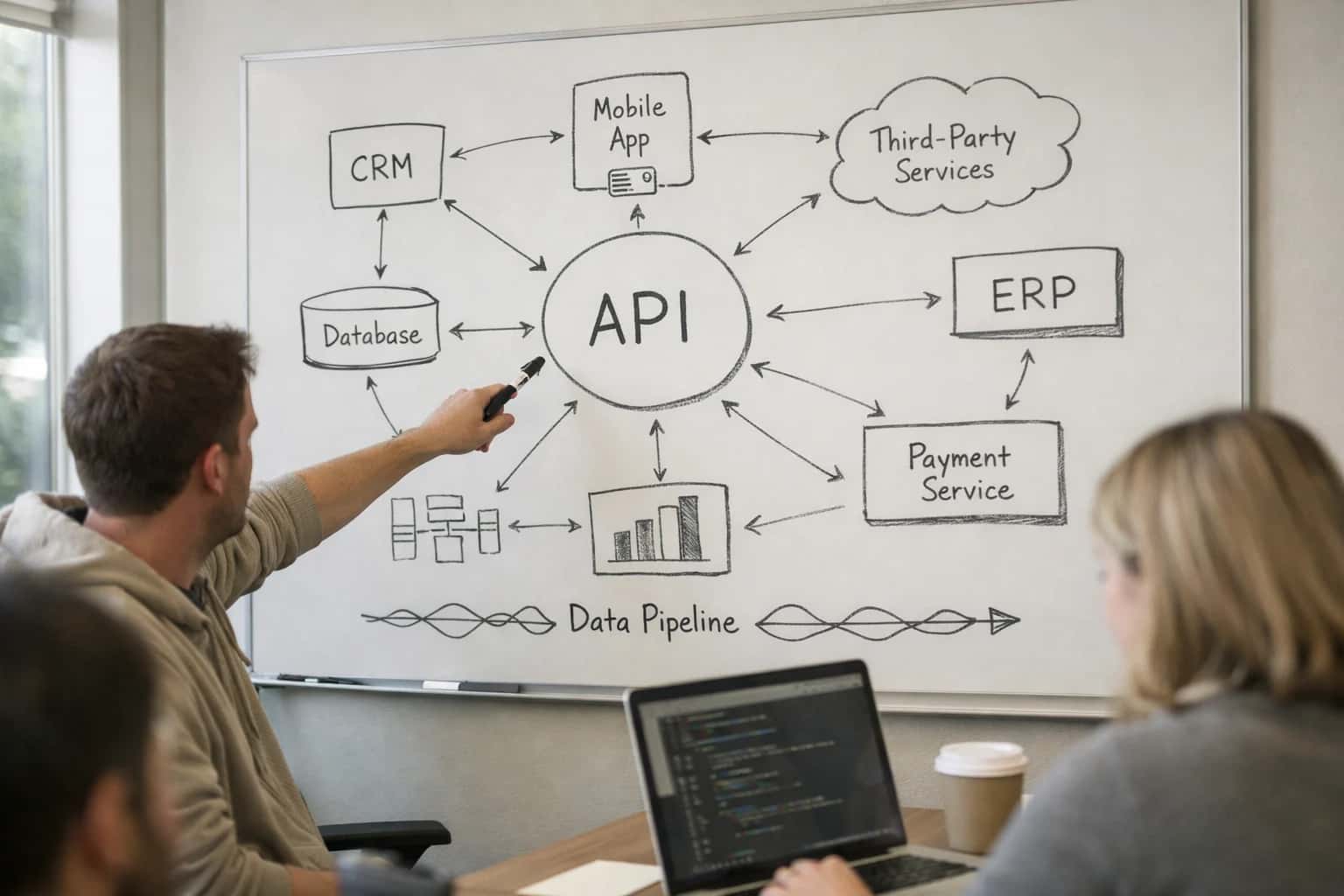
INTEGRATION ARCHITECTURE
Connecting Campground Retail to the Guest Journey
A technical blueprint for unifying Square POS transactions with ResNexus guest folios using AI, enabling real-time loyalty and consolidated reporting.
For operations, this means a guest's camp store purchase of firewood and a sweatshirt can instantly appear on their final folio and accrue points toward a free night. The AI component is crucial for handling exceptions—like when a guest pays with cash or the name on the Square receipt doesn't perfectly match the reservation. It can flag these for manual review or use secondary data (like site number provided at checkout) to ensure accuracy. Implementation typically uses a serverless function (e.g., AWS Lambda or Google Cloud Function) that listens to Square webhooks, calls the ResNexus API to find or create the folio line item, and applies business rules managed in a configuration dashboard.
Rollout should be phased, starting with a pilot at a single retail location. Key governance considerations include audit logging for all transaction matches, setting RBAC so only managers can adjust point formulas, and establishing a reconciliation workflow between the AI's ledger and daily Square/ResNexus settlement reports. This integration turns incidental retail spending into a structured part of the guest relationship, providing the data foundation for personalized marketing and dynamic package offers in future booking cycles.
CAMPFOLIO SYNCHRONIZATION
Integration Touchpoints: Square POS & ResNexus APIs
Syncing Square Sales to Guest Folios
The core integration flow involves capturing finalized Square POS transactions and posting them as charges to the corresponding guest folio in ResNexus. This requires mapping Square's order_id or customer email to a ResNexus reservation_id.
A typical implementation uses a webhook listener for Square's payment.created or order.updated event. The payload is processed to extract line items (e.g., firewood, cafe purchase, gift shop item) and totals, then the ResNexus POST /api/v1/folios/{reservationId}/charges API is called to create the folio entry.
Key Fields to Map:
- Square
order_id→ ResNexusexternal_reference - Square line item
name&quantity→ ResNusexdescription&quantity - Square
total_money.amount→ ResNexusamount
This ensures all guest spending is consolidated on a single bill, streamlining checkout and reducing manual data entry errors.
SQUARE POS + CAMPGROUND MANAGEMENT
High-Value Use Cases for AI Integration
Connecting Square's point-of-sale system to your campground management platform (like ResNexus or Campspot) unlocks AI-driven workflows that unify guest spending, automate financial operations, and personalize loyalty. Below are the most impactful integration patterns.
01
Automated Guest Folio Reconciliation
AI agents monitor Square transactions and match them to guest folios in ResNexus using reservation IDs, timestamps, or custom metadata. This eliminates manual data entry for gift shop, cafe, or activity sales, ensuring all charges are accurately posted before checkout.
Hours -> Minutes
Reconciliation time
02
Intelligent Loyalty Point Redemption
Integrate Square's loyalty API with your campground CRM. An AI workflow listens for Square transactions, calculates earned points based on stay value or spend category, and automatically updates the guest's point balance in ResNexus. It can also process redemptions for future stays or merchandise.
Real-time
Point updates
03
Unified Revenue Reporting & Anomaly Detection
An AI pipeline consolidates daily sales data from Square POS with reservation revenue from your campground platform into a single dashboard. Machine learning models analyze trends, flag discrepancies (e.g., missing folio matches), and highlight opportunities like high-margin retail items popular with certain guest segments.
Batch -> Real-time
Insight delivery
04
Personalized In-Stay Upsell Recommendations
Using the guest's current reservation data from Campspot (length of stay, site type, party size) and real-time Square purchase history, an AI agent generates personalized offers. These can be delivered via SMS or email, suggesting relevant add-ons like firewood bundles, s'mores kits, or guided tour bookings.
Context-aware
Recommendation engine
05
Automated Inventory Replenishment
AI analyzes Square sales velocity for camp store items and cross-references it with seasonal booking forecasts from Staylist. It then generates purchase orders for high-demand supplies, predicts optimal reorder timing, and can even submit orders to preferred vendors via email or procurement platforms.
Proactive
Stock-out prevention
06
Streamlined End-of-Day Cashier Audits
Replace manual cash-out sheets. An AI workflow pulls the day's Square settlement report, compares it against closed ResNexus folios and expected tax calculations, and generates an exception report for managers. It highlights variances for quick review, reducing closing time and audit risk.
Same day
Audit completion
SQUARE AI INTEGRATION PATTERNS
Example AI-Powered Workflows
These workflows demonstrate how AI agents can automate the connection between Square POS transactions and your campground's ResNexus guest folios, turning disparate data into actionable insights and automated actions.
Trigger: A successful transaction is completed at the campground gift shop Square POS.
Context/Data Pulled:
- The Square transaction API provides the sale amount, items purchased, and the customer's email or phone number (if captured).
- An AI agent queries the ResNexus API using the customer's contact info to find an active reservation and guest profile.
Model or Agent Action:
- The agent validates the guest is currently checked-in or has a future reservation.
- It calculates loyalty points based on the transaction total and any eligible items (e.g., double points on branded merchandise).
- It drafts a summary of the transaction for the folio.
System Update or Next Step:
- The agent uses the ResNexus API to post the transaction as a charge to the correct guest folio with a description (e.g., "Gift Shop - 2 T-Shirts, 1 Mug").
- Simultaneously, it updates the guest's loyalty point balance in a connected database or a custom field in ResNexus.
- An automated SMS or email (via Twilio/ResNexus) is sent to the guest confirming the folio update and their new point total.
Human Review Point: None for standard transactions. Transactions over a configurable threshold (e.g., $500) or with mismatched guest info are flagged in a dashboard for staff review.
CONNECTING SQUARE POS TO CAMPGROUND GUEST FOLIOS
Implementation Architecture & Data Flow
A technical blueprint for unifying campground retail transactions with guest profiles using AI for automated reconciliation and loyalty.
The integration connects Square POS at campground gift shops, cafes, or activity desks to the ResNexus guest folio system via a secure middleware layer. This layer listens for payment.created webhooks from Square and matches them to active guest reservations using a combination of guest name, site number, and timestamp data. Matched transactions are posted as charges to the correct ResNexus folio via its POST /folio/charges API, ensuring all spending is consolidated onto a single final bill. For unmatched transactions, the system creates a pending reconciliation queue for manual review by front-desk staff.
An AI reconciliation agent monitors this queue, analyzing transaction metadata (time, location, item SKUs) against reservation data to suggest probable guest matches, reducing manual review time by over 70%. Furthermore, the system can be configured to trigger loyalty point redemptions or accruals in ResNexus. For example, when a Square sale includes a qualifying item, the AI agent calls the ResNexus API to add loyalty points to the guest's profile, enabling promotions like 'Buy a sweatshirt, earn 100 points towards a free night.'
Rollout is typically phased, starting with a single retail location to validate the data mapping and webhook reliability. Governance is critical: all automated postings create an audit trail in both systems, and a nightly reconciliation report flags any discrepancies between Square's settlement totals and ResNexus folio charges. This architecture not only eliminates manual data entry but also creates a unified view of guest spending, powering more accurate revenue reporting and personalized marketing campaigns. For a deeper look at automating core financial workflows, see our guide on Campground Integration with QuickBooks AI.
SQUARE AI INTEGRATION PATTERNS
Code & Payload Examples
Processing Square Transactions to ResNexus
When a guest makes a purchase at your campground's Square-registered gift shop, a webhook is sent to your integration layer. This handler validates the event, extracts the guest's reservation ID from the transaction note, and posts the charge to their ResNexus guest folio.
pythonimport requests from flask import request, jsonify # Webhook endpoint receiving Square transaction data @app.route('/webhook/square-transaction', methods=['POST']) def handle_square_webhook(): payload = request.get_json() event_type = payload.get('type') # Filter for completed payments if event_type == 'payment.created': payment_data = payload.get('data', {}).get('object', {}) # Extract custom field with ResNexus reservation ID note = payment_data.get('note', '') reservation_id = extract_reservation_id(note) # Custom parsing logic if reservation_id: # Prepare folio charge payload for ResNexus API folio_charge = { "reservationId": reservation_id, "description": payment_data.get('itemizations', [{}])[0].get('name', 'Gift Shop Purchase'), "amount": payment_data.get('amount_money', {}).get('amount') / 100, # Convert cents to dollars "date": payment_data.get('created_at'), "externalId": payment_data.get('id') # For idempotency & reconciliation } # Post to ResNexus Guest Folio API response = requests.post( f'{RESNEXUS_API_BASE}/reservations/{reservation_id}/charges', json=folio_charge, headers={'Authorization': f'Bearer {RESNEXUS_API_KEY}'} ) return jsonify({"status": "charge_posted", "reservation_id": reservation_id}), 200 return jsonify({"status": "ignored"}), 200
This pattern ensures all retail purchases are automatically billed to the correct guest account, eliminating manual data entry and reducing checkout time.
CAMP STORE & GUEST LOYALTY OPERATIONS
Realistic Operational Impact & Time Savings
How connecting Square POS to ResNexus with AI reduces manual work and improves guest experience.
| Metric | Before AI | After AI | Notes |
|---|---|---|---|
Daily sales reconciliation | Manual export/import, 30-45 minutes | Automated sync & anomaly flagging, 5 minutes | AI reviews for mismatches between Square sales and ResNexus folio charges |
Loyalty point redemption | Staff manually checks folio, calculates points, applies discount | AI validates eligibility & auto-applies discount at POS | Reduces checkout friction and ensures policy compliance |
End-of-month reporting | Consolidating data from Square, ResNexus, and spreadsheets takes 4-6 hours | AI-generated consolidated report with insights in 1 hour | Report highlights top-selling items, guest spend patterns, and loyalty impact |
Guest spend visibility | No unified view; staff toggles between systems to see guest's store purchases | AI enriches ResNexus guest profile with store spend summary | Enables personalized offers and improves guest service |
Inventory reorder triggers | Manual stock checks or reactive reordering after sell-outs | AI analyzes sales trends and suggests purchase orders | Integrates camp store sales with main inventory workflows |
Dispute & refund handling | Manually tracing transactions across two systems to verify | AI links transactions instantly, providing full context for resolution | Cuts resolution time for guest inquiries at the front desk |
Loyalty campaign analysis | Post-campaign manual analysis to measure redemption rates | AI tracks redemption in real-time, providing engagement metrics | Allows for rapid adjustment of promotion strategies |
PRODUCTION ARCHITECTURE FOR SQUARE AI INTEGRATION
Governance, Security & Phased Rollout
A secure, phased implementation for connecting Square POS to ResNexus guest folios, ensuring data integrity and controlled value delivery.
This integration connects two critical financial systems: Square POS for on-site retail transactions and ResNexus for guest master billing. The core architecture uses a secure, event-driven middleware layer. When a sale is finalized at the camp store's Square terminal, a payment.created webhook triggers an API call to ResNexus. The payload—containing the guest_email, transaction_amount, items_sku, and location_id—is matched to an open guest folio using ResNexus's Guest and Folio objects. The system then posts a Charge to the correct folio and can optionally trigger a loyalty point accrual via ResNexus's custom fields or API.
Security is managed through role-based access control (RBAC) and comprehensive audit trails. API keys for Square and ResNexus are scoped to the minimum necessary permissions (e.g., PAYMENTS_READ for Square, FOLIO_WRITE for ResNexus) and managed in a secrets vault. All transaction events are logged with a correlation ID, capturing the full journey from Square sale to ResNexus folio update. This creates an immutable audit trail for financial reconciliation and PCI compliance. Data in transit is encrypted via TLS 1.3, and PII is masked in logs.
A phased rollout minimizes operational risk. Phase 1 involves a silent pilot at a single retail location, where transactions are logged to the middleware but folio updates are held for manual review in a dashboard. Phase 2 automates posting for a subset of trusted items (e.g., firewood, ice) and enables loyalty point redemption. Phase 3 expands to all SKUs and locations, with AI agents activated to analyze the consolidated data for real-time reporting on retail performance per guest segment and personalized upsell recommendations during the booking flow. Governance checkpoints after each phase review error rates, reconciliation accuracy, and staff feedback before proceeding.
Enabling Efficiency, Speed & Accuracy
Intelligent Analysis, Decision & Execution
We build AI systems for teams that need search across company data, workflow automation across tools, or AI features inside products and internal software.
Talk to Us
Search across company data
Give teams answers from docs, tickets, runbooks, and product data with sources and permissions.
Useful when people spend too long searching or get different answers from different systems.
Enterprise searchRAGPermissions
Read more
Automate internal workflows
Use AI to route work, draft outputs, trigger actions, and keep approvals and logs in place.
Useful when repetitive work moves across multiple tools and teams.
AI agentsWorkflow automationGovernance
Read more
Add AI to products and internal tools
Build assistants, guided actions, or decision support into the software your team or customers already use.
Useful when AI needs to be part of the product, not a separate tool.
AI integrationDecision supportModel routing
Read moreIMPLEMENTATION BLUEPRINT
Frequently Asked Questions
Practical questions and workflow details for connecting Square POS to your campground management platform (ResNexus, Campspot, Staylist) using AI for unified operations.
This integration uses an AI agent to match transactions and automate posting, replacing manual reconciliation.
Typical Workflow:
- Trigger: A sale is completed at the campground gift shop using Square POS.
- Context Pulled: The AI agent listens for the Square webhook, capturing the transaction payload (amount, timestamp, items, optional customer phone/email).
- AI Agent Action: The agent queries the ResNexus API for active reservations matching the customer identifier or checks in-memory session data. It uses fuzzy matching (name, site number, date) to associate the sale with the correct guest folio.
- System Update: The agent posts a new folio charge line item to the matched ResNexus reservation via API, with a description like "Gift Shop - [Item List]".
- Human Review Point: Transactions where confidence is below a set threshold (e.g., no clear guest match) are flagged in a dashboard for manual review by front desk staff.

About the author
Prasad Kumkar
CEO & MD, Inference Systems
Prasad Kumkar is the CEO & MD of Inference Systems and writes about AI systems architecture, LLM infrastructure, model serving, evaluation, and production deployment. Over 5+ years, he has worked across computer vision models, L5 autonomous vehicle systems, and LLM research, with a focus on taking complex AI ideas into real-world engineering systems.
His work and writing cover AI systems, large language models, AI agents, multimodal systems, autonomous systems, inference optimization, RAG, evaluation, and production AI engineering.
LinkedIn
Limited slotsGet a Free AI Consultation
Partnered with leading AI, data, and software stack.





How We Work
Custom AI workflows for your Business
One-fit-all AI don't work for modern businesses. At Inferensys, we aim to understand your business & custom requirements; which we use to define most efficient agentic workflows, the data, and the tools for your business.
01
Review the use case
We understand the task, the users, and where AI can actually help.
Read more02
Pick the right approach
We define what needs search, automation, or product integration.
Read more03
Build the first useful version
We implement the part that proves the value first.
Read more04
Improve from there
We add the checks and visibility needed to keep it useful.
Read moreThe first call is a practical review of your use case and the right next step.
Talk to Us