For enterprise campground groups, the operational data in Campground Master or ResNexus—daily revenue, site inventory, guest folios, and vendor invoices—lives in a separate system from the corporate financials in NetSuite. A direct integration creates a unified ledger, but adding an AI orchestration layer transforms this data flow from a simple sync into an intelligent financial operations engine. The AI agent acts on key objects: it maps Reservation records to NetSuite Sales Orders, converts Site inventory to NetSuite Item Fulfillments, and links campground Vendor bills to NetSuite Bills and Purchase Orders.

Integration
Campground Integration with NetSuite AI
A technical blueprint for enterprise campground operators to connect Campground Master or ResNexus with NetSuite ERP using AI, automating financial reconciliation, inventory management, and procurement workflows.
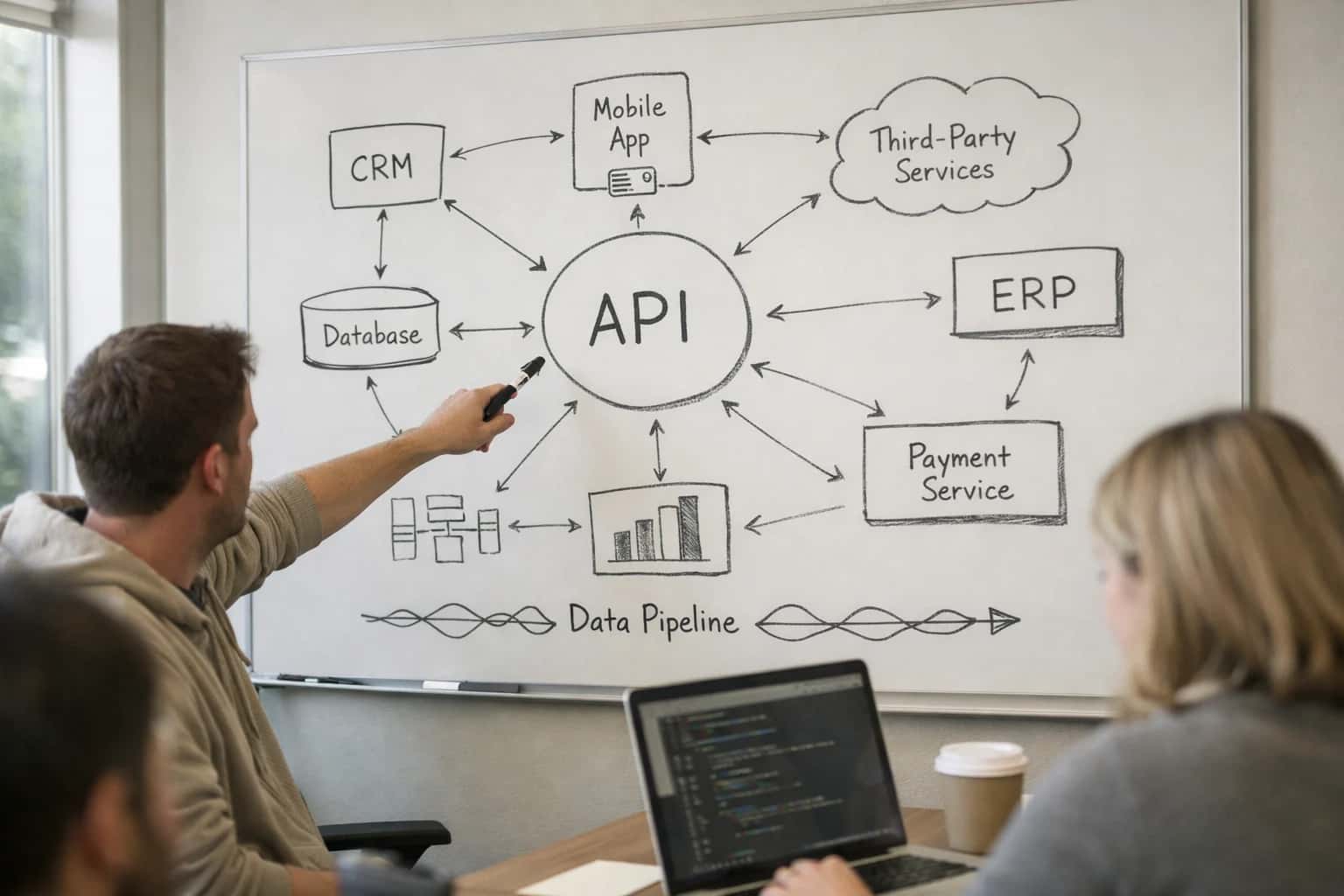
UNIFIED FINANCIALS FOR ENTERPRISE OPERATORS
Where AI Bridges Campground Operations and Enterprise Finance
A technical blueprint for integrating Campground Master or ResNexus with NetSuite ERP, using AI to automate financial consolidation, inventory reconciliation, and procurement workflows.
The high-value use cases are in automation and anomaly detection. An AI workflow can be triggered by a Reservation Posted webhook in ResNexus to: 1) create the corresponding Sales Order in NetSuite, 2) check for duplicate or anomalous postings against historical patterns, 3) flag potential revenue recognition issues for group bookings paid across periods, and 4) update the NetSuite General Ledger with properly coded journal entries. For procurement, the AI monitors Campground Master's work order modules for low stock of supplies (e.g., propane, retail items), automatically generates a NetSuite Purchase Requisition, routes it through configured approval chains, and upon vendor delivery, matches the Goods Received note to the original Purchase Order for three-way matching.
Rollout focuses on phased financial objects. Start with nightly batch reconciliation of revenue and AR between the systems, using AI to classify discrepancies (e.g., failed payment processor settlements vs. NetSuite deposits). Phase two automates Accounts Payable for recurring campground vendors (utility companies, landscaping). The final phase implements real-time cost-of-goods-sold tracking by linking camp store Inventory Items in ResNexus to NetSuite's Average Cost tracking. Governance is critical: all AI-generated journal entries or POs are written to a NetSuite Custom Record audit trail with a human_in_review flag, and the system is designed to escalate any confidence score below a configured threshold to the regional finance manager for approval before posting.
This architecture positions Inference Systems as a credible partner because we understand that the integration's value isn't just in connecting APIs, but in encoding the nuanced business rules of campground accounting—like handling deposit liabilities for future stays or prorating utility pass-through fees across sites—into reliable, auditable AI agents that reduce manual reconciliation from days to hours.
AI-DRIVEN FINANCIAL AND OPERATIONAL UNIFICATION
Key Integration Surfaces: Campground Platform to NetSuite Module
Synchronizing Booking Data to NetSuite GL
This surface connects the campground platform's reservation engine (ResNexus, Campground Master) to NetSuite's General Ledger and Revenue Recognition modules. The AI layer automates the mapping of nightly rates, taxes, and ancillary fees (like activity add-ons from Staylist) into NetSuite journal entries.
Key Workflow:
- A nightly batch job extracts finalized bookings and payments from the campground platform.
- An AI agent classifies revenue by site type, revenue stream (lodging, retail, activities), and correct GL account based on historical mapping and contract terms.
- The agent posts summarized journal entries to NetSuite, flagging any anomalies (e.g., a booking with zero revenue) for human review.
- This eliminates manual spreadsheet reconciliation, ensuring financials are closed within hours instead of days.
ENTERPRISE OPERATIONS
High-Value AI Use Cases for Campground-NetSuite AI Integration
For campground groups running NetSuite as their financial backbone, these AI workflows connect reservation data from Campground Master or ResNexus to automate back-office processes, unify reporting, and optimize procurement.
01
Automated Revenue Recognition & GL Posting
AI agents monitor the Reservation and Payment APIs from Campground Master/ResNexus. They match transactions to NetSuite customer records, apply the correct revenue recognition schedule (e.g., for seasonal passes or deposits), and automatically create journal entries in the appropriate GL accounts. This eliminates manual spreadsheet reconciliation.
Month-end -> Daily
Reconciliation cadence
02
Intelligent Procurement & Inventory Replenishment
AI analyzes camp store sales data from the campground POS and maintenance work orders to predict demand for items like firewood, propane, and repair parts. It automatically generates Purchase Requisitions in NetSuite, suggests vendors based on historical performance, and can even draft RFQs for high-value seasonal purchases.
Stockouts -25%
Typical reduction
03
Unified Financial Forecasting & Cash Flow
An AI copilot ingests future occupancy forecasts from the campground platform and accounts payable data from NetSuite. It models seasonal cash flow, flags potential shortfalls, and recommends actions like adjusting advance deposit policies or delaying non-critical capital expenditures logged in NetSuite Fixed Assets.
1-2 Weeks
Forecast lead time gained
04
Vendor Invoice Processing & 3-Way Matching
AI extracts line-item data from vendor invoices (e.g., from utility companies or landscaping services) and matches them against NetSuite Purchase Orders and Campground Master utility meter readings or work completion tickets. Exceptions are flagged for AP staff, while clean matches are routed for automated payment, ensuring accurate cost allocation to the correct property or department.
Hours -> Minutes
Per invoice review
05
Consolidated Multi-Property P&L Reporting
Instead of manually aggregating reports, an AI agent queries the Financial Dashboard APIs of multiple, separate Campground Master/ResNexus instances (one per property). It normalizes the data, maps it to the unified NetSuite Chart of Accounts, and generates a consolidated P&L with commentary—highlighting outliers like unusually high utility costs at a specific park.
Batch -> Real-time
Reporting availability
06
Compliance & Audit Trail Monitoring
AI monitors the audit logs from both NetSuite and the campground platform for anomalous activity (e.g., a user deleting a large batch of reservations after hours). It correlates events, creates a unified audit trail, and automatically generates compliance reports for internal review or external auditors, pulling data from NetSuite's Custom Records for permit tracking.
Same day
Anomaly detection
CAMPMASTER & NETSUITE ERP
Example AI-Automated Workflows
For enterprise campground groups, integrating Campground Master with NetSuite ERP via AI creates a unified operational and financial backbone. These workflows automate data flow, enhance decision-making, and reduce manual reconciliation between reservation operations and back-office systems.
Trigger: A nightly batch job analyzes the past 24 hours of reservation data from Campground Master.
Context/Data Pulled:
- The AI agent queries Campground Master's
SiteandReservationAPIs to calculate total guest nights and occupancy per site type. - It cross-references this with NetSuite's
Itemrecords for consumables (e.g., firewood bundles, propane tanks, retail items) and their pre-defined usage rates per guest night.
Model or Agent Action: A forecasting model predicts demand for the next 7 days based on occupancy trends and seasonal factors. The agent then:
- Checks current stock levels in NetSuite for each relevant item.
- Calculates the recommended reorder quantity, factoring in lead times from NetSuite
Vendorrecords. - Generates a draft NetSuite
Purchase Orderwith line items, preferred vendor, and requested delivery date.
System Update or Next Step: The draft PO is placed in a NetSuite workflow queue for a procurement manager's review and approval. Upon approval, NetSuite automatically sends the PO to the vendor and updates expected receipts.
Human Review Point: The PO approval step ensures budgetary control and allows for manual overrides based on known events or supply chain issues.
UNIFIED FINANCIALS AND PROCUREMENT
Implementation Architecture: Data Flow and AI Orchestration
A technical blueprint for connecting Campground Master or ResNexus to NetSuite ERP, using AI to automate financial reconciliation, inventory forecasting, and procurement workflows.
The integration establishes a bidirectional data flow between the campground management platform (CMP) and NetSuite. Key objects are synchronized via API: Reservation and Invoice records from Campground Master or ResNexus flow into NetSuite as Sales Order and Customer Deposit transactions. Conversely, NetSuite Item Fulfillment and Vendor Bill records sync back to update campsite inventory and accounts payable status in the CMP. An orchestration layer, typically built with a tool like n8n or Apache Airflow, manages this sync, handles retries, and logs all transactions for audit.
AI agents are injected into this flow at critical decision points. For procurement, an agent analyzes Item stock levels in NetSuite against forecasted occupancy from the CMP's reservation pipeline. It can automatically generate and route Purchase Order drafts for firewood, amenities, or maintenance supplies when thresholds are breached. For financial operations, a reconciliation agent matches daily settlement batches from ResNexus (e.g., Stripe, Square payouts) against NetSuite Customer Payment records, flagging discrepancies for review instead of requiring manual line-by-line matching. This turns a multi-hour daily task into a minutes-long exception review.
Rollout follows a phased approach: first establishing the core item and GL account mapping, then enabling one-way financial posting, followed by bidirectional inventory updates, and finally layering in the AI agents for forecasting and anomaly detection. Governance is enforced through NetSuite's native roles and permissions; AI-generated transactions require approval workflows based on dollar amount, and all agent actions are written to a custom System Note field in both systems for a complete audit trail. This architecture ensures the campground's operational data in Campground Master directly powers its corporate financials in NetSuite without manual data entry, reducing errors and closing the books faster.
NETSUITE ERP INTEGRATION PATTERNS
Code and Payload Examples
Automating Inventory Updates from Reservations
When a guest checks out, the campground platform (e.g., Campground Master) must signal NetSuite to decrement inventory for consumable items like firewood bundles or propane tanks sold during the stay. This integration uses a webhook from the PMS to a middleware service, which then creates or updates an Item Fulfillment record in NetSuite via its REST API.
The payload includes the reservation ID, site number, and an array of fulfilled items with SKUs and quantities. The middleware service handles mapping between the campground's product catalog and NetSuite's internal item IDs, ensuring accurate cost-of-goods-sold tracking.
json{ "event": "checkout_completed", "reservation_id": "RES-2024-78910", "location_id": "CAMP-001", "fulfilled_items": [ { "pms_sku": "FW-BUNDLE", "quantity": 2, "netsuite_item_id": "12345", "unit_price": 8.99 }, { "pms_sku": "PROPANE-20LB", "quantity": 1, "netsuite_item_id": "67890", "unit_price": 24.50 } ], "total_amount": 42.48 }
An AI agent can monitor this flow for discrepancies—like a fulfillment for an out-of-stock item—and automatically create a Case in NetSuite for the procurement team.
CAMPGROUND MASTER / RESNEXUS + NETSUITE ERP
Realistic Operational Impact and Time Savings
This table shows the operational impact of integrating AI between your campground management platform (Campground Master or ResNexus) and NetSuite ERP, focusing on unified financial and procurement workflows.
| Workflow | Before AI Integration | After AI Integration | Implementation Notes |
|---|---|---|---|
Procurement Order Creation | Manual entry from emailed PDFs or spreadsheets | AI-assisted extraction from vendor emails & auto-creation in NetSuite | Requires initial mapping of vendor/item IDs; human review for exceptions |
Inventory Reconciliation (Campsite Supplies) | Weekly manual count and spreadsheet adjustment | Daily AI-driven variance detection using POS/camp store data | Connects NetSuite inventory to Campground Master site usage logs |
Guest Folio to AR Invoice Sync | Batch export/import at end of day with manual review | Real-time sync with AI matching on guest name/date/amount | Reduces payment application errors; uses NetSuite's customer/vendor records |
Multi-Property Financial Consolidation | Manual journal entries and consolidation each month | AI-powered mapping and automated inter-entity eliminations | Leverages NetSuite's OneWorld structure; setup required per property/GL |
Expense Report Coding & Approval | Manual receipt review and GL code assignment by manager | AI suggests GL codes from receipt images; routes for approval | Integrates with NetSuite's Expense Management; learns from historical approvals |
Campground Revenue Recognition | Manual calculation for seasonal passes and deposits | AI applies revenue schedules based on booking and stay data | Syncs ResNexus booking dates/amounts to NetSuite's Advanced Revenue Management |
Vendor Payment Run Analysis | Manual review of aging reports and cash flow forecasts | AI prioritizes payments based on terms, discounts, and cash position | Pulls data from NetSuite Payables and Campground Master vendor contracts |
ENTERPRISE ERP INTEGRATION
Governance, Security, and Phased Rollout
A secure, governed approach to connecting AI workflows between your campground platform and NetSuite.
This integration connects two critical systems: your campground management platform (Campground Master or ResNexus) and your NetSuite ERP. The AI layer acts as an orchestration engine, securely exchanging data between the two via their respective APIs. Key data objects include NetSuite Sales Orders, Vendor Bills, Inventory Items, and GL Accounts synchronized with ResNexus/Campground Master reservation records, guest folios, and site inventory. All data flows are encrypted in transit, and the AI agent's access is scoped via NetSuite's role-based permissions and specific API tokens, ensuring it only interacts with approved records and modules like Transactions, Lists, and SuiteAnalytics.
A phased rollout is critical for managing risk and proving value. We recommend starting with a single, high-impact workflow: Automated Procurement for Camp Store Inventory. In this phase, the AI agent monitors reservation forecasts from the campground platform and current stock levels in NetSuite. When a reorder point is triggered, it drafts a NetSuite Vendor Bill or Purchase Order for review, pulling preferred vendor data and historical pricing. This isolated use case validates the data pipeline, security model, and operational benefit before expanding to more complex workflows like unified financial reconciliation or dynamic budget adjustments based on real-time occupancy.
Governance is built into the workflow. Every AI-generated transaction or adjustment in NetSuite is logged with a clear audit trail, referencing the source reservation ID from the campground system. For financial postings, we implement a human-in-the-loop approval step within NetSuite's native workflow engine before any journal entry is posted. This ensures finance teams retain control. The system is designed for observability, with dashboards tracking sync health, error rates, and the business impact of automated decisions, allowing for continuous tuning of the AI's logic without disrupting core financial operations.
Enabling Efficiency, Speed & Accuracy
Intelligent Analysis, Decision & Execution
We build AI systems for teams that need search across company data, workflow automation across tools, or AI features inside products and internal software.
Talk to Us
Search across company data
Give teams answers from docs, tickets, runbooks, and product data with sources and permissions.
Useful when people spend too long searching or get different answers from different systems.
Enterprise searchRAGPermissions
Read more
Automate internal workflows
Use AI to route work, draft outputs, trigger actions, and keep approvals and logs in place.
Useful when repetitive work moves across multiple tools and teams.
AI agentsWorkflow automationGovernance
Read more
Add AI to products and internal tools
Build assistants, guided actions, or decision support into the software your team or customers already use.
Useful when AI needs to be part of the product, not a separate tool.
AI integrationDecision supportModel routing
Read moreNETSUITE ERP INTEGRATION
Frequently Asked Questions
Common technical and strategic questions about integrating AI between Campground Master/ResNexus and NetSuite for unified financials, inventory, and procurement.
The integration creates a bi-directional sync layer between the campground platform's folio/transaction objects and NetSuite's core financial records (Journal Entries, Customer Invoices, Vendor Bills).
- Trigger: A reservation is checked out in Campground Master or a payment posts in ResNexus.
- Context Pulled: The AI agent retrieves the full folio details, including site fees, add-ons, taxes, and guest profile.
- AI Action: Using a configured rules engine and LLM for classification, the agent maps line items to the correct NetSuite accounts, departments, and classes. It can handle complex splits (e.g., allocating revenue between property and activity entities).
- System Update: A draft Journal Entry or Sales Invoice is created in NetSuite via its REST API, with a reference link back to the source reservation.
- Human Review: For transactions over a configurable threshold or with ambiguous mappings, the entry is flagged in a NetSuite custom record for finance team approval before posting.
This pattern ensures daily revenue is accurately reflected in the general ledger without manual journal entry work.

About the author
Prasad Kumkar
CEO & MD, Inference Systems
Prasad Kumkar is the CEO & MD of Inference Systems and writes about AI systems architecture, LLM infrastructure, model serving, evaluation, and production deployment. Over 5+ years, he has worked across computer vision models, L5 autonomous vehicle systems, and LLM research, with a focus on taking complex AI ideas into real-world engineering systems.
His work and writing cover AI systems, large language models, AI agents, multimodal systems, autonomous systems, inference optimization, RAG, evaluation, and production AI engineering.
LinkedIn
Limited slotsGet a Free AI Consultation
Partnered with leading AI, data, and software stack.





How We Work
Custom AI workflows for your Business
One-fit-all AI don't work for modern businesses. At Inferensys, we aim to understand your business & custom requirements; which we use to define most efficient agentic workflows, the data, and the tools for your business.
01
Review the use case
We understand the task, the users, and where AI can actually help.
Read more02
Pick the right approach
We define what needs search, automation, or product integration.
Read more03
Build the first useful version
We implement the part that proves the value first.
Read more04
Improve from there
We add the checks and visibility needed to keep it useful.
Read moreThe first call is a practical review of your use case and the right next step.
Talk to Us