The integration connects at the board and item level within Monday.com. Key data objects like Reservation, Site, Guest, and Work Order from ResNexus or Staylist are synced to corresponding Monday.com boards via secure API webhooks. Each reservation becomes a board item, with columns mapping to critical fields: check-in/out dates, site type, guest count, status (e.g., Confirmed, Checked-In), and special requests. AI monitors this real-time data stream to trigger automated workflows, such as moving items between groups like Arrivals Today or Maintenance Required based on logic defined in the integration layer.

Integration
Campground Integration with Monday.com AI
Connect Campspot, ResNexus, and Staylist to Monday.com boards. Use AI to automate status updates, generate capacity alerts, and create intelligent operational dashboards for campground managers.
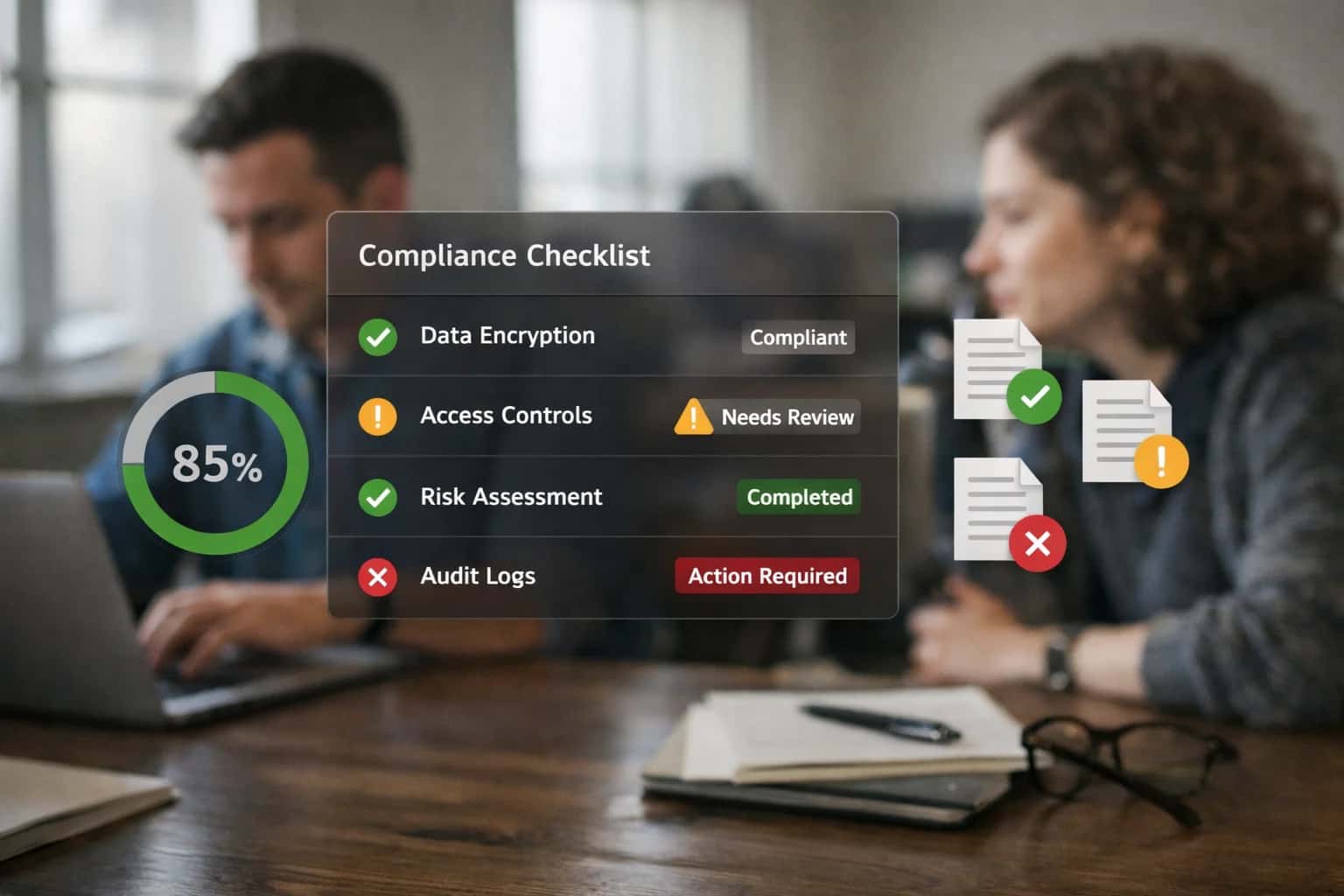
OPERATIONAL DASHBOARD INTEGRATION
Where AI Connects Monday.com to Campground Operations
Sync ResNexus and Staylist data to Monday.com boards, using AI for automated status updates and capacity alerts.
Implementation focuses on AI-driven column updates and notifications. For example, an AI agent can analyze incoming reservation data against site inventory in Staylist to automatically flag potential overbookings in a Capacity Risk column. Another workflow uses natural language processing on guest notes or support tickets synced to Monday.com items to tag them with sentiments (Positive, Issue - Plumbing) and auto-assign them to the appropriate team group. These automated status changes are then pushed back to the source campground platform via its API, closing the loop without manual board management.
Rollout requires configuring the sync for specific board views and user permissions. Start with a single property or reservation type to map the data model, then expand. Governance is critical: implement audit logs for all AI-initiated changes and maintain a human-in-the-loop approval step for high-impact actions like status changes on group bookings. This architecture turns Monday.com into a live command center, where AI handles the tactical updates, allowing managers to focus on exceptions and strategic oversight of campground operations across ResNexus and Staylist properties.
OPERATIONAL DASHBOARDS
Key Integration Surfaces: Campground Data to Monday.com Boards
Sync Reservation Data for Real-Time Visibility
Connect ResNexus or Staylist reservation APIs to a Monday.com board to create a live operational dashboard. Key data points to sync include:
- Guest Name & Contact Info: For quick staff reference.
- Site/Unit Number & Type: To visualize physical layout and capacity.
- Check-in/Check-out Dates: For occupancy forecasting and housekeeping scheduling.
- Booking Status & Source: To track confirmed, pending, and canceled reservations, plus channel performance.
An AI agent can monitor this board to trigger automated workflows. For example, when a Check-in Date is within 24 hours, the agent can:
- Pull the guest record.
- Generate and send a personalized digital welcome packet via email/SMS.
- Update the board status to
Pre-Arrival Comms Sent. This transforms a static data sync into an automated guest experience engine.
OPERATIONAL DASHBOARDS
High-Value Use Cases for Campground Monday.com Dashboards
Sync ResNexus and Staylist data to Monday.com boards to create a unified operational command center. Use AI agents to automate status updates, trigger capacity alerts, and generate insights, turning static dashboards into proactive workflow engines.
01
Real-Time Occupancy & Capacity Alerts
AI monitors the ResNexus API for incoming bookings and updates a Monday.com 'Site Inventory' board. When a specific site type or the entire campground hits a configurable threshold (e.g., 90% booked for a weekend), the AI automatically creates a high-priority alert item, tags the manager, and posts a summary to the operations Slack channel via webhook.
Batch -> Real-time
Alerting speed
02
Automated Maintenance Work Order Triage
Staff submits maintenance requests via a form connected to Monday.com. An AI agent reviews the request description against Staylist's asset database, classifies urgency (e.g., 'Electrical' vs. 'Cosmetic'), estimates a repair time based on historical data, and auto-assigns the ticket to the appropriate technician column on the 'Maintenance Board'. It also checks for duplicate or related open tickets.
1 sprint
Implementation timeline
03
Group Booking & Event Coordination Hub
A dedicated Monday.com board manages complex group inquiries from initial ResNexus lead capture to contract execution. An AI copilot attached to each item can draft proposal emails using stored templates, summarize call notes into the timeline, flag conflicting dates with the master calendar, and automatically generate a checklist of tasks (site prep, catering, permits) when a booking moves to 'Confirmed'.
Hours -> Minutes
Proposal drafting
04
Dynamic Housekeeping Turnover Scheduling
AI syncs the next day's check-out list from Staylist with the 'Housekeeping Schedule' board. It analyzes site types, last-minute extensions, and cleaner availability to optimize assignment routes. The agent automatically updates each cleaner's column with their assigned sites, estimated completion times, and any special notes (e.g., 'early check-in requested'), pushing notifications to mobile devices.
Same day
Schedule generation
05
Guest Issue Escalation & Resolution Tracking
When a guest support ticket is created in a connected system (e.g., Zendesk), an AI agent creates a corresponding item on the Monday.com 'Guest Issues' board. It enriches the item with the guest's ResNexus booking history and stay details. The AI monitors for lack of movement and can escalate items stuck in 'In Progress' past a service-level agreement (SLA), notifying supervisors and suggesting resolution paths from a knowledge base.
06
Revenue & Marketing Campaign Performance Dashboard
AI aggregates daily revenue data from ResNexus and campaign metrics from platforms like Mailchimp into a consolidated Monday.com dashboard board. The agent generates a daily summary pulse, highlighting anomalies (e.g., 'Direct bookings down 15% week-over-week'), and can correlate promotional campaign launches with booking spikes, automatically tagging the marketing lead for review.
Batch -> Real-time
Insight delivery
MONITORING & AUTOMATION
Example AI-Augmented Workflows
These workflows demonstrate how AI can transform Monday.com from a passive dashboard into an active operational command center for campground management. By syncing data from ResNexus or Staylist, AI agents can monitor, analyze, and act on key operational signals.
Trigger: A new reservation is created in ResNexus for a peak weekend, pushing the campground's overall occupancy above a dynamic threshold (e.g., 85%).
AI Agent Action:
- The agent ingests the new booking via a webhook from ResNexus to the AI orchestration layer.
- It queries the ResNexus API for current occupancy and upcoming reservations for the next 7-14 days.
- Using a forecasting model, it predicts if staffing (housekeeping, front desk) or inventory (firewood, propane) will be constrained.
Monday.com Update:
- Creates a new item in the "Capacity Alerts" board with details:
Date Range,Predicted Occupancy %,Constraint Type(Staffing/Inventory). - Automatically assigns the item to the "Operations Manager" group.
- Adds a timeline column showing the critical date range.
- Posts a comment with a summary: "Peak occupancy of 92% forecasted for July 4th weekend. Current housekeeping schedule may be insufficient by 2 FTE. Click to review staffing board."
Human Review Point: The Operations Manager reviews the alert in Monday.com and uses the linked data to adjust schedules in the "Staff Roster" board or place orders in the "Inventory" board.
SYNCING CAMPGROUND DATA TO OPERATIONAL DASHBOARDS
Implementation Architecture: Data Flow & API Orchestration
A technical blueprint for connecting ResNexus and Staylist to Monday.com, using AI to automate status updates and capacity alerts.
The integration is built on a secure, event-driven data pipeline. A middleware service—hosted on a platform like AWS Lambda or Azure Functions—subscribes to webhook events from ResNexus (e.g., reservation.created, site.status_changed) and Staylist (e.g., booking.modified, inventory.updated). This service transforms the payloads into a standardized JSON schema and pushes them to a dedicated Monday.com board via its REST API, typically updating items in columns like Site Number, Check-in Date, Guest Count, and Status. For real-time dashboards, the pipeline can also write aggregated data—such as total occupancy per loop or upcoming arrivals—to a Monday.com dashboard widget using the platform's metrics API.
AI agents orchestrate status updates and generate alerts by monitoring this synchronized board. An AI workflow, built with a framework like LangChain or n8n, is triggered on a schedule or by specific board changes. It analyzes the consolidated data to:
- Automate Status Updates: Classify reservations as
On Track,Requires Attention, orCheck-in Todaybased on rules and learned patterns from past data. - Generate Capacity Alerts: Predict potential overflows or underutilization by comparing booked sites against total inventory and seasonal baselines, posting alerts to a
Campground OpsMonday.com group. - Draft Summary Comments: Use a configured LLM to generate natural-language summaries for high-priority items (e.g., "Group of 8 arriving today, site 12A requires early power hookup").
Rollout and governance are critical for operational reliability. Start by syncing a single property or reservation type to a sandbox Monday.com board to validate data mapping. Implement idempotent processing in the middleware to handle duplicate webhook events. Use Monday.com's board permissions and Audit Log to track all AI-generated changes. For production, establish a human-in-the-loop approval for critical alerts (e.g., site closures) by using Monday.com's email notification or approval column features. This architecture ensures campground operators have a single, AI-augmented pane of glass for daily operations without replacing their core reservation systems.
SYNCING CAMPGROUND DATA TO MONDAY.COM BOARDS
Code & Payload Examples
Ingesting New Bookings from ResNexus
When a new reservation is created in ResNexus, a webhook payload is sent to your orchestration layer. This payload contains the core booking details needed to create or update a Monday.com item. The example below shows a typical JSON structure and the Python handler to transform and push it to Monday.com.
pythonimport requests import json # Webhook handler for ResNexus reservation.created event def handle_resnexus_webhook(payload): # Extract key fields from ResNexus payload reservation_data = { 'item_name': f"{payload['guest']['last_name']} - Site {payload['site_number']}", 'column_values': json.dumps({ 'status': {'label': payload['status']}, 'date_arrival': payload['arrival_date'], 'date_departure': payload['departure_date'], 'site_type': payload['site_type'], 'guest_count': str(payload['number_of_guests']), 'total_amount': str(payload['total_amount']) }) } # Monday.com API call to create item in "Campground Reservations" board monday_api_url = "https://api.monday.com/v2" headers = { "Authorization": "YOUR_MONDAY_API_KEY", "Content-Type": "application/json" } query = 'mutation ($boardId: Int!, $itemName: String!, $columnValues: JSON!) { create_item (board_id: $boardId, item_name: $itemName, column_values: $columnValues) { id } }' variables = { 'boardId': 123456789, 'itemName': reservation_data['item_name'], 'columnValues': reservation_data['column_values'] } response = requests.post( monday_api_url, json={'query': query, 'variables': variables}, headers=headers ) return response.json()
MONITORING OPERATIONAL DASHBOARDS
Realistic Time Savings & Operational Impact
This table illustrates the shift from manual monitoring and reactive updates to AI-assisted, proactive status management for campground operations using Monday.com.
| Operational Task | Before AI Integration | After AI Integration | Implementation Notes |
|---|---|---|---|
Site Availability & Capacity Alerts | Manual checks of ResNexus/Staylist dashboards 2-3x daily | AI-driven push notifications to Monday.com board for low inventory | Triggers based on API-synced occupancy thresholds |
Maintenance Work Order Status Updates | Technician calls/texts to update manager; manual board entry | Automated status sync from Campground Master to Monday.com via webhook | Reduces communication lag; status is real-time |
Group Booking Quote Follow-up | Calendar reminder to check email for client response | AI flags stalled quotes on Monday.com board after 48 hours | Focuses staff attention on high-potential revenue |
Channel Manager Rate Sync Verification | Daily manual audit of OTA listings vs. platform rates | AI compares and highlights discrepancies on a dedicated Monday.com dashboard | Prevents pricing errors and lost revenue |
Weekly Occupancy & Revenue Reporting | Export reports from 2-3 systems, manual consolidation in spreadsheet | AI aggregates data into a pre-formatted Monday.com dashboard every Monday AM | Saves 2-3 hours of manual report building |
Guest Review Sentiment Monitoring | Manual reading of reviews across platforms weekly | AI summarizes sentiment and key issues on a Monday.com card daily | Enables same-day operational response to problems |
Staff Task Assignment & Scheduling | Manager creates and assigns tasks based on email/verbal requests | AI suggests task creation in Monday.com from synced reservation and work order data | Reduces task creation overhead by ~30% |
OPERATIONAL DASHBOARD INTEGRATION
Governance, Security & Phased Rollout
A structured approach to deploying AI-driven Monday.com dashboards for campground operations, ensuring control, security, and measurable impact.
This integration connects your core reservation data from ResNexus or Staylist to Monday.com boards via secure, event-driven APIs. AI agents monitor these data streams to automate status updates, generate capacity alerts, and populate visual widgets. Governance starts with role-based access control (RBAC) on the Monday.com side, ensuring only authorized managers can view or modify AI-generated alerts and dashboards. All data syncs are logged with audit trails in both systems, maintaining a clear lineage from the original reservation record to the dashboard insight.
A phased rollout is critical for adoption and tuning. We recommend starting with a single property or a specific workflow, such as 'Site Turnover Status' or 'Next-Day Arrivals'. In this pilot phase, AI populates a dedicated Monday.com board, but human operators retain final approval for any automated actions (like triggering a maintenance ticket). This allows teams to verify accuracy, provide feedback on alert thresholds, and build trust in the system before expanding to more complex, multi-property capacity forecasting or revenue dashboards.
Security is enforced through scoped API keys from your campground platform, limiting access to read-only reservation and operational data. The AI layer processes this data within your designated cloud environment—no guest PII is stored in Monday.com unless explicitly configured for a workflow. Post-pilot, the rollout expands to additional properties and use cases, with continuous monitoring of AI accuracy and board engagement metrics to ensure the dashboards drive tangible operational decisions, like reallocating housekeeping staff or adjusting dynamic pricing rules.
Enabling Efficiency, Speed & Accuracy
Intelligent Analysis, Decision & Execution
We build AI systems for teams that need search across company data, workflow automation across tools, or AI features inside products and internal software.
Talk to Us
Search across company data
Give teams answers from docs, tickets, runbooks, and product data with sources and permissions.
Useful when people spend too long searching or get different answers from different systems.
Enterprise searchRAGPermissions
Read more
Automate internal workflows
Use AI to route work, draft outputs, trigger actions, and keep approvals and logs in place.
Useful when repetitive work moves across multiple tools and teams.
AI agentsWorkflow automationGovernance
Read more
Add AI to products and internal tools
Build assistants, guided actions, or decision support into the software your team or customers already use.
Useful when AI needs to be part of the product, not a separate tool.
AI integrationDecision supportModel routing
Read moreIMPLEMENTATION AND ARCHITECTURE
Frequently Asked Questions
Common technical and operational questions about integrating AI with Monday.com to automate campground dashboards and workflows.
Data synchronization is typically handled via a middleware layer or directly through Monday.com's API, triggered by webhooks from the campground management platform (CMP).
Typical Implementation Flow:
- Trigger: A webhook from ResNexus/Staylist fires on key events (e.g.,
new_booking,booking_modified,check_in_completed). - Ingestion & Transformation: A serverless function (AWS Lambda, Google Cloud Function) receives the webhook payload, enriches it if needed, and maps CMP fields to Monday.com board columns.
- Update: The function calls the Monday.com API (
POST /v2/items) to create or update an item in the designated "Campground Reservations" board. - Payload Example (Simplified):
json// Monday.com API call to create a board item { "query": "mutation { create_item (board_id: 123456, item_name: \"Smith Family - Site A12\", column_values: \"{\\\"status\\\": \\\"Confirmed\\\", \\\"arrival_date\\\": \\\"2024-10-15\\\", \\\"site_type\\\": \\\"RV Pull-Thru\\\", \\\"guest_count\\\": \\\"4\\\", \\\"revenue\\\": \\\"425.00\\\"}\") { id } }" }
Key Consideration: Maintain a unique ID mapping (e.g., CMP Reservation ID to Monday.com item ID) to handle updates and avoid duplicates.

About the author
Prasad Kumkar
CEO & MD, Inference Systems
Prasad Kumkar is the CEO & MD of Inference Systems and writes about AI systems architecture, LLM infrastructure, model serving, evaluation, and production deployment. Over 5+ years, he has worked across computer vision models, L5 autonomous vehicle systems, and LLM research, with a focus on taking complex AI ideas into real-world engineering systems.
His work and writing cover AI systems, large language models, AI agents, multimodal systems, autonomous systems, inference optimization, RAG, evaluation, and production AI engineering.
LinkedIn
Limited slotsGet a Free AI Consultation
Partnered with leading AI, data, and software stack.





How We Work
Custom AI workflows for your Business
One-fit-all AI don't work for modern businesses. At Inferensys, we aim to understand your business & custom requirements; which we use to define most efficient agentic workflows, the data, and the tools for your business.
01
Review the use case
We understand the task, the users, and where AI can actually help.
Read more02
Pick the right approach
We define what needs search, automation, or product integration.
Read more03
Build the first useful version
We implement the part that proves the value first.
Read more04
Improve from there
We add the checks and visibility needed to keep it useful.
Read moreThe first call is a practical review of your use case and the right next step.
Talk to Us