The integration connects at the ResNexus API layer, syncing key objects like Guest, Reservation, Invoice, and Activity records into corresponding HubSpot CRM objects—Contact, Deal, Ticket, and Company. This creates a unified guest profile where marketing touchpoints (emails, ads, form fills) are linked to operational outcomes (bookings, spend, repeat stays). AI workflows are triggered by webhooks from either system, such as a new reservation in ResNexus initiating a personalized nurture sequence in HubSpot, or a marketing lead in HubSpot enriching a guest record with predicted lifetime value.

Integration
Campground Integration with HubSpot AI
A technical blueprint for connecting campground management platforms like ResNexus and Campspot to HubSpot CRM. Use AI to automate lead scoring, personalize guest communications, and measure marketing impact across the outdoor hospitality journey.
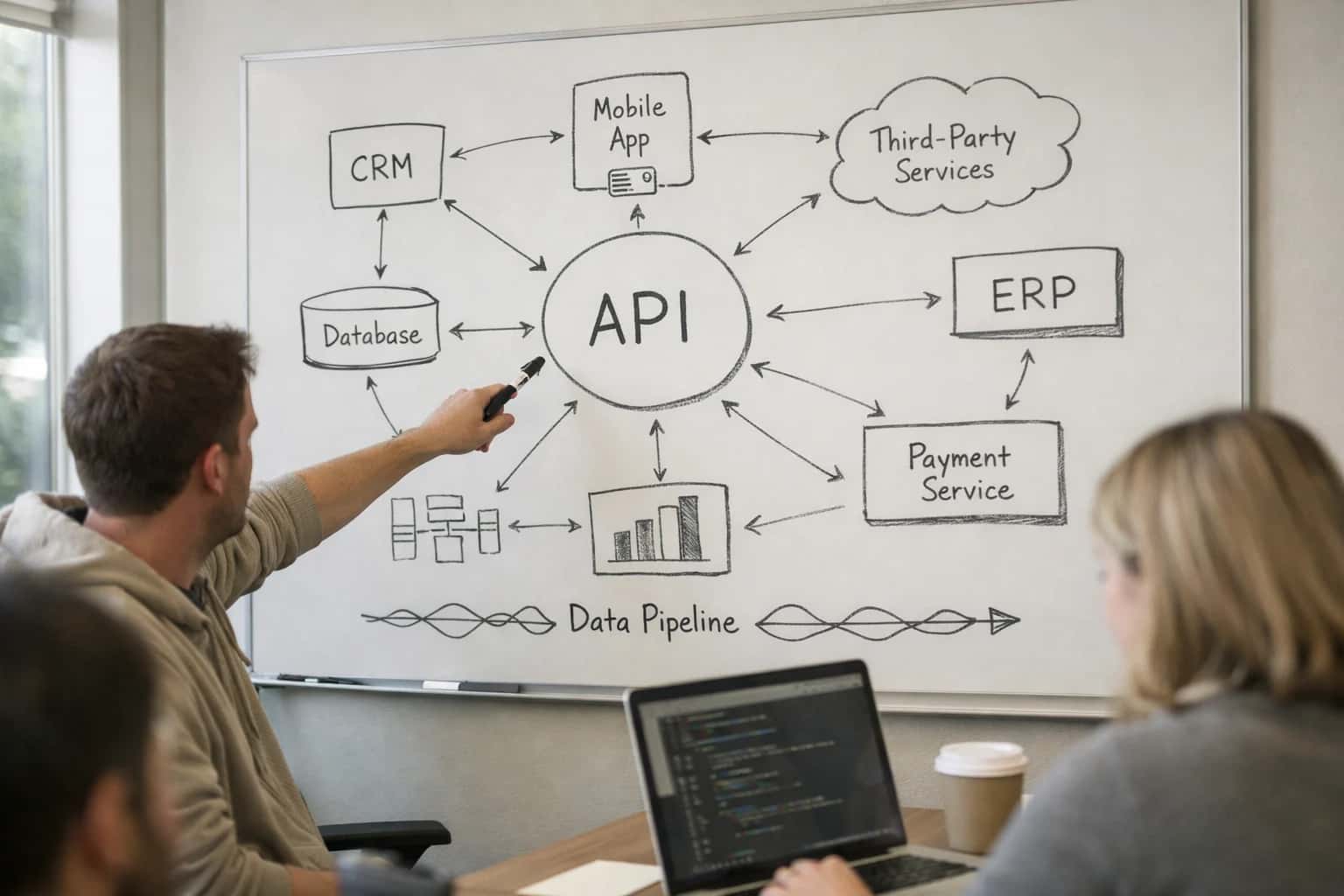
ARCHITECTURE BLUEPRINT
Where AI Connects Campground Operations to HubSpot CRM
A technical guide for integrating ResNexus guest data with HubSpot CRM to automate lead nurturing, track guest journeys, and measure marketing ROI.
Implementation focuses on three high-value surfaces: 1) Lead Scoring & Routing—AI models analyze HubSpot engagement data (email opens, page views) combined with ResNexus booking history to score and route new group inquiries to the correct sales rep. 2) Journey Orchestration—Multi-step campaigns in HubSpot Marketing Hub are dynamically adjusted based on real-time reservation status (e.g., sending pre-arrival guides after check-in is confirmed). 3) ROI Attribution—An AI copilot correlates marketing spend in HubSpot with revenue data from ResNexus, generating reports that show which campaigns drive the highest-value bookings and guest retention.
Rollout requires a phased approach, starting with a one-way sync of historical guest data to build foundational segments, followed by bi-directional workflows for active campaigns. Governance is critical: establish clear field mapping conventions, implement webhook retry logic with dead-letter queues, and use HubSpot's Custom Behavioral Events to track AI-driven interactions. This architecture ensures marketing operations are grounded in actual campground performance data, moving beyond generic email blasts to personalized, revenue-aware guest communications. For related integration patterns, see our guides on AI-Powered Guest Support for Campground Platforms and Campground Integration with Mailchimp AI.
ARCHITECTURE FOR MARKETING AUTOMATION & GUEST JOURNEY TRACKING
Key Integration Surfaces: Campground PMS to HubSpot Objects
Synchronizing Guest Profiles to HubSpot Contacts
The core of this integration is mapping guest records from your Campground PMS (like ResNexus or Campspot) to HubSpot Contact objects. This creates a unified guest profile for marketing and service.
Key Data Flows:
- Bi-directional Sync: Create or update HubSpot Contacts upon new reservation creation in the PMS. Update the PMS guest record with marketing engagement data (e.g., email opens, link clicks) pulled from HubSpot.
- Field Mapping: Critical PMS fields include
guest_email,guest_first_name,guest_last_name,phone,address, andloyalty_tier. Map these to standard and custom HubSpot Contact properties. - Identity Resolution: Use the guest email as the primary key. Implement logic to merge duplicate records if a guest books under slightly different information.
This foundation enables all downstream AI-driven personalization, segmentation, and journey tracking within HubSpot's marketing automation engine.
HUBSPOT CRM INTEGRATION
High-Value AI Use Cases for Campground Marketing
Connecting your campground management platform to HubSpot CRM with AI unlocks personalized guest journeys, automated lead nurturing, and measurable marketing ROI. These workflows turn reservation data into actionable marketing intelligence.
01
Automated Lead Nurturing for Group Inquiries
When a group inquiry form is submitted in ResNexus, the AI creates a HubSpot contact, scores the lead based on group size and requested dates, and triggers a personalized email sequence with campsite photos, availability, and contract templates. Workflow: ResNexus webhook → AI lead scoring → HubSpot email automation.
Batch → Real-time
Lead follow-up
02
Guest Journey Personalization
Syncs guest stay history from Campspot to HubSpot contact properties. The AI segments guests (e.g., 'frequent RVers', 'first-time tent campers') and personalizes post-stay email campaigns, review requests, and rebooking offers based on their past activities and site preferences.
1 sprint
Segment setup
03
Marketing ROI Attribution Engine
AI connects HubSpot campaign UTM parameters to final bookings in ResNexus. It analyzes which marketing channels (social, email, PPC) drive the most valuable reservations and high-lifetime-value guests, generating automated reports for marketing spend optimization.
Hours -> Minutes
Report generation
04
Dynamic Content for Campaigns
AI uses HubSpot's CMS and real-time Campspot API data to generate dynamic website content and email copy. Examples include showcasing 'sites available next weekend' or promoting 'last-minute cancellations' to segmented lists, increasing click-through and conversion rates.
05
Abandoned Booking Recovery
Monitors the HubSpot 'Booking Started' lifecycle stage for contacts who began but didn't complete a reservation in Campspot. The AI triggers a recovery flow with a personalized message, a potential discount offer, and a direct link back to their cart.
Same day
Recovery trigger
06
AI-Powered List Building for Promotions
Instead of manual list creation, the AI analyzes HubSpot contact properties and ResNexus booking history to automatically build targeted lists for promotions. Examples: 'Guests who stayed in 2023 but not 2024' for a win-back campaign or 'Guests who booked premium sites' for an upsell offer.
CAMPFIRE TO CUSTOMER
Example AI-Powered Marketing Workflows
These workflows demonstrate how connecting your campground management platform (ResNexus, Campspot, Staylist) to HubSpot CRM with AI can automate lead nurturing, personalize guest journeys, and measure marketing ROI with precision.
Trigger: A new lead form submission for a group/event booking is captured in ResNexus.
Context Pulled: AI agent retrieves the lead's details (group size, dates, interests) from ResNexus and searches HubSpot for past interactions or existing contact record.
AI Agent Action:
- Scores & Routes: Classifies lead intent (e.g., 'High-Value Family Reunion', 'Low-Intent Scout Troop Inquiry').
- Generates Personalization: Drafts a tailored follow-up email using:
- Group-specific site availability from ResNexus API.
- Past guest testimonials for similar groups.
- Local activity suggestions based on stated interests.
System Update: The drafted email and lead score are pushed to HubSpot, creating a task for the sales manager or triggering an automated email sequence. The lead's ResNexus record is tagged with the HubSpot_Nurture_Campaign status.
Human Review Point: For leads scored as 'High-Value' or 'Complex', the system flags the email draft for manager review before sending, ensuring brand voice and deal-specific nuances are captured.
HUBSPOT CRM INTEGRATION
Implementation Architecture: Data Flow & AI Layer
A practical blueprint for connecting ResNexus guest data to HubSpot CRM, enabling AI-driven lead nurturing and marketing ROI tracking.
The integration architecture connects two primary data flows. First, a synchronization layer uses ResNexus APIs (like GET /guests and GET /reservations) to stream new guest profiles, booking history, and stay preferences into HubSpot as Contact and Deal records. Key fields mapped include email, phone, first stay date, preferred site type, and total lifetime value. Second, an event-driven layer uses webhooks from ResNexus (e.g., booking.created, payment.received) to trigger real-time workflows in HubSpot, such as adding a contact to a nurturing sequence or updating a deal stage.
The AI layer operates within HubSpot, using its native AI tools or connected inference endpoints. Core use cases include: Lead Scoring – an AI model analyzes the synced ResNexus data (e.g., booking frequency, group size, add-on purchases) alongside HubSpot engagement data (email opens, page views) to assign a predictive lead score. Journey Personalization – a generative AI agent drafts personalized email content for marketing campaigns based on a guest's past stay (e.g., "Since you enjoyed a lakeside site last summer..."). ROI Attribution – an AI copilot queries the unified dataset to report on which marketing channels (tracked in HubSpot) drive the highest-value bookings (sourced from ResNexus), automating monthly performance summaries.
For rollout, we recommend a phased approach: start by syncing basic contact data and implementing a simple lead scoring model. Governance is critical; establish clear field mapping rules in the sync layer and implement audit logs for all AI-generated outreach to maintain brand voice. A key caveat: this integration surfaces the need for clean data in ResNexus (e.g., consistent email capture) to fuel effective AI models. Consider implementing a pre-sync data quality check using a simple AI classifier to flag incomplete records for manual review before they enter HubSpot.
HUBSPOT CRM INTEGRATION PATTERNS
Code & Payload Examples
Syncing Guest Records to HubSpot
When a new reservation is created in ResNexus, a webhook payload is sent to your integration layer. This payload should be transformed and used to create or update a HubSpot Contact and associated Deal.
Example Webhook Payload from ResNexus:
json{ "event": "reservation.created", "data": { "reservation_id": "RNX-2024-789", "guest_email": "[email protected]", "guest_first_name": "Alex", "guest_last_name": "Johnson", "arrival_date": "2024-08-15", "departure_date": "2024-08-18", "site_type": "Premium RV", "total_amount": 450.00, "status": "confirmed" } }
Python Logic to Create HubSpot Contact & Deal:
pythonimport requests # 1. Find or create Contact by email contact_search = requests.get( f"https://api.hubapi.com/crm/v3/objects/contacts/search", headers={"Authorization": f"Bearer {API_KEY}"}, json={"filterGroups": [{"filters": [{"propertyName": "email", "operator": "EQ", "value": guest_email}]}]} ) # 2. Create Deal, associating it with the Contact ID deal_payload = { "properties": { "dealname": f"Reservation {reservation_id}", "amount": total_amount, "dealstage": "appointmentscheduled", "pipeline": "default", "reservation_id": reservation_id, "site_type": site_type }, "associations": [{"to": {"id": contact_id}, "types": [{"associationCategory": "HUBSPOT_DEFINED", "associationTypeId": 3}]}] }
This creates a unified guest journey record in HubSpot, enabling AI-powered lead scoring and nurturing based on stay history and engagement.
HUBSPOT CRM INTEGRATION
Realistic Time Savings & Business Impact
How connecting ResNexus to HubSpot with AI transforms manual guest marketing and lead management workflows for campground operators.
| Workflow / Metric | Before AI Integration | After AI Integration | Implementation Notes |
|---|---|---|---|
Lead scoring for group inquiries | Manual review of email/forms; 10-15 min per lead | Automated scoring based on group size, dates, and history; < 1 min review | AI suggests priority score; final booking approval remains manual |
Post-stay review request timing | Batch email sends 3 days after checkout | Personalized send time prediction based on guest stay pattern | AI analyzes past engagement; increases review rate by 20-30% |
Marketing campaign segmentation | Static lists based on last stay date | Dynamic segments using predicted guest value & activity interest | AI refreshes segments weekly; syncs to HubSpot static lists for execution |
Guest re-engagement email content | Generic "We miss you" templates | Personalized draft with recalled stay details & suggested dates | AI pulls favorite site type & activities from ResNexus; marketer edits |
ROI reporting on marketing spend | Monthly manual spreadsheet from multiple sources | Automated dashboard linking ad spend to HubSpot deals & ResNexus revenue | AI matches UTM parameters to guest records; syncs closed-loop data |
New lead nurturing flow creation | 1-2 days to build sequence and write copy | AI suggests flow logic and generates first-draft copy in 2-4 hours | Uses historical conversion data from similar lead profiles |
Manual data entry for new inquiries | Staff copy-paste info from web form to HubSpot | Webhook auto-creates contact; AI enriches with firmographic data | Reduces front-desk task load; ensures CRM hygiene |
IMPLEMENTING AI IN A REGULATED GUEST DATA ENVIRONMENT
Governance, Security & Phased Rollout
A practical guide to deploying HubSpot AI with ResNexus in a controlled, secure manner that protects guest privacy and operational integrity.
This integration connects two critical systems: your ResNexus property management platform (containing sensitive PII, payment details, and stay history) and HubSpot CRM (managing marketing outreach and lead scoring). Governance starts with a clear data map: which ResNexus objects (e.g., Guest, Reservation, Invoice) sync to which HubSpot objects (e.g., Contact, Deal, Company), and under what consent and retention policies. A secure middleware layer, often deployed on your cloud (AWS/Azure), should handle the sync via ResNexus and HubSpot APIs using OAuth, never storing raw guest data. All AI processing—like lead scoring or email personalization—should occur within HubSpot's environment using its native AI tools or approved models, keeping PII within the CRM's security perimeter.
A phased rollout mitigates risk and demonstrates value incrementally. We recommend starting with a read-only sync of historical guest data from ResNexus to HubSpot to build a unified contact database, using AI for initial segmentation and deduplication. Phase two introduces one-way marketing automation: AI-driven campaign triggers based on reservation status (e.g., post-booking welcome series, pre-arrival upsell offers). The final phase enables bi-directional workflows, where HubSpot AI scores new leads (e.g., from website forms) and creates corresponding Prospect records in ResNexus, or where service issues logged in HubSpot trigger maintenance tickets back in ResNexus. Each phase should include audit logging in both systems to track data lineage and AI-driven actions.
Critical to success is establishing a human-in-the-loop for high-stakes actions before full automation. For example, AI-generated lead scores or personalized email content should be reviewed by marketing staff for the first campaign cycle. Similarly, any AI-suggested discount or offer that affects revenue should require manager approval via a HubSpot workflow before being applied in ResNexus. This controlled approach, combined with regular reviews of AI performance against key metrics like lead conversion rate and guest satisfaction, ensures the integration drives ROI without compromising trust or compliance. For related architectural patterns, see our guides on Campground API Automation and Integration Hubs with AI and Data Governance and Privacy Platforms.
Enabling Efficiency, Speed & Accuracy
Intelligent Analysis, Decision & Execution
We build AI systems for teams that need search across company data, workflow automation across tools, or AI features inside products and internal software.
Talk to Us
Search across company data
Give teams answers from docs, tickets, runbooks, and product data with sources and permissions.
Useful when people spend too long searching or get different answers from different systems.
Enterprise searchRAGPermissions
Read more
Automate internal workflows
Use AI to route work, draft outputs, trigger actions, and keep approvals and logs in place.
Useful when repetitive work moves across multiple tools and teams.
AI agentsWorkflow automationGovernance
Read more
Add AI to products and internal tools
Build assistants, guided actions, or decision support into the software your team or customers already use.
Useful when AI needs to be part of the product, not a separate tool.
AI integrationDecision supportModel routing
Read moreIMPLEMENTATION GUIDE
Frequently Asked Questions
Practical questions for connecting ResNexus guest data to HubSpot CRM, using AI to automate marketing workflows and track guest journey ROI.
The mapping is typically handled by an integration middleware (like a lightweight service or iPaaS) that listens for events in ResNexus and transforms the payload for HubSpot.
Key Data Points to Sync:
- Contact Properties:
first_name,last_name,email,phonefrom the guest profile. - Custom Properties: Create HubSpot properties for
total_stays,last_stay_date,preferred_site_type,average_nightly_rate, andloyalty_tier(calculated from ResNexus). - Deal/Object Mapping: Each reservation becomes a HubSpot Deal, linked to the Contact. Deal properties should include
check_in_date,check_out_date,site_number,total_revenue, andbooking_source.
Example Payload Transformation:
json// Sample ResNexus webhook payload (simplified) { "guest_id": "RNX-12345", "email": "[email protected]", "first_name": "Jane", "last_name": "Doe", "reservation_id": "RES-67890", "check_in": "2024-07-15", "check_out": "2024-07-18", "site_type": "RV Pull-Thru", "total_charge": 285.00 } // Transformed for HubSpot Create/Update Contact API { "properties": { "email": "[email protected]", "firstname": "Jane", "lastname": "Doe", "total_stays": "3", // Incremented by middleware "last_stay_date": "2024-07-15", "preferred_site_type": "RV Pull-Thru" } }
The middleware should handle deduplication by email and maintain a sync log to prevent loops.

About the author
Prasad Kumkar
CEO & MD, Inference Systems
Prasad Kumkar is the CEO & MD of Inference Systems and writes about AI systems architecture, LLM infrastructure, model serving, evaluation, and production deployment. Over 5+ years, he has worked across computer vision models, L5 autonomous vehicle systems, and LLM research, with a focus on taking complex AI ideas into real-world engineering systems.
His work and writing cover AI systems, large language models, AI agents, multimodal systems, autonomous systems, inference optimization, RAG, evaluation, and production AI engineering.
LinkedIn
Limited slotsGet a Free AI Consultation
Partnered with leading AI, data, and software stack.





How We Work
Custom AI workflows for your Business
One-fit-all AI don't work for modern businesses. At Inferensys, we aim to understand your business & custom requirements; which we use to define most efficient agentic workflows, the data, and the tools for your business.
01
Review the use case
We understand the task, the users, and where AI can actually help.
Read more02
Pick the right approach
We define what needs search, automation, or product integration.
Read more03
Build the first useful version
We implement the part that proves the value first.
Read more04
Improve from there
We add the checks and visibility needed to keep it useful.
Read moreThe first call is a practical review of your use case and the right next step.
Talk to Us