AI integration for campground calendar management primarily connects to two functional surfaces: the maintenance work order module (e.g., in Campground Master) and the group/event booking engine (e.g., in ResNexus). The goal is to create a unified, intelligent calendar layer that prevents double-booking of resources like pavilions, maintenance crews, or specific high-demand sites. This is achieved by syncing key data objects—WorkOrder, SiteBlock, ResourceCalendar, and GroupReservation—to a central Google Calendar via secure API webhooks, creating a single source of truth for operational scheduling.

Integration
Campground Integration with Google Calendar AI
A technical blueprint for syncing Campground Master maintenance schedules and ResNexus group bookings with Google Calendar, using AI to resolve conflicts and optimize resource calendars.
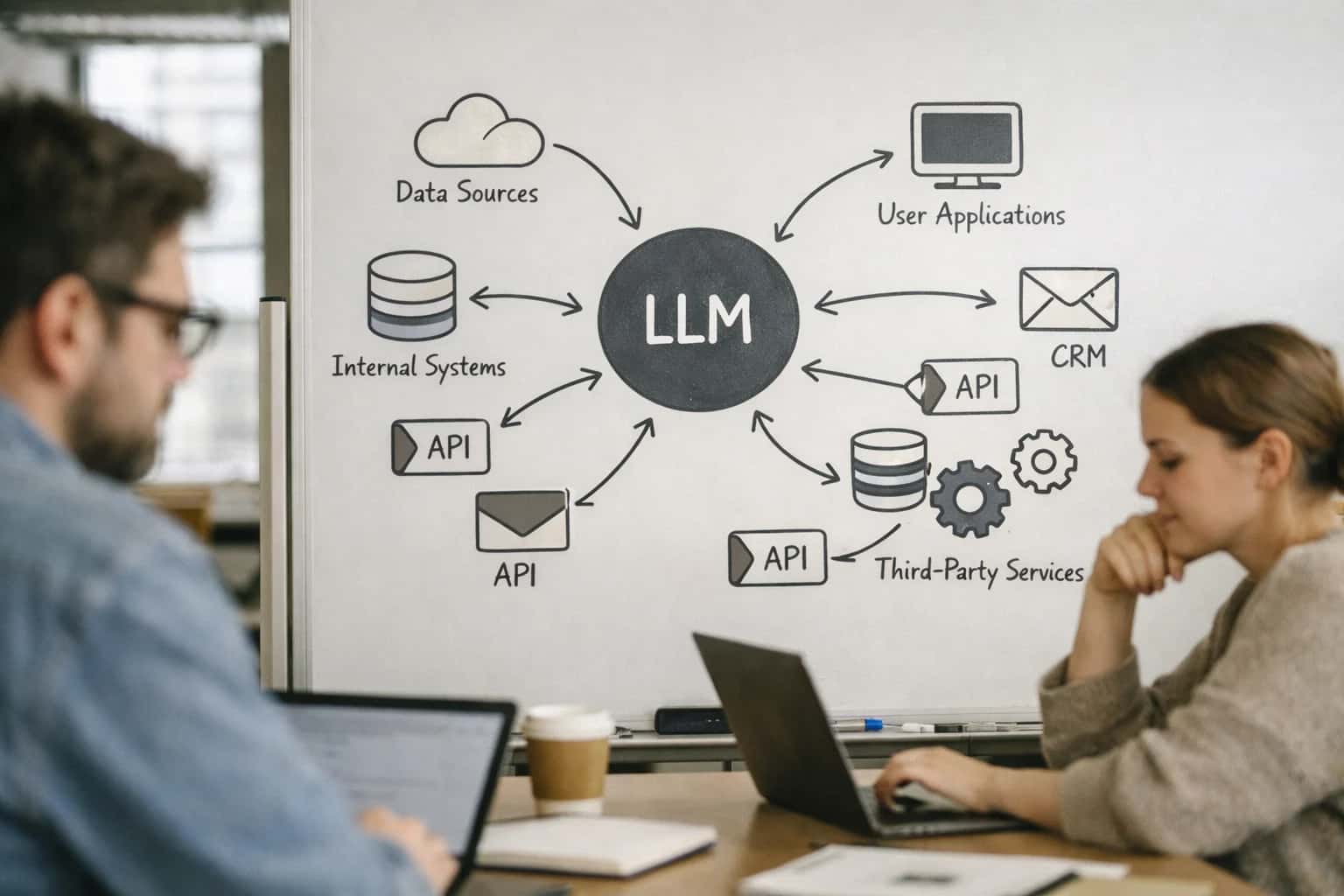
ARCHITECTURE BLUEPRINT
Where AI Fits in Campground Calendar Management
A technical guide to syncing maintenance schedules and group bookings with Google Calendar, using AI to resolve conflicts and optimize resource allocation.
The AI's role is to act as an orchestration and conflict resolution engine. For example, when a new group booking for the clubhouse is submitted in ResNexus, an AI agent can instantly check the synced Google Calendar for conflicts with scheduled maintenance or other events. If a conflict is detected, the agent can propose alternative dates/times, automatically adjust related work orders in Campground Master, and notify the relevant managers via Slack or email—transforming a manual, error-prone coordination process into an automated workflow that takes seconds.
For rollout, we recommend a phased approach: start with read-only sync to build a consolidated calendar view, then implement one-way write operations (e.g., from ResNexus to Google Calendar), and finally enable bi-directional, AI-mediated updates. Governance is critical; all AI-proposed changes should flow through an approval queue in the primary platform (e.g., a special status in Campground Master) with a full audit trail, ensuring staff retain oversight while gaining massive efficiency. This pattern turns disparate calendars into a proactively managed operational asset.
CAMPFIRE
Key Integration Surfaces for AI Calendar Sync
Syncing Campground Master Work Orders
Integrate AI with Campground Master's maintenance module to automatically schedule and optimize work orders on a shared Google Calendar. The AI agent ingests new work requests, site availability from the reservation system, and staff schedules to propose optimal time slots, avoiding conflicts with guest arrivals or high-traffic periods.
Key Objects:
WorkOrderrecords (type, priority, estimated duration, assigned staff)SiteandAssetrecords for location context- Staff
Userrecords with role and skill tags
AI Workflow:
- New
WorkOrderis created in Campground Master. - AI agent evaluates priority, required skills, and site booking calendar.
- Agent proposes 2-3 time slots on the shared Google Calendar via API.
- Maintenance manager reviews and confirms; event is created with all details attached.
- Changes in Google Calendar (delays, cancellations) are synced back to update the
WorkOrderstatus.
GOOGLE CALENDAR INTEGRATION
High-Value AI Calendar Use Cases for Campgrounds
Integrating AI with Google Calendar transforms static schedules into intelligent, conflict-aware operational plans. This blueprint details how to sync Campground Master and ResNexus data to optimize maintenance, group bookings, and resource allocation.
01
Automated Maintenance Scheduling & Conflict Resolution
Syncs Campground Master work orders and asset calendars to Google Calendar. AI analyzes reservation data to block site access, schedules non-disruptive maintenance windows, and automatically resolves double-booking conflicts between staff and contractor calendars.
Hours -> Minutes
Schedule coordination
02
Intelligent Group Booking & Resource Coordination
Connects ResNexus group booking requests to shared resource calendars. AI evaluates pavilion, equipment, and staff availability across multiple Google Calendars, proposes optimal dates/times to the sales team, and auto-blocks resources upon contract signing.
Batch -> Real-time
Availability checks
03
Dynamic Housekeeping & Turnover Workflow Triggers
Uses ResNexus check-out events to trigger cleaning schedules in Google Calendar. AI predicts room-ready times based on cleaner capacity and site type, automatically dispatches tasks via calendar invites, and updates the front desk on delays.
Same day
Schedule updates
04
Multi-Property Manager & Staff Calendar Orchestration
Unifies calendars for managers overseeing multiple properties in Staylist or Campground Master. AI overlays occupancy, maintenance, and event schedules, identifies resource bottlenecks, and suggests optimal staff deployment across locations.
1 sprint
Rollout timeline
05
AI-Powered Guest Activity & Concierge Calendar
Publishes curated activity schedules (guided hikes, events) from Campground Master to a public Google Calendar. An AI concierge agent reads this calendar to answer real-time guest questions about timing, availability, and sign-ups via chat or SMS.
06
Vendor & Permit Renewal Tracking Automation
Integrates Campground Master's vendor and document modules with Google Calendar. AI extracts key dates from contracts and permits, creates calendar events with reminders, and can trigger workflows in /integrations/campground-management-platforms/campground-contract-and-permit-management-ai for review when renewals are due.
Zero Missed Deadlines
Compliance goal
CAMPFIRE INTEGRATION PATTERNS
Example AI-Powered Calendar Workflows
Integrating AI with Google Calendar for campground management automates complex scheduling, resolves conflicts, and optimizes resource use. These workflows connect Campground Master and ResNexus data to Google Calendar APIs, using AI agents to reason over constraints and update schedules.
This workflow uses AI to schedule preventative maintenance for campground assets (e.g., water systems, septic pumps) while avoiding guest site disruptions.
- Trigger: A scheduled job runs each morning, or a new maintenance work order is created in Campground Master.
- Context Pulled: The AI agent fetches:
- Upcoming guest reservations from ResNexus (site numbers, dates).
- Asset maintenance history and required service intervals from Campground Master.
- Technician availability and skill sets from Google Calendar (via shared resource calendars).
- Weather forecasts for the upcoming week.
- AI Agent Action: The LLM analyzes the constraints to propose an optimal schedule. It avoids booking maintenance on occupied sites, prioritizes critical assets, and assigns the best-skilled technician with availability.
- System Update: The agent creates or updates events on the relevant Google Calendars (e.g., 'Maintenance Crew', specific asset calendar). It updates the work order status in Campground Master and sends a Slack notification to the operations manager for review.
- Human Review Point: The manager receives a daily digest of proposed maintenance schedules and can approve or request changes via a simple web interface, which the AI agent processes.
SYNCHRONIZING MAINTENANCE AND GROUP BOOKINGS
Implementation Architecture: Data Flow & System Design
A technical blueprint for connecting Campground Master and ResNexus to Google Calendar, using AI to resolve scheduling conflicts and optimize resource allocation.
The integration architecture centers on a central AI orchestration service that acts as a bidirectional sync engine. It polls the Campground Master Maintenance Module for scheduled work orders (e.g., site repairs, amenity servicing) and the ResNexus Group Bookings API for block reservations and event holds. These are normalized into a unified calendar event format, with metadata tags for resource_type (e.g., 'maintenance_crew', 'group_site', 'common_area'), priority, and estimated_duration. The service then pushes these events to designated Google Calendar resources (e.g., 'Maintenance Team Calendar', 'Group Facilities Calendar') via the Google Calendar API, ensuring all operational schedules are visible in a single, familiar interface.
The AI layer introduces conflict resolution and optimization. An AI scheduling agent continuously monitors the synced Google Calendar for overlapping events (e.g., a group booking on a site slated for maintenance). Using rules defined in the campground's operational playbook and learned patterns from historical data, the agent can: - Propose rescheduling the lower-priority event by checking for the next available slot. - Suggest resource substitution (e.g., moving a group to an equivalent site). - Escalate to human review for complex conflicts via a Slack or email notification with a summarized recommendation. This agent runs on a periodic cron schedule or is triggered in real-time by webhooks from Campground Master or ResNexus when a new high-impact booking or work order is created.
Governance and rollout require a phased approach. Start by syncing read-only events to a sandbox Google Calendar for validation, ensuring data mapping from source fields (ResNexus.BlockName, CampgroundMaster.WorkOrderID) to Google Calendar fields is accurate. Then, enable one-way writes from the campground platforms to production calendars. Finally, deploy the AI agent in a recommendation-only mode, logging its proposed rescheduling actions for manager approval before any automated writes back to Campground Master or ResNexus are permitted. Audit logs within the orchestration service track all sync attempts, AI decisions, and manual overrides to maintain operational control. This architecture ensures resource calendars are optimized without disrupting guest reservations or critical maintenance workflows.
SYNCING RESERVATIONS AND MAINTENANCE WITH GOOGLE CALENDAR
Code & Payload Examples for Key Operations
Retrieving Group Bookings for Calendar Sync
To sync group reservations from ResNexus to Google Calendar, you first need to fetch booking data via the ResNexus API. This typically involves querying for reservations with a specific status (e.g., Confirmed) and a group flag, filtering by date range to avoid syncing historical data.
The API response includes essential details for calendar event creation: guest name, site/unit number, arrival/departure dates, group size, and special requests. This data forms the payload for the Google Calendar API call. A common pattern is to run this fetch operation nightly or via a webhook triggered by a new group booking.
pythonimport requests import datetime # Example: Fetch confirmed group bookings for the next 30 days def fetch_resnexus_group_bookings(api_key, property_id): headers = {'Authorization': f'Bearer {api_key}'} end_date = (datetime.date.today() + datetime.timedelta(days=30)).isoformat() params = { 'propertyId': property_id, 'status': 'confirmed', 'isGroup': 'true', 'startDate': datetime.date.today().isoformat(), 'endDate': end_date } response = requests.get( 'https://api.resnexus.com/v1/reservations', headers=headers, params=params ) return response.json()['reservations'] # Returns list of booking objects
Each booking object is then mapped to a Google Calendar event schema, with the site number and group name populating the event title and description.
SYNCING MAINTENANCE AND GROUP CALENDARS
Realistic Time Savings and Operational Impact
This table shows the operational impact of using AI to resolve scheduling conflicts and optimize resource allocation between Campground Master maintenance schedules and ResNexus group bookings.
| Workflow | Before AI | After AI | Implementation Notes |
|---|---|---|---|
Maintenance Schedule Conflict Detection | Manual cross-checking of paper/Excel calendars (15-30 min per site) | Automated daily scan and alert for conflicts (< 2 min review) | AI reviews Campground Master work orders against ResNexus group blocks |
Group Booking Resource Allocation | Phone/email coordination to confirm equipment and staff availability (1-2 hours) | AI suggests optimal dates and resources based on real-time inventory (10 min review) | Integrates with Campground Master asset logs and ResNexus resource tags |
Calendar Sync and Update Propagation | Manual entry into Google Calendar, risking double-booking | Bidirectional sync with automated updates and change notifications | Uses webhooks from both platforms to a central orchestration layer |
Emergency Maintenance Rescheduling | Disruptive calls to group contacts and manual rebooking | AI proposes alternative slots and drafts communication for approval | Human-in-the-loop for final approval on all schedule changes |
Quarterly Resource Calendar Planning | Spreadsheet analysis and meeting to set tentative blocks (1-2 days) | AI forecasts demand and recommends optimized quarterly schedule (2-4 hour review) | Pilot phase: 2-3 weeks to tune forecasting model with historical data |
Multi-Property Calendar Visibility | Logging into each platform separately to compile a consolidated view | Unified dashboard with AI-highlighted conflicts and recommendations | Requires API access to both Campground Master and ResNexus instances |
Guest Communication for Schedule Changes | Manual drafting and sending of emails/SMS for each affected booking | AI generates personalized draft messages for staff to review and send | Ensures brand voice and includes specific rebooking links from ResNexus |
OPERATIONALIZING AI FOR CAMP CALENDARS
Governance, Security, and Phased Rollout
A secure, controlled approach to integrating AI with Campground Master and ResNexus for automated calendar management.
This integration operates by establishing a secure service account with OAuth 2.0 scoped to specific Google Calendars (e.g., Maintenance, Group Events). The AI agent acts as a middleware orchestrator, pulling schedule data from Campground Master's work order API and ResNexus's group booking module via their respective REST APIs. It processes this data to generate, update, or propose calendar events, but all write actions to Google Calendar are queued and subject to configurable approval rules—ensuring no direct, unvetted modifications to critical operational schedules.
A phased rollout is critical for managing risk and building trust. Phase 1 focuses on read-only synchronization and conflict detection. The AI ingests schedules from both platforms into a central log, identifies double-bookings for resources like pavilions or maintenance crews, and generates daily digest alerts for managers via email or Slack. Phase 2 introduces assisted scheduling, where the AI suggests optimal times for new work orders or group check-ins, presenting recommendations within the Campground Master or ResNexus UI for human confirmation. Phase 3 enables controlled automation for low-risk, repetitive events (e.g., weekly dump station servicing), where the AI can create calendar events automatically, but each action is logged to an immutable audit trail linked to the source system record ID.
Governance is enforced through role-based access control (RBAC) mirroring the campground platforms. For example, only users with Maintenance Manager roles in Campground Master can approve AI-proposed schedule changes for that department. All AI-generated content—like event titles or conflict resolution notes—is tagged with its source model and prompt version for traceability. Data residency is maintained by processing calendar payloads within your cloud environment; only finalized event objects are transmitted to Google Calendar, never raw guest PII or internal reservation notes. This architecture ensures the integration enhances operational tempo—turning schedule coordination from a daily manual chore into a managed, auditable workflow—without introducing ungoverned automation into sensitive hospitality operations.
Enabling Efficiency, Speed & Accuracy
Intelligent Analysis, Decision & Execution
We build AI systems for teams that need search across company data, workflow automation across tools, or AI features inside products and internal software.
Talk to Us
Search across company data
Give teams answers from docs, tickets, runbooks, and product data with sources and permissions.
Useful when people spend too long searching or get different answers from different systems.
Enterprise searchRAGPermissions
Read more
Automate internal workflows
Use AI to route work, draft outputs, trigger actions, and keep approvals and logs in place.
Useful when repetitive work moves across multiple tools and teams.
AI agentsWorkflow automationGovernance
Read more
Add AI to products and internal tools
Build assistants, guided actions, or decision support into the software your team or customers already use.
Useful when AI needs to be part of the product, not a separate tool.
AI integrationDecision supportModel routing
Read moreIMPLEMENTATION BLUEPRINT
Frequently Asked Questions
Practical questions for technical teams planning to connect AI to Campground Master and ResNexus for automated Google Calendar synchronization, conflict resolution, and resource optimization.
The integration uses a secure, token-based architecture with separate service accounts for each system.
-
Campground Platform API Access:
- For Campground Master, the agent uses an API key with scoped permissions (e.g.,
maintenance.read,bookings.read) to fetch maintenance schedules and group booking blocks. - For ResNexus, OAuth 2.0 is typically used to obtain an access token for the property's instance, granting access to the
ReservationsandResourcesendpoints.
- For Campground Master, the agent uses an API key with scoped permissions (e.g.,
-
Google Calendar API Access:
- A dedicated Google Cloud Service Account is created with domain-wide delegation.
- This service account is granted access to the specific Google Calendar resource (e.g.,
[email protected]). - The agent uses the service account's credentials to make authorized calls to the Google Calendar API for
events.list,events.insert, andevents.update.
-
Orchestration Layer:
- A central integration service (often built with a framework like LangChain or as a custom microservice) holds these credentials securely in a vault (e.g., AWS Secrets Manager, Azure Key Vault).
- The service fetches data from both sources, normalizes it into a common event schema, and passes it to the LLM for analysis.
Security Note: API keys and OAuth tokens are never exposed in client-side code. All calls are server-to-server, and audit logs track all data access.

About the author
Prasad Kumkar
CEO & MD, Inference Systems
Prasad Kumkar is the CEO & MD of Inference Systems and writes about AI systems architecture, LLM infrastructure, model serving, evaluation, and production deployment. Over 5+ years, he has worked across computer vision models, L5 autonomous vehicle systems, and LLM research, with a focus on taking complex AI ideas into real-world engineering systems.
His work and writing cover AI systems, large language models, AI agents, multimodal systems, autonomous systems, inference optimization, RAG, evaluation, and production AI engineering.
LinkedIn
Limited slotsGet a Free AI Consultation
Partnered with leading AI, data, and software stack.





How We Work
Custom AI workflows for your Business
One-fit-all AI don't work for modern businesses. At Inferensys, we aim to understand your business & custom requirements; which we use to define most efficient agentic workflows, the data, and the tools for your business.
01
Review the use case
We understand the task, the users, and where AI can actually help.
Read more02
Pick the right approach
We define what needs search, automation, or product integration.
Read more03
Build the first useful version
We implement the part that proves the value first.
Read more04
Improve from there
We add the checks and visibility needed to keep it useful.
Read moreThe first call is a practical review of your use case and the right next step.
Talk to Us