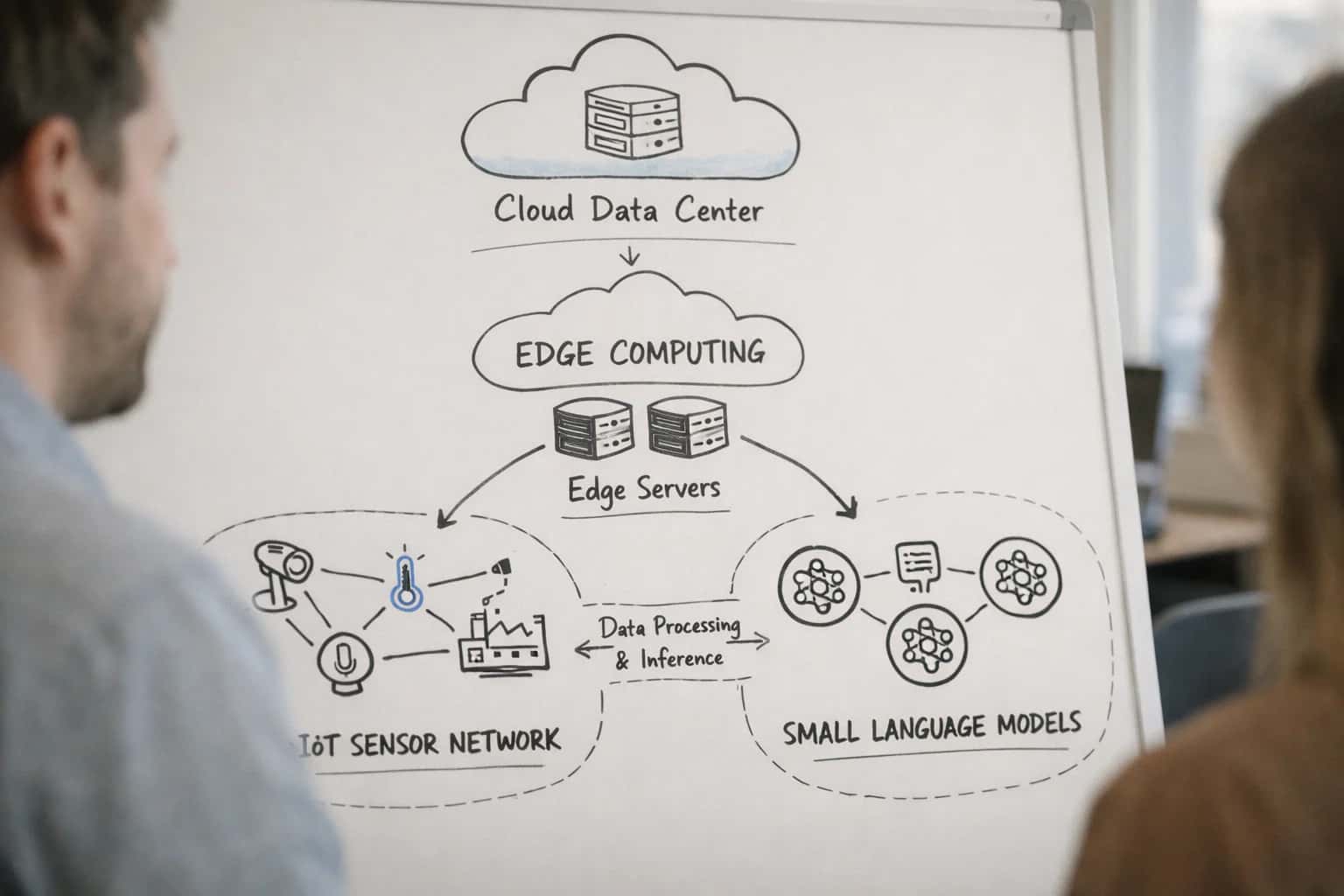
For platforms like Campspot, ResNexus, and Staylist, the primary user touchpoints—booking websites, guest portals, and owner dashboards—are public-facing and latency-sensitive. Deploying AI models on Cloudflare Workers AI or similar edge compute platforms allows you to run security and performance logic within milliseconds of the user's request, before it even reaches your core reservation API. This is critical for real-time workflows like bot detection during high-demand booking periods, personalized cache decisions based on user intent, and lightning-fast form validation that doesn't require a round-trip to your origin servers.

Integration
Campground Integration with Cloudflare AI
A technical blueprint for deploying AI-powered security, performance, and personalization at the edge to protect campground booking platforms like Campspot, ResNexus, and Staylist from bots, fraud, and downtime.
ARCHITECTURE & PERFORMANCE
Why Deploy AI at the Edge for Campground Platforms?
Deploying AI inference directly at the network edge transforms how campground platforms handle security, performance, and guest experience.
Key integration surfaces include:
- Booking Engine APIs: Inject AI-powered bot scoring and rate limiting directly into API gateway logic at the edge.
- Static Asset Delivery: Use AI to dynamically adjust cache TTLs and prefetch strategies based on real-time demand signals from your campground PMS.
- Web Application Firewall (WAF): Enhance rule-based WAF with AI models that analyze request patterns for sophisticated fraud or scraping attempts targeting availability and pricing data.
- Guest Support Chat Widgets: Host lightweight AI inference for initial intent classification and FAQ retrieval at the edge, reducing latency for the first guest interaction.
This architecture moves computationally intensive but low-latency decisions closer to the user, preserving your core platform's resources for complex reservation logic and data persistence.
Rollout is typically phased, starting with non-critical paths like image optimization or bot management on marketing pages, before moving to core booking flows. Governance is managed through the edge platform's version control and canary deployment features, allowing you to roll back AI models as easily as code. The result is a more resilient, faster, and secure front-end for your campground management system, where AI acts as a intelligent filter and accelerator, not a bottleneck. For teams already using Cloudflare, this integration leverages existing infrastructure to add AI capabilities without a major architectural overhaul.
ARCHITECTURE BLUEPRINT
Where Cloudflare AI Touches the Campground Stack
Protecting Booking APIs and Web Assets
Cloudflare AI operates at the global edge to secure the public-facing surfaces of your campground platform. This is critical for platforms like Campspot and ResNexus where the booking engine and guest portal are primary attack vectors.
Key integration points:
- API Gateway Protection: Apply AI-driven bot detection to
/api/v1/reservationsand/api/v1/availabilityendpoints to block credential stuffing and inventory scraping. - Login Page Security: Use Cloudflare's machine learning models to analyze traffic patterns to
/loginand/adminpaths, distinguishing legitimate guest traffic from automated attacks. - DDoS Mitigation: Leverage AI-powered rate limiting and anomaly detection to protect against traffic floods during peak booking seasons or targeted attacks.
This layer ensures reservation integrity and protects revenue operations without modifying core platform code.
CLOUDFLARE AI INTEGRATION PATTERNS
High-Value Use Cases for Edge AI in Campgrounds
Deploying AI at the edge with Cloudflare protects campground booking platforms, accelerates guest experiences, and automates security responses without impacting backend reservation systems like Campspot or ResNexus.
01
Real-Time Bot & Fraud Mitigation
Intercept and analyze traffic patterns at the edge to distinguish legitimate guest bookings from malicious bots, credential stuffing, and inventory scraping attacks. Workflow: Cloudflare AI analyzes request headers, mouse movements, and API call sequences before traffic hits your Campspot/ResNexus booking engine, blocking threats in milliseconds.
Batch -> Real-time
Threat response
02
Dynamic Cache Optimization for Availability Searches
Use edge AI to predict high-demand search patterns (e.g., holiday weekends, local events) and intelligently pre-warm Cloudflare's cache with relevant site availability pages. Workflow: AI model at the edge analyzes historical search logs and real-time trends to serve cached, sub-second responses for common queries, reducing load on Staylist/Campground Master APIs during peak traffic.
2-5s -> <500ms
Page load time
03
Automated DDoS Response & Rate Limiting
Deploy AI-driven adaptive rate limiting that learns normal traffic baselines for your campground website and APIs, automatically tightening thresholds during attack patterns. Workflow: Edge AI identifies anomalous traffic spikes (e.g., volumetric attacks targeting booking APIs) and triggers Cloudflare's firewall rules to isolate and mitigate, ensuring genuine guest access remains uninterrupted.
Manual -> Auto
Incident response
04
Personalized Edge Routing for Guest Segments
Route incoming website visitors to optimized application instances or CDN endpoints based on AI-inferred intent (e.g., first-time visitor, returning guest, group booker). Workflow: Edge AI analyzes user-agent, geolocation, and referral data to route high-intent bookers to a faster, stripped-down booking path, while casual browsers get content-rich pages, all before hitting your origin server.
Same infrastructure
Improved conversion
05
Proactive Security Alert Triage
Filter and prioritize security alerts from edge WAF and firewall logs using an AI classifier, reducing noise for campground IT teams. Workflow: Cloudflare AI evaluates each security event's context and likelihood of being a false positive, pushing only high-confidence threats to integrated platforms like /integrations/security-information-and-event-platforms/splunk-ai or Slack, turning hundreds of daily alerts into a handful of actionable items.
Hours -> Minutes
Alert review time
06
Intelligent API Load Shedding
Protect backend reservation system health during traffic surges by using edge AI to identify and gracefully degrade non-essential API calls. Workflow: During peak load, AI at the edge identifies API endpoints for non-critical functions (e.g., promotional pop-ups, non-personalized recommendations) and temporarily serves static responses or queues requests, ensuring core booking and check-in APIs in ResNexus/Campspot remain responsive.
Prevents downtime
Uptime protection
CAMPFIRE SECURITY & PERFORMANCE
Example AI-Enhanced Edge Workflows
Cloudflare's edge network provides a powerful platform to deploy AI-driven logic close to your campground's digital front door. These workflows show how to protect booking APIs, optimize guest experiences, and secure operational data without modifying your core Campspot, ResNexus, or Staylist applications.
Trigger: An HTTP request hits your campground's reservation API endpoint (e.g., /api/v1/bookings).
Context/Data Pulled: Cloudflare Workers AI analyzes the request in real-time, extracting:
- Request headers, IP reputation, and JA3 fingerprint.
- Behavioral patterns (request rate, timing, sequence) compared to normal guest booking flows.
- Payload structure for anomalies (e.g., scripted form fills, unnatural field values).
Model/Action: A lightweight classification model (like @cf/microsoft/resnet-50 for image CAPTCHA analysis or a custom model for sequence scoring) runs at the edge to assign a bot probability score.
System Update/Next Step:
- Score < Threshold: Request is forwarded to your Campspot/ResNexus backend.
- Score > Threshold: Request is challenged (e.g., served a computational puzzle via Cloudflare Turnstile) or blocked, with details logged to a security dashboard.
Human Review Point: High-confidence bot attacks are auto-blocked. Medium-risk scores trigger an alert in your operations Slack channel with request details for manual review.
EDGE SECURITY & PERFORMANCE
Implementation Architecture: Wiring Cloudflare AI to Your Campground Stack
A technical blueprint for deploying Cloudflare's AI-powered security and performance services at the edge to protect your campground booking platform and guest data.
Integrating Cloudflare AI starts by placing your campground management platform—be it Campspot, ResNexus, Staylist, or Campground Master—behind Cloudflare's global network. This creates a secure, intelligent edge layer that intercepts all traffic before it reaches your booking engine. The core integration surfaces are your public-facing booking website, guest portal APIs, and admin interfaces. Cloudflare's AI models analyze this traffic in real-time to distinguish legitimate guest sessions from malicious bots, DDoS attacks, and credential-stuffing attempts, which are common targets for platforms handling payment and PII.
The implementation is API-driven. You configure Cloudflare's AI-powered Bot Management and DDoS Protection via Terraform or their API, creating rulesets that are informed by global threat intelligence. For performance, you integrate Cache Reserve and Image Resizing with your site's asset delivery, using AI to predict and pre-cache high-demand pages (like availability calendars) during peak booking seasons. A key workflow is connecting Cloudflare's Security Analytics and Logpush to your SIEM (e.g., Splunk) or data warehouse, creating a feedback loop where attack patterns inform future rate-limiting and firewall rules specific to campground booking behavior.
Rollout follows a phased approach: first, enabling security services in 'monitor' mode to baseline traffic, then gradually enforcing protections on API endpoints and login pages. Governance requires mapping Cloudflare's Zone, Account, and User roles to your team's structure—granting network engineers security admin access while limiting campground ops staff to cache purge capabilities. The result is a resilient architecture where AI at the edge absorbs threats and optimizes delivery, letting your core reservation platform focus on business logic while reducing infrastructure costs and support tickets related to site downtime or fraud.
IMPLEMENTATION PATTERNS
Code Examples: Cloudflare Workers AI for Campgrounds
Blocking Scrapers & Fraudulent Bookings
Integrate Workers AI with your Campspot or ResNexus booking API endpoint to analyze incoming traffic patterns and payloads in real-time. This script runs before the request hits your core reservation system, using Cloudflare's AI models to score traffic and block automated attacks.
javascript// Cloudflare Worker for /api/bookings import { Ai } from '@cloudflare/ai'; export default { async fetch(request, env) { const ai = new Ai(env.AI); // 1. Extract request features for AI analysis const requestData = { ip: request.headers.get('CF-Connecting-IP'), userAgent: request.headers.get('User-Agent'), path: new URL(request.url).pathname, // Add payload analysis if it's a POST }; // 2. Run bot detection model const botScore = await ai.run('@cf/facebook/bart-large-mnli', { input: JSON.stringify(requestData), labels: ['legitimate_user', 'scraper_bot', 'fraud_attempt'] }); // 3. Decision logic if (botScore.labels[0]?.label !== 'legitimate_user') { // Log to analytics, return challenge, or block return new Response('Access challenge required', { status: 403 }); } // 4. Forward legitimate request to backend API return fetch('https://your-campspot-api.com/api/bookings', request); } }
This pattern protects against inventory scraping, denial-of-inventory attacks, and fraudulent booking attempts that target high-demand dates.
CAMPFIRE EDGE PROTECTION
Realistic Impact: Security, Performance, and Cost
How deploying AI at the edge with Cloudflare transforms key operational metrics for campground booking platforms.
| Metric | Before AI | After AI | Notes |
|---|---|---|---|
Bot-driven booking fraud | Manual review of suspicious traffic | Automated bot detection & blocking | Reduces fake reservations and inventory hoarding |
DDoS attack mitigation | Reactive manual intervention | AI-powered auto-mitigation | Minimizes site downtime during peak booking periods |
Cache hit ratio for booking pages | Static caching rules | Predictive, AI-optimized caching | Improves page load times and reduces origin server load |
False positive rate on security rules | High, leading to blocked legitimate users | Low, with contextual AI scoring | Improves legitimate guest experience |
Time to detect credential stuffing | Hours to days via log review | Real-time anomaly detection | Protects guest accounts from takeover |
Cost of over-provisioned bandwidth | Fixed, high monthly spend | Dynamic, AI-optimized usage | Reduces CDN and infrastructure costs |
Manual security policy updates | Weekly reviews and adjustments | Continuous, AI-driven tuning | Frees IT/ops team for higher-value tasks |
SECURING THE EDGE
Governance, Monitoring, and Phased Rollout
A practical approach to deploying Cloudflare AI for campground websites that balances security, performance, and operational control.
A production integration with Cloudflare AI should be treated as a security and performance overlay to your existing Campspot, ResNexus, or Staylist booking engine. The primary governance surfaces are: 1) Cloudflare Workers for serverless logic, 2) AI Gateway for managing model calls and costs, 3) WAF/Bot Management rulesets for threat detection, and 4) Cache Rules for optimizing static asset delivery. Your core reservation data remains in your primary campground management platform; Cloudflare AI acts as a protective, intelligent edge layer that intercepts, analyzes, and optimizes traffic before it hits your origin servers.
Start with a phased rollout to de-risk the implementation. Phase 1 focuses on non-critical paths: deploy AI-powered bot detection and cache optimization for your marketing pages and static assets (e.g., campsite images, amenity lists). Use Cloudflare's analytics to establish a baseline for legitimate vs. malicious traffic. Phase 2 introduces AI to the booking path: implement a Worker that uses a lightweight model to analyze form submission patterns for fraud (e.g., rapid-fire booking attempts, mismatched geolocation data) before the request is forwarded to your Campspot or ResNexus API. Phase 3 rolls out more advanced features, like using AI to dynamically adjust cache TTLs based on real-time demand signals from your Staylist calendar or to generate personalized security challenges for high-risk sessions.
Governance is enforced through configuration-as-code for WAF rules and Worker scripts, integrated into your CI/CD pipeline. All AI model interactions should be routed through Cloudflare's AI Gateway to enforce rate limits, log prompts/completions for audit trails, and control costs. Create separate API tokens and zone-level permissions for development, staging, and production environments. Monitoring should combine Cloudflare's built-in dashboards for security events and cache performance with custom logging from Workers to your SIEM (e.g., Splunk, Datadog) to correlate AI-driven actions with business outcomes, like booking completion rates. This layered approach ensures the AI integration enhances resilience without introducing unmanaged complexity into your core reservation operations.
Enabling Efficiency, Speed & Accuracy
Intelligent Analysis, Decision & Execution
We build AI systems for teams that need search across company data, workflow automation across tools, or AI features inside products and internal software.
Talk to Us
Search across company data
Give teams answers from docs, tickets, runbooks, and product data with sources and permissions.
Useful when people spend too long searching or get different answers from different systems.
Enterprise searchRAGPermissions
Read more
Automate internal workflows
Use AI to route work, draft outputs, trigger actions, and keep approvals and logs in place.
Useful when repetitive work moves across multiple tools and teams.
AI agentsWorkflow automationGovernance
Read more
Add AI to products and internal tools
Build assistants, guided actions, or decision support into the software your team or customers already use.
Useful when AI needs to be part of the product, not a separate tool.
AI integrationDecision supportModel routing
Read moreCAMPFIRE AI + CLOUDFLARE
FAQ: Technical and Commercial Questions
Common technical and commercial questions about deploying Cloudflare's AI-powered security and performance features at the edge to protect campground booking platforms and enhance guest experience.
Cloudflare's AI-powered security layers, like Bot Management and DDoS protection, analyze traffic patterns in real-time to distinguish legitimate guest traffic from malicious bots and fraud attempts.
Typical Integration Flow:
- Traffic Routing: All web traffic for your Campspot or ResNexus booking site is proxied through Cloudflare's global network.
- AI Analysis: Cloudflare's models analyze request headers, JS challenges, and behavioral signals (like mouse movements on booking forms) to generate a threat score.
- Automated Action: Based on configurable rules, traffic is allowed, challenged (with a CAPTCHA), or blocked.
- Platform Sync: For high-confidence fraud attempts (e.g., credential stuffing), our integration can create an alert in your campground management platform's guest record or audit log.
Key Benefit: This happens at the edge, before malicious traffic reaches your origin server, protecting your booking engine's performance and preventing inventory scraping or fake reservations.

About the author
Prasad Kumkar
CEO & MD, Inference Systems
Prasad Kumkar is the CEO & MD of Inference Systems and writes about AI systems architecture, LLM infrastructure, model serving, evaluation, and production deployment. Over 5+ years, he has worked across computer vision models, L5 autonomous vehicle systems, and LLM research, with a focus on taking complex AI ideas into real-world engineering systems.
His work and writing cover AI systems, large language models, AI agents, multimodal systems, autonomous systems, inference optimization, RAG, evaluation, and production AI engineering.
LinkedIn
Limited slotsGet a Free AI Consultation
Partnered with leading AI, data, and software stack.





How We Work
Custom AI workflows for your Business
One-fit-all AI don't work for modern businesses. At Inferensys, we aim to understand your business & custom requirements; which we use to define most efficient agentic workflows, the data, and the tools for your business.
01
Review the use case
We understand the task, the users, and where AI can actually help.
Read more02
Pick the right approach
We define what needs search, automation, or product integration.
Read more03
Build the first useful version
We implement the part that proves the value first.
Read more04
Improve from there
We add the checks and visibility needed to keep it useful.
Read moreThe first call is a practical review of your use case and the right next step.
Talk to Us