AI integration for Campground Master connects at three primary layers: the reservation and guest data API, the operational workflow engine, and the reporting and analytics database. The most immediate impact comes from automating high-volume, repetitive tasks that touch these core objects: Reservation, Guest, Site, WorkOrder, and Invoice. For example, an AI agent can be triggered via webhook from a new booking to automatically send personalized pre-arrival instructions, check for site-specific conflicts, or flag a high-value guest for a manual welcome call.

Integration
AI Integration for Campground Master
A technical blueprint for embedding AI agents and workflows into Campground Master's outdoor hospitality suite to automate revenue management, site assignment, maintenance scheduling, and compliance reporting.
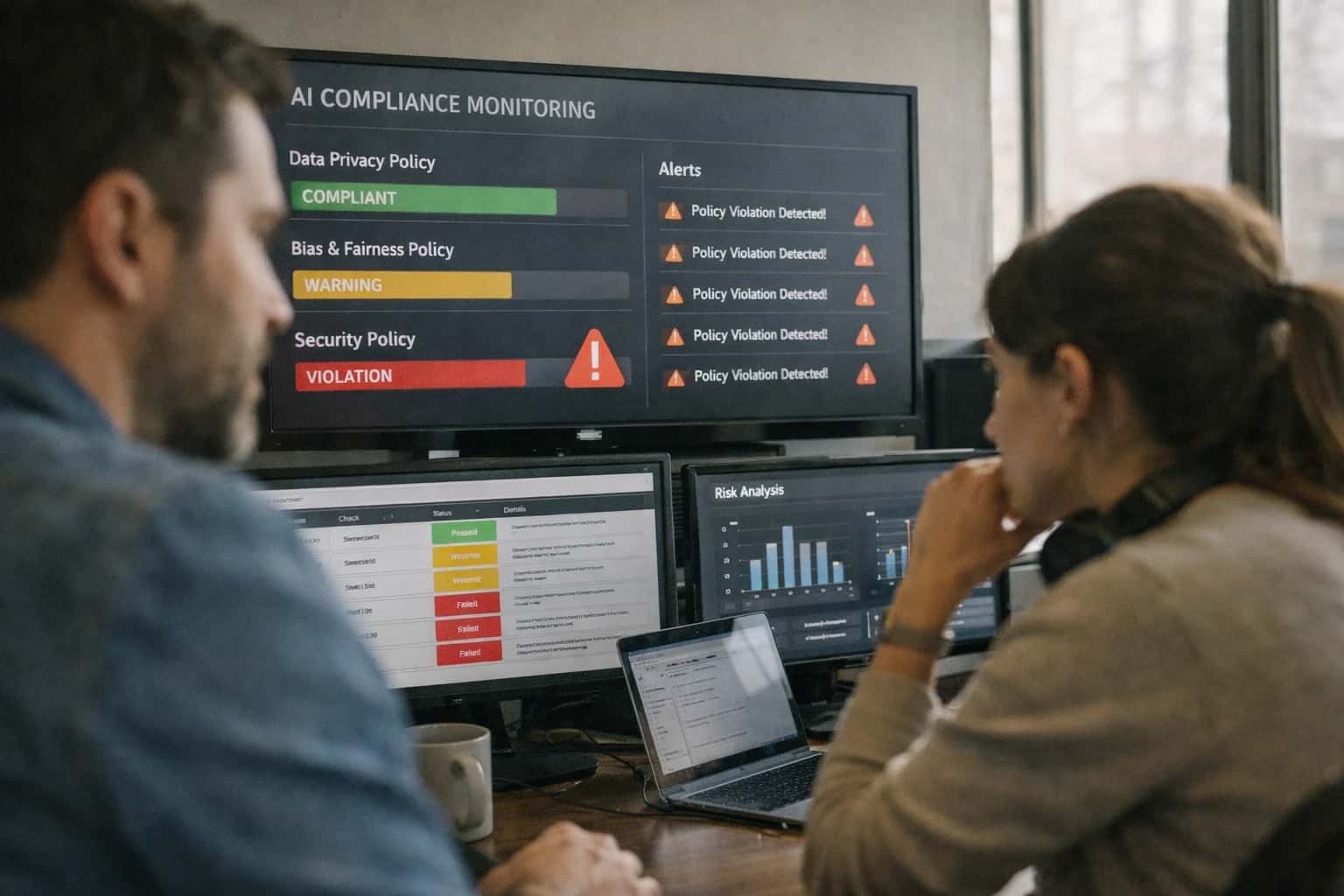
ARCHITECTURE BLUEPRINT
Where AI Fits into Campground Master's Operations
A practical guide to connecting AI agents and workflows to Campground Master's reservation engine, guest records, and operational modules.
Implementation typically involves building a middleware orchestration layer that securely calls Campground Master's REST API. Key workflows to prioritize include: - Guest Support Triage: An AI agent reads incoming emails or chat messages, classifies intent using the guest's reservation context, and either answers directly (e.g., "What time is check-in?") or creates a structured support ticket with priority in Campground Master. - Dynamic Rate Optimization: An AI model analyzes historical Site occupancy, local event data from integrated calendars, and competitor pricing to suggest rate adjustments, which are then pushed back to Campground Master's pricing tables via API. - Maintenance Scheduling: AI processes WorkOrder history and upcoming Reservation turnover schedules to optimize cleaner and maintenance crew assignments, reducing gaps and overtime.
Rollout should be phased, starting with a single campground and a non-critical workflow like automated FAQ responses. Governance is critical: all AI-generated guest communications should be logged in the guest's record, and any action that modifies a reservation or invoice should require human-in-the-loop approval or be confined to a sandbox environment initially. The integration's value is measured in operational efficiency—reducing manual data entry, shrinking response times from hours to minutes, and enabling revenue managers to act on pricing insights the same day instead of next week.
ARCHITECTURE GUIDE
Key Integration Surfaces in Campground Master
Reservation & Guest Hub
The core of Campground Master is its reservation engine and guest profile system. AI integration here focuses on automating high-volume, repetitive tasks and enhancing the guest journey.
Key Objects & APIs:
- Reservation Records: The primary object containing stay dates, site type, guest count, and status (confirmed, waitlisted, canceled).
- Guest Profiles: Store contact details, preferences, stay history, and notes.
- Booking Engine API: For creating, modifying, and canceling reservations programmatically.
AI Use Cases:
- Automated Waitlist Management: An AI agent monitors cancellations and automatically offers newly available sites to waitlisted guests via email/SMS, updating both records.
- Intelligent Upsell at Booking: During the online booking flow, an AI analyzes the guest's profile and current reservation to suggest relevant add-ons (e.g., firewood delivery, activity passes).
- Anomaly Detection: AI reviews new bookings in real-time to flag potential fraud (e.g., duplicate profiles, suspicious payment patterns) for staff review.
Integration typically involves webhooks for reservation status changes and secure API calls to fetch guest data and apply modifications.
INTEGRATION OPPORTUNITIES
High-Value AI Use Cases for Campground Master
Practical AI integration patterns that connect directly to Campground Master's reservation engine, site inventory, guest records, and operational workflows to automate manual tasks and improve decision-making.
01
Intelligent Site Assignment & Inventory Optimization
AI analyzes upcoming reservations, guest preferences (RV length, hookup needs), and site conditions (shade, slope) to automatically assign the optimal site from Campground Master's inventory. It predicts inventory turns and manages hold-backs for group bookings, reducing manual shuffling and maximizing site utilization.
Batch -> Real-time
Assignment logic
02
Automated Guest Communications & Issue Triage
An AI agent integrates with Campground Master's guest records and communication logs to handle pre-arrival FAQs, send personalized check-in instructions, and triage common issues (e.g., Wi-Fi problems, amenity questions). It escalates complex cases to staff with full context, cutting down front-desk volume.
Hours -> Minutes
Response time
03
Predictive Maintenance & Work Order Scheduling
AI processes Campground Master's work order history, asset conditions, and future occupancy to predict maintenance needs for sites, utilities, and amenities. It automatically generates and prioritizes work orders in the system, optimizing technician schedules against reservation calendars to minimize guest disruption.
Reactive -> Proactive
Maintenance mode
04
Dynamic Rate & Package Recommendation Engine
Connected to Campground Master's rate tables and booking engine, AI evaluates real-time factors (local events, competitor pricing, weather forecast, lead time) to suggest optimal rate adjustments and create personalized package offers (e.g., 'Stay 3 nights, get a firewood bundle'). It pushes these recommendations directly to the booking flow.
1 sprint
Pilot implementation
05
Group Booking & Event Contract Assistant
For complex group inquiries, AI reviews the request details against Campground Master's availability, site configurations, and policy rules to draft a preliminary quote and contract outline. It can answer common logistical questions from the group organizer and flag special requirements (catering, permits) for staff review.
Same day
Quote turnaround
06
Compliance & Audit Reporting Copilot
An AI copilot queries Campground Master's transaction logs, audit trails, and permit records to automate the generation of compliance reports for health, safety, or financial regulations. It monitors for anomalous user activity or data entry patterns and alerts managers, turning manual monthly reviews into continuous oversight.
Days -> Hours
Report preparation
CAMPFIRE-READY IMPLEMENTATIONS
Example AI-Powered Workflow Automations
These are practical, production-ready automations that connect AI agents directly to Campground Master's APIs and data objects. Each workflow is designed to reduce manual effort, improve guest experience, and optimize revenue.
Trigger: A new reservation is created in Campground Master via the API or web portal.
Context Pulled: The AI agent retrieves the guest's booking details (party size, equipment type, stay dates, past stay history) and queries Campground Master's real-time site inventory for available sites matching the criteria.
Agent Action: Using a configured LLM, the agent analyzes the guest profile and current occupancy to:
- Assign the optimal site: Balances operational efficiency (proximity to utilities, planned maintenance) with guest preferences (privacy, view, proximity to amenities) inferred from past stays or notes.
- Generate a personalized upsell offer: Drafts a natural-language message suggesting a premium site upgrade, early check-in, or activity package, including a rationale (e.g., "Based on your 30' RV, we recommend Site A12 for easier leveling and a lake view.").
System Update: The agent calls Campground Master's API to tentatively hold the recommended site and posts the upsell message and rationale to the reservation's internal notes and/or to a configured guest communication channel (e.g., SMS, email template).
Human Review Point: The front desk agent receives an alert in Campground Master's dashboard with the AI's site recommendation and upsell draft. They can approve, modify, or reject the suggestion with one click before the offer is sent to the guest.
PRODUCTION-READY INTEGRATION PATTERNS
Implementation Architecture: Data Flow & Guardrails
A secure, phased approach to connecting AI agents with Campground Master's reservation, site, and guest data.
A production integration with Campground Master is built on a secure orchestration layer that sits between your AI models and the platform's core APIs. This layer typically uses a service like n8n or Microsoft Copilot Studio to manage workflows, calling Campground Master's REST API for reservation objects, guest profiles, site inventory, and work orders. Key data flows include: pulling upcoming arrivals for check-in automation, fetching site attributes for intelligent assignment, and writing back notes or status changes from AI interactions. All API calls should use service accounts with role-based access control (RBAC) scoped to specific modules, and implement retry logic with exponential backoff for resilience during peak booking periods.
Critical guardrails are implemented at the data, workflow, and output stages. Before any AI processing, a data masking service should anonymize sensitive PII like guest payment details. For any AI action that modifies a reservation (e.g., site reassignment) or initiates a charge, the workflow must include a human-in-the-loop approval step, logged in Campground Master's audit trail. Outputs from generative AI, such as draft guest communications or maintenance summaries, are passed through a validation prompt that checks for policy compliance and accuracy against the source reservation data before being queued for sending or filing.
Rollout follows a phased, use-case-specific path. Start with a read-only reporting copilot that answers natural language questions about occupancy and revenue using a RAG system over your data warehouse (synced via Fivetran). Next, deploy a guest support agent that can answer FAQs by querying Campground Master's guest records and knowledge base, but cannot modify bookings. Finally, introduce prescriptive agents for dynamic pricing or site assignment, which run in a simulation/sandbox mode to build confidence before enabling live API writes. Each phase includes monitoring for data drift, prompt performance, and user feedback, ensuring the AI augments—rather than disrupts—your outdoor hospitality operations.
CAMPGROUND MASTER
Code & API Integration Patterns
Connecting AI to Reservation Objects
Integrate AI agents directly with Campground Master's reservation and site APIs to automate complex booking logic. Use the Reservation object to access guest details, stay dates, and site preferences. An AI agent can process incoming group requests or waitlist entries, evaluate site availability via the Site API, and propose optimal assignments based on vehicle size, amenity requests, and ADA compliance.
Key API endpoints include GET /api/v1/reservations for retrieval and PATCH /api/v1/reservations/{id} for updates. Use webhooks (e.g., reservation.created) to trigger AI workflows for real-time optimization. This pattern reduces manual site juggling and improves occupancy by matching guests to the most suitable sites automatically.
python# Example: AI agent fetching and evaluating a reservation import requests def evaluate_reservation_for_site_assignment(reservation_id): headers = {'Authorization': 'Bearer YOUR_API_KEY'} # Fetch reservation details reservation = requests.get( f'https://api.campgroundmaster.com/v1/reservations/{reservation_id}', headers=headers ).json() # AI logic: Analyze guest vehicle length, ADA needs, pet status requirements = { 'vehicle_length': reservation['vehicleLength'], 'ada_required': reservation['adaFlag'], 'pet_friendly': reservation['petFlag'] } # ... AI selects best available site ... # Update reservation with selected site ID update_payload = {'siteId': selected_site_id} requests.patch( f'https://api.campgroundmaster.com/v1/reservations/{reservation_id}', json=update_payload, headers=headers )
CAMPFIRE-READY AI INTEGRATION
Realistic Operational Impact & Time Savings
A practical look at how AI integration for Campground Master transforms high-friction, manual workflows into assisted, data-driven operations. These estimates are based on typical implementations for 50–200 site properties.
| Workflow | Before AI | After AI | Implementation Notes |
|---|---|---|---|
Site Assignment & Optimization | Manual review of grid, 15–30 min per day | AI-suggested assignments in 2–5 min | Considers ADA needs, equipment, guest history, and maintenance status |
Group Booking Quote Generation | Manual rate calculation and contract drafting, 1–2 hours | Automated draft with AI review, 15–20 min | Pulls from master rate tables and past group contracts |
Maintenance Work Order Triage | Phone/email intake, manual priority assignment | AI-assisted intake & routing via chat/portal | Integrates with site status and upcoming reservations |
Dynamic Rate Adjustment Review | Weekly manual analysis of occupancy & comps | Daily AI-generated recommendations with rationale | Human approves final rates; AI handles API updates |
Guest FAQ & Pre-Arrival Support | Staff answers repetitive questions via phone/email | AI agent handles 60–70% of common inquiries | Escalates complex issues to staff with full context |
End-of-Month Compliance Reporting | Manual data pull and formatting, 4–6 hours | AI-generated draft report in 30–45 min | Validates against state/county permit requirements |
Camp Store Inventory Reordering | Manual stock check and purchase order creation | AI predicts demand and drafts POs for review | Considers seasonal trends and upcoming group bookings |
PRODUCTION ARCHITECTURE FOR CAMPGROUND MASTER
Governance, Security, and Phased Rollout
A practical framework for deploying AI in Campground Master with controlled risk and measurable impact.
A production-grade AI integration for Campground Master is built on a secure, event-driven architecture. This typically involves deploying an AI orchestration layer (e.g., using a framework like LangChain or Microsoft Copilot Studio) that listens to webhooks from Campground Master for events like new reservations, guest messages, or work order creation. This layer processes the event, calls the appropriate AI service (e.g., for summarization, classification, or generation), and then uses Campground Master's REST API to write back results—such as a categorized support ticket, a dynamic pricing suggestion, or a drafted guest response—into the relevant Reservation, Guest Profile, Work Order, or Communication Log objects. All AI interactions are logged with a correlation ID back to the source Campground Master record for a full audit trail.
Governance is enforced at multiple levels. Role-Based Access Control (RBAC) in Campground Master dictates which AI-generated suggestions or automations are visible to which staff roles (e.g., only managers see pricing overrides). A human-in-the-loop approval step is configured for high-stakes actions, like sending automated responses to negative reviews or adjusting rates beyond a predefined threshold. Data sent to external AI models is anonymized where possible (e.g., using guest IDs instead of names) and all prompts are engineered to avoid leaking sensitive information. The system is designed to fail gracefully; if the AI service is unavailable, core Campground Master operations continue uninterrupted, with workflows defaulting to manual processes.
A phased rollout minimizes operational disruption and builds confidence. Phase 1 (Read-Only Intelligence) focuses on AI providing insights without taking action—for example, an AI copilot that summarizes a guest's stay history for front-desk staff or flags potential booking anomalies for review. Phase 2 (Assisted Workflows) introduces automation with a required human review, such as AI-drafted responses to common guest inquiries that an agent can approve and send with one click. Phase 3 (Conditional Automation) enables fully automated actions for well-defined, low-risk scenarios, like auto-assigning a maintenance priority based on a work order description or sending a pre-arrival email confirmation. Each phase is measured against clear KPIs (e.g., reduction in manual data entry time, faster guest response resolution) before proceeding, ensuring the integration delivers tangible value to campground operations.
Enabling Efficiency, Speed & Accuracy
Intelligent Analysis, Decision & Execution
We build AI systems for teams that need search across company data, workflow automation across tools, or AI features inside products and internal software.
Talk to Us
Search across company data
Give teams answers from docs, tickets, runbooks, and product data with sources and permissions.
Useful when people spend too long searching or get different answers from different systems.
Enterprise searchRAGPermissions
Read more
Automate internal workflows
Use AI to route work, draft outputs, trigger actions, and keep approvals and logs in place.
Useful when repetitive work moves across multiple tools and teams.
AI agentsWorkflow automationGovernance
Read more
Add AI to products and internal tools
Build assistants, guided actions, or decision support into the software your team or customers already use.
Useful when AI needs to be part of the product, not a separate tool.
AI integrationDecision supportModel routing
Read moreIMPLEMENTATION AND OPERATIONS
Frequently Asked Questions
Common technical and operational questions about integrating AI agents and workflows with Campground Master's reservation, operations, and guest management systems.
AI agents interact with Campground Master via its REST API, using OAuth 2.0 or API key authentication scoped to specific roles and permissions. A typical secure integration pattern involves:
- Service Account Provisioning: Create a dedicated service account in Campground Master with granular permissions (e.g.,
reservations:read,reservations:update,guests:read). - API Gateway & Orchestrator: The AI agent logic runs in a secure environment (like AWS Lambda or Azure Functions) and calls an integration layer. This layer:
- Manages API credentials and token rotation.
- Validates and sanitizes agent-generated requests (e.g., ensuring date formats, valid site IDs).
- Logs all data access for audit trails.
- Contextual Data Retrieval: For a guest service query, the agent first calls
GET /api/v1/reservations?guestEmail={email}to retrieve the active reservation context. - Grounded Updates: Any proposed change (like a site reassignment) is formulated as a structured JSON payload and sent via
PATCH /api/v1/reservations/{id}. The orchestrator can implement a human-in-the-loop approval step for high-impact changes before submission.
This ensures the AI operates within a governed, auditable framework, never having direct database access.

About the author
Prasad Kumkar
CEO & MD, Inference Systems
Prasad Kumkar is the CEO & MD of Inference Systems and writes about AI systems architecture, LLM infrastructure, model serving, evaluation, and production deployment. Over 5+ years, he has worked across computer vision models, L5 autonomous vehicle systems, and LLM research, with a focus on taking complex AI ideas into real-world engineering systems.
His work and writing cover AI systems, large language models, AI agents, multimodal systems, autonomous systems, inference optimization, RAG, evaluation, and production AI engineering.
LinkedIn
Limited slotsGet a Free AI Consultation
Partnered with leading AI, data, and software stack.





How We Work
Custom AI workflows for your Business
One-fit-all AI don't work for modern businesses. At Inferensys, we aim to understand your business & custom requirements; which we use to define most efficient agentic workflows, the data, and the tools for your business.
01
Review the use case
We understand the task, the users, and where AI can actually help.
Read more02
Pick the right approach
We define what needs search, automation, or product integration.
Read more03
Build the first useful version
We implement the part that proves the value first.
Read more04
Improve from there
We add the checks and visibility needed to keep it useful.
Read moreThe first call is a practical review of your use case and the right next step.
Talk to Us