AI integration for campground procurement targets the vendor, purchase order, and contract modules within platforms like Campground Master. The primary surfaces are the vendor master file, purchase requisition queues, invoice approval workflows, and contract repository. AI agents can be triggered by events such as a new vendor application, a low-stock alert for camp store inventory, or a contract renewal date, connecting via the platform's REST API or webhooks to ingest relevant data objects like Vendor, PurchaseOrder, Invoice, and Contract.

Integration
AI for Campground Vendor and Procurement Management
A technical blueprint for integrating AI into campground back-office operations to automate ordering, evaluate supplier performance, and manage contracts using data from Campground Master, ResNexus, and Staylist.
ARCHITECTURE AND ROLLOUT
Where AI Fits in Campground Procurement and Vendor Operations
A technical blueprint for integrating AI into back-office procurement, vendor performance, and contract management workflows for campgrounds.
High-value use cases include automating the initial vetting of new suppliers by checking for required insurance certificates and licenses, analyzing historical vendor performance data to flag underperforming partners for review, and drafting contract amendments by extracting key terms from existing agreements. For example, an AI workflow could monitor fuel or propane delivery invoices against contracted rates, flag discrepancies, and route them to a manager with a suggested resolution. This shifts manual, periodic review to continuous, exception-based management, reducing overspend and compliance risk.
A production rollout typically involves a phased approach: starting with a single, high-volume category like janitorial supplies or firewood, where AI handles purchase order generation and invoice matching. Governance is critical; all AI-generated actions (e.g., sending a vendor performance notice) should require human-in-the-loop approval via the platform's native task or approval system, creating a clear audit trail. The integration architecture often uses a middleware layer to securely broker data between the campground management platform, AI services, and external data sources like supplier databases, ensuring vendor data remains synchronized and access is role-controlled.
AI FOR VENDOR AND PROCUREMENT MANAGEMENT
Key Integration Surfaces in Campground Management Platforms
Core Data for AI-Driven Supplier Intelligence
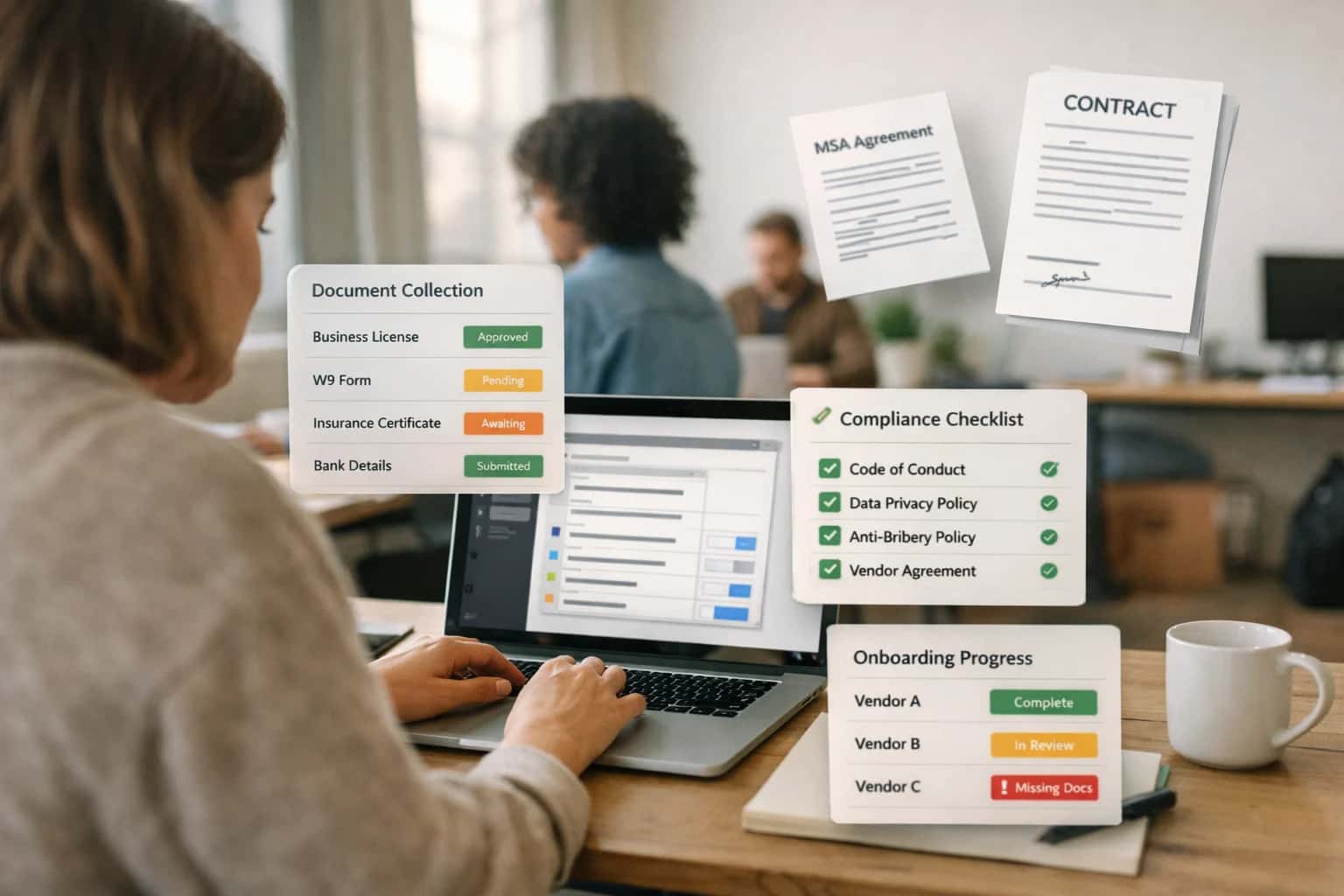
The Vendor Master is the system of record for all supplier relationships, containing critical fields like contact details, tax IDs, payment terms, and performance history. AI integration surfaces here to automate enrichment, risk scoring, and compliance checks.
Key objects for AI include:
- Vendor Profile Records: Use AI to parse incoming W-9 forms, extract key data, and auto-populate fields, reducing manual entry.
- Performance Metrics: Connect AI to analyze on-time delivery rates, invoice accuracy, and quality scores from purchase orders and work orders.
- Compliance & Certification Tracking: Implement AI agents to monitor expiration dates for insurance certificates, licenses, and safety documents, triggering automated renewal requests.
By grounding AI in this master data, procurement teams gain a dynamic, scored view of their supplier ecosystem, enabling proactive management and smarter sourcing decisions.
VENDOR & SUPPLY CHAIN OPERATIONS
High-Value AI Use Cases for Campground Procurement
Integrate AI directly with Campground Master's vendor modules to automate ordering, evaluate supplier performance, and manage contracts—turning procurement from a manual back-office task into a strategic, data-driven operation.
01
Automated Purchase Order Generation
AI monitors inventory levels in Campground Master for items like firewood, propane, and maintenance supplies. When thresholds are met, it automatically drafts and routes POs to pre-approved vendors, pulling historical pricing and contract terms. Workflow: Inventory API → AI review → PO draft in Campground Master → Manager approval → Vendor dispatch.
Hours -> Minutes
Order processing
02
Supplier Performance & Risk Scoring
An AI agent continuously analyzes vendor data—delivery timeliness, invoice accuracy, quality reports—from Campground Master's vendor records and connected accounting systems. It generates a live risk score and flags vendors for review before contract renewal. Value: Proactively mitigates supply chain disruptions for critical campground operations.
Batch -> Real-time
Vendor monitoring
03
Contract Review & Obligation Tracking
AI parses new vendor contracts (MSAs, SLAs) uploaded to Campground Master's document system, extracting key clauses, pricing terms, and auto-renewal dates. It creates tracked obligations and schedules reviews. Integration: Links contract intelligence to the procurement module, ensuring compliance and avoiding auto-renewal surprises.
1 sprint
Implementation timeline
04
Intelligent Invoice Matching & Coding
When vendor invoices arrive via email or portal, AI extracts line items, matches them to Campground Master POs and goods receipt records, and suggests GL codes for export to QuickBooks or Xero. Flags discrepancies for human review. Operational Impact: Drastically reduces manual data entry and accelerates month-end close.
80% Reduction
Manual matching effort
05
Predictive Replenishment for Seasonal Items
AI analyzes reservation forecasts, historical usage, and seasonal trends to predict demand for seasonal procurement items (e.g., pool chemicals, picnic tables). It generates recommended orders within Campground Master, optimizing cash flow and preventing stockouts during peak season. Data Sources: Reservation APIs, weather data, past consumption logs.
Same day
Demand signal to order
06
RFQ Analysis & Vendor Shortlisting
For new capital projects (e.g., playground equipment), AI assists in creating RFQ documents based on Campground Master project specs. It then analyzes incoming vendor bids, scoring them against weighted criteria (cost, timeline, references) to produce a shortlist for management. Workflow: Project brief → AI-augmented RFQ → Bid intake → Comparative analysis.
Days -> Hours
Bid evaluation cycle
FOR CAMPGROUND VENDOR OPERATIONS
Example AI-Powered Procurement Workflows
These workflows illustrate how AI agents can automate key procurement tasks by connecting to Campground Master's vendor, purchase order, and inventory modules. Each flow is triggered by real operational data and results in a system update or a prioritized task for staff review.
Trigger: Nightly sync from Campground Master's inventory tables shows stock levels for critical items (e.g., propane tanks, firewood, septic treatment).
Context/Data Pulled:
- Current inventory levels and reorder points from
Inventoryobjects. - Historical consumption rates by season.
- Preferred vendor and contract terms from
Vendorrecords. - Last purchase price and lead time data.
Model or Agent Action:
- AI identifies items below their dynamic reorder point (calculated from usage trends).
- For each item, it selects the primary vendor and checks for any active blanket POs.
- It drafts a purchase order line item with calculated quantity, referencing the contract price.
- It generates a summary note justifying the reorder based on upcoming reservations and seasonality.
System Update or Next Step:
A draft Purchase Order record is created in Campground Master in a "Pending Approval" status, with all line items, vendor info, and the AI-generated note pre-populated. An alert is sent to the procurement manager in the platform.
Human Review Point: The manager reviews the draft PO, can adjust quantities or vendors, and then approves it with one click, sending it to the vendor via integrated email or portal.
CONNECTING AI TO VENDOR MODULES AND PROCUREMENT WORKFLOWS
Implementation Architecture: Data Flow, APIs, and Guardrails
A practical blueprint for integrating AI into Campground Master's back-office operations to automate vendor analysis, order management, and contract oversight.
The integration connects to Campground Master's Vendor Management and Purchase Order modules via its REST API. Core data objects include Vendor, PurchaseOrder, Contract, and Item. The AI agent ingests vendor performance history (delivery times, quality scores), current contract terms, and real-time inventory levels from the platform to make intelligent recommendations. For example, when a stock level for firewood or propane falls below a threshold, the system can automatically evaluate qualified vendors, check contract pricing, and draft a purchase order for approval—all within the existing Campground Master workflow.
Implementation uses a queue-based architecture to handle asynchronous workflows. A webhook from Campground Master triggers the AI agent upon events like purchase_order_created or inventory_low. The agent then calls the LLM with a structured prompt containing vendor data, contract clauses, and business rules. The LLM's output—such as a vendor ranking or a redlined contract clause—is posted back to Campground Master via API, creating an audit trail in the system's native logs. Key guardrails include human-in-the-loop approvals for orders above a set value and RBAC enforcement to ensure only authorized managers can approve AI-generated procurement actions.
Rollout should start with a single, high-volume procurement category (e.g., maintenance supplies) to validate data quality and user trust. Governance requires monitoring for model drift in vendor scoring and establishing a clear escalation path to campground staff for edge cases. This architecture reduces manual vendor comparison from hours to minutes, ensures contract compliance, and provides a data-driven foundation for negotiating better terms with suppliers—directly impacting the campground's bottom line through smarter spending.
AI FOR CAMPGROUND VENDOR AND PROCUREMENT MANAGEMENT
Code and API Pattern Examples
Automating Supplier Scorecards with AI
Analyze vendor performance by connecting AI to Campground Master's vendor records and purchase order history. An AI agent can ingest delivery times, quality ratings, and invoice accuracy to generate automated scorecards and flag underperforming suppliers for review.
python# Pseudocode for vendor analysis agent from campground_master_api import VendorAPI from ai_agent import analyze_supplier_performance # Fetch vendor transaction history vendor_api = VendorAPI(api_key=CM_API_KEY) po_history = vendor_api.get_purchase_orders(vendor_id='V123', timeframe='last_quarter') invoice_data = vendor_api.get_invoices(vendor_id='V123') # AI analysis for key metrics analysis_prompt = f""" Analyze this vendor's performance: - On-time delivery rate: {po_history['on_time_rate']}% - Invoice error rate: {invoice_data['error_rate']}% - Average cost vs. budget: {po_history['cost_variance']}% Provide a summary score (1-10) and top risk. """ scorecard = analyze_supplier_performance(analysis_prompt) # Post result to vendor record or alert procurement alert_team_if_low_score(scorecard, threshold=7)
This pattern moves vendor reviews from quarterly manual exercises to continuous, data-driven monitoring.
AI-ENHANCED VENDOR OPERATIONS
Realistic Time Savings and Operational Impact
A practical comparison of manual versus AI-assisted workflows for campground vendor and procurement management, based on typical integrations with platforms like Campground Master.
| Metric | Before AI | After AI | Notes |
|---|---|---|---|
Vendor onboarding review | 2-3 hours per vendor | 30-45 minutes assisted review | AI extracts and summarizes key terms from contracts; human final approval required |
Purchase order creation | Manual entry from email/PDF | Automated draft from requisition | AI parses requisition forms and suggests line items; reduces data entry errors |
Spend category classification | Monthly manual spreadsheet review | Real-time transaction tagging | AI analyzes invoice line items against GL codes; flags uncategorized spend |
Supplier performance evaluation | Quarterly manual scorecard compilation | Continuous dashboard with alerts | AI aggregates delivery times, quality ratings from work orders; highlights underperformers |
Contract renewal tracking | Calendar reminders and manual checks | Automated 90/60/30-day alerts with summaries | AI scans contract end dates and key terms; provides renewal decision context |
Price change analysis | Manual comparison to previous quotes | Assisted trend spotting and benchmarking | AI flags unusual price variances and suggests negotiation points based on market data |
Procurement report generation | Days to compile cross-platform data | Hours with automated consolidation | AI pulls data from Campground Master, accounting software, and vendor portals for unified reporting |
IMPLEMENTATION BLUEPRINT
Governance, Permissions, and Phased Rollout
A practical guide to deploying AI for campground procurement with controlled access, auditability, and incremental value.
Effective AI integration for vendor management requires aligning with the existing data and permission structures of platforms like Campground Master. Start by mapping AI access to key objects: the Vendor Master record for supplier profiles, Purchase Order modules for requisitions, and Inventory Item tables for stock levels. Use the platform's native API authentication (OAuth2 or API keys) and respect its Role-Based Access Control (RBAC)—ensuring AI agents only interact with procurement data that the assigned service account or user role can see. For instance, an AI analyzing supplier performance should only query vendors tagged to the user's property group, never cross-contaminate data between unrelated franchise locations.
Implementation typically follows a three-phase rollout. Phase 1: Assisted Intelligence focuses on read-only analysis, such as an AI copilot that reviews open POs and vendor contracts to flag expiring agreements or suggest consolidation opportunities based on spend history. This phase builds trust without altering core workflows. Phase 2: Guided Automation introduces write-back capabilities for low-risk tasks, like using an AI agent to auto-generate draft POs for routine consumables (e.g., firewood, toilet paper) based on par levels and approved vendor lists, which still route through a human for final approval in Campground Master. Phase 3: Autonomous Orchestration enables closed-loop workflows, such as an AI that monitors weather forecasts and event bookings, predicts increased demand for propane, and automatically creates and dispatches a PO to the preferred local supplier—logging all actions to an immutable audit trail.
Governance is critical. Every AI-generated action—a suggested vendor, a drafted PO line item, a contract clause highlight—must be logged with a traceable session ID linked to the source data (e.g., vendor_id: 4573, po_number: 2024-087). Implement a human-in-the-loop checkpoint for any procurement decision exceeding a predefined cost threshold or involving a new supplier. Use the platform's native audit log API to record AI interactions, ensuring compliance for seasonal audits. Finally, start with a single property or a specific category (like maintenance supplies) to validate the AI's recommendations against historical outcomes before scaling across your entire campground portfolio. This phased, governed approach de-risks the integration while delivering operational savings—turning manual vendor evaluation from a quarterly chore into a continuous, data-driven process.
Enabling Efficiency, Speed & Accuracy
Intelligent Analysis, Decision & Execution
We build AI systems for teams that need search across company data, workflow automation across tools, or AI features inside products and internal software.
Talk to Us
Search across company data
Give teams answers from docs, tickets, runbooks, and product data with sources and permissions.
Useful when people spend too long searching or get different answers from different systems.
Enterprise searchRAGPermissions
Read more
Automate internal workflows
Use AI to route work, draft outputs, trigger actions, and keep approvals and logs in place.
Useful when repetitive work moves across multiple tools and teams.
AI agentsWorkflow automationGovernance
Read more
Add AI to products and internal tools
Build assistants, guided actions, or decision support into the software your team or customers already use.
Useful when AI needs to be part of the product, not a separate tool.
AI integrationDecision supportModel routing
Read moreIMPLEMENTATION BLUEPRINT
Frequently Asked Questions
Practical questions for integrating AI into Campground Master's vendor and procurement workflows, covering architecture, security, rollout, and ROI.
AI integration typically connects via Campground Master's REST API or a direct database connection (with appropriate safeguards) to key procurement objects. The primary surfaces are:
- Vendor Master Records: For analyzing supplier performance, contract terms, and compliance status.
- Purchase Orders (POs): To automate creation, review for errors, and track against budgets.
- Receiving Logs: To match deliveries against POs and flag discrepancies.
- Inventory Items & Catalogs: To analyze usage patterns and suggest reorder points.
- Invoice & Payment Records: For automated matching and anomaly detection.
An AI agent acts as a middleware layer, querying these objects, processing the data with an LLM (like GPT-4 or Claude), and returning structured actions—such as updating a PO status, flagging a vendor for review, or drafting a new order—back to Campground Master via API calls or by updating a staging table.

About the author
Prasad Kumkar
CEO & MD, Inference Systems
Prasad Kumkar is the CEO & MD of Inference Systems and writes about AI systems architecture, LLM infrastructure, model serving, evaluation, and production deployment. Over 5+ years, he has worked across computer vision models, L5 autonomous vehicle systems, and LLM research, with a focus on taking complex AI ideas into real-world engineering systems.
His work and writing cover AI systems, large language models, AI agents, multimodal systems, autonomous systems, inference optimization, RAG, evaluation, and production AI engineering.
LinkedIn
Limited slotsGet a Free AI Consultation
Partnered with leading AI, data, and software stack.





How We Work
Custom AI workflows for your Business
One-fit-all AI don't work for modern businesses. At Inferensys, we aim to understand your business & custom requirements; which we use to define most efficient agentic workflows, the data, and the tools for your business.
01
Review the use case
We understand the task, the users, and where AI can actually help.
Read more02
Pick the right approach
We define what needs search, automation, or product integration.
Read more03
Build the first useful version
We implement the part that proves the value first.
Read more04
Improve from there
We add the checks and visibility needed to keep it useful.
Read moreThe first call is a practical review of your use case and the right next step.
Talk to Us