
Inferensys

Integration

Regulatory and Compliance Reporting AI

Build AI-augmented systems that transform BI platform data into mandated regulatory reports for finance and healthcare, ensuring accuracy, auditability, and significant time savings.
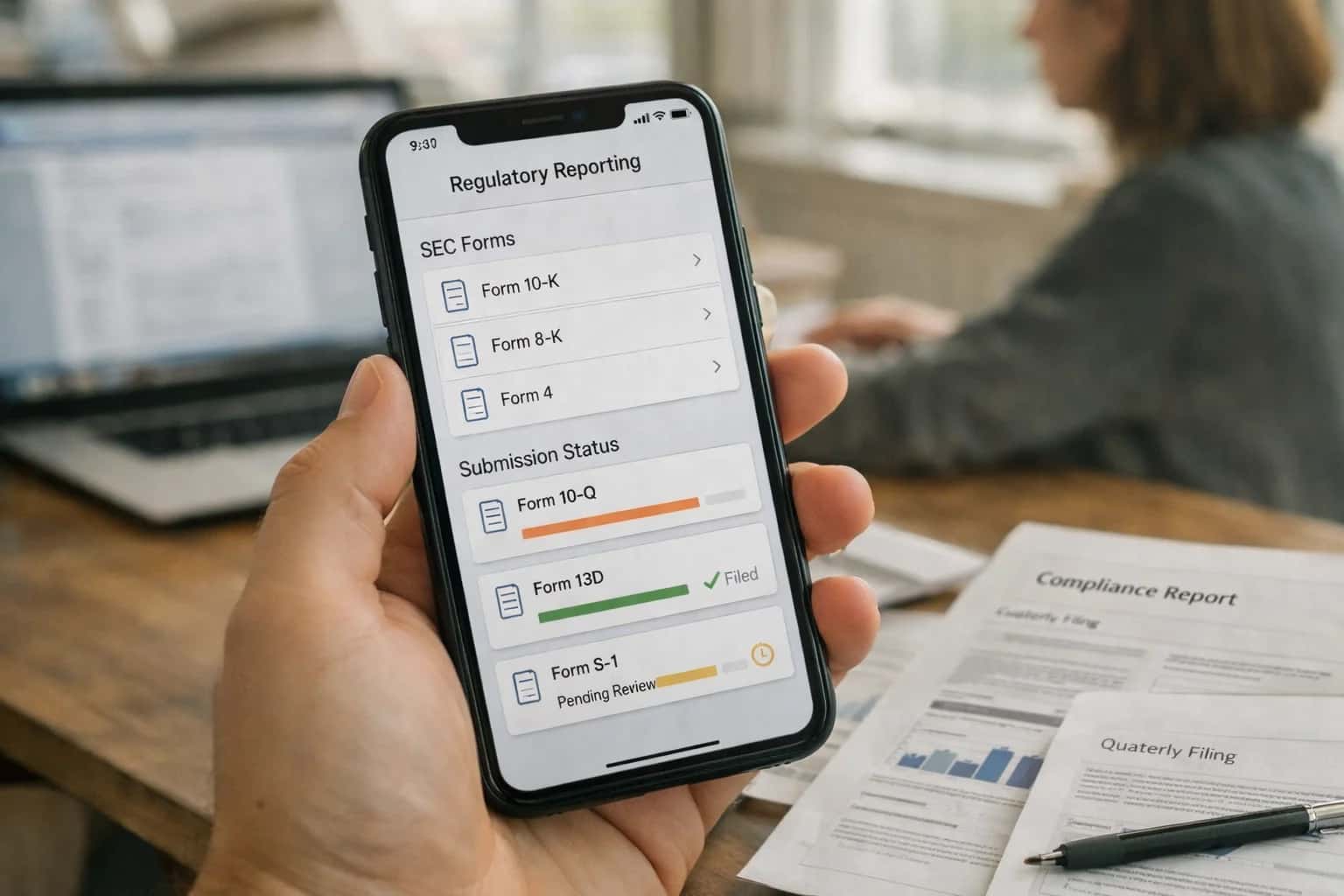
Compliance team using AI for regulatory reporting on laptop, SEC templates visible, modern office desk setup.
ARCHITECTURE AND GOVERNANCE

Where AI Fits in Regulatory Reporting

AI integration for regulatory reporting transforms BI dashboards into auditable, narrative-driven compliance submissions.

Regulatory reporting is not just about the final chart; it's a governed workflow that starts with raw data in your data warehouse (e.g., Snowflake, BigQuery), moves through transformation and validation in tools like dbt or Informatica, and culminates in a formatted submission. AI fits into three key surfaces of this workflow:

  • Data Validation & Mapping: AI agents can monitor ETL jobs and BI dataset refreshes, automatically flagging outliers or mismatches against regulatory schemas (e.g., XBRL for SEC, specific formats for HIPAA).
  • Narrative Generation: Systems like Tableau Pulse or Power BI datasets can be extended with custom AI to generate the required explanatory text for each KPI, grounded in the underlying data and tagged to specific regulatory sections.
  • Audit Trail Orchestration: Every AI-generated insight or narrative must be logged with its source data lineage, prompt version, and approval status. This creates an immutable record for compliance audits.


A production implementation typically wires an AI orchestration layer (using platforms like n8n or Microsoft Copilot Studio) between your BI platform's APIs and your compliance system. For example:

  1. A nightly job triggers a Power BI dataset refresh via the REST API.
  2. Upon completion, an event triggers an AI agent to analyze the refreshed data for a specific report (e.g., SOX Control Metrics).
  3. The agent, using a governed prompt and access to the semantic layer (like LookML or a Power BI dataset), generates narrative commentary and populates a pre-formatted Word or PDF template.
  4. The draft report, along with a full data lineage log, is routed to a ServiceNow or Jira queue for human reviewer approval before final submission.

Rollout requires a phased, use-case-first approach. Start with a single, high-volume report where narrative generation is a manual bottleneck. Implement strict human-in-the-loop gates for the first production cycle, with clear RBAC defining who can approve AI-generated content. Governance is critical: you must version-control prompts, monitor for LLM drift in output quality, and maintain the audit trail that connects the final submitted document back to the source data in your BI platform. This approach turns your BI investment from a visualization tool into a core component of your controlled compliance engine.

REGULATORY AND COMPLIANCE REPORTING AI

Integration Points in Your BI and Compliance Stack

Data Preparation & Validation

AI integrates at the data ingestion and transformation layer of your BI platform (e.g., Power Query, Tableau Prep, LookML) to automate the preparation of data for regulatory reports. This involves:

  • Automated Data Mapping: Using LLMs to map source system fields (e.g., from ERP, GL) to mandated report schemas (e.g., SEC Form 10-K schedules, HIPAA transaction sets).
  • Anomaly & Outlier Detection: Running statistical and pattern-matching models on data flows to flag transactions or records that deviate from expected norms for manual review before inclusion in reports.
  • Consistency Checks: Automatically validating that figures tie out across related reports (e.g., SOX control logs align with financial statement balances) and generating reconciliation summaries.

This layer ensures the raw data feeding into compliance dashboards is accurate, traceable, and audit-ready, reducing the manual scrubbing that delays report cycles.

FINANCE & HEALTHCARE

High-Value Regulatory Reporting Use Cases

AI-augmented reporting systems that transform BI platform data into mandated regulatory submissions, ensuring accuracy, auditability, and significant operational lift for compliance teams.

01

Automated SEC 10-K/Q Narrative Drafting

AI agents consume financial dashboards from Power BI or Tableau (e.g., revenue by segment, cash flow trends) and automatically draft compliant narrative sections for SEC filings. The system flags material changes, ensures consistency with numerical exhibits, and maintains a versioned audit trail of all AI-generated content for legal review.

Weeks -> Days
Drafting cycle
02

SOX Control Testing & Exception Reporting

Integrates with Looker or Qlik dashboards monitoring transactional controls. AI continuously analyzes control test results, identifies outliers and potential deficiencies, and auto-generates exception reports for internal audit. It correlates failures across controls to suggest systemic issues, streamlining the quarterly certification workflow.

Batch -> Continuous
Monitoring
03

HIPAA Audit Trail Synthesis & Breach Reporting

For healthcare systems using BI tools for operational analytics, AI monitors access log dashboards. It synthesizes millions of log events into plain-English audit narratives, detects anomalous access patterns indicative of a potential breach, and auto-populates initial breach notification reports with relevant scope and timeline details.

Hours -> Minutes
Incident summarization
04

Basel III / CRR Capital Ratio Monitoring & Commentary

AI connects to Tableau or Power BI dashboards tracking capital, risk-weighted assets, and liquidity coverage ratios. It generates daily commentary on ratio movements, explains drivers using underlying transaction data, and automatically produces draft sections for regulatory Pillar 3 reports, ensuring calculations align with published figures.

Daily
Automated commentary
05

FDA Submission Data Package Reconciliation

In life sciences, AI agents cross-reference statistical outputs and patient safety summaries visualized in Spotfire or Qlik with the raw data packages intended for FDA submission. The system identifies discrepancies, validates traceability, and generates a reconciliation report, reducing manual QC time before critical regulatory milestones.

Manual -> Automated
QC workflow
06

ESG Disclosure Data Aggregation & Gap Analysis

AI integrates with multiple BI dashboards containing scattered ESG metrics (energy, emissions, diversity). It aggregates data into a single regulatory framework (e.g., SASB, CSRD), identifies missing datapoints or calculation inconsistencies, and drafts the initial gap analysis report for sustainability and legal teams.

1 sprint
Consolidation time
REGULATORY & COMPLIANCE REPORTING

Example AI-Augmented Reporting Workflows

These workflows illustrate how AI agents can be integrated with BI platforms like Tableau, Power BI, and Looker to automate the transformation of governed data into mandated reports, ensuring accuracy, auditability, and significant time savings for finance and healthcare teams.

Trigger: A scheduled job runs after the monthly financial close, querying the General Ledger and Journal Entry datasets in the data warehouse.

Context Pulled: The agent retrieves pre-defined control test parameters (e.g., threshold for manual journal entries, segregation of duty rules) and the relevant transactional data for the period from the connected BI platform's semantic layer (e.g., LookML model, Power BI dataset).

Agent Action: An LLM-powered agent, grounded in SOX framework documentation, analyzes the data. It identifies entries requiring review, checks for policy violations, and drafts a narrative summary of control effectiveness, highlighting any exceptions.

System Update: The agent's output—a structured JSON containing test results, exception flags, and the narrative—is posted to a Compliance Workflow system (e.g., ServiceNow, Workiva). The findings are also appended as a comment to the corresponding dashboard in Tableau Server for traceability.

Human Review Point: The compliance officer receives a notification to review and attest to the AI-generated narrative in the workflow system before final submission. All agent actions, prompts, and data queries are logged to an immutable audit trail.

AUDITABLE, CONTROLLED, AND REPEATABLE

Implementation Architecture: Data Flow and Guardrails

A production-ready regulatory reporting system integrates AI as a governed component within a larger, auditable data pipeline.

The architecture begins by establishing a secure data extraction layer from your BI platform (e.g., Tableau Server APIs, Power BI datasets, Looker Explores). This layer pulls the curated datasets, metrics, and dimensional models that underpin your regulatory reports—such as financial statements for SEC filings or patient encounter summaries for HIPAA audits. The extracted data is passed through a validation and reconciliation service that checks for completeness, flags data quality issues against predefined rules, and logs any discrepancies before the AI step. This ensures the AI operates on a verified, 'single source of truth' dataset.

The core AI component, typically a series of specialized agents or a fine-tuned LLM, is then invoked via a secure API call. Its role is not to create data, but to transform and narrate it according to the strict template and narrative requirements of the target regulation (e.g., SOX 404, Basel III, MiFID II). For example, an agent might: consume a dataset of quarterly financial transactions, apply regulatory logic to classify and summarize them, draft the mandated narrative disclosures, and flag any entries requiring manual review. All inputs, prompts, and AI-generated outputs are immutably logged with timestamps, user/service IDs, and the specific data version used, creating a complete audit trail.

Crucially, the output does not go directly to filing. It enters a human-in-the-loop review and approval workflow, integrated with your existing GRC or document management system (e.g., Workiva, SharePoint). Here, subject matter experts and compliance officers review, edit, and formally approve the AI-generated content. The system tracks all changes, maintaining a clear separation between AI-suggested text and human-approved final copy. Once approved, the finalized report is versioned, signed off via digital signatures if required, and can be packaged for submission or archived. This closed-loop architecture ensures AI augments—but never circumvents—the necessary human oversight and control points mandated for compliance.

IMPLEMENTATION PATTERNS

Code and Payload Examples

Orchestrating a SOX 404 Report

A typical workflow for a quarterly SOX 404 report involves extracting control test results and financial data from the BI platform, structuring it for narrative generation, and enforcing a review chain.

Key Steps:

  1. Data Extraction: Query the BI platform's semantic layer (e.g., LookML, Power BI datasets) for control effectiveness metrics and GL balances.
  2. Context Assembly: Package the data with prior period comparisons and control framework metadata.
  3. Narrative Generation: Call an LLM with a structured prompt to draft management's assessment.
  4. Review & Audit Trail: Route the draft through a configured approval workflow, logging all changes and reviewer attestations.

The system must maintain a strict chain of custody for all data points used in the final report, linking back to source system IDs.

REGULATORY AND COMPLIANCE REPORTING

Realistic Time Savings and Business Impact

How AI-augmented reporting systems reduce manual effort, accelerate cycle times, and improve accuracy for finance and healthcare compliance teams.

Workflow StageBefore AIAfter AIKey Impact

Data Consolidation & Validation

Manual SQL queries, spreadsheet merges, peer review

Automated data pulls with anomaly flagging, LLM-assisted reconciliation

Reduces prep time from days to hours; surfaces discrepancies for human review

Report Drafting & Narrative Generation

Analyst writes commentary from scratch, copies tables

AI generates draft narratives from BI metrics, suggests key disclosures

Cuts initial drafting time by 60-70%; ensures consistent regulatory language

Variance Analysis & Explanation

Manual comparison to prior periods and benchmarks

AI performs automated variance analysis, proposes plausible explanations

Identifies material variances in minutes instead of hours; provides audit-ready rationale

Audit Trail & Change Logging

Manual version tracking in shared drives, email chains

Automated lineage capture, prompt/input logging, version diffs

Creates immutable audit trail; reduces evidence collection for SOX/HIPAA audits by days

Review & Approval Workflow

Sequential email reviews, manual comment incorporation

AI-powered collaborative review with inline suggestions, automated routing

Compresses review cycles from weeks to days; ensures all stakeholder feedback is addressed

Final Formatting & Submission

Manual PDF assembly, portal uploads, confirmation tracking

Automated template population, e-filing integration, submission confirmation

Eliminates last-mile formatting errors; ensures timely filing with receipt tracking

Post-Submission Query Response

Manual data mining to answer regulator questions

AI retrieves relevant source data and report context for rapid response

Enables same-day instead of week-long responses to regulatory inquiries

ARCHITECTING FOR AUDIT AND CONTROL

Governance, Security, and Phased Rollout

Integrating AI into regulated reporting workflows requires a deliberate approach to data lineage, human oversight, and controlled deployment.

For compliance reporting in platforms like Tableau or Power BI, the AI integration must be architected to treat the BI semantic layer as the single source of truth. The AI agent should operate as a controlled extension of the reporting engine, pulling data exclusively through approved data source connections and dataset APIs (e.g., Tableau Server REST API, Power BI Datasets API). Every AI-generated narrative, commentary, or derived field must be tagged with the source dataset version, calculation logic, and the specific prompt used, creating a complete audit trail alongside the final report artifact.

A typical implementation uses a phased rollout to manage risk and build trust:

  • Phase 1: Augmented Drafting. The AI generates draft commentary for pre-existing, manually validated reports (e.g., quarterly SEC 10-Q sections, SOX control summaries). A human reviewer approves, edits, or rejects all output before publication, with all interactions logged.
  • Phase 2: Assisted Variance Analysis. The AI is granted read access to live financial datasets to auto-generate explanations for material budget vs. actual variances flagged in dashboards. Output is presented as a "suggested insight" requiring analyst confirmation.
  • Phase 3: Proactive Monitoring. The AI agent runs scheduled scans on key compliance metrics (e.g., HIPAA audit logs, trade surveillance data) to surface anomalies and generate preliminary incident summaries, triggering a governed workflow in a connected system like ServiceNow for formal review.

Security is enforced at multiple layers: API calls between the BI platform and the AI service use service principals with scoped, read-only permissions. Sensitive data, such as PII in HR analytics or PHI in healthcare reports, is never sent directly to a foundational model; instead, the architecture uses retrieval-augmented generation (RAG) with a secure vector store to ground responses in pre-approved, sanitized policy documents and past report templates. This ensures the AI adds narrative context without inventing or exposing controlled data. Rollout success is measured by the reduction in manual drafting time and the increase in reviewer confidence, not by full automation.

REGULATORY AND COMPLIANCE REPORTING AI

FAQ: Technical and Commercial Questions

Architecting AI-augmented reporting systems for finance and healthcare that ensure BI data is accurately transformed into mandated regulatory reports (e.g., SEC, SOX, HIPAA) with full audit trails.

Accuracy is enforced through a multi-layered governance architecture:

  1. Grounded Generation: AI agents are instructed to generate narrative commentary only from approved, versioned datasets within the BI platform (e.g., a specific Power BI dataset or Looker Explore). They cannot hallucinate figures.
  2. Rule-Based Validation: Before finalization, all AI outputs pass through a rules engine that checks for compliance with reporting standards (e.g., GAAP formatting, required disclosures for SEC 10-K sections).
  3. Human-in-the-Loop (HITL) Gates: Critical reports have mandatory review steps. The system presents a diff view highlighting AI-generated sections against source data, which a qualified controller or compliance officer must approve and sign off on within the workflow.
  4. Immutable Audit Trail: Every action—data pull, AI prompt, generation, edit, approval—is logged with a user/timestamp and linked to the final report artifact. This lineage is stored separately from the BI platform for independent auditability.

This approach shifts the AI's role from authoritative source to assisted draftsman, keeping the human expert firmly in control of compliance.

Prasad Kumkar

About the author

Prasad Kumkar

CEO & MD, Inference Systems

Prasad Kumkar is the CEO & MD of Inference Systems and writes about AI systems architecture, LLM infrastructure, model serving, evaluation, and production deployment. Over 5+ years, he has worked across computer vision models, L5 autonomous vehicle systems, and LLM research, with a focus on taking complex AI ideas into real-world engineering systems.

His work and writing cover AI systems, large language models, AI agents, multimodal systems, autonomous systems, inference optimization, RAG, evaluation, and production AI engineering.


