GDPR compliance for BI platforms involves monitoring three critical surfaces: report metadata and lineage, underlying dataset schemas, and query logs. An AI integration connects to platform APIs (like Tableau's Metadata API, Power BI's Admin REST API, or Looker's system__activity explores) to continuously scan for objects containing PII identifiers—names, emails, IDs, IP addresses. The system tags reports and datasets with privacy classifications (e.g., contains_pii, data_subject_type: customer), builds a searchable inventory, and maps data flows for Article 30 record-keeping. This moves compliance from a manual, point-in-time audit to an automated, always-current registry.

Integration
GDPR and Data Privacy Reporting AI
Build AI agents that connect to Tableau, Power BI, Looker, and Qlik to automate PII discovery, fulfill Data Subject Access Requests (DSARs), and generate privacy compliance reports, reducing manual review from days to hours.
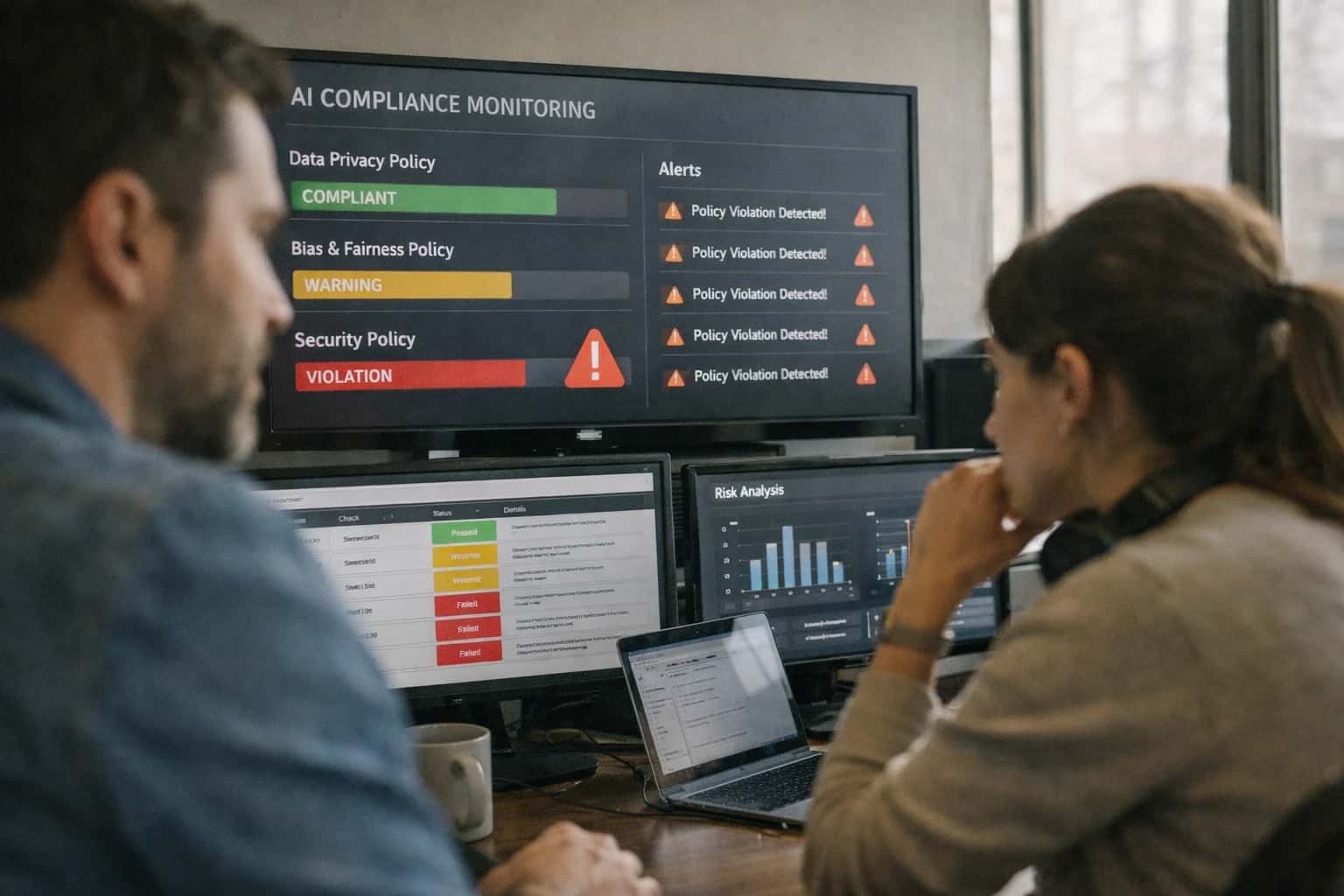
PRIVACY OPERATIONS
Where AI Automates GDPR Compliance in BI Platforms
Engineer AI agents that scan Tableau, Power BI, Looker, and Qlik to identify personal data, automate DSAR fulfillment, and generate compliance-ready privacy reports.
For Data Subject Access Requests (DSARs), AI automates the fulfillment workflow. When a request arrives via a privacy portal or email, an agent uses the tagged inventory to identify all reports and dashboards where the subject's data appears. It then executes governed queries against the BI platform's data sources (via secure, ephemeral credentials) to extract the relevant personal data, redacts any third-party information, and compiles a structured response package. This reduces fulfillment time from weeks to hours and ensures consistent, audit-trailed execution. For right-to-erasure requests, the agent can generate precise data deletion instructions for source system owners, referencing the BI lineage map.
Rollout requires a phased approach: start with a read-only inventory scan to assess exposure, then implement DSAR automation for a single data subject type (e.g., customers), and finally expand to automated privacy impact assessments and report generation. Governance is critical: all AI-generated actions (like data extraction) should route through a human-in-the-loop approval step initially, and all activity must be logged to a separate SIEM or audit platform. Implement strict RBAC so AI agents only access BI metadata and data via service accounts with least-privilege permissions, never storing raw PII. Consider connecting this workflow to your broader data governance stack, such as /integrations/data-governance-and-privacy-platforms/collibra-integration for centralized policy management.
GDPR AND DATA PRIVACY REPORTING
BI Platform Touchpoints for Privacy AI
Automating Personal Data Discovery
AI agents connect to BI platform metadata APIs (like Tableau's REST API or Power BI's Dataset APIs) to scan data sources, columns, and report definitions. The goal is to automatically identify fields containing personal data—names, emails, IDs, IP addresses—based on naming patterns, sample values, and existing catalog tags.
This creates a continuously updated inventory of where personal data resides across dashboards and datasets. The AI can flag reports containing PII for review, tag them in the data catalog, and trigger workflows to notify data owners. This automation replaces manual, error-prone audits and provides the foundational data map required for GDPR Article 30 record-keeping.
GDPR AND DATA PRIVACY REPORTING
High-Value Use Cases for Privacy AI
Integrate AI directly with your BI platform to automate the discovery, classification, and reporting of personal data, turning manual compliance tasks into governed, scalable workflows.
01
Automated PII Discovery in Reports & Dashboards
AI agents scan Tableau workbooks, Power BI datasets, and Looker explores to identify columns and visualizations containing personally identifiable information (PII). The system tags data sources, flags high-risk reports, and updates the data catalog—replacing manual, error-prone audits.
Weeks -> Hours
Discovery cycle
02
Data Subject Access Request (DSAR) Fulfillment
When a DSAR is received, an AI workflow queries the BI platform's metadata and usage logs to identify all reports and dashboards where the subject's data appears. It generates a consolidated inventory and can draft response summaries, drastically reducing legal and IT coordination time.
Same day
Response readiness
03
Automated Privacy Impact Assessments (PIA)
For new reports or data sources, AI analyzes the data model, intended audience, and sharing permissions to auto-generate a draft PIA. It highlights risks like data retention mismatches or broad internal sharing, providing a structured starting point for privacy officer review.
1 sprint
Acceleration
04
Compliance Reporting & Audit Trail Generation
AI monitors BI platform activity logs to generate privacy compliance reports for Article 30 records of processing. It documents data flows, access patterns, and report usage, creating an immutable audit trail for regulators and internal audits without manual log aggregation.
Batch -> Real-time
Audit readiness
05
Consent Management & Data Minimization Monitoring
AI workflows cross-reference BI data subjects against consent management platforms. They flag reports using data without proper legal basis or containing excessive personal data, triggering alerts to report owners or automated data masking workflows within the BI tool.
Proactive
Risk reduction
06
Right to Erasure (Article 17) Workflow Orchestration
Upon a deletion request, AI identifies all BI assets containing the subject's data and generates precise technical tickets for data engineering teams. It tracks completion across source systems and verifies suppression in downstream reports, ensuring full chain-of-custody.
Manual -> Orchestrated
Process control
GDPR AND DATA PRIVACY REPORTING
Example Automated Privacy Workflows
These workflows illustrate how AI agents can be integrated with BI platforms like Tableau, Power BI, and Looker to automate critical data privacy operations, reducing manual effort and improving compliance accuracy.
Trigger: Scheduled daily scan or upon publication of a new data source or report.
Context/Data Pulled: The agent uses the BI platform's metadata API (e.g., Tableau Server REST API, Power BI Admin API) to crawl all datasets, data sources, reports, and dashboard objects. It extracts column names, sample data, and report metadata.
Model or Agent Action: An LLM classifies each column against a predefined taxonomy (e.g., PII, Sensitive, Financial, Non-Personal). It uses techniques like pattern matching, named entity recognition, and contextual understanding to identify indirect identifiers.
System Update or Next Step: The agent updates a central data catalog (e.g., Collibra, Alation) or a dedicated privacy register with the classification tags. It flags newly discovered PII-containing assets for review and can automatically apply row-level security (RLS) rules in the BI platform to restrict access.
Human Review Point: A compliance officer receives a weekly digest of newly classified high-risk assets for validation before RLS rules are enforced.
PRIVACY-BY-DESIGN AI FOR BI
Implementation Architecture: Data Flow and Guardrails
A secure, auditable architecture for identifying and reporting on personal data within business intelligence platforms.
A production-ready GDPR reporting system integrates at three key layers of your BI stack: the metadata/lineage layer (e.g., Tableau Server's REST API, Power BI's dataset APIs, Looker's LookML), the data query layer (via direct connections to underlying data warehouses like Snowflake or BigQuery), and the user activity log layer. The core AI agent first scans table and column metadata across all reports and datasets to flag fields with names, patterns, or tags suggesting PII (e.g., email, customer_id, address). For high-confidence matches, it executes sample queries—within strict row limits—to validate the presence of actual personal data, classifying it against GDPR categories (e.g., 'contact data', 'financial data').
For Data Subject Access Request (DSAR) fulfillment, the system uses this classified inventory. When a request is received (often via a ticketing system like ServiceNow), the workflow is triggered: the AI agent constructs and executes the necessary SELECT queries across the identified BI datasets, always filtering first by the subject's unique identifier (e.g., user_id = 'XYZ'). Results from multiple sources are consolidated, de-duplicated, and formatted into a unified report. Crucially, all query logic, results (in transient memory), and the final report are logged with a unique DSAR case ID, user ID of the agent executor, and timestamp for a full audit trail. The system never retains extracted PII beyond the request's fulfillment window.
Governance is enforced through technical guardrails: query execution is sandboxed with strict timeouts and row limits to prevent data exfiltration; all generated reports are automatically encrypted and access is logged; and the system's own access to BI platforms uses a service account with read-only, minimally-scoped permissions. Rollout typically starts with a pilot on a single BI platform (e.g., Power BI workspaces containing known customer data), with manual review of the AI's PII classifications before automating DSAR workflows. This phased approach builds trust in the AI's accuracy and ensures the data flow complies with internal privacy policies before scaling.
GDPR REPORTING WORKFLOWS
Code and Payload Examples
Identifying Personal Data in Reports and Datasets
An AI agent scans BI metadata and data samples to flag assets containing GDPR-relevant fields. It queries the platform's REST API for asset lists, samples data via custom SQL or the platform's data preview endpoints, and uses an LLM classifier to identify PII patterns (names, emails, IDs). Results are logged to a compliance database with confidence scores for human review.
python# Example: Scan Tableau workbook for potential PII import tableauserverclient as TSC from openai import OpenAI import pandas as pd # Authenticate to Tableau Server tableau_auth = TSC.PersonalAccessTokenAuth( token_name='GDPR-Scanner', personal_access_token='your_token', site_id='YourSite' ) server = TSC.Server('https://your-server.tableau.com') server.auth.sign_in(tableau_auth) # Get all workbooks workbooks = list(TSC.Pager(server.workbooks)) for wb in workbooks: # Get workbook preview data (simplified) # In practice, use Tableau's Data API or extract from underlying datasource preview_data = get_workbook_data_preview(wb.id) # Use LLM to classify columns client = OpenAI() response = client.chat.completions.create( model="gpt-4", messages=[ {"role": "system", "content": "Classify if this column name and sample values contain PII. Respond with JSON: {\"contains_pii\": bool, \"pii_type\": str, \"confidence\": float}"}, {"role": "user", "content": f"Column: 'Customer_Email', Samples: {preview_data['Customer_Email'].head(3).tolist()}"} ] ) classification = json.loads(response.choices[0].message.content) if classification['contains_pii']: log_finding(wb.id, classification)
GDPR AND DATA PRIVACY REPORTING
Realistic Time Savings and Operational Impact
How AI integration transforms manual, high-risk privacy compliance tasks into automated, auditable workflows within BI platforms like Tableau, Power BI, and Looker.
| Process | Before AI | After AI | Key Impact |
|---|---|---|---|
Personal Data Report Identification | Manual sampling and keyword searches across 100s of reports/dashboards | Automated scan of metadata and data models to flag PII-containing assets | Coverage increases from sample-based to comprehensive; reduces oversight risk |
Data Subject Access Request (DSAR) Fulfillment | Manual data extraction and consolidation from multiple BI reports and sources | Automated query generation, data retrieval, and report compilation for a subject | Fulfillment time reduced from days to hours; ensures consistent, auditable output |
Privacy Impact Assessment (PIA) Documentation | Manual process to map data flows and assess risk for new reports/dashboards | AI-assisted analysis of data lineage and classification to auto-generate PIA drafts | Accelerates review cycles; embeds privacy-by-design into BI development |
Compliance Reporting (e.g., Article 30 Records) | Quarterly manual compilation of processing activities from spreadsheets and emails | Continuous monitoring and automated generation of processing activity registers from BI metadata | Shifts from reactive, point-in-time reporting to proactive, real-time compliance |
Consent and Preference Management Reporting | Manual reconciliation of marketing/analytics dashboards with consent logs | AI-driven correlation of BI platform usage data with consent records to generate opt-out/erasure reports | Improves accuracy of compliance evidence; reduces manual reconciliation errors |
Data Retention Policy Enforcement | Periodic manual review and archival/deletion of outdated BI content | Automated identification of reports/datasets past retention period and workflow triggers for review | Systematizes policy enforcement; reduces storage costs and compliance exposure |
Breach Notification Assessment | Manual investigation to determine scope and impact within BI data assets | AI-assisted impact analysis to rapidly identify affected data subjects and report types | Drastically shortens assessment timeline for mandatory 72-hour notification windows |
GDPR AND DATA PRIVACY REPORTING AI
Governance, Security, and Phased Rollout
Implementing AI for data privacy reporting requires a security-first architecture, clear data governance, and a controlled rollout to manage compliance risk.
A production-ready integration for GDPR reporting typically connects to the BI platform's metadata API (e.g., Tableau's REST API, Power BI's Dataset APIs, Looker's LookML/API) and audit log feeds to scan for reports, dashboards, and datasets. The AI agent is designed to identify columns and metadata tagged as personal data (PII) like customer_email, employee_id, or patient_dob. It does not ingest the actual sensitive data rows; instead, it analyzes data object names, descriptions, and lineage to build an inventory map. This inventory is stored in a separate, access-controlled system (like a vector database or a dedicated compliance database) with strict RBAC, ensuring only authorized privacy officers can query the full results.
The rollout should be phased, starting with a read-only discovery pilot on a non-production BI environment or a single business unit's data. In Phase 1, the AI scans and catalogs potential PII locations, with outputs reviewed manually by the data governance team to validate accuracy and tune the classification logic. Phase 2 introduces automated reporting workflows, where the system generates data subject access request (DSAR) fulfillment guides—listing which reports contain a subject's data and their owners—and scheduled privacy compliance reports for review. Phase 3, if appropriate, could include automated workflow triggers, such as creating Jira tickets for data owners to review or redact reports flagged for containing outdated PII.
Governance is critical. All AI-generated outputs must be treated as recommendations, not definitive rulings. A human-in-the-loop step is required for any action that could impact data retention or reporting access. The system should maintain a full audit trail of scans performed, findings generated, and any subsequent actions taken. This traceability is essential for demonstrating compliance to regulators. Furthermore, the AI models themselves (e.g., for classifying sensitive data types) should be regularly evaluated for drift and bias to prevent over- or under-identification of privacy risks.
Enabling Efficiency, Speed & Accuracy
Intelligent Analysis, Decision & Execution
We build AI systems for teams that need search across company data, workflow automation across tools, or AI features inside products and internal software.
Talk to Us
Search across company data
Give teams answers from docs, tickets, runbooks, and product data with sources and permissions.
Useful when people spend too long searching or get different answers from different systems.
Enterprise searchRAGPermissions
Read more
Automate internal workflows
Use AI to route work, draft outputs, trigger actions, and keep approvals and logs in place.
Useful when repetitive work moves across multiple tools and teams.
AI agentsWorkflow automationGovernance
Read more
Add AI to products and internal tools
Build assistants, guided actions, or decision support into the software your team or customers already use.
Useful when AI needs to be part of the product, not a separate tool.
AI integrationDecision supportModel routing
Read moreGDPR & DATA PRIVACY REPORTING
FAQ: Technical and Commercial Questions
Common questions about implementing AI to automate GDPR data discovery, DSAR fulfillment, and compliance reporting within BI platforms like Tableau, Power BI, Looker, and Qlik.
The system uses a multi-layered approach, connecting to your BI platform's metadata and data APIs:
- Metadata Scanning: Agents first scan report metadata (e.g., Tableau workbook field names, Power BI dataset columns, Looker explore definitions) using platform APIs to flag fields with names suggesting PII (e.g.,
email,customer_id,postal_code). - Content Sampling & Classification: For high-risk candidates, the system samples actual cell values and uses a classification model (often a purpose-built, on-premise LLM) to determine if the data constitutes personal data under GDPR definitions (identifiers, location, online identifiers, etc.).
- Lineage Tracing: It maps where this identified PII flows—from source tables (e.g., data warehouse) into datasets and finally into published dashboards—creating an audit trail.
- Confidence Scoring: Each finding is tagged with a confidence score and reason. High-confidence automated tags can be acted upon; lower-confidence items are flagged for human review in a governance queue.
Key Integration Point: This requires read access to your BI platform's REST APIs (e.g., Tableau Server Client, Power BI Admin APIs, Looker API) and a secure connection to sample data, often via a dedicated service account.

About the author
Prasad Kumkar
CEO & MD, Inference Systems
Prasad Kumkar is the CEO & MD of Inference Systems and writes about AI systems architecture, LLM infrastructure, model serving, evaluation, and production deployment. Over 5+ years, he has worked across computer vision models, L5 autonomous vehicle systems, and LLM research, with a focus on taking complex AI ideas into real-world engineering systems.
His work and writing cover AI systems, large language models, AI agents, multimodal systems, autonomous systems, inference optimization, RAG, evaluation, and production AI engineering.
LinkedIn
Limited slotsGet a Free AI Consultation
Partnered with leading AI, data, and software stack.





How We Work
Custom AI workflows for your Business
One-fit-all AI don't work for modern businesses. At Inferensys, we aim to understand your business & custom requirements; which we use to define most efficient agentic workflows, the data, and the tools for your business.
01
Review the use case
We understand the task, the users, and where AI can actually help.
Read more02
Pick the right approach
We define what needs search, automation, or product integration.
Read more03
Build the first useful version
We implement the part that proves the value first.
Read more04
Improve from there
We add the checks and visibility needed to keep it useful.
Read moreThe first call is a practical review of your use case and the right next step.
Talk to Us