
Inferensys

Integration

AI Integration for Qlik

Architect AI agents and workflows that connect to the Qlik Associative Engine and Qlik Sense APIs to automate insight generation, provide context-aware explanations, and power predictive what-if analysis.
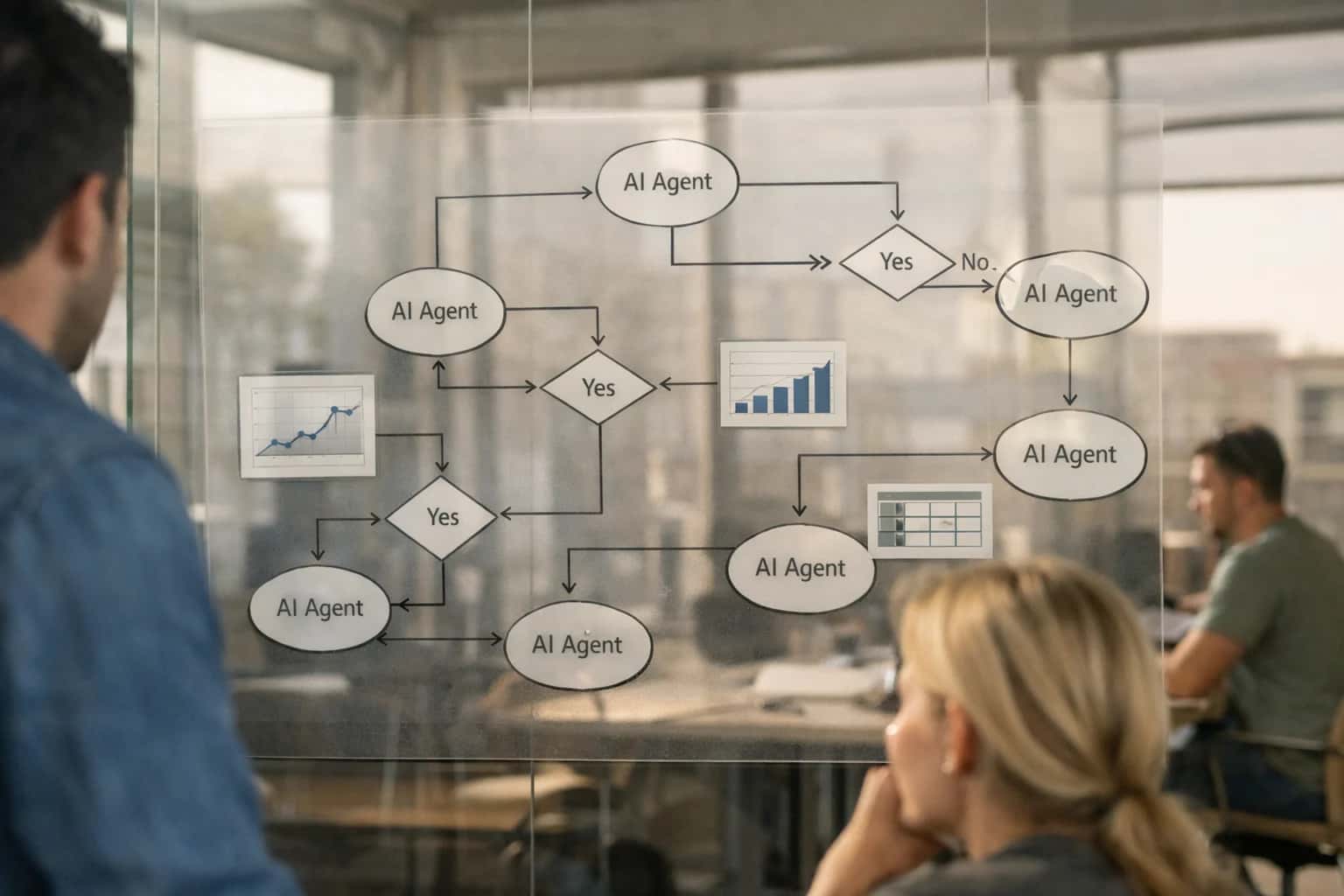
Developer designing multi-agent workflow on laptop, architecture diagram on screen, casual home office setup with afternoon light.
ARCHITECTURE AND DATA FLOW

Where AI Connects to Qlik's Associative Model

An AI integration for Qlik is not a separate layer; it's a set of intelligent agents that interact directly with the Associative Engine and its data model to augment human analysis.

The integration surface is the Qlik Sense APIs—primarily the Engine API and the REST API. AI agents act as a privileged analytical user, connecting to a Qlik app's data model to perform operations that would be manual or impossible for a human. Key connection points include:

  • App Objects & Visualizations: Reading the underlying hypercubes and data of existing sheets and charts to generate context-aware explanations.
  • Associative Selections: Programmatically making and clearing selections to explore "what-if" scenarios and test hypotheses at scale.
  • Data Model Introspection: Reading the app's data model schema, including tables, fields, and associations, to understand the business context for analysis.
  • Bookmarks & Stories: Generating narrative summaries of specific analytical states saved as bookmarks or within stories.


In a production implementation, an AI agent workflow typically follows this pattern:

  1. A business user or automated trigger (e.g., a daily schedule) initiates a request for analysis.
  2. An AI agent authenticates via the Qlik Sense REST API, opens a specific app, and establishes a session with the Engine API.
  3. The agent reads the current state of key visualizations or performs a series of programmed selections to explore a question (e.g., "Why did sales in Region X drop last quarter?").
  4. Using the structured data from the hypercubes and the app's associative data model as context, an LLM generates a plain-English insight, a hypothesis for testing, or a recommendation for a next selection.
  5. The output is delivered as a comment in a Qlik Sense story, posted to a Slack channel, or used to trigger a downstream workflow in a system like Salesforce or NetSuite. All agent actions are logged for audit and governance.

This architecture requires careful governance. AI agents should operate under a dedicated service account with scoped Qlik licenses and permissions, using Qlik's Section Access for row-level data security. The goal is not to replace the analyst but to automate the initial data exploration and narrative drafting, turning a task that takes hours into minutes. The value is in scaling expert analytical patterns—like root cause analysis or forecast commentary—across hundreds of dashboards and KPIs, ensuring insights are generated consistently and acted upon faster.

ARCHITECTURAL BLUEPRINT

Qlik Surfaces and APIs for AI Integration

The Core Engine for AI Context

The Qlik Associative Engine and its in-memory data model are the primary surfaces for AI integration. This is where AI agents can perform context-aware exploration and hypothesis testing.

Key Integration Points:

  • Qlik Sense APIs: Use the Engine API and Generic Object API to programmatically execute selections, retrieve hypercube data, and traverse the associative model. AI can simulate user exploration at scale.
  • Analytical Connections: Connect AI models directly to underlying data sources (Snowflake, BigQuery, Databricks) via Qlik's connectors, using the engine to maintain business logic and relationships.
  • Use Case: An AI agent uses the Engine API to test "what-if" scenarios—e.g., "What happens to regional profitability if material costs increase by 15%?"—by programmatically applying selections and retrieving the resulting aggregated values.
INTEGRATION PATTERNS

High-Value AI Use Cases for Qlik

Qlik's associative data model and open APIs create unique surfaces for AI to augment human analysis. These patterns connect LLMs and agents to the Qlik engine, turning passive dashboards into active, insight-generating systems.

01

Associative Insight Explanation

An AI agent consumes the Qlik Associative Engine's data model and user selections to generate plain-English explanations of why data points are related. It answers questions like 'Why did sales drop in this region?' by analyzing the associative links and providing a narrative summary.

Hours -> Minutes
Analysis time
02

Automated Dashboard Commentary

Integrate with the Qlik Sense APIs to scan a published app or sheet. An AI agent analyzes KPI movements, trends, and outliers, then auto-generates and attaches context-aware commentary to key visualizations, creating a self-documenting dashboard for stakeholders.

Same day
Report turnaround
03

Predictive What-If Analysis

Build an interface where users pose scenario questions (e.g., 'What if we increase marketing spend by 15%?'). The agent uses the Qlik Engine JSON API to manipulate data sets, runs lightweight forecast models, and visualizes the comparative outcomes directly within a Qlik sheet.

Batch -> Interactive
Planning mode
04

Natural Language to Qlik Query

Deploy a copilot that translates a user's natural language question (e.g., 'Show me top products by margin last quarter') into the proper Qlik script or set analysis syntax. It can execute the query via API and return the results table or suggest a new chart to add to the app.

1 sprint
Citizen analyst enablement
05

Anomaly Detection & Alerting

Monitor key measures in a Qlik app using scheduled API calls. An AI model identifies statistical outliers and significant shifts. The system then triggers alerts via webhook (e.g., to Slack, Teams) with a generated summary of the anomaly and a deep link to the relevant Qlik sheet for investigation.

Proactive vs. Reactive
Monitoring stance
06

Data Story Automation

Orchestrate a workflow where an AI agent traverses a multi-sheet Qlik app, extracts key insights and visualizations, and structures them into a compelling narrative data story. Outputs can be formatted as an email summary, a PowerPoint deck, or a page in Qlik Sense itself.

Manual -> Automated
Story creation
IMPLEMENTATION PATTERNS

Example AI Workflows for Qlik

These workflows demonstrate how to connect AI agents and models to the Qlik Associative Engine and Qlik Sense APIs. Each pattern is designed to augment, not replace, existing Qlik applications by adding context-aware explanation, predictive analysis, and automated insight generation.

Trigger: A scheduled Qlik reload task completes, or a user opens a key executive dashboard.

Context/Data Pulled: The AI agent calls the Qlik Engine JSON API for the target app. It retrieves:

  • The current values and trends for pre-defined KPIs (e.g., Sales_YTD, Customer_Churn_Rate).
  • Associated dimension selections and filter context.
  • Historical data for the same period from a connected data warehouse for comparison.

Model/Agent Action: An LLM (like GPT-4 or Claude) is prompted with the data, the business context (e.g., "This is the North America Q2 Sales Dashboard"), and a structured template. The agent generates a plain-English summary highlighting:

  • Top 2-3 notable changes from prior period.
  • One potential contributing factor based on associative data relationships.
  • A suggested "next look" (e.g., "Drill into Product Category X").

System Update/Next Step: The generated commentary is:

  1. Inserted as a text object into the Qlik Sense sheet via the Qlik REST API.
  2. Posted as a message to a Microsoft Teams/Slack channel via webhook.
  3. If a KPI breaches a threshold, an alert is created in ServiceNow via its API.

Human Review Point: The first 100 commentaries are routed to a business analyst for review and feedback, which is used to fine-tune the prompt. A governance dashboard in Qlik tracks commentary accuracy ratings.

FROM ASSOCIATIVE ENGINE TO ACTIONABLE INSIGHTS

Implementation Architecture: Data Flow and Guardrails

A secure, governed architecture for connecting AI agents to the Qlik Associative Engine and Qlik Sense APIs.

A production-ready AI integration for Qlik is built on a secure middleware layer that sits between your Qlik Sense apps and the LLM. This layer uses the Qlik Sense APIs (like the Engine API for data interaction and the REST API for app management) to execute queries against the associative model. The AI agent, typically hosted in your private cloud or VPC, formulates these queries based on a user's natural language request, sends them to Qlik, receives the resulting data set or chart object, and then uses an LLM to generate a contextual explanation, a what-if analysis, or a narrative summary. This pattern keeps sensitive data within your governed analytics environment; only the necessary, aggregated result data is passed to the AI for commentary.

Key architectural components include:

  • Tool Calling Layer: An agent framework (e.g., using LangChain, CrewAI, or a custom service) that maps user intents to specific Qlik API calls, handling authentication via Qlik's JWT or certificate-based methods.
  • Context Grounding Service: A system that retrieves relevant app metadata, sheet objects, and field definitions from the Qlik repository to provide the LLM with precise context about the data model, avoiding hallucinations.
  • Result Cache & Audit Log: All AI-generated insights are cached with their source data fingerprint and user context, creating a full audit trail for compliance and enabling performance optimization on repeated queries.
  • Approval & Governance Gateway: For automated commentary on executive dashboards, a gateway can route AI-generated narratives through a human-in-the-loop review or a rules-based approval workflow before publication to a Qlik story or alert.

Rollout is typically phased, starting with a single Qlik app and a controlled user group. The first phase often focuses on automated dashboard commentary—where an agent runs on a schedule, analyzes a key sheet object (like a KPI trend), and posts a summary to a Qlik Story. The second phase introduces an interactive Q&A copilot embedded in a custom extension or separate web app. Governance is critical: establish clear data boundaries (which apps and fields the AI can access), implement prompt templates to ensure consistent, unbiased language, and monitor for query cost and latency. This architecture ensures AI augments Qlik's associative strength without compromising security or performance.

QLIK SENSE API INTEGRATION PATTERNS

Code and Payload Examples

Querying the Associative Engine for AI Context

An AI agent needs to fetch relevant data context from Qlik's in-memory associative model before generating insights. This typically involves using the Qlik Engine JSON API (via the qix protocol) to open an app, create a session object, and evaluate a hypercube or measure.

Below is a Python example using the websockets library to connect to the Qlik Engine, open an app, and evaluate a simple measure for a given selection. This data payload can then be sent to an LLM for narrative generation.

python
import asyncio
import websockets
import json

async def get_qlik_measure(app_id, measure_def):
    # Connect to Qlik Engine (typically via proxy/SSE)
    uri = "wss://your-qlik-sense-server:4747/app/"
    async with websockets.connect(uri) as websocket:
        # 1. Open the app
        open_msg = {
            "jsonrpc": "2.0",
            "id": 1,
            "method": "OpenDoc",
            "params": [app_id]
        }
        await websocket.send(json.dumps(open_msg))
        open_response = await websocket.recv()
        app_handle = json.loads(open_response)['result']['qReturn']['qHandle']

        # 2. Create a session object for the measure
        create_msg = {
            "jsonrpc": "2.0",
            "id": 2,
            "method": "CreateSessionObject",
            "params": [app_handle, {
                "qInfo": {"qType": "my-measure"},
                "qMeasure": measure_def
            }]
        }
        await websocket.send(json.dumps(create_msg))
        create_response = await websocket.recv()
        obj_handle = json.loads(create_response)['result']['qReturn']['qHandle']

        # 3. Get the layout (which contains the calculated value)
        layout_msg = {
            "jsonrpc": "2.0",
            "id": 3,
            "method": "GetLayout",
            "params": [obj_handle]
        }
        await websocket.send(json.dumps(layout_msg))
        layout_response = await websocket.recv()
        layout = json.loads(layout_response)
        measure_value = layout['result']['qLayout']['qMeasure']['qText']

        return {"measure_value": measure_value}

# Example measure definition for 'Sales YTD'
measure_def = {
    "qDef": "=Sum({<Year={$(=Max(Year))}>} Sales)",
    "qLabel": "Sales YTD"
}

# Run the query
result = asyncio.run(get_qlik_measure("your-app-id", measure_def))
print(f"Data for LLM context: {result}")
QLIK SENSE AI INTEGRATION

Realistic Time Savings and Business Impact

How AI agents connected to the Qlik Associative Engine and APIs change the speed and depth of analytics workflows.

Analytics WorkflowBefore AI IntegrationAfter AI IntegrationImplementation Notes

Metric Explanation & Root Cause

Manual investigation across sheets and apps (30-60 mins)

Automated narrative with drill-down suggestions (<2 mins)

Agent queries the associative model and returns a ranked list of contributing factors.

Executive Report Commentary

Analyst writes summaries for 10+ KPIs (2-4 hours)

AI drafts context-aware narratives for review (20-30 mins)

Human-in-the-loop review required for final approval and nuance.

Anomaly Detection & Alerting

Scheduled report reviews or reactive user spotting (Next day)

Continuous monitoring with push notifications for outliers (Real-time)

Integrates with Qlik Sense triggers and external channels like Slack or Teams.

What-If Scenario Modeling

Manual data manipulation and copy-paste in separate sheets (1-2 hours)

Conversational interface to adjust variables and see outcomes (5-10 mins)

Leverages Qlik's set analysis and engine to simulate changes safely.

Data Quality & Gaps Discovery

Ad-hoc SQL queries or manual dashboard filtering (Hours to days)

Proactive scan of app data model with issue summaries (Same day)

Agent runs predefined data quality rules against the loaded data model.

Onboarding & Citizen Analyst Support

Training sessions and support tickets for self-service questions

Embedded copilot for natural language chart building and DAX help

Reduces support burden but requires initial prompt engineering and grounding.

Insight-to-Action Workflow

Analyst exports finding, emails team, manually creates Jira ticket

AI suggests action, pre-fills ticket via API, notifies owner (Minutes)

Requires integration with downstream systems like CRM, ERP, or project tools.

ARCHITECTING FOR ENTERPRISE CONTROL

Governance, Security, and Phased Rollout

A practical approach to implementing AI in Qlik Sense with proper controls, data security, and incremental value delivery.

A production AI integration for Qlik must respect the platform's existing data governance and security model. This means your AI agents should operate within the same authentication and authorization boundaries as your Qlik Sense users, typically via the Qlik Sense Repository Service (QRS) API and Qlik Associative Engine API. We architect integrations where AI queries are executed under a dedicated service account with scoped permissions—only accessing approved apps, sheets, and data connections. All AI-generated commentary, insights, or suggested actions are logged as audit events within Qlik's operational logs or a separate audit trail, creating a clear lineage from source data to AI output for compliance reviews.

A phased rollout is critical for user adoption and risk management. We recommend starting with a read-only, assistive phase: deploying an AI agent that can explain visualizations, answer questions about the data model, or generate narrative summaries for a single, well-understood Qlik app. This allows users to build trust in the AI's accuracy without granting it any ability to modify data or apps. The next phase introduces predictive and prescriptive capabilities, such as what-if analysis or anomaly detection, where the AI can suggest new measures or sheet objects. The final, most advanced phase enables action-oriented workflows, where insights from Qlik can trigger automations in connected systems like Salesforce or ServiceNow via webhooks, but only after passing through a defined approval or human review step.

Security extends to the AI models themselves. We implement data grounding to ensure all Qlik context provided to an LLM (like GPT-4 or Claude) is sourced directly from the Qlik Associative Engine's in-memory data model or via secure API calls, preventing the leakage of raw data into public model contexts. For highly sensitive data, we can deploy private, fine-tuned models. A key governance checkpoint is establishing a prompt management layer that defines and version-controls the exact instructions, guardrails, and data scoping rules used by your Qlik AI agents, ensuring consistent, auditable behavior across all users and apps.

Successful rollout also depends on change management. We work with your analytics team to identify pilot user groups, define success metrics (e.g., reduction in time to insight, increased dashboard engagement), and establish a feedback loop where user interactions with the AI agent are used to iteratively improve prompt design and data grounding. This measured, governed approach ensures your Qlik AI integration delivers tangible value while maintaining the security and trust your enterprise requires.

IMPLEMENTATION AND ARCHITECTURE

AI Integration for Qlik: Frequently Asked Questions

Practical answers for technical leaders planning to embed AI agents, natural language analytics, and automated insight generation into Qlik Sense and Qlik Cloud environments.

AI agents interact with the Qlik Associative Engine via the Qlik Sense APIs (JSON-RPC for the engine, REST APIs for the repository). A production integration typically follows this pattern:

  1. Authentication & Context: The agent authenticates using a dedicated service account with Qlik Cloud API keys or a certificate for Qlik Sense Enterprise on Windows. RBAC is enforced via Qlik's section access or security rules.
  2. Session Management: The agent opens a session against a specific app, loading the required data model into memory. For performance, sessions can be pooled or kept warm for high-frequency queries.
  3. Query Execution: The agent submits queries (e.g., GetHyperCubeData, GetListObjectData) through the Engine API. The LLM or a separate orchestrator translates a natural language question into the proper Qlik set analysis syntax and chart dimensions/measures.
  4. Data Handling: Raw result sets are returned as JSON. The agent processes this data—often summarizing, comparing, or explaining it—before presenting a final answer.

Key Consideration: Never pass raw, unfiltered data from the engine directly to a public LLM. Implement a grounding layer where the agent's context is strictly limited to aggregated, anonymized result sets relevant to the user's permissions.

Prasad Kumkar

About the author

Prasad Kumkar

CEO & MD, Inference Systems

Prasad Kumkar is the CEO & MD of Inference Systems and writes about AI systems architecture, LLM infrastructure, model serving, evaluation, and production deployment. Over 5+ years, he has worked across computer vision models, L5 autonomous vehicle systems, and LLM research, with a focus on taking complex AI ideas into real-world engineering systems.

His work and writing cover AI systems, large language models, AI agents, multimodal systems, autonomous systems, inference optimization, RAG, evaluation, and production AI engineering.


