AI integration targets specific EHR data objects and modules to automate high-volume compliance tasks. This typically involves connecting LLMs and workflow engines to: client demographics, appointment records, clinical progress notes, treatment plans, billing/CPT codes, and structured assessment scores (e.g., PHQ-9, GAD-7). The system pulls from these sources to auto-generate reports for CARF, Joint Commission, state Medicaid, or HIPAA audits, and to track outcome measures required for value-based care contracts. Instead of manual chart reviews, AI agents can be triggered on a schedule or by a record update to compile necessary evidence.

Integration
AI for Behavioral Health Compliance and Reporting
Implementation guide for using AI to automate compliance reporting, audit trail generation, and outcome measurement (e.g., PHQ-9, GAD-7 tracking) directly from EHR data to meet regulatory and accreditation requirements.
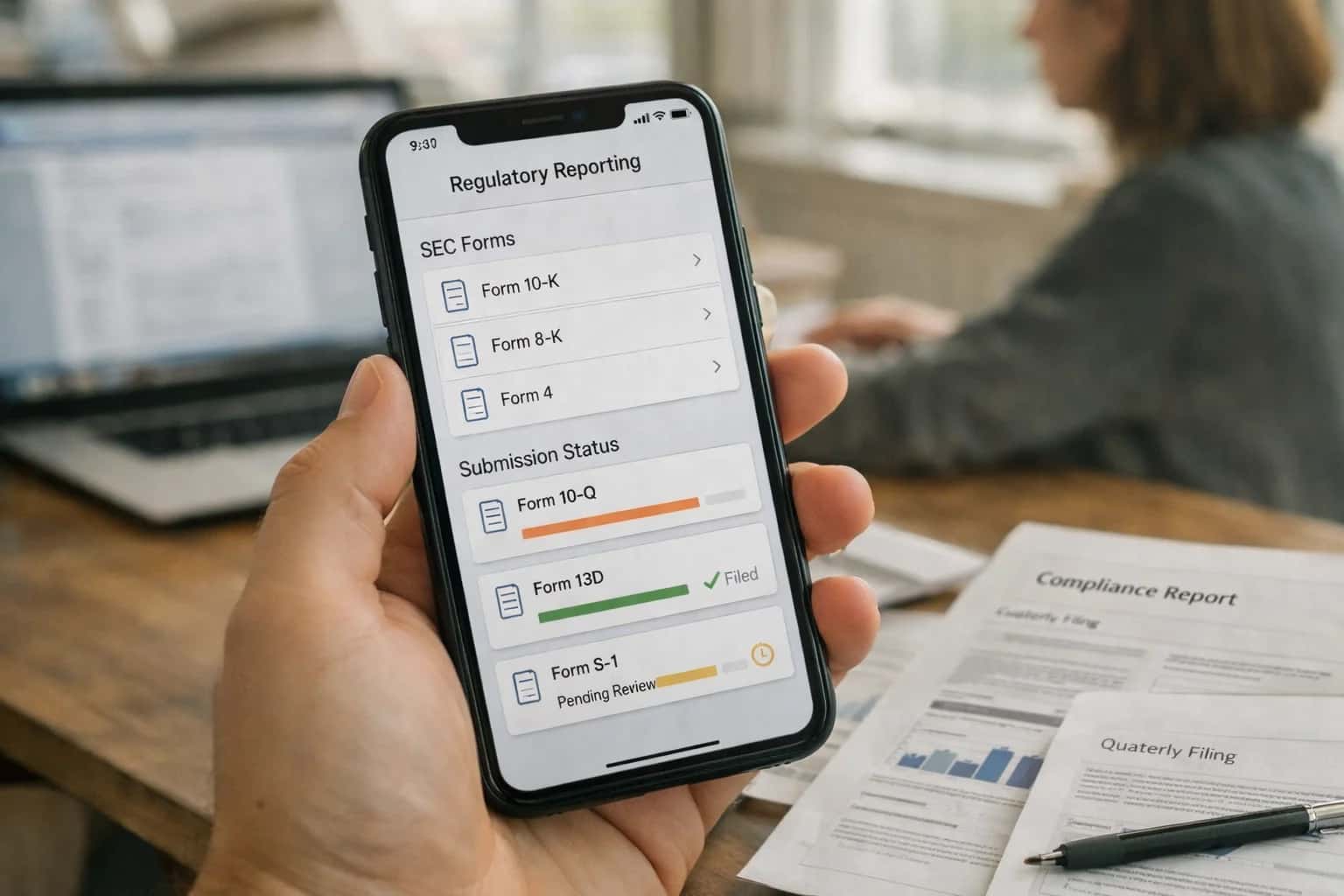
AUTOMATING ACCREDITATION AND REGULATORY BURDENS
Where AI Fits into Compliance and Reporting Workflows
A practical architecture for using AI to automate compliance reporting, audit trail generation, and outcome measurement directly from EHR data.
Implementation follows a secure, clinician-in-the-loop pattern. A typical workflow: 1) An automated job queries the EHR API for recent client encounters and note updates. 2) Relevant text and data are securely sent (with PHI de-identification or under BAA) to a governed LLM. 3) The AI drafts a compliance summary or populates a reporting template, citing specific record IDs and dates. 4) This draft is routed within the EHR or a connected system for clinician or compliance officer review, modification, and final sign-off. 5) Upon approval, the finalized report is filed to the correct audit trail or submitted via the platform's native reporting channel. This reduces report preparation from days to hours while maintaining a clear human audit trail.
Rollout focuses on incremental, risk-managed automation. Start with deterministic, rule-based reporting (e.g., generating a list of clients with completed treatment plans) before layering in AI for narrative summarization (e.g., extracting evidence of informed consent from progress notes). Governance is critical: implement strict access controls so only authorized staff can trigger or approve reports, and maintain immutable logs of all AI-generated content and its reviewer. This approach turns the EHR from a passive record-keeper into an active compliance partner, letting clinicians focus on care while ensuring the practice meets its accreditation and regulatory obligations.
AI FOR BEHAVIORAL HEALTH COMPLIANCE AND REPORTING
EHR Modules and Data Sources for AI Integration
The Primary Source for Outcome and Compliance Data
Unstructured progress notes, SOAP notes, and treatment plans within modules like Client Records or Clinical Documentation are the richest source for compliance reporting. AI can extract and structure key data points required for audits and outcome tracking.
Key Data for AI Extraction:
- Symptom severity mentions linked to standardized measures (e.g., mentions of "low mood," "panic")
- Intervention types and modalities delivered
- Risk assessment statements and safety planning actions
- Functional impairment descriptions
- Patient goals and progress toward them
AI Integration Pattern: Implement a background process using the EHR's API (e.g., GET /api/v1/clients/{id}/notes) to fetch new notes. Use a HIPAA-compliant LLM with a structured prompt to extract entities into a JSON payload, then write the structured data back to a dedicated Compliance Fields object or an external audit database.
json// Example AI-extracted payload from a progress note { "client_id": "12345", "note_date": "2024-05-15", "extracted_measures": [ { "measure": "PHQ-9", "indicated_score_range": "10-14" }, { "measure": "GAD-7", "indicated_score_range": "5-9" } ], "risk_indicators": ["passive SI"], "interventions": ["CBT - Cognitive Restructuring"] }
BEHAVIORAL HEALTH EHR INTEGRATION
High-Value AI Use Cases for Compliance and Reporting
Automate the manual, high-risk workflows of compliance and outcomes reporting by connecting AI directly to your EHR's data model and document stores. These patterns turn structured and unstructured clinical data into audit-ready reports and actionable insights.
01
Automated PHQ-9 & GAD-7 Trend Reporting
AI continuously analyzes scores entered in client records to generate compliance-ready trend reports for accreditation bodies (e.g., Joint Commission, CARF). It flags clients with worsening scores for clinician review and auto-populates outcome sections in treatment plans.
Batch -> Real-time
Outcome tracking
02
Audit Trail Generation from Session Notes
An AI agent reviews newly signed progress notes and SOAP notes, extracting key actions (crisis interventions, treatment plan updates, consults) to auto-generate a chronological audit trail. This creates a searchable, regulator-friendly log from unstructured documentation.
Hours -> Minutes
Audit preparation
03
42 CFR Part 2 Consent & Disclosure Logging
For substance use treatment, AI monitors EHR APIs for disclosure requests and consent form updates. It automatically logs all disclosures with required metadata (date, recipient, purpose) into a secure, immutable ledger, ensuring strict Part 2 compliance.
Eliminates manual logs
Compliance risk reduction
04
Treatment Plan Compliance & Gap Analysis
AI compares active treatment plans against recent progress notes and billing data to identify documentation gaps (e.g., unmet goals, missing reviews). It generates clinician alerts and pre-fills plan update drafts to maintain continuity-of-care compliance.
05
Incident & Unusual Event Report Drafting
When a safety incident is logged in the EHR, an AI workflow is triggered. It pulls relevant client history, witness notes, and prior interventions to generate a structured draft report for review, ensuring timely, consistent reporting to required agencies.
Same day
Report completion
06
Value-Based Care & Payer Outcome Submission
AI aggregates structured assessment data, functional outcomes, and utilization metrics across a provider's caseload or entire practice. It formats and submits required data bundles to payers and registries (e.g., Medicaid, IAPT), automating value-based reporting.
1 sprint
Integration timeline
IMPLEMENTATION PATTERNS
Example Automated Compliance and Reporting Workflows
These concrete workflows illustrate how AI agents can be integrated with EHR data to automate high-volume, error-prone compliance and reporting tasks, reducing manual effort and audit risk.
Trigger: A new outcome measure (PHQ-9, GAD-7, etc.) is submitted via a patient portal or entered by a clinician in the EHR.
Context Pulled: The AI agent retrieves:
- The last 5 scores for the same measure for this client.
- The client's diagnosis and active treatment plan.
- Clinic policy thresholds for "significant change" (e.g., increase of ≥5 points).
Agent Action: The LLM analyzes the trend, calculates the change from baseline, and evaluates against policy rules.
System Update:
- If significant worsening is detected: The agent creates a draft clinical alert note and automatically generates a task for the treating clinician in the EHR's task queue: "Review elevated PHQ-9 score for [Client Name]. Suggested alert note pre-drafted."
- For routine tracking: The agent appends a structured summary to a dedicated "Outcome Trends" data object linked to the client record:
"2024-10-26: PHQ-9 score 15 (+6 from 10/12). Trend: Worsening. Automated review: Policy threshold met."
Human Review Point: The clinician must review and sign off on any auto-generated alert before it becomes part of the official record. The task remains open until actioned.
AUTOMATING COMPLIANCE AND REPORTING WORKFLOWS
Implementation Architecture: Data Flow and System Components
A practical blueprint for integrating AI into behavioral health EHRs to automate compliance reporting and outcome measurement.
The integration architecture connects to your EHR's core data objects—client demographics, progress notes, assessment scores (PHQ-9, GAD-7), treatment plans, and billing records—via secure APIs or webhooks. An orchestration layer, typically deployed in your VPC or a HIPAA-compliant cloud, listens for events like a completed note or a submitted assessment. It extracts relevant PHI, de-identifies data for external processing where required, and routes it to configured AI services for analysis and report drafting.
Key system components include: a secure queue (e.g., Amazon SQS, RabbitMQ) to manage event ingestion from the EHR; a vector database (e.g., Pinecone, Weaviate) to index practice policies, accreditation standards, and past audit documents for RAG; and orchestration agents that call LLMs for specific tasks. For example, an agent might analyze a week's progress notes against 42 CFR Part 2 guidelines, flag potential documentation gaps, and draft an audit-ready summary, all while maintaining a full audit trail of data accessed and actions taken.
Rollout is phased, starting with non-critical reporting like routine outcome measurement (tracking PHQ-9 trends across a caseload) before moving to regulated compliance workflows. Governance is enforced via role-based access controls (RBAC) integrated with your EHR's user management, ensuring only authorized staff can approve and submit AI-generated reports. All AI outputs are designed for clinician-in-the-loop review, with easy one-click acceptance or edit within the familiar EHR interface before final submission or filing.
BEHAVIORAL HEALTH COMPLIANCE & REPORTING
Code and Payload Examples for Key Integration Points
Automating Outcome Score Extraction and Trend Analysis
Integrate AI to parse clinical notes and structured fields within the EHR to identify, extract, and log standardized outcome measure scores. This automates the population of compliance dashboards and accreditation reports.
Example Workflow:
- A daily batch job queries the EHR API for new or updated progress notes for a given provider panel.
- Each note's text is sent to a configured LLM with a system prompt to extract any mentioned PHQ-9, GAD-7, or other scale scores, along with the assessment date.
- The AI returns a structured JSON payload, which is validated and written to a dedicated
outcome_measurestable linked to the client record.
Example Payload Returned from AI:
json{ "client_id": "C-12345", "note_id": "NOTE-67890", "extracted_measures": [ { "measure_name": "PHQ-9", "score": 14, "assessment_date": "2024-05-15", "confidence": 0.95 } ] }
This data powers automated trend graphs for clinicians and aggregates into population-level reports for value-based care contracts.
AI FOR COMPLIANCE AND REPORTING
Realistic Time Savings and Operational Impact
This table illustrates the operational impact of integrating AI into behavioral health EHRs to automate compliance reporting and outcome measurement workflows. Estimates are based on typical practice patterns and assume a clinician-in-the-loop review model.
| Workflow | Before AI | After AI | Notes |
|---|---|---|---|
PHQ-9 / GAD-7 Score Tracking & Trend Analysis | Manual extraction and spreadsheet entry (15-30 min per client review) | Automated data pull and dashboard generation (2-5 min review) | AI identifies trends and flags clients needing intervention; human clinician confirms. |
Accreditation Audit Trail Compilation (e.g., CARF, Joint Commission) | Multi-day manual document search and evidence compilation | AI-assisted search and report drafting (same-day completion) | AI retrieves relevant notes, consent forms, and treatment plans; compliance officer reviews and finalizes. |
Outcome Measurement Report Generation | Hours spent aggregating data and writing narrative summaries | Automated report drafting with key insights (30-60 min review) | AI synthesizes scores and progress notes into structured reports for payers or internal review. |
Treatment Plan Compliance and Review Date Monitoring | Manual calendar checks and chart reviews for overdue plans | Automated alerts and draft plan updates generated | AI scans for expiring plans and suggests updates based on recent progress notes. |
Incident and Unusual Event Report Documentation | 45-60 minutes to draft narrative and complete forms | AI-assisted form population and narrative suggestion (15-20 min) | AI pre-fills details from EHR; clinician adds context and approves final submission. |
Controlled Substance Prescription Log Reconciliation | Manual cross-checking of logs against EHR data (1-2 hours monthly) | AI-driven anomaly detection and discrepancy report (20-30 min review) | Highlights potential mismatches for pharmacist or prescriber investigation. |
Annual Compliance Training and Policy Acknowledgment Tracking | Manual follow-up emails and spreadsheet tracking | Automated reminder sequences and status dashboard | AI manages outreach; administrator reviews exceptions and completion reports. |
IMPLEMENTING AI IN A REGULATED ENVIRONMENT
Governance, Security, and Phased Rollout
A production-ready architecture for AI-driven compliance and reporting must be built on a foundation of data security, clinician oversight, and incremental adoption.
Implementation begins by connecting to the EHR's reporting APIs or database to extract structured data (e.g., PHQ-9, GAD-7 scores, appointment dates, CPT codes) and unstructured clinical notes. A secure pipeline encrypts this Protected Health Information (PHI) in transit and at rest, routing it only to LLM providers with a signed Business Associate Agreement (BAA). For reporting workflows, we architect systems where the AI acts as an assistant to the compliance officer or clinician—generating draft audit trails, highlighting discrepancies in outcome measure documentation, or summarizing progress for accreditation reports—but never auto-filing or signing off without human review.
A phased rollout is critical for adoption and risk management. Phase 1 typically targets automated outcome measure tracking: deploying an agent that monitors new assessment scores in the EHR (e.g., TherapyNotes' Outcome Measures or Valant's Assessment modules), populates tracking dashboards, and flags missing follow-ups. Phase 2 introduces draft report generation for internal quality reviews, using RAG grounded in the practice's own policies and past reports. Phase 3 expands to more complex, cross-client reporting for value-based care contracts or regulatory bodies, incorporating multi-source data synthesis. Each phase includes defined approval gates, user training, and parallel manual review to validate AI output quality before scaling.
Governance is enforced through technical controls and clear protocols. All AI-generated content is watermarked and logged in an immutable audit trail linked to the source EHR data and the reviewing clinician. Access to AI tools is managed via the EHR's existing Role-Based Access Control (RBAC)—for instance, only billing managers can trigger claim denial analysis, and only clinical directors can generate population-level outcome reports. Regular model evaluations check for drift in performance on key tasks like score extraction accuracy. This structured approach ensures AI augments compliance workflows—turning manual, error-prone data aggregation into assisted, auditable processes—while keeping the clinician firmly in the loop and the practice's data secure.
Enabling Efficiency, Speed & Accuracy
Intelligent Analysis, Decision & Execution
We build AI systems for teams that need search across company data, workflow automation across tools, or AI features inside products and internal software.
Talk to Us
Search across company data
Give teams answers from docs, tickets, runbooks, and product data with sources and permissions.
Useful when people spend too long searching or get different answers from different systems.
Enterprise searchRAGPermissions
Read more
Automate internal workflows
Use AI to route work, draft outputs, trigger actions, and keep approvals and logs in place.
Useful when repetitive work moves across multiple tools and teams.
AI agentsWorkflow automationGovernance
Read more
Add AI to products and internal tools
Build assistants, guided actions, or decision support into the software your team or customers already use.
Useful when AI needs to be part of the product, not a separate tool.
AI integrationDecision supportModel routing
Read moreAI FOR BEHAVIORAL HEALTH COMPLIANCE
Frequently Asked Questions (FAQ)
Practical questions about implementing AI to automate compliance reporting, audit trails, and outcome measurement from EHR data like TherapyNotes, TheraNest, SimplePractice, and Valant.
The integration typically uses the EHR's API to pull structured and unstructured data on a scheduled or event-driven basis.
- Trigger: A scheduled job (e.g., nightly) or a manual trigger from an admin initiates the reporting workflow.
- Data Extraction: The system queries the EHR API for relevant data over the specified period:
- Appointment records (type, duration, clinician, location)
- Client demographics and insurance panels
- Clinical documentation (progress notes, treatment plans)
- Billing data (CPT codes, ICD-10 codes, claim status)
- Outcome measures (PHQ-9, GAD-7 scores logged in forms)
- AI Processing: An LLM or structured data pipeline classifies and summarizes this data against compliance rules (e.g., Medicaid encounter reporting, accreditation standards like CARF or Joint Commission).
- Output Generation: The system produces formatted reports (CSV, PDF) and updates an internal audit log. Reports can be pushed back to a designated EHR document folder or sent via secure email.
Example Payload for API Query:
json{ "report_type": "monthly_encounter_summary", "date_range": {"start": "2024-03-01", "end": "2024-03-31"}, "clinician_ids": ["all"], "required_fields": ["client_id", "date_of_service", "cpt_code", "diagnosis_code", "note_summary"] }

About the author
Prasad Kumkar
CEO & MD, Inference Systems
Prasad Kumkar is the CEO & MD of Inference Systems and writes about AI systems architecture, LLM infrastructure, model serving, evaluation, and production deployment. Over 5+ years, he has worked across computer vision models, L5 autonomous vehicle systems, and LLM research, with a focus on taking complex AI ideas into real-world engineering systems.
His work and writing cover AI systems, large language models, AI agents, multimodal systems, autonomous systems, inference optimization, RAG, evaluation, and production AI engineering.
LinkedIn
Limited slotsGet a Free AI Consultation
Partnered with leading AI, data, and software stack.





How We Work
Custom AI workflows for your Business
One-fit-all AI don't work for modern businesses. At Inferensys, we aim to understand your business & custom requirements; which we use to define most efficient agentic workflows, the data, and the tools for your business.
01
Review the use case
We understand the task, the users, and where AI can actually help.
Read more02
Pick the right approach
We define what needs search, automation, or product integration.
Read more03
Build the first useful version
We implement the part that proves the value first.
Read more04
Improve from there
We add the checks and visibility needed to keep it useful.
Read moreThe first call is a practical review of your use case and the right next step.
Talk to Us