AI integrates directly into Tekmetric's Service Workflow and Inspection surfaces, acting as a copilot for technicians and service advisors. The primary connection points are the Repair Order (RO) object, the Vehicle Inspection module, and the Customer Communications engine. AI agents can be triggered via Tekmetric's webhooks (e.g., repair_order.created, inspection.completed) or called on-demand from within the UI via custom actions. This allows AI to access real-time job data—VIN, customer notes, inspection findings, and labor lines—to provide context-aware assistance without disrupting the native workflow.

Integration
AI Integration for Tekmetric
A technical blueprint for embedding AI agents into Tekmetric's core workflows to assist technicians with diagnostics, automate service note generation, and optimize parts coordination, reducing repair order cycle time.
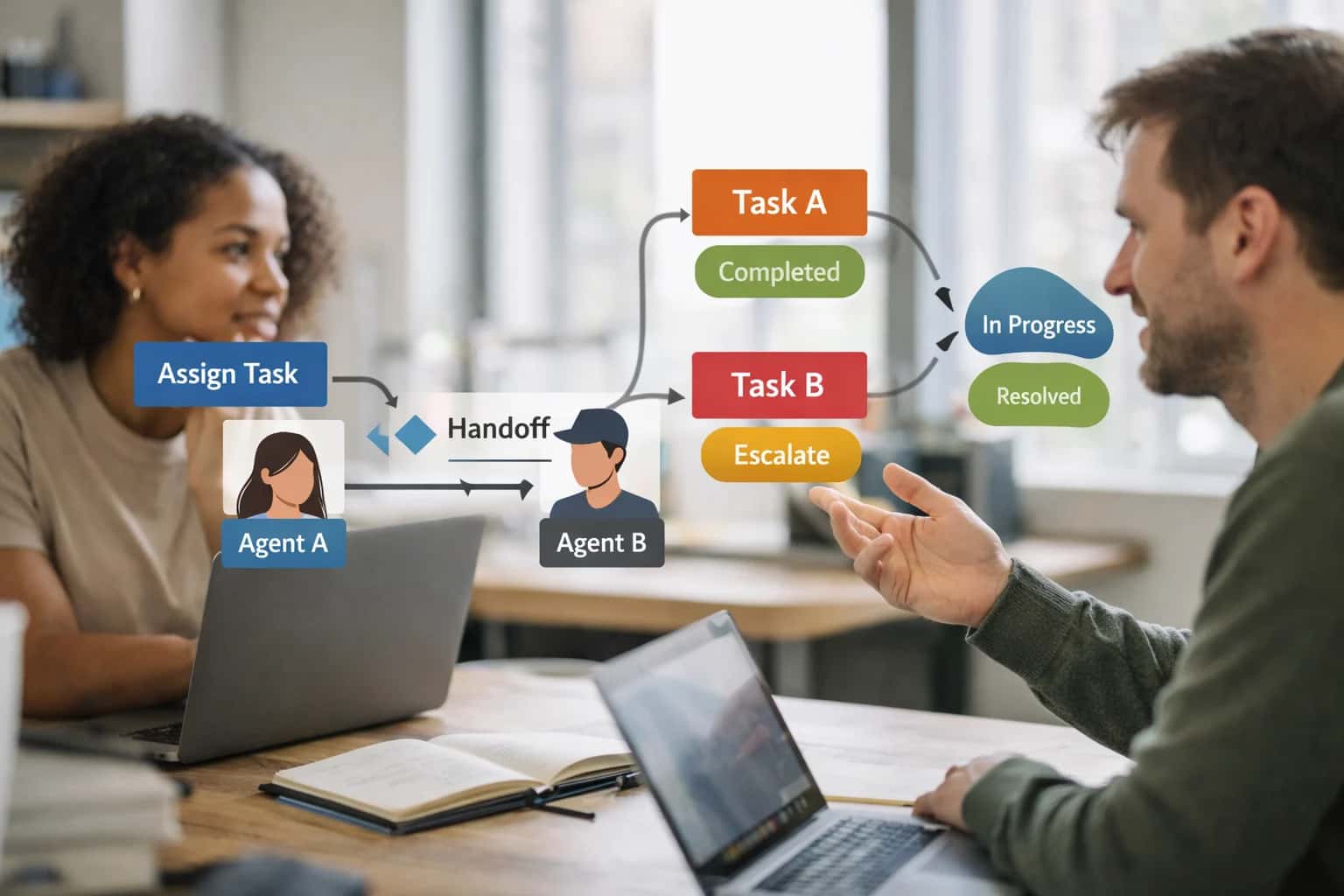
ARCHITECTURE FOR TECHNICIAN AND SERVICE ADVISOR COPILOTS
Where AI Fits into the Tekmetric Stack
A practical guide to embedding AI agents within Tekmetric's core modules to augment, not replace, your existing service workflow.
For technicians, this means an AI agent can surface diagnostic suggestions by cross-referencing the vehicle's symptoms and codes with a RAG-powered knowledge base of repair manuals and technical service bulletins (TSBs). For service advisors, AI can auto-generate detailed service notes from inspection photos and technician shorthand, draft clear customer explanations for recommended repairs, and even suggest labor guide lookups to ensure accurate time estimates. The impact is operational: reducing the time from vehicle check-in to estimate approval from hours to minutes and minimizing callback loops for unclear recommendations.
A production rollout typically involves a middleware layer that sits between Tekmetric's API and your chosen LLM (e.g., OpenAI, Anthropic). This layer handles prompt engineering with Tekmetric's specific data schema, manages conversation memory per RO, and enforces governance—like requiring a human-in-the-loop approval before sending AI-drafted communications to customers. Audit trails are logged back to a custom field on the RO for transparency. Start by piloting a single use case, like automated inspection summarization, within one service bay to validate the workflow and ROI before scaling shop-wide.
ARCHITECTURE FOR TECHNICIAN COPILOTS AND WORKFLOW AUTOMATION
Key Integration Surfaces in Tekmetric
The Core Workflow Surface
This is the primary integration point for AI agents that assist with diagnostic logic and service write-ups. The Repair Order (RO) object contains the vehicle, customer, line items, labor operations, and technician notes—all critical context for AI.
Key Integration Patterns:
- Webhook Triggers: Listen for
repair_order.createdorrepair_order.updatedevents to initiate AI workflows. - Line Item Suggestions: Use the RO's vehicle year/make/model/mileage and initial concern to query a RAG system containing OEM repair manuals, Technical Service Bulletins (TSBs), and shop historical data. Return ranked probable causes and recommended operations.
- Automated Note Generation: After a technician completes an operation, an AI agent can draft a concise, customer-friendly service note by analyzing the labor code and parts used, pulling from a template library.
- Estimate Review: Before an estimate is sent, an AI can review line items against common repair patterns for the vehicle to flag potential oversights or recommend preventative maintenance.
Implementation Note: AI suggestions should be presented as non-blocking recommendations within the Tekmetric UI, requiring technician approval to maintain liability and quality control.
ARCHITECTURE PATTERNS
High-Value AI Use Cases for Tekmetric
Practical integration patterns for embedding AI agents directly into Tekmetric's service workflow, inspection surfaces, and customer communications to reduce administrative load and improve shop throughput.
01
Automated Service Note Generation
AI listens to technician voice notes or parses inspection checklists via Tekmetric's API, then drafts detailed, structured service notes for the Repair Order. This reduces manual typing, ensures consistency, and captures all findings before the vehicle moves bays.
Minutes per RO
Time saved
02
Intelligent Labor Guide & TSB Lookup
An AI agent integrated into the Estimate/Repair Order module uses the vehicle VIN and symptom codes to retrieve and summarize relevant labor times from Mitchell/ALLDATA and Technical Service Bulletins (TSBs). It surfaces this context directly in the workflow for accurate quoting.
Context in-flow
Technician support
03
Dynamic Parts Cross-Reference & Substitution
AI monitors the parts list on an active Repair Order, interfaces with supplier APIs (NAPA, AutoZone), and suggests available, cost-effective alternatives when the primary part is out of stock. It can auto-update the RO and generate a revised customer approval request.
Reduce vehicle downtime
Primary impact
04
Proactive Customer Communication Agent
Triggered by Tekmetric webhooks (e.g., status_changed, estimate_ready), an AI agent crafts personalized SMS/email updates, answers common FAQs about repair status, and handles simple scheduling requests. This keeps customers informed without advisor intervention.
40-60% of inquiries
Automated deflection
05
Inspection Triage & Recommendation Engine
AI analyzes completed multipoint inspection data and vehicle service history from Tekmetric to prioritize recommended services by safety/criticality, estimate urgency, and even predict likely future failures. Presents a sorted list to the service advisor for the customer conversation.
Upsell clarity
Advisor confidence
06
Automated Estimate-to-RO Reconciliation
Upon job completion, AI compares the final Repair Order against the approved estimate, flags any line-item deviations (additional parts, labor overruns), and drafts a concise explanation for the customer. Ensures billing accuracy and reduces post-service disputes.
Audit-ready
Compliance support
TEKMETRIC INTEGRATION PATTERNS
Example AI-Powered Workflows
These concrete workflows illustrate how AI agents connect to Tekmetric's API and webhook surfaces to automate high-friction tasks for service advisors, technicians, and shop managers.
Trigger: A technician completes a repair line item in the Tekmetric mobile app and submits a voice recording via the API.
Context Pulled: The AI agent receives the audio file URL and the associated Repair Order ID. It fetches the RO details (vehicle year/make/model, customer concerns, existing line items) from Tekmetric's GET /repair-orders/{id} endpoint.
Agent Action: The agent transcribes the audio, then uses an LLM to structure the note. It cross-references common repair terminology and ensures notes align with the labor operation code. The output is a well-formatted service note in clear English.
System Update: The agent calls Tekmetric's POST /repair-orders/{id}/notes to append the generated note to the specific line item, tagging it as source: ai_generated.
Human Review Point: The service advisor receives a notification in Tekmetric. The note is editable before finalizing the RO for customer review. This cuts note-writing time from 5-10 minutes per item to seconds, with a final human sign-off.
HOW AI EMBEDS INTO TEKMETRIC'S WORKFLOWS
Implementation Architecture & Data Flow
A production-ready AI integration for Tekmetric connects to its core APIs and webhooks to assist technicians and advisors without disrupting their existing screens.
The integration architecture centers on Tekmetric's Repair Order (RO) API and Inspection API. AI agents are triggered via webhooks on key RO status changes (estimate_created, inspection_completed, parts_ordered) or when an inspection template is saved. For each trigger, the relevant context—RO details, vehicle history, inspection findings, and labor guide references—is packaged into a secure request to an orchestration layer. This layer, built with tools like CrewAI or n8n, manages the multi-step AI workflow, calling the appropriate LLM (e.g., GPT-4, Claude 3) and any external tools (like parts supplier APIs or a vector store of OEM manuals) before returning structured suggestions back to Tekmetric.
A primary workflow is automated service note generation. When a technician completes an inspection in Tekmetric, the AI agent receives the inspection data and vehicle mileage. It cross-references the vehicle's repair history from Tekmetric's database and queries a RAG-powered vector store containing the shop's preferred labor guides and technical service bulletins. The agent then drafts a concise, plain-language service note with recommended line items, which is posted back to the RO via the API as a draft for the service advisor to review and approve. This turns a 10-15 minute manual write-up into a same-minute suggestion, keeping the vehicle moving.
Governance is built into the flow. All AI-generated content is flagged as a draft_suggestion within the RO and requires a human approve or edit action by the service advisor before it becomes billable. Every interaction is logged with a full audit trail—original data, prompt used, model response, and final human action—ensuring accountability. Rollout typically starts in a single "pilot bay," allowing technicians and advisors to refine the prompts and workflows before scaling to the entire shop, ensuring the AI acts as a reliable copilot rather than an unpredictable automation.
TEKMETRIC INTEGRATION PATTERNS
Code & Payload Examples
Automating Repair Order Documentation
This pattern listens for a repair_order.updated webhook from Tekmetric when a status changes to Completed. An AI agent uses the RO's line items, technician codes, and vehicle history to draft a customer-friendly service summary.
Key Integration Points:
- Tekmetric Repair Order API (
GET /v2/repair-orders/{id}) - Vehicle Service History (via
vehicle_id) - Webhook endpoint to receive status changes
Example Payload for AI Prompt:
json{ "vehicle": { "year": 2019, "make": "Honda", "model": "CR-V", "mileage": 65210 }, "customer_name": "Jane Smith", "repair_order": { "id": "RO-4821", "summary_lines": [ "Performed oil and filter change with synthetic blend", "Replaced cabin air filter - found heavily clogged", "Completed multi-point inspection: brakes at 7mm, tires good" ], "technician_notes": "Cust reports slight whistle on acceleration. Inspected - no issues found. Rec check again in 1k mi." } }
The AI returns a structured summary for advisor review before attaching to the RO's customer notes field via PATCH /v2/repair-orders/{id}.
AI-ASSISTED WORKFLOWS IN TEKMETRIC
Realistic Time Savings & Operational Impact
This table illustrates the practical impact of integrating AI agents into Tekmetric's core surfaces, focusing on reducing administrative drag for technicians and advisors while keeping critical human judgment in the loop.
| Workflow / Task | Before AI Integration | After AI Integration | Implementation & Impact Notes |
|---|---|---|---|
Initial Repair Order Write-Up | 15-25 minutes manual entry from inspection sheet | 5-10 minutes with AI-suggested line items | AI parses technician notes/video, suggests common repairs & parts from history. Advisor reviews and edits. |
Labor Time & Procedure Lookup | 5-10 minutes searching manuals or Mitchell1 | <1 minute with RAG-powered copilot | Technician queries natural language; AI retrieves & summarizes relevant procedures from integrated guides. |
Parts Identification & Cross-Reference | 8-15 minutes across supplier catalogs | 2-5 minutes with AI-powered search | AI suggests OEM/aftermarket parts based on vehicle; checks local inventory & supplier API availability. |
Customer Approval Request Drafting | 10-15 minutes writing custom explanation | 2-3 minutes generating draft from RO data | AI drafts plain-language summary of repairs/costs. Advisor personalizes tone and sends via Tekmetric Comms. |
Daily Service Summary for Shop Owner | 30-45 minutes manual compilation | 5 minutes for AI-generated report | AI aggregates KPIs from closed ROs, flags anomalies (high parts cost, comeback), emails digest. |
Post-Repair Quality Note Documentation | 5-8 minutes per vehicle for technician notes | 1-2 minutes with voice-to-text & summarization | Technician records brief audio; AI transcribes, structures into SOAP-like format for the RO history. |
Next Service Recommendation Generation | Manual review of history during checkout | Automated trigger with personalized list | AI analyzes mileage, repair history, and OEM schedules at RO closure; suggests next services for advisor review. |
ARCHITECTING FOR PRODUCTION
Governance, Security, and Phased Rollout
A practical guide to implementing, securing, and scaling AI within Tekmetric's operational environment.
A production AI integration for Tekmetric must respect the platform's data model and user workflows. Core integration points include the Repair Order API for job context, the Vehicle History and Customer objects for personalization, and the Inspection module for diagnostic assistance. AI agents should be deployed as a middleware layer, using webhooks to listen for events like inspection_completed or estimate_created. This layer then calls the LLM, grounding its responses in Tekmetric data and approved knowledge bases (like labor guides or OEM bulletins), before posting suggestions back as notes or line items via the API. All interactions must be logged to a separate audit table, linking the AI's suggestion to the specific repair order, user, and timestamp for full traceability.
Security is non-negotiable. API credentials for Tekmetric must be managed via a secrets vault, not hard-coded. AI tool calls should operate under a dedicated service account with role-based access control (RBAC) scoped to necessary endpoints—typically read-only for most data, with write access limited to adding notes or flagging estimates for review. For customer communications (e.g., automated status updates), a human-in-the-loop approval step should be configurable per shop. Data sent to external LLM APIs must be scrubbed of direct PII; use customer IDs that are meaningless outside your system, and ensure your AI provider contract includes strict data processing agreements.
Roll this out in phases. Start with a pilot workflow, such as an AI copilot that suggests common repairs based on inspection findings. Deploy to a single, trusted service advisor for a two-week test. Monitor the audit logs for suggestion accuracy and user adoption. Phase two expands to automated service note generation for all technicians, with a simple approval toggle in the Tekmetric UI. The final phase introduces predictive parts coordination, where the AI monitors job queues and interfaces with supplier APIs. Each phase requires clear success metrics (e.g., reduction in manual note-taking time, decrease in parts wait time) and a rollback plan. Governance is ongoing: establish a monthly review with shop management to evaluate AI suggestions, retrain prompts based on feedback, and ensure the integration evolves with Tekmetric's own platform updates.
Enabling Efficiency, Speed & Accuracy
Intelligent Analysis, Decision & Execution
We build AI systems for teams that need search across company data, workflow automation across tools, or AI features inside products and internal software.
Talk to Us
Search across company data
Give teams answers from docs, tickets, runbooks, and product data with sources and permissions.
Useful when people spend too long searching or get different answers from different systems.
Enterprise searchRAGPermissions
Read more
Automate internal workflows
Use AI to route work, draft outputs, trigger actions, and keep approvals and logs in place.
Useful when repetitive work moves across multiple tools and teams.
AI agentsWorkflow automationGovernance
Read more
Add AI to products and internal tools
Build assistants, guided actions, or decision support into the software your team or customers already use.
Useful when AI needs to be part of the product, not a separate tool.
AI integrationDecision supportModel routing
Read moreIMPLEMENTATION AND WORKFLOW DETAILS
Frequently Asked Questions
Common technical and operational questions about embedding AI agents and automation into Tekmetric's service workflow, inspection, and parts coordination surfaces.
The integration uses Tekmetric's webhooks or a scheduled API poll to detect new or updated Repair Order (RO) records.
Typical Trigger & Data Flow:
- Event: A service advisor creates or updates a Repair Order, changing its status to
Estimate ReadyorCustomer Approval Pending. - Webhook Payload: Tekmetric sends a JSON payload to your secure endpoint containing the RO ID, vehicle info, customer details, and preliminary line items.
- Context Enrichment: The AI agent calls Tekmetric's API to fetch additional context:
- Full vehicle service history
- Technician notes from the digital inspection
- Stored customer preferences
- Agent Action: The enriched context is sent to an LLM (like GPT-4) with a system prompt to:
- Generate a clear, customer-friendly summary of recommended services.
- Suggest potential upsells based on mileage, inspection findings, and history.
- Draft a personalized communication for customer approval.
- System Update: The generated summary is posted back to the RO as an internal note or attached as a PDF. The draft communication is queued for advisor review/send.
Key API Objects: RepairOrders, Inspections, Customers, Vehicles.

About the author
Prasad Kumkar
CEO & MD, Inference Systems
Prasad Kumkar is the CEO & MD of Inference Systems and writes about AI systems architecture, LLM infrastructure, model serving, evaluation, and production deployment. Over 5+ years, he has worked across computer vision models, L5 autonomous vehicle systems, and LLM research, with a focus on taking complex AI ideas into real-world engineering systems.
His work and writing cover AI systems, large language models, AI agents, multimodal systems, autonomous systems, inference optimization, RAG, evaluation, and production AI engineering.
LinkedIn
Limited slotsGet a Free AI Consultation
Partnered with leading AI, data, and software stack.





How We Work
Custom AI workflows for your Business
One-fit-all AI don't work for modern businesses. At Inferensys, we aim to understand your business & custom requirements; which we use to define most efficient agentic workflows, the data, and the tools for your business.
01
Review the use case
We understand the task, the users, and where AI can actually help.
Read more02
Pick the right approach
We define what needs search, automation, or product integration.
Read more03
Build the first useful version
We implement the part that proves the value first.
Read more04
Improve from there
We add the checks and visibility needed to keep it useful.
Read moreThe first call is a practical review of your use case and the right next step.
Talk to Us