AI integration for loyalty programs connects directly to the Customer, Vehicle, and Repair Order modules in platforms like Shopmonkey, Tekmetric, AutoLeap, or Mitchell 1. The core architecture involves an AI agent that consumes the platform's transaction history API—analyzing service frequency, average order value, and vehicle age—to calculate a dynamic retention score for each customer. This score, combined with real-time job status from the Repair Order object, allows the system to trigger personalized reward offers at the point of sale or during follow-up communications, moving beyond static point-per-dollar programs.

Integration
AI Integration for Auto Repair Loyalty Platforms
A technical blueprint for connecting AI to shop management platforms to transform static loyalty points into dynamic, predictive retention engines that automate personalized rewards and offers.
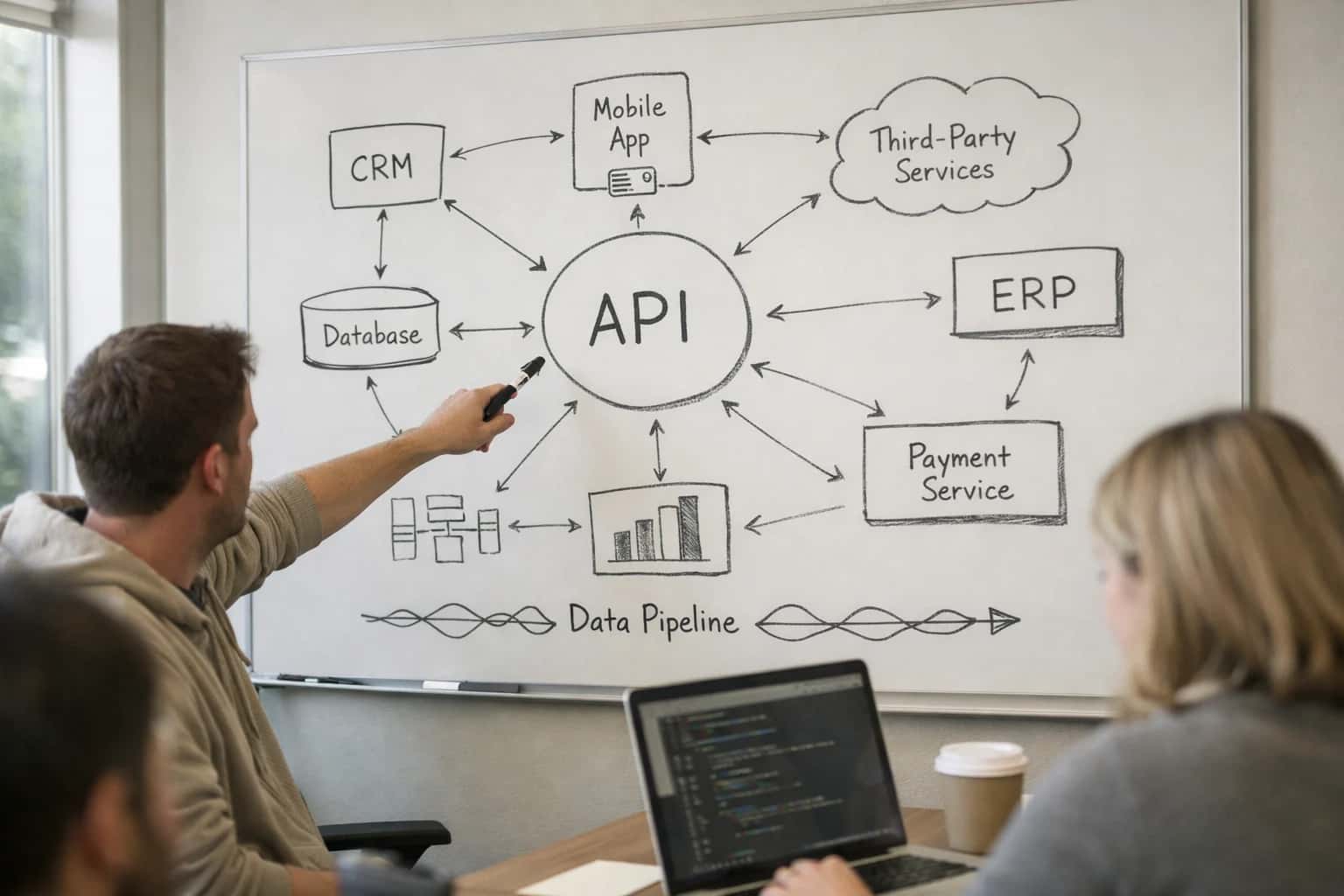
ARCHITECTURE AND IMPLEMENTATION
Where AI Fits into Auto Repair Loyalty Programs
A technical blueprint for integrating AI with shop platform transaction history to power dynamic, personalized loyalty and retention programs.
Implementation centers on a secure, event-driven workflow. When a repair order status changes to Invoice Paid, a webhook fires from the shop platform to an orchestration layer. An AI agent evaluates the customer's history against business rules (e.g., "high-value customer with declining visit frequency") and generates a context-aware offer, such as a discount on a future alignment service or a complimentary cabin air filter on their next visit. The offer and redemption logic are then pushed back into the customer's record via the platform's API, making it available for the service advisor to apply immediately or for an automated marketing system to include in a post-visit email.
Rollout requires careful governance. Start with a pilot segment (e.g., customers with 3+ visits in the last 18 months) and implement an approval queue for generated offers before they are committed to the platform. Audit logs should track which AI-suggested offers were presented, accepted, and redeemed to measure incremental revenue and retention lift. This closed-loop feedback is critical for tuning the AI's reward prediction models. For a deeper dive on orchestrating these customer communications, see our guide on AI Integration for Auto Repair Customer Communications.
ARCHITECTURE FOR DYNAMIC REWARDS
Key Integration Surfaces in Auto Repair Loyalty Platforms
The Core Loyalty Data Model
The customer and vehicle history tables within your shop platform (Shopmonkey, Tekmetric, etc.) are the primary fuel for AI-driven loyalty. Integration focuses on extracting and structuring:
- Service Transaction Records: Complete repair order history, including line-item details (parts, labor codes), total spend, and service categories (e.g., brake job, oil change).
- Vehicle and Owner Attributes: Vehicle make/model/year, mileage intervals, and customer tenure.
- Temporal Patterns: Visit frequency, seasonal service trends, and intervals between specific repairs.
An AI agent consumes this data via the platform's REST API or a nightly sync to a data warehouse. The goal is to build a predictive model of customer lifetime value (LTV) and defection risk, which directly informs reward tiers and personalized offer logic. Without this historical context, loyalty programs remain static and generic.
LOYALTY AUTOMATION
High-Value AI Loyalty Use Cases
Integrate AI directly with your shop platform's transaction history and customer records to move from static point systems to dynamic, predictive loyalty programs that drive retention and increase customer lifetime value.
01
Predictive Tier Assignment & Rewards
AI analyzes a customer's transaction history, service frequency, and average ticket value from the shop platform to dynamically assign loyalty tiers and predict the optimal reward (e.g., free oil change vs. 10% off brakes) most likely to trigger their next visit.
Static -> Dynamic
Program logic
02
POS-Triggered Personalized Offers
At the point of sale, an AI agent reviews the completed repair order and customer profile to generate and present a personalized, time-bound offer (e.g., "$20 off your next alignment within 90 days") before the final receipt is printed, increasing immediate redemption.
Batch -> Real-time
Offer delivery
03
Lapsed Customer Win-Back Campaigns
AI monitors the shop platform for customers who have passed a predictive inactivity threshold. It triggers automated, personalized win-back campaigns (SMS/email) with tailored incentives based on their past service history, reactivating dormant relationships.
Manual list -> Automated
Campaign trigger
04
Maintenance Reminder + Loyalty Integration
Instead of generic mileage-based reminders, AI synthesizes vehicle service history, driving pattern data (if available), and loyalty status to generate hyper-personalized reminders that include a loyalty reward incentive for booking the recommended service.
Higher conversion
Reminder to booked job
05
Referral Program Optimization
AI identifies a shop's most loyal and satisfied customers (via transaction history, review sentiment, and tenure) and automatically enrolls them into a targeted referral program, generating personalized referral codes and tracking redemptions back to the shop platform CRM.
06
Loyalty Points Redemption Forecasting
For shops with point-based systems, AI analyzes accumulation rates and redemption patterns to forecast future liability, recommend reward cost adjustments, and proactively push "burner" offers to customers nearing point expiration, managing program cost while driving visits.
Reactive -> Proactive
Program management
CONCRETE IMPLEMENTATION PATTERNS
Example AI-Powered Loyalty Workflows
These workflows illustrate how AI can be integrated with your shop platform's transaction history and customer records to automate and personalize loyalty operations. Each pattern connects to specific modules like the Customer Profile, Repair Order, and Point-of-Sale surfaces.
Trigger: A repair order is marked 'Paid' and closed in the shop platform (e.g., Shopmonkey, Tekmetric).
Context Pulled: The AI agent queries the platform's API for:
- Customer's 12-month spend history and visit frequency.
- Types of services historically purchased (e.g., preventative maintenance vs. major repairs).
- Current loyalty points balance and tier.
AI Action: A lightweight model analyzes the new transaction against historical patterns to predict customer lifetime value (LTV) and churn risk. It calculates a personalized tier progression or reward multiplier that would most effectively incentivize the next visit.
System Update: The agent calls the loyalty platform's API (or updates a custom field in the shop platform's Customer module) to:
- Award the standard points for the transaction.
- Apply the calculated multiplier or bonus points.
- Upgrade the customer's tier if thresholds are met, triggering an automated communication.
Human Review Point: For tier downgrades or unusually large bonus allocations, the system can flag the action in a dashboard for manager approval before committing.
LOYALTY AUTOMATION ENGINE
Implementation Architecture & Data Flow
An AI-powered loyalty engine integrates directly with your shop management platform's transaction history to automate personalized reward strategies and customer retention workflows.
The integration architecture centers on a dedicated AI agent that subscribes to key events in your shop platform (e.g., Shopmonkey, Tekmetric). Using webhooks or API listeners, it ingests finalized Repair Order data—including customer ID, vehicle, service codes, total spend, and parts margin—into a secure processing queue. The agent's core logic evaluates each transaction against a configurable rules engine and historical customer data to calculate a dynamic Loyalty Score. This score determines the type and value of an automated reward, such as a percentage-off coupon for their next service or a complimentary tire rotation, which is then pushed back into the shop platform's Customer Record or Marketing Module as a tagged offer.
For high-impact use cases, the system employs a Retrieval-Augmented Generation (RAG) layer over the customer's full service history. When a customer checks in or an invoice is closed, the AI queries this vectorized history to generate hyper-personalized communications. For example: 'Based on your 2018 F-150's brake service last visit, your next recommended maintenance is a tire rotation in ~3,000 miles. Here’s $25 off that service, valid for 60 days.' This offer is automatically appended to their digital invoice and sent via the shop platform's native SMS/email system, creating a seamless, context-aware loyalty touchpoint without manual intervention.
Rollout is typically phased, starting with a read-only connection to historical transaction data for model training and rule calibration. Governance is maintained through a human-in-the-loop approval step for the first 30-60 days, where generated offers are logged in an audit trail for shop manager review before being issued. Post-validation, the system moves to fully automated execution, with dashboards monitoring offer redemption rates, customer lifetime value (LTV) impact, and exception flags for manual review—ensuring the AI operates within defined business guardrails. This architecture turns your shop platform's operational data into a proactive retention engine, moving loyalty from static point programs to dynamic, predictive relationship management.
LOYALTY PROGRAM AUTOMATION
Code & Payload Examples
Analyzing Customer History for Loyalty Tiers
An AI agent processes the shop platform's transaction API to segment customers and calculate dynamic loyalty scores. This logic runs nightly via a scheduled job, updating a customer metadata field used for offer targeting.
Key Data Points:
total_lifetime_spendvisit_frequency_12moaverage_repair_order_amountservice_mix(e.g., percentage preventive vs. corrective)
python# Example: Customer Loyalty Scoring Function def calculate_loyalty_score(customer_history): """Processes transaction history to output a 0-100 loyalty score.""" score = 0 # Weight lifetime spend (40%) spend_weight = min(customer_history["total_lifetime_spend"] / 10000, 1) * 40 # Weight visit frequency (30%) freq_weight = min(customer_history["visit_frequency_12mo"] / 12, 1) * 30 # Weight service mix preference for high-margin work (30%) mix_weight = customer_history["preventive_service_ratio"] * 30 score = spend_weight + freq_weight + mix_weight return round(score, 1)
The resulting score determines their loyalty tier (Bronze, Silver, Gold, Platinum), which is stored back in the shop platform via a PATCH request to the customer record.
LOYALTY PROGRAM OPERATIONS
Realistic Operational Impact & Time Savings
How AI integration with your shop platform's transaction history transforms loyalty program management from a manual, reactive task into a dynamic, automated driver of customer retention and revenue.
| Metric | Before AI | After AI | Notes |
|---|---|---|---|
Personalized Offer Generation | Manual, batch email blasts based on broad segments | Dynamic, real-time offers at POS based on individual history & predicted value | Triggers from completed repair order; uses customer LTV and service propensity models |
Reward Tier Management | Quarterly manual review of customer spend to adjust tiers | Continuous, automated tier adjustment with next-visit benefit preview | Rules execute nightly via platform APIs; customers see status change in communications |
Optimal Reward Identification | Standard discount (e.g., 10% off next service) for all | AI-scored reward menu (discount, free tire rotation, waived fee) per customer | Model balances cost-to-serve, predicted redemption rate, and lifetime value impact |
Loyalty Program Reporting | Monthly spreadsheet export and manual analysis | Automated dashboard with churn risk scores, program ROI, and top member insights | Dashboard built on shop platform data warehouse; alerts for at-risk high-value customers |
Enrollment & Onboarding | Paper form or checkbox at checkout; no follow-up | Post-visit AI-generated SMS/email explaining personalized benefits earned | Triggered 24 hours after first paid visit; includes personalized earning forecast |
Win-Back Campaign Execution | Manual list creation for lapsed customers (6+ months) | Automated, staged win-back sequences triggered at 90-day lapse | Sequence includes personalized offer based on past service mix; updates CRM loyalty flag |
Program Rule Updates | IT ticket to modify hard-coded discount rules (1-2 weeks) | Business user configures rules via no-code UI; AI suggests rule effectiveness | Changes sync to shop platform via API; A/B test results inform future rules |
ARCHITECTING FOR PRODUCTION
Governance, Security & Phased Rollout
A practical approach to implementing AI for loyalty programs within your auto repair shop platform.
Integrating AI with your loyalty platform requires careful handling of sensitive transaction data from systems like Shopmonkey or Tekmetric. The AI agent typically operates as a middleware service, listening for webhooks on key events such as invoice_closed or customer_payment_posted. It securely accesses the shop platform's REST API to fetch historical transaction data, vehicle records, and customer profiles. All data processing occurs in a secure, isolated environment where personally identifiable information (PII) is tokenized, and loyalty scoring logic is applied to raw spend and visit frequency data without exposing underlying business rules.
A phased rollout is critical for managing risk and proving value. We recommend starting with a pilot cohort of your most engaged customers. In Phase 1, the AI generates dynamic reward recommendations (e.g., "Next oil change 20% off" or "Free tire rotation") but these are presented as advisor suggestions within the shop platform's CRM or point-of-sale module, requiring manual approval and issuance by a service advisor. This allows the team to audit the AI's logic and calibrate its impact on customer retention before full automation. Phase 2 automates the offer generation and injection directly into the customer's profile or a digital wallet, triggered by specific loyalty tier thresholds.
Governance is built into the workflow. Every AI-generated recommendation and issued offer is logged with a full audit trail, linking back to the source transaction IDs and the model's decision factors (e.g., customer lifetime value, service interval). Role-based access controls (RBAC) ensure only managers can modify the underlying reward parameters or scoring models. A human-in-the-loop approval step is maintained for high-value offers or for customers flagged with recent complaints, ensuring brand safety and allowing for nuanced, personal intervention that pure automation cannot provide.
Enabling Efficiency, Speed & Accuracy
Intelligent Analysis, Decision & Execution
We build AI systems for teams that need search across company data, workflow automation across tools, or AI features inside products and internal software.
Talk to Us
Search across company data
Give teams answers from docs, tickets, runbooks, and product data with sources and permissions.
Useful when people spend too long searching or get different answers from different systems.
Enterprise searchRAGPermissions
Read more
Automate internal workflows
Use AI to route work, draft outputs, trigger actions, and keep approvals and logs in place.
Useful when repetitive work moves across multiple tools and teams.
AI agentsWorkflow automationGovernance
Read more
Add AI to products and internal tools
Build assistants, guided actions, or decision support into the software your team or customers already use.
Useful when AI needs to be part of the product, not a separate tool.
AI integrationDecision supportModel routing
Read moreIMPLEMENTATION & WORKFLOWS
Frequently Asked Questions
Practical questions for shop owners and CTOs planning AI-driven loyalty programs integrated with platforms like Shopmonkey, Tekmetric, AutoLeap, and Mitchell 1.
This workflow uses real-time transaction data from your shop platform to generate a dynamic, personalized offer before the final invoice is printed.
- Trigger: The repair order status changes to
Ready for Final Invoicein the shop platform (e.g., Shopmonkey, Tekmetric). - Context Pulled: The AI agent, via a secure API call, retrieves:
- Customer's full service history (vehicle, spend, frequency).
- Details of the current repair order (services performed, total spend, parts used).
- Historical effectiveness of past loyalty offers for similar customer segments.
- AI Action: A model evaluates the data to predict the optimal reward for retention. For example:
- High-Value, Infrequent Customer:
"$50 off your next service over $300"to incentivize a return visit. - Frequent, Low-Spend Customer:
"Free tire rotation on your next visit"to maintain routine. - The offer is generated as a discount code and a natural language explanation for the service advisor.
- High-Value, Infrequent Customer:
- System Update: The offer and code are injected back into the repair order notes and the POS system. The agent can also trigger an automated SMS/email to the customer with the offer details post-visit.
- Human Review Point: The service advisor sees the AI-suggested offer on the final invoice screen and can approve, modify, or decline it before presenting it to the customer.

About the author
Prasad Kumkar
CEO & MD, Inference Systems
Prasad Kumkar is the CEO & MD of Inference Systems and writes about AI systems architecture, LLM infrastructure, model serving, evaluation, and production deployment. Over 5+ years, he has worked across computer vision models, L5 autonomous vehicle systems, and LLM research, with a focus on taking complex AI ideas into real-world engineering systems.
His work and writing cover AI systems, large language models, AI agents, multimodal systems, autonomous systems, inference optimization, RAG, evaluation, and production AI engineering.
LinkedIn
Limited slotsGet a Free AI Consultation
Partnered with leading AI, data, and software stack.





How We Work
Custom AI workflows for your Business
One-fit-all AI don't work for modern businesses. At Inferensys, we aim to understand your business & custom requirements; which we use to define most efficient agentic workflows, the data, and the tools for your business.
01
Review the use case
We understand the task, the users, and where AI can actually help.
Read more02
Pick the right approach
We define what needs search, automation, or product integration.
Read more03
Build the first useful version
We implement the part that proves the value first.
Read more04
Improve from there
We add the checks and visibility needed to keep it useful.
Read moreThe first call is a practical review of your use case and the right next step.
Talk to Us