Traditional iMIS segmentation relies on static queries against fields like MemberType, JoinDate, or ChapterCode. An AI integration layers on top of this by analyzing unstructured engagement signals—email opens, event attendance logs, community post sentiment, and CE course completion—to create dynamic, behavior-based clusters. The architecture typically involves a nightly ETL job that extracts member records and activity logs from iMIS tables (e.g., IMIS_Activity, IMIS_EmailHistory) into a vector store. A clustering model then groups members by latent engagement patterns, writing the resulting segment labels (e.g., high_risk_churn, advocacy_candidate, networking_seeker) back to a custom AI_Segment object in iMIS via its REST API.

Integration
AI Integration with iMIS for Member Segmentation
Replace manual list-building with AI-driven dynamic segmentation in iMIS. Automatically cluster members by behavior, value, and interest to power hyper-targeted marketing and retention campaigns.
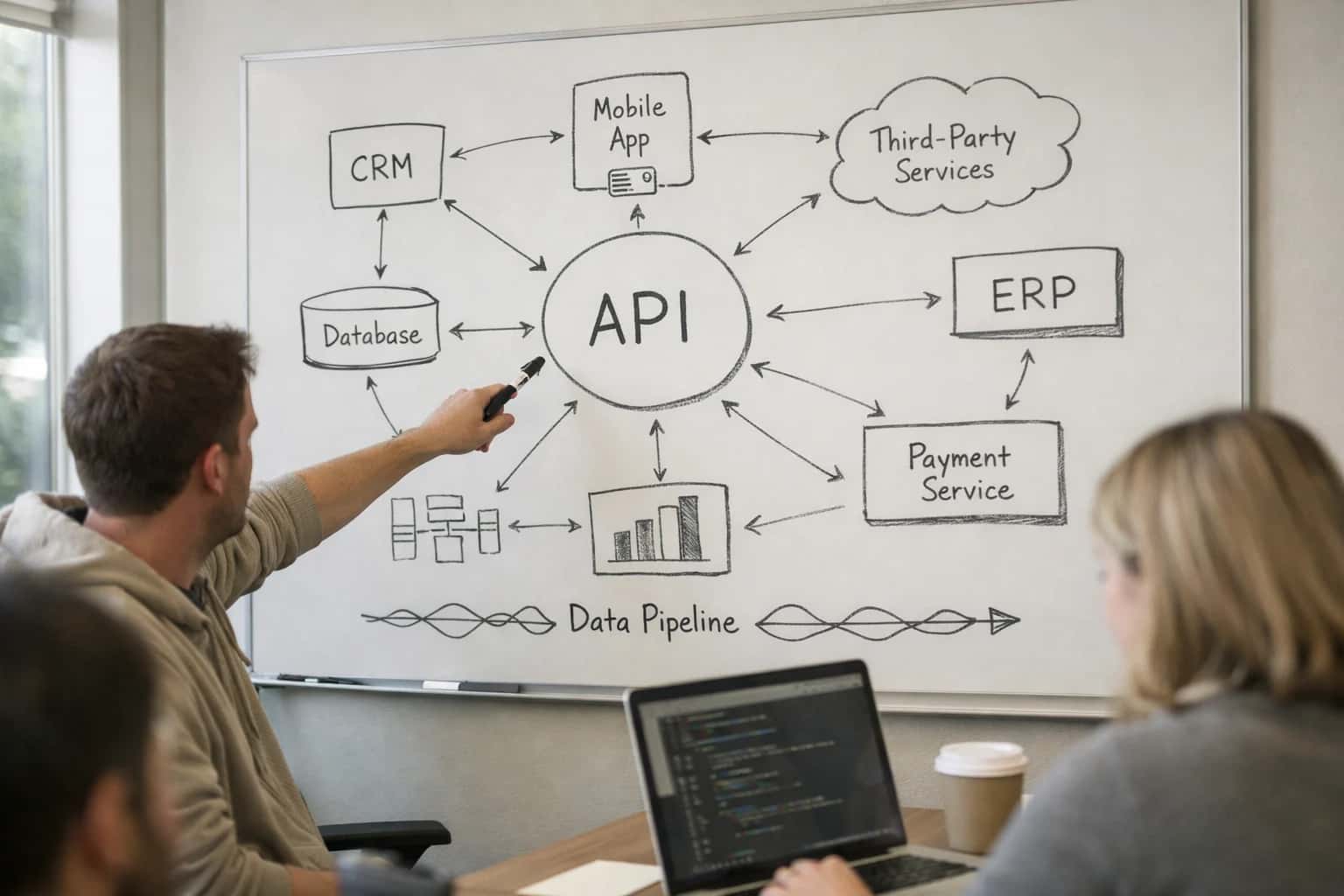
ARCHITECTURE AND ROLLOUT
From Static Lists to AI-Driven Dynamic Segments in iMIS
How to build a production-ready AI segmentation engine that plugs into iMIS data models and marketing workflows.
For marketing teams, this means campaigns in iMIS Advance or integrated tools like Informz can be triggered by AI segment membership changes. Instead of manually building a list of ‘lapsed members,’ an AI agent monitors the high_risk_churn segment and automatically enrolls members into a personalized win-back journey. Key implementation details include setting up an approval workflow for segment definitions before they go live, maintaining an audit log of which members were assigned to which AI segment and why, and establishing a human review queue for edge cases flagged by low-confidence scores.
Rollout should start with a pilot on a single campaign type, such as annual conference promotion. Compare the performance of AI-driven dynamic segments against the control group using traditional iMIS queries. Governance is critical: ensure the AI model’s features (e.g., login frequency, donation history) are documented and that segment definitions can be explained to non-technical stakeholders. This integration turns iMIS from a system of record into a system of intelligence, enabling hyper-targeted communications that adapt as member behavior evolves. For related patterns, see our guides on /integrations/association-management-platforms/ai-integration-with-imis-for-membership-churn-prediction and /integrations/association-management-platforms/ai-integration-with-imis-for-member-sentiment-analysis.
PLATFORM SURFACES
Where AI Segmentation Connects to iMIS
Core Data Objects for AI Clustering
AI-driven segmentation in iMIS begins with the platform's foundational records: the Individual (IM_Individual) and Organization (IM_Organization) tables. These objects hold the demographic, firmographic, and transactional history required for clustering.
Key fields for AI analysis include:
- Demographics: Job title, industry (SIC/NAICS codes), geographic location, membership tenure.
- Engagement Signals: Event attendance history, committee participation, website login frequency, resource downloads.
- Transactional Data: Dues payment history, sponsorship levels, donation amounts, product purchases.
An AI model consumes this data via iMIS REST API or direct database connection (for on-premise deployments) to identify latent patterns and create dynamic segments that go beyond static rule-based groups. These segments can be written back to iMIS as new Groups or tagged using custom fields for activation in marketing workflows.
IMIS INTEGRATION PATTERNS
High-Value AI Segmentation Use Cases for Associations
Move beyond static demographic lists. These AI-powered segmentation patterns for iMIS use behavioral data, predictive models, and natural language to create dynamic, actionable member groups for hyper-targeted engagement.
01
Predictive Churn Risk Segments
AI models analyze iMIS engagement logs (portal logins, event no-shows, resource downloads) and transactional history to score each member's churn likelihood. Automatically creates dynamic segments like 'High Risk - 90 Days' and 'Medium Risk - Renewal Window' to trigger personalized retention workflows.
Batch -> Real-time
Segment updates
02
Behavioral Engagement Clusters
Unsupervised learning clusters members based on interaction patterns across iMIS modules (Community posts, CE course completions, committee participation). Reveals segments like 'Silent Learners' and 'Network Champions' for tailored content and communication strategies.
1 sprint
To initial model
03
Natural Language Query Segments
Enables marketing staff to create segments using plain English queries against the iMIS database. For example: "Show me members in Texas who attended a webinar last quarter but haven't registered for the annual conference." The AI translates this into a dynamic iMIS query, executed and maintained automatically.
Hours -> Minutes
Segment creation
04
Lifetime Value & Tier Migration Segments
AI calculates predicted lifetime value using dues history, sponsorship spend, and donation data. Creates segments for 'High LTV - Upgrade Candidates' and 'At-Risk Downgrade' to guide tier-based marketing campaigns and personalized benefit outreach within iMIS.
Same day
Insight generation
05
Sentiment-Based Advocacy Segments
Continuously analyzes unstructured feedback from iMIS survey comments, email replies, and community discussions. Dynamically segments members by sentiment and topic affinity (e.g., 'Pro-Policy X Advocates', 'Concerned about Topic Y') for targeted advocacy alerts and issue-based outreach.
Real-time
Sentiment tracking
06
Next-Best-Offer Propensity Segments
Machine learning predicts a member's likelihood to purchase specific non-dues offerings (e.g., certification, premium webinar, sponsorship). Creates segments like 'High Propensity - Advanced Course' to drive personalized cross-sell campaigns directly from iMIS marketing automation, increasing conversion rates.
Batch -> Real-time
Propensity scoring
IMPLEMENTATION PATTERNS
Example AI Segmentation Workflows for iMIS
These workflows demonstrate how to inject AI into iMIS to automate dynamic segment creation, moving beyond static lists to behavior-driven clusters that power hyper-targeted communications.
Trigger: Nightly batch job or real-time webhook from iMIS activity logs (event registration, portal login, document download).
Context Pulled: The agent queries the iMIS database for the last 30 days of member activity, focusing on:
IMIS..Activity_Logfor page views and clicks.IMIS..Event_Registrationfor session attendance.IMIS..Committee_Memberfor participation.
AI Action: A clustering model (e.g., using embeddings from activity descriptions) groups members into cohorts like 'High-Engagement Learners', 'Passive Renewers', or 'Event-Only Participants'. The model assigns a segment label and confidence score to each member record.
System Update: The agent writes the new segment labels to a custom iMIS table (IMIS..AI_Segment) and updates the member's IMIS..Individual record with a segment ID. It can also create a dynamic Smart Group in iMIS Engage for immediate use in campaigns.
Human Review Point: A daily digest is sent to the marketing manager showing new segments created and member counts, with an option to approve, rename, or merge segments before they go live.
FROM BATCH SEGMENTS TO DYNAMIC CLUSTERS
Implementation Architecture: Data Flow & System Boundaries
A production-ready architecture for AI-powered member segmentation connects iMIS data to a secure inference layer, enabling real-time, behavior-driven clusters.
The integration architecture centers on a secure, dedicated service layer that sits adjacent to your iMIS database. This layer performs three core functions: it extracts and transforms raw member data from key iMIS tables (e.g., Individual, Organization, EventRegistration, TransactionHistory), executes AI clustering models on this unified profile, and writes dynamic segment tags back to iMIS custom fields or a dedicated segmentation object. Data flow is orchestrated via scheduled jobs for nightly batch updates, with optional real-time webhook triggers from high-signal events like a major purchase or event registration to recalculate a member's cluster immediately.
Key system boundaries ensure governance and performance. The AI service never stores raw PII; it processes anonymized feature vectors (engagement scores, tenure bands, demographic categories). All model inferences are logged with the member ID and timestamp back to iMIS for audit trails. Segmentation logic is version-controlled, allowing you to roll back or A/B test different clustering strategies. The service exposes a REST API, enabling iMIS workflows or marketing modules (like iMIS Email) to pull the current segment for a member or list, turning static groups into dynamic audiences for hyper-targeted campaigns.
Rollout follows a phased approach: start with a pilot model on a single data domain (e.g., event engagement) to validate clusters and business impact. Then, expand the feature set to include transactional data and demographic signals. Governance is maintained through a human-in-the-loop review step where marketing managers approve new AI-generated segments before they are activated in live campaigns. This architecture ensures iMIS remains the system of record while gaining a powerful, scalable intelligence layer for membership marketing. For related patterns on activating these segments, see our guide on [/integrations/association-management-platforms/ai-integration-with-imis-for-member-communications](AI Integration with iMIS for Member Communications).
AI-DRIVEN SEGMENTATION WORKFLOWS
Code & Payload Examples
Querying iMIS for Segmentation Features
The first step is extracting the raw member data needed for AI clustering. This typically involves querying multiple iMIS tables via its REST API or direct SQL (if permitted) to build a unified feature set.
Key tables include:
- Member/Individual: Demographics, join date, membership tier.
- Activity/Event Registration: Attendance frequency, event types.
- Financial Transactions: Dues payment history, donation amounts.
- Engagement Logs: Portal logins, resource downloads, committee participation.
A Python script using requests and pandas can orchestrate this, handling pagination and joining data. The output is a feature matrix where each row is a member and columns are normalized engagement scores, recency, and demographic indicators.
AI-POWERED MEMBER SEGMENTATION
Realistic Time Savings & Business Impact
How AI clustering on iMIS engagement, demographic, and transactional data transforms manual segmentation into a dynamic, automated process for marketing and membership teams.
| Metric | Before AI | After AI | Notes |
|---|---|---|---|
Segment Creation & Refresh | Manual spreadsheet analysis, 8-16 hours monthly | Automated clustering runs, 1-2 hours monthly | AI analyzes 20+ data points (logins, event attendance, dues history) to propose segments |
Campaign Targeting Accuracy | Broad blasts based on static lists or basic filters | Hyper-targeted comms based on dynamic behavioral clusters | Reduces irrelevant emails, improving open rates and reducing unsubscribes |
Identification of At-Risk Members | Reactive, after non-renewal or disengagement | Proactive, with churn-risk scores appended to member records | Enables pre-emptive retention campaigns 60-90 days before renewal |
Personalized Content Generation | Manual copy variations for 2-3 major segments | AI-assisted draft generation for 10+ micro-segments | Uses segment attributes to tailor subject lines and body content |
New Member Onboarding Paths | One-size-fits-all welcome series | Dynamic 30-60-90 day journey based on inferred interests | Increases early engagement by recommending relevant events and resources |
Cross-Sell / Upsell Opportunity Identification | Manual review of member profiles for sponsorship leads | AI flags members with high propensity for premium tiers or sponsorships | Sales team receives prioritized leads with suggested talking points |
Reporting on Segment Performance | Manual compilation of campaign metrics by segment | Automated dashboard with engagement trends and ROI by cluster | Provides clear insight into which segments drive the most value |
PRODUCTION ARCHITECTURE FOR MEMBER DATA
Governance, Security & Phased Rollout
A secure, governed approach to deploying AI-driven segmentation in iMIS, ensuring member trust and operational control.
Production implementations connect to iMIS via its REST API, operating in a read-only mode for initial data clustering. We extract member engagement metrics (event attendance, portal logins, committee participation), demographic fields, and transactional history (dues, donations, purchases) into a secure processing environment. AI models analyze this data to propose dynamic segments—such as 'High-Value Advocates' or 'At-Risk Renewals'—without writing back to iMIS until approved by a membership manager. All data flows are logged, and PII is pseudonymized or excluded from model training by default, aligning with association privacy policies.
Segmentation logic is governed through a human-in-the-loop approval layer. Proposed segments and their defining rules (e.g., "members with >3 event registrations in the last year but $0 donations") are surfaced in a separate dashboard or via a dedicated iMIS workflow for review. Staff can adjust thresholds, exclude outliers, or reject segments before any automated actions—like campaign launches in iMIS Engage—are triggered. This ensures strategic alignment and prevents unintended communications. Audit trails capture who approved each segment and when, which is critical for compliance and understanding campaign performance.
Rollout follows a phased, low-risk path. Phase 1 focuses on insight generation: deploying models to analyze historical data and produce a 'segment discovery' report, validating the AI's logic against staff intuition. Phase 2 introduces a pilot, enabling one-way segment creation in a sandbox iMIS environment for a single marketing campaign. Phase 3 scales to production, connecting approved segments to automated email journeys in iMIS Engage or Dynamics, with performance monitored against control groups. This crawl-walk-run approach de-risks the investment and builds internal confidence in AI-augmented operations.
Security is enforced at multiple levels. API credentials are scoped to specific iMIS modules and stored in a secrets manager. The AI processing layer runs in the client's cloud (e.g., Azure, AWS) or a dedicated Inference Systems VPC, never on public LLM endpoints without explicit data masking. For associations requiring on-premise iMIS deployments, we can containerize the segmentation engine to run within the client's data center. This architecture ensures member data never leaves the association's controlled environment, meeting strict data residency and governance requirements common in trade groups and professional societies.
Enabling Efficiency, Speed & Accuracy
Intelligent Analysis, Decision & Execution
We build AI systems for teams that need search across company data, workflow automation across tools, or AI features inside products and internal software.
Talk to Us
Search across company data
Give teams answers from docs, tickets, runbooks, and product data with sources and permissions.
Useful when people spend too long searching or get different answers from different systems.
Enterprise searchRAGPermissions
Read more
Automate internal workflows
Use AI to route work, draft outputs, trigger actions, and keep approvals and logs in place.
Useful when repetitive work moves across multiple tools and teams.
AI agentsWorkflow automationGovernance
Read more
Add AI to products and internal tools
Build assistants, guided actions, or decision support into the software your team or customers already use.
Useful when AI needs to be part of the product, not a separate tool.
AI integrationDecision supportModel routing
Read moreIMPLEMENTATION DETAILS
Frequently Asked Questions
Common technical and operational questions about deploying AI-driven segmentation within iMIS.
The integration uses a secure, read-only service account with granular iMIS API permissions. Data processing follows a typical ETL pattern:
- Extract: A scheduled job pulls anonymized or pseudonymized member data from key iMIS tables (e.g.,
Individual,Organization,Transaction_Header,Event_Registration). - Transform & Load: This data is processed in your secure cloud environment (e.g., AWS, Azure). The AI model analyzes patterns across three primary data types:
- Engagement: Event attendance, portal logins, committee participation, resource downloads.
- Demographic/Firmographic: Job title, company size, location, membership tenure.
- Transactional: Dues history, sponsorship levels, donation amounts, product purchases.
- Segmentation Output: The model outputs segment labels (e.g.,
high-value-advocate,at-risk-inactive,emerging-leader) and propensity scores. These are written back to a custom object or a designated field in the iMISIndividualtable via an APIPOSTcall, never storing raw model inputs.
All data remains within your cloud tenancy. We implement strict RBAC, audit logging for data access, and optional private endpoint connectivity.

About the author
Prasad Kumkar
CEO & MD, Inference Systems
Prasad Kumkar is the CEO & MD of Inference Systems and writes about AI systems architecture, LLM infrastructure, model serving, evaluation, and production deployment. Over 5+ years, he has worked across computer vision models, L5 autonomous vehicle systems, and LLM research, with a focus on taking complex AI ideas into real-world engineering systems.
His work and writing cover AI systems, large language models, AI agents, multimodal systems, autonomous systems, inference optimization, RAG, evaluation, and production AI engineering.
LinkedIn
Limited slotsGet a Free AI Consultation
Partnered with leading AI, data, and software stack.





How We Work
Custom AI workflows for your Business
One-fit-all AI don't work for modern businesses. At Inferensys, we aim to understand your business & custom requirements; which we use to define most efficient agentic workflows, the data, and the tools for your business.
01
Review the use case
We understand the task, the users, and where AI can actually help.
Read more02
Pick the right approach
We define what needs search, automation, or product integration.
Read more03
Build the first useful version
We implement the part that proves the value first.
Read more04
Improve from there
We add the checks and visibility needed to keep it useful.
Read moreThe first call is a practical review of your use case and the right next step.
Talk to Us