
Inferensys

Integration

AI Integration with iMIS for Job Board Management

Enhance your iMIS-powered career center with AI to automate candidate matching, suggest competitive salary ranges, and alert recruiters to top-tier applicants, turning a static job board into an intelligent talent marketplace.
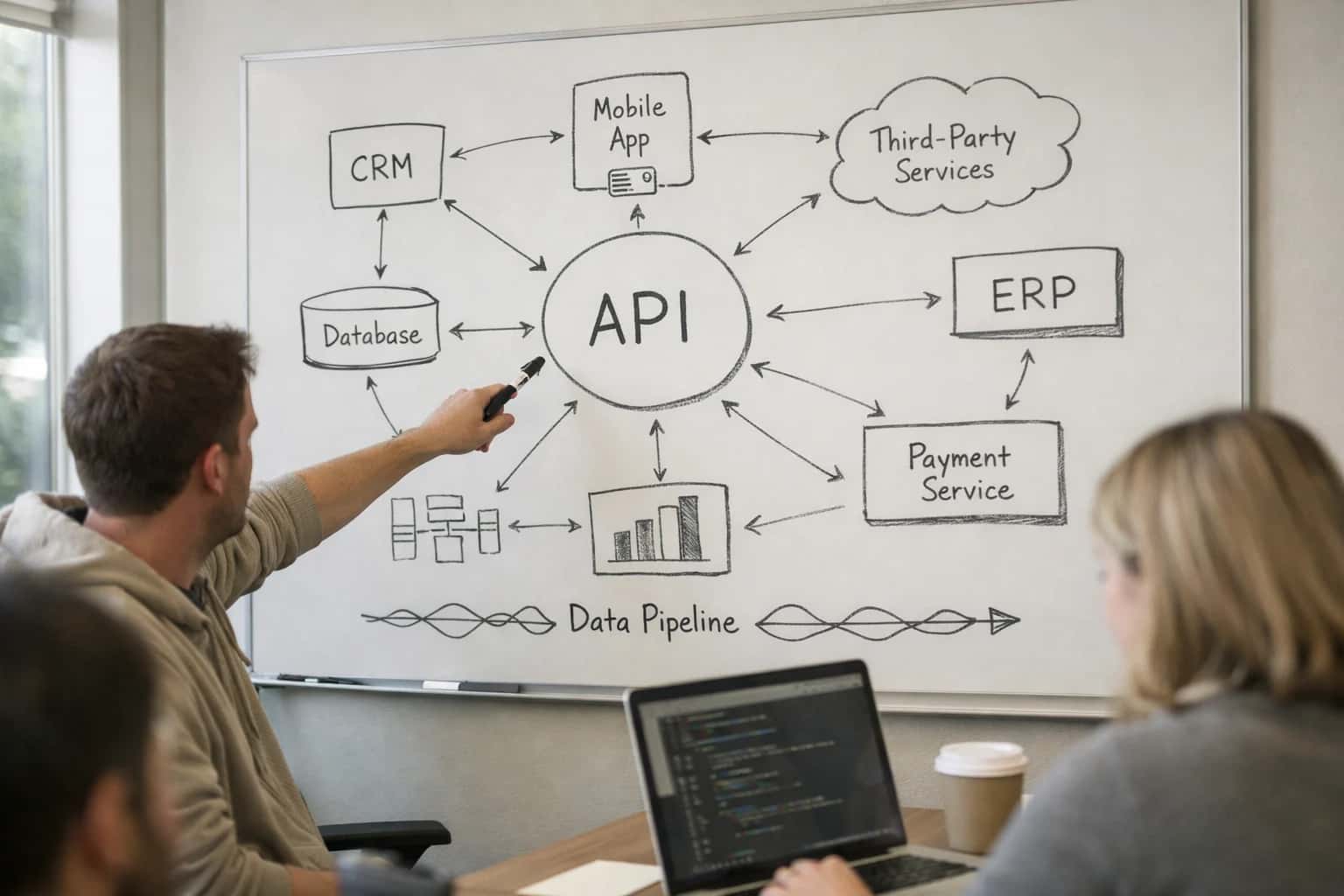
Enterprise integration architect reviewing API connections on laptop, diagram showing systems connecting, modern office setup.
ARCHITECTURE AND IMPLEMENTATION

Where AI Fits into iMIS Job Board Management

Integrating AI into iMIS transforms your career center from a static posting board into an intelligent talent matching engine.

The integration connects to core iMIS objects like Job Postings, Member Profiles, and Resume Attachments. AI agents operate across three key surfaces: the public job board for candidate discovery, the admin console for recruiter workflows, and batch processing for matching and alerting. Use cases include:

  • Semantic Candidate Matching: Moving beyond keyword search, an AI agent analyzes uploaded resumes and member profile data (like Industry, Skills, and Career History fields) to rank applicants by fit, even if their resume lacks exact keyword matches.
  • Intelligent Job Recommendations: For logged-in members, an AI copilot suggests relevant open positions in newsletters or a personalized dashboard widget by comparing their profile against new postings.
  • Recruiter Alerting: An automated workflow flags top-tier candidates to hiring managers via iMIS alerts or integrated email/SMS, reducing time-to-contact.


Implementation typically involves a middleware layer that subscribes to iMIS events (e.g., a new Job Application or Member Profile update via the iMIS API or a queue). This layer calls an LLM with a structured prompt containing the job description and candidate data, returning a match score and reasoning. Results are written back to a custom iMIS table or object extension for reporting and triggering automations. For governance, all AI-scored rankings should include an audit trail and a manual override flag for recruiters, ensuring human-in-the-loop control. A RAG system on your association's career resources can also ground the AI's salary or qualification suggestions in your specific industry data.

Rollout focuses on the highest-friction areas first: automating the initial triage of applications for high-volume postings. Start with a pilot for a specific membership segment (e.g., recent graduates) or job category. Measure impact through iMIS reports on application-to-interview conversion rates and recruiter time saved per hire. This integration doesn't replace iMIS workflows but augments them, making your career center a more valuable, sticky member benefit. For related architectural patterns, see our guides on AI Integration for iMIS Membership Workflows and AI Integration for iMIS Member Communications.

JOB BOARD MANAGEMENT

iMIS Modules and Data Surfaces for AI Integration

Core Data Objects for AI Matching

The iMIS Job Board module manages two primary data surfaces: Job Postings and Applicant Profiles. Each posting contains structured fields like title, description, required skills, location, and salary range. Applicant data is typically stored in the iMIS Contact/Individual records, enriched with resumes, work history, and self-reported skills.

AI integration connects here to perform semantic matching. An agent can:

  • Parse resume PDFs or text from the Resume field into structured skill and experience vectors.
  • Compare these vectors against the JobRequirements text from active postings.
  • Score and rank candidates for each job, storing the match score in a custom AI_Match_Score field on the application record for recruiter review.
  • Use member profile data (e.g., Industry, JobFunction) from the main iMIS database to suggest jobs to passive candidates via newsletter or portal alerts.
CAREER CENTER AUTOMATION

High-Value AI Use Cases for iMIS Job Boards

Transform your iMIS-powered career center from a static posting board into an intelligent talent marketplace. These AI integration patterns automate matching, enrichment, and engagement workflows to increase placement rates and member value.

01

AI-Powered Candidate Matching

Automatically match member profiles and uploaded resumes to open job postings using semantic search. An AI agent analyzes skills, experience, and job descriptions to generate a relevance score and alert recruiters of top-tier candidates, moving beyond simple keyword filters.

Batch -> Real-time
Matching cadence
02

Intelligent Job Description Enrichment

An AI copilot assists employers posting jobs by analyzing the role and suggesting competitive salary ranges (based on aggregated, anonymized iMIS data), required skills, and optimized title/keywords to improve search visibility within the member base.

1 sprint
Implementation timeline
03

Automated Candidate Outreach & Nurturing

Trigger personalized email or SMS sequences from iMIS when a high-match job is posted. AI drafts initial outreach messages for recruiters and can auto-respond to candidate questions about the role, company, or application process, logged back to the iMIS contact record.

Same day
Engagement speed
04

Resume Gap Analysis & Upskilling Suggestions

For members, an AI agent reviews their iMIS profile against target roles, identifies skill or experience gaps, and recommends relevant association courses, webinars, or certifications from your iMIS CE module to improve their candidacy.

05

Recruiter Copilot for Screening

Integrate an AI assistant into the recruiter's iMIS workflow that pre-screens applicants, summarizes candidate qualifications, highlights potential red flags, and suggests initial interview questions—all within the iMIS job application record.

Hours -> Minutes
Screening time
06

Predictive Job Board Analytics

Move beyond basic report views. An AI layer analyzes iMIS job board data to forecast in-demand skills, identify employer posting trends, and predict optimal times to promote the career center to specific member segments, driving higher engagement.

FOR IMIS JOB BOARD MANAGEMENT

Example AI Agent Workflows and Automation Triggers

These workflows illustrate how AI agents can automate high-value tasks within the iMIS career center, from intelligent candidate matching to proactive recruiter alerts. Each flow is triggered by specific events in iMIS and executes a series of actions using AI, with results logged back to member and job records.

Trigger: A member uploads a new resume or updates their professional profile in the iMIS member portal.

Agent Actions:

  1. Context Retrieval: The agent extracts key information from the resume (skills, experience, location, job titles) and pulls the member's existing iMIS profile data.
  2. Semantic Matching: Using a vector embedding model, the agent compares the candidate's profile against all active job postings in the iMIS job board module. It scores matches based on semantic relevance, not just keyword overlap.
  3. System Update: The agent writes match scores and a brief rationale (e.g., "Strong match due to 5+ years in project management and PMP certification") to a custom object linked to both the member and job record.
  4. Notification: If a match score exceeds a configurable threshold (e.g., 85%), the agent triggers two actions:
    • To the Candidate: An automated, personalized iMIS email suggesting they apply for the matched role(s).
    • To the Recruiter: An alert is added to the job posting record in iMIS, flagging a new high-potential candidate.

Human Review Point: Recruiters review the AI-suggested matches in the job record's dashboard before deciding to reach out.

INTEGRATING AI INTO THE IMIS CAREER CENTER

Implementation Architecture: Data Flow and System Boundaries

A practical blueprint for connecting AI matching and recommendation engines to iMIS job board objects and member profiles.

The integration connects at two primary surfaces within iMIS: the Job Posting (JOB) and Individual (IND) record types. An AI orchestration layer, deployed as a secure microservice, listens for webhook events from iMIS (e.g., Job.Posted, Resume.Uploaded, Profile.Updated). For each job posting, the service retrieves the job description, required skills, and location from the JOB table and its related custom fields. It then performs a vector similarity search against a pre-indexed pool of member profiles, which have been enriched and embedded from IND records, resume documents in the Document Management module, and professional history from the Experience and Education sub-objects.

The matching logic is not a simple keyword search. It uses a multi-factor model that weighs semantic skill alignment, seniority inference from job titles, geographic proximity (using chapter/region data), and even inferred salary expectations based on member tier and past event attendance. High-confidence matches trigger automated alerts to the job poster via iMIS workflow emails, while candidates receive personalized job recommendations in their portal via a dynamically populated Recommended Opportunities widget. All AI-driven actions and scores are logged back to a custom AI_Match_Audit object in iMIS for transparency and to allow recruiters to provide feedback, which continuously fine-tunes the model.

Rollout is typically phased, starting with a passive recommendation engine for members before enabling proactive recruiter alerts. Governance is critical: a human-in-the-loop approval step can be configured for the first 90 days, where the system suggests matches but requires a staff member to review and send the alert. This architecture ensures the AI augments the existing iMIS workflow without replacing recruiter judgment, keeps sensitive member data within the association's controlled environment, and creates a clear audit trail for the matching decisions driving your career center's value.

AI-POWERED JOB BOARD INTEGRATION

Code and Payload Examples for Key Integration Points

Ingesting and Processing Candidate Resumes

When a candidate uploads a resume to the iMIS job board, an AI agent can parse the document, extract structured data, and match it against open positions. This involves calling an external AI service via webhook, processing the response, and updating iMIS candidate records.

Example Python Webhook Handler:

python
import json
from imis_client import IMISClient  # Hypothetical SDK
from ai_matching_service import match_candidate_to_jobs

def handle_resume_upload(webhook_payload):
    """Process a new resume upload from iMIS."""
    candidate_id = webhook_payload['candidateId']
    resume_url = webhook_payload['resumeDocumentUrl']
    
    # 1. Parse resume with AI service
    parsed_profile = match_candidate_to_jobs.parse_resume(resume_url)
    
    # 2. Match to open jobs in iMIS
    imis = IMISClient()
    open_jobs = imis.get_open_jobs()
    matches = match_candidate_to_jobs.find_matches(parsed_profile, open_jobs)
    
    # 3. Update candidate record with match scores
    update_payload = {
        'candidateId': candidate_id,
        'skills': parsed_profile.get('skills', []),
        'topJobMatches': [
            {'jobId': m['jobId'], 'score': m['score'], 'reason': m['reason']}
            for m in matches[:3]
        ]
    }
    imis.update_candidate_profile(update_payload)
    
    # 4. Optionally alert recruiter for high-priority matches
    if matches and matches[0]['score'] > 0.85:
        imis.create_alert({
            'type': 'TOP_CANDIDATE',
            'candidateId': candidate_id,
            'jobId': matches[0]['jobId']
        })
AI-POWERED JOB BOARD OPERATIONS

Realistic Time Savings and Business Impact

How AI integration transforms manual, reactive iMIS job board management into a proactive, value-added service for members and recruiters.

Workflow / MetricBefore AIAfter AINotes

Candidate-to-Job Matching

Manual keyword search by recruiter

Automated, scored shortlist generation

AI analyzes resumes & profiles against job descriptions; human recruiter reviews top 5

Salary Range Suggestion

Manual market research or guesswork

Data-driven range based on title, location, skills

Pulls from integrated salary databases and past posting data; editable before posting

Top-Tier Applicant Alerting

Periodic dashboard checks by staff

Real-time push notifications for high-match candidates

Alerts sent via email/SMS when a >85% match applies; reduces time-to-contact

Job Posting Quality Review

Peer review or no formal check

AI draft review for clarity, bias, and completeness

Flags vague requirements, suggests inclusive language, and estimates ideal candidate pool size

Member Career Recommendations

Generic 'recent postings' email blasts

Personalized job alerts in newsletter & portal

AI matches member profile to new postings; increases click-through and application rates

Job Category & Tag Management

Manual assignment by admin

Auto-categorization and skill tagging

AI reads job description to assign correct iMIS categories and extract key skills for search

Recruiter Support Inquiries

Email/phone to staff for basic questions

AI chatbot handles tier-1 FAQs on posting rules

Deflects ~40% of common inquiries on pricing, formatting, and approval status

ENSURING CONTROLLED, SECURE AI DEPLOYMENT FOR iMIS CAREER CENTERS

Governance, Security, and Phased Rollout Strategy

A practical blueprint for rolling out AI-powered job board features in iMIS with appropriate controls, data security, and iterative validation.

Integrating AI into your iMIS job board requires careful handling of sensitive candidate data—including resumes, salary history, and contact details—stored within iMIS Contact, Resume, and JobPosting objects. A secure architecture typically involves a dedicated AI service layer that calls LLM APIs (like OpenAI or Anthropic) via a secure gateway. This service should never store raw candidate PII in vector databases; instead, it uses pseudonymized IDs and fetches full records from iMIS only when necessary for a specific, logged operation. All AI interactions should be logged to iMIS custom objects for a full audit trail, capturing the prompt, the source data IDs, the AI response, and the staff member or member who triggered the action. Role-based access in iMIS must govern who can configure AI matching rules, view AI-suggested salary ranges, or receive alerts about top-tier candidates.

A phased rollout minimizes risk and builds confidence. Phase 1 (Pilot) could implement AI-powered resume parsing and skill extraction for a single job category, running matches offline and presenting results in a side panel for recruiters to validate. This phase focuses on accuracy tuning and user feedback. Phase 2 (Automation) integrates the matching engine into the iMIS job application workflow, automatically scoring incoming applicants and flagging 'best fit' candidates in the iMIS recruiter dashboard. Phase 3 (Member-Facing) exposes safe AI features to members, such as a 'Career Copilot' that suggests jobs based on their iMIS profile and anonymized resume data, with clear disclosures about AI use. Each phase includes defined success metrics (e.g., reduction in manual screening time, improvement in applicant-to-interview conversion) and a rollback plan.

Governance is continuous. Establish a cross-functional committee (IT, HR, Legal, Membership) to review AI match accuracy, audit logs for bias or errors, and approve expansions to new job categories. Implement a human-in-the-loop requirement for critical actions—like sending an automated 'top candidate' alert to a hiring manager—where a staff member must approve the AI's recommendation within iMIS before it's sent. Regularly retrain or fine-tune models on your association's unique job and candidate data to maintain relevance. This controlled approach ensures the AI integration enhances your iMIS career center's value while protecting your association's reputation and your members' data privacy.

AI INTEGRATION WITH IMIS FOR JOB BOARD MANAGEMENT

Frequently Asked Questions for Technical Buyers

Practical answers for engineering and operations leaders planning to add AI to an iMIS-powered career center. Focused on architecture, data flows, and rollout.

The core workflow involves extracting, processing, and comparing data from iMIS objects. Here’s a typical serverless pattern:

  1. Trigger: A new job posting is published in the iMIS Job module OR a member updates their resume/profile in MemberProfile.
  2. Context Pull: An event-driven function (e.g., Azure Function listening to iMIS webhooks) fetches the relevant data:
    • For a job: JobTitle, Description, RequiredSkills, Location, Department.
    • For a candidate: Resume text (from Document blob or parsed profile fields), Skills, JobHistory, Certifications.
  3. AI Action: Data is sent to an orchestration service that:
    • Embeds both job and candidate data into vector representations using a model like text-embedding-3-small.
    • Performs a similarity search against a pre-populated vector database (e.g., Pinecone, Weaviate) to find top matches.
    • For salary suggestions, an LLM (e.g., GPT-4) analyzes the job description, historical iMIS salary data (if available), and public benchmarks to suggest a range.
  4. System Update: Results are written back to iMIS:
    • Candidate matches and scores are stored in a custom AIMatch object linked to the Job record.
    • Salary suggestion is appended as a note to the Job record for recruiter review.
  5. Alert: A high-confidence match (e.g., score > 0.85) triggers an alert to the recruiter via iMIS workflow email or a dashboard notification.

Key Integration Points: iMIS REST API for data pull, custom objects for AI metadata, iMIS workflow engine for alerts.

Prasad Kumkar

About the author

Prasad Kumkar

CEO & MD, Inference Systems

Prasad Kumkar is the CEO & MD of Inference Systems and writes about AI systems architecture, LLM infrastructure, model serving, evaluation, and production deployment. Over 5+ years, he has worked across computer vision models, L5 autonomous vehicle systems, and LLM research, with a focus on taking complex AI ideas into real-world engineering systems.

His work and writing cover AI systems, large language models, AI agents, multimodal systems, autonomous systems, inference optimization, RAG, evaluation, and production AI engineering.


