AI integration connects directly to Fonteva's core volunteer data objects—Volunteer Profiles, Opportunity Records, and Shift Assignments—via the Salesforce platform's APIs. The primary surfaces for automation are the volunteer portal, coordinator dashboards, and backend scheduling engines. Key workflows include using AI to analyze volunteer skills, past participation, and stated availability to auto-fill open shifts, predict and mitigate potential no-shows, and generate personalized thank-you communications and impact reports.

Integration
AI Integration with Fonteva for Volunteer Management
Implement AI within Fonteva's Salesforce-native volunteer modules to automate shift scheduling, predict no-shows, generate impact reports, and reduce manual coordination work for volunteer managers.
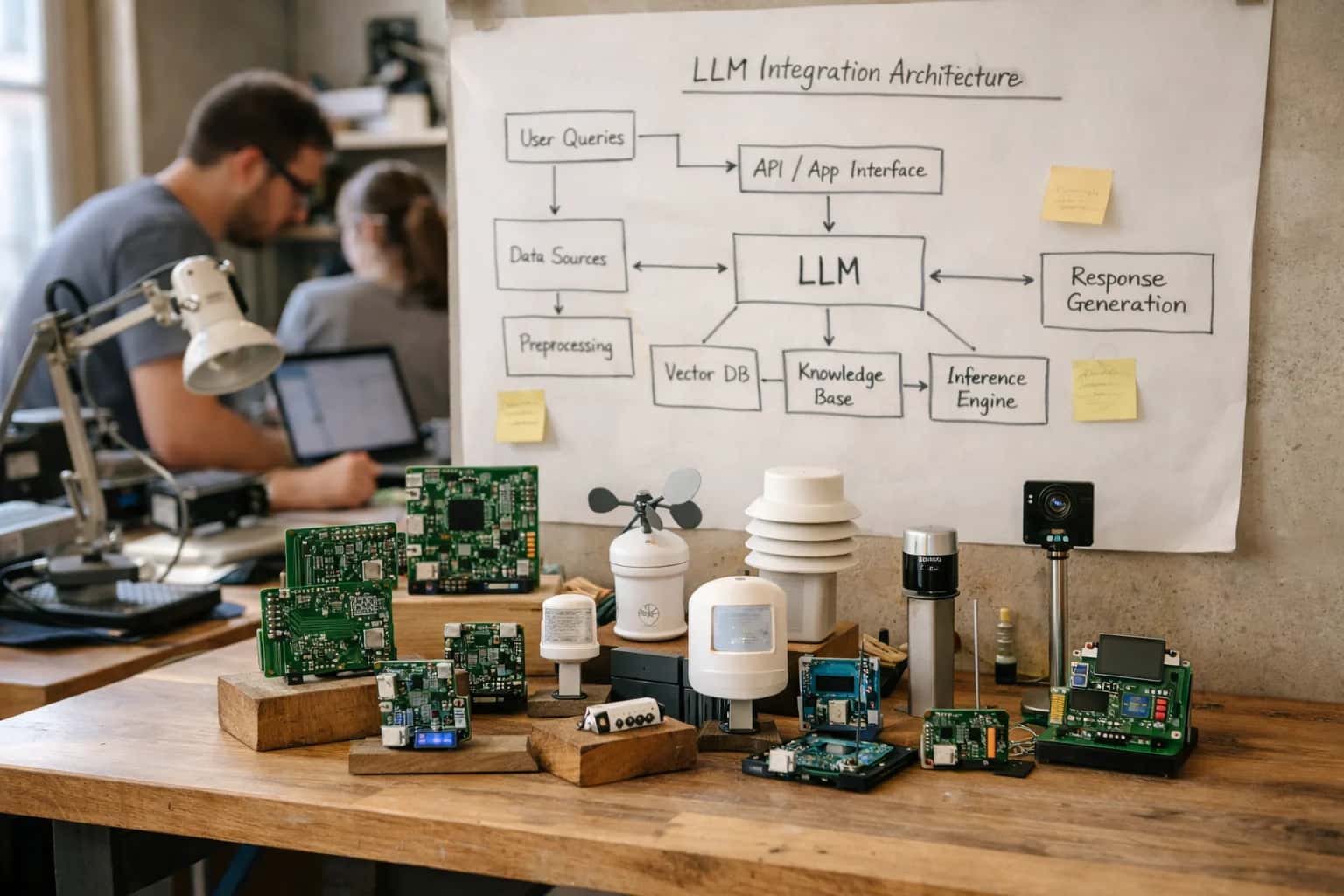
ARCHITECTURE & ROLLOUT
Where AI Fits in Fonteva Volunteer Management
Integrating AI into Fonteva's volunteer modules automates scheduling, reduces administrative load, and improves volunteer retention by creating a more responsive and personalized experience.
A typical production implementation involves a lightweight middleware layer or Salesforce-native Apex triggers that listen for events like new opportunity creation or shift cancellation. This layer calls an AI service to perform tasks such as:
- Matching & Scheduling: Running optimization algorithms to fill shifts based on constraints (skills, location, preferences).
- No-Show Prediction: Analyzing historical attendance, weather data, and last-minute communication patterns to flag high-risk shifts and trigger proactive reminders or backup volunteer alerts.
- Report Generation: Using a RAG (Retrieval-Augmented Generation) pipeline on volunteer hours and event data to draft narrative impact summaries for coordinators and volunteers.
All AI actions are logged back to custom objects in Fonteva for audit trails, and human-in-the-loop approvals can be configured for critical schedule changes.
Rollout should be phased, starting with a single high-volume volunteer program (e.g., annual conference) to validate matching logic and user acceptance. Governance is critical: define clear rules for when AI can auto-assign versus when it must suggest, and establish a feedback loop where coordinators can correct mismatches to continuously improve the model. The goal is to move coordinator effort from manual scheduling and chasing volunteers to higher-value relationship building and program strategy.
VOLUNTEER MANAGEMENT
Key Fonteva Surfaces for AI Integration
Automating Shift Creation and Fulfillment
The Volunteer Opportunities and Shifts objects are the core scheduling surfaces. AI can ingest event details, historical attendance, and resource needs to auto-generate shift schedules, optimizing for coverage and skills. For example, an agent can analyze a 3-day conference agenda, create roles for 'Registration Desk,' 'Session Moderator,' and 'Networking Guide,' and propose a draft schedule with recommended volunteer counts per time slot.
Integration typically involves listening for new Event records in Fonteva, triggering an AI workflow to draft associated volunteer opportunities, and posting them back via the Fonteva API or a Salesforce Flow. This reduces manual planning from hours to minutes and ensures consistency.
FONTEVA INTEGRATION
High-Value AI Use Cases for Volunteer Coordinators
Integrate AI directly into Fonteva's volunteer modules to automate manual tasks, predict engagement, and generate actionable insights, freeing coordinators to focus on strategy and volunteer relationships.
01
Intelligent Shift Scheduling & Auto-Fill
AI analyzes volunteer skills, past attendance, and stated preferences in Fonteva to auto-fill open shifts and build balanced schedules. It sends personalized shift offers via email or SMS, reducing manual outreach and last-minute scrambles.
Hours -> Minutes
Schedule creation
02
No-Show Prediction & Proactive Backup
Models trained on Fonteva check-in history, volunteer engagement scores, and external factors (e.g., weather, event type) predict likely no-shows. The system automatically triggers backup volunteer alerts or suggests schedule adjustments to staff.
Batch -> Real-time
Risk monitoring
03
Automated Impact Reporting
An AI agent aggregates volunteer hours, roles, and feedback from Fonteva records to generate narrative impact reports. It drafts summaries for board meetings, grant applications, and volunteer recognition, pulling data from the Volunteer Hours and Opportunity objects.
1 sprint
Report generation
04
Skills-Based Volunteer Matching
Goes beyond basic role tags. AI parses volunteer profiles, past feedback, and even resume uploads in Fonteva to recommend ideal volunteers for specialized roles (e.g., graphic design, grant writing, bilingual support), increasing engagement and output quality.
Same day
Role fulfillment
05
Personalized Recognition & Retention
Integrates with Fonteva communications to automate personalized thank-you messages and milestone recognition. AI suggests retention actions (e.g., offering leadership roles, inviting to exclusive events) based on a volunteer's contribution history and engagement signals.
06
On-Demand Volunteer Support Agent
Deploy an AI chatbot within the Fonteva Community portal or via SMS to answer volunteer FAQs about shift details, parking, attire, and point policies. The agent queries Fonteva data in real-time and deflects routine inquiries from coordinator inboxes.
24/7
Support coverage
IMPLEMENTATION PATTERNS
Example AI Volunteer Workflows
These workflows demonstrate how to inject AI into Fonteva's volunteer management modules to automate scheduling, improve reliability, and generate actionable insights, reducing manual coordination for your staff.
Trigger: A volunteer cancels their shift via the Fonteva portal or a scheduled event start time approaches with unfilled roles.
AI Action:
- An AI agent queries the Fonteva API for the open shift details (role, skills required, time, location).
- It searches the volunteer database for members who:
- Have the required skills/tags in their Fonteva profile.
- Are available during the shift window (based on past sign-up patterns or integrated calendar availability).
- Have a high predicted reliability score (based on past no-show history).
- The agent generates and sends a personalized outreach message via Fonteva's communication tools (email/SMS), highlighting the specific need and their fit.
- If a volunteer accepts via a tracked link, the AI agent automatically updates the Fonteva shift assignment record and sends confirmation details.
Human Review Point: Staff are notified only if the AI cannot find a suitable match within a configurable timeframe, allowing them to manually intervene.
VOLUNTEER MANAGEMENT
Implementation Architecture: Connecting AI to Fonteva
A practical blueprint for integrating AI agents into Fonteva's volunteer modules to automate scheduling, predict engagement, and generate impact reports.
The integration connects to Fonteva's Volunteer Management objects—primarily Volunteer__c, Opportunity__c (for shifts), and Contact records—via the Salesforce REST API and Platform Events. An AI orchestration layer, typically deployed as a serverless function or within Salesforce using Apex invocable actions, listens for key triggers: a new volunteer sign-up, a shift creation, or a check-in/check-out. This layer calls configured AI agents (e.g., for scheduling, prediction, or reporting) which reason over the data, make decisions, and write recommendations or updates back to Fonteva. For example, an auto-fill scheduling agent analyzes a new Event__c record, reviews past volunteer performance and availability from related Volunteer_Shift__c records, and proposes an optimal roster by creating new Volunteer_Opportunity__c records and assigning Contact roles.
High-value workflows are built around specific pain points. A no-show prediction agent runs daily, scoring upcoming shifts by analyzing historical attendance, volunteer tenure, weather data (via external API), and last-minute communication patterns. Volunteers flagged as high-risk trigger an automated, personalized nudge via Fonteva's communication tools or a task for the coordinator. Post-event, a impact report agent aggregates data from shift completions, hours logged, and post-survey feedback (stored in Survey__c objects), using a report-generation LLM to draft a narrative summary for board reports, highlighting top contributors and volunteer satisfaction trends. All agent actions are logged to a custom AI_Audit_Log__c object for transparency and to feed back into model improvement.
Rollout follows a phased, governance-first approach. Start with a single, high-volume event type (e.g., annual conference) for the scheduling agent, with a human-in-the-loop approval step before shifts are finalized. This builds trust and provides labeled data for tuning the prediction models. Implement role-based permissions so AI-generated tasks and insights are visible only to coordinator-level users. Crucially, the architecture keeps Fonteva as the system of record; AI acts as a copilot, suggesting actions but requiring configurable rules for auto-approval (e.g., for low-risk shift assignments). This ensures compliance and allows coordinators to retain ultimate control while offloading repetitive analysis and communication tasks, turning manual roster juggling into a review-and-confirm process.
FONTEVA VOLUNTEER MODULES
Code and Payload Examples
Matching Volunteers to Open Shifts
An AI agent analyzes volunteer profiles (skills, past participation, availability) against open shifts in the Fonteva Volunteer_Shift__c object. It uses a scoring algorithm to recommend optimal matches, which can be presented to coordinators for approval or auto-assigned.
python# Example: Python function to call AI matching service import requests def match_volunteer_to_shift(volunteer_id, shift_id): """ Calls an AI service to score a volunteer-shift match. Returns a confidence score and reasoning. """ payload = { "volunteer_profile": { "id": volunteer_id, "skills": ["Event Setup", "Registration"], "past_shifts_completed": 5, "preferred_times": ["weekend_morning"] }, "shift_details": { "id": shift_id, "required_skills": ["Registration"], "datetime": "2024-10-19T09:00:00Z", "location": "Main Convention Hall" } } # Call Inference Systems' matching endpoint response = requests.post( "https://api.inferencesystems.com/v1/fonteva/volunteer/match", json=payload, headers={"Authorization": "Bearer YOUR_API_KEY"} ) return response.json() # Returns { "match_score": 0.92, "reason": "Skills align and preferred time matches." }
The result can update the Volunteer_Assignment__c record in Fonteva, logging the AI's recommendation score for auditability.
VOLUNTEER MANAGEMENT
Realistic Time Savings and Operational Impact
How AI integration transforms manual, time-intensive volunteer coordination tasks in Fonteva into automated, proactive workflows.
| Metric | Before AI | After AI | Notes |
|---|---|---|---|
Shift Filling & Scheduling | Manual outreach and calendar juggling (2-4 hours/week) | AI-driven auto-matching and schedule generation (15-30 minutes/week) | Matches volunteers to roles based on skills, past participation, and stated availability. |
No-Show Prediction & Mitigation | Reactive calls and last-minute scrambles | Proactive alerts for high-risk shifts and automated backup outreach | Analyzes historical attendance and engagement signals to flag likely cancellations 24-48 hours prior. |
Volunteer Impact Reporting | Manual data compilation and narrative writing (3-5 hours/quarter) | Automated report generation with narrative summaries (30 minutes/quarter) | Pulls data from shifts, hours logged, and feedback surveys to produce board-ready summaries. |
Volunteer Communications & Reminders | Manual email/SMS blasts and individual follow-ups | Personalized, automated nudges and thank-you messages | AI crafts context-aware messages (e.g., shift reminders, appreciation notes) triggered by Fonteva events. |
Skill & Interest Tagging | Manual profile review and spreadsheet tracking | AI analysis of volunteer history and self-descriptions for auto-tagging | Continuously enriches volunteer records to improve future role matching and opportunity recommendations. |
Onboarding & Training Coordination | Generic welcome emails and manual training assignment | Personalized onboarding sequences and AI-recommended training modules | Dynamically suggests resources and shadowing opportunities based on the volunteer's assigned role. |
Recognition & Retention Insights | Annual awards based on limited visibility | Quarterly retention risk scores and recognition opportunity alerts | Flags volunteers with declining engagement for personalized check-ins and surfaces top performers for recognition. |
IMPLEMENTING AI WITH CONFIDENCE
Governance, Security, and Phased Rollout
A secure, governed approach to deploying AI agents within Fonteva's volunteer management modules.
AI integration with Fonteva's volunteer objects and workflows requires careful data governance from the start. We scope access to specific data objects—Volunteer__c, Shift__c, Opportunity (for hours), and Contact—ensuring AI agents operate with a least-privilege data model. All AI-generated outputs, such as shift recommendations or no-show predictions, are written back to designated custom fields with clear audit trails, linking actions to the initiating agent and source data. This allows for human-in-the-loop review before any automated communications or schedule changes are finalized, maintaining coordinator oversight.
A phased rollout is critical for user adoption and risk management. We recommend starting with a single, high-impact workflow, such as AI-powered shift schedule auto-fill. This involves deploying an agent that analyzes past volunteer performance, stated preferences from Fonteva profiles, and role requirements to propose optimal shift assignments. This runs in a 'recommendation-only' mode, presenting plans to the coordinator for approval within the Fonteva UI before any records are updated. Success here builds trust and provides a controlled environment to refine prompts and data mappings.
Subsequent phases introduce predictive and generative agents. Phase two adds no-show prediction scoring, where an agent analyzes historical attendance, communication responsiveness, and external factors (like weather for outdoor events) to flag high-risk shifts. These scores appear as dashboard alerts, enabling proactive backup planning. The final phase activates impact report generation, where an agent synthesizes data from completed shifts, volunteer feedback surveys, and associated Event__c records to draft quarterly impact narratives, saving coordinators hours of manual compilation.
Security is enforced at the API and platform layer. All calls between Fonteva (via Salesforce APIs) and our inference systems are encrypted and logged. Volunteer personal data is never used to train foundational models. Role-based access controls (RBAC) in Fonteva remain the system of record, meaning AI suggestions respect existing user permissions—a coordinator can only see AI recommendations for events and volunteers they already manage. This layered approach ensures the integration enhances operations without introducing new compliance or security vulnerabilities.
Enabling Efficiency, Speed & Accuracy
Intelligent Analysis, Decision & Execution
We build AI systems for teams that need search across company data, workflow automation across tools, or AI features inside products and internal software.
Talk to Us
Search across company data
Give teams answers from docs, tickets, runbooks, and product data with sources and permissions.
Useful when people spend too long searching or get different answers from different systems.
Enterprise searchRAGPermissions
Read more
Automate internal workflows
Use AI to route work, draft outputs, trigger actions, and keep approvals and logs in place.
Useful when repetitive work moves across multiple tools and teams.
AI agentsWorkflow automationGovernance
Read more
Add AI to products and internal tools
Build assistants, guided actions, or decision support into the software your team or customers already use.
Useful when AI needs to be part of the product, not a separate tool.
AI integrationDecision supportModel routing
Read moreIMPLEMENTATION
Frequently Asked Questions
Practical questions for volunteer coordinators and technical teams planning AI integration with Fonteva's volunteer modules.
This workflow uses AI to predict volunteer availability and match skills to open shifts, reducing manual coordination.
- Trigger: A new event is created in Fonteva Events with defined volunteer roles and time slots.
- Context Pulled: The AI agent queries Fonteva for:
- Historical volunteer sign-up data for similar events.
- Individual volunteer profiles (skills, preferences, past no-show rate).
- Current open shift requirements.
- Agent Action: A model analyzes patterns to predict which volunteers are most likely to sign up for which shifts. It then generates and sends personalized shift invitation emails via Fonteva's communication tools, highlighting roles that match their profile.
- System Update: As volunteers confirm via the standard Fonteva portal, the schedule is populated. The agent logs its outreach actions as notes on the volunteer record for auditability.
- Human Review: The coordinator reviews the auto-populated schedule in the Fonteva Volunteer Console, making manual adjustments for key roles or VIP volunteers as needed.

About the author
Prasad Kumkar
CEO & MD, Inference Systems
Prasad Kumkar is the CEO & MD of Inference Systems and writes about AI systems architecture, LLM infrastructure, model serving, evaluation, and production deployment. Over 5+ years, he has worked across computer vision models, L5 autonomous vehicle systems, and LLM research, with a focus on taking complex AI ideas into real-world engineering systems.
His work and writing cover AI systems, large language models, AI agents, multimodal systems, autonomous systems, inference optimization, RAG, evaluation, and production AI engineering.
LinkedIn
Limited slotsGet a Free AI Consultation
Partnered with leading AI, data, and software stack.





How We Work
Custom AI workflows for your Business
One-fit-all AI don't work for modern businesses. At Inferensys, we aim to understand your business & custom requirements; which we use to define most efficient agentic workflows, the data, and the tools for your business.
01
Review the use case
We understand the task, the users, and where AI can actually help.
Read more02
Pick the right approach
We define what needs search, automation, or product integration.
Read more03
Build the first useful version
We implement the part that proves the value first.
Read more04
Improve from there
We add the checks and visibility needed to keep it useful.
Read moreThe first call is a practical review of your use case and the right next step.
Talk to Us