AI integration for Fonteva application review typically connects at three key surfaces: the Application object for data extraction, the Community portal for applicant self-service, and the approval workflow engine for committee routing. The core AI agent ingests the raw application payload—often a mix of structured form fields (from Fonteva's native forms) and unstructured documents (PDF resumes, cover letters, letters of recommendation). Using a Retrieval-Augmented Generation (RAG) pattern, the agent cross-references this data against your association's defined membership criteria, which can be codified in a knowledge base of bylaws, qualification rules, and past committee decisions.

Integration
AI Integration with Fonteva for Membership Application Review
Automate the initial screening of Fonteva membership applications using AI to verify credentials, score against criteria, and generate summary dossiers for approval committees—reducing review time from days to hours.
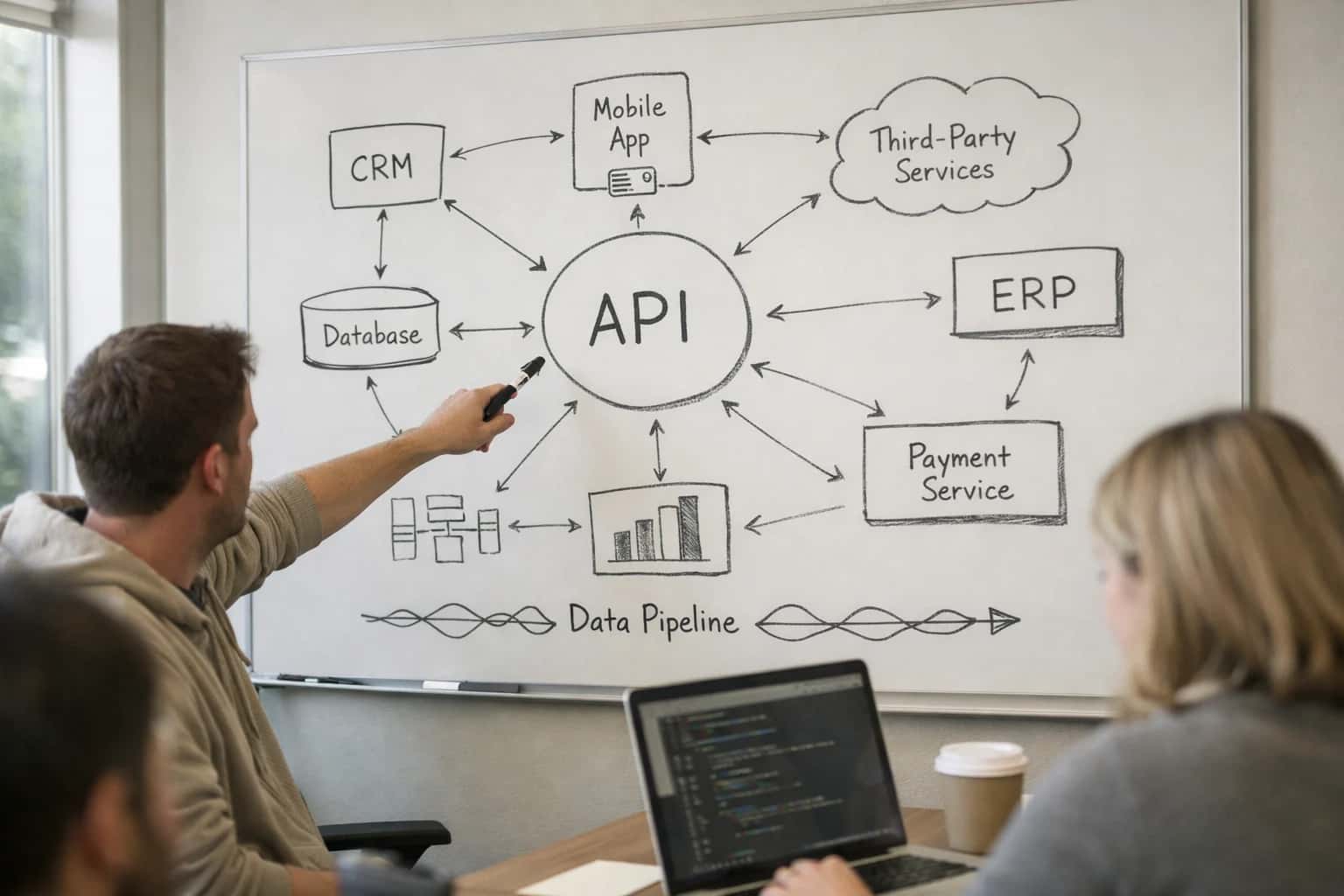
ARCHITECTURE & ROLLOUT
Where AI Fits in Fonteva Application Review
A practical blueprint for injecting AI into the Fonteva membership application workflow to accelerate committee decisions.
The implementation creates a parallel, automated review track that operates before human committee members see an application. The AI agent performs tasks like:
- Scoring & Flagging: Assigning a preliminary score based on criteria match and flagging applications that are clearly incomplete or non-compliant for immediate staff review.
- Dossier Generation: Producing a concise, standardized summary dossier for the committee, highlighting key credentials, potential red flags, and suggested discussion points pulled from the application materials.
- Duplicate Checking: Comparing new applicant details against existing
ContactandAccountrecords in the Salesforce-native Fonteva data model to prevent duplicate memberships.
This workflow is typically executed via a serverless function or middleware (like n8n or a custom service) that listens for new Application records via Fonteva's APIs or platform events, processes them, and writes back a custom AI_Review__c object with scores, summaries, and a recommendation status (Recommended for Review, Needs More Info, Auto-Reject).
Rollout should be phased, starting with a shadow mode where the AI generates dossiers but decisions are made solely by humans, allowing for calibration and trust-building. Governance is critical: establish a clear review layer for edge cases and maintain a human-in-the-loop for final approval. This architecture doesn't replace the committee's judgment; it arms them with consistent, pre-digested information, turning a process that can take days of manual compilation into minutes of focused deliberation. For a deeper dive into related association analytics, see our guide on AI Integration for Fonteva Association Analytics.
MEMBERSHIP APPLICATION REVIEW
Key Fonteva Surfaces for AI Integration
Core Data Model for AI Review
AI agents need structured access to the primary objects that define a membership application and the resulting member record. The key surfaces are:
Membership_Application__c: The central custom object for the application form. AI can read fields for applicant details, professional credentials, references, and narrative responses.Member__c: The core member record object. AI can cross-reference to check for duplicate applications or existing members applying for a different tier.Account&Contact: Standard Salesforce objects that underpin Fonteva's data model. AI uses these for firmographic data (company, title) and to maintain a single view of the constituent.
Integration typically involves querying these objects via Salesforce REST or Bulk API. AI logic can be triggered by a platform event when a new application is submitted, or by a scheduled batch job to process a queue.
FONTEVA INTEGRATION
High-Value AI Use Cases for Application Review
Accelerate member committee decisions and reduce manual screening by injecting AI directly into Fonteva's membership application objects and workflows. These patterns leverage Fonteva's Salesforce-native architecture to automate scoring, summarization, and routing.
01
Automated Credential & Eligibility Screening
An AI agent reviews incoming Fonteva application forms, cross-referencing submitted documents and profile data against configurable membership criteria (e.g., years of experience, certifications, chapter affiliation). It flags incomplete applications and passes verified ones to the scoring engine.
Batch -> Real-time
Screening speed
02
AI Scoring Against Rubric
For applications requiring committee review, AI scores each submission against a defined rubric (experience, references, statement of purpose). Scores and confidence levels are written back to a custom Fonteva object, creating a ranked queue for reviewers and surfacing borderline cases needing human judgment.
Hours -> Minutes
Initial scoring
03
Applicant Dossier Generation
Instead of reviewers piecing together data from multiple tabs, AI generates a consolidated summary dossier for each applicant. It pulls from the Fonteva application, linked LinkedIn profile, past event attendance, and community posts to provide a 360-view, automatically attached to the member record.
1 sprint
Review prep time
04
Committee Workflow & Routing
AI orchestrates the approval workflow within Fonteva. Based on score, applicant type, or committee rules, it automatically routes applications to the correct reviewer group, schedules them on committee calendar events, and sends personalized review assignments via Salesforce-powered email templates.
05
Personalized Communication Triggers
Upon committee decision, AI triggers the next step in the Fonteva membership lifecycle. For approvals, it initiates a personalized welcome sequence and onboarding journey. For denials or requests for more information, it drafts a sensitive, policy-compliant email from the committee, maintaining a consistent member experience.
Same day
Decision communication
06
Audit Trail & Bias Monitoring
All AI actions—scores, summaries, routing decisions—are logged as audit records within Fonteva/Salesforce. Analytics dashboards monitor for scoring drift or unintended bias across applicant demographics, ensuring the AI-assisted process remains fair, explainable, and compliant with association governance.
IMPLEMENTATION PATTERNS
Example AI Review Workflows for Fonteva
These are practical, production-ready workflows for automating membership application review within Fonteva's Salesforce-native environment. Each pattern connects AI agents to specific Fonteva objects, automations, and user roles to accelerate committee decisions.
Trigger: A new Membership Application record is created in Fonteva.
Workflow:
- An AI agent is triggered via a Fonteva Flow or Salesforce Process Builder.
- The agent retrieves the full application payload, including attached resumes, cover letters, and answers to custom fields on the
Application__cobject. - Using a pre-configured scoring rubric (e.g., years of experience, relevant credentials, geographic alignment with chapter), the agent evaluates the application against association criteria.
- The agent generates a structured JSON output with:
- A compliance check (e.g., "All required fields completed").
- A match score (0-100) with reasoning.
- Flagged items for manual review (e.g., "Experience in non-standard industry, recommend committee review").
- This output is written back to the Application record in custom fields (
AI_Score__c,AI_Flag__c,AI_Summary__c). - Based on the score, the Flow automatically routes the application:
- High Score (>80): Status to
Ready for Fast-Track Approval, notifying a board member via an auto-generated summary dossier. - Medium Score (50-79): Status to
Pending Committee Review, adding it to the next committee meeting agenda. - Low Score (<50): Status to
Pending Staff Reviewfor a personalized, AI-drafted rejection or request for more information.
- High Score (>80): Status to
Human Review Point: All flagged items and medium/low-score applications are queued for the membership committee in a dedicated Fonteva dashboard view.
BUILDING A PRODUCTION-READY REVIEW PIPELINE
Implementation Architecture: Data Flow & System Design
A secure, auditable system design that connects AI scoring agents directly to Fonteva's membership application objects and approval workflows.
The integration is triggered when a new Membership Application record is created or updated in Fonteva. A webhook or a scheduled Salesforce Flow sends the application payload—including fields like Applicant_Name__c, Company__c, Industry__c, Application_Essay__c, and attached Resume_PDF__c—to a secure API endpoint. This endpoint orchestrates a multi-step AI agent: first, it extracts and normalizes text from PDFs; second, it runs the consolidated applicant data against a configured set of membership criteria (e.g., years of experience, relevant certifications, geographic chapter alignment) using a classification model; and finally, it generates a structured Review Dossier JSON object containing a compliance score, risk flags, and a narrative summary.
The processed dossier is posted back to Fonteva, creating a related AI_Review__c custom object record linked to the original application. Key scores and flags are written to fields on the application record itself (e.g., AI_Score__c, Requires_Manual_Review__c). This update can trigger platform-native automation: applications scoring above a high-confidence threshold are auto-routed to an "Approved for Committee Review" status, while those with discrepancies or low scores are flagged and assigned to a specific staff member's queue. The entire data flow is logged with correlation IDs for full auditability, and sensitive PII is never persisted in external AI systems beyond the processing window.
For governance, the system implements a human-in-the-loop approval layer before any final status change. Committee members review the AI-generated dossier within a custom Fonteva Lightning component that surfaces the rationale alongside the original application. All actions are captured in Fonteva's audit trail. Rollout typically begins with a pilot phase, where AI scores are generated in a "shadow mode"—visible to staff but not triggering automations—to calibrate thresholds and build trust before full integration into the membership committee's weekly review rhythm.
FONTEVA INTEGRATION PATTERNS
Code & Payload Examples
Agent Logic for Initial Screening
This Python-based agent uses the Fonteva API to fetch new applications, scores them against configurable criteria, and updates the record with a recommendation. It runs as a scheduled job or is triggered via a platform event from a Fonteva Flow.
pythonimport requests from openai import OpenAI # Fetch pending applications from Fonteva fonteva_api_url = "https://api.fonteva.com/v2/membership/applications?status=pending" headers = {"Authorization": "Bearer YOUR_FONTEVA_TOKEN"} applications = requests.get(fonteva_api_url, headers=headers).json() for app in applications['data']: # Build scoring prompt from application data prompt = f"""Score this membership application from 1-10. Applicant: {app['company_name']}, {app['job_title']} Industry: {app['industry']} Self-reported revenue: {app['annual_revenue']} Application essay: {app['essay_response'][:500]}... Scoring criteria: Industry relevance, revenue tier alignment, clarity of value proposition. Return a JSON with 'score', 'reason', and 'recommendation' (approve/review/reject).""" # Call LLM for scoring client = OpenAI() response = client.chat.completions.create( model="gpt-4", messages=[{"role": "user", "content": prompt}], response_format={ "type": "json_object" } ) score_result = json.loads(response.choices[0].message.content) # Update Fonteva record with AI score and flag update_payload = { "ai_review_score": score_result['score'], "ai_review_summary": score_result['reason'], "review_status": "AI_SCORED", "committee_priority": "High" if score_result['score'] >= 8 else "Medium" } update_url = f"{fonteva_api_url}/{app['id']}" requests.patch(update_url, json=update_payload, headers=headers)
AI-ASSISTED APPLICATION REVIEW
Realistic Time Savings & Operational Impact
How AI integration transforms the manual, time-intensive process of reviewing new membership applications in Fonteva into a scalable, consistent, and accelerated workflow.
| Process Stage | Before AI | After AI | Implementation Notes |
|---|---|---|---|
Initial Application Intake & Triage | Manual download from portal, email alerts, spreadsheet tracking | Automated ingestion via webhook, immediate classification & routing | AI parses application PDFs/forms, extracts key fields, and creates a Fonteva record |
Eligibility & Duplicate Check | Staff cross-references databases, manual searches for existing members | Automated verification against Fonteva/Salesforce records & external sources | AI scores match confidence and flags potential duplicates for human review |
Document & Credential Review | Manual reading of resumes, licenses, or supporting documents | AI extracts and summarizes key credentials, flags missing or expired items | Summaries are appended to the application dossier; human reviews flagged items |
Committee Dossier Preparation | Staff manually compiles applicant data, writes summaries, formats for committee | AI auto-generates a standardized review dossier with scores and summaries | Dossiers are populated into a Fonteva object or PDF, ready for committee access |
Committee Review & Scoring | Unstructured discussion, variable scoring criteria, manual note-taking | Pre-scored applications, guided review rubric, AI-generated discussion prompts | Committee focuses on borderline cases and exceptions, with AI capturing decisions |
Approval Communication Workflow | Manual drafting of acceptance/welcome or rejection letters | AI-generated first drafts of personalized communications based on outcome | Staff approves and triggers comms via Fonteva's email automation, with full audit trail |
Data Entry & Onboarding Trigger | Manual creation of member record, assignment of benefits, triggering welcome series | Automated member record creation upon approval, triggering AI-driven onboarding journey | Integration ensures approved applicants become active members in Fonteva within minutes |
ARCHITECTING FOR CONFIDENCE AND CONTROL
Governance, Security & Phased Rollout
A production-ready AI review system for Fonteva requires a secure, auditable architecture and a phased rollout to build trust and demonstrate value.
The integration is architected to operate as a secure, event-driven layer alongside your Fonteva instance. When a new Membership Application record is created or updated in Fonteva, a webhook triggers the AI review workflow. The system extracts key fields (e.g., Company Name, Job Title, Application Narrative, Attached CV/Resume) and sends them via a secure API to a dedicated AI agent. This agent, governed by strict data handling policies, never stores raw applicant data permanently and operates within your designated cloud environment. All actions—data sent, scoring rationale, generated dossier—are logged to an immutable audit trail linked back to the Fonteva application ID for full transparency.
A phased rollout is critical for adoption. Phase 1 (Pilot): The AI agent runs in 'shadow mode' for a subset of applications (e.g., new corporate members). It generates review dossiers and scores but does not influence workflow; the committee reviews applications as usual while comparing notes with the AI's output to calibrate trust. Phase 2 (Assist): The agent's summary dossier and a confidence score are surfaced directly within the Fonteva application record via a custom Lightning component or related object, serving as a pre-read for committee members. Low-confidence or flagged applications are automatically routed for manual review. Phase 3 (Automate): For high-confidence applications that meet clear criteria, the system can auto-approve and trigger the next Fonteva onboarding workflow step, notifying staff for oversight.
Governance is built into the prompts and workflows. The AI's scoring rubric is explicitly defined in its system prompt, referencing your association's bylaws and membership criteria. A human-in-the-loop checkpoint is maintained for any application scoring near a threshold or flagged for potential policy issues (e.g., conflict of interest detection). Furthermore, the system includes regular model evaluation cycles where a sample of AI-reviewed applications is re-scored by the committee to monitor for drift and ensure the AI's recommendations remain aligned with the board's evolving standards. This structured approach ensures the AI augments—rather than replaces—committee governance, accelerating review times while maintaining the integrity of your membership process.
Enabling Efficiency, Speed & Accuracy
Intelligent Analysis, Decision & Execution
We build AI systems for teams that need search across company data, workflow automation across tools, or AI features inside products and internal software.
Talk to Us
Search across company data
Give teams answers from docs, tickets, runbooks, and product data with sources and permissions.
Useful when people spend too long searching or get different answers from different systems.
Enterprise searchRAGPermissions
Read more
Automate internal workflows
Use AI to route work, draft outputs, trigger actions, and keep approvals and logs in place.
Useful when repetitive work moves across multiple tools and teams.
AI agentsWorkflow automationGovernance
Read more
Add AI to products and internal tools
Build assistants, guided actions, or decision support into the software your team or customers already use.
Useful when AI needs to be part of the product, not a separate tool.
AI integrationDecision supportModel routing
Read moreIMPLEMENTATION DETAILS
Frequently Asked Questions
Common technical and operational questions about integrating AI agents with Fonteva to automate and enhance membership application review.
The integration uses Fonteva's Salesforce-native APIs to securely fetch application data. A typical workflow involves:
- Trigger: A new or updated
Membership_Application__crecord in Fonteva. - Context Fetch: The agent calls the Fonteva/Salesforce API to retrieve the full application record, including:
- Applicant profile fields (company, title, demographics)
- Uploaded documents (resumes, business licenses, letters of recommendation)
- Answers to custom qualification questions
- Processing: The application data is structured into a prompt for an LLM (like GPT-4 or Claude). The agent uses a pre-configured scoring rubric—embedded in the system prompt—to evaluate the applicant against your association's specific membership criteria.
- Output: The agent generates a structured JSON payload containing:
- An overall recommendation (
Approve,Review,Reject) - A confidence score
- A summary dossier highlighting key qualifications and potential red flags
- Specific citations from the application data supporting the score
- An overall recommendation (
This payload is then posted back to a custom field on the Membership_Application__c object, making the AI's analysis immediately visible to staff within Fonteva.

About the author
Prasad Kumkar
CEO & MD, Inference Systems
Prasad Kumkar is the CEO & MD of Inference Systems and writes about AI systems architecture, LLM infrastructure, model serving, evaluation, and production deployment. Over 5+ years, he has worked across computer vision models, L5 autonomous vehicle systems, and LLM research, with a focus on taking complex AI ideas into real-world engineering systems.
His work and writing cover AI systems, large language models, AI agents, multimodal systems, autonomous systems, inference optimization, RAG, evaluation, and production AI engineering.
LinkedIn
Limited slotsGet a Free AI Consultation
Partnered with leading AI, data, and software stack.





How We Work
Custom AI workflows for your Business
One-fit-all AI don't work for modern businesses. At Inferensys, we aim to understand your business & custom requirements; which we use to define most efficient agentic workflows, the data, and the tools for your business.
01
Review the use case
We understand the task, the users, and where AI can actually help.
Read more02
Pick the right approach
We define what needs search, automation, or product integration.
Read more03
Build the first useful version
We implement the part that proves the value first.
Read more04
Improve from there
We add the checks and visibility needed to keep it useful.
Read moreThe first call is a practical review of your use case and the right next step.
Talk to Us