AI integration connects at three primary surfaces within the Fonteva Events module: the exhibitor application portal, the attendee registration workflow, and the post-event analytics dashboard. For sponsors, AI agents can pre-screen applications against historical ROI data and sponsorship tier rules, auto-generating custom package recommendations. For attendees, AI-driven matchmaking analyzes registration profiles—job title, interests, past session attendance—to recommend a personalized shortlist of relevant exhibitors and suggest optimal booth visit times, pushing these matches into the event app agenda.

Integration
AI Integration with Fonteva for Exhibit Hall Management
Automate attendee-exhibitor matching, booth meeting scheduling, and post-show lead quality reports within Fonteva's Salesforce-native expo management platform.
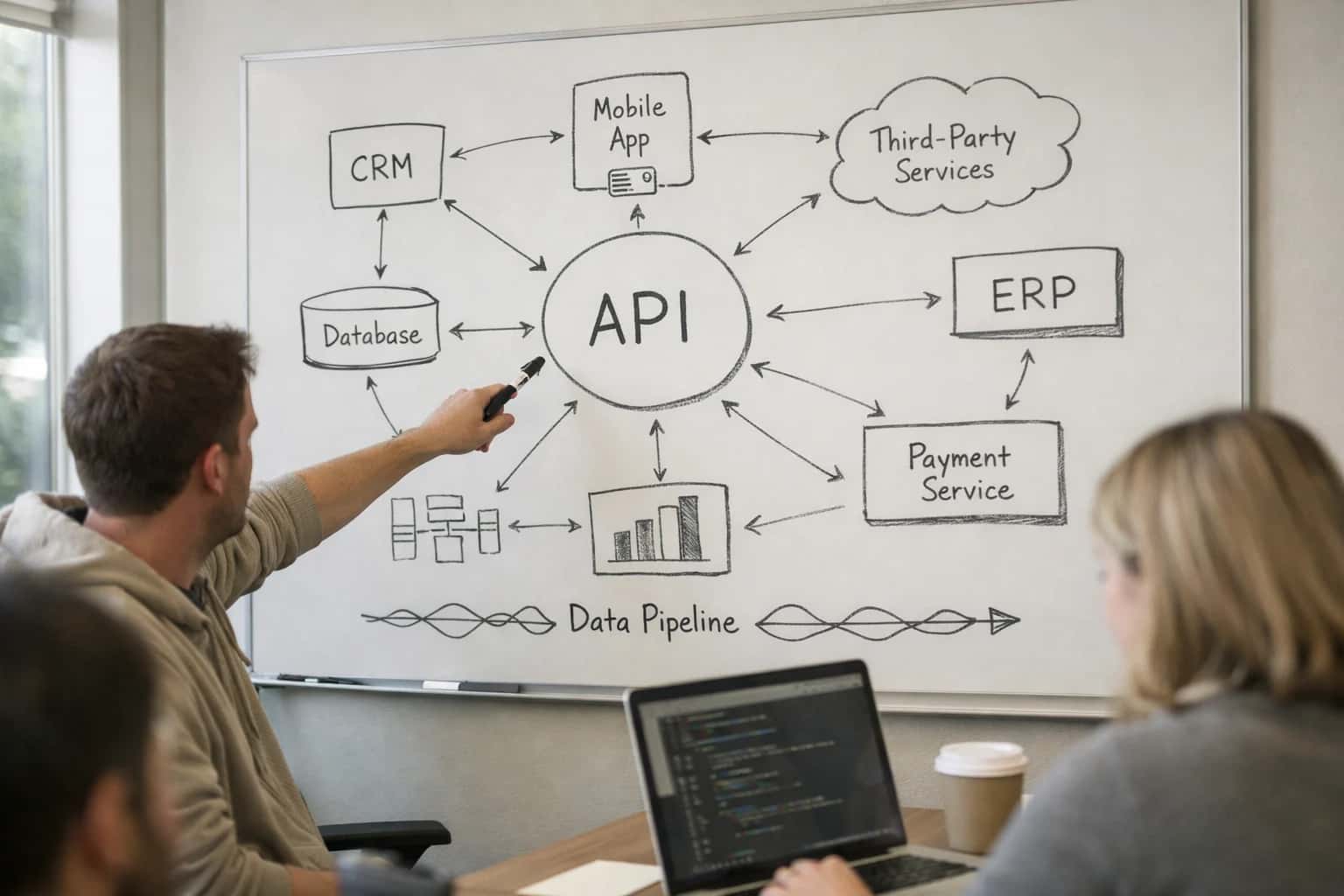
ARCHITECTURE & ROLLOUT
Where AI Fits in Fonteva Exhibit Hall Management
Integrating AI into Fonteva's expo management features transforms static floor plans into intelligent, revenue-driving engagement engines.
The implementation typically involves a middleware layer (like an MCP server or custom Salesforce Apex class) that sits between Fonteva's Salesforce objects (Event__c, Exhibitor__c, Attendee__c) and the AI model. This layer handles:
- Data enrichment: Pulling firmographic data from integrated sources to enhance attendee and exhibitor profiles.
- Vectorization: Creating embeddings for exhibitor descriptions and attendee profiles for semantic matching.
- Orchestration: Triggering personalized email/SMS sequences via Marketing Cloud or Pardot when a high-probability match is identified.
- Audit logging: Recording all AI recommendations and attendee interactions back to Fonteva custom objects for ROI analysis and model retraining.
Rollout should be phased, starting with a post-show lead quality report generator. This low-risk use case uses AI to analyze booth scan data, session attendance, and survey responses to produce a narrative report for each sponsor, summarizing lead engagement and suggested follow-up actions. This builds trust before launching attendee-facing matching. Governance is critical; all AI-driven attendee recommendations should include an 'opt-out' preference in the event app, and matching logic must be reviewed to avoid conflicts of interest (e.g., not recommending direct competitors in sequence).
EXHIBIT HALL MANAGEMENT
Key Fonteva Surfaces for AI Integration
Exhibitor & Sponsor Management Objects
The core of exhibit hall operations lives in Fonteva's Exhibitor/Sponsor objects, which link companies to events, packages, and contacts. AI integration surfaces here for lead matching and fulfillment.
Key Integration Points:
- Exhibitor Profile Data: Use AI to analyze company descriptions and booth staff profiles to match with attendee interests.
- Sponsorship Package Attributes: AI can review purchased benefits (e.g., speaking slots, logo placement) to auto-generate personalized fulfillment reports.
- Booth Assignment Logic: Integrate AI models to suggest optimal booth placements based on sponsor tier, attendee traffic predictions from past events, and competitor separation rules defined in custom objects.
Example Workflow: An AI agent monitors new exhibitor applications, enriches profiles with firmographic data from external APIs, and suggests relevant attendee segments for targeted pre-show marketing campaigns set up in Fonteva Events.
AI INTEGRATION WITH FONTEVA
High-Value AI Use Cases for Expo Management
Integrate AI directly into Fonteva's expo workflows to automate manual tasks, personalize the attendee experience, and deliver measurable value to exhibitors and sponsors.
01
Intelligent Attendee-Exhibitor Matching
An AI agent analyzes attendee profiles, registration interests, and past behavior to recommend relevant exhibitors. It surfaces matches directly in the event app or via personalized email digests, increasing booth traffic and lead quality for sponsors.
Batch → Real-time
Recommendation cadence
02
Automated Booth Meeting Scheduling
AI coordinates schedules between attendees and exhibitor reps. It suggests optimal meeting times, sends calendar invites, and manages rescheduling via natural language, eliminating the back-and-forth emails for event staff. Integrates with Fonteva's session scheduler and external calendars.
Hours → Minutes
Staff time saved
03
Post-Show Lead Quality & ROI Reporting
After the event, AI synthesizes lead scan data, meeting notes, and attendee engagement scores from Fonteva to generate sponsor-specific reports. It highlights high-intent leads, summarizes conversation themes, and estimates potential ROI, turning raw data into actionable sponsorship intelligence.
1 sprint
Report generation time
04
Dynamic Floor Plan Optimization
AI analyzes historical traffic patterns, sponsor tier levels, and competitor conflicts to suggest optimal booth placements on the Fonteva floor plan. It helps maximize visibility for key sponsors and improves overall attendee flow, increasing perceived value of premium packages.
05
AI-Powered Expo Help Desk
Deploy a RAG-based chatbot within the Fonteva Community or event app trained on the exhibitor manual, floor plans, and logistics FAQs. It handles common exhibitor questions about move-in, utilities, and shipping, deflecting tickets from event operations staff.
Same day
Query resolution
06
Sponsorship Upsell & Renewal Intelligence
An AI copilot analyzes exhibitor engagement metrics (scan counts, meeting attendance) and post-event survey feedback within Fonteva. It identifies prime candidates for booth upgrades or multi-event packages and drafts personalized renewal outreach for the sales team.
FONTEVA EXHIBIT HALL MANAGEMENT
Example AI-Powered Workflows
These workflows illustrate how AI agents can be integrated into Fonteva's expo management surfaces to automate high-friction tasks, enhance attendee experience, and deliver measurable value to sponsors.
Trigger: An attendee completes their event registration profile in Fonteva, including job role, interests, and objectives.
AI Agent Action:
- Profile Analysis: The agent analyzes the attendee's profile and cross-references it with the Fonteva Exhibitor object, which contains sponsor-provided data on target attendee personas, product categories, and meeting goals.
- Semantic Matching: Using vector similarity, the agent matches the attendee to the top 3-5 most relevant exhibitors, going beyond simple keyword matching to understand intent (e.g., "looking for HR compliance software" matches to exhibitors tagged for "employment law" and "workforce management").
- Automated Outreach & Scheduling: The agent initiates a workflow:
- Sends a personalized email to the attendee: "Based on your profile, we recommend connecting with [Exhibitor A] about [specific topic]. Would you like me to schedule a 15-minute meeting at their booth?"
- If the attendee consents (via a link or reply), the agent checks both parties' availability via integrated calendar lookups (using the Fonteva event schedule).
- It books the meeting, creating a record in the Fonteva
Booth_Appointment__ccustom object and sending calendar invites with a unique meeting ID.
System Update: The appointment is logged in both the attendee's agenda within the Fonteva event app and the exhibitor's lead capture dashboard, pre-populated with the match reason for context.
INTEGRATING AI INTO FONTEVA'S EXPO MODULES
Implementation Architecture: Data Flow & Integration Points
A practical blueprint for connecting AI agents to Fonteva's exhibit hall data model to automate matchmaking, scheduling, and lead analysis.
The integration connects at three primary layers within the Fonteva platform: the Exhibitor and Booth objects, the Attendee Registration and Profile modules, and the Event App/Community surfaces. AI agents ingest structured data (booth categories, attendee job titles, session interests) via Salesforce APIs and unstructured data (exhibitor marketing PDFs, attendee-supplied goals) via document parsing. A central orchestration layer, often built as a Salesforce Flow or external microservice, maintains the matchmaking logic, calling LLM APIs to generate personalized recommendations and meeting prompts.
A typical workflow begins post-registration: an AI agent analyzes an attendee's profile and stated goals, then cross-references the exhibitor list. It generates a shortlist of 3-5 recommended booths with a rationale (e.g., 'Matches your interest in sustainability software'). For exhibitors, a separate agent monitors booth traffic goals and scans registered attendee lists to suggest high-potential targets for pre-scheduled meetings. All match suggestions and meeting confirmations are written back to Fonteva as Custom Objects (e.g., AI_Recommendation__c, Scheduled_Meeting__c) or attached to existing Campaign Member records for tracking.
Post-event, the architecture shifts to analysis. AI agents process lead scan data, meeting notes captured in the event app, and post-show survey responses. Using retrieval-augmented generation (RAG) against exhibitor sponsorship packages, they generate lead quality reports for each sponsor, summarizing attendee engagement, inferred interest level, and suggested follow-up actions. These reports are delivered via automated Email Alerts or posted as files to the exhibitor's record in Fonteva. Governance is managed through Salesforce Permission Sets to control data access and a human-in-the-loop approval step for any communication generated by the AI before it's sent to members or exhibitors.
Rollout is typically phased: start with a passive recommendation engine in the event app, then activate proactive scheduling assistants, and finally deploy the post-show analytics. This allows for tuning the AI prompts based on real engagement data and ensuring the Fonteva data model is properly extended to log AI interactions for auditability. For a deeper dive into orchestrating multi-step AI workflows within Salesforce-native platforms, see our guide on AI Agent Builder and Workflow Platforms.
AI INTEGRATION PATTERNS FOR FONTEVA EXPO
Code & Payload Examples
Matching Logic & API Integration
This workflow uses AI to analyze attendee profiles and session interests against exhibitor descriptions, creating a relevance score. The match results are written back to Fonteva as custom objects (AI_Match__c) for use in the event app or targeted communications.
Example Python payload to call an inference endpoint and create match records:
pythonimport requests import json # Payload with attendee and exhibitor data extracted from Fonteva match_payload = { "attendee_id": "a003h00000XyZz1AAF", "attendee_profile": { "job_title": "Director of Clinical Research", "interests": ["regulatory affairs", "patient recruitment"], "sessions_registered": ["Session-101", "Session-205"] }, "exhibitor_list": [ { "exhibitor_id": "a003h00000AbCd2EAF", "company": "MedTrial Solutions", "description": "AI-powered platform for clinical trial patient matching and site feasibility.", "booth": "A12", "categories": ["Clinical Trials", "Patient Recruitment"] } ] } # Call AI matching service response = requests.post( 'https://api.your-ai-service.com/match', json=match_payload, headers={'Authorization': 'Bearer YOUR_API_KEY'} ) matches = response.json() # Create AI_Match__c records in Fonteva (Salesforce) for match in matches['results']: if match['score'] > 0.7: # Threshold for high-quality match sf_payload = { "Attendee__c": match_payload['attendee_id'], "Exhibitor__c": match['exhibitor_id'], "Match_Score__c": match['score'], "Reason__c": match['reasoning'], "Status__c": "Suggested" } # Use Salesforce REST API to create record sf_response = requests.post( 'https://yourinstance.salesforce.com/services/data/v58.0/sobjects/AI_Match__c/', json=sf_payload, headers={'Authorization': 'Bearer SALESFORCE_TOKEN'} )
EXHIBIT HALL OPERATIONS
Realistic Time Savings & Business Impact
How AI integration transforms manual, reactive tasks into proactive, data-driven workflows within Fonteva's expo management modules.
| Workflow | Before AI | After AI | Implementation Notes |
|---|---|---|---|
Exhibitor-Attendee Matching | Manual spreadsheet review and email blasts | Automated profile scoring and push notifications | Matches based on declared interests, job title, and past engagement |
Booth Meeting Scheduling | Back-and-forth emails over 2-3 days | Self-service calendar links with AI-generated agenda prompts | Reduces staff coordination by 70%; meetings logged to Fonteva Activities |
Lead Capture & Qualification | Paper business cards and manual data entry | Digital badge scans with instant lead scoring | Scores based on booth dwell time, session attendance, and profile fit |
Post-Show Sponsor Report Generation | Manual compilation 1-2 weeks after event | Automated report draft generated within 24 hours | Includes lead quality analysis, traffic heatmaps, and ROI estimates |
Exhibit Hall Floor Plan Optimization | Static placement based on sponsor tier alone | Dynamic suggestions using predicted traffic flow | Considers attendee profiles, session locations, and competitor separation rules |
Post-Event Follow-up Personalization | Generic 'thank you' email to all leads | Segmented, personalized follow-up sequences | Content tailored to interactions captured in Fonteva; human review before send |
Real-time Attendee Support Queries | Staffed info desk with limited hours | 24/7 AI chat in event app for booth locations, hours | Deflects ~40% of simple inquiries; escalates complex issues to staff |
IMPLEMENTING AI IN A REGULATED SPONSOR ENVIRONMENT
Governance, Security & Phased Rollout
Deploying AI for Fonteva exhibit hall management requires a controlled approach that protects sponsor data, ensures fair matching, and maintains staff oversight.
An AI integration for Fonteva's expo features must operate within the platform's existing security and data model. This means the AI agent should be a headless service that interacts via Fonteva's Salesforce APIs, respecting object-level and field-level security (FLS) for Exhibitor__c, Attendee__c, Booth_Assignment__c, and Lead_Capture__c records. All AI-generated recommendations—like attendee-exhibitor matches or meeting suggestions—are stored as custom objects (AI_Recommendation__c) with an approval status field, ensuring no automated changes are made to core records without a staff review step. Sponsor data, especially contact lists and lead quality reports, must never leave the controlled environment; processing occurs within your secure cloud or VPC, with results written back via authenticated API calls.
A phased rollout mitigates risk and demonstrates value incrementally. Phase 1 focuses on a read-only analytics agent: it analyzes past Fonteva event data to generate sponsor lead quality reports, identifying which attendee segments drove the most qualified conversations. This provides immediate insight without altering workflows. Phase 2 introduces the matching and scheduling copilot: this AI agent suggests booth meetings to attendees via the event app or portal, but all invitations require attendee opt-in and exhibitor notification through existing Fonteva communication workflows. Phase 3 enables predictive floor planning, where the AI recommends booth placements based on sponsor tier and attendee traffic patterns, but final assignment remains a manual decision by the events team, logged in Fonteva with rationale.
Governance is built around transparency and auditability. Every AI-generated action—a match suggestion, a report, a schedule change—creates an audit log record linked to the source data and the prompting user. For high-value sponsors, you can implement a human-in-the-loop approval for any AI-scheduled meeting or lead score adjustment. Regular model evaluations ensure matching algorithms do not develop unintended bias, and sponsor contracts should be reviewed to confirm AI-driven analytics and matchmaking are within the scope of agreed services. This controlled, phased approach allows associations to harness AI for exhibitor ROI while maintaining the trust and data integrity that Fonteva is built to provide.
Enabling Efficiency, Speed & Accuracy
Intelligent Analysis, Decision & Execution
We build AI systems for teams that need search across company data, workflow automation across tools, or AI features inside products and internal software.
Talk to Us
Search across company data
Give teams answers from docs, tickets, runbooks, and product data with sources and permissions.
Useful when people spend too long searching or get different answers from different systems.
Enterprise searchRAGPermissions
Read more
Automate internal workflows
Use AI to route work, draft outputs, trigger actions, and keep approvals and logs in place.
Useful when repetitive work moves across multiple tools and teams.
AI agentsWorkflow automationGovernance
Read more
Add AI to products and internal tools
Build assistants, guided actions, or decision support into the software your team or customers already use.
Useful when AI needs to be part of the product, not a separate tool.
AI integrationDecision supportModel routing
Read moreIMPLEMENTATION DETAILS
Frequently Asked Questions
Common technical and operational questions about integrating AI agents with Fonteva's exhibit hall management to automate attendee-exhibitor matching, meeting scheduling, and lead reporting.
The matching agent uses a multi-step workflow triggered by attendee registration or profile updates in Fonteva:
- Trigger: A new registration is completed in Fonteva Events, or an existing attendee updates their interests/job role.
- Context Pulled: The agent queries Fonteva's Salesforce objects for:
- Attendee's
Job_Title__c,Company_Industry__c, andRegistration_Interests__c(multi-select). - Exhibitor's
Booth_Products_Services__c,Target_Attendee_Profile__c, and sponsorship tier.
- Attendee's
- Agent Action: A retrieval-augmented generation (RAG) model compares semantic embeddings of attendee interests and exhibitor profiles. It generates a ranked list of 3-5 relevant exhibitors with a brief justification for each match (e.g., "Matches based on interest in 'data analytics' and exhibitor's focus on 'BI tools for associations'").
- System Update: The match list and justifications are written to a custom
AI_Exhibitor_Recommendation__cobject in Salesforce, linked to both the attendee and exhibitor records. - Human Review Point: For high-tier sponsors, matches can be flagged for staff review before being surfaced to the attendee via the event app or email.

About the author
Prasad Kumkar
CEO & MD, Inference Systems
Prasad Kumkar is the CEO & MD of Inference Systems and writes about AI systems architecture, LLM infrastructure, model serving, evaluation, and production deployment. Over 5+ years, he has worked across computer vision models, L5 autonomous vehicle systems, and LLM research, with a focus on taking complex AI ideas into real-world engineering systems.
His work and writing cover AI systems, large language models, AI agents, multimodal systems, autonomous systems, inference optimization, RAG, evaluation, and production AI engineering.
LinkedIn
Limited slotsGet a Free AI Consultation
Partnered with leading AI, data, and software stack.





How We Work
Custom AI workflows for your Business
One-fit-all AI don't work for modern businesses. At Inferensys, we aim to understand your business & custom requirements; which we use to define most efficient agentic workflows, the data, and the tools for your business.
01
Review the use case
We understand the task, the users, and where AI can actually help.
Read more02
Pick the right approach
We define what needs search, automation, or product integration.
Read more03
Build the first useful version
We implement the part that proves the value first.
Read more04
Improve from there
We add the checks and visibility needed to keep it useful.
Read moreThe first call is a practical review of your use case and the right next step.
Talk to Us