AI integration for GitHub focuses on three primary surfaces: the Pull Request workflow, GitHub Actions for CI/CD, and Repository-level data for analytics and search. The goal is to inject intelligence into existing developer touchpoints—like the PR review interface, issue comments, or Actions logs—using GitHub's webhooks, REST API, and GraphQL API. This allows AI to act as a contextual copilot within the native workflow, analyzing code diffs, summarizing lengthy discussions, or suggesting pipeline optimizations without requiring developers to switch contexts to a separate tool.

Integration
AI Integration for GitHub
A practical blueprint for engineering leaders to embed AI into GitHub's ecosystem, automating code reviews, vulnerability detection, workflow orchestration, and developer productivity insights.
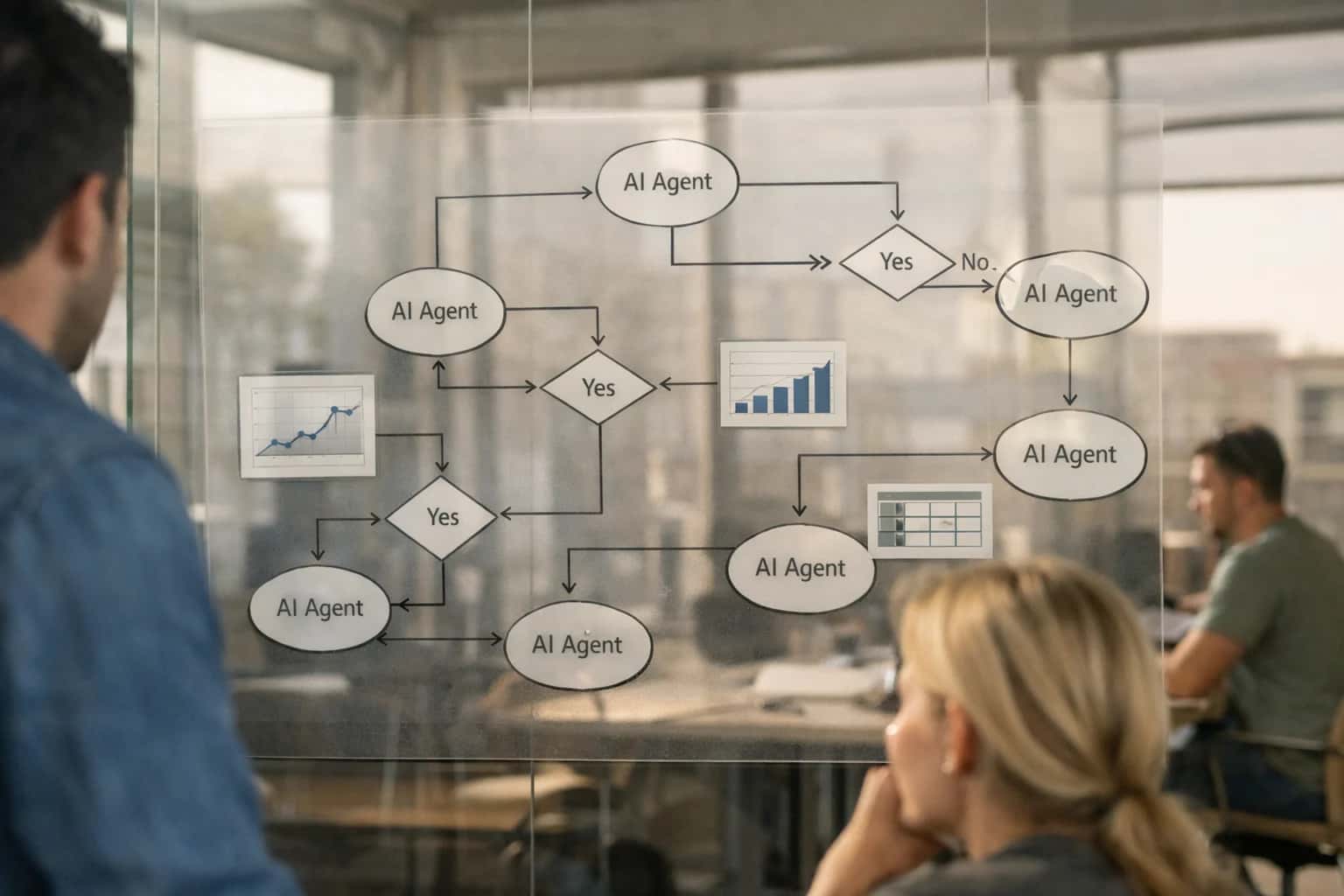
ARCHITECTURE AND ROLLOUT
Where AI Fits into the GitHub Ecosystem
A practical blueprint for integrating AI into GitHub's surfaces, workflows, and data to augment developer productivity without disrupting existing processes.
A production implementation typically involves a middleware service that subscribes to relevant GitHub webhook events (e.g., pull_request.opened, issues.labeled, workflow_run.completed). This service processes the event payload—which contains the full PR diff, issue body, or workflow logs—calls an LLM with a carefully engineered prompt for the specific task, and then posts the results back as a PR comment, an issue update, or a status check. For example, an AI agent can be triggered on every PR to generate a concise summary of changes and potential risks, posting it as the first comment. Governance is managed through GitHub's native repository permissions and branch protection rules, ensuring AI suggestions are reviewed before merge and all actions are auditable via the GitHub audit log.
Rollout should be incremental, starting with a single, high-value workflow like automated PR summaries or vulnerability explanation in a pilot repository. This builds trust and surfaces integration nuances, such as token limits for large diffs or handling private dependencies. The next phase often expands to AI-powered issue triage, using the Issues API to classify and tag incoming bugs, or to CI/CD optimization, where AI analyzes Actions run histories to suggest caching strategies or flaky test identification. The architecture remains lightweight, treating AI as a stateless service that enhances GitHub's existing capabilities, ensuring the integration scales alongside your engineering team's adoption of AI-assisted development.
ARCHITECTURE BLUEPRINT
Key GitHub Surfaces for AI Integration
Automating Code Review Workflows
Integrating AI directly into the Pull Request (PR) workflow transforms a manual review bottleneck into a guided, accelerated process. The primary surfaces are the GitHub Pull Request API and webhooks (pull_request events).
Key Integration Points:
- PR Description & Comments: Use the API to post AI-generated summaries of diff changes, contextualizing why code was modified by linking to related issues or commits.
- Review Comment Automation: Attach AI-suggested improvements, security findings, or style guide violations as inline review comments using the
POST /repos/{owner}/{repo}/pulls/{pull_number}/commentsendpoint. - Status Checks: Implement a GitHub App that adds a status check (e.g.,
AI Review) based on analysis of code quality, test coverage impact, or dependency changes.
Example Pseudocode for PR Summary:
python# On receiving a pull_request webhook payload = json.loads(request.data) pr_number = payload['pull_request']['number'] diff_url = payload['pull_request']['diff_url'] # Fetch and analyze the diff diff_text = requests.get(diff_url).text summary = ai_client.chat.completions.create( model="gpt-4", messages=[{"role": "system", "content": "Summarize key changes in this code diff..."}, {"role": "user", "content": diff_text}] ) # Post summary as a PR comment github.post(f"/repos/{repo}/issues/{pr_number}/comments", json={"body": f"## AI-Powered Summary\n\n{summary}"})
This integration reduces reviewer cognitive load and ensures consistent, preliminary analysis on every PR.
PRACTICAL INTEGRATION PATTERNS
High-Value AI Use Cases for GitHub
Integrating AI into GitHub's ecosystem moves beyond simple chat. These are production-ready patterns that connect to Pull Requests, Issues, Actions, and the repository itself to automate workflows and augment developer productivity.
01
Automated Pull Request Summaries & Review
Connect an AI agent to the pull_request webhook. For every new PR, the agent analyzes the diff, commit messages, and linked issues to generate a concise summary of changes, potential risks, and suggested reviewers. This reduces context-switching for reviewers and accelerates merge cycles.
Batch -> Real-time
Review readiness
02
Intelligent Issue Triage & Routing
Implement a GitHub App that listens to new issues. Using the issue title, body, and labels, an AI model classifies the bug/feature request, estimates priority, and suggests assignment based on contributor history and code ownership from CODEOWNERS. Posts automated comments to gather missing info.
Hours -> Minutes
Initial triage
03
AI-Powered GitHub Actions Workflows
Embed AI decision-making into GitHub Actions. Use the Actions toolkit to call an AI service that can: analyze test failures to suggest fixes, dynamically generate deployment plans based on diff scope, or craft release notes from merged PRs. Moves CI/CD from static scripts to adaptive orchestration.
1 sprint
Pipeline maturity
04
Repository-Level Codebase Q&A (RAG)
Deploy a Retrieval-Augmented Generation (RAG) system over the entire repo—code, Markdown docs, wiki, and closed issues. Provide a secure chat interface (e.g., as a GitHub App or Slack bot) where developers can ask "How does authentication work?" or "Where is the pricing logic?" and get cited answers.
Same day
Onboarding acceleration
05
Proactive Security & Dependency Alerts
Go beyond Dependabot's basic alerts. Integrate AI to analyze package.json, pom.xml, or requirements.txt for transitive vulnerabilities, license risks, and deprecated APIs in context. Automatically creates detailed, actionable Issues or Pull Requests with suggested upgrades and impact analysis.
06
Commit Message & Convention Enforcement
Use a GitHub Action with an AI model to analyze every push. It evaluates commit messages for clarity, links them to existing Issue numbers, and enforces team conventions (e.g., semantic commit formatting). Provides constructive feedback via status checks, improving project history and automation triggers.
Manual -> Automated
Code hygiene
IMPLEMENTATION PATTERNS
Example AI-Augmented GitHub Workflows
These workflows demonstrate how AI can be integrated into GitHub's core surfaces—Issues, Pull Requests, Actions, and Discussions—to automate routine tasks, enhance code quality, and provide developers with contextual intelligence. Each pattern is designed to be implemented using GitHub's APIs, webhooks, and Actions runners.
Trigger: A new pull request is opened or updated.
Context Pulled: The AI agent fetches the PR diff, commit messages, linked issue descriptions, and recent CI/CD pipeline status via the GitHub API.
Agent Action: A multi-step LLM call analyzes:
- Code Changes: Summarizes the functional intent of the changes in plain language.
- Risk Detection: Flags potential issues (e.g., missing tests for new logic, security-sensitive file modifications, large refactors).
- Review Guidance: Suggests specific reviewers based on code ownership (CODEOWNERS) and file change history.
System Update: The agent posts a structured comment on the PR with:
markdown## 🤖 AI PR Analysis **Summary:** This PR refactors the user authentication service to support OAuth2.0... **⚠️ Attention Areas:** - No new unit tests were added for the `OAuthHandler` class. - Modified `config/secrets.yml` – please confirm no sensitive data is exposed. **Suggested Reviewers:** @alice (auth service owner), @bob (security).
Human Review Point: The comment is informational. A required status check can be added to block merge until a human reviewer acknowledges or addresses the AI's findings.
FROM REPOSITORY TO PRODUCTION
Implementation Architecture: Connecting AI to GitHub
A practical blueprint for embedding AI into GitHub's core surfaces—Issues, Pull Requests, Actions, and Discussions—to automate developer workflows.
Integrating AI into GitHub means connecting to its REST API and webhook ecosystem to read repository content, monitor events, and post contextual insights. The primary surfaces for AI are Pull Requests (for code review summaries and vulnerability context), Issues (for automated triage and summarization), GitHub Actions (for AI-powered pipeline gates and dynamic job generation), and GitHub Discussions (for community Q&A support). AI agents typically authenticate via fine-grained personal access tokens or GitHub Apps, listening for events like pull_request.opened or issues.labeled to trigger analysis.
A production implementation follows a decoupled, event-driven pattern: 1) A webhook receiver (often a serverless function) captures GitHub events and places them on a message queue. 2) An orchestrator service determines the required AI task—such as summarizing diff content or scanning for security patterns—and calls the appropriate LLM with relevant context retrieved from the repository. 3) Results are posted back via the GitHub API as a comment, check run, or issue update. For complex workflows like automated code refactoring, the system may create a temporary branch and draft pull request for human review. Governance is managed through repository-specific configuration files (e.g., .github/ai-policies.yml) that define opt-in rules, allowed models, and approval gates.
Rollout should start with a single, high-value workflow—like automated pull request summaries—in a pilot team's repository. This builds trust and surfaces integration nuances, such as handling large diffs or private dependencies. Critical considerations include cost management (caching LLM responses for similar diffs), rate limiting against GitHub's API, and maintaining a clear audit trail of all AI-generated content and actions. The goal is not to replace developer judgment but to reduce manual toil, turning hours of context-switching into minutes of review. For teams using GitHub Enterprise Cloud, additional patterns like leveraging GitHub Copilot's API for extended capabilities or integrating with Advanced Security alerts become viable.
For a deeper dive into orchestrating these agents, see our guide on AI Agent Builder and Workflow Platforms. Teams implementing this architecture often complement it with a Vector Database and RAG Platform to create a semantic search layer over their entire codebase and documentation for more contextual AI assistance.
AI INTEGRATION FOR GITHUB
Code and Configuration Examples
AI-Enhanced Code Review Automation
Integrate AI directly into the pull request (PR) workflow using GitHub Apps or repository webhooks. When a PR is opened or updated, trigger an AI service to analyze the diff, commit messages, and linked issues.
Example Workflow:
- A GitHub Action is triggered on
pull_requestevents. - The action packages the diff, title, and description, then calls an inference endpoint.
- The AI service returns a summary of changes, identifies potential security smells, and suggests test coverage.
- The action posts these insights as a PR comment using the GitHub API.
yaml# .github/workflows/ai-pr-review.yml name: AI PR Analysis on: [pull_request] jobs: analyze: runs-on: ubuntu-latest steps: - name: Call AI Review Service run: | PAYLOAD=$(jq -n --arg diff "${{ github.event.pull_request.diff_url }}" \ --arg desc "${{ github.event.pull_request.body }}" \ '{diff_url: $diff, description: $desc}') RESPONSE=$(curl -X POST https://api.your-ai-service.com/review \ -H "Authorization: Bearer ${{ secrets.AI_API_KEY }}" \ -H "Content-Type: application/json" \ -d "$PAYLOAD") echo "summary=$(echo $RESPONSE | jq -r '.summary')" >> $GITHUB_OUTPUT - name: Post Review Comment uses: actions/github-script@v7 with: script: | github.rest.issues.createComment({ issue_number: context.issue.number, owner: context.repo.owner, repo: context.repo.repo, body: `## AI PR Analysis\n${process.env.SUMMARY}` })
This automates initial triage, providing developers with immediate, contextual feedback and freeing senior engineers for complex reviews.
GITHUB WORKFLOW AUTOMATION
Realistic Time Savings and Operational Impact
How AI integration transforms key developer and DevOps workflows within the GitHub ecosystem, from code review to incident response.
| Workflow | Before AI | After AI | Implementation Notes |
|---|---|---|---|
Pull Request Summarization | Manual review of 500+ line diffs | AI-generated summary in seconds | Provides context for approvers; human judgment remains critical |
Code Vulnerability Triage | Manual review of SAST/DAST alerts | AI-prioritized and explained alerts | Integrates with GitHub Advanced Security; reduces noise for AppSec teams |
Issue Triage & Routing | Manual tagging and assignment by leads | AI-suggested labels and assignees | Learns from historical issue patterns; final assignment requires approval |
Release Note Drafting | Manual compilation from commits and PRs | AI-generated first draft from linked PRs | Uses conventional commit messages; requires editor review before publishing |
CI/CD Pipeline Failure Diagnosis | Engineer manually parses logs | AI suggests likely root cause and fix | Analyzes GitHub Actions logs; points to recent code or config changes |
Repository Q&A for New Developers | Searching wikies and digging through code | RAG-powered assistant answers codebase questions | Indexes repo code, issues, and wiki; provides source citations |
Incident Linkback to Code | Manual git bisect and issue correlation | AI suggests probable commits and linked issues | Connects deployment events from Actions to production monitoring alerts |
ARCHITECTING FOR ENTERPRISE CONTROL
Governance, Security, and Phased Rollout
A production AI integration for GitHub must be built with the same rigor applied to the codebase it analyzes.
Start by defining the trust boundary between GitHub's data and your AI models. Use GitHub's REST API and GraphQL to pull data into a secure, isolated processing environment—never send proprietary code directly to a public LLM endpoint. For pull request summaries or code review, implement a pipeline that: 1) fetches the PR diff and related issues via API, 2) processes and redacts sensitive strings (keys, internal URLs) in a secure middleware layer, 3) sends a sanitized payload to your chosen model (e.g., via Azure OpenAI Service or Anthropic with private endpoints), and 4) posts the AI-generated comment back to GitHub via a service account. All interactions should be logged with the PR SHA, user, and model version for a full audit trail.
Roll out incrementally by scoping AI actions to low-risk, high-repetition surfaces first. A common phased approach is:
- Phase 1 (Read-Only Analysis): Deploy AI agents that generate draft summaries for pull requests and issues in a non-blocking manner. Use GitHub Actions workflows or a dedicated service to post these as comments marked
(AI Suggestion)for human review. This builds trust without altering workflows. - Phase 2 (Guided Automation): Introduce AI-powered checks into GitHub Actions workflows, such as automated vulnerability explanation or test coverage analysis, configured as non-required status checks. Gate these with repository-specific
AI_FEATURESenvironment variables for opt-in control. - Phase 3 (Interactive Agents): Enable more advanced tools like AI-assisted code generation or refactoring suggestions via GitHub Copilot APIs or custom bots, restricted to repositories with appropriate
CODEOWNERapprovals and only for teams that have completed training.
Govern access and cost with the same policies applied to your CI/CD infrastructure. Implement role-based access control (RBAC) so AI features can be enabled per repository, team, or organization. Use token-based authentication for API calls, scoped with the minimal required permissions (e.g., repo for PRs, read:org for team context). Monitor usage and cost via metered logging to cloud services like Azure Monitor or Datadog, tagging expenses by repository and team. Establish a clear human-in-the-loop protocol for any AI-generated code changes, ensuring they are always reviewed by the pull request author or a designated reviewer before merge. For highly regulated industries, maintain an allowlist of approved AI models and prompt templates, versioned and reviewed alongside other internal engineering standards.
Enabling Efficiency, Speed & Accuracy
Intelligent Analysis, Decision & Execution
We build AI systems for teams that need search across company data, workflow automation across tools, or AI features inside products and internal software.
Talk to Us
Search across company data
Give teams answers from docs, tickets, runbooks, and product data with sources and permissions.
Useful when people spend too long searching or get different answers from different systems.
Enterprise searchRAGPermissions
Read more
Automate internal workflows
Use AI to route work, draft outputs, trigger actions, and keep approvals and logs in place.
Useful when repetitive work moves across multiple tools and teams.
AI agentsWorkflow automationGovernance
Read more
Add AI to products and internal tools
Build assistants, guided actions, or decision support into the software your team or customers already use.
Useful when AI needs to be part of the product, not a separate tool.
AI integrationDecision supportModel routing
Read moreIMPLEMENTATION BLUEPRINT
Frequently Asked Questions on GitHub AI Integration
Practical answers for engineering leaders planning to embed AI into GitHub's ecosystem for pull request automation, code security, Actions workflows, and developer productivity.
A production integration typically uses GitHub Apps with fine-grained permissions, not personal access tokens.
- Create a GitHub App: Define the exact repository permissions needed (e.g.,
contents: read,pull_requests: write,actions: read). - Use Private Keys: Authenticate via a PEM file, generating installation access tokens via the GitHub API.
- Deploy a Secure Proxy/Orchestrator: Host a service (e.g., in your VPC) that:
- Receives webhooks from GitHub (pull request events, issue comments).
- Calls your AI model API (OpenAI, Anthropic, or a private model) with relevant code snippets and context.
- Posts comments or status checks back to GitHub via the authenticated app.
- Govern Data Flow: Ensure no proprietary code is sent to external models without proper data processing agreements. For sensitive repos, use a self-hosted or VPC-hosted model.
See our guide on secure tool calling for enterprise integrations for detailed architecture patterns.

About the author
Prasad Kumkar
CEO & MD, Inference Systems
Prasad Kumkar is the CEO & MD of Inference Systems and writes about AI systems architecture, LLM infrastructure, model serving, evaluation, and production deployment. Over 5+ years, he has worked across computer vision models, L5 autonomous vehicle systems, and LLM research, with a focus on taking complex AI ideas into real-world engineering systems.
His work and writing cover AI systems, large language models, AI agents, multimodal systems, autonomous systems, inference optimization, RAG, evaluation, and production AI engineering.
LinkedIn
Limited slotsGet a Free AI Consultation
Partnered with leading AI, data, and software stack.





How We Work
Custom AI workflows for your Business
One-fit-all AI don't work for modern businesses. At Inferensys, we aim to understand your business & custom requirements; which we use to define most efficient agentic workflows, the data, and the tools for your business.
01
Review the use case
We understand the task, the users, and where AI can actually help.
Read more02
Pick the right approach
We define what needs search, automation, or product integration.
Read more03
Build the first useful version
We implement the part that proves the value first.
Read more04
Improve from there
We add the checks and visibility needed to keep it useful.
Read moreThe first call is a practical review of your use case and the right next step.
Talk to Us